
M&S to cut hundreds of jobs in response to pandemic
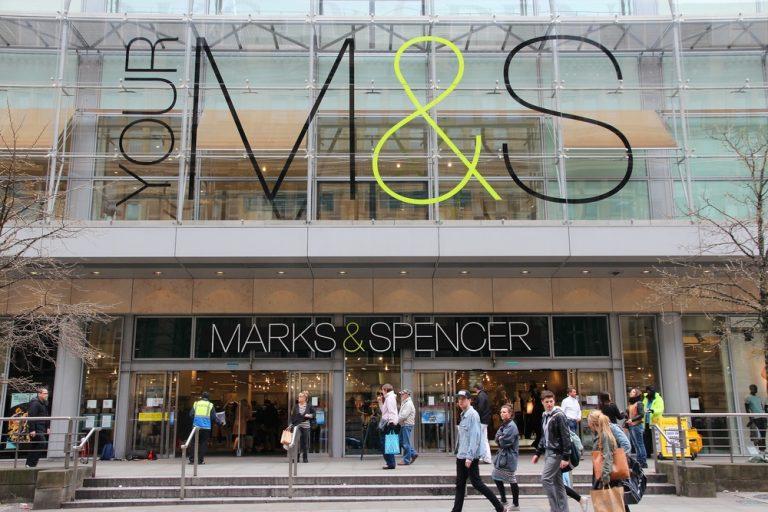
Marks & Spencer (M&S) will reportedly announce hundreds of job cuts this week.
According to a Sky News report, the retailer will be revealing a redundancy plan that may affect thousands of employees.
During the lockdown, M&S closed between 100 – 120 stores and furloughed 27,000 of its 78,000 employees. Many of these employees have now returned back to work, however, may risk upcoming redundancy.
An M&S spokeswoman has said in response to the Sky News report: “We don’t comment on speculation and, if and when we have an announcement to make, our colleagues will be the first to know.”
Following results two months ago, the company formed a plan called ‘Never the same again’.
As well as job cuts that are expected to be announced this week, earlier the chief executive, Steve Rowe, said in May that the pandemic will result in permanent changes to shopping habits.
Rowe said: “Whilst some customer habits will return to normal others have changed forever, the trend towards digital has been accelerated, and changes to the shape of the high street brought forward. Most importantly working habits have been transformed and we have discovered we can work in a faster, leaner, more effective way.”
The group’s boss has agreed to a pay freeze over the course of the pandemic and said he will not accept his an annual bonus for two consecutive years.
The retailer is the latest of a series of companies that have suggested large-scale job cuts in response to the pandemic.
John Lewis, Debenhams, and Boots have announced redundancy plans. Boots said that it will cut 4,000 jobs and axe 48 stores following a 72% fall in sales in Boots opticians and a 48% drop in Boots pharmacy stores.
Shares in M&S (LON: MKS) are trading down 2% on Monday morning (0900GMT)
Biden favourite to win presidency: how investors should ride the ‘blue wave’
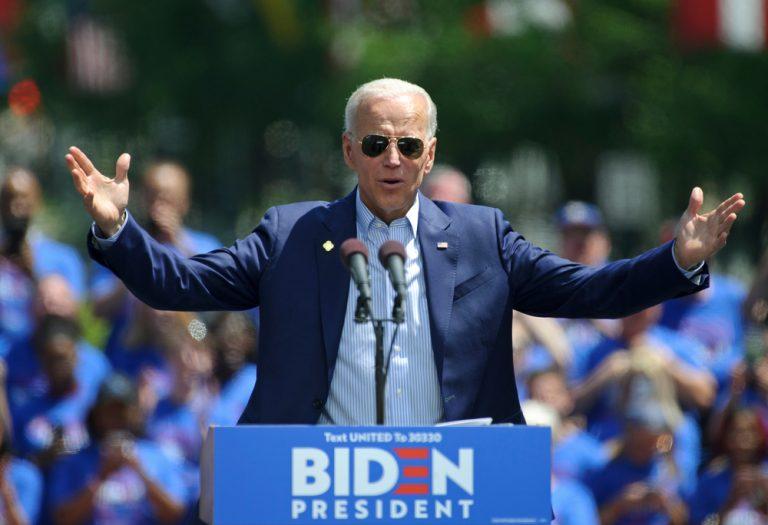
Between Donald Trump’s handling of the COVID pandemic, protests and ongoing investigations into his potential involvements in several scandals, the US president has certainly seen his stock fall in the last couple of months. While most of his cards will rest upon his ability to inspire a quick economic bounce-back from the virus, most polling outlets and pundits currently peg Joe Biden as the favourite to become the next US president in November. Should the blue wave prediction come to fruition, what should investors do about it?
How likely is a Biden presidency?
In a recent report, financial services and research company StoneX sought to answer questions about the likelihood of a Democrat victory, and what investors should do if such as scenario were to play out. Data science company Ravenpack have given Biden a generous lead in their predictions, beating Trump with an estimated 308 votes to 230, and a 90% chance of victory. Meanwhile, and likely more in line with consensus predictions, StoneX said betting odds were consistent with a 60/40 likelihood of the Democrat candidate winning the presidency, which follows his 10 point lead in the RealClearPolitics poll average. In the House of Representatives, the company report that there is an 85% that the Democrats will retain their majority; they added that these odds have never fallen below 50% and that they ‘would not consider’ the hypothesis that the Republicans take control of the House in November. Further, and more interestingly, perhaps, StoneX report that current odds imply a 63% chance that the Democrats will win a majority in the senate. Should these three predictions come to pass, this would invoke what has been dubbed the ‘blue wave’, and ultimately sweeping control of all forces of law-making and review outside of the Supreme Court. However, we ought to note the very real possibility of a Republican comeback in polling for the senate, with the party’s odds of winning a majority standing at over 70% consistently until February. Further, and crucially – in my view – we can never underestimate the Trump brand of politics. After being largely written off by bookies in 2016, he secured a narrow win. Also, regardless of what we might make of him as an individual, his US-first approach to international trade, diplomacy and military intervention has really struck a chord with lots of disgruntled Americans, and I don’t think this sentiment has dissipated over the last four years. Two other factors, while more minor, may also help his cause: while his response to the BLM protests may have polarised opinion, some fence-sitters may actually prefer his hard-line approach. Also, though likely a small number, there is a chance that out of either defiance of his less progressive tone, or protest against Sanders’s defeat, some of the more extreme left-wing voters may opt not to vote for Biden.What do Democrat victories do to shares?
The real possibility of a changing tide in polling aside, for the sake of StoneX’s report, we’ll imagine that the Biden blue wave comes to fruition, and according to the current analysis, this is the most likely combination of outcomes. So what does this mean? Well, it is important to note that ‘blue waves’ tend to display two key characteristics for investors. First, they tend to be good for shareholders (largely due to the second characteristic). Second, they tend to follow major economic calamities, such as the Great Depression or the 2008 Financial Crash, and therefore tend to oversee the recovery period. As stated in the StoneX report: “Looking at the average of the past six “blue waves”, stocks have tended to fall by 10 percentage points in the five months preceding the swearing in of a new Democratic President. This would suggest that the market should peak in August and experience a double-digit correction in the fall, which is conveniently consistent with the normal seasonal pattern of U.S. equity indices.” “Biden’s tax plans would also support the forecast of a double-digit decline in stocks as investors start pricing in the impact of tax increases on corporate earnings. The Biden campaign has proposed about $3.4 trillion in tax increases to fund infrastructure, climate investments, education, and healthcare.” Now of course there is a notable difference between tax rates and actual tax paid. For instance, regardless of Donald Trump’s change of corporation tax from 16% to 10%, the average tax actually paid by S&P 500 companies in the US was consistently between 3-4%. So the initial pricing in of a Democrat presidency would be reflected in shares, even if the actual effects aren’t felt by company earnings.How to splash the green in a sea of blue
With these facts in mind, here are a few of the trends to anticipate in a Biden presidency. First, there’ll be greater scrutiny on how companies spend their money. While the presidential hopeful called on companies in a Twitter post not to commence buy-back plans within the next year, actively placing restrictions on buy-backs across the board will likely not be a priority for a new Democrat administration. What might have an impact, though, is greater scrutiny of companies receiving Fed financial aid and emergency loans, which may include restrictions on buy-backs. This may not adversely affect big hitters such as tech giants, however sectors such as healthcare, financials and industrials may feel the squeeze of some constraints. These sectors have all relied on government hand-outs to survive the COVID pandemic, and between them having made up 44% of all buy-backs within the last two years, StoneX predicts “a suspension of repurchases would lead to a significant reduction in the demand for stocks”. Secondly, and much like Trump, Biden’s seeming disregard for the deficit will likely contribute to inflationary pressure. While the Fed’s gung ho attitude to spending in April might lead to inflationary pressures in the long run, the short-term behaviour change of individuals was to save rather than spend money. Should Biden implement his $15 per hour Federal Minimum Wage policy and enhanced unemployment benefits, as well as offering an exact timeline for these policies to come about, StoneX state he could release a lot of ‘pent-up demand’. This, in combination with his currently uncosted $700bn ‘Buy American’ campaign, would likely put strong upward pressure on inflation. Thirdly, we could see a replay of the 2008-2010 trends, with gold and commodities soaring and emerging markets outperforming. With Biden being open about his ambitions for less isolationist policy (trying to join the TTP Treaty and rolling back tariffs on China) alongside income growth, widening deficits, tax increases and high inflation creating a weaker dollar, international and emerging economies would be less burdened by their USD-denominated liabilities, and would have a huge market once again open for trading. Fourth, out-of-network private hospital services, big pharma and insurers are likely to take a hit. Between lowering the eligibility age for Medicare – from 65 to 60 – and banning insidious “surprise billing” practices (when someone checks into an in-network and is then transferred to out-of-network services and charged extortionately), hospital providers will incur higher costs and take in less money. Also, more cost controls and transparent pricing measures – including limits of price increases, banning ‘abusive pricing’ on generic drugs and repealing the law which bans Medicare from negotiating drug prices with suppliers – would hit Big Pharma shares. Finally, introducing a subsidised public care and insurance service, alongside restrictions on insurers’ ability to increase premiums, will have negative implications for US health and care insurer stocks. As stated in the StoneX report: “The main investment implications are already playing out: international healthcare stocks, which are less exposed to U.S. regulatory risk, have outperformed as the probability of a November blue-wave has risen.” Fifth, and finally, clean energy and home-building stocks can expect to have their day in the sun. Trying to keep a firm grip on the next generation of progressive voters, Biden has promised to “invest $640 billion over 10 years so every American has access to housing that is affordable, stable, safe and healthy, accessible, energy efficient and resilient, and located near good schools and with a reasonable commute to their jobs”. Regardless of the actuality of these promises, we can expect, at least to some extent, that renewables and construction stocks will see a resurgence under a Democrat clean sweep. In conclusion, if you believe the Biden blue wave hype, look to inflation-sensitive assets, emerging markets, house-builders and clean energy as money-makers, and short health and care insurers and big pharma!Pandemic sees up to 64% of businesses lose revenue with arts worst hit
On Thursday the ONS posted some of its damage assessment statistics for the Coronavirus pandemic, which entailed a relatively understated job loss estimate of under 700,000, as well as detailing the losses of turnover incurred by businesses that continued trading.
Where were businesses hardest hit?
Country-by-country, Scottish and Welsh businesses fared worst. Around 62% of Scottish firms reported a downturn in revenue outside of normal ranges, which was the highest country-wide loss of turnover. This was likely led by the Scottish government’s more stringent approach to lockdown measures, which has exacerbated the adverse effects on businesses, but has also seen the country’s death rates fall more quickly than their other UK counterparts. Meanwhile, Welsh businesses were noted as the most ‘at-risk’, with the lowest levels of resilience in terms of preparedness and cash reserves. Some 44% of enterprises were noted as having less than six months-worth of cash reserves, with this number falling to 41% in England, and 37% and 35% respectively in Scotland and Northern Ireland. Elsewhere, business turnover fell by 58% in England and Wales and 49% in Northern Ireland, with 28% of still-trading businesses in Northern Ireland saying that their turnover had been unaffected. Overall, then, Northern Ireland were the best-organised member of the UK to cope with the impact of the virus, while Welsh businesses, in sum, were the most vulnerable. By specific region, rather than country, Yorkshire and Humber, the West Midlands, North West and South West of England, all reported that over 60% of their still-trading businesses had lost turnover. The North East of England, though, suffered worst, with 64% of businesses reporting a drop in revenues.Which sectors bore the brunt of the pandemic?
Unsurprisingly, the ONS reported that the arts, entertainment and recreation were worst-off due to the pandemic, with some 61% of all businesses in the sector still closed and just under half of the ventures saying that they weren’t planning to reopen in the next two weeks. Hotels, restaurants and bars were also, unsurprisingly, among the worst hit. While 26% currently of closed outlets said they would be looking to reopen soon, 22% of the currently-closed group said they had no plans to recommence trading in the next two weeks. With a small glimmer of positivity, the ONS stated that: “There were three industries where 99% or more of businesses reported continuing to trade (including trading for more than the last two weeks or had started trading again within the last two weeks after a pause in trading),” These three business sectors included water and waste management, private health and social work activities, and manufacturing, who reported trading at 100%, 99% and 99% respectively.The opportunity for growth in cyber security

Sponsored by CybeX Security
CybeX is a newly established technology driven global security company, with a focus on the convergence of cyber security and private security services, major event security, counter surveillance, vetting and risk management, critical national infrastructure and debt collection.
The Market
Cyber security has been one of the fastest growing security verticals and markets globally since the turn of the internet age and the global cyber security market is expected to grow from £100bn ($137bn) in 2017 to £200bn ($231bn) by 2022 at a CAGR of 11.0%. The major forces driving this growth in the market are the strict data protective directives and cyber terrorism which has been on the geopolitical spectrum in recent times. In addition, the market is growing rapidly due to the growing security needs associated with the Internet of Things (‘IoT’), Bring Your Own Device (‘BYOD’) trends and the increased deployment of web and cloud-based business and government applications. Download the CybeX Security Investor Presentation As per a Frost & Sullivan report conducted in 2017, the global security market is forecast to continue to grow at just over 5% annually with cyber security growing at 11%. The global cyber security market can be segmented by various industry verticals, out of which the adoption of security solutions is expected to be the highest in aerospace and defence, as the critical data and applications used are vulnerable to advanced cyber threats. It is expected that over the course of the next few years cyber security will continue to be in high demand and be in high demand and be widely adopted by governments and the private sector.Integrated Security Solutions
CybeX is aiming to become the largest globally integrated security solutions company with a broad portfolio of security services operating across major industry verticals with multiple end user clients in both the private and public sectors. The cyber security startup will help its clients to enhance their ability to respond to cyber-attacks, benchmark their current data protection capabilities to industry standards whilst evaluating their security and incident response policies to ensure there are no major gaps in their systems. The Company’s attack prevention services include both internal and external assessments to systems, application and facilities that include but are not limited to:- Cyber risk assessment and analysis;
- Vulnerability assessment and penetration testing;
- Physical security measures and assessments;
- Wireless network security assessments;
- Breach and data compromise assessments; and
- Policy and procedure review and design.
Potential Exit
Within five years, the Company will also consider the sale of the entire organisation in order to release cash back to the shareholders, through a trade sale or IPO. The firm should have access to a range of security markets globally, generating revenues in excess of £182m and pre-tax profits of £89.2m. With the firm cemented as a leading online and physical security services company, it is expected to have a net asset value of £129.3m and thus the IPO value could be significantly higher when accounting for EV multiples on exit. With significant in-depth research and analysis, the Company estimates current market EV ratios to be 13.36x and after taking into account risk and liquidity discounts, CybeX could achieve a ratio in the region of 9.3x resulting in an IPO valuation of £830 million or £53.40 per share when taking into account the total number of shares expected to be in issue. Download the CybeX Security Investor PresentationJob losses hit record highs over lockdown – and set to increase

Official figures revealed on Thursday showed that almost 650,000 people lost their jobs during lockdown held between March and June.
Whilst the government’s furlough scheme kept the number lower than feared, the number of people who have lost their jobs is expected to grow when the scheme ends in October.
“Our official data is failing to show the true extent of this jobs crisis,” said Mike Brewer, chief economist at the Resolution Foundation think tank, which has predicted millions of total job losses by the end of the year.
As well as the number of people off the payroll, the number of hours worked in the UK also plummeted over lockdown. Weekly hours worked between March and May fell to 877.1 million hours. the largest annual decrease since estimates began in 1971.
“These figures show serious difficulties for hundreds of thousands of people, but unfortunately this is still only the beginning of the impact on the labour market. Flattening the unemployment curve will remain paramount,” said Matthew Percival, director for people and skills at the CBI.
Job vacancies are currently at a lower-than-normal rate during the pandemic. ONS deputy national statistician Jonathan Athow explains: “As the pandemic took hold, the labour market weakened markedly. But that rate of decline slowed into June, though this is before recent reports of job losses.”
“The labour force survey is showing only a small fall in employment, but shows a large number of people who report working no hours and getting no pay,” he added.
A new survey from the British Chambers of Commerce (BCC) has found that of 7,400 businesses they surveyed, 29% plan to make job cuts over the next three months as the furlough scheme comes to an end.
The furlough scheme will wind down in October. So far, 1.2m companies have benefitted from the scheme where the government pays 80% of employees’ salaries.
Airlines, banks, oil and car companies among the most traded shares in June
With March to May being a turbulent period for shareholders, June appeared to be the month where some semblance of usual service resumed. Though, while most companies began finding their feet again, most of their share prices were significantly below where they were at the start of the year, with a return to previous levels not expected for many until 2021 or 2022. Analysing their trading through June, CFD and financial spread betting provider IG (LON:IGG) reported on the most commonly traded shares on their platform.
Airlines and Aviation saw a resurgence
After understandable mass sell-offs in airline shares towards the beginning of lockdown, June saw investors hoping to take advantage of cut-price offerings before flights restarted in earnest in July. The most commonly traded share on the IG platform in June were IAG (LON:IAG) shares. The owners of British Airways, having suffered a one-day share price dip of 8.80% in June, had to sell off a large part of their fine art collection to raise capital. The stock’s discount price, and timing – just before flight routes began reopening – made it an enticing prospect for traders, with the volume of its shares being traded on the IG platform seeing a month-on-month increase of 35%. With several outlets reporting on Wednesday that IAG shares are ready to ‘take off’, the company saw its share price bounce by over 10%. Other airlines received similar buzz, with easyJet being the third most traded stock and American Airlines coming nineteenth on the list, with their volume of shares traded increasing month-on-month by 21% and 135% respectively. Elsewhere in aviation, aerospace engineering firm Rolls-Royce (LON:RR) claimed the number six spot on most traded stocks, with volumes up 29% month-on-month. The company’s shares likely also saw a resurgence in activity in early July, with its shares tumbling as it sought out a £2 billion loan. Aerospace engineering firm Boeing also proved popular in June, becoming the fourteenth most traded stock, and seeing the month-on-month trades of its shares bouncing 71%.Big Banks may still be a fan favourite
It would hardly be a good account of the most popular stocks if we didn’t mention Lloyds Banking Group (LON:LLOY), and indeed the bank took second place in IG’s most traded stocks, with the volume of its shares being traded rising 8% month-on-month. In June the company were landed with a £64 million fine over its mortgage failures and later announced that its boss of nearly a decade was stepping down. However, its popularity in June was likely little more than a force of habit – investors trust the UK banking bluechip and believe that it’s still a safe place to tuck some money away. On Wednesday, the company’s shares traded as normal, rallying modestly by around 0.70%. Elsewhere, RBS took the number twenty spot on the most-traded list, with its month-on-month volumes remaining entirely flat. Meanwhile, Barclays were the eighth most traded stock, though it lost some ground on the previous month, and in June saw its shares’ trading volume drop by 7%.Motor vehicle companies kept rolling
Also popular were the shares of car manufacturers. Despite the disappointing news of job cuts, Aston Martin Lagonda (LON:AML) performed well in early June, looking to pull off a V-shaped recovery from its COVID dip in the previous months. This saw the company claim fourth place in the most traded shares list, with its trading volumes picking up speed and rising by 46% month-on-month. Likely buoyed by its first SUV rolling off of the production line on Tuesday, Aston Martin shares rallied 4.35% on Wednesday. Another sub-sector that enjoyed strong demand was the electric vehicle industry. Tesla saw its trading volumes rise 6% month-on-month as US investors got excited about the stock touching values of around $1,000 apiece for the second time in 2020. This activity saw it take the number ten spot on IG’s most traded list. Similarly, Tesla rival and fello electric vehicle company Nikola, saw its trading volumes skyrocket 279% during June, with the highly volatile stock proving popular with option traders. The company landed itself the number fifteen spot on most traded stocks last month.Oil sector difficulties see share trades gush
Ahead of even airlines and hospitality sectors, oil was the sector hardest-hit by COVID, and this was reflected in June trading with investors both preempting price recoveries and others offloading their loss-makers. On the IG rankings, BP (LON:BP) took the top spot for the most popularly traded oil stock, at fifth place overall on the monthly rankings and up 24% from May. With factors that could have led to both mass purchases and mass sales of the stock, BP had an exceptionally busy June, with its announcement that it will slowly transition more of its operations towards green energy, the news that it would have to slash $17.5 billion off of the value of its oil and gas assets, and its announcement that it would be selling off its petrochemicals business to INEOS. On Wednesday, the company’s shares rallied by almost 2.50%. Meanwhile, though often seen as (and for many, still) the best moneymaker in the oil business, Royal Dutch Shell saw its share trading volumes drop by 10% in June, which saw it take the number eleven spot of most traded shares. One reason we could maybe assume for Shell’s recent loss of popularity was its choice to cut its dividend during the pandemic’s peak, which had, for decades, been a huge source of attraction for investors looking to tuck their money away in a money-making bluechip. Other notable mentions in the oil industry include Premier Oil and Tullow Oil, which occupied the number sixteen and eighteen spots on the most popular shares list, with each seeing their trading volumes increase during June by 89% and 63% respectively.Notable mentions
Other worthy candidates for the June top twenty list include more companies which have seen their operations regain pace as lockdown began easing in June. Examples of such companies include Cineworld, who became the seventh popular share, with volumes increasing 40% as the company announced it would reopen its cinemas during June. Similarly, hire care company Hertz saw strong trading activity, taking the number thirteen spot and seeing its volumes hike 210%. The Hertz share price saw a sharp spike at the start of the month, followed by a dip and levelling out during the rest of June. Thirdly, we have cruise company Carnival. With cruise ships acting as potential incubation pods for the virus, cruise services went into standstill between March and June. Last month, however, the company became the ninth most-traded share, with its volumes up by 79% month-on-month. On Wednesday, the group’s shares rallied by over 10%. A final company to note is Wirecard, who had the biggest shift in its shares trading out of any company. After first filing for insolvency and seeing its shares plummet 76%, the company had restrictions on its UK payments lifted towards the end of the month. The combination of these factors saw Wirecard share trading volumes take off, up 1798% and lifting the company to the rank of twelfth most traded share for June.Burberry share price tumbles amid plans to axe 500 jobs

British luxury fashion retailer Burberry (LON:BRBY) has seen its share price slip by more than 6% on the back of news that the company is planning to cut 500 jobs as part of its post-coronavirus recovery operation.
In a statement included in the company’s first quarter trading update, Burberry said:
“In Q1, sales were severely impacted by the drop in luxury demand from COVID-19 and we expect it will take time to return to pre-crisis levels with the resumption of overseas travel. We are encouraged by the improving trends in all regions and the promising exit rate for June”.
After reporting a 45% drop in retail sales worldwide during its first quarter ending 27 June – and a 75% fall in Europe and the Middle East – Burberry is attempting to streamline its services and cut costs of up to £55 million.
150 UK-based office jobs are said to be on the line as part of the restructuring plan, as well as a further 350 overseas roles. The move will affect about 5% of the Burberry’s 10,000 employees globally and 4% of its 3,500-strong UK workforce.
Burberry blamed declining tourist numbers during the peak of the pandemic as the cause for the 75% decline in sales across its Europe, Middle East, India & Africa stores, and a further 70% slump across its locations in the USA.
The Asia-Pacific region emerged relatively unscathed, with just a 10% drop in sales during the first quarter, while Mainland China reportedly saw a double-digit increase due to a ‘repatriation’ trend as Chinese customers chose to buy from home instead of abroad.
Overall, Burberry reported that sales have already begun to recover after reopening the majority of its 465 stores worldwide in June. Sales are still down 20% year-on-year, but the company is optimistic that it can make a full recovery.
Julie Brown, Burberry CEO, commented: “One of the good things that has come out of Covid is ways of working differently.”
After the widespread success of the government-backed work from home scheme, Burberry said that it would be looking to free up office space across the UK. The company’s London and Leeds headquarters are reportedly safe, but a number of head office roles across the country are set to be the first to go.
Manufacturing and retail jobs will not be affected by the move, Burberry said.
The company has already announced savings of up to £140 million, but The Guardian reported that CEO Brown has already expressed interest in reinvesting the savings in ‘marketing activities including pop-up stores, digital campaigns, events and improved store displays’.
Commenting on Burberry’s figures, Nicholas Hyett – equity analyst at Hargreaves Lansdown – told Yahoo Finance that the results were a “mixed picture”.
“Overall sales numbers are predictably ugly, but the pace of recovery is faster than we’d expected with a particularly stylish turnaround in mainland China. A 20% decline in June sales is painful but still a pretty good result all things considered”.
Nevertheless, Burberry’s share price has slipped 6.68% to 1,453.50p as of BST 13:53 15/07/20, trading at its lowest level since the start of the month and down by more than 30% over the course of 2020. The firm is currently valued at more than £5 billion.
InvestingCube reported on the company’s falling share prices and disappointing Q1 figures, but emphasised that it expects the iconic brand to ‘return to growth as the coronavirus pandemic fades’.
Short-term ‘significant volatility’ will likely continue to depress Burberry’s share price. However, with coronavirus vaccine development reportedly doing well and stores worldwide reopening to customers for the first time since March, the company will most likely begin to see some growth again in the coming months.
New virtual study to measure stress in Covid-19 healthcare workers

Cambridge Cognition Holdings plc (AIM:COG), a leading digital neuroscience software development firm, has teamed up with charity 4YouandMe and The Centre for International Emergency Medical Services (CIEMS) to launch a study using mobile phones to assess the stress recovery rates of frontline Covid-19 healthcare workers in the USA.
The project is to be funded by charitable donations, and the study will take place over a 6-12 month period across up to 500 participants. With mobile phones being so commonly stored in pockets during the working day, they provide a unique opportunity to chart the ‘subtle fluctuations in wellbeing’ of healthcare workers throughout their shift, as they cope with the tremendous emotional stress of caring for Covid-19 positive patients.
While the ‘primary goal’ of the study is to determine whether mobile phones can be used to detect and chart ‘real-time changes in stress and recovery’, Cambridge Cognition is also looking to see if high stress levels can inform a greater risk of Covid-19 infection.
Stress can take an enormous toll on psychological and emotional health, but it can also negatively impact the immune system, causing greater susceptibility to contracting a virus or infection. With frontline Covid-19 healthcare workers enduring intense stress levels, the study is designed to assess how this pressure may relate to the disproportionately high rate of medical professionals contracting the virus.
Matthew Stork, Chief Executive Officer at Cambridge Cognition, welcomed the study’s announcement in a statement this morning:
“Tracking stress and recovery for frontline healthcare workers is important research and we are pleased to provide our cognitive assessment expertise for this project. Wearables and mobile phones are unparalleled for tracking real-time responses and Cambridge Cognition has extensive experience in virtual trials such as this. We hope that the environment for healthcare workers may be improved in the future as a result of the objective information gathered in the study”.
Earlier this week, biotechnology firm Avacta (LON:AVCT) confirmed it has launched a collaboration with Integumen (LON:SKIN) to develop a testing system for the presence of Covid-19 proteins in waste water.Will the airline industry survive Coronavirus?

The Coronavirus pandemic has hit the airline industry hard, as planes were grounded and holidays were cancelled.
Ryanair, easyJet and British Airways have all announced large-scale redundancies and total industry losses in 2020 are expected to reach $84.3bn (£67.4bn).
Over the course of lockdown, over 90% of global planes were grounded, flights were cancelled and 13 carriers worldwide fell into administration – including Flybe in the UK.
Whilst the UK government has tentatively offered bailout loans, ministers have made clear that taxpayers money is only available as a last resort.
Virgin Atlantic has secured a £1.2bn rescue deal after the UK government refused to give the airline’s request for state funding.
The privately funded loan will allow Virgin Atlantic to survive for a further 18 months, with Richard Branson also providing £200mn of his own money into the company.
The airline will still cut 3,500 jobs, however, the remaining 6,500 staff will continue to work.
“Virgin Atlantic has been working on a comprehensive, solvent recapitalisation of the airline to ensure that we can continue to provide essential connectivity and competition to consumers and businesses in Britain and beyond,” said a spokesperson from the group.
“We greatly appreciate the support of our shareholders, creditors and private investors and by working together, we will ensure that Virgin Atlantic can emerge from the crisis a sustainably profitable airline, with a healthy balance sheet.”
It’s a difficult time for the industry, which has seen collapse and wide-scale redundancies. However, rescue deals seen by Virgin Atlantic offer hope to the industry so hard hit by the pandemic.
How reckless housing policy will further divide UK society

As British philosopher John Gray discussed in a recent article, there is a deep and widening cultural rift in British society. While this rift, as Gray sees it, is between the metropolises and everywhere else, the nationalists and the woke, and those with and without university degrees, we should also remain aware of intergenerational divides, and the split between the haves and the have-nots. Within this context, the ‘haves’ refer to those who benefited from twentieth century housing policies, and who are if anything helped by the Johnson government’s housing policy.
Now to be clear, the opinions I hold are non-partisan. Had it not been for later changes to; wage-to-mortgage ratios; building programmes led by local authorities to increase supply; and curbs on buy-to-let, Thatcher’s right-to-buy would have been an unprecedented success.
Indeed, while social democratic policies saw home ownership increase from 30% to nearly 60% between 1950 and 1980, within the space of a few years, Thatcher’s flagship policy saw property ownership rise to over 70% in the early eighties. This, forgetting for a moment, the subsequent and momentous failures, was a roaring success, and one that could have laid the foundations for an aspirational and motivated age of property-owning Brits.