We look at Rolls-Royce and whether, after a sterling rally from the pandemic lows, the engine maker’s shares have reached their cruising altitude.
Rolls-Royce shares have gained 5% year-to-date, compared with the FTSE 100’s return of just over 3%. Contrast this with Rolls-Royce’s 1,070% appreciation over five years, compared with an index that added 46% over the same period; the stock seems to have reached a plateau.
Yes, the Middle East conflict is weighing on shares, but looking at the bigger picture, the Rolls-Royce valuation seems to have caught up with the ambitious growth targets set out in the early stages of the CEO’s tenure.
That said, Rolls-Royce still presents a compelling growth case underpinned by three structurally expanding divisions.
The investment thesis still hinges on Civil Aerospace, where the aftermarket dynamic remains the principal earnings driver. Large engine flying hours reached 115% of 2019 levels in the first quarter and are guided to 115%–120% for the full year, with Middle Eastern Trent XWB activity already fully recovered to pre-conflict levels.
The 12% growth in large engine shop visits, alongside 18% growth in original equipment deliveries, points to a maturing installed base that should convert into recurring high-margin service revenue over the coming decade.
Order momentum is strong. New commitments from Atlas and Delta, and the repositioning of the Trent 1000 XE as an order-winning engine, provide revenue visibility into the future.
Defence provides a defensive growth anchor, with more than 20% growth in OE deliveries and a pipeline spanning Eurofighter, the B-52 re-engining and next-generation autonomous propulsion.
Does this justify its forward price-to-earnings ratio of 33x? Some would argue not.
However, the optimists will look to Power Systems division and the potential to play a part in the race to power AI compute. Power generation order intake has increased by around 50% year-on-year, led by data centres and government demand, with a record month of orders in March, lifting the backlog to £7.3bn. This positions the division as a direct beneficiary of structural electrification and AI-driven power demand, themes likely to sustain elevated order intake.
This in itself makes Rolls-Royce exciting enough to include in a portfolio. But we’ll need to see additional traction here for Rolls-Royce to ascend into the stratosphere. Compared to post-pandemic lows, that is.
Gabriel Sacks, Lead Manager of Aberdeen Asia Focus plc
The Korea Composite Stock Price Index (KOSPI) marked a notable milestone in early May, hitting 6,900 for the first time. This reflected South Korean equities’ general outperformance of their counterparts elsewhere in Asia.
Numerous factors were cited as contributing to the record high. Perhaps most eye-catchingly, they included the settling of the Samsung family’s monumental inheritance tax (IHT) bill – which, at around $8 billion, was the largest in the country’s history.
Many investors had been closely monitoring this saga ever since Samsung co-CEO Lee Kun-hee passed away in 2020. He left assets worth approximately 26 trillion won – roughly $17 billion – of which his beneficiaries were required to pay 50% in IHT. Sobering stuff.
Fears that this could somehow impact the ownership and control of the Samsung empire proved unfounded. The company remained South Korea’s biggest family-owned business – known as a chaebol – and the market soared in celebration.
Yet it would be blinkered to suppose South Korea’s success depends exclusively on the fortunes of a single enormous conglomerate. Crucially, it would also be blinkered to suppose it depends on the fortunes of several enormous conglomerates. The chaebols count for an awful lot – but not for everything.
A wealth of data from multiple nations and regions shows smaller companies are often key drivers of a market’s long-term performance. Their superior agility, capacity for innovation and potential for growth over time can give them a valuable edge in this respect.
Our own efforts to identify the brightest prospects in South Korea – and in Asia as a whole – are rooted in this reality. The South Korean stocks in our portfolio are to be found towards the lower end of the market-capitalisation spectrum.
We believe more members of the investment community would adopt a similar approach if they had a firmer grasp of two critical considerations. The first is why these businesses are attractive. The second is how to find such opportunities.
As it happens, Samsung can tell us something about the former. Despite the company’s magnitude, much of its current investment appeal rests in Samsung Electronics’ “picks-and-shovels” role in the AI boom.
As a manufacturer of High Bandwidth Memory (HBM) chips, Samsung Electronics can be seen as a hugely important enabler of the ongoing tech revolution. It produces equipment essential to the worldwide AI buildout, as a result of which it has increasing pricing power and an extremely healthy order book.
The same can be said of Hynix, which also makes HBM chips. The only other major player in this arena is US-based Micron Technology, which completes a triumvirate whose combined share of the HBM market is basically unchallenged.
Yet picks-and-shovels businesses come in a variety of sizes. Even these giants frequently rely on the many smaller companies that fulfil vital functions in the global supply chains at the heart of some of the most significant investment themes of our age.
Take Hyundai Marine Solution. With 50,000 purchase orders and 80,000 deliveries a year, much of its activity centres on maintaining, repairing and refitting ships. The company has distribution centres in Europe, the US and Singapore and is also establishing a presence in the Middle East.
But another string to its bow is becoming apparent. The engines traditionally used in ships are now being used for AI. Hyundai Marine Solution recently revealed it is receiving inquiries about “floating data centres” – known as FDCs – which would be based on second-hand vessels.
Hansol Chemical is another interesting example of a smaller picks-and-shovels business. It taps into the notion of what might be broadly thought of as “resilience” – that is, the kind of future-proofing derived from the energy transition, defence, security and other forward-looking concerns.
Hansol’s product range includes components for electric vehicle (EV) batteries. There may be a case for investing in EV companies themselves, of course, but we see more merit in investing in a business capable of supplying those that thrive in the face of ever-fiercer competition.
And how do we unearth these “hidden gems”, as we like to call them? Ultimately, a fund like ours relies on in-depth research, on-the-ground insight and direct engagement with companies’ management teams.
Both in South Korea and throughout Asia, we continue to regard “being there” as an indispensable element of our stock-picking process. In our view, developing a genuine understanding of places, people, policies and practices is central to generating the outperformance that investors expect from some of the most exciting economies on Earth.
Companies selected for illustrative purposes only to demonstrate the investment management style described herein and not as an investment recommendation or indication of future performance.
Important information
The value of investments, and the income from them, can go down as well as up and investors may get back less than the amount invested.
Past performance is not a guide to future results.
Emerging markets tend to be more volatile than mature markets and the value of your investment could move sharply up or down.
Investment in the Company may not be appropriate for investors who plan to withdraw their money within 5 years.
The Company may borrow to finance further investment (gearing). The use of gearing is likely to lead to volatility in the Net Asset Value (NAV) meaning that any movement in the value of the company’s assets will result in a magnified movement in the NAV.
The Company may accumulate investment positions which represent more than normal trading volumes which may make it difficult to realise investments and may lead to volatility in the market price of the Company’s shares.
The Company may charge expenses to capital which may erode the capital value of the investment.
The Company invests in smaller companies which are likely to carry a higher degree of risk than larger companies.
Movements in exchange rates will impact on both the level of income received and the capital value of your investment.
There is no guarantee that the market price of the Company’s shares will fully reflect their underlying Net Asset Value.
As with all stock exchange investments the value of the Company’s shares purchased will immediately fall by the difference between the buying and selling prices, the bid-offer spread. If trading volumes fall, the bid-offer spread can widen.
The Company invests in emerging markets which tend to be more volatile than mature markets and the value of your investment could move sharply up or down.
Specialist funds which invest in small markets or sectors of industry are likely to be more volatile than more diversified trusts.
Yields are estimated figures and may fluctuate, there are no guarantees that future dividends will match or exceed historic dividends and certain investors may be subject to further tax on dividends.
Other important information:
The details contained here are for information purposes only and should not be considered as an offer, investment recommendation, or solicitation to deal in any investments or funds and does not constitute investment research, investment recommendation or investment advice in any jurisdiction. Any data contained herein which is attributed to a third party (“Third Party Data”) is the property of (a) third party supplier(s) (the “Owner”) and is licensed for use with Aberdeen. Third Party Data may not be copied or distributed. Third Party Data is provided “as is” and is not warranted to be accurate, complete or timely. To the extent permitted by applicable law, none of the Owner, Aberdeen, or any other third party (including any third party involved in providing and/or compiling Third Party Data) shall have any liability for Third Party Data or for any use made of Third Party Data. Neither the Owner nor any other third party sponsors, endorses or promotes the fund or product to which Third Party Data relates.
The Aberdeen Asia Focus PLC Key Information Document can be obtained here.
Issued by abrdn Fund Managers Limited, registered in England and Wales (740118) at 280 Bishopsgate, London EC2M 4AG. The company is authorised and regulated by the Financial Conduct Authority in the UK.
Being able to make an investment that gives you pleasure, not just the potential for a return, is what many new entrants into the world of cask whisky are looking for. It sounds like the perfect combination of fun and finance, assuming everything plays out as intended, but there are some cautionary tales out there. Scams, lack of foresight, and poorly structured portfolios are all ways in which things can go awry.
Our goal is to help you make the smart, informed decisions at the beginning of your journey that will allow you to maximise the quality of your position. Of course, as with every investment, there are never any guarantees, but there is a due diligence framework that you can build on.
Do you understand the true nature of the risk profile?
This is a question that some of us might feel is taking the fun out of making an investment in something we are passionate about, and yet it remains the most important question there is. “Anyone who says to you that the market is completely guaranteed is an extreme red flag,” says Alphie Valentine, Co-founder of Hackstons, whisky specialists who provide opportunities for both investment and consumption.
The point is that you first have to accept that there will never be a 100% guarantee of a return, as certain factors will always be beyond your control, and this is true not just for whisky but for any type of investment. Understanding this means that you can remain pragmatic and grounded in the real world. From there, you will be able to work through the due diligence process.
Can you prove ownership and fully verify the asset?
A Delivery Order is the document needed to do this, and without one, you will not be able to do so. Every reputable business in the whisky industry will think nothing of providing you with one, which means that if one is not forthcoming, or appears to be incomplete, something is amiss.
Scammers know that whisky enthusiasts can be led with their hearts rather than their heads if they get them really excited about the journey, and they may try to exploit this. Taking a step back and thinking about a potential whisky investment like it were any other asset is important. You wouldn’t accept anything less than watertight proof of ownership when buying commercial real estate, so why risk settling for less just because you’re passionate about the whisky you’re looking to invest in?
Are the people offering the opportunity fully transparent?
You only have to look at the public profile of a respected business, such as when Hackstons recently won Newcomer of the Year, to see that they are not just great at what they do, but are always willing to put a name to a face. Being able to meet in-person, ask questions and receive answers, and discuss options without feeling like you are being constantly sold something is essential. You want to know that the people you are going to be dealing with have your best interests at heart and are there to make sure that you get all of the information required to make an informed decision.
Is there an option to come and visit the storage facility?
Seeing your assets with your own eyes and getting to know about how they are stored and handled is both interesting, if you have a passion for whisky, and essential if you are an investor. Upfront, honest, and open professionals with years of combined experience will think nothing of arranging a visit for you. If, on the other hand, you find that the contact you have been dealing with up to that point becomes evasive when you ask for a visit, this is a clear sign that all may not be as it seems.
Are you making sure to keep your passion in check?
Being excited about a new opportunity is great, but you should never let this excitement rule your decision-making; you could end up in a below-par position. Once again, due diligence is as much about stepping back and slowing things down as it is diving into the details. Giving yourself time and space to perform an analysis at a pace that you feel comfortable with is what will allow you to make an informed decision.
Sanity Check: Where did you first hear about the opportunity?
Last but by no means least, always consider where you heard about the opportunity. Being referred by a friend or coming across a brochure or online guide from a respected name is one thing, but being approached personally via phone or email by someone you have never heard of before is another. Work through each of these steps while assessing each opportunity, and you will be able to avoid offers that are simply too good to be true. There are never any guarantees in the world of investments, but performing these steps will ensure that you can maximise the quality of your position.
In the eleventh of a series of real asset investment case studies, Matteo Quatraro, Director and Head of Portfolio and Ben Rider, Associate Director, at Gravis Capital Management, look at potential investments in Offshore Transmission Assets in the UK.
In 2000, the UK commissioned its very first offshore wind farm. Since then, the deployment of the technology has scaled substantially, and the UK is now placed second in the world for installed offshore wind (China is number one). The industry has enhanced the UK’s energy security, reduced the nation’s carbon emissions and continues to create jobs.
A fundamental feature of these projects is how they connect to the national grid. This is achieved by transmission infrastructure which connects an offshore substation platform, via subsea and underground cabling, to an onshore substation, which subsequently exports power into the electricity network.
An Offshore Transmission Owner (“OFTO”) is responsible for owning, operating, and maintaining this transmission infrastructure.
An illustration is presented below:
Source: Ofgem
The OFTO regime was established in 2009 by Ofgem under UK competition law. Its purpose is to separate ownership of offshore wind farms from their transmission infrastructure, thereby promoting competition among investors seeking to own and operate transmission assets. This, in turn, is intended to improve efficiency and reduce costs for consumers.
Under the regime, offshore wind farm owners are required to transfer the transmission assets to an OFTO within approximately 18 months of first export, through a competitive, regulated tender process managed by Ofgem.
The competitive OFTO process begins with an Enhanced Pre-Qualification (“EPQ”) phase, where potential bidders must demonstrate their financial stability, relevant experience in acquiring and managing similar infrastructure, and their capacity to efficiently operate the asset for up to 25 years.
Entities that pass the EPQ stage are then invited by Ofgem to take part in the Invitation to Tender (“ITT”) phase. During this stage, the entity provides more detailed information on the acquisition and management of the transmission assets, including evidence of financial backing from lenders.
At the conclusion of the process, the most competitive bidder is appointed as the Preferred Bidder (“PB”) and proceeds to negotiate final terms before completing the acquisition of the transmission assets and receiving an OFTO license.
The investment case
Gravis views these assets as attractive because they provide a long-term revenue stream (up to 25 years, depending on the asset) that is linked to inflation and paid by the System Operator. This offers a strong counterparty, and the revenue is independent of the wind farm’s performance, relying solely on the availability of the transmission assets.
The sector presents several challenges that should be considered when deciding whether to participate in OFTO tenders. These include a limited number of established market participants with high barriers to entry, the increasing complexity of transmission technology as assets grow larger and are located further offshore, and substantial due diligence and adviser costs associated with the bidding process, which place funds at risk.
Gravis has successfully lead and passed the EPQ milestone for Tender Round 10 (TR10) and TR11. We have recently qualified for TR13 in collaboration with our consortium partner, Sosteneo Infrastructure Partners. Together, we achieved the high benchmark required to participate and will bid for projects later this year.
The transmission assets available for acquisition as part of TR13, have a combined value of approximately £3.5bn, and include both High-Voltage Direct Current (HVDC) and High-Voltage Alternating Current (HVAC) projects. The three assets available for tender are listed below:
East Anglia 3
Dogger Bank C
Inch Cape
The next stage of the process for each asset will include an Invitation to Tender phase. This involves the comprehensive due diligence of assets, preparation of the financing package, and bid arrangement and submission. Prospective parties submit the Tender Revenue Stream (“TRS”) they will require in order to ensure assets are appropriately managed and project financing is repaid. To be successful, a bidder must submit a credible management plan alongside the lowest revenue requirement.
Despite the challenges in the sector, we feel it is a good fit for Gravis’ long term investment approach. OFTOs provide revenues that are government backed and inflation linked, and the sector aligns well with our existing infrastructure expertise.
How the sector could evolve
The prospects for the offshore wind sector in the UK are very positive. Forecasts over the coming years point to a further 10.4GW of capacity going through final completion and commissioning, with an additional 8.4GW to start construction. Consequently, Ofgem is preparing future tender rounds, with TR14 to be launched before the end of 2026 and the potential for more tenders up to a total value of £30bn by 2030.
Source: Ofgem
Important Information
This article has been prepared by Gravis Capital Management Ltd (“Gravis”) and is for information purposes only.
This article is not intended for distribution to, or use by, any person or entity in any jurisdiction or country where such distribution or use would be contrary to local law or regulation. Any recipients of this article outside the UK should inform themselves of and observe any applicable legal or regulatory requirements in their jurisdiction and are treated as having represented that they are able to receive this article without contravention of any law or regulation in the jurisdiction in which they reside or conduct business.
This article should not be considered as a recommendation, invitation or inducement that any investor should subscribe for, dispose of or purchase any such securities or enter into any other transaction in a fund affiliated with Gravis.
No undertaking, representation, warranty or other assurance, express or implied, is made or given by or on behalf of the Investment Manager or any of their respective directors, officers, partners, employees, agents or advisers or any other person as to the accuracy or completeness of the information or opinions contained in this article and no responsibility or liability is accepted by any of them for any such information or opinions or for any errors, omissions, misstatements, negligence or otherwise. In addition, the Investment Manager does not undertake any obligation to update or to correct any inaccuracies which may become apparent. The information in this article is subject to updating, completion, revision, further verification and amendment without notice.
Past performance is no guarantee of future performance.
Gravis Capital Management Ltd is authorised and regulated by the Financial Conduct Authority; registered in England and Wales No: 10471852 and its principal place of business is 24 Savile Row, London W1S 2ES.
The FTSE 100 fell on Wednesday as the number of violations of the current ceasefire in the Middle East increased overnight, raising doubts about when the Strait of Hormuz will reopen.
The US struck Iranian sites overnight, and Iran responded by attacking Kuwait and Bahrain – despite the US President saying talks are continuing.
Investors will be growing tired of the lack of progress in peace talks, but frustrations are not yet evident in UK equity markets, which are bouncing around in a range.
Since the end of March, London’s FTSE 100 has traded sideways between 10,200 and 10,600, with the range tightening in recent weeks as the inflation outlook grows ever more precarious.
But investors are still showing signs of optimism, and the latest developments have only sent the FTSE 100 down by 0.2% to 10,343 at the time of writing.
“Markets continue to ebb and flow in step with Middle East developments,” says Russ Mould, investment director at AJ Bell.
“The lack of solid progress with peace talks has resulted in Brent Crude oil moving back up in price, trading 1.8% higher at $97.76 per barrel.
“That’s weighed on European markets, although the FTSE 100 fared relatively better than its peers thanks to a large weighting towards oil and gas stocks. BP and Shell both traded higher as their earnings will benefit from oil’s ascent, while their trading arms should be busy thanks to ongoing volatility in the commodity price.”
BP and Shell both increased by around 1%.
Elsewhere, gainers and losers were split almost 50/50. UK retailers were back among the best performers with JD Sports, Kingfisher, and Sainsbury’s enjoying buying pressure.
Howden Joinery rose 2% after announcing it had acquired DIY Kitchens and, in the process, entered the direct-to-consumer market.
Corporate finance business Marechale Capital (LON: MAC) is acquiring broker Stanford Capital Partners along with global asset tokenisation platform Blubird Global and NJC Capital Management VSA Private Fund and its manager. The payment is 75.2 million shares issued at 1.75p each, which values the businesses at £1.32m. There will be £1.06m raised at the same price. The strategy is to become a digital merchant bank. Stanford Capital Partners founder Patrick Claridge will become an executive director. The share price jumped 95.4% to 4.3p.
Online fashion retailer boohoo Group (LON: DEBS) returned to growth in the first quarter of 2026-27 with an 8% increase in in GMV in May. Gross margin improved from 52.1% to 53.5%. The Debenhams and PrettyLittleThing did particularly well in the quarter. The target of a £100m reduction in fixed costs is on course to be completed in 2027. Full year underlying EBITDA is expected to grow in double-digits from the 2025-26 figure of £53m Net debt is being reduced. The share price increased 23.7% to 23.25p.
Venture Life Group (LON: VLG) is acquiring two consumer health brands from a US business for up to £21m. They generated revenues of $12.1m in the year to March 2026. The brands are women’s health product range Femiclear and infection prevention product range Curoxen, although Femiclear accounts for 98% of revenues. These products are based on oxygenated olive oil, and this IP is included in the acquisition. The deal will provide a platform in the US. Cavendish has upgraded its 2026-27 pre-tax profit from £4.73m to £5.83m, while earnings increase from 3.26p/share to 3.76p/share. The share price gained 11.5% to 63p.
Pawnbroker Ramsdens (LON: RFX) made a higher profit in the first half than in the previous full year. The interim pre-tax profit jumped from £6.1m to £16.7m, and interim dividend is raised from 5p/share to 9p/share – including a special dividend of 3p/share compared with 0.5p/share the previous year. The loan book is at record levels. Precious metals purchases more than doubled and jewellery retail sales grew by 26%. Forex income declined. Up to 12 stores could be opened this year. Cavendish raised its 2025-26 pre-tax profit forecast by 6% to £30.3m. The share price rose 7.1% to 490p.
FALLERS
Quantum Helium (LON: QHE) is seeking shareholder approval for a 100-for-one share consolidation at a general meeting on 1 July. This would reduce the number of shares to just under 500 million. Management believes that the share consolidation will improve the shareholder perception of the company. The share price declined 8.41% to 0.0245p.
EnergyPathways (LON: EPP) has drawn down another £1m from the £15m financing agreement announced in April. There will be an associated issue of 3.43 million warrants exercisable at 12.24p each. The cash will finance work on the company’s Marram Energy Storage Hub project. The share price slid 5.17% to 8.25p.
Arkle Resources (LON: ARK) has appointed resources-focused Hannam & Partners as joint broker. Strand Hanson is nominated adviser, and First Equity is joint broker. The share price slipped 6.25% to 0.75p.
Real-time oil conditioning monitoring technology developer Tan Delta Resources (LON: TAN) reported an increased loss of £1.55m on flat revenues of £1.22m in 2025. Cash was £1.49m at the year-end, following an outflow of £1.59m during the year. The pipeline of opportunities is valued at more than £75m. The share price fell 4.62% to 31p.
After this morning’s excellent Interim Results released by Ramsdens Holdings (LON:RFX) I expect its shares to rise back above their peak 470p reached in late January this year.
I do like to see companies announcing unexpected profit upgrades – and that is just what Ramsdens has done over the last four months or so, issuing updates guiding the market that its business was performing a lot better than expectation.
And it has announced another this morning.
The results show that the group made more in its First Half tha...
AI data centres, chipmakers and space companies are among the most heavily traded stocks by Robinhood UK clients in May, according to their top ten traded stocks for May 2025, released this week.
Robinhood UK clients traded heavily in some of the best-performing stocks of 2025 so far, including Micron, Nebius and Rocket Lab.
10 most traded stocks in May 2026 on Robinhood UK:
Micron (MU)
MARA (MARA)
NVIDIA (NVDA)
IREN (IREN)
Rocket Lab (RKLB)
Ondas (ONDS)
Nebius (NBIS)
Advanced Micro Devices (AMD)
Meta (META)
SanDisk (SNDK)
Users are selecting stocks at the forefront of emerging technologies, including artificial intelligence and space exploration. AI is unsurprisingly a dominant theme, with traders opting for the exciting area of AI computing through names such as IREN, Nebius, and Micron.
“AI data centres need memory, and lots of it,” said Dan Lane, Investment Content Lead at Robinhood UK.
“That realisation has fuelled interest in the likes of Micron and SanDisk for a while now, with May chucking a few logs onto the fire after some political endorsements for domestic semiconductor manufacturing and a big price target hike on MU from Swiss bank UBS.
“The feeling is that the cycle for high-bandwidth memory and NAND storage (used to process huge AI workloads without bottlenecking the system) is just kicking off. If that’s the case, MU and SNDK could well be in a good position to capitalise on broader AI infrastructure spending.
“NVIDIA’s Q1 results beat expectations across the board, giving the rest of the sector, and market, a sign that there’s still wind in the AI sails. Even more important was the company’s forward guidance, which blew past even the most optimistic targets, helping lift shares across the sector. That positivity spread to AMD too, with the company getting a boost after NVIDIA CEO Jensen Huang sought to reassure the market that the market for AI accelerators is expanding rapidly (translation: there should be plenty of AI pie to go around).”
The Hidden Semiconductor Flywheel: TOTO has successfully leveraged decades of ceramic sanitaryware manufacturing expertise on the semiconductor value chain. Its advanced ceramics division now generating 54% of group operating profit, surpassing its legacy housing businesses on 43% operating margin.
Critical AI Infrastructure: TOTO is now the global No. 2 player in the Electrostatic Chuck (ESC) market, a critical component used in the semiconductor manufacturing process. It is a supplier for Lam Research’s cryogenic etching tools, where major memory maker (Samsung, SK Hynix, Micron, Kioxia) used to manufacture advanced 3D NAND flash memory used in AI data centers.
Structural Growth Isolated from Memory Price: The business benefits from a structural growth isolated from memory pricing cycles. As 3D NAND architectures scale toward 1,000 layers by 2030, the demand for cryogenic etching multiplies, driving recurring replacement demand for consumable ESCs.
From Sanitaryware to Semiconductor
TOTO (TYO: 5332) is widely recognized as a premium Japanese bathroom sanitaryware brand. However, fewer notice that the company has transformed itself into a high-margin node in the semiconductor value chain.
In FY2026, TOTO’s advanced ceramics division generated 53.7% of group operating profit.
Source: The company, AP
This is a payoff of a deliberate build. The company launched its ceramics research programme in 1976, hit mass production on electrostatic chucks in 1988, and reached profit inflection in FY2026.
Why ceramics matter for chips
Semiconductor manufacturing requires holding fragile silicon wafers absolutely still under extreme conditions: plasmas, vacuum chambers, nanometre-scale patterning and deposition. Any movement, vibration, or dust ruins the wafer.
Conventional metal clamps or adhesives cannot be used. The solution is ceramic plates with embedded electrodes that use electrostatic force to hold a wafer without physical contact. Only advanced ceramics can survive this environment — they resist plasma corrosion, withstand extreme temperatures, and can be polished to nanometre flatness.
The technical term is Electrostatic Chuck (ESC) — the ceramic component that holds silicon wafers in place during chip manufacturing. It is an important component in the semiconductor production process.
How TOTO becomes an AI infrastructure play
TOTO’s century of ceramic sanitaryware manufacturing maps directly onto the material science demands of semiconductor-grade ceramics.
Compared with sanitaryware, the semiconductor industry demands higher purity and tolerance, but the underlying processes, including precise powder formulation, controlled firing, and ultra-fine polishing, are essentially the same.
TOTO spent decades perfecting them for bathrooms, then applied the same knowledge to chipmaking at higher precision.
Why TOTO’s ceramics are essential to advanced memory chips
TOTO’s electrostatic chucks are engineered for critical processes including cryogenic dielectric etching, which carves microscopic patterns into silicon wafers during 3D NAND memory fabrication.
Building 3D NAND, the flash memory inside AI data centre SSD, smartphone, and laptop, requires stacking over 200 layers of memory cells vertically. To connect these layers, manufacturers need to drill deep, narrow holes through hundreds of stacked layers.
Normal etching uses heat to drive a chemical reaction that carves the hole. However, at this depth, the chemical clogs before reaching the bottom.
The solution is cryogenic etching used by Lam Research. By etching at -70°C to -100°C, the reaction changes without clogging.
TOTO spent decades developing cold-resistant ceramics that maintain uniform temperature under extreme conditions — a capability competitors struggle to match for this specific application.
The Lam Research connection
Lam Research is the major supplier of cryogenic dielectric etching tools to major NAND manufacturers such as Samsung, SK Hynix, Kioxia, Micron. TOTO is a supplier of electrostatic chucks for those tools.
The relationship runs deep. TOTO and Lam have co-developed chamber-level components since 1990. Lam awarded TOTO its Supplier Excellence Award in both 2023 and 2024.
Semiconductor business driving margins
In FY2025, semiconductor ceramics became the largest operating profit contributor (54%), exceeding Japan housing (38%) and overseas housing (14%).
In addition, the ceramic business enjoys a 43% operating margin versus only 4% for housing products.
Source: The company, AP
Structural growth from memory advancement
As 3D NAND layer counts rise, cryogenic etch becomes more important.
Major memory makers are transitioning to 300/400 layer architectures and is expected to achieve 1000 layers by 2030. SK Hynix is mass producing 321-layer NAND. Samsung’s 400-layer line is under development. Kioxia is ramping 332-layer production.
Each additional tier requires more etch steps. Lam Research itself anticipates 3x growth in its cryogenic etch installed base within three to five years.
For TOTO, a major portion of its current ceramics revenue comes from recurring ESC replacement demand — ESCs are consumables that degrade under plasma exposure and require regular replacement.
Looking forward, every new cryogenic etch tool deployed creates a multi-year revenue stream of replacement demand. For example, Micron’s US$24bn investment in a new NAND fab in Singapore, announced in January 2026, adds another layer of demand visibility.
The result is a structural growth independent of short-term memory price cycles. More NAND layers → more cryogenic etch tools → more electrostatic chucks → more replacement demand.
A critical node in the semiconductor value chain
Semiconductor equipment makers have always relied on specialist suppliers for critical components.
Major semiconductor equipment makers, including ASML, Applied Materials, and Lam Research use ESCs in their equipment.
A handful of Japanese ceramic specialists hold the ESC market, including SHINKO, NGK Insulators, NTK CERATEC, TOTO, Kyocera, Sumitomo Osaka Cement.
Japanese companies’ global ESC shipment market share exceeded 97% in 2025, and TOTO ranked No. 2 in the ESC market.
Among them, TOTO is the top global filer of ESC patents from 1995 to 2026, with a heavy concentration in Japanese jurisdictions that gives it a patent moat.
TOTO’s higher operating margin than peers reflects its technical strength.
Source: The companies, AP
The activist catalyst
London-based activist fund Palliser Capital identified this opportunity and pressed for greater ceramics disclosure, increased segment investment, and capital efficiency improvements.
TOTO then adopted four key initiatives:
– Improved disclosure of the Advanced Ceramics business, giving investors visibility into its growth and competitive position
– Increased investment in the ceramics segment for sustained growth. It plans ¥30bn in ceramics capex through FY2028 across three factories
– Targeted restructuring of the low-profit toilet business to enhance margins
– Capital structure optimisation toward an appropriate equity ratio
This article is a “periodical publication” for information only and is not investment advice or a solicitation to buy or sell securities. This article does not constitute a “personal recommendation” or “investment advice” under UK FCA regulations. Investing in equities involves significant risk. The author holds NO position in the securities mentioned. There is no warranty as to completeness or correctness. Please do your own due diligence or consult a licensed financial adviser. Please read the Full Disclaimer before acting on any information. Images created with the assistance of AI.
How a quiet British innovation in malting is taking on the global probiotics market — and bringing investors with it.
UK animal-health business Tharos is opening its equity round on Republic Europe at a moment when its category is finally catching up with the science. After three years of live commercial proof in horses, the UK company is launching its patented barley derived natural enzyme platform into the canine market — a category that the world’s biggest food and consumer-health groups are actively consolidating.
Founded with a simple mission — to help companion animals stay healthy through what nature already provides — Tharos has spent more than a decade turning a British patent protected innovation in malting into a serious challenge to the dominant model of animal supplementation. Where most gut-health products try to add foreign bacteria, Tharos works with the animal’s own biology. It is an approach the company calls anabiomics, and it is starting to redefine what “natural” actually means in the pet-health aisle.
A market $4 billion big — and growing
The global pet and equine supplement market is worth more than $4 billion and is growing 7%+ a year. It is also a category being aggressively consolidated. In the past 18 months alone, Nestlé has acquired Petivity, Vetnique Labs has bought Lintbells (the maker of YuMOVE), Morgan Stanley has taken a position in FoodScience Corp, and Pooch & Mutt has acquired BIOME9. These deals are not random — they are a hunt for the next defensible, science-backed natural category in animal health.
Tharos’s 2029 revenue target would represent under 1% of that category. In other words, the opportunity is large enough that the company does not need to win a large part of the market.
Why pet owners are paying attention
Anyone who has lived with a horse or a dog knows the moment when something is not right. A horse loses condition through a stressful winter; a rescue dog cannot settle, or has the kind of stomach upset that follows the family through every walk. These are not glamorous problems — but they are the daily lived experience of millions of owners, and they are the reason the natural supplement aisle has become one of the fastest-growing corners of pet retail.
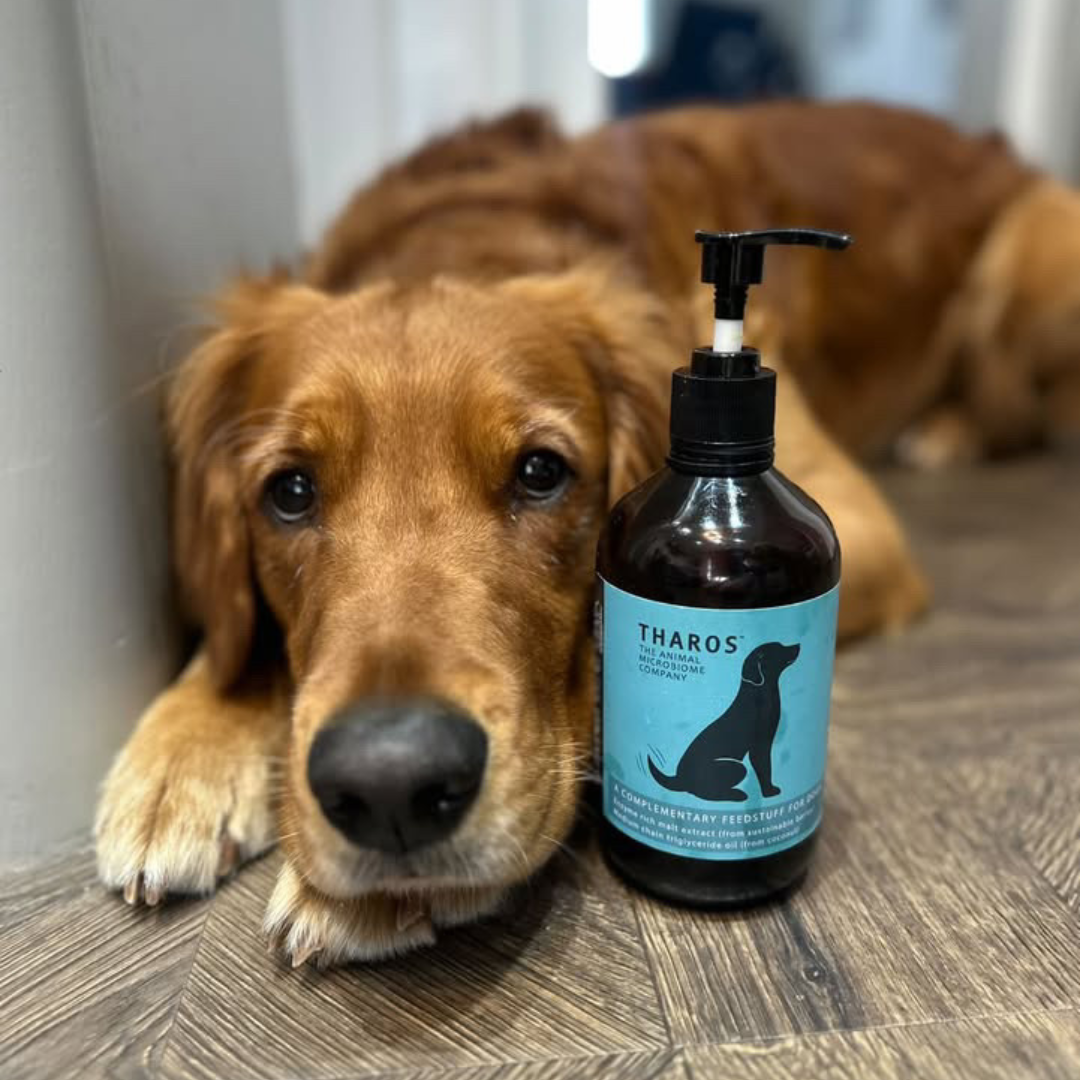
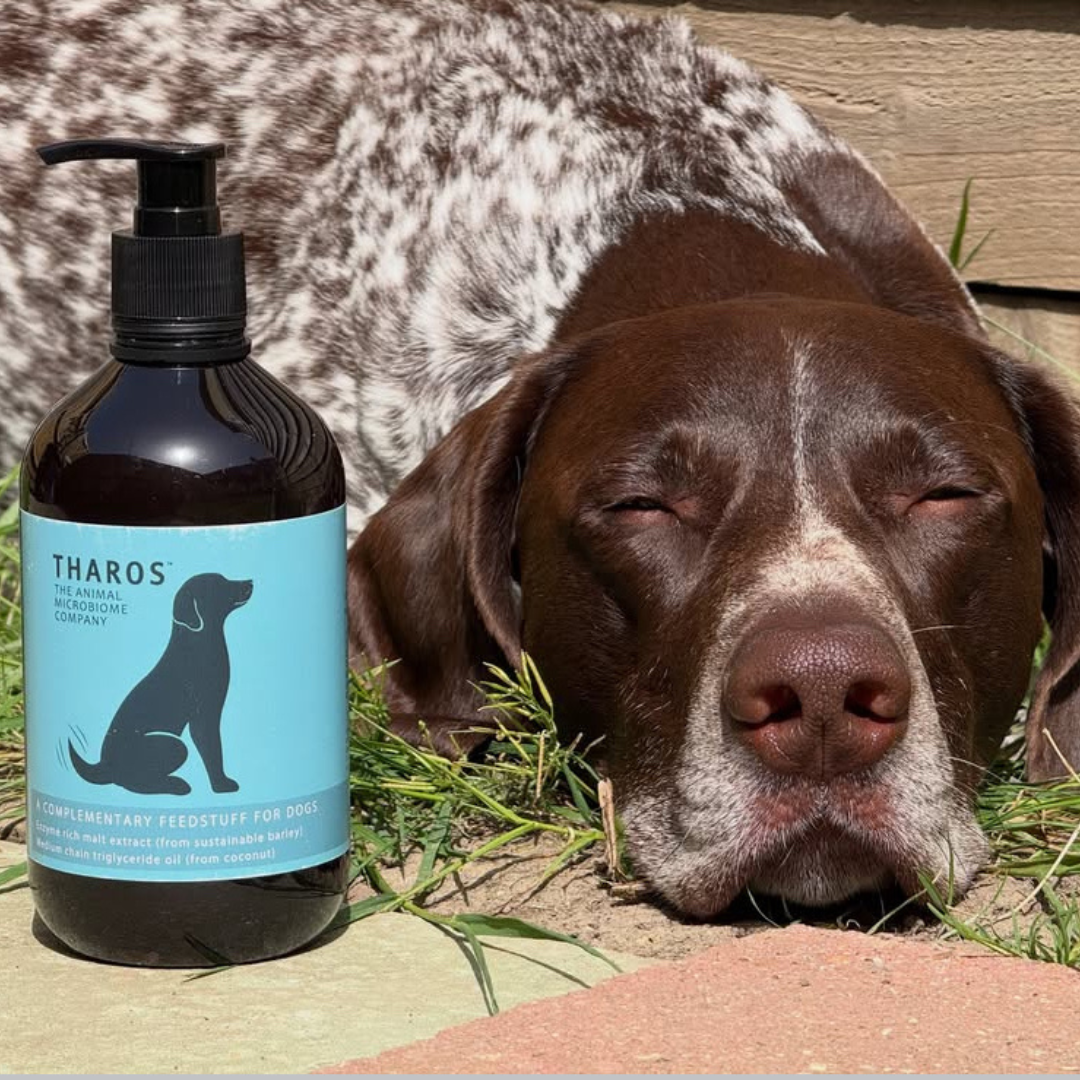
Tharos’s products — EquiNectar for horses, CaniNectar for dogs — are designed to address that experience at its root. Visible improvements typically arrive within four weeks: calmer behaviour, firmer stools, better skin and coat. For owners, it is a small monthly cost (£23 a month for dogs) sitting inside the £120 a month they already spend on food, vet bills, insurance and treats. For the animal, it is the difference between coping and thriving.
Real science, real outcomes
Most natural pet supplements still rely on testimonials. Tharos is built on real studies — twelve of them, across two species and eleven years.
In horses, peer-reviewed work has been published in the Equine Vet Journal, JMAB and Vet Times, with a presentation at BEVA in 2024. In dogs, a peer-reviewed mechanism paper was published in JMAB in December 2024, followed by five independent study populations.
The headline numbers tell their own story. In a Blue Cross pet-charity study, 80% of dogs reached ideal stool consistency by week four, up from 41.7% at baseline. In a live 81-dog professional field trial, every single recorded change in high-anxiety dogs was an improvement (p < 0.0001 therefore highly statistically significant). A UK Border Force working-dog study showed pathogen reduction sustained at two-year follow-up. Across every study, the adverse-event count is zero. Placebo-controlled trials, funded by this raise, are next, starting with a study at Nottingham Vet School on gastric torsion in dogs.
Three years of commercial proof in horses
Tharos’s equine product is used by more than 2,500 active customers on a subscription model with minimal churn. The repeat purchase rate is over 70%; the business has fulfilled more than 16,000 orders. It delivered £726,000 of revenue in 2025.
The customer roster is institutional in tone: every horse regiment of the British Army (including the Household Cavalry), the Metropolitan Police, and full approval from IVC Evidensia — the UK’s largest veterinary group. Distribution is genuinely multi-channel. D2C drives volume, with 30–40% of new customers acquired via veterinary referrals and the balance through social media. B2B partnerships sit alongside, including the Blue Cross pet charity and a global corporate white-label arrangement. The French B2B partner reached 6× original revenue inside one year, and the US business launched in March 2025.
A platform, not a product
What gives Tharos its scale potential is that it is a platform, not a single product. One patented natural ingredient supports digestion in horses (EquiNectar.com), dogs (CaniNectar.com), and — over time — a wider range of species and indications. It is manufactured in the UK by Muntons, a 150-year-old family-controlled malting partner.
The regulatory position is settled across the three lanes that matter: complementary feed classification in the UK (FSA), EU (FEDIAF) and US (AAFCO / FDA-CVM), with written regulatory advice on file in all three. This is a faster, lower-friction route to market than the pharma-style pathways probiotic brands often follow.
Four patent families protect the company’s enzyme approach; two are already granted, in the UK and the US. The malting process — capturing enzymes at their peak before the heat of kilning would destroy them — carries a 40–50% lower carbon footprint than the dairy-based probiotics it can replace. In a market where premium owners are increasingly carbon-aware, that is no longer a footnote.
The founder’s view
Douglas Dundonald, CEO of Tharos, puts the thesis plainly:
“For some time now, one of the answers to animal gut health has been to add billions of foreign bacteria. We believe the better answer is to support the animal’s own biology — at the very start of digestion. We have proven the approach in 2,500 horses over three years, and we are now ready to take that proof into the dog market, which is several times larger. This is a platform built on one patented ingredient, regulatory clarity in three jurisdictions, and category-defining IP. There has never been a better moment to back it.”
Why now
Premium, natural-led animal health is the precise corner of pet wellness where the largest acquirers are spending their balance sheets. The IP position is settled. The regulatory lanes are clear. The science is now peer-reviewed across two species. Tharos already has the institutional customers, the commercial traction and the multi-channel distribution to scale. What this raise funds is the next chapter — particularly the canine launch in the UK, US growth via equinectar-usa.com, and EU expansion mirroring the French Zenhorse partnership.
Back the round on Republic Europe
Tharos’s £165,000 equity round is now live on Republic Europe at a £9.1M pre-money valuation. For investors looking for exposure to a clinically-grounded, IP-protected platform in a consolidating premium-natural category — with the additional warmth of knowing the product helps real animals live measurably better lives — Tharos offers a rare combination of science, sustainability, and tangible commercial proof.
Disclosure: This article is for information only and does not constitute investment advice. Investing involves risks, including loss of capital, illiquidity, lack of dividends and dilution, and should be done only as part of a diversified portfolio. Capital is at risk. Tax treatment depends on individual circumstances and is subject to change in future.