Entain swings to profit following stateside venture

0

Entain’s joint venture in US has 18% market share of live markets

Entain (LON:ENT), the owner of Ladbrokes, swung to a profit during 2020 as growth from its venture into the US market reaped higher sales.

Following a loss of £131.2m in 2019, Entain posted a profit of £113.8m for 2020.

The FTSE 100 company saw its revenue remain steady at £3.5bn, as earnings rose by 10% to £862.1m.

BetMGM, Entain’s joint venture with MGM Resorts, is now live in 12 states, and the company’s market share of live markets is up to 18%.

Harry Barnick, Senior Analyst for leisure sector companies at Third Bridge, commented on Etain’s reliance on growth in the US:

“Growth in the US is fundamental to Entain’s long-term future. This increasingly competitive market has outperformed expectations and is the key growth pillar for the group,” Barnick said.

The board announced in the financial statement that a dividend would not be paid, as it did not consider it a “prudent” measuring with the ongoing uncertainty caused by Covid-19. In 2019 Entain paid a dividend of 17.6p per share.

Entain’s share price is down 2.05% on market opening on Thursday to 1,431p per share.

Jette Nygaard-Andersen, chief executive at Entain, commented on the results:  

“Having spent more than two decades working with digital companies using technology to transform and disrupt industries, I am hugely excited about the future prospects for Entain.  We are a digital entertainment company with a clear strategic focus on growth and sustainability.  As such, we have a fantastic platform from which to use our proprietary technology to expand into new markets and reach new audiences around the world.”

“Today’s results demonstrate the extraordinary resilience and professionalism of our people, as well as the importance of having a truly diversified business model that is not overly reliant on any one product, brand, territory, or channel.  Furthermore, we firmly believe that the launch during the year of our Sustainability Charter, which includes our game-changing Advanced Responsibility & Care player protection programme, will be a key component in helping us to deliver on our vision of being the world-leader in sports-betting and gaming entertainment.”

“The strong underlying momentum within our business, the rapid growth of our US joint-venture, and our continuing international expansion mean that we are as confident as ever in the long-term prospects for Entain.”

Schroders assets under management at a record high

0

Schroders profit before tax down by 2.3%

Schroders (LON:SDR) confirmed on Thursday that its pre-tax profit fell by 2.3% in 2020, while its assets under management soared to a record high.

The asset management company posted a profit before tax of £610.5m in 2020, down from £624.6m in 2019.

The FTSE 100 company now manages assets worth £574.4bn, up from 15% the year before.

The board announced a final dividend of 79p per share, bringing the full-year payment to 114p -unchanged from the previous two years.

Schroders’ share price was down by 2.28% at early morning trading on Thursday to 3,510p per share. The company’s share price is up year-to-date by 95p from 3,415p.

Peter Harrison, chief executive at Schroders, commented on the company’s results:

“The strength of our investment performance showcases the benefits of active investment management and our ability to deliver good outcomes for our clients. I would like to thank our employees for their hard work and ongoing dedication to our clients which helped us to deliver a strong financial performance in 2020 despite the challenging environment,” said Harrison.

“Assets under management increased 15% to reach a record high of £574.4 billion. We generated net inflows of £42.5 billion with strong demand in our Private Assets, Wealth Management and Solutions businesses. These higher growth areas now account for 54% of our assets under management. Our geographic diversification continued with our US business reaching a milestone of more than $100 billion of assets under management. We also continued to expand in Asia through our growing network of partnerships which contributed strongly to the Group in 2020.”

“I am proud of our continued progress in building a leading position in sustainability and impact investing. We now incorporate ESG factors into decision-making across our investment range. This fulfils a commitment we made in 2019. De-carbonisation is a critical issue. We are focused on supporting companies in their transition to net zero.”

Aviva to sell off Italian operation to pay down debt

0

Aviva posts net profit of £2.9bn

Aviva confirmed on Thursday that the company is set to sell its Italian arm in 2021 as it looks to pay down its debt.

The insurer will offload its Italian operation by selling for €873m in cash according to its financial statement released today. Aviva expects a £1.7bn debt reduction in the first half of 2021.

The insurer also announced a net profit of £2.9bn, up from £2.7bn in 2019.

Aviva had a record year with strong sales of bulk annuities, in which the company took on a large portion of corporate pension scheme liabilities.

Aviva proposed a final dividend of 14p per share, bringing the total dividend for 2020 up to 21p per share. This is up from 15.5p per share in 2019.

On Thursday’s market opening, Aviva’s share price was up by 0.89% to 386.4p per share. Year-to-date the company’s share price is up by over 20p.

Amanda Blanc, chief executive at Aviva, commented on the results:

“2020 was a year of significant change for Aviva. We have taken major steps forward in simplifying the business, most recently with the sale of Aviva France and today’s announcement of the sale of the rest of our Italian operations. Our strategic focus is now on the UK, Ireland and Canada where we have leading positions. We are putting customers at the heart of everything we do and I am confident we will transform Aviva’s financial performance and deliver greater value for our shareholders. I recognise we have much more to do and we are getting on with it.”

“Our performance in 2020 demonstrates the resilience of our Core businesses and our growth potential. We delivered record sales in group protection; record sales of bulk purchase annuities; and record net flows in savings and retirement, where we are the largest provider of workplace pensions in the UK.”

“Aviva is financially strong and following the completion of the major disposals, we will be in a position to make a substantial return of capital to our shareholders. We are also announcing today an £800m debt tender offer. This allows us to accelerate our debt reduction plans and lower debt by a total of £1.7bn in the first half of this year.”

Edenville Energy in process of handing over Tanzania operations

0

Edenville Energy to update shareholders when takeover agreed

Edenville Energy (AIM:EDL) reported on Wednesday morning that the company is set to continue working alongside Infrastructure and Logistics Tanzania (ILTL) on the proposed handover of operations at Rukwa.

The company announced it will inform its shareholders when the official handover date is agreed.

In the meantime, the AIM-listed company confirmed its existing contracts, in addition to pursuing new contracts with existing and new customers.

Edenville “has received new East African enquiries regarding power generation capacity and is continuing discussions with the Tanzanian Government regarding a future power plant development at Rukwa”, the board confirmed in a statement.

Edenville Energy’s share price opened down on the firm’s announcement but then rebounded back to the level of yesterday’s close, to 33.5p per share. Year-to-date, the company’s shares are up by over 20%.

At the end of January 2021, Edenville Energy’s share price jumped by 16% as the coal mining company announced a fundraising.

FTSE 100 set to make third consecutive daily gain

0

Following an early morning rally in anticipation of the budget announcement, the FTSE 100 was up by 0.58% to 6,651.22, as the close of day neared. It is the third consecutive day of upward movement on the index amid optimism surrounding the vaccine roll-out and Rishi Sunak’s budget.

Sunak announced a hike in corporation tax up to 25% from 2023, up from its present level at 19%. The lowest income tax threshold will rise to £12,570, while the higher rate threshold will go up to £50,270. Both will then be frozen until 2026. The Chancellor received mixed reviews, with experts warning of the potential impact of Sunak’s tax policies on the UK economy.

Nigel Green, chief executive and founder of deVere Group, gave his verdict as the Chancellor delivered his 2021 Budget in the House of Commons, his second since he took on the role.

“The Chancellor has got an extraordinarily difficult hand to play as he tries to stem the economic damage caused by the pandemic, support jobs and businesses and, crucially, rebuild the public finances,” said Green.

“Whilst Mr Sunak is being hailed a hero for the continued and unprecedented levels of support, it should also be remembered that he is – in a stealth move – dragging more people firmly into the tax net.”

“He is raising taxes under the radar. Yes, there is no income tax rise. However, he is freezing personal tax thresholds, meaning as incomes rise and thresholds don’t, he is able to raise money by fiscal drag.”

The FTSE 100, specifically homebuilders, benefitted from the Chancellor’s efforts to stimulate the economy.

FTSE 100 Top Movers

Homebuilders, Persimmon (5.52%) and Taylor Wimpey (5.23%), headed up the FTSE 100 closely followed by Barclays (4.63%).

At the other end of the index, Avast (-4.05%), Scottish Mortgage Investment Trust (-3.22%) and Severn Trent (-2.79%) were the day’s top fallers.

DS Smith

DS Smith (LON:SMDS) confirmed on Wednesday that its trading volumes are in line with the company’s expectations.

The FTSE 100 firm, which supplies packaging products to Amazon, Nestle and Unilever, noted “strong box volumes” driven by its differentiated offering, while input costs costs also increased.

Interview with CrowdToLive CEO Anouar Adham

What is CrowdToLive?

 CrowdToLive offers a new way for would-be homeowners and buy-to-let investors to realise their dreams of property ownership. To do that, our innovative platform leverages the power of crowdfunding.

Our buyers – we call them Champions – use our service to take a minimum of 5% equity in a property, while professional investors take the remainder. Champions pay inflation-linked rent on the portion of the property they don’t own. Both Champions and investors share proportionately in any capital appreciation when the home is sold. 

This co-investment model helps align the interests of tenants and investors, while also mitigating many of the issues that have made institutions wary of the UK residential market up to now.

Who are your Champions?

Like many of the best ideas, CrowdToLive was developed to solve a problem. We wanted to address the immense difficulties facing certain types of buyer when they seek a home of their own or wish to access rental yields from buy-to-let properties. 

Such buyers include the self-employed, first-timers, Muslims, expats, and NHS workers. They are the Champions – but we also cater to anyone with property-owning ambitions.

What are the buy-to-let issues that CrowdToLive helps to mitigate?

There are five main ones

First is every landlord’s constant worry, the so-called ‘void period’ when, following a tenancy termination, the property is unlet for an indefinite time. With CrowdToLive, that uncertainty is lessened because every tenant signs a five-year lease.

Secondly, we sidestep the bulk of estate agency fees. Tenant-finding fees, inventory fees, property management fees all add to the landlord’s expense ratio. 

In recent years, moreover, changes to the law have made it increasingly difficult for agents to charge fees to tenants, leaving landlords to carry that additional burden. 

With CrowdToLive®, in contrast, the investment property comes fully-let for a minimum of five years. 

Besides, our management fee is only 2% of the rent, compared with estate agents’ typical 12% levy.

Thirdly – and this is a key attraction for our professional investors – most expenses are insured and insurance premium are paid by the Champion. 

Any landlord’s nightmare is a tenant who stops paying rent while mortgage payments continue. CrowdToLive® is different. We are an all-equity platform, so the property is debt-free: no mortgage, no lender lien of any kind, no interest payments – hence, the attractions of our service for Muslims.

Moreover, Champions pledge their equity against unpaid rent and fees arising from any breach of the tenancy agreement. If we can’t resolve that breach with the tenant within an agreed period, we’ll start an eviction process. Once the property is vacated, we will sell it and the proceeds of the Champion’s equity will go to pay any outstanding rent and fees. This limits the cash-flow risk of unpaid rent.

Finally, there is the long-standing problem that property is an investment with a very high barrier to entry, given the average cost of £251,500 according to the UK House Price Index for end-December 2020. That compares with a minimum investment of just £40,000 on the CrowdToLive® platform.

Where are the properties located?

CrowdToLive properties are located all around England. However, our main current focus is on the larger cities, where the available selection of properties is wider and there’s good liquidity if we need to sell.

What is the CrowdToLive® exit procedure?

Champions have the option, but not the obligation, to buy more equity in their property every three months, with the percentage movement in the UK House Price Index as the basis for valuation. That provides the exit path for our professional investors.

Investors can also sell their equity at any time but they will first need to find a buyer – for which, however, there’s no guarantee. After five years, the property will be sold if the Champion does not want to renew a tenant’s five-year lease or if a majority of the professional investors want to sell the property.

What level of return is expected?

CrowdToLive targets a rental yield of 5% to 6% annually, net of expenses. It is worth noting that Champions and professional investors also share any potential capital gain when the property is sold. 

What are the main risks?

As with any investment, there can be no return at all unless some risks are taken. First of all, the value of the property could go down. 

Secondly, there is a liquidity risk because willing buyers may prove hard to find when it’s time to sell. 

Due to those risks, the product is only available to Sophisticated and High Net Worth Individuals.

However, the key to minimising such risks is diversification. No-one should invest all of their savings in property alone. It should be just one element in a balanced portfolio of complementary assets. 

Taking that one step further, CrowdToLive® could actually help to reduce the risks of property investing because its low minimum investment may enable buyers to hold a diverse range of properties (houses, flats, new-builds, conversions, etc) in different locations.

Our website outlines these and other risks. Go to: https://crowdtolive.com or click here to read our investor guide.

Stamp duty holiday extended but long-term reform still needed

0

The government will guarantee mortgages up to 95% of a home’s value

Property industry experts have reacted positively to Rishi Sunak’s budget announcement on Wednesday, while outlining the need for more sustainable reforms.

The Chancellor pledged to “stand behind home buyers”, extending the stamp duty holiday to June. The point at which stamp duty will be paid will remain at £250,000, double its standard level, until the end of September. The budget also included assurance that the government will guarantee mortgages up to 95% of a home’s value.

House builders, Persimmon (5.96%), Barratt Developments (5.7%) and Taylor Wimpey (5.41%) made up three of the top four risers on the FTSE 100 following Chancellor Rishi Sunak’s budget announcement on Wednesday afternoon. Today follows a recent surge by UK house builders as they continue to prop up the index of the UK’s top companies.

Commenting on the Budget and its implications, David Ross, managing director at Hometrack, said:

“Our analysis shows that the 95% mortgage scheme for first-time buyers would support borrowers predominantly in lower value markets, particularly in the northern regions of England and across Scotland, parts of Wales and Northern Ireland, which lenders should factor into their considerations. The high cost of homes in southern England makes using a 95% mortgage much harder, and mortgage regulations compound this with limits on maximum loan to income levels.

While Richard Donnell, research director at Zoopla, praised the combined impact of Sunak’s policy on the housing market, he said it would do little to address the sector’s longer-term structural issues

“Taken together, the stamp duty holiday extension and the 95% mortgage guarantee scheme provide continued support for the housing market as we help the economy respond to the pandemic – they address barriers to movement and access to home ownership but will have limited impact on shifting the longer term fundamentals of the housing market,” Donnell said.

Budget 2021: UK economy expected to grow by 4% this year

0

Corporation tax raised to 25% from 2023

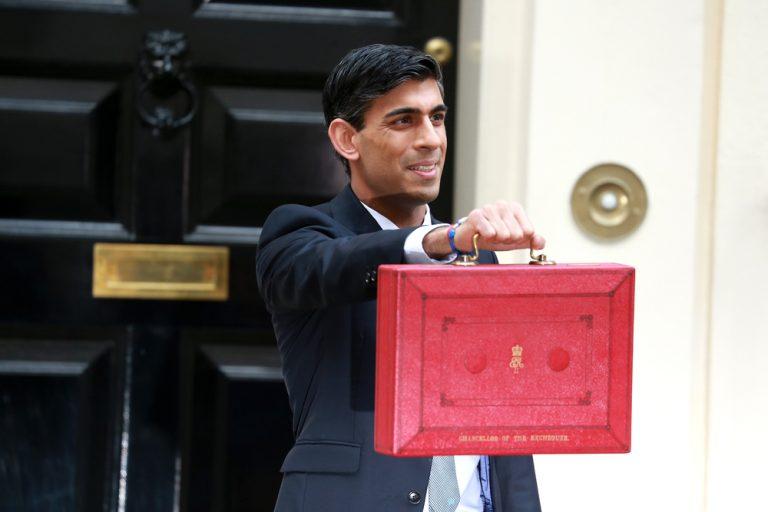
Rishi Sunak warned during his budget announcement that “it will take a long time to recover from this extraordinary situation”. The Chancellor on Wednesday afternoon confirmed an increase in corporation tax to help restore the nation’s finances in the aftermath of the pandemic. In addition, Sunak announced a continuation of the furlough scheme and the stamp duty holiday, among other policies.

Sunak began by outlining forecasts by the Office for Budget Responsibility (OBR) for the economy to return to its pre-pandemic level quicker than anticipated. The OBR expects the economy to return to its pre-Covid level at the middle of next year, six months quicker than previously thought, Sunak confirmed. The Chancellor also said that the OBR has forecast the UK economy will grow by 4% in 2021, 7.3% in 2022 and 1.7% in 2023.

Tax Hike

Sunak announced that government debt would rise to 97% of GDP, comparing the figure to levels seen during World War Two.

The Chancellor announced a hike in corporation tax up to 25% from 2023, up from its present level at 19%. “It’s a tax rise on company profits, but only the larger most profitable companies and only in two years time,” Sunak said.

The lowest income tax threshold will rise to £12,570, while the higher rate threshold will go up to £50,270. Both will then be frozen until 2026.

Covid-19 Support

The UK Government’s furlough scheme will be extended to the end of September. Employees will continue to receive 80% of their salary, while businesses will be asked to contribute as well. The self-employment scheme will also be continued.

The government will continue to raise universal credit by 20% for the next six months, beyond the proposed conclusion of the national lockdown. While grants will be provided to businesses across the UK. Retail and hospitality businesses will receive a special “restart” grant to help them reopen in April.

Sunak said the government’s fiscal support for the UK economy would total £407bn.

Property

The Chancellor pledged to “stand behind home buyers”, extending the stamp duty holiday to June. The point at which stamp duty will be paid will remain at £250,000, double its standard level, until the end of September. The budget also included assurance that the government will guarantee mortgages up to 95% of a home’s value.

Commenting on the extension to the stamp duty holiday and introduction of a government-backed 5% mortgage in today’s Budget, Tom Brown, managing director of real estate at Ingenious, said: “The Chancellor’s decision to extend the Stamp Duty Land Tax (SDLT) holiday and provide a Government-backed guarantee to mortgages with deposits of just five per cent reflect the importance of maintaining optimism in the UK housing market.”

“The support provided by the SDLT relief extension, saving up to £15,000 on property purchases of £600,000 is positive news for our strategy as an alternative lender focused on the affordable end of the market,” Brown added.

Green bonds

The budget included a number of “green” policies aimed at rebalancing the UK economy after the pandemic.

Sunak announced new port infrastructure enabling offshore wind on Teesside and the Humber, in addition to a new “green” retail savings bond. The UK’s new infrastructure bank, located in Leeds, will be armed with an initial £12bn fund to support projects aimed at zeroing out net carbon emissions by 2050.

Chris Holmes, co-lead investment adviser at JLEN Environmental Assets Group, commented on today’s budget:

“We are particularly pleased to see confirmation of a cash boost for the new UK Infrastructure Bank. It is vital for the UK’s post-pandemic and post-Brexit recovery to invest in the sustainable infrastructure and nascent green technologies that will take our country forward, honouring the government’s promise to ‘Build Back Better’ and creating the jobs needed to power the green economy.”

“Environmental infrastructure assets such as wind and solar plants, have on the whole proved to be very robust during the coronavirus pandemic – proving their resilience and reinforcing the investment case for building a sustainable future.”

Pensions

Finally, Sunak announced that the government would be freezing the pension lifetime allowance. The allowance is the amount people can save in their pension before they are liable to pay tax.

Simon Harrington, senior public policy adviser at PIMFA, commented on the policy.

“We are dumbfounded that the Chancellor has frozen the Pension Lifetime Allowance until 2026. Doing so penalises pension savers looking to secure their future and in the most extreme cases sees people left with no choice but to give up work. Freezing the lifetime allowance could see a number of people inadvertently exceed their allowance and, as we have seen previously with NHS workers, incur a 55% tax hit which they otherwise would not have to pay,” Harrington said.

Packaging giant DS Smith reaps benefits from increase in online shopping

0

DS Smith improves ESG rating, retaining ‘Prime status’

DS Smith (LON:SMDS) confirmed on Wednesday that its trading volumes are in line with the company’s expectations.

The FTSE 100 firm, which supplies packaging products to Amazon, Nestle and Unilever, noted “strong box volumes” driven by its differentiated offering, while input costs costs also increased.

Corrugated box volume growth has soared compared to Q2 of DS Smith’s financial year, as the e-commerce and FMCG (Fast-moving consumer goods) operations proved to be strong over the Christmas period and into 2021.

DS Smith’s North European and North American regions have continued its “strong growth with our largest customers and increasing utilisation of our plant in Indiana”.

DS Smith’s share price was up by 0.68% before lunchtime to 405.74p per share.

Since the beginning of the calendar year, DS Smith’s rating within the MSCI ACWI Index has increased from A to AA and the company’s ISS ESG rating had increased, retaining its prime status.

Mike Roberts, chief executive of DS Smith, commented on the results:

“The Group has delivered a robust performance during the period against a challenging macro-economic environment, and I remain immensely grateful and proud of our colleagues for their commitment to keeping our plants safe and operational and continued support from our customers.”

“We are seeing excellent demand from FMCG and e-commerce customers for our sustainable packaging products and solutions and we continue to invest for growth in these areas. COVID-19 is accelerating a number of the structural growth drivers and with our leading position in recycling and fibre-based packaging we are well positioned to capitalise and drive further market share gains.”

“While the economic environment remains uncertain due to Covid-19, we are experiencing good momentum across the business in both Europe and North America. We are confident in delivering results in line with our expectations for the  year and showing further good progress and momentum as we move into the next financial year.”

JLEN gains exposure to battery storage by acquiring GSRL

JLEN will invest around £21.2m over the next 12-15 months

JLEN (LON:JLEN), the environmental infrastructure fund, confirmed on Wednesday that it has acquired a 100% stake in Gigabox South Road Limited (GSRL).

JLEN, the FTSE 250 company, has said it will invest around £21.2m over the next 12-15 months as a part of the acquisition of GSRL.

GSRL holds the development rights to construct the West Gourdie project, a 50MW lithium-ion battery energy storage plant based in Dundee, UK. It is anticipated the project will reach energisation and begin commercial operations in March 2022.

JLEN said that storage projects provide vital support to the National Grid, by reducing imbalances and improving its ability to harness a greater level of intermittent renewables on the system.

The West Gourdie project will connect to the Scottish Hydro Electric Power Distribution plc’s network and has a 49.9MW import and export connection.

This acquisition represents JLEN’s third investment into battery storage systems, adding to the two co-located batteries that the company owns as part of its run-of-river hydro portfolio.

JLEN’s share price is up by 0.43% on early Monday morning trading to 114.5p per share, recovering to its level at the beginning go 2021.

Richard Morse, Chairman of JLEN, committed on his company’s acquisition:

“We are pleased to announce the further expansion of our interests in the energy storage market with our first grid-scale battery project. We believe that plants such as this one, will play an important role in the decarbonisation agenda by providing balancing support to the local network and allowing for greater levels of renewable generation on the network.”

“This investment should offer additional returns over time as it is structured to take advantage of increased market volatility as intermittent renewable generation facilities play a greater part in supplying green electricity to the nation.”