


Plus500 reports strong H1 2025 amid global expansion

Plus500 shares rose on Monday after the financial markets trading app reported strong results for H1 2025 driven by an uptick in activity in Q2.
Plus500 delivered solid financial results in the first half of 2025, with revenue increasing 4% to $415.1 million compared to $398.2 million in H1 2024. EBITDA rose to $185.1 million, maintaining a strong 45% margin (H1 2024: $183.9 million, 46% margin).
The company received a boost from higher volatility in Q2 2025, with revenue increasing 15% to $209.3 million and EBITDA rising 12% to $91.3 million.
Customer deposits reached a record high of $3.1 billion for the six-month period, more than doubling from $1.5 billion in H1 2024, reflecting the company’s strategic focus on attracting higher-value customers.
Plus500 maintained steady customer acquisition, onboarding 56,165 new customers in H1 2025, nearly matching the prior year’s 56,759. Active customers increased to 179,931 from 175,909 in H1 2024, with Q2 2025 showing particular strength at 132,602 active customers compared to 123,803 in Q2 2024.
The company made significant progress diversifying its business model, with its futures operations now representing approximately 13% of total group revenue, demonstrating successful expansion into the US futures market. Plus500 secured a new clearing membership with ICE Clear US to enhance its futures offering.
The company is becoming a global player in financial markets trading, with expansion in the US complementing new licenses and acquisitions across North America, the Middle East, and Asia.
“Plus500 delivered further operational and financial progress in H1 2025,” said David Zruia, Chief Executive Officer of Plus500.
“We expanded our global presence with new regulatory licences in Canada and the UAE, added to our growing list of clearing memberships with ICE Clear US and announced the exciting acquisition of Mehta Equities in India, which will provide us access to the largest retail futures market in the world. This progress is underpinned by our proprietary technology which drives our global business model and supports our relentless focus on innovation and growth, enabling the Group to deliver compounded returns through the cycle.”
Aquis weekly movers: Incanthera raises cash for Skin + CELL launch

The Smarter Web Company (SWC) currently owns 773.58 Bitcoin at a total cost of £60.4m. The share price recovered 61.3% to 322.5p.
Vaultz Capital (LON: V3TC) has raised £1m at 15.5p/share. Vaultz Capital owns 50 Bitcoin at a total cost of just over £4m. Alex Appleton has been appointed as chief executive and Sarah Gow as an executive director. The share price increased 40.2% to 23.125p.
Dermatology treatments developer Incanthera (LON: INC) has raised £508,000 at 3.5p/share, which was similar to the previous closing price. The investors include Incanthera directors and subsidiary Skin + CELL director Stuart Robertson. The cash will fund the direct to consumer launch of the Skin + CELL skin care range. There is an agreement with a global direct to consumer and it will launch the Skin + CELL product range in return for royalties on sales. The launch should be in early August. The share price rebounded 35.7% to 4.75p.
Hot Rocks Investments (LON: HRIP) has raised £375,000 at 1.125p/share. It has subscribed £100,000 in the Hamak Gold (LON: HAMA) fundraising that generated £2.5m at 0.8p/share. It also invested £100,000 in Cel AI. The Hot Rocks share price improved 28% to 1.6p.
IntelliAM AI (LON: INT) has received a software order from a food manufacturer in the US. The deal covers three sites. A strategic partnership has been entered into with hardware Connection Technology Center Inc for the co-development of sensing products. This will be used for predictive maintenance and asset performance analysis. The share price rose 14.8% to 105p.
Wishbone Gold (LON: WSBN) reported a cash outflow from operations of £1.49m in 2024. There was £125,000 of cash left. The share price increased 14.3% to 0.36p.
Spinal medical devices developer TruSpine Technologies (LON: TSP) has engaged fintech adviser Alnistar to provide advice on the implementation of a Bitcoin treasury policy. The share price edged up 3.23% to 1.6p.
FALLERS
Prize draw operator Good Life Plus (LON: GDLF) plans to ask shareholders for approval to leave Aquis because it says thee is limited liquidity and it is getting funding outside of the market. Monthly recurring revenues are £420,000. In the year to January 2025, revenues were £3.8m and the operating loss was £4.2m. The share price slumped 66.2% to 0.625p.
Shares in Eight Capital Partners (LON: ECP) fell 38.1% to 32.5p ahead of suspension because the 2024 accounts have not been published.
Coinsilium (LON: COIN) raised £2.78m at 18p/share. Even so, the share price declined 35.2% to 17.5p. A subsidiary currently holds 73.7 Bitcoin at a total value of £5.79m.
Mendell Helium (LON: MDH) has published its Bitcoin treasury management policy. It intends to invest up to 50% of free cash flow in Bitcoin. Also, up to 50% of any surplus cash could also be invested in Bitcoin. There is discretion for some investment in other cryptocurrencies. Chief executive Nick Tulloch has been paid £22,500 of accrued remuneration in shares at 2p each. The share price slipped 28.6% to 1.875p.
Shares in consumer loans provider Amazing AI (LON: AAI) returned to trading on 1 July. The company is in the process of appointing a custodian for its Bitcoin holdings. The share price was one-fifth lower at 3p.
Vault Ventures (LON: VULT) has acquired AI development agency System7 Ventures and it will become the in-house development and incubation arm in the AI and crypto sectors. The all-share deal should be worth £1m, depending on the achievement of the earn-out. A placing raised £1m at 0.02p/share and a WRAP offer could raise up to £300,000 more. There have been 881.1 Solana purchased for an average price of £109.60 each. The share price dipped 18.2% to 0.0225p.
Cryptocurrency investor Phoenix Digital (LON: PNIX) had net assets of £29.1m at the end of 2024. The share price deceased 12% to 5.5p.
Valereum (LON: VLRM) had net assets of £2.97m at the end of 2024. It made a £3,222 profit after a revaluation gain of £1.98m. Matthew Ripperger and Grant Gischen are joining the board as Non-Executive Directors. Karl Moss and Pete Sekhon are stepping down. The share price fell 3.52% to 4.8p.
KR1 (LON: KR1) had net assets of 47.5p/share at the end of May 2025. There was nearly £459,000 of income generated from digital assets. The share price edged down 1.43% to 34.5p.
AIM weekly movers: Mkango Resources selling core asset to company joining Nasdaq
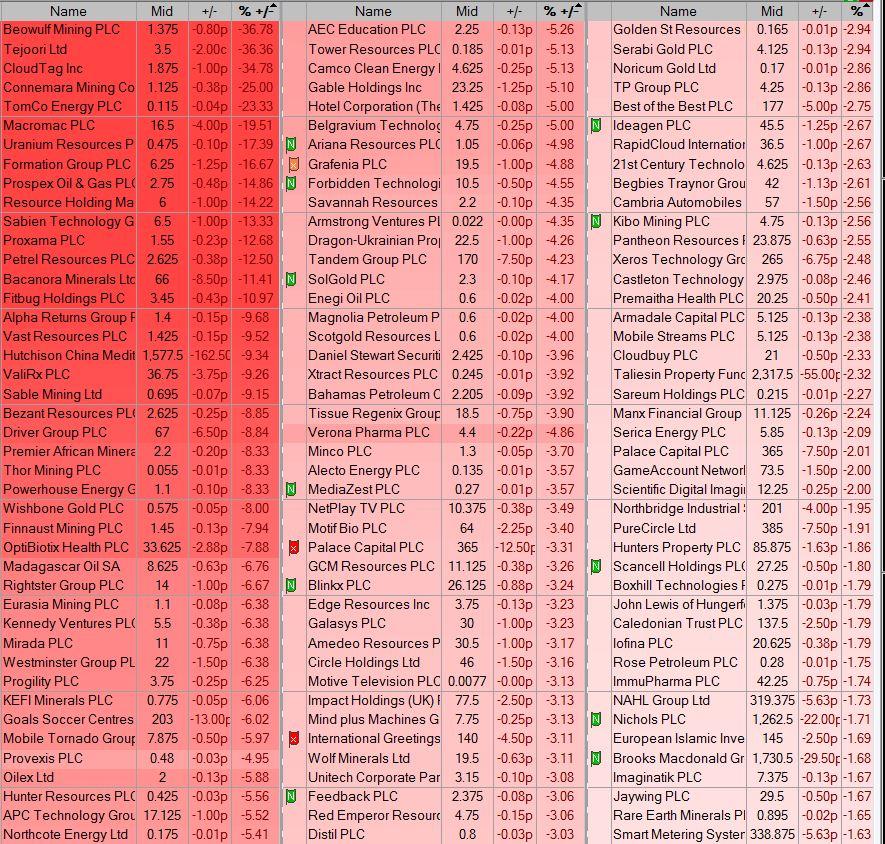
Mkango Resources (LON: MKA) is planning to combine its Songwe Hill rare earths project in Malawi with the Pulawy rare earth separation project in Poland and list them on Nasdaq as Mkango Rare Earths. This creates a vertically integrated rare earths business. The pro forma value of Mkango Resources’ shareholding would be $400m before any fundraising and transaction costs. The share price jumped 102% to 31p, the highest level for more than three years.
Synergia Energy (LON: SYN) plans to sell its 50% stake in the Cambay PSC Selan Exploration Technology, which owns the other 50% after a previous farm-out agreement. There will be an initial payment of $500,000 followed by $6.5m when the Indian government approves the deal. Then, 12 months later, the final $7m will be paid. This will require shareholder approval because the company will become a shell. The share price increased 42.5% to 0.0285p.
Thruvision Group (LON: THRU) has secured a contract to supply 20 security systems with a total value of £1m to a customer in Asia. In the quarter to June 2025, the order intake was £2.3m. The additional business means that the company’s cash should last until the end of 2025. After the contract announcement, Thruvision announced plans to raise at least £2.5m via a placing at 1p/share and a retail offer could raise up to £250,000. The retail offer closes on 7 July. The share price recovered 36.1% to 1.225p.
Biotech Sareum (LON: SAR) has appointed Oberon Capital as sole broker. The share price is 35.5% higher at 21p.
FALLERS
Graphene technology developer Versarien (LON: VRS) improved interim revenues from £1.34m to £1.47m and the loss was slightly lower at £1.49m. At the end of March, there was £850,000 in cash and that has fallen to £650,000. The available cash will run out by August. Later in the week, Versarien announced that it has extended its manufacturing licence agreement with Montana Quimica, which allows it to use Polygrene compounds in products sold in South America. Versarien will receive £25,000 and there is a further £25,000 when manufacturing starts and then 5% of sales revenues from those products. These payments are in addition to previous ones. The share price still slumped 53.1% to 0.015p.
Chemotherapy drug delivery technology developer CRISM Therapeutics (LON: CRTX) raised £874,000 from a placing at 12p/share and the retail offer generated £54,000. This will finance the manufacture of a batch of ChemoSeed for evaluation of safety and efficacy in glioblastoma patients in a Phase 2 registration grade clinical trial, plus setting up of clinical trials. The share price fell back 47.6% to 11p.
Online video editing technology developer Blackbird (LON: BIRD) has raised £2m from a placing and subscription at 3p/share and could raise up to £200,000 more from a retail offer. The cash will finance further development of the elevate.io platform and help to grow sales. There were 325 paid users at the end of May 2025 and the cost of adding each new user has more than halved to £115. The cost for signing up a free user is £2.14 each. Usage is increasing. The share price declined 36.3% to 3.025p.
Capital equipment supplier Mpac (LON: MPAC) has suffered from uncertainty surrounding tariffs in the US and that has stemmed the flow of orders coming through. The first half held up because of the order book at the start of the year, but there will be a slump in the second half because of a lack of new orders coming through. Outside of the US, trading is not as bad. Panmure Liberum has cut its 2025 pre-tax profit forecast from £17.9m to £13.5m with significant reductions in the following two years – which appears cautious. There will be one-off costs of restructuring the North American operations. A pension scheme buy in has been agreed with Aviva. Chief executive Adam Holland bought 3,810 shares at 262.5p each. The share price slipped 34.7% to 281p.
AIM movers: Huddled deal with THG and Aptamer fundraising

Shares in sports and fitness data analysis provider 4Global (LON: 4GBL) jumped ahead of the AIM cancellation on 7 July. The shares will be traded on the JP Jenkins matched bargain market. The share price jumped 104.6% to 22.5p.
On Thursday afternoon, it was announced that IT managed services provider Tiales Essential IT (LON: TIA) has taken a 10.6% stake in IT services provider CloudCoCo (LON: CLCO). The stake was previously held by MXC Capital. CloudCoCo has sold part of its business and improved its balance sheet. It has also reduced costs in order to move towards profit. The CloudCoCo share price rebounded 8.77% to 0.31p. The Tiales Essential share price is unchanged at 64p.
Graphene technology developer Versarien (LON: VRS) has extended its manufacturing licence agreement with Montana Quimica, which allows it to use Polygrene compounds in products sold in South America. Versarien will receive £25,000 and there is a further £25,000 when manufacturing starts and then 5% of sales revenues from those products. These payments are in addition to previous ones. The share price increased 11.5% to 0.0145p.
Excess inventory retailer Huddled (LON: HUD) has done a deal with THG Ingenuity to use its fulfilment centres, which will enable additional growth. Huddled is raising £1.5m at 3.2p/share. Management previously said it did not need more cash, but it believe it is the right time to acquire stock and increase marketing. Michael Ahley has been appointed chief executive. The share price improved 7.81% to 3.45p.
AFC Energy (LON: AFC) has announced a joint venture with Industrial Chemicals Goup to secure a low-cost supply of hydrogen produced from ammonia. Industrial Chemicals will procure the ammonia, and the joint venture will acquire technology from AFC Energy. The share price rose 6.28% to 16.58p.
FALLERS
Security technology company Thruvision (LON: THRU) plans to raise at least £2.5m via a placing at 1p/share and a retail offer could raise up to £250,000. The retail offer closes on 7 July. The share price slipped 14.3% to 1.2p.
Synthetic binders developer Aptamer (LON: APTA) is raising £2m at 0.3p/share. This will accelerate the commercialisation of Optimer technology. The stronger balance sheet will help with negotiations over licences. Manufacturing will be done in-house. A new service is being launched to offer biomarker identification. Some of the cash will fund the validation of the molecular target to deliver siRNA to hepatic stellate cells (HSCs) in liver fibrosis. The share price slipped 2.63% to 0.37p.
Oil and gas company Enwell Energy (LON: ENW) is continuing to try to resolve the regulatory issues that have suspended production at the licences in the Ukraine. The licences generated more than $30m in free cash flow in 2024. There is still $100.7m at the end of June 2025. No revenues are forecast for this year and cash could fall to $98.4m at the end of 2025. The share price fell 2.78% to 17.5p.
FTSE 100 slips on trade deadline tensions
The FTSE 100 was slightly weaker on Friday as investors battened down the hatches ahead of key trade deadlines next week.
London’s leading index was trading down 0.3% at the time of writing. With US cash equity markets closed for the Independence Day holiday, trading volumes were slightly lower on Friday.
“Optimism is evaporating at the end of the week, as the US tariff deadline looms and the signs are that many countries will face higher duties than expected,” said Susannah Streeter, head of money and markets, Hargreaves Lansdown.
“There’s a distinct lack of Friday fizz for the FTSE 100, as investors mull repercussions for the global economy. Investors are also assessing the implications of the passing of Trump’s big tax cut bill which will add to the mountain of US debt.”
The nervousness in Europe was evident in the failure of major indices to track US stocks higher overnight after an encouraging Non-Farm Payrolls reading.
Any weakness in the FTSE 100 this week has been met by a strong US session, which has fueled a recovery in afternoon trade. This will be absent on Friday.
Underscoring a risk-averse tone to trade on Friday, investors bought into defensive sectors such as telecoms and shunned those with cyclical attributes.
“Vodafone, Sainsbury’s and BT were among the top risers on the FTSE 100, but their strength was not enough to offset weakness from the mining sector,” said Dan Coatsworth, investment analyst at AJ Bell.
UK housebuilders trade negatively again after peer MJ Gleeson said the ‘housing market lacks confidence’. Persimmon was down 1.7%, and Barratts gave up 2%. Housebuilders have been among the worst performers this week after Nationwide released data showing average house prices fell in June.
Mondi was the FTSE 100 top faller with a loss of 2%.
Undervalued UK equities, emerging markets, and trade tariff positioning with Dan Boardman-Weston

The UK Investor Magazine was delighted to welcome Dan Boardman-Weston, CEO of BRI Wealth Management, back to the podcast for an insightful conversation about UK equities, trade tariffs, interest rates, emerging markets, and asset allocation considerations for the rest of 2025.
This podcast explored the current global economic landscape and investment strategies for the second half of the year.
The discussion focused on the outlook for global growth and its impact on market sentiment, with a particular emphasis on the emerging concept of “resilience” in European and emerging markets.
The conversation examined the concentration risk posed by the “Magnificent Seven” tech stocks dominating US equity gains and explored the need for diversification in a concentrated market environment.
We address immediate market concerns around the upcoming US tariff deadline on July 9th and how clients are positioning their portfolios accordingly.
Dan outlines the potential implications of tariffs on US inflation and whether this could undermine the Federal Reserve’s traditional monetary policy effectiveness and credibility in meeting its dual mandate.
The conversation concluded with recommendations on asset allocation shifts, geographical diversification strategies, and sector-specific opportunities.
UK AI Venture Capital boom drives record investment in H1 2025 – Dealroom

The United Kingdom has cemented its position as Europe’s undisputed leader in VC funding in the first half of 2025, with AI startups raising a record $2.4 billion in the first half of 2025 – accounting for 30% of all UK venture capital funding, according to a new report from HSBC Innovation Banking and Dealroom.
AI VC investment has grown substantially since 2022, when OpenAI launched ChatGPT, and AI investment accounted for less than 13% of UK VC investment.
The UK’s total venture capital investment of $8 billion in H1 2025 exceeded the combined funding raised by Germany ($4.4 billion) and France ($3.2 billion), maintaining the country’s position as Europe’s top destination for startup investment for the 30th consecutive quarter.
“The UK is continuing to shine as the leading innovation nation across Europe with strong and sustained growth. No more is this evident than with artificial intelligence businesses, where talent, ambition and capital are accelerating the sector at incredible pace,” said Simon Bumfrey, Head of Banking at HSBC Innovation Banking.
AI VC investment hit a record in the first half of 2025 as startups completed blockbuster rounds, including Synthesia’s $180 million Series D, ORI’s $175 million late VC round, and Quantexa’s $175 million Series F.
The UK has created 10 AI unicorns since 2022, including recent additions Isomorphic Labs (DeepMind’s AI drug discovery spinout), Synthesia, Quantexa, Stability AI, Wayve, and PhysicsX. Isomorphic Labs secured the largest funding round of Q1 2025 with a $600 million late-stage investment.
While London remains the dominant hub with 68% of the UK’s 179 AI funding rounds in H1 2025, innovation is spreading nationwide. The remaining 57 rounds were distributed across the country, from Bude to Paisley, and Diss to Castlereagh, demonstrating the geographic breadth of the UK’s AI ecosystem.
Health and Enterprise Lead AI Applications
The report highlights that AI drug discovery, metabolic health, neurology, and synthetic biology have been key areas of investment within the health sector, attracting $2.3 billion overall in H1 2025. Fintechs also raised around $2.3 billion.
The UK’s total innovation economy is now valued at $1.3 trillion, with the country having created 188 unicorns to date – 117 of which have already achieved exits worth over $1 billion.
While AI startups have attracted record investment in H1 2025, their valuations are still generally dwarved by the UK’s leading Fintech such as Monzo and Revolut.
AFC Energy shares surge as hydrogen JV announced

AFC Energy shares soared on Friday after the hydrogen firm announced a partnership with Industrial Chemicals Group to establish a 50:50 joint venture that will produce hydrogen from ammonia using proprietary cracking technology.
The collaboration aims to disrupt the UK hydrogen market by producing and selling hydrogen at competitive prices without relying on government subsidies.
The joint venture will leverage ICL’s ammonia procurement capabilities and customer base alongside AFC Energy’s ammonia cracking technology.
AFC Energy shares were 10% higher at the time of writing.
“The establishment of the JV with ICL is an exciting step in delivering our strategy to deliver commercial viability of the hydrogen economy, without reliance on Government subsidies,” said John Wilson, Chief Executive of AFC Energy.
“We have been working with ICL for some time to develop the JV and are delighted to collaborate with a partner of ICL’s capability and experience to deliver low-cost hydrogen at a market disruptive price.”
Initial operations are expected to begin in early 2026, subject to permitting, with production capacity of up to 400kg of hydrogen per day. The partnership plans to expand capacity through AFC Energy’s Hy-5 portable, containerised ammonia crackers, which can generate up to 500kg daily.
MJ Gleeson says UK ‘housing market lacks confidence’

Housebuilder MJ Gleeson said the UK’s ‘housing market lacks confidence’ in a trading statement released on Friday that underscored the difficulties the builder faced over the last year.
MJ Gleeson delivered results in line with market expectations for the year ended 30 June 2025, despite facing significant operational challenges that have prompted a major reorganisation at its Gleeson Homes division.
The Group expects to report a profit before tax and exceptional items of between £21.0m and £22.5m for FY2025. This would represent a marginal decline from the £24.8m recorded last year.
Gleeson Homes completed the sale of 1,793 homes during the year, marginally up from 1,772 homes in the previous year, though multi-unit sales fell to 205 from 346.
Net reservation rates showed encouraging signs of recovery, averaging 0.88 per site per week over the past six months compared to 0.63 in the second half of FY2024. Excluding multi-unit agreements, reservation rates improved significantly to 0.64 per site per week, whilst cancellation rates decreased to 14% from 18%.
MJ Gleeson Management Shake-up
However, mounting pressures on gross margins and operational issues have triggered substantial changes. Mark Knight has stepped down as Chief Executive of Gleeson Homes and left the business entirely.
The company has restructured its operations under two divisions: Scott Stothard, joining from Vistry where he was Divisional Chair, will run the Central division, whilst Andy Davies continues to lead the Northern division. Both will report to Graham Prothero.
Simon Topliss, previously Gleeson Homes Finance Director, has been appointed to the newly created role of Chief Operating Officer with responsibility for central functions, performance and governance.
Challenges and Reorganisation
The reorganisation follows a comprehensive review launched in autumn 2024 under “Project Transform” after issues around process compliance and cost overruns were identified. The company cited cumulative headwinds including increased build costs, flat selling prices, planning delays, and legacy site issues as factors that prevented anticipated margin improvements.
The restructuring will cost approximately £1.2m in exceptional items but is designed to shorten reporting lines, empower divisional leadership teams, and strengthen regional management whilst improving oversight and compliance.
Outlook
The board remains cautious about market conditions. They made this abundantly clear in this trading update.
“The housing market lacks confidence and remains subdued and the Board does not see a short-term catalyst for any substantial improvement,” the company stated.
For FY2026, the board expects profit before tax and exceptional items of around £24.5m, at the lower end of current market expectations. It would mark an increase on the current years’ trading but would still be lower than FY2024.
MJ Gleeson, like all housebuilders, needs the UK property market to pick up.