
CMA warns on PayPal-iZettle merger following investigation
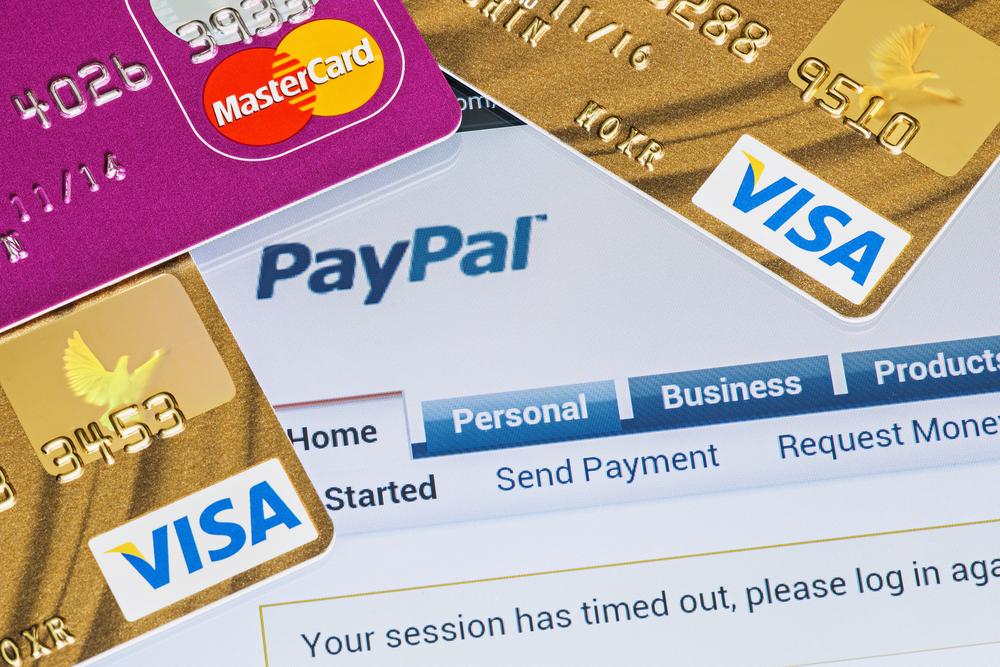
The Competition and Markets Authority (CMA) has warned that a merger between PayPal (NASDAQ: PYPL) and iZettle could lead to a lower quality in service and drive up prices for customers.
The UK watchdog has been investigating the merger of PayPal and the Swedish startup and has concluded that the merger, which was completed in September, has taken away sufficient competition in the UK.
“Payment services markets are evolving so it’s particularly important to look to the future when we assess competition and the effects of mergers on customers,” said the CMA Executive Director, Andrea Gomes da Silva.
“While iZettle is a relatively recent entrant to payment services, it has already established a market-leading position in mobile point of sale devices and was well-placed to compete against PayPal in other emerging markets. That’s why we are concerned that PayPal’s takeover could lead to higher prices or reduce the quality of the services available to customers,” he added.
If the two groups are unable to address the results of the investigation, the CMA will carry out a second phase.
A PayPal spokesperson said: “PayPal continues to work cooperatively with the CMA as it conducts its review of the acquisition of iZettle. We are now working to address the CMA’s concerns and demonstrate to the CMA that the market will remain competitive, so we can move forward with integrating iZettle into our global platform.”
Whilst iZettle, which provides payment services for start-ups, announced plans to launch an IPO in Sweden, PayPal proposed plans to merge just three weeks later.
Northern Ireland businesses “cannot cope” with no-deal scenario
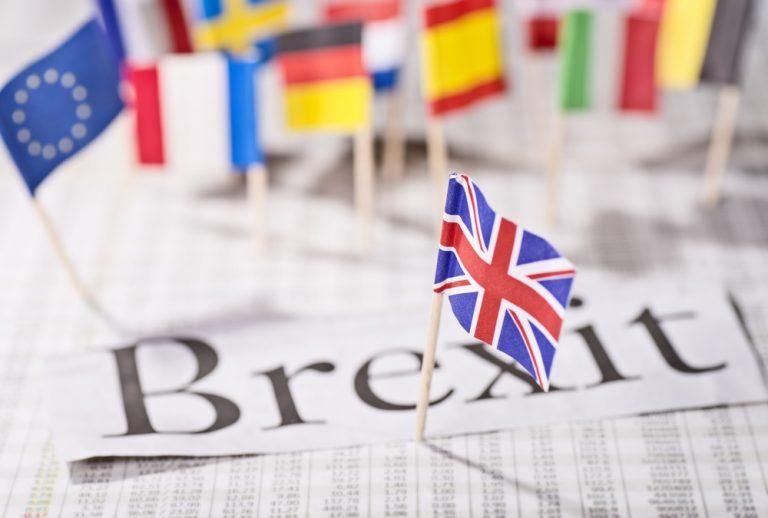
The director of the Confederation of Business Industry (CBI) has said that businesses in Northern Ireland will not be able to cope with a no-deal Brexit.
Angela McGowan said on Monday that leaving the EU without a deal is not an option for the state’s business sector and “no country in the world will want to invest in Northern Ireland if it is thrown out of Europe.”
McGowan plans to meet with Northern Ireland business leaders and the DUP this week.
The DUP has called Theresa May’s agreement “worse than no deal” and said that their 10 MPs will vote against the proposed EU deal in Parliament next month.
“The DUP has been very clear all along – we have core beliefs and principles and we’re sticking by those,” said DUP deputy leader Nigel Dodds.
McGowan hopes to persuade DUP MPs to vote in favour of the proposed deal.
The CBI director said on the possibility of a no-deal Brexit: “All I can do is do my best to put the honest evidence on the table that companies simply cannot cope with no deal.”
“We’re talking about people; neighbours; your relatives being put out of jobs – companies cannot cope with this uncertainty.”
“There is no country in the world [that] will want to invest in Northern Ireland if it is thrown out of Europe, has no access to markets and is in a state of chaos.”
“Nobody would wish that on their own region, so today we will simply be talking about what the business community needs, we hope the politicians listen, she said.
Business leaders in the City of London have also rallied behind the prime minister’s deal, saying a no-deal Brexit would be the worse option and would harm the UK economy.
Stephen Martin, the director general of The Institute of Directors said: “The deal the EU approved today provokes a wide range of reactions across the political spectrum, and indeed among business leaders, but the steer from our members is that avoiding no deal must be the main priority.”
May will warn MPs on Monday that rejecting the Brexit deal will lead to “division and uncertainty”.
Russia – Ukraine tensions intensify with naval incident
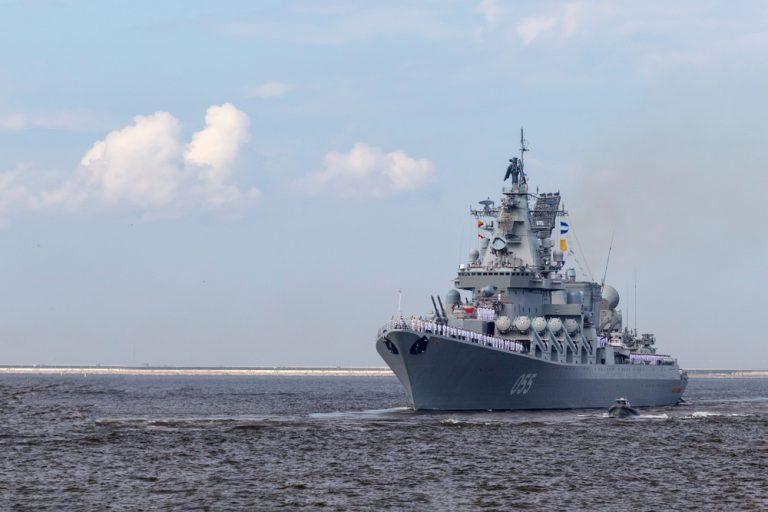
Tensions between Russia and Ukraine have been amplified with news that Russia had intercepted and seized three Ukrainian naval vessels on Sunday.
The incident occurred as the two Ukrainian gunboats and one tug were intercepted – with the tug being rammed by a Russian boat – in the Kerch Strait, off to coast of Crimea (which Russia annexed in 2014).
Accounts vary between the two sides, one stating that six sailors had been injured in the incident while the other states three. Ukrainian officials have branded the incident an “act of aggression”.
While the Kremlin has responded, declaring that the passage of Ukrainian vessels through Russian territorial waters was a “pre-planned provocation,” officials in Kiev retorted by saying that they had informed Russia of its plans to move vessels through the Sea of Azov to Mariupol.
There is conflict over the agreed legal precedent, with the current 2003 treaty accepted by most of the international community outlining the right of vessels from either nation to navigate in these waters. However, the 2014 referendum – ratified only by Moscow officials – states that this region and its surrounding waters are sovereign Russian territory.
The reaction of the international community
The EU has responded, “We expect Russia to restore freedom of passage at the Kerch strait and urge all to act with utmost restraint to de-escalate the situation immediately.” Nato also weighed in by saying that it “respects Ukraine’s sovereignty and territorial integrity and its navigational rights in its territorial waters”, and called upon Russia to, “ensure unhindered access to Ukrainian ports in the Azov Sea”. There will be a meeting of the UN Security Council to discuss recent developments in Russia-Ukraine tensions, with the likely outcome being a denial and blame to-and-fro. Nato’s latest statement likely amounts to little more than a ‘we don’t approve’ and is very unlikely to be followed up with any physical show of force.What does this mean for Russia?
Russia has always been a tricky candidate in the business of preserving the international status quo, which is understandable when looking at the history of the US-led agenda which is greatly at odds with the Kremlin’s aspirations. For most ‘Western’ diplomats, yesterday’s events will likely inspire groans. Not an immediately worrying clash, but one, based on past evidence, that has the potential to escalate into a political and economic stalemate, with passive or sometimes directly aggressive rhetoric being accompanied by sanctions on one end and resource cut-off on the other. The fear of military loggerheads aside, the more immediate concern for Russian political opponents is the threat posed by the continuity of Russian pipelines for oil – and particularly – LNG, being at the whim of Vladimir Putin. Since 2014, separatist mobilisation against the Ukrainian state has resulted in the deaths of over 10,000 people in the regions of Donetsk and Luhansk. Going forward, US president Donald Trump will hope to build a more fruitful relationship with Vladimir Putin’s administration.Mitsubishi fires Ghosn amid financial misconduct scandal
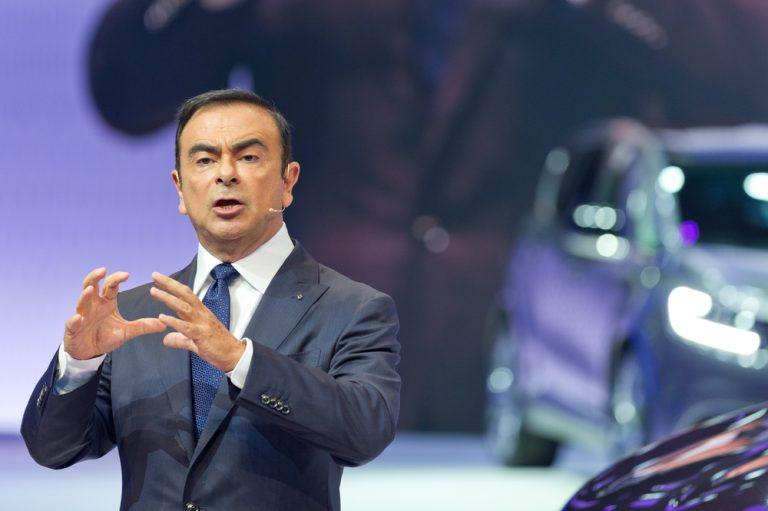
Following his arrest last week, Carlos Ghosn has been fired by Mitsubishi Motors.
The chairman of the car manufacturer was also sacked by Nissan last week after it emerged he had carried out financial misconduct at both firms.
The company said in a statement after the board met on Monday: “During today’s board meeting, it was decided that he is dismissed as chairman.”
CEO Osamu Masuko will replace Ghosn as the interim chairman.
“It was an agonizing decision,” he said on Monday.
“The priority was what to do to protect the company, what to do to protect our employees and their families. It was an unavoidable decision,” he added.
Ghosn was sacked from Nissan on Thursday. A spokesperson said the decision was “based on the copious amount and compelling nature of the evidence of misconduct presented.”
The chairman has denied allegations of financial misconduct but he is yet to speak publicly.
It was reported that he and colleague Greg Kelly understated Ghosn’s income by about 5 billion yen ($44 million) over a five-year period ending in March 2015.
Executives of Mistibushi, Nissan and Renault are planning to meet this week. Japan’s Yomiuri Shimbun newspaper has reported that the meeting is due to be held in the Netherlands this week.
Shares in Nissan (TYO: 7201) are trading +1.76%. Renault (EPA: RNO) shares are +3.24% up and Mitsubishi (TYO: 8058) shares remain flat (1143GMT).
UK & European stocks open higher, pound remains mixed

Monday morning saw the FTSE 100 open 0.86% higher at 7,012.87.
Whilst the FTSE started the day on a strong foot, the pound was more mixed.
Sterling is ahead the dollar at $1.2821 but is down 0.20% against the euro at €1.1286,
The mixed nature of the pound on today’s opening comes as Prime Minister Theresa May’s success from gaining approval from EU leaders over the Brexit deal comes with concern over Parliament’s support in the upcoming vote on 12 December.
May will tell MPs in a statement today:
“Our duty as a Parliament over these coming weeks is to examine this deal in detail, to debate it respectfully, to listen to our constituents and decide what is in our national interest.”
Rejecting the deal will take the UK “back to square one”.
“It would open the door to more division and more uncertainty, with all the risks that will entail,” she will add.
Italy’s FTSE MIB jumped 3% on Monday’s opening.
Connor Campbell of SpreadEx commented on the surge: “Investors are more cheering the chance that the relationship between Italy and the EU is thawing, rather than any jubilance over the agreement of a Brexit deal (though that’ll be playing its part).”
“Comments from Italian deputy PM Matteo Salvini on Sunday, hinting that the country’s controversial 2.4% budget deficit could be lowered, came after reports of a meeting between Prime Minister Giuseppe Conte and European Commission President Jean-Claude Juncker on Saturday night. These signs of progress were like catnip for good news-hungry investors, explaining the over-sized reaction of the European indices,” he added.
Vauxhall to cut further 241 jobs at Ellesmere port
Vauxhall has announced plans to cut 241 jobs at its Ellesmere Port manufacturing plant.
The jobs will be cut by the end of 2019 and will carry out redundancies on a voluntary basis.
The Peugeot-owned car manufacturer has said that the latest round of job cuts are “necessary”.
The latest round of cuts is “critical to ensure that the Ellesmere Port plant develops its competitiveness during this difficult time within the industry,” said the group.
“The restructuring is necessary to make it a competitive plant when compared to the benchmark,” the group added.
This is not the first time that jobs have been slashed at the Ellesmere Port plant.
October last year saw 400 jobs cut, whilst more recently in January another 250 jobs were cut.
In a statement, Vauxhall said the group’s 2019 plan includes “site compression, implementation of new technologies and other transformation activities which will impact on headcount requirements.”
The regional coordinating officer at Unite, Mick Chalmers, said: “Vauxhall’s Ellesmere Port workers have made huge sacrifices and worked hard to ensure the carmaker recently returned to profit for the first time in two decades.”
“Further job losses will come as a sickening blow for them and their families in the run-up to Christmas and will further heighten the anger over the uncertainty surrounding the future of the plant.”
“PSA should be clear. Unite will not tolerate the death by a thousand cuts of Ellesmere Port and will leave no stone unturned in securing the future of the plant and its skilled workforce,” he added.
Vauxhall has said that it is also considering stockpiling parts to avoid shortages amid the Brexit uncertainty.
“We do not want to comment at this stage on the Brexit process and its assessment by Groupe PSA, as it is not the final step for implementation,” Vauxhall said in a statement.
“We are working in an agile mode, as usual, and we have several solutions to address different scenarios.”
Shares in Peugeot are trading +1.50% at 19,59 (0846GMT).
May to warn MPs: rejecting Brexit deal will lead to division
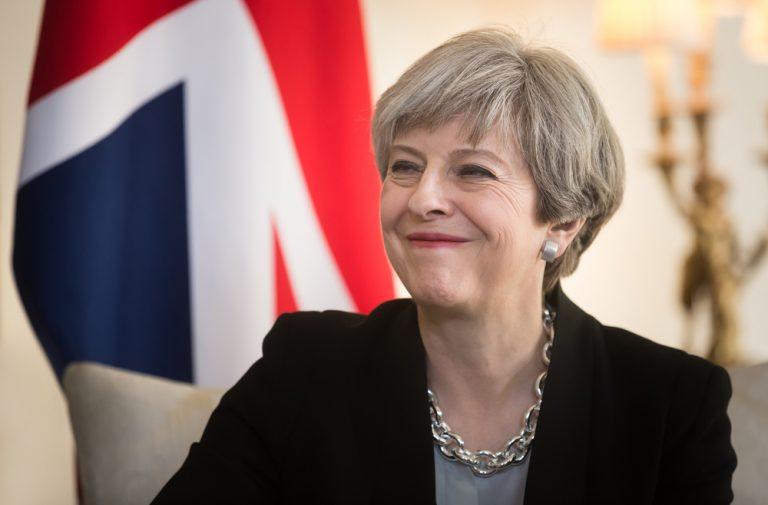
Theresa May will tell MPs on Monday that rejecting her Brexit deal lead to “division and uncertainty”.
After the prime minister’s deal was accepted by EU leaders over the weekend, May has to now persuade MP’s to back the deal.
MPs will vote in the House of Commons held on 12 December, where a rejection of the agreement is expected to lead to a no-deal scenario.
May will make a statement on Monday, where she will say: “Our duty as a Parliament over these coming weeks is to examine this deal in detail, to debate it respectfully, to listen to our constituents and decide what is in our national interest,”
She will say that MPs decide to reject the deal, it will take the UK “back to square one”.
“It would open the door to more division and more uncertainty, with all the risks that will entail,” she will add.
Jeremy Hunt, the foreign secretary, has said that getting backing from Parliament may be difficult.
“It’s not possible to rule out anything, and that’s why all of us have to say: what do your constituents actually want in this situation? And we have to work out what’s in the national interest, and it’s all about the balance of risks,” he said.
As well as British MPs, the prime minister also hopes to “speak directly to the British people” and explain the benefits of the agreed Brexit deal.
“I will take this deal back to the House of Commons confident we have achieved the best deal available, and full of optimism about the future of our country,” said May.
“In parliament and beyond it, I will make the case for this deal with all my heart, and I look forward to that campaign,” she added.
However, whilst rejecting the deal may lead to crashing out of the EU without a deal, Labour leader Jeremy Corbyn does not think that the prime minister’s Brexit deal is good enough.
“This is a bad deal for the country. It is the result of a miserable failure of negotiation that leaves us with the worst of all worlds. It gives us less say over our future, and puts jobs and living standards at risk. That is why Labour will oppose this deal in parliament,” he said.
Oil prices plunge, putting pressure on markets
Friday saw oil prices plunge to their lowest levels in 2018.
Oil prices continue to fall and the price of a barrel of oil has plunged approximately 20% since the start of September.
Brent crude fell to $60.69 (£47.32) on Friday, the lowest level since November 2017.
West Texas Intermediate crude fell 6.2% to $3.37.
The oil price is not low enough for US President, Donald Trump. Despite thanking Saudi Arabia for exporting more and lowering the price, he said he wanted to see it lower still.
“Oil prices getting lower. Great! Like a big Tax Cut for America and the World. Enjoy! $54, was just $82. Thank you to Saudi Arabia, but let’s go lower!” he tweeted.
The Saudi energy minister, however, has said that the state needs to curb the output.
“We will not sell oil that customers don’t need,” he said.
A survey of 11 oil forecasters by S&P Global Platts expects oil prices to average $75.50 a barrel in 2019. This year prices averaged at $73.91.
HSBC said in a note last week: “OPEC has indicated its determination not to let the market slip back into oversupply in 2019, and we think it has given a clear indication of its intention to defend prices in the $70s.”
The plunge in oil prices saw stocks tumble on Friday. The Dow Jones Industrial Average fell 142 points, while the Nasdaq Composite fell 0.3%.
Peter Cardillo, the chief market economist at Spartan Capital Securities, said: “Tech stocks are under pressure once again but more troubling is that oil prices are collapsing.”
“Lower oil prices are not a good sight for the economy. OPEC has indicated they’re going to cut [production], but that’s not helping. That’s a bad sign.”
Supermarkets cut petrol prices in time for Black Friday
Supermarkets Asda, Morrisons (LON: MRW) and Sainsbury’s (LON: SBRY) have all cut petrol and diesel in time for Black Friday.
As wholesale prices have decreased, the price of petrol has dropped at filling stations starting from Friday.
The first supermarket to announce the changes was Asda, which has decreased the price petrol price by 1p and diesel by 2p per litre.
“Further decreases in the wholesale market mean we are able to reduce our prices again, with Asda’s unleaded price dropped by up to 9p per litre since the end of October, and now we’re seeing the diesel price drop below £1.30 for the first time in three months,” said Dave Tyrer, who is Asda’s senior fuel buyer.
Sainsbury’s and Morrisons will match the price starting on Saturday. The changes to prices will mean that petrol will cost no more than £1.19 per litre and diesel will cost a maximum of £1.30.
David Pegg, the fuel buying manager at Sainsbury’s, said: “At this busy, festive time of year we are committed to helping our customers live well for less and that’s why we’re dropping the price of unleaded petrol and diesel from tomorrow.”
“Whether in-store or at the pumps, customers know they will get fantastic value with Sainsbury’s.”
The drop in price is welcomed by motorists. Earlier this year, fuel price hit a four-year high.
“It’s great to see drivers benefiting from Black Friday too with this latest price cut at the pumps, which we now need to be followed swiftly by other retailers so the UK average price comes down,” said RAC fuel spokesman Simon Williams.
“After so much of 2018 being characterised by rising fuel prices, it’s heartening to see prices falling just as we enter the expensive festive period. While this is obviously good news, it’s disappointing that it has not come sooner as the wholesale price of petrol has been falling for weeks.”
Provision of social dwellings for rent sinks 80% over 10 years

A new report from the Ministry for Housing, Communities and Local Government has shown that the construction of new social homes for rent has fallen by 80% over the past decade.
Over one million families are on the waiting lists for housing for social rent, which at the current rate of construction will take 70 years to house everyone waiting.
London Boroughs have added just 777 additional dwellings for social rent in 2017-2018.
“These figures confirm the disastrous fall in the number of new affordable homes for social rent under the Conservatives,” said John Healey, the shadow housing secretary.
Community Housing Cymru (CHC) has blamed austerity for the lower number of homes being built.
Whilst the Welsh council had £159 million in 2010 to spend on planning departments in Wales, this figure has dropped to £77.4 million in 2017-18.
The chief executive of the charity Shelter, Polly Neate, said the gap between those waiting for social housing and construction taking place to meet this demand was unacceptable.
“This just isn’t acceptable when nearly 280,000 people are homeless in England today,” she said.
Theresa May said in her party conference speech last month that she would scrap the cap on local authority borrowing for the construction of new homes.
The chairman of the Local Government Association, Lord Porter, said on the prime minister’s announcement: “Today’s speech by the prime minister shows that the government has heard our argument that councils must be part of the solution to our chronic housing shortage.”
“It is fantastic that the government has accepted our long-standing call to scrap the housing borrowing cap. We look forward to working with councils and the government to build those good quality affordable new homes and infrastructure that everyone in our communities need.”
“Our national housing shortage is one of the most pressing issues we face and it is clear that only an increase of all types of housing – including those for affordable or social rent – will solve the housing crisis.”
“The last time this country built homes at the scale that we need now was in the 1970s when councils built more than 40 per cent of them,” he added.