
Labour Conference 2018: Five key talking points
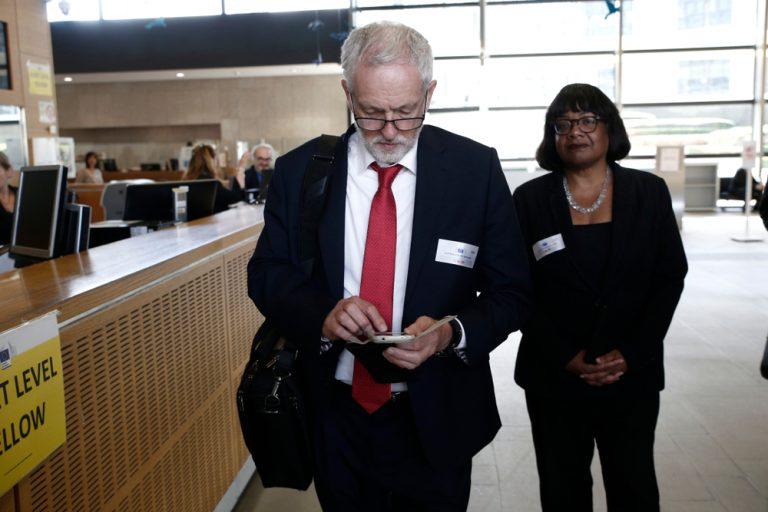
The Labour Conference in Liverpool came to an end today after Labour leader Jeremy Corbyn delivered his highly-anticipated closing speech.
Whilst such annual events are often used as an opportunity to re-focus policy agendas and clarify the official stance, Labour’s conference arguably continued to expose divisions.
We’ve rounded up five of the biggest talking points from this year’s conference.
1.The shadow chancellor rules out remain
Ahead of the party conference, shadow chancellor John McDonnell said a second referendum vote should only go ahead if ‘remain’ was not included as an option.
During an interview with Radio 4’s Today programme, McDonnell said regarding another vote:
“If we are going to respect the last referendum, it will be about the deal, it will a negotiation on the deal,”
He added: “Parliament will determine the nature of the question that will be put, but the first stage of that is to see if we can get a deal that is acceptable and brings the country together again. And I’ve always thought we could.”
McDonnell, a longtime ally of leader Jeremy Corbyn, finally seemed to offer clarification with regards to Labour’s position on Brexit.
But then…
2. To remain or not to remain? Sir Kier Starmer’s speech
Just when the party looked to be crystallising its position on Brexit, Sir Keir Starmer’s speech suggested that the fight to remain was not necessarily dead in the water after all.
Sir Starmer, who is also the shadow Brexit secretary, made the following remarks:
“If [a general election] is not possible, we must have other options. And, conference, that must include campaigning for a public vote. Conference, it’s right that parliament has the first say. But if we need to break the impasse, our options must include campaigning for a public vote and nobody is ruling out remain as an option.”
The comments prompted applause from various Labour delegates, exposing once more internal party divisions with respect to Brexit.
Notably, around 90 percent of Labour’s support base voted to remain in the June 2016 referendum.
However, Starmer’s comments no doubt added to confusion regarding the party’s official stance on Brexit negotiations.
3. Labour Jewish event canceled after bomb scare
In recent months the Labour party has been criticised for its inability to effectively quell anti-semitism within the party.
Earlier this month the party finally adopted a complete definition of anti-semitism.
As a result, Labour is set to incorporate the 11 examples of anti-semitism outlined by the International Holocaust Remembrance Alliance’s code of conduct.
However, Labour continues to be under intensifying pressure to address mounting concerns from the Jewish community about Corbyn’s leadership.
In an unprecedented move, three Jewish newspapers in the UK published the same front page back in July, condemning Labour under Corbyn.
Consequently, a crucial aim of this year’s Labour conference no doubt included addressing anti-semitism once and for all.
Nevertheless, the party was dealt a blow when a Jewish party event had to be abandoned after a bomb scare.
The Jewish Voice for Labour Group decided not to go ahead with the event, which was set to showcase a film focusing on the case of Jackie Walker, a former Momentum vice-chair who was suspended from the party over antisemitism claims.
Still, Shadow Foreign Secretary Emily Thornberry was applauded for her rousing speech against fascism and racism.
Addressing anti-semites within the party, Thornberry made clear parallels with fascism.
She said:“If we want to root out fascism and racism and hatred from our world, and from our country, then we must start, we must start, with rooting it out of our own party.”
Similarly, Jeremy Corbyn took an opportunity to address anti-semitism in his closing speech, vowing to fight with “every breath”.
Specifically, Corbyn said:
“The Jewish people have suffered a long and terrible history of persecution and genocide. I was humbled to see a memorial to that suffering two years ago, when I visited the former Nazi concentration camp at Terezin.”
“The row over antisemitism has caused immense hurt and anxiety in the Jewish community and great dismay in the Labour Party. But I hope we can work together to draw a line under it.”
“I say this to all in the Jewish community: This party, this movement, will always be implacable campaigners against antisemitism and racism in all its forms.”
Corbyn also criticised ‘Tory hypocrites’ on the issue of anti-semitism.
4. Labour embraces ‘green jobs revolution’
Labour also announced its plans to further commit itself to environmentally friendly policies.
In his speech, Jeremy Corbyn vowed to commit the party to net-zero target of greenhouse gas (GHG) emissions by 2050, as the party looks to kick-start its so-called ‘green jobs revolution’.
The leader of the opposition announced plans for the development of green technology, with the aim of building 13,500 onshore and offshore wind turbines, encouraging the use of solar panels and wide-scale home insulation.
Corbyn also pledged to created some 400,000 ‘green’ jobs as a result of the initiative.
The party will no doubt be attempting to appeal to the growing support base of the Green party.
5. Labour MP calls for union strike to topple the Conservative government
Labour MP Laura Smith courted controversy during a speech, where she called for a general strike to bring down the Conservative government.
Smith, who is the MP for Crewe and Nantwich, said: “Today we’ve heard calls for a true people’s vote. A general election.”
She continued: “Comrades, we must topple this cruel and callous Tory government as soon as we can. And if we can’t get a general election, we should organise with our brothers and sisters in the trade unions to bring an end to this government with a general strike.”
The comments were made during a Momentum organised The World Transformed event in Liverpool, which coincided with the party conference.
However, Deputy leader Tom Watson has since distanced the party from her remarks.
Watson ultimately said that “not particularly helpful”, suggesting that Smith “got a little carried away” with her comments.
So, as the Labour Conference for 2018 draws to a close, one thing is for certain – the party still remains utterly divided, particularly with respect to Brexit.
AA shares down 12pc as group reports fall in profits
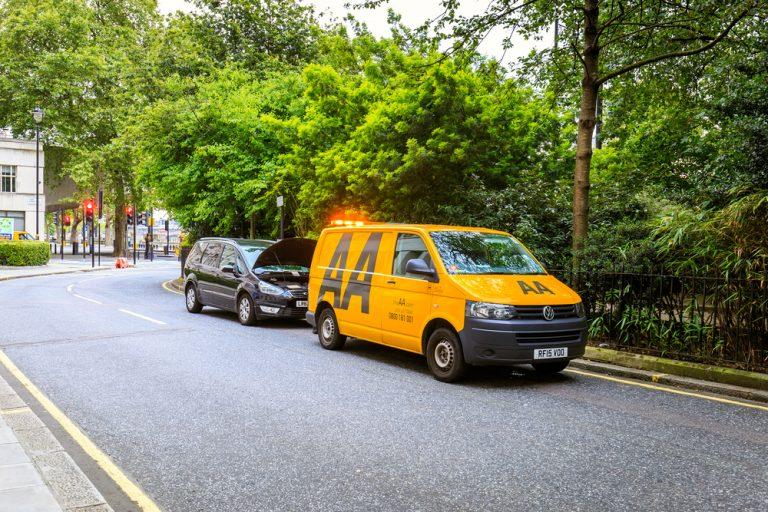
Car insurer AA’s profits have dropped 65 percent for the first six months of 2018.
The motorists’ organisation has reported pre-tax profits to drop to £28 million and is blaming bad weather for the increase in breakdown callouts.
Simon Breakwell, the group’s chief executive, said the drop in profits was due to the “exceptional weather conditions” seen this year, “from extreme cold and snow in February and March to the hottest summer in recent memory, with the severe winter also creating a pothole ‘epidemic’ on the UK’s roads”.
“All this led to a 15-year high in the number of breakdowns we serviced. Against this backdrop, I am extremely proud of our achievements and to be reporting results in line with our guidance as we continue to build resilience throughout the business,” he said
“We are making good operational progress across our roadside and insurance businesses and firmly believe that we have the people and strategy in place to unlock the full potential of the AA and crystallise long-term value for our shareholders.”
Revenue rose two percent, which is in line with expectations but operating profit fell 35 percent to £116 million. AA warned in February that its full-year expectations would fall short of expectations, causing shares at the time to drop sharply. The number of breakdowns between January and July reached a 15-year high, driving up costs for the group. AA has previously warned that drivers and insurers are losing up to £1 million a month repairing damage caused by potholes. The firm has been investing in an app and its Car Genie digital device, which is installed in its members’ cars and detects potential motor problems in order to appeal to younger drivers. Shares fell over 12 percent on the news. AA (LON: AA) shares are currently trading down 12.13 percent at 105,00 (1317GMT).Bushveld Minerals profits soar after Vanadium price increase
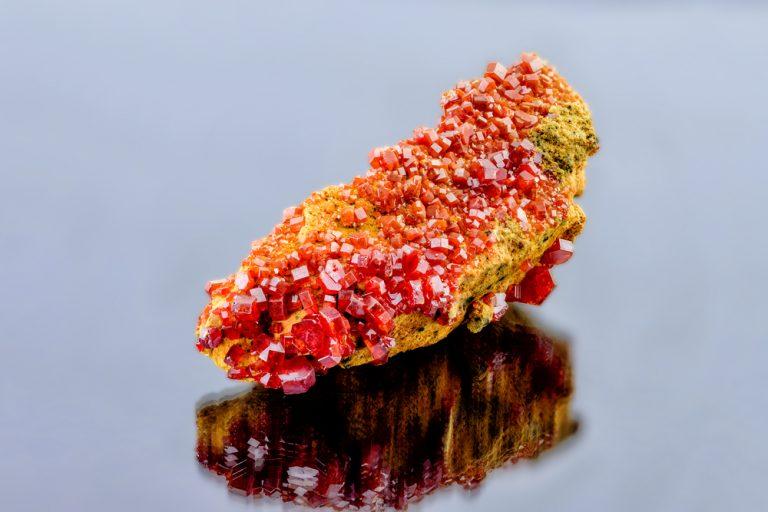
Bushveld Minerals (LON:BMN) have reported a promising set of half year results that highlights the positive impact of Vanadium prices on the company’s earnings.
A rising Vanadium prices in combination with a number of acquisitions have helped Bushveld Minerals’ revenue jump to £62m in the six months to June 2018, up from just £2.2m in the corresponding period a year prior.
Bushveld’s Vametco sells its Vanadium and Nitrogen product, Nitrovan, to steel mills for the production steel alloys on a global basis. A considerable increase in Nitrovan sales alongside a rise in underlying prices has helped Bushveld Minerals register EBITDA of £31.7m and a net profit of £21.1m.
The reported bottom-line means the firm is producing and selling Vanadium at a very respectable 34% net margin which can be largely attributed to the fact Bushveld are currently one of the worlds cheapest producers of Vanadium.
In addition to steel alloys, Bushveld Minerals is developing battery applications for Vanadium. Bushveld’s business unit Bushveld Energy recently received a $500,000 grant from the United States government for the research and development of their Vanadium Redox Flow Battery (VRFB). VRFB has the potential to revolutionise an energy market currently dominated by Lithium batteries struggling to meet today’s increasing demand for greener energies.
VRFB is a potentially safer and more efficient alternative to Lithium as it stores electrolytes in separate storage tanks as opposed to being held in the power cell itself.
Bushveld are not the only ones preparing for wider Vanadium battery adoption. The CEO of Australian Vanadium Ltd recently said at a mining conference that the technology awaits its ‘Elon Musk’ moment – something Bushveld is doing well in positioning for.
However, the prospect of such wide adoption for the use of Vanadium in power is driving up prices meaning those developing VRFB technology are being also being faced with the challenge of cost efficiencies.
So, the recent leap higher in Vanadium prices is proving to be a doubled edged sword for Bushveld. The group is benefiting in the short term from higher achieved sales prices for alloy applications but being hindered in arguably the most exciting area of their business, the Vanadium Battery.
Commenting on Bushvelds progress, CEO Fortune Mojapelo said:
“Key to the success of our efforts at Vametco is a healthy cooperative relationship with all of our stakeholders, not least the local communities in which we operate and the workers. The recent unprotected strike action at the mine, while unfortunate only underscores the importance of us succeeding in this objective. We are pleased that we were able to reach a resolution with the workers and delighted that they will participate in the success of the Company through an Employee Share Options Scheme Structure.
“Meanwhile our efforts in building a leading energy storage company through Bushveld Energy are progressing well on all fronts, the construction of the electrolyte manufacturing plant in South Africa, the deployment of a VRFB at Eskom, securing mandates for large scale VRFB deployments as well as the development of vanadium electrolyte leasing products to promote the adoption of VRFBs in the global energy storage industry. The grant of US$500,000 received from the Government of the United States of America will go a long way to fund the implementation and enhancement of the Eskom Vanadium Redox Flow Batteries project. The commissioning delay experienced with the Eskom Vanadium Redox Flow Batteries project has meant the new battery is now expected to be commissioned during the Q4 2018.”
“The signing of a 30-year Project Concession Agreement between Lemur Holdings and the Government of Madagascar is a critical milestone in the development of Lemur’s integrated coal-to-power project, bringing it even closer to implementation.
“As we continue to steadily execute our firm strategy to grow into a significant, low-cost vertically integrated vanadium platform, we have a busy pipeline of corporate and operational activities ahead. I look forward to providing further updates on the operations in the second half of the year.”
Pret A Manger faces lawsuit after ‘natural’ products contain pesticides
Pret a Manger has been sued in the US after the sandwich chain labelled bread as “natural” when they contained pesticides.
A lab test has found traces of glyphosate, an item used in weedkiller, in items including cookies, salads and bread from the chain.
The latest lawsuit comes following a teenager who was allergic to sesame died in 2016 after eating a sandwich from Pret that contained sesame but was not labelled.
Natasha Ednan-Laperouse was to France from the UK when she bought the sandwich from a Pret store at Heathrow Airport.
The Organic Consumers Association (OCA) is a plaintiff in the court case.
The OCA’s international director, Ronnie Cummins, said: “Companies like Pret a Manger know this.”
“By describing their products or brands as ‘natural’, they are knowingly deceiving consumers in order to sell more product, and charge higher prices. We believe consumers should know the truth about this advertising tactic, and about what is actually in the food they are buying.”
Kim Richman, a partner in the Richman law firm that is prosecuting the suits, said: “Our clients believe that companies will need to start using the phrase ‘natural’ more responsibly in the future, taking legitimate precautions to avoid contamination by glyphosate or other synthetic biocides.”
“While glyphosate is indeed ubiquitous, it doesn’t need to be – and the campaign to put food producers and restaurants on notice about the issue is an important step in getting them to take glyphosate reduction seriously.”
Pret has not commented on the lawsuit.
Ryanair to cancel 190 flights amid strikes
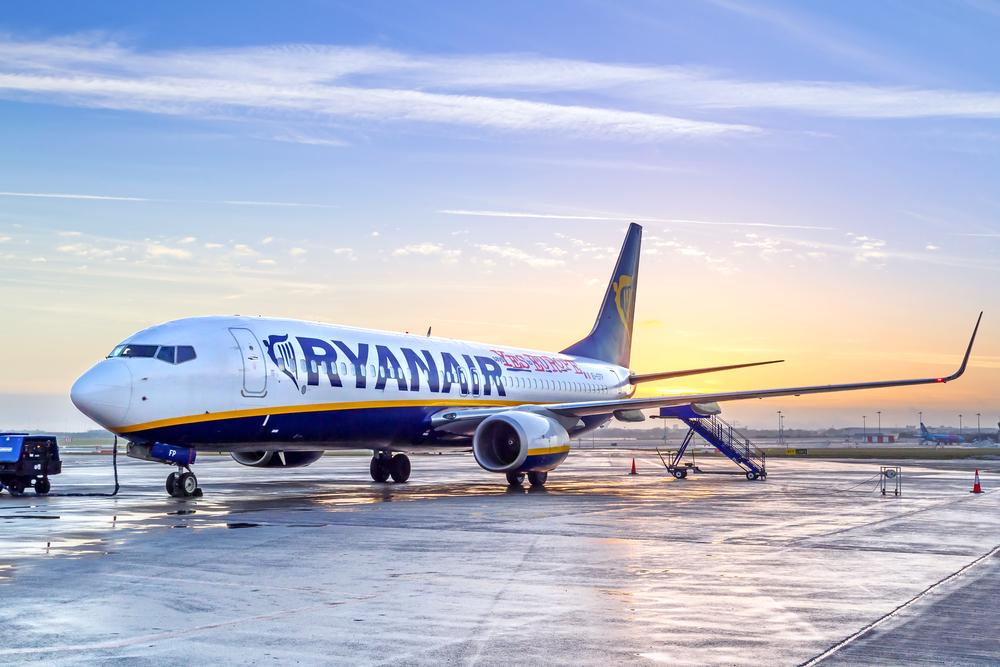
Ryanair has cancelled 190 flights on Friday, blaming the latest cabin crew strikes.
Strikes will be taking place by cabin crew based in Spain, Belgium, the Netherlands, Portugal, Italy and Germany.
30,000 passengers will be affected and have received a text and email about the cancellations.
The Irish airline has said that it “sincerely regrets these unnecessary customer disruptions, which have been called by unions at the behest of competitor airline employees.”
The airline was forced to cancel 400 flights in August as well as a similar number in July.
Kenny Jacobs from Ryanair said: “These repeated unnecessary strikes are damaging Ryanair’s business and our customer confidence at a time when oil prices are rising strongly, and if they continue, it is inevitable that we will have to look again at our capacity growth this winter and in summer 2019. We hope these unions will see common sense.”
Rory Boland, the travel editor from Which?, said the group must save its customers holidays.
“The airline must now immediately arrange alternative flights or provide a full refund and pay out compensation to those affected – including the many people still waiting for the money they’re owed from its shambolic summer of cancellations,” he said.
Ryanair has agreed to a deal with staff based in Ireland. The group employs over 4,000 pilots, with around 350 of them based in Ireland. Ryanair said that negotiations in the country proved among the most difficult.
Shares in the group (LON: RYA) are trading down 0.73 percent at 12,92 (0912GMT).
Corbyn to attack “greed-is-good” capitalism
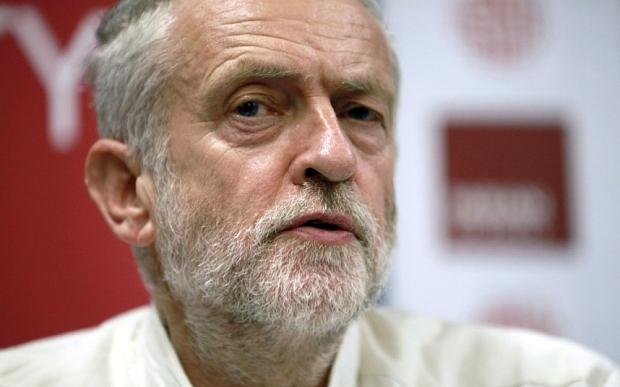
Jeremy Corbyn will attack the “greed-is-good” approach to capitalism on Wednesday.
Speaking at the Labour party conference, the party’s leader will also declare a “green jobs revolution” that will create up to 400,000 new positions.
“Ten years ago this month, the whole edifice of greed-is-good, deregulated financial capitalism, lauded for a generation as the only way to run a modern economy, came crashing to earth, with devastating consequences,” Corbyn will say on Wednesday.
”But instead of making essential changes to a broken economic system, the political and corporate establishment strained every sinew to bail out and prop up the system that led to the crash in the first place.”
“People in this country know – they showed that in June last year – that the old way of running things isn’t working any more. That’s why Labour is offering a radical plan to rebuild and transform Britain.”
The party leader will pledge to pump billions of pounds of public money into green industries including expansions in wind power, solar panels on every roof and a drive to insulate all UK homes.
A report published on Wednesday will also hint towards expansion in tidal power, hydrogen and nuclear in order to meet the climate change targets.
“There is no bigger threat facing humanity than climate change. We must lead by example. Our energy plans would make Britain the only developed country outside Scandinavia to be on track to meet our climate change obligations,” Corbyn will say.
“Our programme of investment and transformation to achieve a 60 percent reduction in emissions by 2030 will create over 400,000 skilled jobs, based here and on union rates, bringing skills and security to communities held back for too long.”
The party has set aside £12.8 billion in its National Transformation Fund to cover the insulation programme in its first term, with other costs being covered by the private sector.
Carillion collapse to cost taxpayers £150m
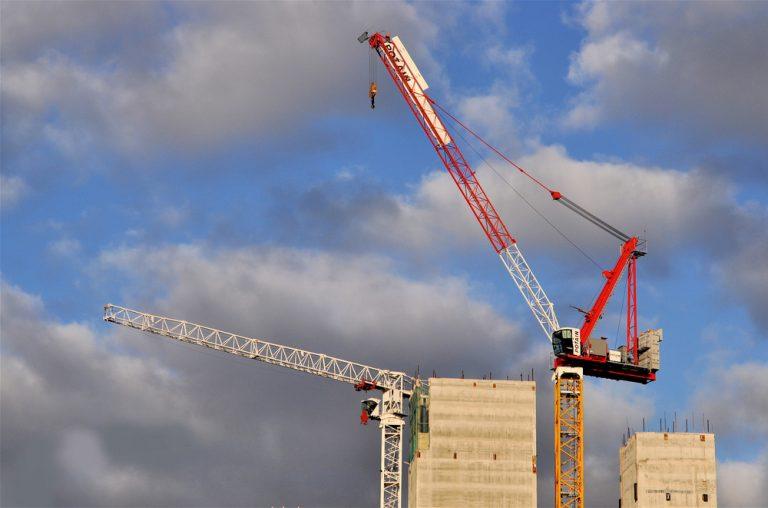
UK taxpayers are due to pay £150 million following the collapse of Carillion earlier this year.
It was revealed after the Unite union requested the information that redundancy payments for the group’s former employees is expected to reach £65 million.
With the redundancy payment at £65 million combined with the cost of lawyers and accountants expected to hit £70 million and other costs reaching £20 million, the total costs will hit £150 million.
Earlier this year, a report by the National Audit Office (NAO) expected costs to reach £148 million.
“Doing a thorough job of protecting the public interest means that government needs to understand the financial health and sustainability of its major suppliers, and avoid creating relationships with those which are already weakened,” said Sir Amyas Morse, head of the NAO at the time. “Government has further to go in developing in this direction.”
The construction group collapsed in January after shares fell 90 percent on the news that the group had debts of about £1 billion.
Ministers have been accused of realising too late that the company was struggling and offered false investor hope but offering the group new contracts.
Whilst many of the contracts have been passed on, projects including the Royal Liverpool hospital will be completed using tax money.
The Redundancy Payments Office has said: “The total amount we may pay out is approximately £65 million, of which £50 million has been paid so far based on actual claims received.”
A Cabinet Office spokesperson said: “Since Carillion’s insolvency, our approach has ensured the smooth continuation of public services and safeguarded over 13,000 jobs.”
“This government is committed to getting the new Royal Liverpool hospital built as quickly as possible for the benefit of patients across Merseyside and we expect to have an update on the next steps shortly.”
Brexit: ‘nobody ruling out remain’, says Starmer
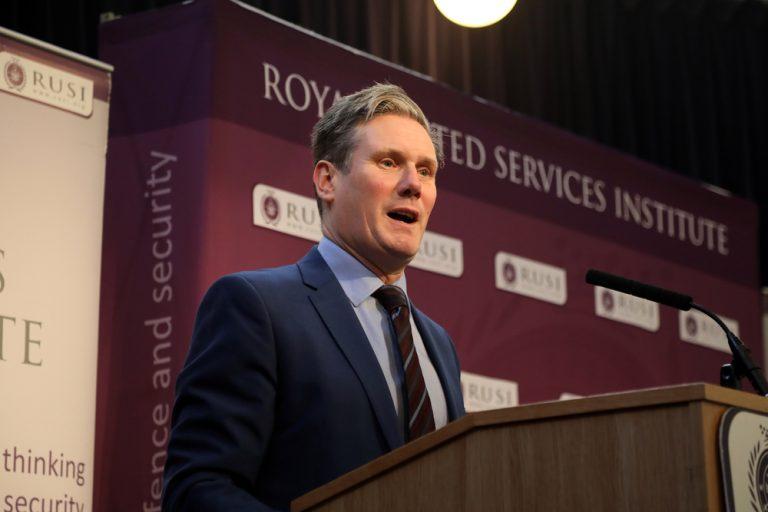
The shadow Brexit Secretary has said that Labour are not necessarily ruling out a remain option, should a second referendum go ahead.
The Former QC and current MP for Holborn and St Pancras, Sir Kier Starmer, made the comments during his speech at the annual party conference in Liverpool.
Specifically, Sir Starmer took the opportunity to dispel suggestions that a remain option would not be reconsidered in the event of a secondary vote.
In the speech, he stated:
“If [a general election] is not possible, we must have other options. And, conference, that must include campaigning for a public vote. Conference, it’s right that parliament has the first say. But if we need to break the impasse, our options must include campaigning for a public vote and nobody is ruling out remain as an option.”
Sir Starmer’s comments prove to be in direct opposition to remarks made earlier in the week by shadow chancellor and close ally of leader Jeremy Corbyn, John McDonnell.
Notably, McDonnell said that should a second referendum indeed go ahead, the vote should crucially respect the result of the June 2016 vote and thus not include an option for ‘remain’.
“If we are going to respect the last referendum, it will be about the deal, it will a negotiation on the deal,” he stated on Monday.
He added: “Parliament will determine the nature of the question that will be put, but the first stage of that is to see if we can get a deal that is acceptable and brings the country together again. And I’ve always thought we could.”
Sir Starmer’s recent interjection will no doubt add to confusion over Labour’s Brexit stance, as the March 2019 deadline fast approaches.
Whilst the annual party conference is often seen as way to outline a cohesive party strategy, it still remains unclear precisely what Labour’s official policy regarding Brexit actually is.
However, it seems that a lack of clarity over Brexit is, curiously, a cross-party problem.
Equally, the Conservatives continue to be in disarray with respect to how best to proceed with negotiations.
In particular, Tory Brexiteers continue to differ on whether or not to back Theresa May’s proposed plan.
Former cabinet foreign secretary Boris Johnson has remained among one of the most prominent critics of the proposals, articulating his opposition in his respective column in The Telegraph.
Moreover, prominent Hard Brexit supporter, Jacob Rees Mogg, has said that the Prime Minister should recognise that her Chequer’s plan will have limited support.
It seems that the controversial vote to leave back in 2016 has done nothing to quell debates within the conservative party over the Europe issue.
Nevertheless, a spokesperson for Number 10 remained adamant that the cabinet itself remain united behind the plan.
However, with the most recent rejection of the proposed chequers deal from EU officials, it remains to be seen whether Theresa May’s own party will also cooperate.
According to party sources, Labour also remains unconvinced.
Ahead of his aforementioned speech in Liverpool, Sir Starmer told BBC’s Radio 4 Today Programme that the party looks likely to vote down the deal.
Party differences aside, it seems there is one thing both the Conservative and Labour can agree upon – derailing Theresa May’s Brexit proposals.
Michael Kors confirms Versace takeover
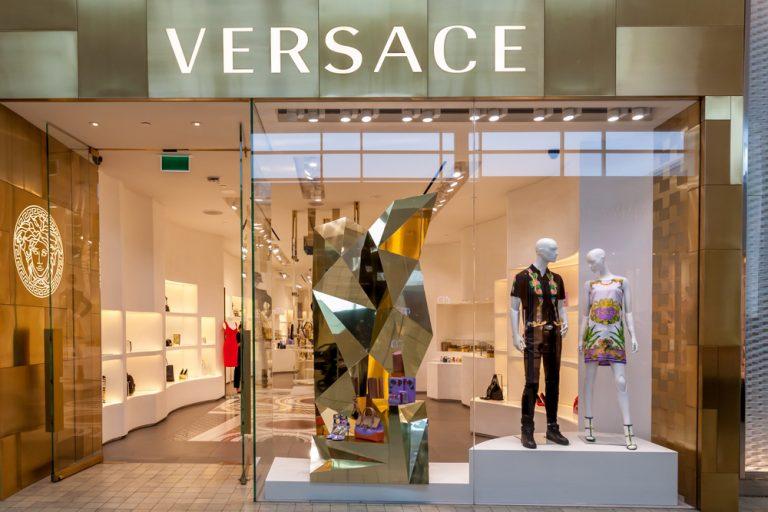
Michael Kors has confirmed plans to buy Versace in a $2.1 billion deal.
The US company confirmed the takeover after fans called on Versace to stop the sale.
John D. Idol, the chairman and chief executive officer of Michael Kors, said the deal was “an important milestone for our group”.
“For over 40 years, Versace has represented the epitome of Italian fashion luxury, a testament to the brand’s timeless heritage,” he said in a statement.
“We are excited to have Versace as part of our family of luxury brands, and we are committed to investing in its growth. With the full resources of our group, we believe that Versace will grow to over $2 billion in revenues.”
“We believe that the strength of the Michael Kors and Jimmy Choo brands, and the acquisition of Versace, position us to deliver multiple years of revenue and earnings growth,” he added.
Donatella Versace, who is the creative director of Versace, said sale the sale was a “very exciting moment” and will “allow Versace to reach its full potential”.
Michael Kors plans to increase the number of Versace outlets from 200 to 300 and double the group’s turnover to $2 billion.
Last year the US luxury fashion brand bought Jimmy Choo for almost £900 million.
The deal was first reported on Monday by Italian newspaper Corriere della Sera.
Reuters later reported the news after a source revealed: “They gradually persuaded the family to look into a possible sale and introduced them to a series of buyers, including Michael Kors.”
“Blackstone wasn’t going to put any more money into it. They needed a buyer who could make heavy investments.”
Shares in Michael Kors (NYSE: KORS) are down 8.21 percent at 66,71 (1324GMT).
Novartis to shed thousands of jobs, shares rise

Pharmaceutical giant Novartis has announced that it plans to axe thousands of jobs worldwide.
The group currently employs around 1,500 people in the UK, with plans to cut 400 of these roles. As well as the UK, Novartis will also cut over 2,000 roles in Switzerland.
The group has said the decision to phase out roles is not relevant to Brexit.
“Novartis has been a part of the Grimsby community for many years so this has been a very difficult decision,” said the UK country president, Haseeb Ahmad.
“The Grimsby site is an effective, well-running operation that is testament to the hard-working and dedicated employees. We will treat every employee with the utmost respect, sensitivity and fairness during this difficult time.”
“This decision has been made alongside broader changes to our business globally, and as a result of the changes in our product portfolio which now focuses on more specialised medicines, reflective of today’s changing healthcare needs.”
“Novartis remains committed to the UK and believes that the UK is a world-leader in life sciences. Today’s announcement is part of a global review of our manufacturing operations and is not linked to the decision of the UK to leave the European Union,” he added.
Novartis currently employs around 124,000 people worldwide, with plans to cut this number to below 100,000 by 2022.
Unions criticised the decision and said the company will be worse off.
Shares in the group (SWX: NOVN) were up about 0.8 percent at 0900 GMT.