
Honda invests $2.8bn in GM’s autonomous vehicles

Honda (TYO: 7267) has announced plans to invest $2.8 billion into General Motors Co’s self-driving vehicles.
The Japanese carmaker will invest over the next twelve years, whilst taking a 5.7 percent stake in the fleet.
“This is the logical next step in General Motors and Honda’s relationship, given our joint work on electric vehicles, and our close integration with Cruise,” said General Motors Chairman and CEO Mary Barra in a joint statement.
“Together, we can provide Cruise with the world’s best design, engineering and manufacturing expertise, and global reach to establish them as the leader in autonomous vehicle technology – while they move to deploy self-driving vehicles at scale.”
Honda Executive Vice President and Representative Director COO Seiji Kuraishi said: “Honda chose to collaborate with Cruise and General Motors based on their leadership in autonomous and electric vehicle technology and our shared vision of a zero-emissions and zero-collision world.”
“We will complement their strengths through our expertise in space efficiency and design to develop the most desirable and effective shared autonomous vehicle,” the added.
Earlier this year, Japan’s Softbank (TYO: 9984) invested $2.25 billion in GM Cruise.
Honda and Softbank’s investment values GM Cruise at $14.6 billion.
Softbank has also invested in Toyota (TYO: 7203), creating a new joint venture partner called MONET.
“Possibilities include demand-focused just-in-time mobility services, such as meal delivery vehicles where food is prepared on the move, hospital shuttles where onboard medical examinations can be performed, mobile offices,” the companies said.
The race for the first self-driving cars comes with concerns over safety.
Uber’s self-driving cars testing led to a fatal accident in the US and a self-driving car owned by Apple was involved in an accident earlier this month.
Shares in GM (NYSE: GM) are trading up two percent at 34,00 (0936GMT).
RBS boss: no-deal Brexit can lead to recession
Chief executive of the Royal Bank of Scotland (LON: RBS) has warned that a no-deal Brexit could result in a recession.
Ross McEwan told the BBC that a “bad Brexit” could lead to negative growth, which would affect RBS share price.
“We are assuming 1-1.5 percent growth for next year but if we get a bad Brexit then that could be zero or negative and that would affect our profitability and our share price,” he said.
UK taxpayers own 64 percent of RBS since the financial crisis in 2008. Following a collapse in its share price, the government part-nationalised the bank in 2008.
McEwan said the bank was becoming more cautious about lending to certain sectors including construction and retail.
“There are some retailers we are having to be a bit more cautious about because they haven’t made the necessary transition from bricks and mortar to digital,” he said.
The retail sector has faced troubling conditions this year, leading to the collapse of Toys R Us, Maplin and Poundworld. In addition, House of Fraser, Debenhams and Carpetright are closing stores.
“The big construction companies are getting very cautious about where they are putting their capital – particularly around London,” he added.
The RBS boss said that lending to large businesses has fallen by about two percent this year as they delayed investment decisions.
“Big businesses are pausing, they are saying that in six months time I’ll have another look at the UK and I might come back, but if it’s really bad I’ll invest elsewhere – that’s the reality of where we are today,” he said.
Smaller and medium-sized businesses are continuing to borrow and invest, he added.
Marcus facing possible headwinds after prolific start
Goldman Sachs Group Inc’s (NYSE:GS) consumer bank Marcus has made a name for itself by topping the UK market for exchange rates on savings accounts.
The firm have come to the UK market amid the rise of fintech firms such as Monzo, but have thus far seen success with their online savings accounts which can be opened for as little as one pound.
Goldman have launched Marcus – named after founder Marcus Goldman – as a means of branching out into the world of consumer banking, as regulations in the finance sector have forced larger banks including RBS (NYSE:RBS) to move away from their traditional methods of making money.
“So far the number of sign-ups for Marcus by Goldman Sachs has been stunning,””Numbers have exceeded even our most ambitious expectations, and our interest rate is clearly a big draw for frustrated savers who have had to put up with a decade of low interest rates.” said Des McDaid, managing director of Marcus by Goldman Sachs, in an e-mailed statement. However, the firm still have some way to go in regard to fully establishing themselves in the world of consumer banking – for instance they are yet to launch a mobile app, which has became a quintessential component of online banking. Similarly, Goldman are facing questions over the invasive nature of their background checks, which asks for information on an individual’s salary and occupation. “Asking for your salary is not a standard question for verifying your identity — although some banks do so.” said Anna Bowes of advice website Savings Champion. That kind of information is not required under FCA guidelines, and Bowes added that, “It’s a shame Goldman Sachs has added unnecessary questions to its application, as some could feel this is sensitive information.” Marcus will have to smooth out its early teething issues in the short-term if it hopes to gain a foothold, competitors such as Charter Savings Bank, OakNorth, Atom, Ford Money, Investec and Tandem are now all offering interest rates of up to 2.01% for consumers willing to tie their money up for a year. In the wake of the recent launch, Goldman Sachs share are trading up 0.86%, up $1.94 since trading began to $228.03.
Italian budget talks ease Brussels tensions
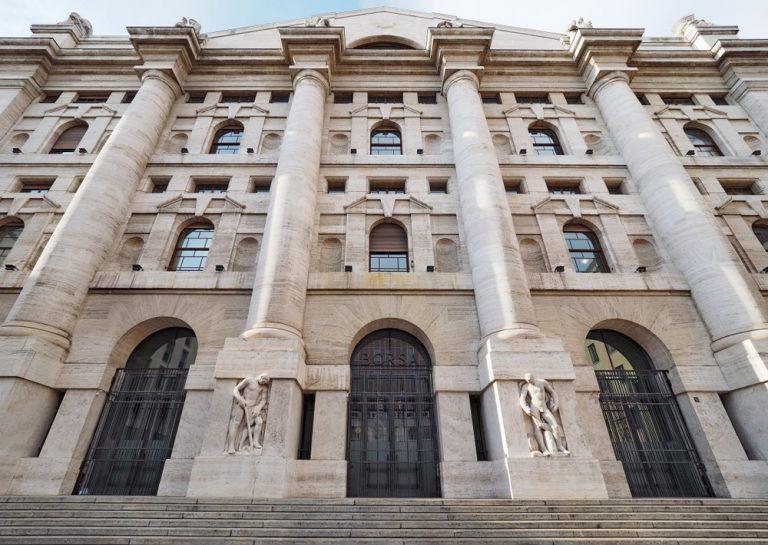
During today’s budget talks, Italian economy minister Giovanni Tria has said that the country will make efforts to cut its deficit in 2020 and 2021, which is earlier than the time frame announced in the budget last week.
Today’s announcements indicate that Italy is moving in the direction of benchmarks given by the EU, with the deficit set to rise to 2.4% of national output in 2019, though GDP is also expected to grow.
Speaking to industrialists in Rome, Tria said, “The deficit will increase compared with the previous forecast in 2019, but then there will be a gradual reduction in the following years.”
Alongside today’s budget, Italian government bonds have continued to recover and the FTSE MIB is up 1.3%, which has been led by Unicredit (BIT:UCG) and Intesa Sanpaulo (BIT:ISP) rallying 1.4 % and 1.85% respectively.
Following today’s discussions and clashes with the EU, Holder Schmieding of Berenberg Bank commented,
“Italy‘s fiscal plans and the behaviour of its key political leaders are probably self-defeating. Yes, Italy has underutilised resources. The economy may well respond for a while to a fiscal stimulus such as the one Italy‘s radical coalition is planning against the advice if its own finance minister.”
“However, picking a noisy fight with Italy’s European partners could stoke euro exit fears and depress economic sentiment by more than the fiscal stimulus could lift investment intentions and consumer spending.”
Much like the UK then, the Italian economy has shown some progress today, however it should heed the fate of the UK and the potential damage done by the uncertainty of fraught relations with the EU.
Funding Circle shares tumble 20pc on initial IPO pricing

Funding Circle (LON: FCH) had a disappointing debut on the London Stock Exchange on Wednesday.
Shares in the peer-to-peer lender tumbled down to 334.5p in mid-morning trading, down from the listing price of 440p.
Samir Desai, the group’s chief executive, said last month that he expected “ups and downs” but was focused on the long-term.
“We know where we are going in the long term, and we’re not naive – we know there will be ups and downs, but as long as we stay focused on the long-term we will be happy,” he told City AM.
Wednesday also Aston Martin debut on the stock exchange. Shares opened at £19 but soon fell 6.6 percent when trading went underway, valuing the group just over £4 billion.
“We are delighted by the positive response we have received from investors across the world and are very pleased to welcome our new shareholders to the register,” said the group’s chief executive, Andy Palmer.
Russ Mould, the investment director at AJ Bell, said that the groups were getting a reality check.
“Many IPOs have been a great success this year and you cannot conclude from Aston Martin and Funding Circle’s problems that investors have suddenly gone off new floats. You need to look at them on a case-by-case basis.”
“Peer-to-peer platform Funding Circle lost nearly 20 percent of its value while still in the conditional trading phase, sometimes described as a grey market, yesterday.”
“This is highly unusual, as typically the banks which bring a company to market are able to at least stabilise a share price during this period. It is also worth noting the issue had already come in at the bottom of the guided range at 440p.”
“Funding Circle made £94.5 million revenue in 2017 and a pre-tax loss of £36.3 million. It spent £38.7 million on marketing – so roughly 40 percent of revenue. The company says it expects to significantly increase marketing activity, albeit maintaining this ratio of spend-to-revenue for the medium term.
“You also have to consider the P2P sector has developed a patchy reputation in recent years with concerns about loan default levels and lower returns than some platforms initially indicated,” he added.
The UK Supreme Court now has female majority – for the first time ever
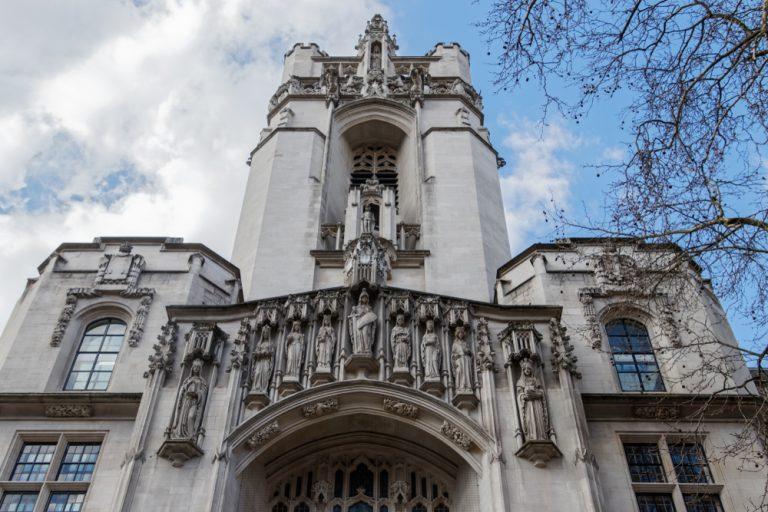
The UK Supreme Court is to hear a court case with a female majority, for the first time since its creation.
Following the swearing in of two new justices, a quarter of the UK’s highest court are now women.
The female justices on the UK Supreme court now include President Lady Brenda Hale, Lady Justice Mary Arden, Lady Jill Black.
Lady Arden became the third woman following her swearing in ceremony this week.
She assumed the position following the retirement of her husband, Lord Mance, who departed from the court back in June.
During the official ceremony, Lady Hale, the court’s president told senior members of the judiciary: “It is a special delight to welcome back Lady Arden’s husband, Lord Mance, who is no stranger to this room.
“But he is with us today in a very different, but no doubt no less proud, capacity as the spouse of a member of the court, rather than as its deputy president.”
Back in 2004, Barroness Hale made history when she was appointed as the first female house of lords judge.
The UK Supreme Court court was founded back in 2009, and the panel consists of 12 justices.
The justices are set to hear their first case today, involving a 19-year old man with learning difficulties, in which they will decide whether his liberties had been deprived.
Despite the momentous moment in UK legal history, Baroness Hale has said that women still remain “seriously underrepresented” in the industry.
The US Supreme Court is similarly facing problems of lack of representation for women.
As of currently, there is only female justice residing on the court – Ruth Bader Ginsburg.
Current President Donald Trump was also tasked with replacing two justices, Anthony Kennedy and and Antonin Scalia.
Notably, current supreme court nominee Brett Kavanaugh, selected by Trump, is undergoing public investigation after allegations of sexual misconduct had been raised against him.
Despite widespread backlash over the appointment, particularly following the publicised trial, Trump mocked accuser Dr Christine Blasey Ford during a rally in Mississippi on Tuesday night.
Tesco offsets one-off costs with profit growth
Tesco Plc (LON:TSCO) have seen a hike in pre-tax profits, despite restructuring costs and fines.
The firm’s pre-tax profits rose 2.2% for the half through August, peaking at £564 million. At the same time, revenue jumped sharply by 11.8% to £31.7 billion. This news came as the company’s sales for the second half to-date have grown 2.7% on-year, sales for the year as a whole of course being supplemented by the acquisition of wholesalers Booker Group Plc (LON:BOK).
“We have made a good start to the year,” chief executive Dave Lewis said.
“The step up in the second quarter is driven mainly by the UK and Ireland and delivers our eleventh consecutive quarter of growth.”
Lewis said he was “delighted” with the performance of Booker since it was acquired in March.
“And we are now more than half-way through the biggest own brand re-launch in our nearly 100-year history, including a significant investment in over 300 new ‘Exclusively at Tesco’ products at market-leading prices,” he said.
However, what has thus far prevented 2018 from being an astronomical success for the supermarket giant have been a series of one-off expenses. In addition to its £3.7 billion takeover of Bookers, Tesco has had to bare the brunt of £57 million to close Tesco Direct, £22 million for restructuring and redundancy, a £16 million in fines for a cyber attack, and then undisclosed costs from their new merger deal with French giant Carrefour (EPA:CA) and the launch of it’s discount chain – Jack’s.
Despite the costs, the company’s chief executive remains understandably optimistic.
“We are firmly on track to deliver our medium-term ambitions and are continuing to improve the quality and value of our offer for customers in all of our markets.”
“In doing so, we are well-positioned to deliver strong, sustainable returns for shareholders.”
The firm have however suffered a dive of 9.69% in their share price, with shares currently trading down 22.8p at 212.4p. Analysts from Shore Capital have reiterated their ‘Buy’ stance on Tesco stock.
Echo Energy shares dip as it completes well workovers

Echo Energy Plc (LON:ECHO) has said that it has completed its programme of intervention for four wells at the Fraccion D project.
The AIM-listed company follows their peers in operations expansion and acquisitions, with its four new wells in Argentina set to begin production in the near future. The first of its four wells has been connected for production, while the company have said the remaining three will move to production shortly, following completion of their ongoing operations.
“I am very pleased to announce the successful completion of our previously announced well intervention activity, and that the first well in the series has already been hooked up to the field facilities and is contributing to our production,” said Fiona MacAulay, Echo chief executive.
“The remaining wells in the programme are in the final process of commissioning and are expected to come online in the coming month.”
However, like some of their counterparts, Echo have recently faced losses. The firm’s share price has dipped to 11p, down 0.25p or 2.22% since markets opened this morning.
Theresa May’s speech: Corbyn, Brexit & fuel duty
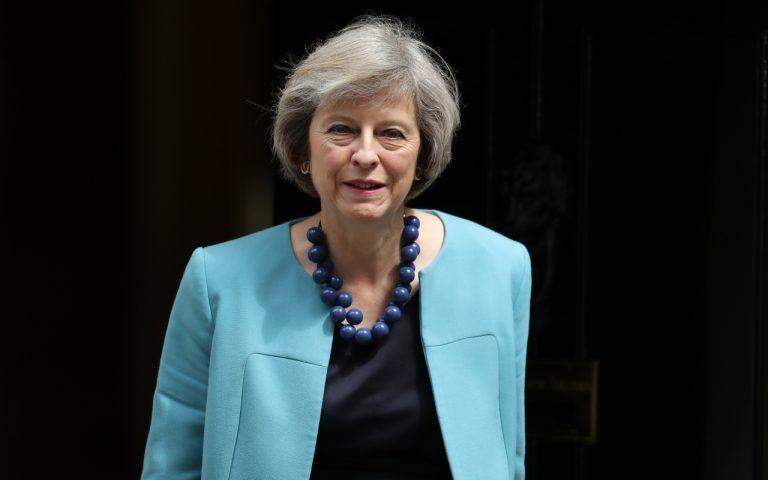
On the final day of the Conservative party’s conference in Birmingham, Theresa May used her speech to attack Jeremy Corbyn.
The prime minister appeared on the stage dancing to Abba’s Dancing Queen and called for Conservative unity, urging her party to “recapture that spirit of common purpose.”
“The lesson of that remarkable generation is clear – if we come together there is no limit to what we can achieve. Our future is in our hands,” she said.
The prime minister criticized Jeremy Corbyn’s labour party, referring to the anti-semitism claims within the party as a “national scandal”.
May also took the opportunity to defend her Brexit strategy, which has come under fire, as well as urging that the Tories must be “a party not for the few, not even for the many but for everyone who is willing to work hard and do their best”.
“Some communities have been left behind. We’re all worse off when any part of us has been left back.”
“We are investing in infrastructure. We are doing more than anyone since the Victorians to upgrade our railways. Our road-building programme is the largest since the 1970s,” she said.
May also announced plans to freeze fuel duty for the ninth consecutive year.
“Some have wondered if there would be a thaw in our fuel duty freeze this year,” she said. “Today I can confirm that in the budget later this month, the chancellor will freeze fuel duty again.”
The move was criticized by environmental campaigners, with Green Party MP Caroline Lucas saying: “Dirty air is killing thousands of people every year, and the government is breaking the law with its negligent failure to cut pollution. The last thing we need is another subsidy to encourage more cars on to our roads.”
“Instead of paying for petrol, she should be investing that money into modernising our creaking public transport network and making our streets safe for walking, cycling and breathing.”Avacta Group sees increased losses following R&D investment

Avacta Group Plc (LON:AVCT) have seen their losses for the second half widen with a 31% increase in research and development.
The move has seen the firm’s R&D costs jump to £3.78 million, with losses through the year dipping from £7.89 million to £10.39 million.
In the meantime however, the company’s £11.6 million fundraiser in July will help it hit necessary milestones in the next couple of financial years. This news coming alongside a modest 1.02% hike in revenue to £2.76 million.
The company remain optimistic for coming years, with the firm stating that they are potentially tapping into a multi-billion dollar market for Affirmers, an alternative for chemotherapy and antibodies that does not rely on killing cancerous cells.
“We are very pleased with the significant operational progress made over the past year which firmly underpins our progress towards key near term commercial and clinical milestones which represent major value inflection points for the Affimer platform and the Group,” said Dr Alastair Smith, Chief Executive Officer of Avacta Group.
“We are very confident that the Group will deliver at least one substantial pharmaceutical licensing deal whilst the technology is still at a pre-clinical stage, during which, we remain focused on getting first-in-man clinical data in 2020.”
The firm’s repeating under-performance is a prime indictment of investing money to make money, an approach being adopted and weathered by other players in the British market. However, should the company’s rounds of R&D prove fruitful in the near future, it would mark monumental progress not only for Avacta’s profits but also for the pharmaceutical sector and the way healthcare is looked at as a whole.
Avacta’s most promising Affirmer programmes are the PD-L1 and LAG3, both of which are said to have the potential to be cures for breast, bowel and lung cancer within the next decade. The Affirmer treatment is a binding protein that can be used to detect difficult targets and address the shortfalls of antibodies and aptamers, at a fraction of the cost.
The firm’s share price is currently trading at 24p, down 1p or 4% since trading began. Analysts from finnCap have reiterated their ‘Corporate’ stance on Avacta stock.