
Vauxhall owner warns consequences of no-deal Brexit
Vauxhall’s owner, Carlos Tavares, has warned the dire consequences for its UK factories in the event of a no-deal Brexit. Whilst Theresa May negotiates the UK’s exit from the EU, Vauxhall’s owner is not alone in expressing fear.
Carlos Tavares has said that Vauxhall’s primary request of the Brexit negotiations is free trade.
In an interview with the BBC at the Paris Motor Show, he said:
“If we don’t have free trade conditions then of course we will have to adapt”.
“That may have dramatic consequences for our operations in the UK, which of course we would like to avoid as much as possible.”
“So for us the situation is crystal clear, we need free trade. That’s the number one request,”
Carlos Tavares is the chief executive of the PSA Group. As well as owning Vauxhall, the group owns Peugeot and Citron and employs 3,000 people across the UK.
Primera Air leaves passengers stranded amid collapse
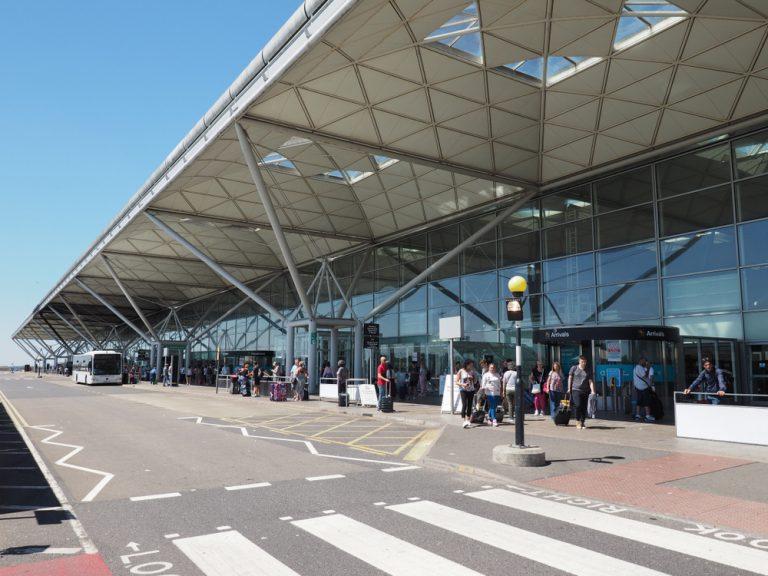
The budget airline, Primera Air, has collapsed. At midnight on Monday, the airline announced that it was terminating all operations.
Earlier this year, the budget airline began offering long-haul flights from the UK. This included flights from London Stansted to Washington and New York in the US.
Flights to the US from Stansted on Monday evening did not depart. Moreover, passengers have been advised not to fly on Tuesday.
The majority of Primera Air’s flights involved flying from Scandinavia to European destinations such as Spain, Greece, Italy and Turkey.
As a result of the airline’s collapse, thousands of passengers have been left stranded abroad.
Primera Air’s cabin crew are also among those left stranded abroad.
One Canadian passenger was set to board a flight from Paris to Toronto. However, in the queue, passengers were informed that the flight had been cancelled. Angela Dorau, Primera Air passenger, said: “Everybody was stranded. Currently my husband and I are in a dumpy motel by the airport trying to frantically scrounge together the funds to pay for another way home.” Moreover, Britain’s airline authority has said it will not intervene to return UK passengers home. The Civil Aviation Authority (CAA) has insisted that it will not intervene because passengers are not Atol protected. Because of this, British passengers will have to arrange their return home themselves. UK passengers have also been advised to contact their travel insurance for further information. This reaction from the CAA contrasts that of when the airline Monarch collapsed last year. The CAA assisted in bringing roughly 110,000 customers home. Consequently, Stansted airport has released the following statement: “Passengers due to travel with Primera Air are advised not to travel to the airport and instead contact the airline direct for the latest information regarding their flight”. “Tour operator passengers are kindly suggested to address their tour operations and agents for further information and actions”. An additional passenger, Tara Noe, had booked a flight to Toronto. The passenger has commented on the airline’s service: “You can’t contact them, they have shut down the phone lines and the website is inaccessible. Everything is shut down, you can’t get anywhere”. A statement on the airline’s website reads: “On behalf of Primera Air team, we would like to thank you for your loyalty. On this sad day we are saying Goodbye to all of you.”Amazon raises minimum wage in US & UK

Amazon (NASDAQ: AMZN) has announced plans to raise the minimum wage for British and American workers.
Employees in the UK will see a rise from £8 an hour to £10.50 in London and £9.50 across the rest of the country, affecting almost 40,000 workers.
In the US, the minimum wage for over 350,000 workers Amazon employees will rise to $15 (£11.57) an hour.
Jeff Bezos, the tech giant’s founder, said: “We listened to our critics, thought hard about what we wanted to do, and decided we want to lead.”
“We’re excited about this change and encourage our competitors and other large employers to join us.”
The change to wages will apply to all workers, including those on full-time and part-time contracts. It will also include seasonal and temporary staff that have been hired by recruitment agencies.
The wage increase in London is higher than the Living Wage recommended earning of £10.20 an hour.
As well as just change the minimum wage within the group, Amazon has also said it would press for a change to the US minimum wage level.
Amazon spokesman Jay Carney said: “We will be working to gain Congressional support for an increase in the federal minimum wage. The current rate of $7.25 was set nearly a decade ago.”
The increase in the group’s wage comes after Philip Hammond pledged to go ahead with a new digital tax on internet companies.
House of Fraser senior management team sacked
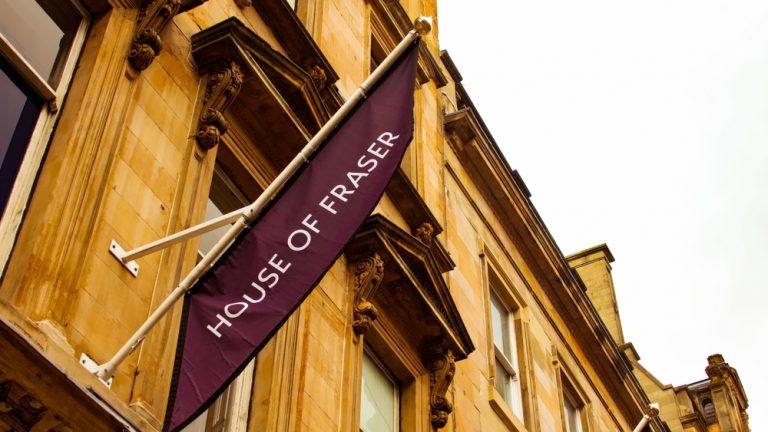
Sports Direct has sacked the entire House of Fraser senior management team. This is following Sports Direct’s acquisition of the department store chain earlier in August.
In August, tycoon Mike Ashley’s Sports Direct purchased the department store, saving it from administration. Approximately 17,500 jobs were at risk had the department store chain collapsed into administration. Sports Direct purchased House of Fraser for a price of £90 million.
The British retail entrepreneur, Mike Ashley, is also the owner of Newcastle United having purchased the club for roughly £135 million.
Sports Direct announced the dismissal in a statement:
“Following the collapse of House of Fraser on August 10 2018, and subsequent calls for an investigation into the circumstances of that collapse, the Company today announces that we have dismissed the former Directors and senior management of House of Fraser.”
House of Fraser is not the only high-street chain struggling at present.
Indeed, its rivals Debenhams and John Lewis are also facing difficulties amid the current economic climate. In fact, John Lewis reported a staggering 99% fall in its profits earlier in September. Prior to sacking the chain’s senior management, Ashley overturned their aim to close 31 of the 59 department stores. In order to achieve this, Ashley negotiated with British land lords to reduce rent bills. As a result, this saved 20 House of Fraser stores and 3,500 jobs. Despite this, various outlets in Edinburgh, Hull and Swindon are set to close down as negotiations with landlords were not reached. A store in Bath is also at risk of closure as negotiations were also failed to be made. That said, Ashley has saved a variety of House of Fraser stores from closing down. Most notably, the department store’s flagship Oxford Street store is set to remain open. Likewise, House of Fraser stores in Altrincham, Aylesbury, Camberley, Carlisle, Darlington, Doncaster, Grimsby, High Wycombe, Lincoln, Middlesbrough and Plymouth are just a few to remain open. At 11:37 BST today, shares in Sports Direct International PLC (LON:SPD) were trading at -0.18%.Toyota warns no-deal Brexit could halt UK production
Toyota Motor (TYO: 7203) has warned that a no-deal Brexit could temporarily stop production in the UK.
Toyota’s chief executive, Johan van Zyl, said that a bad or no Brexit deal would be damaging for the UK car industry and hit investment in the UK.
“If we have anything that has an impact on your competitiveness of manufacturing in the UK, it will definitely have an impact on future investment decisions,” van Zyl told the BBC at the Paris Motor Show.
“The reason for many manufacturers being in the UK is the fact that they could export to the European market duty free – and that is a critical one.”
Various car makers have said that a no-deal Brexit will pose a threat to the UK motor industry.
Jaguar Land Rover recently announced plans to move workers at the Castle Bromwich plant to a three-day week because of “continuing headwinds impacting the car industry”.
Meanwhile, Honda (TYO: 7267) has warned that a no-deal Brexit would cost it tens of millions of pounds.
Maxime Picat, the executive vice president for Europe at Vauxhall owner PSA, has said that a no-deal departure would not “necessarily” hit production.
“We’ve been doing all we can to develop our UK business, restore Vauxhall and Opel profitability, reinvesting in Luton and improving our sites’ competitiveness in order to help them face up to an uncertain future,” he said.
“But there are limits. Those limits are customs barriers, and the loss of freedom of movement, for people and goods. If we get to that point, we will be obliged to take measures.”
“If we suddenly have to start manufacturing for the UK in the UK, and for Europe in Europe, there will necessarily be an impact on UK production,” Picat said in an interview.”
“We’re not going to be dogmatic about it, and there’s no question of punishing the UK. We’d take a look at our two factories, the state of our business, and look for a solution. But I don’t know where that will lead us in terms of the sustainability of our sites.”
“We’re not going to be dogmatic about it, and there’s no question of punishing the UK. We’d take a look at our two factories, the state of our business, and look for a solution. But I don’t know where that will lead us in terms of the sustainability of our sites,” he added.
General Electric boss fired, shares rise 8pc
General Electric’s chief executive (NYSE: GE) has been sacked after just 14 months in the role.
John Flannery will be replaced by General Electric board member, Larry Culp, immediately as the group struggles to return to profit.
Culp said that the group “remains a fundamentally strong company with great businesses and tremendous talent”.
“We have a lot of work ahead of us to unlock the value of General Electrics. I am excited to get to work,” Culp added.
Flannery joined the group less than two years ago and announced a turnaround plan that aimed to simplify the business model of the group.
Since he became chief executive, shares have halved.
On the news of his departure, shares in the group triggered an eight percent share price rally.
General Electrics has also appointed the former American Airlines chief executive Thomas Horton as lead director on the board.
In June, General Electric lost its place on the Dow Jones Industrial Average.
The group also faced fines after pledging but failing to produce 1,000 new jobs by the end of the year.
France’s Labour minister Muriel Penicaud said General Electric would face a €50,000 penalty for every job not created.
The government spokesman Benjamin Griveaux, said: “Sanctions must set an example. €50,000 should be applied by the end of the year if GE does not stick to its commitments.”
Royal Mail shares plunge 18pc on profit warning
Shares in Royal Mail (LON: RMG) fell almost 18 percent after the group issued a profit warning.
In an unscheduled trading update, the Royal Mail cut its profits guidance for this year from £694 million last year to £500 million -£550 million.
Stuart Simpson, the chief financial officer, said: “We are going to be looking at all the levers that we have across revenues and cost [cutting].”
“We are [also] looking at … management layers, head office structure and all discretionary spending. We are doing a full portfolio review.”
Chief executive Rico Back said that trading conditions in the UK are “challenging”, particularly affected by the decrease in marketing mail due to the “ongoing structural decline, business uncertainty and GDPR”.
“I’m very disappointed with the performance we have had to announce today,” Back said. “It is clearly not the announcement we ever wanted to make. Trading conditions in the UK are challenging. Our UK productivity and cost performance has been disappointing.”
Two weeks ago, Peter Long, stepped down from being the group’s chairman after being accused of having too many boardroom jobs.
There is question over whether the group may risk falling out of the FTSE 100 in the next reshuffle.
Helal Miah, an investment research analyst at The Share Centre, said: “After only a few months in charge the new chief executive of Royal Mail has issued a shocking trading update to the market, which was certainly unexpected.”
“Having been hovering around the FTSE 100 relegation lists in the last few quarterly reviews, the shares are now more than ever at risk of dropping out of the prestigious top 100 in the next reshuffle.”
Shares fell 85.7p to 391.4p on the news, an hour before the London market closed.
Dignity shares fall 6pc on Co-op’s price war

Shares in Dignity fell more than six percent on the news that Co-op was cutting funeral prices to beat competitors.
Dignity cut the price of its pre-paid funeral plan by £340 two weeks ago, undercutting Co-op. On Monday, Co-op continued the price war and guaranteed to beat prices.
“The key concern post Dignity’s announcement of price reductions in January to match the Co-op on Simple funerals was that the Co-op would respond – it now has with a £100 price reduction,” said Analyst Charles Hall.
The latest Sun Life report on funeral costs has shown the average cost of a basic funeral to increase for the 15th consecutive year.
According to the report, the average basic funeral now costs £4,271.
Robert Maclachlan, the managing director of Co-op’s Funeralcare business, said the cut in costs were to tackle affordability.
“In the last two years we have seen a huge shift in the number of clients seeking affordable funeral choices,” he said.
The funeral services sector has been investigated by the Competition and Markets Authority (CMA), which launched an investigation to make sure that customers were “not getting a bad deal”.
“There is plenty of evidence that prices are too high,” said James Congdon from Quest, a division of Canaccord Genuity.
“With the backdrop of the CMA investigation into pricing, and clarity of pricing, perhaps its not a surprise that prices are coming down.”
Shares in Dignity (LON: DTY) are currently trading down 0.88 percent at 1.010,00 (1653GMT).
Deliveroo sales double, yet losses increase 43pc on ‘major investments’
Deliveroo has reported sales to almost double to £277 million.
Despite the impressive growth in sales, the privately owned company recorded an increase in losses by 43 percent following major investments.
Deliveroo invested £106 million more last year than in 2016, spending money a new head office based in London and opening Editions pop-up kitchens.
“Our growth is matched only by our ambition. We want to become the world’s definitive food company and we have invested heavily in innovation, technology, people and restaurants. We are changing the way people eat and helping restaurants to expand to new areas and in new ways,” said the group’s co-founder and chief executive, Will Shu.
The company has invested £10 million in order to offer free accident and injury and third-party liability insurance for Deliveroo riders.
The group works with 50,000 restaurants and employs the same number of riders.
Fiona Cincotta, a senior market analyst at Cityindex said: “Deliveroo has no plans of slowing down and says that it will continue investing in further expansion.”
“And this is where the balancing act comes in. While new regions like Taiwan are likely to become a very interesting and fast-growing area for the company it is questionable as to at which point the company’s bottom line will turn black – at the current pace unlikely before the planned IPO.”
“Looking at its competitors it is clear that the expansive growth in the food delivery business can be sustained only for a relatively small number of years.”
“Shares in London-listed Just Eat which listed in 2014 rose rapidly until 2018 but are now trading at roughly the same level as they did at the beginning of the year.”
“German-listed Delivery Hero also recently warned it does not expect to break even this year or in 2019 after investments of €80 million (£71 million),” she added.
Beyond ‘Boris Bikes’: What lies next for Boris Johnson?
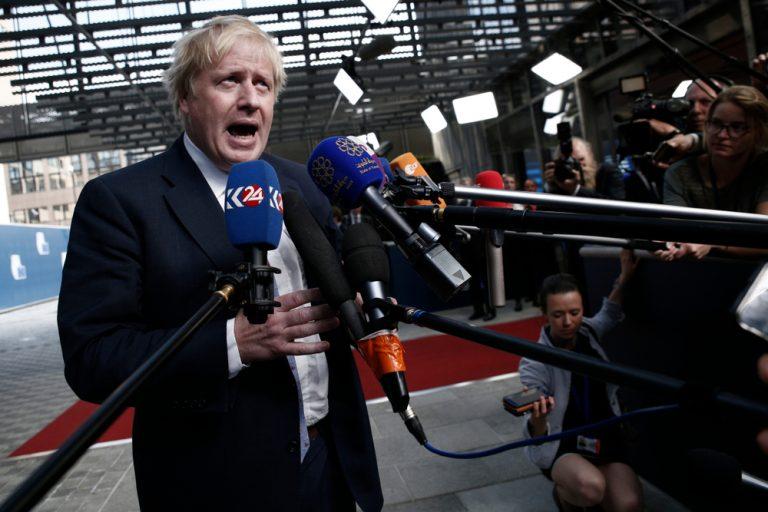
Despite resigning from the cabinet back in July, Boris Johnson is never far from the headlines.
Perhaps one of the most well-known advocates of Vote Leave, Boris Johnson had long been a popular figure in British politics, famed for his superfluous use of language and eccentric character.
However, in recent months, the former London Mayor has proved an increasingly divisive figure within the Conservative party.
Various incidents have cast doubts over whether the former Etonian can indeed emerge as a credible successor to challenge the increasingly unstable leadership of Theresa May.
It seems the former foreign secretary continues to abide by the phrase – there is no such thing as bad publicity.
Towards the end of Johnson’s tenure at City Hall, Boris Johnson commanded an impressive approval rating of 61 percent compared to then Prime Minister David Cameron’s 23 percent, according to polling by YouGov.
Johnson enjoyed a remarkable popularity in an era characterised by mass disillusionment with politics and politicians, and falling turnouts.
It seems Johnson bucked the trend, in turn carving his name as a powerhouse in Conservative politics.
Indeed, he was widely regarded as one of the most influential figures within the party, proving instrumental in securing the success of the Leave Campaign.
The Brexit referendum upset has no doubt marked itself as one of the most seismic political events in the UK’s history, perhaps a testament to Johnson’s gravitas.
However, according to YouGov’s polling, Johnson’s has continued to decline in recent months, suggesting that like most politicians and their relationship with the public, all honeymoons must inevitably come to an end.
Public confidence in Johnson continues to weaken with his support base continuing to fragment, particularly following the fallout from a series of inflammatory comments he made regarding muslim women.
Disintegrating public confidence in Johnson has only been compounded by mounting criticism from his Conservative peers, as the party too question his viability.
Most recently, the chancellor Philip Hammond added to concerns over Johnson’s capabilities as a potential leadership contender, dismissing his ability to engage effectively in ‘grown-up politics’.
Ahead of his speech at the party conference in Birmingham, Hammond told the Daily Mail:
“Boris is a wonderful character, but he’s never been a detail man.”
Moreover, the chancellor suggested that to date, Johnson’s political achievements were limited to the installation of the fleet of ‘Boris Bikes’ he has become associated with.
As such, Hammond decidedly dismissed the notion of Johnson as a future PM. When questioned on the matter, he commented: “I don’t expect it to happen”.
Boris Johnson is known for his tendency to sprout elaborate political statements, often cloaked in colourful adjectives.
Yet, many are starting to question whether there is indeed any substance beyond the style – particularly with respect to Brexit.
His achievements during his time as Foreign Secretary too remain elusive.
His short tenure was dominated by inconsistency, in a government position that necessitates resoluteness, particularly when navigating the murky waters of international diplomacy.
Nevertheless, former journalist and MP for Uxbridge doesn’t seem to be backing down just yet.
A vocal opponent of the Prime Minister’s chequers deal, Johnson has repeatedly taken to his weekly column in The Telegraph to criticise the government’s lack of progress in Brexit negotiations.
Most recently, in a lengthy 4,500 word article, Johnson laid out a potential alternative for Brexit in the form of a ‘Super-Canada’ style deal, perhaps marking his most clear bid for leadership yet.
Specifically, Johnson called for May to renege on the December agreement, keeping Northern Ireland in the customs union and parts of the single market in a bid to avoid enforcing a hard border.
Johnson also advocated that the UK should opt for a “super Canada trade deal” with zero tariffs and quotas, alongside prioritising investment in technology to aid customs.
Moreover, in an interview with the BBC, Johnson crucially failed to dampen speculation that he was indeed preparing to pursue the top job.
“I resigned from the Cabinet because I could not see how I could not see how I could support an arrangement I don’t think is in this country’s interest.”, he said, when pressed on the matter.
Whilst his opponents remain unconvinced of his ‘super Canada’ alternative, Johnson shows no signs of slowing down, as he continues to take aim at Theresa May’s government.
https://platform.twitter.com/widgets.js Having resigned earlier this year from his cabinet position, Johnson will not be making an official speech at this year’s party conference. Nevertheless, Boris Johnson’s absence will be far from felt, as he continues to take up the column inches, and attempt to dominate the front pages. The question still remains – will Johnson stick to commenting behind the scenes, or will he seize the so-called ‘poisoned chalice’ of Brexit? With day two of the conservative conference well under way, all eyes will be on the Prime Minister, Theresa May, who is set to delivers her keynote speech on Wednesday.Boris Johnson just inflicted Theresa May with the greatest trolling in historyhttps://t.co/ewwk82HSI2 pic.twitter.com/JhH4DimBk3
— Mirror Politics (@MirrorPolitics) October 1, 2018