
Coca-Cola eyes up the cannabis market

Coca-Cola Co (NYSE:KO) is closely watching the cannabis-infused drink market. This was announced after a media report said that Coca-Cola and Canada’s Aurora Cannabis Inc were corresponding.
Canadian financial channel BNN Bloomberg, reported the possible product collaboration. This may drive new interest in Coca-Cola as it faces a slump in demand because of its not so healthy beverage.
The partnership between the two companies could be one of the first of its kind. It would make Coca-Cola the first of the major non-alcoholic beverage manufactures to delve into the cannabis market.
Sirius Minerals agrees potash supply deal with Cibra

Sirius Minerals Plc (LON:SXX) has today penned a take-or-pay potash supply agreement with Brazil’s Cibrafertil Companhia Brasileira de Fertilizantes, or Cibra, for supply and resale of POLY4 in Brazil and certain South American countries.
The deal sees the firm’s contracted peak take-or-pay sales volume to 8.2mln tonnes, with an additional exchange being done for a 30% stake in Cibra, in exchange for 95 million Sirius shares. At the same time as agreeing these deals, the London-listed company are also building a potash project in Yorkshire.
“We are delighted to have signed these supply and investment agreements with a leading player in the South American fertilizer market with a proven track record and ambitious growth plans,” said Chris Fraser, Sirius Minerals chief executive.
Cibra chief executive Santiago Franco, meanwhile, added, “We are excited to be entering into this long-term partnership with Sirius to deliver POLY4 into Brazil and other key markets of South America.”
“POLY4 will change the shape of the fertilizer market in South America and Cibra will be at the heart of driving the growth and adoption of this innovative sustainable product across the region.”
Sirius Minerals shares are currently trading up 1.84p or 6.68% at 29.38p. Analysts from Liberum Capital have reiterated their ‘Buy’ stance on the company’s stock.
New iPhones could soon be out of reach for some

Apple Inc (NASDAQ:AAPL) have announced three new iPhone models this week, the XS, the XS Max and the XR, but have since faced criticism for becoming an increasingly luxury brand.
The new phones are priced at £1000, $1100 and $750 respectively, and while the latter seems like a relatively affordable option in comparison to its counterparts and last year’s $1000 iPhone X, it represents a hop from its $700 lower-priced equivalent, the iPhone 8.
This comes as part of a drive from the company to set itself apart from its competitors. It bears an attitude of borderline arrogance, ‘we are better, we do not compete on the same level as the rest’. While Apple products have never been cheap, this represents a seismic shift from the days of Steve Jobs and the iPod Nano, designed to cater to all tiers of tech consumer. This new approach certainly changes Apple’s centre of gravity in the smartphone market.
While the price of the new phones alone may not be enough to convince a reader – and may come of little surprise – the company’s move to discontinue its SE model should be enough to demonstrate a statement of intent. The SE was Apple’s lowest-price iPhone model, retailing at £250 or $350 in the US. With the removal of this product, Apple’s cheapest phone is now the iPhone 7 at $450, which leaves question marks hanging over how long we’ll have to wait before it won’t be possible to buy an iPhone for under $500.
Some may see little difference in the price increases and old model discontinuation, but Apple’s sales figures do. While the company’s profit per unit has jumped from $600 to $724, its sales figures have plateaued over the last four years.
More revenue than ever is pouring into the company and it has just hit a trillion dollars in value. Surely though, one can’t help but think that one of Apple’s major strengths is tying customers up in its iOS/Cloud/iTunes user-face, but getting new customers involved and tied into your tech only works if you can entice them in the first place.
Critics have noted Apple’s prices have risen faster than market forces such as comparative wages or GDP per capita, and thus they risk excluding lower economic tiers who represent a large proportion of their customer base. Similarly, such concerns echo as bad omens in emerging markets such as China and India, especially with the rise of Chinese smartphone giant Huawei.
What these critics have perhaps failed to realise is the idea of monopolising a section of the market. Apple has plenty of competition in the smartphone market, so perhaps this move is a long-term strategy to monopolise the luxury bracket of the market, while its competition fight for control beneath them.
Paperchase insurer abandons retailer’s suppliers

Paperchase is under renewed pressure after one of its main credit insurers withdrew its cover.
Following a a slump in profits, Euler Hermes has refused to cover new contracts with the retailer’s suppliers.
“We’re in discussion with [Euler Hermes] around why we believe this decision should be reversed. Paperchase has excellent long-term relationships with suppliers and very supportive lenders and owners. Trading so far this year is in line with expectations,” said Paperchase.
The group has been owned by the private equity firm Primary Capital for the past eight years and sells greetings cards, mugs and stationary.
The company was founded in 1968 by Judith Cash and Eddie Pond and currently employs an estimated 2,000 people.
Latest accounts have shown pre-tax profits to have fallen 88 percent to £613,000 in the year to the end of January 2017. Revenues were up by four percent to just over £119 million.
The high street faces a difficult time as retailers struggle amid weak consumer spending which has resulted in business failures, mass store closures and tens of thousands of job losses.
Retailers including Mothercare (LON: MTC), Carpetright (LON: CPR), Byron and Prezzo, have resorted to company voluntary arrangements (CVAs) whilst groups including Toys R Us and Maplin have fallen into administration.
In August, House of Fraser collapsed into administration and was purchased by Sports Direct’s (LON: SPD) Mike Ashley in a £90 million deal.
Chancellor, Philip Hammond, said: “We want to ensure that the high street remains resilient, and we also make sure that taxation is fair between business doing business the traditional way, and those doing business online.”
“We may have to look at temporary tax measures to rebalance the playing field until we can get international agreements sorted out.”
Karhoo is on the road to recovery

Karhoo is back after it collapsed into administration two years ago, the Times reports. Originally, the British business was an “Uber wannabe”, rivalling London’s most popular app-based taxi service.
In late 2016, Karhoo faced administration. The first version was launched in May 2016 and expanded into nine other British cities along with New York, Paris and Singapore. However, flaws in its promotional campaign and a faulty payment system damaged the business. Not to mention the extravagant spending of its founder.
But, two French bankers have reshaped Karhoo. Boris Pilichowski and Nicolas Andine gained control after the business was appointed administrators.
Today, the only traces of the original Karhoo that remains is its name. RCI Banque and Renault now back the business. Additionally, it operates from WeWork offices in Paddington.
Moreover, Karhoo now targets train operators, airlines and hotels. It allows businesses to provide customers with taxis and private hire vehicles via Karhoo technology.
Karhoo now operated in 125 countries with 1.5 million vehicles and 100 staff.
Amazon under fire amid allegations of staff selling customer data

Online commerce giant Amazon (NASDAQ:AMZN) is under the cosh following claims that employees accepted bribes in exchange for confidential customer information.
According to findings from a report published by the WSJ, independent merchants who sell through the website were paying brokers for Amazon employees up to £1500 for data such as internal sales metrics, reviewers’ email addresses, and the ability to delete negative reviews, as well as the ability to restore banned accounts.
The alleged phenomena has been particularly “pronounced in China”, with the bulk of sales being proliferated in Shenzen.
The company have said they are carrying out a “thorough investigation”, which began in May when the practice was first brought to light.
In a statement, Amazon commented on their position toward relevant third parties, “We have zero tolerance for abuse of our systems and if we find bad actors who have engaged in this behaviour, we will take swift action against them, including terminating their selling accounts, deleting reviews, withholding funds, and taking legal action”.
Regarding its staff, the company have said, “We hold our employees to a high ethical standard and anyone in violation of our Code faces discipline, including termination and potential legal and criminal penalties”
The company hope to stamp out internal malpractice as friction persists with the UK government over tax avoidance. Amazon shares are currently trading at $1.970,19, down $19,68 or 0.99% since trading began.
Brexit: Theresa May defiant amid Chequers plan criticism
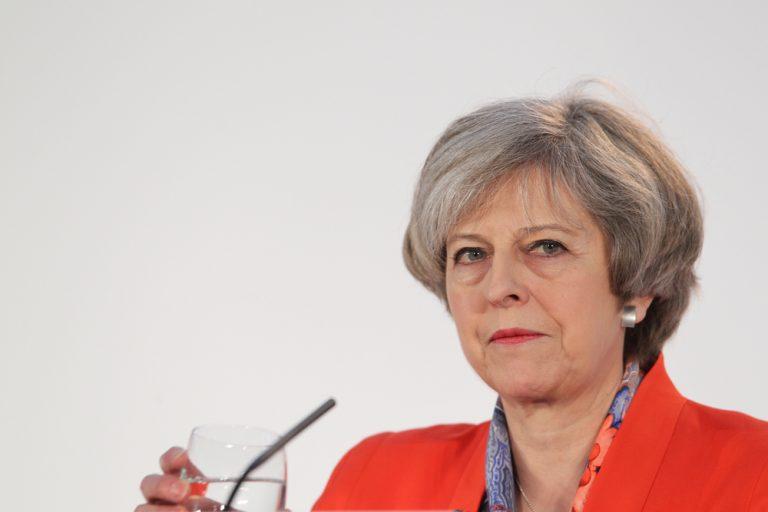
Theresa May defended her proposed Chequers plan for Brexit in an interview with the BBC.
In an interview with Panorama, The Prime Minister said: ‘it’s either my deal or no deal’, despite mounting opposition from Brexiteers over her Chequers proposal.
With respect to negotiating a deal, Theresa May remained optimistic of the road ahead, she commented:
“I believe we will get a good deal. We will bring that back from the EU negotiations and put that to parliament. I think the alternative to that would be not having a deal because, a) I don’t think the negotiations would have that deal, and b), we’re leaving on the 29 March.”
Rejecting the idea that the UK could potentially renegotiate deals once that have been agreed, as suggested by Michael Gove, May said:
“Do we really think that the European Union, if we’ve been through this negotiation, we get to the point where we’ve agreed a deal, that if parliament was to say ‘No, go back, get a better one’, do you really think the European Union is going to give a better deal at that point?”
Gove, who is the government environment secretary and was a prominent figure in the Leave campaign, recently said that the Chequers plan could be ‘undone’ following the completion of withdrawal from the EU.
On Sunday, Gove told the BBC’s Andrew Marr Show that “a future prime minister could always choose to alter the relationship between Britain and the European Union.”
He added:
“But the Chequers approach is the right one for now because we have got to make sure that we respect that vote and take advantage of the opportunities of being outside the European Union.”
Nevertheless, May dismissed the notion of the UK renegotiating the terms in the Panorama interview .
May also took the opportunity to criticise plans to resolve the Irish border issue.
Boris Johnson, who recently resigned as Foreign Secretary, nevertheless criticised the government’s lack of solution for the border as a “constitutional abomination”.
Moreover, Prime Minister May also expressed her annoyance regarding ongoing speculation regarding the future of her leadership.
Both Boris Johnson and Michael Gove had been tipped as potential leaders before Theresa May took over the party.
Johnson’s resignation has only reignited speculation that he is vying to replace May as leader of the Conservative party.
However, Johnson has proved a particularly controversial figures as of late, following his inflammatory remarks regarding muslim women wearing burqas.
Johnson has since refused to apologise for the comments, however, the party are increasingly under pressure to initiate a formal inquiry into the issue.
The Muslim Council of Britain has called for Conservative to tackle Islamophobia within the party on the back of Johnson’s divisive comments.
Robots to create 133m jobs globally in the next decade

The World Economic Forum (WEF) has said that machines, robots and algorithms could create roughly 133 million jobs globally. In comparison to the 75 million jobs that could be replaced, this figure is almost double.
Key findings of the report include trends in robotization of the workforce. Stationary robots, non-humanoid land robots, fully automated aerial drones, machine learning algorithms and artificial intelligence interest businesses significantly.
Moreover, robot adoption rates do vary by a significant amount across different sectors. That said, as many as 37% of companies plan on investing in robots. Notably, the Financial Services industry are most likely to plan the adoption of humanoid robots in the period up to 2022.
It is estimated that robots may displace 75 million jobs. But, up to 133 million new roles may emerge as a result of the adoption of this new technology. As a result, this alleviates fears that the rise of technology may cost millions of workers their jobs.
The study is based on a survey of company executives representing 15 million workers in 20 different nations.
Additionally, Chairman of the WEF, Klaus Schwab, wrote in the report:
“Workforce transformations are no longer an aspect of the distant future. As shown in the five-year outlook of this report, these transformations are a feature of today’s workplaces and people’s current livelihoods and are set to continue in the near term. We hope this report is a call to action to governments, businesses, educators and individuals alike to take advantage of a rapidly closing window to create a new future of good work for all.”
Housing booms in four regions and London market shows signs of resurgence

In September, Rightmove has reported a 16% on-month increase in new properties coming onto the market, with some areas seeing an annual price increase of over 4%, and the upper echelons of the London housing market enjoying increased liquidity amid a price dip.
While property prices are down 1.1% on-year in the North East and 0.5% in London, the latter is not necessarily a cause for upset. In the last few months, people have started clocking onto the house price slump that has been coming for the last couple of years with buyers flocking to the market en masse.
However, against the trends of 2011 to 2016, the London market is not at the centre of the prosperity. While recent figures for the capital are promising, other – not previously hyper-inflated – regions are having the greatest joy in what analysts are calling the period for smart money. Prices in the East Midlands are up 4.7%, Wales up 4.6%, the West Midlands 4.5% and Yorkshire and the Humber 4%.
Rightmove director, Miles Shipside, has said: “The start of the back to school season sees a surge of sellers coming to market compared to the preceding quieter holiday period.”
“Sellers aren’t hanging back in coming forward to try and sell, and with average prices just 1.2% higher than a year ago, many seem to be pricing sensibly.”
He added, “Now, there are signs that these price reductions in parts of London have led to an upturn in buyer activity as sentiment improves.”
However, “The recovery in the upper end in London is encouraging but the painful and drawn-out process of price reductions has yet to run its course especially in parts of Outer London and the commuter belt that saw very sizeable and unsustainable price rises”.
The dwindle preceding this recent liquidity was attributed to political factors such as Brexit uncertainty and recent taxation policies, as well as natural decline with prices hitting record highs.
Going forwards, fear in the housing market remains around the implications of Brexit and the possibility of a Labour government. The issue is, if markets react prematurely to recent liquidity and prices are pushed up once again, the idea of a post-Brexit housing slump could become a falsely fulfilled prophecy.
Christie Group shares up amid strong first half results

Christie Group shares (LON:CTG) soared on Monday after the company posted its interim results for the first six months of the year.
The professional business services company reported that first half revenues were up 10 percent to £38.4 million, compared to £34.9 percent a year previously.
First half operating profit came in at £2.0 million, up from £1.1 million in 2017. Basic earnings per share also increased to 5.18p from 1.53p.
Moreover, the interim dividend rose to 1.25p per share, compared to 1.0 p last year.
The group attributed the strong performance to enhanced performance from international operations as well as various ongoing and future projects in the pipeline.
Commenting on the results, David Rugg, Chairman and Chief Executive of Christie Group said:
“the first half saw progress in performance and our services remain in demand from sophisticated commercial audiences”.
Christie Group is part of the AIM market, constituent of the London Stock Exchange.
The firm has 44 offices across the UK, Canada and Europe, with a particular focus upon the leisure, retail and care industry.
The company was founded back in 1846, with is now comprised of two divisions.
These include its professional services operations as well as its stock inventory systems and services.
Shares in Christie Group are currently trading +3.82 percent as of 11.02AM (GMT), as investors react to the news.
Elsewhere in the markets, shares in high street retailer H&M rallied after posting strong sales for q3.
Sales in the three months to August-end rose 9 percent, beating forecasts.
Moreover, rival retailer Intidex, which owns Zara, reported a three percent growth in sales for the first-half of the year.
This proves welcoming news for the retail sector, with many high street stores feeling the effects of an increasingly difficult trading environment.
Various highstreet giants have announced the closure of many stores in recent months, as retailers battle to offset the impact of falling foot-fall and lower discretionary spending levels among consumers.