
New Look financial worries exposed in full-year report
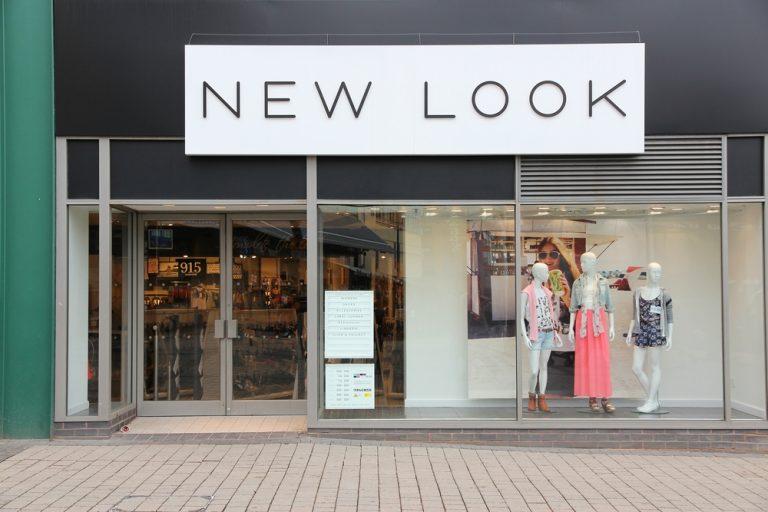
New Look became the latest store to fall victim to the high street crisis, after its worrying performance was exposed in its full year report on Tuesday.
New Look reported an underlying operating loss of £74.3 million for the full year period ending March 24th, compared to last year’s profit of £97.6 million. Even that was down from £174.7 million the year prior.
New Look’s UK sales plunged 11.7 per cent on a like-for-like basis, and website sales dropped by 19 per cent.
“Last year was undoubtedly very difficult for New Look, with a well-documented combination of external and self-inflicted issues impacting our performance,” executive chairman Alistair McGeorge said.
“Since November, we have focused on making the necessary changes to get the company back on track and reconnect with our customers.
“Our turnaround plan is now well underway, and we have already made substantial operational improvements to help stabilise the business, reduce our fixed cost base and put us in a better position to drive future full price sales.”
New Look has been on the high street since 1969, but has struggled in the recent climate to keep up with online-only stores. The group announced a series of store closures several weeks ago, and as part of its plan is aiming to sell 80pc of its clothes for under £20.
Phoenix Global Resources shares down as production slips

Phoenix Global Resources (LON:PGR) reported a slip in production in its first quarter, sending shares down in early trading.
The group said it had relinquished a drilling concession and switched its focus to new development drilling at another, sending first-quarter output down to 10,749 barrels of oil equivalent per day. This is down from 11,537 boepd in the fourth quarter of 2017.
The group reported an average Q1 production of 10,749 boepd, consistent with full year 2017 production, with operating costs of US$17.10 per barrel of oil equivalent.
Anuj Sharma, CEO said:
“Year to date we have made great progress in securing key unconventional acreage and operatorship positions giving us control over the work programmes and capital spend.
“Looking forward we have an exciting 2018 drilling campaign, focused on the appraisal of Phoenix’s significant unconventional Vaca Muerta acreage at Puesto Rojas and Mata Mora, including our first horizontal wells.”
Shares in Phoenix Global (LON:PGR) are currently trading down 1.78 percent at 22.10 (0845GMT).
Ted Baker defies high street gloom to report surging sales
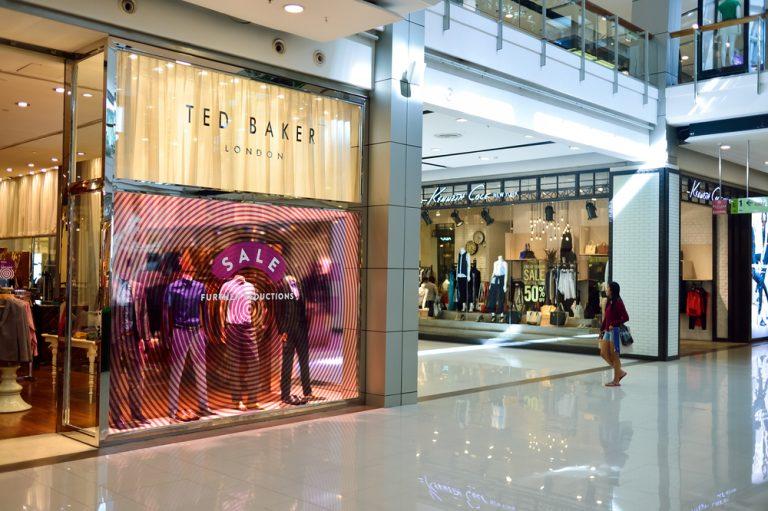
Fashion retailer Ted Baker (LON:TED) defied recent high street gloom in its half year results on Tuesday, despite unseasonal weather throughout the period.
Revenue rose 4.2 percent in the half year to June 2018, despite the Beast from the East in the UK and severe storms in the US dampening footfall.
For the 19 weeks from 28 January to 9 June, Ted Baker saw sales grow by 7.5 percent in constant currency terms, with total retail sales, including e-commerce, increasing by 0.7 percent. Wholesale sales for the period increased by 14.2 percent.
“This performance was achieved despite the impact of unseasonal weather across Europe and the East Coast of America in the early part of the period and, as previously reported, external trading conditions remaining challenging across many of our global markets”, the company said.
Average retail square footage rose by 5.7 percent to 420,799 square feet, and both retail and wholesale gross margins came in in line with expectations.
Ray Kelvin CBE, founder and chief executive, said: “We have made significant investment in our flexible business model to ensure that the Ted customer has multiple channels to engage with the brand.”
Shares in Ted Baker fell however after the group warned on external trading conditions. Shares are currently trading down 2.18 percent at 2,334.00 (0830GMT).
British American Tobacco shares edge up on trading update

British American Tobacco (LON:BATS) shares edged up slightly at market open on Tuesday, after it confirmed trading in line with expectations but warned on currency pressures going forward.
The group said it expected earnings growth to come under pressure amid a stronger pound going into the second half of 2018, with first half earnings per share also expected to be impacted by a currency translation headwind of 9 percent.
Lower industry volume in the US is also likely to hit revenue in the first half, despite the group setting to benefit from US tax reform.
The cigarette maker updated markets on Tuesday ahead of the release of its half year results on July 26. Looking ahead, it aims to grow its market share to next generation products (NGPs), aided by significant funding from US tax reform benefits.
Shares in British American Tobacco are currently 0.78 percent at 3,775.82 (0814GMT).
KPMG fined £4.5m over Quindell audit
KPMG has been fined £4.5 million over its audit of insurance firm Quindell.
The Financial Reporting Council (FRC) has fined both KPMG and audit engagement partner William Smith over misconduct in the year to December 2013.
The FRC said: “KPMG and Mr Smith, members of the Institute of Chartered Accountants in England and Wales (ICAEW), have admitted that their conduct fell significantly short of the standards reasonably to be expected of a member and a member firm and that they failed to act in accordance with the ICAEW’s fundamental principle of professional competence and due care.”
“The misconduct related to two audit areas, and included failure to obtain reasonable assurance that the financial statements as a whole were free from material misstatement, failure to obtain sufficient appropriate audit evidence and failure to exercise sufficient professional scepticism.”
KPMG was fined £4.5 million, while William Smith was fined £120,000.
The FCA started their investigation into KPMG’s 2013/14 auditing in 2015 after almost £1 billion was wiped off the value of Quindell in 2014.
When Gotham City Research released a note calling Quindell “country club built on quicksand”, investors questioned the group’s value sending shares in the firm to plunge.
KPMG commented: “Audit quality, and professional scepticism in particular, is of paramount importance to our firm. We have cooperated fully throughout the FRC’s investigation, and have already updated our audit processes and procedures to address the areas of concern.”
“We regret that some aspects of our audit for the year ended 31 December 2013 did not meet the required standards. As we stated in our audit opinion for the following year, certain information given to KPMG contradicted representations previously made by former members of management. Nonetheless, we accept the FRC’s findings that in two specific areas of the audit, our challenge for the year ended 31 December 2013 should have gone further,” the spokesperson added.
The FRC is also investigating KPMG’s auditing of the collapsed firm Carillion.
UK retains top spot for FDI – for now

The UK remains the top spot for attracting foreign direct investment (FDI), but Brexit uncertainty continues to lessen its lead, according to newly released figures.
Last year the UK attracted 6 per cent more FDI developments than 2016, according to figures collated by EY in a survey of 450 global investors.
After London, Scotland proved the most attractive location for foreign investment, with a marked rise in particular with respect to research and development projects in the region.
A 70 per cent increase revealed Scotland as the best-performing part of the UK, with Scotland’s share comprising 24 percent of the UK overall.
However, the UK fell behind France, which grew by 3 per cent, overall lagging behind the European average growth rate of 10 per cent.
According to EY’s figures, the UK’s market share fell for the second consecutive year in 2017, and is likely to suffer further falls.
As a result, the data revealed that investors were leaning towards Germany for future projects. France followed in second place boosted by the election of pro-business Macron, with the UK coming in at third.
Whilst Britain welcome a 22 per cent bolster in foreign investment into digital enterprises, this compared to an average 33 per cent rise recorded across Europe.
Investor anxiety with respect to economic uncertainty relating to Brexit was particularly evident in sectors such as financial services, with the number of firms opening headquarters in the UK on the decline.
EY senior partner in Scotland, Mark Harvey, said: “Scotland has demonstrated an outstanding ability to attract and drive sustained growth of FDI.
“However, the performance of the UK as a whole within Europe is a signal that competition for FDI projects is intensifying and our previous levels of attractiveness are not guaranteed to continue.”
He added: “Economic growth (in Scotland) is positive, but sluggish, and access to labour is a recurring challenge that makes it more difficult to expand operations.
“Scotland must work increasingly hard, with private and public sectors in partnership, to ensure the pipeline of talent, skills and experience is strong enough to drive business and economic growth in the future.”
Poundworld collapses into administration
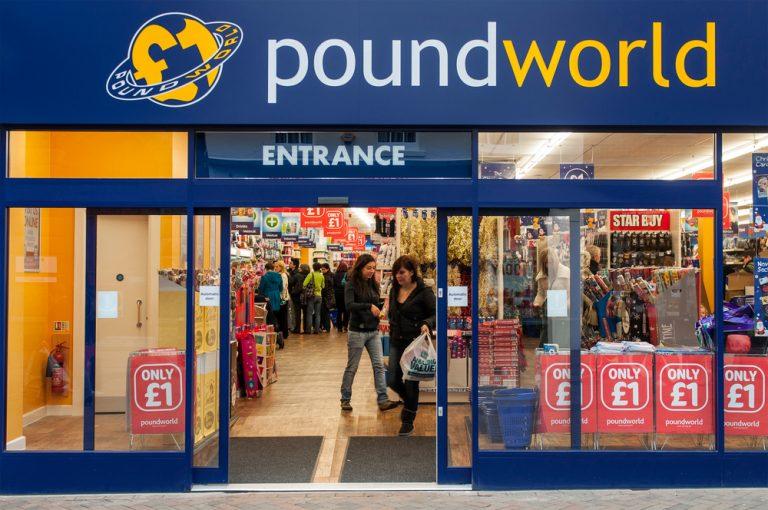
Troubled retailer Poundworld has appointed administrators after rescue talks failed to progress.
the discount shop was forced into administration this week after talks with potential buyer, R Capital, collapsed.
The unravelling of the chain, which operates some 355 stores across the country, means over 5,000 jobs are at risk.
Deloitte, the administrators, have insisted that Poundworld will continue to operate as usual with no redundancies as of yet.
It said in a statement: “Like many high street retailers, Poundworld has suffered from high product cost inflation, decreasing footfall, weaker consumer confidence and an increasingly competitive discount retail market.”
A spokesperson from TPG, the owner behind the group, said: “This was a difficult decision for every party involved. We invested in Poundworld because of our belief in how the company serves its customers and the strength of its employees.
“Despite investing resources to strengthen the business, the decline in UK retail and changing consumer behaviour affected Poundworld significantly.”
News of Poundworld’s impending collapse first began circulating last week when another potential buyer, Alteri Investors, pulled out from negotiations.
The discount retailer is the latest in a series of UK retailers grappling with an increasingly challenging trading environment.
New Look, Marks & Spencer’s, Carpetright and House of Fraser have all announced store closures in recent weeks, prompting concerns about the death of the UK high street as we know it.
Bitcoin price plummets after cryptocurrency hack

The price of Bitcoin plummeted substantially on Monday morning, after the market reacted to the news of the hacking of South Korean cryptocurrency exchange, Coinrail.
A tweet from Coinrail confirming the hack sent the price of Bitcoin down 10 percent on Sunday, loosing $500 (£372) an hour.
Some sources have speculated that Coinrail lost cryptocurrencies totaling as much as $40 million in the cyber attack.
According to its website, the exchange has already suspended services after the “cyber intrusion,” which led to a number of ERC-20 based tokens being stolen.
In a statement, Coinrail said: “70% of total coin and token reserves have been confirmed to be safely stored and moved to a cold wallet [not connected to the internet]. Two-thirds of stolen cryptocurrencies were withdrawn or frozen in partnership with related exchanges and coin companies. For the rest, we are looking into it with an investigative agency, related exchanges and coin developers.”
Bitcoin is currently trading at $6783.31, down from its Christmas peak of nearly $20,000.
The cyber attack adds to concerns over the vulnerability of said unregulated currencies, in light of weak regulation.
Cryptocurrencies remain controversial, with many governments across the globe calling for greater regulation across the market.
Back in March, Bank of England Governor Mark Carney spoke out against Bitcoin, calling for a crackdown on deregulated currencies.
“The time has come to hold the crypto-asset ecosystem to the same standards as the rest of the financial system,” said Carney at the Scottish Economics Conference in Edinburgh.
“Being part of the financial system brings enormous privileges, but with them great responsibilities. In this spirit, the EU and the US are requiring crypto exchanges to meet the same anti-money laundering and counter the financing of terrorism standards as other financial institutions.
“In my view, holding crypto-asset exchanges to the same rigorous standards as those that trade securities would address a major underlap in the regulatory approach.”
UK manufacturing faces worst month in five years

April saw worst month for UK manufacturing in over five years, with a 1.4 percent fall in factory production.
According to the Office for National Statistics (ONS), April was the steepest fall since October 2012 and marked the third consecutive fall.
“Manufacturing fell in the three months to April with electrical machinery and steel for infrastructure projects seeing reduced production,” said Rob Kent-Smith, the ONS’ head of national accounts.
“International demand continued to slow and the domestic market remained subdued. However, oil and gas production grew strongly in the aftermath of the Forties pipeline closure at the end of last year.”
The poor results led to the fall in the pound, which slipped 0.35 percent against the dollar to $1.3368.
Construction was also weaker than expected for April and grew just 2.3 percent in May.
Suren Thiru of the British Chambers of Commerce said: “It is possible that the UK is now moving past the recent sweet spot for exporters, with growth in key markets moderating and the impact of the post-EU referendum slump in sterling, which has helped some exporters, subsiding. The possibility of an escalating trade war has added to the downside risks for exporters.”
GDP growth in the first quarter of the year slumped to 0.1 percent. The Bank of England held off from increasing interest rates in May and remains optimistic for positive results.
“The very poor set of April industrial production, construction output and trade data can only fuel Bank of England concerns and uncertainties over the economy and there can be no doubt that the [Bank’s Monetary Policy Committee] will leave interest rates unchanged at their June meeting next week,” said Howard Archer of the EY Item Club.
“The data also make an August interest rate hike by the Bank of England look a lot more questionable,” he added.
The UK trade deficit was also seen to increase to £5.3 billion in April. This is the largest amount since September 2016.
Amazon commits to post-Brexit Britain with plans to create 2,500 jobs

Amazon (NASDAQ: AMZN) has committed to UK expansion, despite uncertainty surrounding Brexit.
The retail giant has said it will create over 2,500 jobs in the UK this year including 650 head office roles.
Doug Gurr, the company’s UK and Ireland boss, said: “The UK is a fantastic place to do business.”
“We are trying to make sure all the businesses that work with us can continue to operate effectively … We don’t yet know exactly what the rules [on trading after Brexit] are going to be. We will wait and see what happens and adapt as necessary,” he added.
The group employed about 24,000 at the end of last year but hopes to increase this number to 27,500 by the end of 2018.
Building several new warehouses in the UK, the group hopes to employ experts in speech science and machine learning in order to develop its smart speakers and the Alexa personal assistant.
Amazon has invested £9.3 billion in the UK since 2010 and has created thousands of jobs. This is unlike retailers including Tesco (LON: TSCO) and Sainsbury’s (LON: SBRY), which have both cut thousands of jobs this year amid the Brexit uncertainty.
CEO Jamie Dimon of JP Morgan (LON: JMC) said that the group may cut over 4,000 jobs in the UK if a suitable Brexit deal isn’t reached.
Amazon is currently facing legal dispute over employment rights of delivery drivers. The group has also been criticised over the conditions for workers in warehouses.
Gurr has said he is “proud of working conditions across all parts of our business” and said the group runs public tours of warehouses and the public are able to see the facilities for themselves.
The Amazon boss has not commented on whether the group plan to buy Waitrose (LON: JLH) in order to expand the business.