
Speedy Hire boosted by strong UK construction market

Speedy Hire (LON:SDY) reported an increase in both profit and revenue for the full year, after a strong performance in the UK construction markets.
Pre-tax profit rose 25 percent to £18 million, as revenue rose 2.2 percent to £377.4 million. Adjusted pre-tax profit rose 60 percent to £25.9 million, with the company boosting its dividend for the year by 65 percent to 1.65p per share.
The specialist equipment hire firm cautioned that the market remains “competitive”, but said the start was “encouraging”.
“We are delighted with these results which reflect a strong operational performance, robust capital management, the benefits of the strategy which was launched in September 2015, the impact of our recovery initiatives and some earlier-than-expected acquisition synergies,” chief executive Russell Down said.
Shares in Speedy Hire are currently up 0.72 percent at 59.42 (0934GMT).
Marston’s swing into loss in H1

Pub owner and brewer Marston’s (LON:MARS) saw shares sink nearly 5 percent on Wednesday morning, after swinging into a loss for the first half.
Pre-tax losses amounted to £13.4 million, compared to a profit of £36.7 million the previous year. Underlying pre-tax profit rose 8 percent to £36.3 million, while revenue was up 20 percent to £528.1 million.
Accounting adjustments relating to the estate valuation and changes in the fair value of interest rate swaps were responsible for the loss.
The group kept its dividend steady, maintained at 2.7p per share.
Marston’s remained confident about its prospects heading into 2018, hoping to deliver growth in both revenue and underlying pre-tax profit in 2018.
“We are pleased to report another period of good growth in revenue and underlying profit before tax,” chief executive Ralph Findlay said.
“Strong trading in brewing and taverns and leased pubs offsets the adverse impact of poor weather on ‘drive-to’ pubs in our destination estate, further validating the resilience of our model.”
Shares in Marston’s (LON:MARS) are currently trading down 4.38 percent at 107.10 (0924GMT).
Coats Group shares down despite 5pc sales jump in Q1

Thread maker Coats (LON:COA) reported a 5 percent jump in sales in the first quarter of the year, after a strong performance in its industrial division.
Strong industrial sales boosted the results, rising 6 percent on a constant currency basis, with a 3 percent increase in its footwear business driven by improved performance in the Asian markets. Its performance materials business grew by 19 percent year-on-year.
Tough market conditions in North America spurred weaker performance in the crafts division, however, which saw sales decline by 4 percent on a constant currency basis.
“The group continues to perform well, and anticipates delivering 2018 full year results in line with management’s expectations,” the firm said.
In February the group said it would be starting 2018 in a “strong position”, adding that a “refocused strategy” would boost the North American crafts business.
Shares in Coats Group (LON:COA) are currently trading down 2.07 percent at 81.78 (0906GMT).
Burberry shares up as cost savings boost annual figures
Shares in luxury fashion retailer Burberry (LON:BRBY) edged up on Wednesday morning, after posting a 5 percent increase in annual profit to £467 million.
Retail growth, improved beauty profitability and cost savings supported the group’s earnings in the year to March, despite total revenue falling 1 percent.
Sales from Burberry’s own stores increased 3 percent, with same-store sales also up 3 percent on improved performance in the US. After stripping out the benefit of currency movements, adjusted profit before tax rose 2 percent.
The firm also announced it would launch a £150 million share buyback programme expected to be completed in 2019. It confirmed that cost-cutting plans were ahead of schedule, with £64 million of annualised savings achieved in the past year.
“In a year of transition, we are pleased with our performance as we began to execute our strategy. While the task of transforming Burberry is still before us, the first steps we implemented to re-energise our brand are showing promising early signs,” said Marco Gobbetti, Chief Executive Officer.
Shares in Burberry (LON:BRBY) are currently trading up 1.91 percent at 1,838.00 (0952GMT).
Moss Bros shares soar 10pc despite “disappointing performance”
Men’s retailer Moss Bros Group (LON:MOSB) reported a 2.4 percent fall in sales in the first 15 weeks of the year, with CEO Brian Brick calling it a “disappointing performance”.
Like-for-like sales for the period slipped 5.2 percent, a slight improvement on the 6.5 percent ran rate seen in March, at which time reported sales had fallen by 4.4 percent.
The results follow a profit warning issued in March that wiped a third off the value of its shares.
“Following a disappointing start to the year, our trading performance has, as anticipated, begun to improve, as a result of our improving stock availability,” chief executive Brian Brick said.
“The wider trading environment, however, remains tough with a fragile consumer environment.”
“We remain conscious of the economic headwinds which we face but will, as described in March, continue to invest in the areas that ensure we leverage our distinct position on the high street.”
Shares in Moss Bros (LON:MOSB) are currently up over 10 percent on the news, at 52.53 (0845GMT).
Cineworld record 10pc revenue boost after strong box office figures

Cineworld (LON:CINE) shares sunk slightly on Wednesday morning, despite recording a 10 percent revenue boost for the full year.
The group confirmed that it expects performance to be in line with expectations, with the group seeing admissions rising by 1.1 percent for the period from 1 Jan to 13 May. Black Panther and Avengers: Infinity War were the biggest drivers of sales throughout the period, with box office revenue growing 9.6 percent on a pro-forma basis.
The group also announced a deal with Casual Dining Group on Wednesday, the leading UK-based mid-market restaurant company that includes the Bella Italia, Café Rouge, Las Iguanas, Belgo and La Tasca restaurant chains. The partnership deal will last for three years.
This follows on from another strategic move by Cineworld earlier this year, the $3.6 billion reverse takeover of US rival Regal Entertainments. The deal created one of the world’s largest cinema chains with hundreds of movie theatres across the United States, Europe and Israel.
Shares in Cineworld (LON:CINE) are currently trading up 0.29 percent at 271.40 (0935GMT).
CYBG report loss after £350m PPI hit
Clydesdale and Yorkshire Banking Group (LON: CYBG) have swung into the red following large fines for payment protection complaints.
CYBG posted a loss of £95 million from last year’s profit of £46 million after putting aside £350 million for misselling PPI.
The FTSE 250 lender has estimated that 110,000 of its customers will complain in the run-up to the August 2019 deadline. City regulators are planning to step up a campaign to ensure customers who are eligible will complain and receive compensation.
The bank is currently in talks with Virgin Money (LON: VM) for a potential £1.6 billion takeover.
The approach was revealed last week, where CYGB plan to give investors 1.13 of its shares for each Virgin Money share. This will give them a 36.5 percent share of the total group.
In a bid to win approval from Virgin Money, CYBG will continue the Virgin Money brand. The lender has until June 4 to formally propose or withdraw its proposal.
Despite the poor results, City analysts believe a takeover of Virgin Money will make strategic sense.
“The absence of inorganic growth” for CYBG means that a deal with Virgin Money looked sensible for the bank and shows “management confidence”.
The group’s chief executive David Duffy said: “While the economic outlook remains uncertain, CYBG is well-positioned to continue executing our existing strategy and to capture future growth opportunities.”
UK wages up and unemployment down in three months to March
UK wages rose in real terms in the three months to March, whilst unemployment fell to 1.42 million.
Figures from the Office for National Statistics showed average weekly earnings increasing for employees over the period. UK wages excluding bonuses rose 2.9 percent in the three months to March, compared to an inflation rate of 2.7 percent for the same period.
Unemployment fell by 46,000 between January and March to 1.42 million, with employment up by 197,000 during the first three months of this year. This was the biggest jump since late 2015 and higher than 130,000 expected by economists.
Senior ONS statistician Matt Hughes says that growth in total pay remains in line with inflation, “meaning real earnings are flat on the year.”
“The growth in employment is still being driven by UK nationals, with a slight drop over the past year in the number of foreign workers.”
Toshiba shares up after narrowly avoiding being delisted

Japanese electronics giant Toshiba (TYO:6502) has narrowly avoided being delisted from the Tokyo Stock Exchange, after a stronger set of results for the full year to March put them back in the black.
The group posted record profits of 804 billion yen on Tuesday for the full year, a huge improvement 965.7 billion yen loss recorded the previous year.
The results were largely boosted by the one-off revenue from tax cuts linked to the sale of its nuclear units. Last year Toshiba faced increasing pressure after a series of accounting scandals and cost-overruns following the acquisition of the US nuclear energy firm Westinghouse. The group was then placed under bankruptcy protection.
Operating profits dropped 21.9 per cent to 64.1 billion yen over the period, however, while sales declined 2.4 per cent to 3.95 trillion yen.
Toshiba is expecting a net profit of 1.07 trillion yen for the current financial year, up 33.1 per cent from the previous year on sales of 3.6 trillion yen.
Shares in Toshiba (TYO:6502) are currently trading up 3.46 percent at 299 JPY (0946GMT).
Patisserie Valerie shares up after strong set of Christmas results
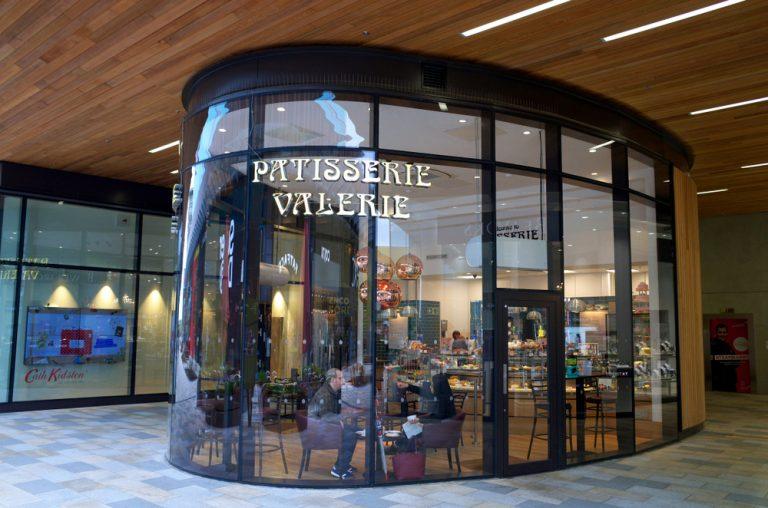
Soaring Christmas sales lent a hand to Patisserie Valerie’s (LON:CAKE) latest results, sending shares soaring at market open on Tuesday.
The chain bucked the gloomy trend on the high street, with “affordable treats” pushing up sales over the Christmas period.
Revenue rose 9 percent in the six months to the end of March, with pre-tax profit up 14 percent to £11.9 million. The company also hiked its interim dividend by 20 percent to 1.44p.
“The period started well with a good build up to Christmas with our new festive range, including the limited edition Reindeer slice, selling well,” the company said.
“The group has delivered a strong set of results in a sector which has well documented challenges,” Luke Johnson, executive chairman, added.
Shares in Patisserie Valerie are currently trading up 0.23 percent at 434.00 (0934GMT),