
Garmin shares up on higher profits
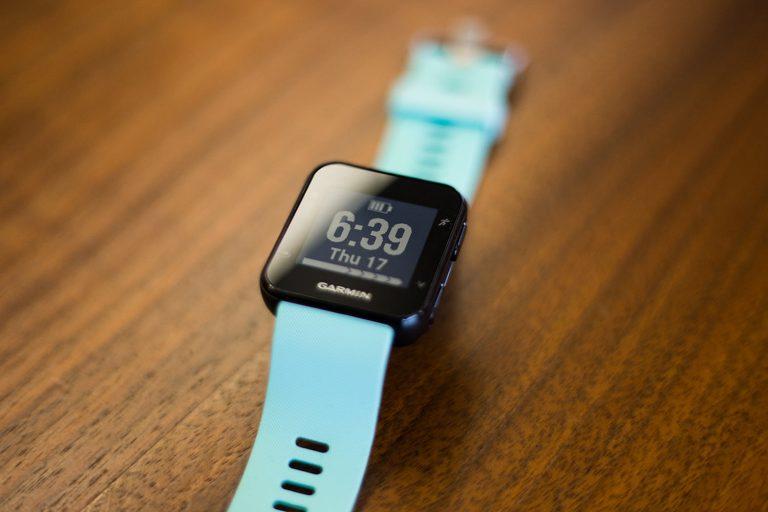
Shares in Garmin were up 1.5 percent after the group reported better than expected quarterly profits.
Sales in the group’s fitness products increased 24.3 percent to $225.1 million following the growing demand in smartwatches and other wearable devices.
Shares were up 1.5 percent at $63.40 (£48.30) on Wednesday. The stock price has increased by 27 percent over the past year.
Joe Wittine, the Longbow Research analyst, wrote in a note: “We believe the quarter will go a long way toward establishing confidence in Garmin’s fitness business, having clear differentiation versus mainstream fitness tracker and mainstream smartwatch competitors.”
Garmin’s sales in its outdoor segment also rose about four percent to $201.6 million.
The group’s total revenue for the second quarter was $894 million, an increase of eight percent over the previous year.
Garmin has raised its full-year forecast. The group now expects a total revenue for this year at $3.3 billion. This is an increase of $100 million for its previous forecast.
Shares in the group (NASDAQ: GRMN) are currently trading 3.28 percent at 64.50 (1007GMT)
Tesla shares soar 9pc despite record loss
Shares in Tesla soared over nine percent in after-hours trading on Wednesday despite the record $717.5 million loss for the second quarter.
Despite the $3.06-per-share loss, Elon Musk reassured investors on an analyst call and said: “We believe we can be sustainably profitable from Q3 onwards.”
“From an operating plant standpoint, from onwards I really want to emphasize our goal is to be profitable and cash flow positive for every quarter going forward,” he added.
According to the Musk, the group had also achieved a “mind-blowing leap forward” in vehicle production. The car manufacturer reported a production of 53,339 vehicles in the quarter and delivered 40,768.
Tesla is now aiming to achieve a production goal of 6,000 vehicles per week by August. By the end of the year, the group hopes to manufacture 10,000 per week.
In an unlikely move by Musk, apologised for the comments made on the previous analyst phone call where he accused Wall Street analysts of asking “boring bonehead questions.”
“I’d like to apologize for being impolite on the prior call,” he said. “There’s no excuse for bad manners.”
The company has made headlines over this year due to various outbursts and controversies from Musk.
Musk and the chief financial officer, Deepak Ahuja, wrote in the shareholder letter: “It took 15 years to execute on our initial goal to produce an affordable, long-range electric vehicle that can also be highly profitable.”
“In the second half of 2018, we expect, for the first time in our history, to become both sustainably profitable and cash flow positive.”
Shares in Tesla (NASDAQ: TSLA) are currently trading up 0.91 percent at 300.84 (0952GMT).
House of Fraser rescue deal dropped by C.banner
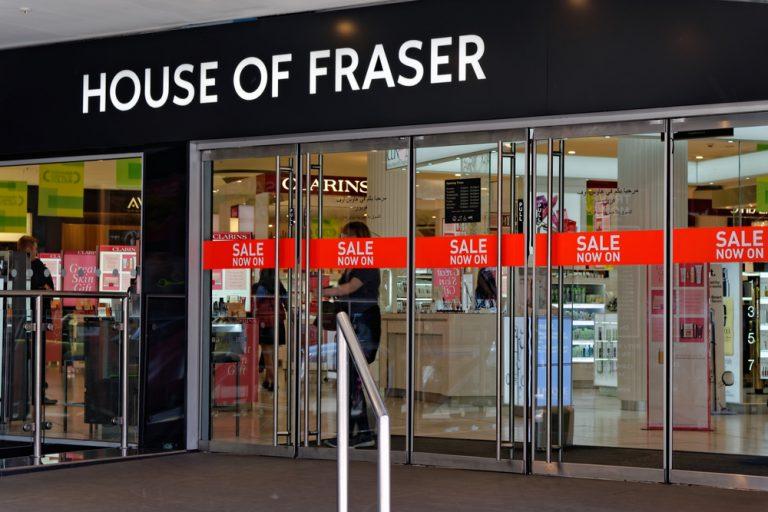
C.banner (HKG: 1028), the owner of Hamleys, has rejected previous plans to rescue House of Fraser.
In a blow to the department store, C.banner had planned to take control of House of Fraser and invest £70 million to revive the chain.
The Hong Kong-listed owner of Hamleys said on Wednesday that the saviour of House of Fraser had been “rendered impracticable and inadvisable.”
C. banner said in a statement that was issued to the Hong Kong stock exchange: “In view of the fact that the recent market prices of the shares as quoted on the stock exchange have significantly dropped to a level which is far below the placing price range of HK$2.40 to HK$3.00 per placing share, the company and the placing agent are of the opinion that the placing has been rendered impracticable and inadvisable, and therefore no longer intend to proceed with the placing.”
House of Fraser is seeking £50 million to avoid collapse, which would lead to the risk of 17,000 jobs.
“This is a real blow to House of Fraser,” said Richard Lim of Retail Economics.
“They’re in desperate need of a rescue deal and without this fresh injection of around £70 million, it’s almost inevitable that they’ll fall into administration. This could be within a matter of weeks.”
The department store has said it is “exploring options to obtain the required investment on the same timetable.” Potential investors include Sports Direct’s, Mike Ashley.
Andrew Busby, of the consultancy Retail Reflections, has said that House of Fraser will need to consider a merger with Debenhams (LON: DEB) for its survival.
House of Debenhams is becoming more and more of a reality – that’s the best outcome for House of Fraser,” he said. “Unless you are Harrods or Selfridges the department store concept is not quite dead, but severely challenged.”
Apple set to hit a trillion dollars despite Huawei surge
Apple Inc (NASDAQ:AAPL) has surged to a valuation of $935 billion, with analysts estimating that the company will hit the $1 trillion threshold if they fulfill their trade estimates within Q4.
Q3 sales were above expected, with iPhone revenues up 32% on the same period last year. overall sales up 17% to $53.3 billion and sales of home wares such as the Apple TV and HomePod Speaker up 37% on-year.
In the meantime, Huawei have knocked Apple off of the number two spot in the global mobile phone market, with Samsung occupying the top spot. The news comes after positive feedback from Asia on the iPhone X, but unfortunately for Apple, Chinese tech firm Huawei were able to most effectively capture the growing mobile phone market in their home country.
“Apple is not in a very comfortable position,” said Nicole Peng, mobility analyst for Canalys. “Consumers have to make a hard choice between Apple and its peers in China.”
Despite the news, Apple shares have rallied 4.92% since trading began, up $9.37 to $199.66 – a far-cry from the $11 share price when the iPhone was released in 2007.
Apple CEO Tim Cook does not appear to be phased by the news on Huawei, which is perhaps not surprising as trade conflicts with the US have meant that the Chinese firm have been forced to capitalise on their domestic market.
With Chinese figures not knocking Apple investor confidence, an optimistic message of consensus rings around the Apple camp as they look ahead to the fourth quarter:
“Growth was strong all around the world,” said Apple Finance Chief, Luca Maestri.
Apple have published optimistic sales targets, ahead of analyst expectations for Q4. They will look to capitalise on their pre-existing strengths and build on their relatively recent successes such as Apple Pay and Apple Music, as well as hoping to branch out into software and hardware for other areas of technology.
Vitesse Media raise £18.7 million to fund InvestmentNews acquisition

Publishing group Vitesse Media (LON:VIS) has raised around £18.7 million to fund its planned acquisition of InvestmentNews, it was announced on Wednesday.
The group raised the funds from a discounted share placing launched on Tuesday, with the aim of raising around £22.5 million. New shares in the company were issued at 2 pence each, a 41 percent discount to the closing price of Vitesse shares on Monday.
“We are delighted with the interest and support we have received in the placing,” chief executive Simon Stilwell said.
“We welcome our new shareholders and thank our existing shareholders for their ongoing support.”
Vitesse Media organise events focusing on enterprise technology, growth business, investment and diversity, as well as running several magazines both digitally and in print. The acquisition of InvestmentNews will be the group’s first foray into the US market.
Stillwell, who was appointed CEO of Vitesse in August 2017, said the acquisition is part of the company’s ongoing strategy to expand in the following areas: providing business information, live events and data & insights in the technology, financial services and diversity and inclusion sectors.
“Since I joined Vitesse last year we have overhauled the board and management team as well as the strategy and this is the first major step in executing on our growth plan,” he said.
St James’s Place please investors with 20pc dividend hike

Wealth manager St. James’s Place gave investors a boost by increasing its dividend by 20 percent, after a strong first half performance.
The group declared an interim dividend of 18.49p per share, with CEO Andrew Croft saying there had been “continued strong growth across all areas of our business”.
Pre-tax profit rose 4 percent to £82.5 million over the period, with underlying cash profit, after tax, up 29 percent to £147.1 million.
Gross inflows grew by 15 percent to £7.9 billion, with net inflows up 21 percent to £5.2 billion.
“The environment we are operating in, together with these investments, provides us with the confidence that we can continue to achieve our medium-term growth objectives,” Croft continued.
“Supporting the above, we have a strong balance sheet and the knowledge of a growing income from our existing business both of which underpin the growing return to shareholders as shown by the 20 percent increase in the interim dividend.”
Shares in St James’s Place (LON:STJ) are currently trading down 2.78 percent at 1.172.00 (1003GMT).
BAE Systems shares slip on fall in profits

BAE Systems (LON:BA) saw shares slip on Wednesday morning, after reporting a fall in profits in the first half of the year.
Operating profit fell 10.5 percent to £792 million in the first half of the year, led by a 3 percent dip in sales to £8.8 billion. Revenue also sunk 5 percent to £874 million, sending first-half underlying earnings (EBITA) down 6 percent on a constant currency basis.
The group, one of Britain’s largest defence and security companies, reported a £1 billion drop in order intake, with stronger performances in its Electronic Systems and Air sectors negated by weakness in Maritime and Platforms & Services.
“We have made good progress in the first half strengthening the outlook through significant wins on the Australian SEA 5000 and US Amphibious Combat Vehicle programmes. These, combined with the launch of the UK Combat Air Strategy, provide good momentum into the second half and beyond,” Charles Woodburn, Chief Executive, commented.
“In this transition earnings year, our Group earnings guidance is maintained and, with a large order book and a positive outlook for defence budgets in a number of key markets, we have a strong foundation to deliver growth and sustainable cash flow.”
Shares in BAE Systems are currently trading down 1.07 percent at 646.20 (0945GMT).
Lloyds Banking shares edge up on H1 profit increase
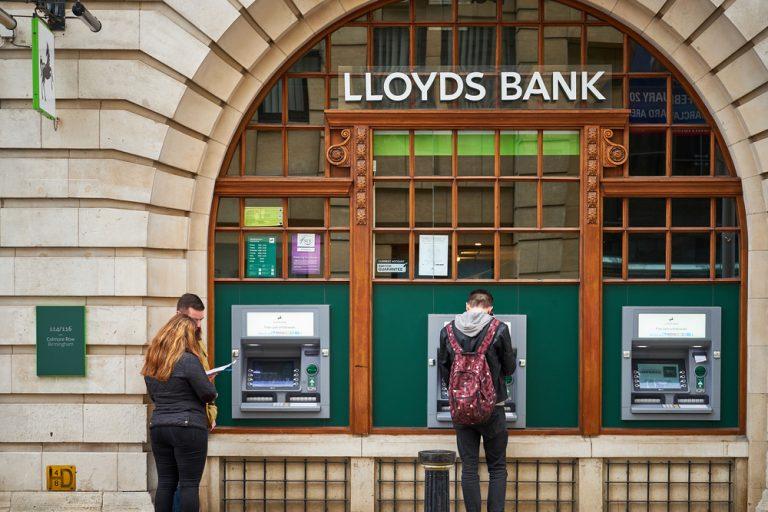
Lloyds Banking Group (LON:LLOY) reported an increase in profit for the first half of the year, after a fall in its PPI charge.
Underlying profit rose by 7 percent to £4.2 billion in the six months to June, with statutory profit before tax up 23 percent to $3.1 billion. Total income came in 2 percent higher at £9 billion.
The positive results were largely down to a decrease in its PPI charge to £550 million, which included an additional £460 million in the second quarter and would cover claims volumes of approximately 13,000 per week until the deadline in August 2019.
Net interest income came in at £6.3 billion, up by 7 percent, as improved net interest margin and increased average interest-earning banking assets rose 1 percent to £436 billion.
“Given the strong performance, the Group now expects net interest margin for 2018 to be in line with the first half of 2018 and for the margin to remain resilient over the plan period,” the group said.
“We now expect net interest margin to be in line with the first half of the year, the asset quality ratio to be less than 25 basis points and for capital build to be c.200 basis points, at the top end of our guided range. All other longer term guidance remains unchanged”.
Shares in Lloyds Banking Group are currently up 2.08 percent at 63.68 (0928GMT).
Next shares sink despite positive quarterly sales figures
Clothing retailer Next (LON:NXT) defied recent high street gloom with its latest quarterly results, with online sales driving a strong performance.
‘Full price’ sales grew by 4.5 percent in the first half, with a 12.5 percent boost to online sales offsetting continued weakness on the high street.
Next entered sale a week earlier than the same period last year, but markdown sales combined with full-price sales growth of 4.5 percent led to a total sales growth of 3.9 percent on-year.
“Full-price sales in the second quarter were up 2.8 percent on last year and ahead of our guidance. We believe that this over‐achievement in sales was due to the prolonged period of exceptionally warm weather, which greatly assisted the sales of summer weight product.
“It is almost certain that some of these sales have been pulled forward from August, so we are maintaining our sales and profit guidance for the year to January 2019.”
Next shares are currently trading down despite the relatively positive set of results, down 5.63 percent at 5,602.00 (0919GMT).
Taylor Wimpey confident after strong first half
Housebuilder Taylor Wimpey (LON:TW) said it remained confident about full year trading figures, after reporting an increase in first half profit.
First half pretax profit rose to £301 million, up from £205 million in the same period last year, with the housing market remaining strong and sending the UK private average selling price up to £295,000, from £287,000 in 2017.
The group declared an interim dividend of 2.44p per share, up 6.1 percent on-year, adding that it would also pay a special dividend of around 10.7p per share in 2019.
“As employment prospects remain positive and mortgage availability is good, customer demand for our homes has been strong in spite of some wider macroeconomic uncertainty,” chief executive Pete Redfern said.
“With a strong order book in place, we are confident in our prospects for the remainder of the year and looking further ahead.”
Shares in Taylor Wimpey are currently up 0.005 percent at 172.14 (0922GMT).