
UK house prices fall in May, Nationwide figures reveal

UK house prices continued to fall in May, according to the latest figures from Nationwide.
The figures revealed that house prices fell by 0.2 percent month-on-month, marking the third fall in four months.
On an annual basis, price growth weakened to 2.4 percent from 2.6 percent in April.
Whilst UK house prices rose 2.4 per cent in May compared with the same month a year previously, this proved a slower rate of growth than had been anticipated.
Robert Gardner, Nationwide’s chief economist, commented: “There are few signs of an imminent change. Surveyors continue to report subdued levels of new buyer inquiries, while the supply of properties on the market remains more of a trickle than a torrent.
“Looking further ahead, much will depend on how broader economic conditions evolve, especially in the labour market, but also with respect to interest rates.
“Subdued economic activity and ongoing pressure on household budgets is likely to continue to exert a modest drag on housing market activity and house price growth this year, though borrowing costs are likely to remain low.”
The slowdown in the UK housing market has been attributed to in particular to a London-led decline, with high stamp duty and the uncertainty relating to Brexit deterring potential buyers.
According to the latest ONS figures, house prices across the capital experienced a stark 0.7 percent fall in March.
Notably, this proved the steepest fall since 2009, at the height of financial crisis.
“This is the lowest annual growth in London since September 2009, when it was negative 3.2 percent. London has shown a general slowdown in its annual growth rate since mid-2016. The second-lowest annual growth was in the north-east, where prices increased by 2.1 percent in the year to March 2018.”, The ONS stated.
Nationwide is one of UK’s largest mortgage providers, collating a UK house price Index on a monthly basis.
FirstGroup oust Chief Executive after £327m loss

FirstGroup (LON:FGP) announced the departure of Chief Executive Tim O’Toole, after the transportation operator reported substantial losses for the year.
The company reported a £326.9 million pre-tax loss for the year ending March 31, a steep decline from the £152.6 million pre-tax profit reported last year.
Adjusted pre-tax profit totalled at £197 million, down on already pessimistic analyst forecasts of £199 million.
This marked a 4.8 percent plunge from year before, disappointing investors and causing shares to slide on Thursday morning.
“The time is right for me to step aside,” O’Toole said. “Today’s results clear the way for the new approach sought by our chairman and the board.”
Mr O’Toole has been at the helm of the struggling bus and train operator for eight years.
He is set to be replaced by current chairman, Wolfhart Hauser.
Matthew Gregory, will assume the role of interim chief operating officer as well as chief financial officer.
Mr Hauser said: “This year’s results fell short of our ambitions – we are disappointed that we did not make the further progress we intended based on the trends we saw at the end of the previous financial year.”
The company, which owns Great Western Railway (GWR), is exploring its options and potentially considering a sale of its US bus group GreyHound.
Most recently, the company’s reporting revealed that profits at Greyhound fell 39 percent to £25.5 million, amid increased competition from ultra low-cost airline operators in the US.
Ultimately, Greyhound has struggled to “overcome the structural shift taking place in its long-haul markets, as ultra low-cost airlines significantly increase capacity and extend into new markets”, commented Mr Gregory.
Alongside Great Western Railways and GreyHound, FirstGroup operate London Tram Link, Aircoach, alongside various First services across the UK.
Shares in FirstGroup are currently trading -12.73 percent as of 11.34AM (GMT).
FCA announce crackdown on high interest loans

The Financial Conduct Authority (FCA) have announced plans to crackdown on the issuing of high interest loans.
The independent financial watchdog launched an 18 month review into high-cost credit.
It has now put forward a set of recommendations with regards to rent-to-own schemes, doorstep lending and catalogue shopping, alongside a review into bank overdraft fees.
Initially, campaigners sought a cap on the £2.3 billion overdraft fees, however the FCA decided against the move amid concerns of opposition by the banks.
Specifically, the FCA recommended that banks send mobile text alerts warning of potential overdraft charges, alongside suggesting greater clarity with respect to these loans.
The suggestions included stopping including overdraft as “available funds”, as well as emphasising the customers that overdrafts are in fact classified as credit or borrowing.
It said that it expects the crackdown initiative to save customers around £200 million in total per year.
Moreover, the FCA noted it would consider imposing price caps on rent-to-own, where shops such as BrightHouse sell cookers and household appliances on weekly payments.
Its findings revealed that customers ended up spending more than £1,500 for cookers that retail in other high street stores for less than £300.
“The FCA believes the harm identified in this market is sufficient in principle to consider a cap on rent-to-own prices. It will now carry out the detailed assessment of the impact that a cap could have on the rent-on-own sector and how it might be structured,” the regulator said.
It is expected that the cap is set to come into force next April.
The FCA is a financial regulatory organisation in the UK, which succeeded its previous incarnation the FSA in 2013.
SSE announce 6.7pc price hike
Utility company SSE announced new price hikes on Wednesday, in a move that will increase a typical dual-fuel bill by an average of 6.7 percent.
The prices will increase from 11th July, equating to an increase of 5.7 percent for gas and 7.7 percent for electricity. For the average dual-fuel character, this will be a rise of around £1.50 each week.
The group confirmed that customers on fixed-price tariffs, with a prepayment meter and on the vulnerable customer safeguard tariff, will not be affected.
Chief commercial officer Stephen Forbes said SSE “deeply regret having to raise prices and have worked hard to withstand the increasing costs that are largely outside our control by reducing our own internal costs”.
“However, as we’ve seen with recent adjustments to Ofgem’s price caps, the cost of supplying energy is increasing and this ultimately impacts the prices we’re able to offer customers”, he concluded.
SSE aren’t the only company to have announced a price hike recently, with 4.1 million British Gas customers facing a 5.5 percent hike on Tuesday. Scottish Power is increasing prices by 5.5 percent for nearly one million people from 1st June, with EDF putting their prices up 2.7 percent on the 7th June.
SSE (LON:SSE) shares are currently trading broadly flat, down 0.51 percent at 1,368.00 (1033GMT).
Hot weather lends boost to British supermarkets
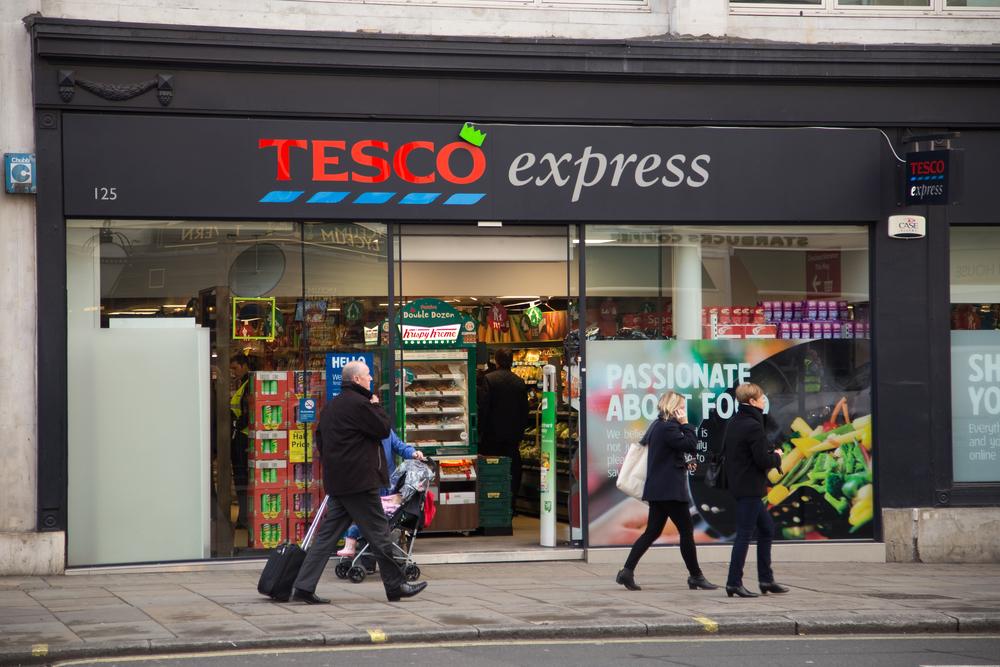
British supermarkets have performed well over the last quarter, benefitting from hot weather in May and the Royal Wedding’s ‘Meghan Markle’ effect.
Sales in the grocery sector were 2.7 percent up on last year in the 12 weeks to the 20th May, according to the latest figures from Kantar Worldpanel.
“Record-breaking temperatures, a hot bank holiday weekend and Royal Wedding fever all contributing to a bumper period”, Kantar said, with the Friday before the day of the wedding and the FA Cup Final lending the biggest boost to sales. Supermarkets sold £415 million worth of good in the 24 hour period.
Hot weather also increased sales of BBQ items, with sales of burgers and sausages up by 39 percent and 12 percen t respectively. Non-alcoholic beer sales jumped by 64 percent and over 16.6 million households bought ice cream.
Morrisons (LON:MRW) recorded sales growth of 2.9 percent, well ahead of the overall market, with Asda also recording sales growth of 2.8 percent.
Tesco (LON:TSCO) increased sales but dropped market share by 0.1 percentage points to 27.7 percent. Over the past 12 weeks Lidlwas the only bricks and mortar retailer to experience double-digit sales growth, up 10.4 percent.
Morning round-up: FTSE off to uncertain start, Asian stocks affected by Italy

The FTSE 100 kicked Wednesday trading off to an uncertain start, dropping sharply before climbing again to trade at 7634 points (0909GMT).
The markets suffered a bad start to the week on Tuesday after the long bank holiday weekend, as impending political crises in Italy and Spain weighed heavy on investors minds.
The possibility of an anti-European coalition government coming into power in Italy sent Italy’s markets – and the rest of Europe’s – down during the day.
However, Italy’s main share index rebounded on Wednesday as its stop-gap Prime Minister meets with the President in a new attempt to get a government approved. The FTSE MIB is up 197.69 points at 21,544.50.
Italy’s crisis also affects Asia on Wednesday, with the biggest stock indexes closing down for the day.
Japan’s benchmark Nikkei 225 finished down 1.52% to 22,018.52 points and South Korea’s Kospi lost 1.96% to end at 2,409.03 points.
Bodycote (LON:BOY), Premier Oil (LON:PMO) and Kainos Group (LON:KNOS) are the LSE’s biggest risers this morning, up 64.5 percent, 3.70 percent and 12 percent respectively. Photo-Me is the biggest faller so far, down 31.40 percent, followed by Gym Group and Sabre Insurance.
Loss of passport contract weighs on De La Rue
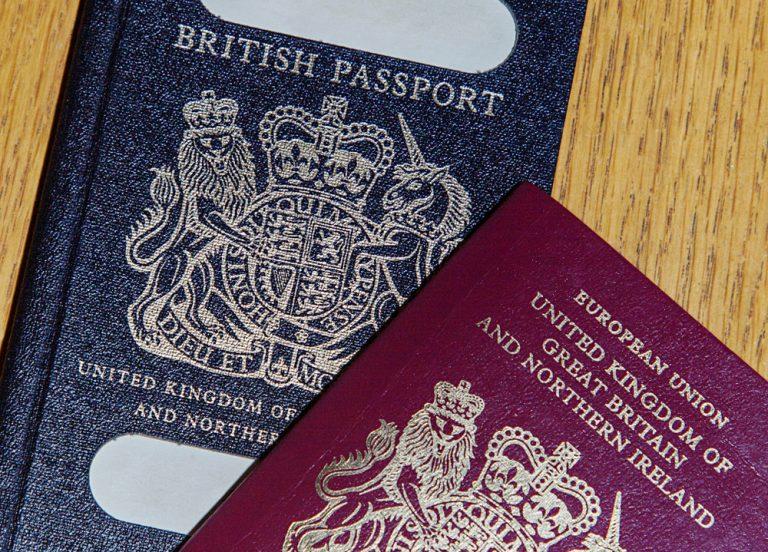
Passport printing firm De La Rue (LON:DLAR) saw an 11 percent fall in adjusted operating profit for the year to the end of March, with concerns over the loss of its contract to print the new blue passports weighing on results.
The group also suffered from loss of revenue from its exited paper business, with operating profit dropping to £62.8 million. Group revenue rose 7 percent to £493.9 million.
“Solid growth in all segments has been offset by strategically focused increases in investment in R&D and sales, which will drive long term sustainable growth,” the company said.
“The sale of the paper business and the associated long term paper supply agreement have reduced our exposure to the volatility of the oversupplied paper market, while securing the surety of supply for our print business,’ said Martin Sutherland, Chief Executive Officer.
“Through this, and good cash generation from the business, we have significantly strengthened our balance sheet with net debt now at its lowest in five years. The stronger balance sheet provides the Group with greater flexibility to allocate capital to deliver long term shareholder value.”
Shares in De La Rue are currently up on the news, at 518.00 (0902GMT).
Photo-Me shares plunge 20pc on profit warning

Photo-Me (LON:PHTM) downgraded its 2019 profit guidance on Wednesday, after a weak performance from its Japan photo division.
The group blaming a market over-supply in its Japanese photo identification business, with Japan having the highest density of photobooths worldwide – something that has only increased since the Japanese government brought in its photo ID scheme two years ago.
Operators installed photo machines to cater for the expected demand, which failed to appear. Oversupply now troubles the Japanese market, leading Photo-Me to warn on profits for the 2019 year.
The group is now expecting to make pre-tax profit of around £44 million for the year to April, below market expectations.
“Although no final decision has yet been made, the board currently expects that it will maintain the group’s existing dividend policy at the full year results,” Photo-Me said.
However, the group’s laundry business has continued to perform well, with revenue up 49 percent to £32.3 million.
Shares in Photo-Me are down 21.41 percent at 118.99 (0848GMT).
AirAsia under investigation for illegal international licenses
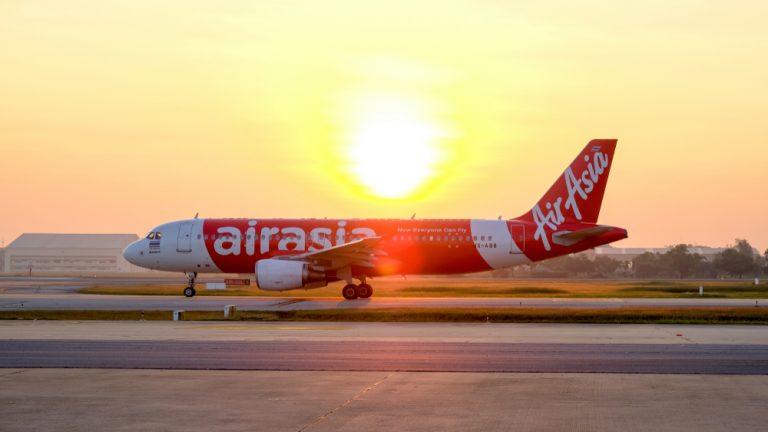
An investigation has been launched against budget Asian airline AirAsia (KLSE:AIRASIA), after it was accused of obtaining its international flying licenses illegally.
Authorities in India confirmed that they were launching the investigation on Wednesday, causing the airline’s share price to fall by 6 percent.
Both AirAsia India, its Malaysian parent company, and the airline’s boss Tony Fernandes are involved, with the offices of AirAsia India searched by police on Tuesday.
Mr Fernandes’s Malaysian firm teamed up with India’s Tata group five years ago to create AirAsia India. Both AirAsia India and its parent company have denied any wrongdoing.
Shuva Mandal, director of AirAsia India, said in a statement:
“Air Asia India Limited refutes any wrong-doing and is co-operating with all regulators and agencies to present the correct facts. In November, 2016 AAIL had initiated criminal charges against its ex-CEO and had also commenced civil proceedings in Bangalore for such irregularities. We hope to bring early resolution to all such issues.”
Shares are currently trading down 7.85 percent at 3.05MYR (0833GMT).
Telford Homes profits up on demand from overseas investors
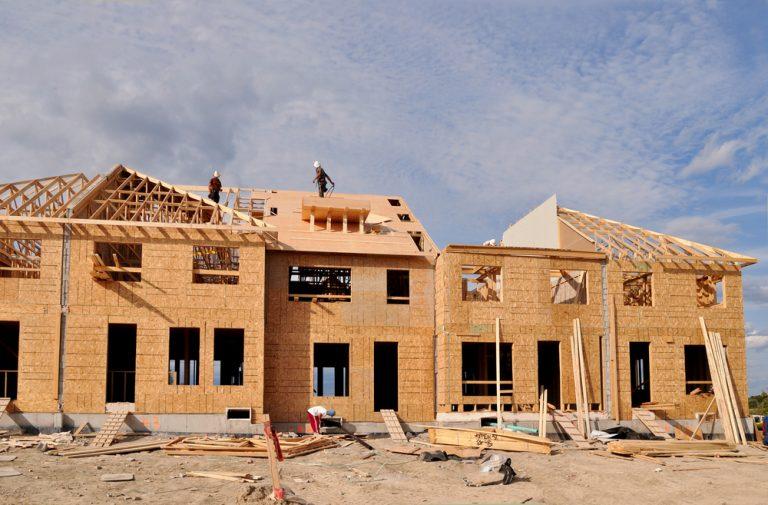
Telford Homes (LON:TEF) shares rose in early trading on Wednesday, after reporting a 35 percent rise in profit for the year to March 2018.
The group’s figures beat market expectations, with pre-tax profit hitting £46 million. For the year ahead, Telford Homes said it was likely to push pre-tax profit up to over £50 million, representing a 100 percent increase over four years.
Telford Homes declared a final dividend of 9.0 pence per share, bringing the total dividend for the year to 17.0 pence, up 8 percent on-year.
“Telford Homes continues to perform well and I am delighted to report such a strong set of results, which again have produced record levels of revenue and profit,” chief executive Jon Di-Stefano said.
“As we increase the scale of the business, our growth is underpinned by the under supply of new homes in London and robust demand at more affordable price points, particularly for rental housing.
“Our substantial development pipeline and increasing expertise in the burgeoning build-to-rent sector provide us with confidence for the future.”
The developer has benefitted from demand from overseas investors, especially from Chinese investors looking for London property.
“We are seeing growing investment from China due to the continued international attraction of London, despite Brexit, and strong rental demand relative to supply,” Di-Stefano said.
Shares in Telford Homes (LON:TEF) are currently trading up 1.38 percent at 464.83 (0816GMT).