
Zoopla acquires property marketing firm Ravensworth

Zoopla owner ZPG has acquired property marketing company Ravensworth in push to create a one-stop shop for their property partners.
Ravensworth provides print and digital marketing campaigns to property companies offering services such as brochure design and printing, property guides and mail campaigns.
“We are delighted to announce the acquisition of Ravensworth, which gives us a market-leading position in the provision of on-demand print and creative marketing services to UK estate and letting agents. In keeping with our strategy, by combining Ravensworth’s products with our sales and marketing capabilities we will be able to offer our partners a fully integrated, best-in-class print solution and once again confirms our position as the most effective partner for UK property professionals,” said Alex Chesterman, CEO of ZPG.
ZPG also owns uSwitch, PrimeLocation and Hometrack. The acquisition of Ravensworth will strengthen ZPG as a multichannel media company covering the housing market and household bills.
Shares in ZPG PLC rose 2.3% to touch 361.8p in the initial reaction to the deal.
ZPG is up around 20% over the past year but still 8% off highs of 394p printed in March of this year.
EUR/USD retreats from highs after ECB warning

The Euro has fallen over 200 pips from highs helped lower by a Reuters report suggesting ECB officials were unhappy with the strength of the single currency.
The ECB is due to meet next week in a highly anticipated meeting which could set the path of QE tapering. Today’s report implies there is a preference for a slower shallower reduction in bond purchases than the market has been pricing in.
Dollar bounce
The dollar has also strengthen after weeks of decline helping to push EUR/USD back from multi-month highs. Some analysts think that we have already seen a short-term top and EUR/USD is likely to drift lower. “We expect several more rate hikes by the Fed this year and the next. A softer message from the European Central Bank (ECB) aimed at avoiding further euro strength is not that unlikely at the next meeting. We think this has the chance to re-establish relative monetary policy expectations as the dominant driver of EUR/USD and support the dollar in the coming months, especially considering the potential for a reversal of current positioning among speculative accounts,” said Richard Falkenhäll, Senior FX Srategist at SEB who has a year end target of 1.14.Sterling drops as Brexit talks remain in stalemate

Sterling sank against the dollar on Thursday as Barnier said there had been ‘no decisive progress’ in Brexit negotiations.
The lack of progress will unnerve markets who are looking for any semblance of cooperation that could avoid a so called ‘hard-Brexit’.
“The risk of no transitionary agreement seems to have increased today given the strong word’s from Barnier, the EU chief Brexit negotiator. His not unexpected comments has led to a modest weakening in Sterling, however it also increases the chance of the UK exiting the EU in a disorderly fashion,” said Shilen Shah, Bond Strategist at Investec Wealth & Investment.
“The key hazard for markets is that today’s disagreement is an indicator of where future negotiations are heading, with the danger that the risk-premium on UK assets will widen if the talks implode with no agreement.”
GBP/USD has been resilient throughout August as the UK government holidays and the dollar weakens in the face of unconventional behaviour in Washington DC.
Chinese manufacturing activity jumps

The Chinese manufacturing sector expanded faster than economists expected in August.
Official Chinese PMI came in at 51.7, higher than the 51.3 consensus of analysts polled by Reuters.
The reading was also higher than July’s reading of 51.4.
There has been concern that high levels of debt and efforts to control a rampant property market would begin to curtail growth in the world’s second largest economy.
Miners Rally
China is the world’s largest consumer of base metals and FTSE 100 miners reacted positively to the release with Antofagasta, Rio Tinto, KAZ Minerals and Anglo American rising between 2%-5% in early trade on Thursday. Despite the initial exuberance in markets, many analysts were still pessimistic about Chinese economic growth saying tighter controls from the authorities would ultimately dent growth and possibly incite financial instability.Strategic Pipeline Income Fund Fast Fact Sheet

Income is generated through the large and diverse North American pipeline universe, energy infrastructure and land owner royalties.
⇒Cash Dividend
⇒Dividend Income is Tax Advantaged
⇒Monthly Income Payments
Download Fact Sheet now:
Terms, Risk Warning & Disclaimer:
Although the author and publisher have made every effort to ensure that the information in this publication was correct at press time, the author and publisher do not assume and hereby disclaim any liability to any party for any loss, damage, or disruption caused by errors or omissions, whether such errors or omissions result from negligence, accident, or any other cause. Investments can go up in value as well as down, so you could get less than you invested. This information does not constitute personal advice and you should speak to your financial advisor before committing to any pension product. Information in this document is for reference use only and its accuracy cannot be guaranteed and is subject to change.
UK Investor Magazine does not endorse any of the products or services that appear on it or are linked to it and are not liable for any action that you may take as a result of the content of this guide, or losses or damage you may incur doing so.
There is no obligation to purchase anything but, if you decide to do so, you are strongly advised to consult a professional adviser before making any investment decisions. Not all companies or products mentioned in this guide are necessarily regulated by the Financial Ombudsman Service and, as such, you may not have access to statutory or regulatory protections such as the Financial Ombudsman Service and the Financial Services Compensation Scheme.
Please remember that financial investments may rise or fall and past performance does not guarantee future performance in respect of income or capital growth; you may not get back the amount you invested.
By submitting your details, you are agreeing with our privacy policy. In addition to this and to facilitate the delivery of your book/guide or report, your details will be passed to the sponsor of this free offer. By requesting a book and agreeing to our privacy policy, you are agreeing to be contacted by the book sponsor. The book is intended for educational and informational purposes only. It should not be construed as giving investment advice and you should not rely on any content within this book in making or refraining from making any investment decisions.
This offer and advert has been issued and approved by Noble Energy Partners, 40 Gracechurch Street, London, EC3V 0BT.
Bundesbank research says ECB purchases ineffective at increasing inflation
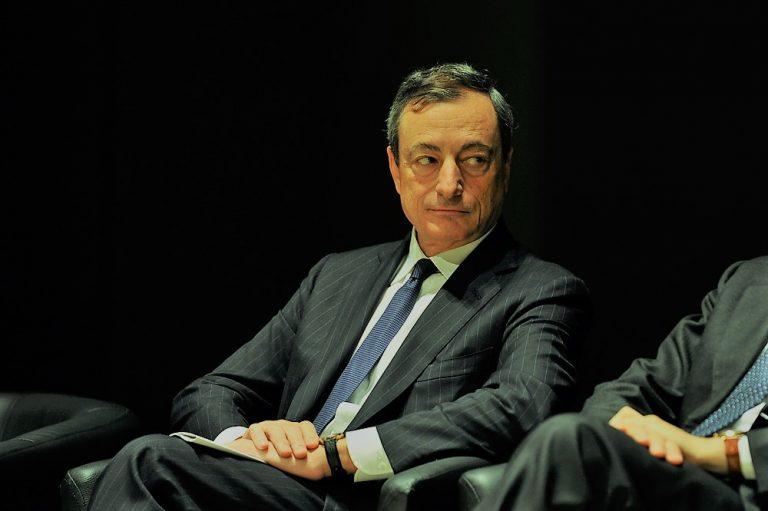
Research from the Bundesbank published on Friday suggest that the European Central Bank’s quantitative easing program is ineffective at increase inflation over longer periods.
It did however note that QE was useful for short term financial stability but the lasting impact was largely negative.
“We find that ECB balance sheet policies, in the form of direct asset purchases, bring down financial stress for some periods after the shock,” the research summarised.
“This positive effect is reversed thereafter as stress increases above its pre-shock level.”
“At the same time, asset purchase shocks have an expansionary effect on economic activity, while the effect on prices remains insignificant.”
Germany has been opposed to QE since its inception and has been critical of the ECB.
“We are not reaching our goal of increasing trust in the ECB and its monetary policy” said Hans Michelbach, chairman of the CDU finance committee last year.
Despite its critics in Germany many would argue Mario Draghi program has been effective in increasing economic activity and supporting markets.
Oil price rises following decline in inventories

Oil prices have pushed higher after US crude inventories declined by 3.3 million barrels suggesting the supply glut may finally be easing.
The Energy Information Administration said total US stocks fell to 462. million barrels. Another gauge of oil stocks, Cushing Oil Inventories, fell to 56.54 million barrels of oil down from 57.04.
Total US oil stocks peaked in March at 535.5 million barrels and the fall in inventories has been accompanied by a drop in the Baker Hughes.
The North American Rig Count peaked at 958 in July of this year after increasing from a low of 404 in June 2016
WTI Oil prices are up over 2% from lows of $46.62 printed 17th August.
Scotland’s budget deficit drops to £13bn

Scotland’s budget deficit has dropped over the past year, falling to £13.3 billion from a revised figure of £14.5 billion the previous year.
According to the figures from the Government Expenditure and Revenue Scotland (Gers), the figure represents an 8.3 percent share of Scotland’s GDP.
The Gers figures put Scottish public sector revenue a £58 billion, 8 percent of total UK revenue. As whole, the UK has a budget deficit of £46.2 billion, or 2.4 percent of GDP.
Just £208 million of Scotland’s revenue over the year came from its oil and gas industry in the North Sea, showing the industry is continuing to recover slowly from the oil price crash. In 2012, the North Sea brought in revenues of £8 billion.
However, Scotland’s non-North Sea revenue increased by 6.1 percent, to £57.8 billion from £54.5 billion the year previously.
Are UK banks too innovative for consumer tastes?

Banks have been plunging money and time into developing innovative new products and online offerings, but are they falling short on customer service?
According to the results of the latest survey from FleishmanHillard Fishburn, the answer is yes. It seems whilst banks are good at offering new products and keeping up with changing technology, they are falling far short on customer care and basic value.
Using a specially selected sample of 1064 ‘engaged consumers’ – UK adults 18-55+ who are politically engaged, actively share news about businesses on social networks, buy shares or already engage with a brand or company – the survey found a wide fap between consumers’ expectations and their experience.
Expectations of innovation for the banking industry were almost five times lower than those of customer care, suggesting that, though banking is increasingly done online, people still have high expectations of their banks in this area. Customer care was actually the highest expectation for the industry, comprising over one-third of expectations.
But banks are not meeting these expectations. In fact, Banking has the largest gap of any industry studied; no company exceeds customer expectations. People feel that banks are paying too little attention to caring for their customers while they’re seen to be delivering far more on innovation than expected, an area for which most people had lower expectation of the industry.
As banks continue to innovate, customers move increasingly to digital platforms, and disrupting start-ups like online-only banks Monzo and Atom put pressure on the industry, this issue is only likely to get more critical. Businesses must start to think about a strategy to effectively communicate why their programmes of innovation are necessary to keep up with the competition, but which clearly explain why they’ll also lead to better experiences for customers.
Three reasons stock markets could be about to crash

Equities are overvalued
Stocks are expensive using the most rudimentary of metrics; price.
Global stocks have posted significant gains in recent years and the bull run has been characterised by a severe lack of meaningful corrections and prices have drifted to record reach record highs on numerous occasions.
Major developed world indices currently reside mere percent away from all-time highs whilst the velocity of the gains is subsiding.
Now while bull markets do not die of old age, the longer stocks remain elevated, the closer we get to the next major sell-off.
Pulling up the bonnet of stock prices reveals further cause for caution. Stock index earnings multiples are well above historical averages and in some cases valuations are approaching the most expensive on record.
Historical 12-month trailing price-to-earnings in developed market equities are approaching the highest levels on record with ratios well above 20.
The last time valuations were this stretched was in the Dotcom bubble which ended in a global stock market crash.
Robert Shiller’s Cyclically Adjusted Price-to-Earnings Ratio (CAPE) of the S&P 500 is currently at 29, the same level as 1929’s Black Tuesday.
Central Banks are tightening monetary policy
The fact the central banks are tightening policy pays testament to the strength of the global economy and the process is not a historically a direct cause of a market selloff.
However, the chances of a policy mistake leading to a market crash is much higher now than any time in recent history given the unprecedented period of low rates and huge bond purchase programs distorting equity prices.
Global stocks market have enjoyed the liquidity provided by central banks and some attribute the higher than average valuations of equities to easy monetary policy perverting traditional equity risk discounting.
As this punch bowl is withdrawn it is conceivable that markets experience multiple compression as shares correct back to longer terms averages mentioned previously.
Volatility is at record lows
2017 has experienced the lowest levels of volatility for the longest periods on record.
Depending on who you ask, low volatility in markets is result of a combination of factors including low interest rates, a robust economy, the rise of passive ETFs and even Donald Trump.
Despite the apparent calm in markets many are worried the market is being complacent and this period of low volatility is the quiet before the storm of a sharp rise in volatility.
Broad-based selling
Low interest rates have forced investors into increasingly risky assets such as stocks in search of a yield.
This of course pushes up prices but many of these investors have opted for broad-based equity vehicles like ETFs which has lowered dispersion between individual stocks and added to the sense of tranquillity.
This however could prove to be a double edged sword as when investors start to leave the market through ETFs the selling could be indiscriminate and lead to liquidity issues and magnified volatility.