
Santander shares drop as pre-tax profits remain flat
Shares in Santander (LON:BNC) bank dropped nearly 1.5 percent on Friday morning, after pre-tax profits remained flat in the first six months of the year.
UK pre-tax profits came in at £1 billion in the first six months of the year, with net profit for the entire group rising to €1.75 billion in the second quarter from €1.3 billion a year earlier. Net interest income came in at €8.61 billion.
However, the bank warned on “greater uncertainty” going forward and said risks would likely increase into 2018.
“The labour market remains strong, but higher inflation, largely from the lower value of sterling, is now reducing households’ real earnings.
“This is likely to result in lower consumer spending growth which, when combined with a potentially more challenging macro environment, adds a degree of caution to our outlook,” Santander said.
Net mortgage lending at its UK arm fell by £200 million after it being forced to increase rates. Like many other banks, the group also took a £69 million charge to cover claims for payment protection insurance (PPI) compensation in the first six months of the year.
Santander shares are currently trading down 0.16 percent at 515.38 (1109GMT).
BT share price sinks on £225 shareholder payout
Shares in communications company BT (LON:BT.A) dropped nearly 4 percent in early trading on Friday, after revealing a 40 percent drop in profits in the first quarter.
The company’s finances took a hit in the first quarter of the financial year after it paid out £225 million shareholders Deutsche Telekom and Orange, in the wake of an accounting scandal at its Italian operation.
BT said the £225m payout represents a “full and final settlement in respect of these issues”, with chief executive Gavin Patterson, the BT chief executive saying that: “Whilst this is clearly disappointing. it is the best possible outcome for all shareholders as it avoids a potential protracted legal process.”
BT’s shares sunk in January after it was revealed that the accounting scandal would cost the company £530 million.
Pre-tax profits slumped 42 percent from £717 million to £418 million during the quarter. Stripping out the impact of the one-off £225 million payment, BT’s adjusted profits still fell by 2 percent to £1.78 billion in its first quarter.
Shares in BT are currently trading down 3.64 percent at 304.80 (1032GMT).
Lloyds Bank shares fall after profits hit by further compensation claims
Lloyds Bank (LON:LLOY) have once again seen profits hit by expensive compensation claims, sending shares down over 2 percent on Thursday.
In its half year results, the bank announced that it had set aside another £1 billion to cover charges relating to payment protection insurance (PPI) claims, leading pre-tax profits to come in below expectations.
Lloyds also said it would pay further compensation to the 590,000 customers who were incorrectly charged mortgage arrears fees, bringing the total compensation paid to correct that scandal up to £552 million.
Pre-tax profits rose 4 percent to £2.5 billion in the six months to June, with underlying profit up 8 per cent to £4.5 billion. The group recorded an underlying return on tangible equity of 16.6 per cent, with total income 4 per cent higher at £9.3 billion.
Shares in Lloyds Banking Group (LON:LLOY) are currently down 2.12 percent at 67.57 (1011GMT).
Diageo shares get boost from better-than-expected FY earnings
Shares in drinks maker Diageo (LON:DGE) jumped nearly 7 percent in early trading on Thursday, after the company reported better-than-expected earnings for the year.
Operating profit, excluding one-time items, rose 20 percent over the 12 months to hit £3.6 billion, with per-share earnings before one-time items up to to £1.09 from 89.4 pence. Net sales were up 4 percent to £12.05 billion, from £10.49 billion last year.
The stronger results come after the alcohol maker, who owns the Johnny Walker scotch and Smirnoff vodka brands, announced a cost-cutting programme last year. The improved earnings for the year and raised its target for profit margin growth
The company also announced a 1.5 billion pound share buyback, to be paid to investors over fiscal 2018.
Shares in the company are currently up 5.96 percent at 2,408.00 (0955GMT).
AstraZeneca shares plunge 15pc as drug trial disappoints
Shares in pharmaceutical firm AstraZeneca (LON:AZN) fell over 15 percent in early trading on Thursday, after disappointing results from a key drug trial.
Shares in the company plunged after it reported that the development of new lung cancer drug Mystic had failed to show the positive results expected, with the trial not reaching its “endpoints” for progression free survival.
The Mystic drug was one of AstraZeneca’s most prominent drugs in development, but initial results from the study found that the combination of two injectable drugs, durvalumab and tremelimumab, was no more effective at stopping disease progression in affected patients than chemotherapy.
The Mystic drug was one of AstraZeneca’s most prominent drugs in development, with Jeffrey Holford, an analyst at Jefferies, telling the Financial Times that the setback in the Mystic trial was “a significant blow”. He said his firm estimated this would remove “[about] 10 per cent to 15 per cent of mid term earnings and valuation” from AstraZeneca.
Total revenue at the company fell 11 percent to $10,456 million, but operating profit rose 37 percent to $1,842 million. Reported earnings per share were also up 58 percent to $0.80.
The company saw 3 percent growth in emerging markets in the first half of the year, underpinned by China sales growth of 3 percent. However, it warned that economic conditions in Latin America and Saudi Arabia limited overall growth in the region.
McDonald’s share price hits record high after strong Q2 sales
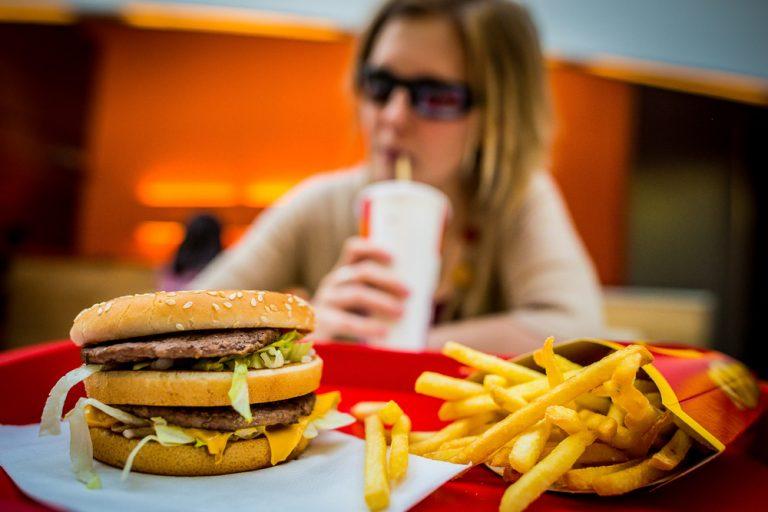
McDonalds shares hit record highs on Wednesday, after upmarket burgers and $1 drinks boosted sales.
The fast food chain recorded its highest quarterly sales at established stores in five years in the three months to the end of June, with turnaround efforts and the use of better ingredients paying off.
UK stores recorded their highest sales ever, with sales at stores open at least 13 months jumping 6.6 percent from this time last year.
McDonalds reported earnings of $1.70 per share on $6.05 billion in revenue, higher than the $1.62 per share on $5.96 billion in revenue expected by analysts.
“We’re building a better McDonald’s and more customers are noticing,” said Steve Easterbrook, the company’s chief executive.
“Our relentless commitment to running great restaurants and keeping the customer at the center of everything we do is generating broad-based strength and momentum across our entire business.”
McDonald’s shares are currently trading up 4.75 percent at 159.05 (1249GMT).
Shares in brewery company Marston’s drop 4pc as hot weather dampens demand
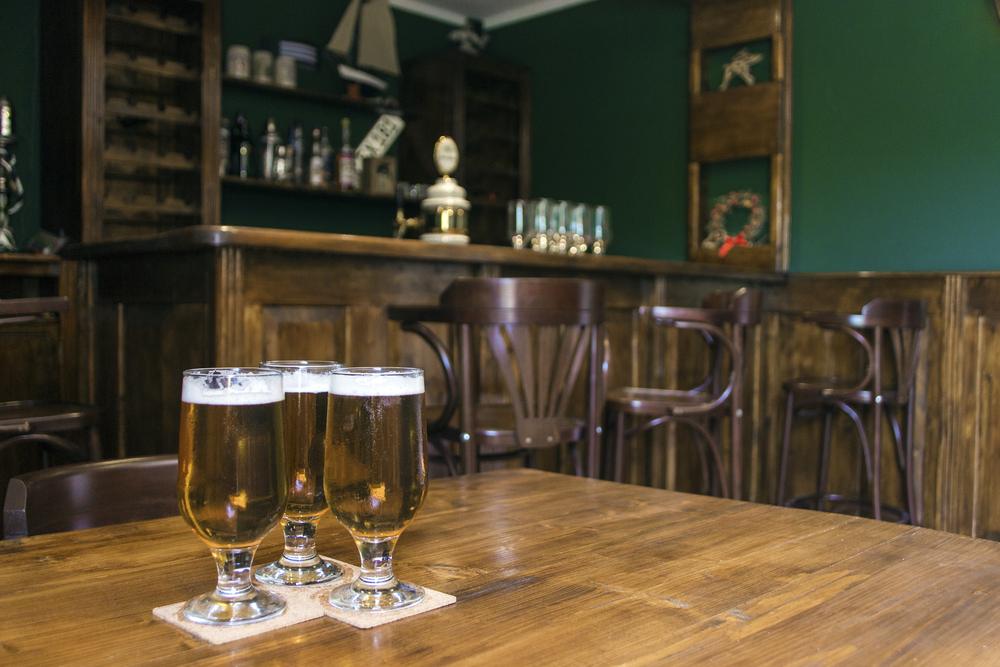
Brewing company Marston’s (LON:MARS) saw shares sink over 4 percent on Wednesday morning, after hot weather led to weak demand for its pub meals.
Like-for-like sales in tits food division rose by just 1.3 percent for the 42 weeks to July 22, almost half the 2.5p percent rate recorded in the same period last year.
Marston’s brewing section fared better, with own-brewed beer volumes up around 4 percent on the year before, reflecting the “continued good performance of our underlying business and the benefits of the acquisition of Charles Wells Brewing and Beer Business.”
The company confirmed that it remained on track to meet growth targets for 23 new pub-restaurants and bars in the current financial year in addition to eight lodges.
Commenting on the results, Ralph Findlay, Chief Executive Officer, said:
“We remain encouraged by our continued market outperformance and focused on delivering sustainable growth and maximising return on capital in an evolving market place.
“Our transformed pub estate continues to deliver positive like for like growth across all three divisions. We benefit from an operating structure which spans food-led destination and wet-let community pubs, accommodation and brewing, maintaining a good balance within our brand portfolio and broad consumer appeal.
“The Charles Wells brewing and beer business is bedding in well, further underpinning our leadership in the UK ale market. We are on track to complete our new-build and lodge expansion plans. We remain confident of delivering further profitable progress for the full financial year.”
Shares in Marston’s are currently trading down 3.23 percent at 117.40 (1127GMT).
Compass Group shares lifted on positive Q2 trading statement
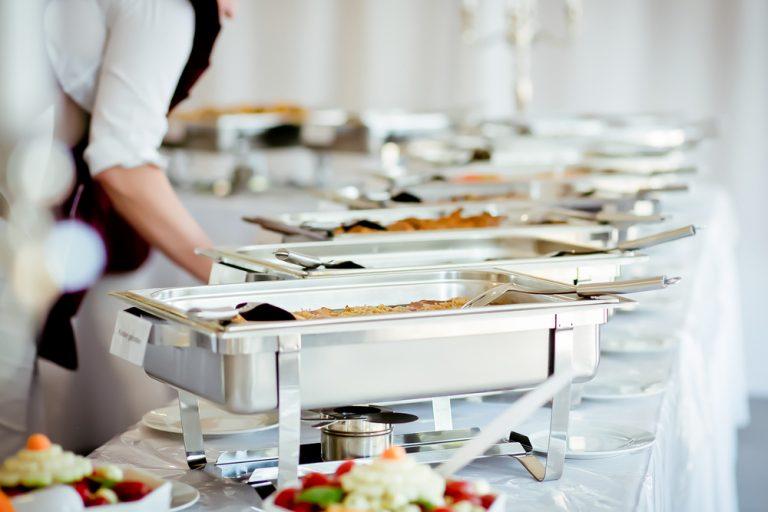
Shares in hospitality group Compass Group (LON:CPG) rose over 2 percent on Wednesday, after reporting strong third quarter performance.
Organic revenue growth in the third quarter stood at 3.9 percent, with growth accelerating after netting new business in North America and recording good progress in Europe. For the nine months to 30 June 2017 organic revenue growth was 3.7 percent.
In North America the firm recorded a 7.1 percent revenue growth over the third quarter, but saw a 0.3 percent fall in Europe and a 1.3 percent decline in its business across the rest of the world.
In a statement, the group said it had “had a good third quarter”, and full year expectations remain “positive and unchanged.”
“North America is performing strongly and we anticipate further progress in Europe and Rest of World in the fourth quarter. We remain focused on driving efficiencies throughout the business and our margin expectations for the full year are also unchanged”, it concluded.
Shares in Compass are currently trading up 2.25 percent on the positive outlook, at 1,634.00 (1101GMT).
General Motors shares volatile after mixed results
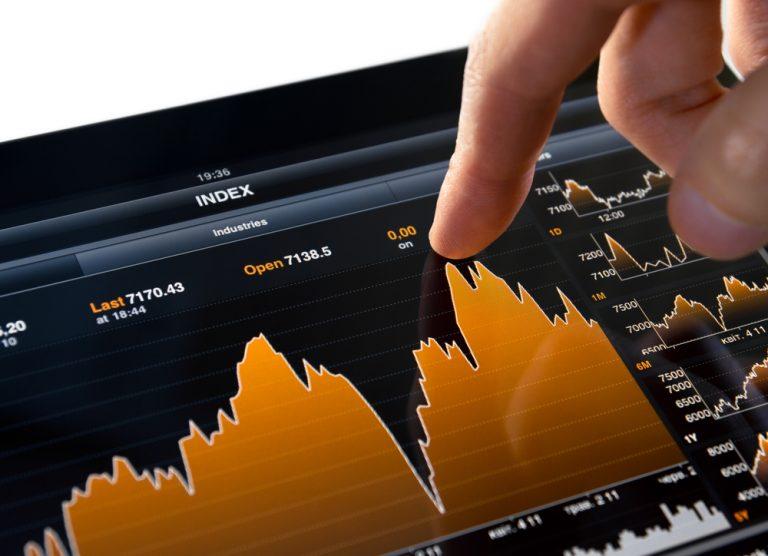
General Motors (NYSE:GM) shares had a volatile day on Tuesday, after a mixed set of second quarter results.
The company, who own the Buick, Opel and Vauxhall brands, recorded earnings per share of $1.89, above the $1.69 expected by Reuters analysts.
However revenue came in at $37 billion, just below the $40.15 billion expected, with net income at $2.4 billion, down from $2.8 billion a year earlier.
The results excluded its European arm, which is being sold to French carmaker PSA.
The company said on Tuesday that dealer inventories in the second quarter were up 273,000 against the same period in 2016. GM has built up a large inventory of unsold vehicles in advance of the launch of several new models.
General Motors shares plunged after the results were released, but have since recovered. They are currently trading up 0.70 percent at 36.07 (1611GMT).
What can investors learn from Germany’s stock market crash?
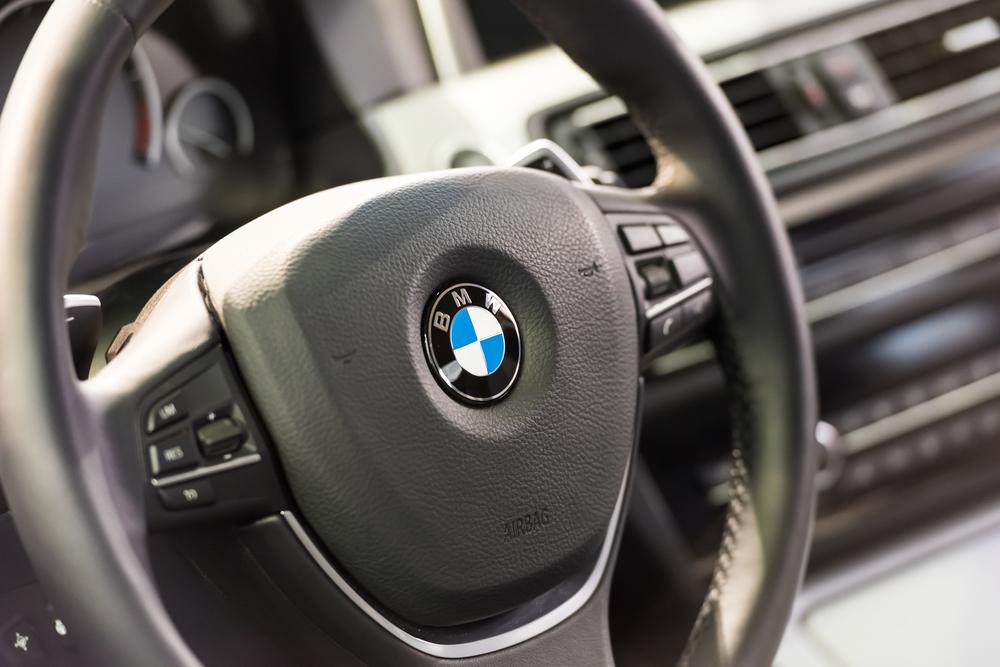
The German stock market crash is a timely reminder of the need to broadly invest, affirms one of the world’s largest independent financial services organisations.
The comment from Tom Elliott, deVere Group’s International Investment Strategist, comes as the DAX, Germany’s top stock index, was nearing the red after shares in the country’s largest car makers dropped over a fresh probe into the diesel emission scandal.
Mr Elliott observes: “Eurozone stock markets have felt the pain of a strong currency in recent weeks, as investors think that improving economic data will force the ECB to curtail its bond-buying program prematurely and – if inflation picks up – lead to interest rate hikes.
The DAX 30, the key German stock market index, has fallen after several large motor companies – including BMW, Daimler and Volkswagen – face fines over diesel emissions. Last week, the Mayor of London announced plans to seek compensation from Volkswagen after the true scale of the company’s diesel-fuelled cars’ contribution to the city’s air pollution became known. The sector is at risk of punitive fines across the world.
Elliott continues: “However, while this is embarrassing for the German auto sector, and for German exporters more generally, it is likely to be a passing phase. The fines will be absorbed by shareholders, and meanwhile the German auto sector will return to the real long-term battle: is there a durable market for high quality, driver-driven, private cars?
Elliott goes on to say: “German – and European autos’ biggest threat comes from technology from the U.S. – in the form of driverless cars and battery cells, amongst other factors – as well as changing social habits, which include car pooling and young adults driving less in developed economies.”