
“In May this year there were 1.4 million employment contracts in use that didn’t guarantee minimum hours, down from a peak of 2.1 million two years previously.
“Coupled with figures we’ve already seen from the Labour Force Survey showing a small fall in the number of people who say they’re on zero-hours contracts, it seems possible that the trend towards this type of work has begun to unwind.” Zero hours contracts fall to lowest level in three years
The number of people employed on zero hours contracts has fallen to its lowest level since 2014, suggesting controversy over the contracts have caused a fall in their popularity.
Tuesday’s report from the Office for National Statistics shows that there were 1.4 million of the contracts in the three months to June, down from 1.7 million a year earlier.
The number of people working on these contracts also fell to 883,000, 20,000 less than the previous three month period.
The contracts have attracted controversy for not guaranteeing employees actual work, causing a lack of security for those needing a full-time job. However, others argue that the contracts offer the necessary flexibility for those wanting causal work, such as students or self-employed staff.
Senior ONS statistician David Freeman commented:
Asking prices in London drop to lowest in ten years

Asking prices in London fell 2.9 percent in September, marking their biggest drop for a decade.
House prices fell by an average of £18,000 since last month, according to the latest figures from property website Rightmove, with expensive areas such as Chelsea and Camden being hit the hardest.
According to the Telegraph’s calculations, a new seller in Camden would be marketing their property for almost £74,000 less than they would have done exactly one year ago, while a new seller in Hackney is asking for almost £63,000 more than they would have done in September 2016.
House prices over the whole of the UK fell during the month, down by 1.2 percent to mark their third fall over the last four months.
Rightmove’s Miles Shipside said of the figures:
“Estate agents are clearly advising many sellers that they have to lower their price expectations to fit in with buyers’ stretched financial resources, with that price compromise hopefully generating extra buyer interest,” he said.
Rightmove’s figures took into account over 98,000 asking prices on properties listed for sale between 13th August and the 9th September, representing around 90 percent of the UK market.
Northrop Grumman and Orbital ATK shares up after takeover deal

Security company Northrop Grumman (NYSE:NOC) saw shares spike at market open on Monday, after announcing a deal to buy rocket maker Orbital ATK (NYSE:OA).
The company confirmed the agreement would be worth about $7.8 billion in cash, with an offer price of $134.50 a share. This is around 22 percent higher than Orbital’s closing price on Friday.
The deal is one of Northrop’s biggest in several years, and signifies a deepening in their commitment to this market; last month Northrop won a $328 million contract to develop a intercontinental ballistic missile system for the US Air Force.
Orbital itself holds several contracts with US Army and NASA, and focuses on the building on both rockets and missiles. North Korea’s missile testing of late has renewed the US’s focus on this area and has renewed interest in the sector.
Northrop Grumman is currently trading up 1.44 percent at 270.88, with Orbital ATK shares shooting up 20.80 percent to 132.93 (1615GMT).
Should I invest in Bitcoin?

After Jamie Dimon’s controversial comments last week labelled Bitcoin as a ‘fraud’, the cryptocurrency has one again hit the headline news.
Initially a complicated, secretive ‘currency’ used by drug-dealers and black market buyers, interest in bitcoin has surged dramatically over the last couple of years. Launched in 2009, Bitcoin is the “first decentralized digital currency,” according to bitcoin.org. Whilst its anonymity initially caused its rise to fame, it has hit the mainstream, becoming a talking point for investors globally.
But should you be investing?
Money-making potential
As recently as January, prices were below $800 – but have more than doubled since April, after Japan moved to legalize the cryptocurrency as a payment method and Russia announced that it was seeking to regulate it too. Since then, Bitcoin seems to have replaced gold as the “safe-haven” default, benefiting whenever political chaos hits the markets as it operates without government influence from any country. Whilst they are subject to increasing investor interest, the fact remains that Bitcoins are rare – which could make them a sound investment for the future. Right now, around 80 percent of all bitcoins are already mined and no new ones will appear after the year 2040. This scarcity could continue to drive up demand, especially if central banks decide to start buying them as foreign currency reserves. Big financial institutions have also given the green light to the currency, with both Fidelity and Hargreaves Lansdown offering their investors exposure to Bitcoin. Clearly, there’s potential to make some big money. However, as fast as its price can move up it can move down; investors should be aware that there’s the potential to lose a lot of money as well.Cons to Bitcoin investment
Bitcoin is a mathematical algorithm. It’s not something you can hold in your hand. Its value is based entirely on your trust in the math, the exchange and the willingness of the market to accept it. Whilst Bitcoin’s original draw was its anonymity; however, users identities on the platform are not entirely hidden. Whilst you will not need to disclose personal identity information in a bitcoin transaction, nor provide a credit card number that could be stolen, every transaction performed with bitcoin is visible on the distributed electronic public ledger known as the block chain. From this, it could be possible to determine a transaction’s origin. What rises quickly can also fall quickly. When the government rejected an effort to create a Bitcoin-based exchange-traded fund in March, the price of Bitcoin on the Bitfinex market plunged by almost one-third in just more than a week – making it far more volatile than traditional currencies moving within a small range. Alongside that, it is also vulnerable to hackers, with no backstop central bank to provide security.Bitcoin-related funds?
With Bitcoin being a relatively complicated investment, several vehicles have hit the market allowing investors to dabble in a more simple way. The most famous of these is the Bitcoin Investment Trust, which is designed to track the asset price; but actually trades at a significant premium compared with the underlying holdings. This makes it a “disaster waiting to happen” according to Sumit Roy in an analysis for ETF.com. Whilst many bitcoin fans lambasted JP Morgan boss Jamie Dimon for saying bitcoin was “not a real thing”, it is worth remembering that Bitcoin is just a mathematical algorithm; its value is based entirely on math, the exchange and the willingness of the market to accept it. This inherently makes it a risky investment. However, as long as you bear that in mind, there could be a place for bitcoin as a part of a balanced investment portfolio – and it could just be the investment bringing home the largest returns.Morrisons shares price falls despite improving figures
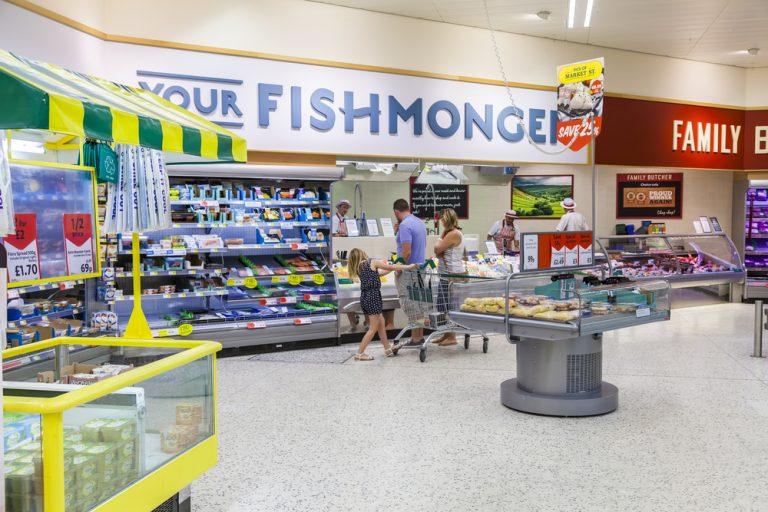
Shares in British supermarket Morrisons (LON:MRW) fell over 5 percent on Thursday, despite reporting a rise in both sales and profits for the first six months of the year.
Like-for-like sales rose 3 percent for the six months to 30 July, with underlying profit rising almost 13 percent to £177 million. The improving results are likely to come as a relief for chief executive David Potts, after a turbulent couple of years for the supermarket and several profit warnings.
Morrisons have since signed several deals in order to expand their reach in the market, forming a tie-up with Amazon and signing a deal to become the wholesale supplier for McColls.
The company reduced net debt during the six month period by a further £262 million, below the group’s £1 billion year-end target. Their interim dividend also rose 5.1 percent to 1.66 pence.
However, analysts failed to be impressed by the improving figures, with shares in Morrisons falling on the news. The company is currently trading down 5.02 percent at 232.66 (1227GMT).
Unemployment figure sticks at lowest since 1975, but wage pressure continues
The UK unemployment rate fell by a further 75,000 in the three months to July, maintaining the rate’s lowest level since 1975.
The jobless rate now stands at just 4.3 percent, according to the latest statistics from the Office for National Statistics, down from 4.4 percent in the previous quarter.
There were 32.14 million people in work in the three months to July, 181,000 more than for February to April 2017 and 379,000 more than for a year earlier.
The employment rate is currently at its highest since comparable records began in 1971. However, despite the fall in unemployment, the squeeze on real incomes continues as the latest inflation figure, released yesterday, continues to rise. Matt Hughes, a senior ONS statistician, said: “Another record high employment rate and a record low inactivity rate suggest the labour market continues to be strong. “In particular, the number of people aged 16 to 64 not in the labour force because they are looking after family or home is the lowest since records began, at less than 2.1 million. “Despite earnings rising by 2.1 percent in cash terms over the last year, the real value of people’s earnings is down 0.4 percent.”Modern Water shares sink despite increases in both revenue and profit

Water technologies group Modern Water (LON:MWG) saw shares sink 6 percent on Wednesday, despite boosts to both revenue and profit.
Group revenue increased 37 percent to 1.56 million, with group gross profit increasing by 15 percent to £0.67 million. Group overheads were also reduced, down by 4 percent to £2.08 million in line with management strategy.
£1.75 million raised from issue of new shares, with the group’s chairman, Alan Wilson, saying the fund raise had achieved the Board’s objectives.
“We are now able to make further investment in our growth and accelerate our work in developing new products, which are already taking shape in the USA.
“The impressive performance of our All Membrane Brine Concentrator (AMBC) in the cleaning of process waste-water for an Indian-based textiles company was widely marketed and has encouragingly resulted in new enquiries from companies in a range of countries and industrial sectors. We are also beginning to see increasing market interest in our other membrane technologies, with sales of licences and products in China, India and Oman”, Wilson said.
Shares in Modern Water are currently trading down 4.44 percent at 10.81 (1040GMT).
MyCelx shares jump 50pc on first half results
Shares in clean water technology company Mycelx (LON:MYX) jumped over 50 percent on Wednesday, after recording a strong set of results for the first half of 2017.
The group, who provide patented solutions for the oil and gas market and commercial industrial markets worldwide, recorded a 51 percent increase in revenue year-on-year to $5.9 million. EBITDA stood at $0.3 million, with a gross profit margin of 52.2 percent.
Mycelx won several contracts during the six month period, including its first contract in Nigeria to provide an onshore water treatment solution to a leading independent oil and gas producer, and a $1.1 million contract in Saudi Arabia.
Connie Mixon, CEO, said the company had made “good progress” in the first half of the year, adding:
“It is pleasing that we are now beginning to see the benefits of our 2016 pilot trial strategy come to fruition with our entry into the Nigerian market where we have sold a complete treatment system for an onshore facility.
“Our technology will deliver sustainable water treatment for years to come”, she concluded.
Shares in Mycelx shot up 50 percent on the news, but are now trading down 9.5 percent at 90.50 (1022GMT).
Industry heavyweights give major funding boost to creative agent Easle

Online creative platform Easle has obtained £450,000 in seed funding from industry heavyweights ustwo and Ian Hambleton of Studio Output, in order to expand its creative platform.
Easle aims to offer a new way for high quality creative talent from around the world to connect with brands, already attracting businesses such as Ogilvy, Diageo and Penguin Random House.
With over 200 clients already signed up, Easle provides a part-tech, part-human service offering a new way for brands, agencies and businesses to discover high quality creative talent from around the world.
Search, negotiation, briefing, contracts and payments are built into the platform, but experts are available to provide support, and help find the right talent to suit client needs. This allows Easle to operate at lower costs than competitors whilst retaining a high calibre of talent.
Having successfully trialled the platform with illustrators, Easle will use the funding to expand the platform to include Graphic Design, Animation, Photography and Videography, build an app and further develop their offering.
“Our focus is on bringing the top creative talent and brands together to make great work. With the expansion, we plan to really disrupt the traditional agency-talent model across the board. Eventually we aim to become a hub for inspiration and collaboration across a huge range of disciplines,” said Nick Gubbins, Easle CEO and Co-Founder.
The service directly responds to the soaring increase of freelancers who now contribute over £20 billion to the UK Creative Economy. Over time, Easle aims to provide tools to support its customers and creator’s day to day working lifestyle such as managing finances and accounts, as well as more specific tools to assist with flexible working.
UK inflation rate rise may divide Monetary Policy Committee
The UK’s inflation rate hit its joint highest level in more than five years in August, driven by rising clothing and petrol prices.
UK inflation measured by the Consumer Prices Index rose to 2.9 percent in August, according to statistics from the Office for National Statistics released on Tuesday, up from 2.6 percent in July. Air fares rose between July and August, alongside a jump in clothing and motor fuels prices. Clothing and footwear rose 4.6 percent year-on-year, hitting their highest level since records began, partly because of rising import costs for retailers in the wake of Brexit. The inflation figure are likely to have an impact on the Bank of England’s decision on monetary policy, with the Committee meeting later this week to discuss the interest rate. Capital Economics is predicting a split within the MPC, with economist Paul Hollingsworth saying: “[The] figures are likely to provide further ammunition to the more hawkish members of the MPC at this Thursday’s meeting, and as a result we expect the vote to be split once again.” However, he added: “With mixed signals on the current strength of the economy and the majority of the Committee appearing to be comfortable with a temporary, exchange-rate driven pick-up in headline inflation, we don’t think that the MPC will be panicked into raising interest rates imminently.”