
Sage Group shares tumble 15pc as revenue flags

Shares in software company Sage Group (LON:SGE) fell 15 percent on Friday morning, after first half revenue growth missed expectations for the six months to March.
The group downgraded its annual guidance on the back of the results, with ‘inconsistent operational execution’ leading to a revenue rise of 6.3 percent over the period, instead of the 7.4 percent growth recorded a year earlier.
The group attributed the fall to lower recurring revenue growth, as well as the loss of several contracts in its Sage’s enterprise software division.
Full-year guidance was cut to around 7 percent organic revenue growth, down from 8 percent, but operating margin guidance was maintained at 27.5 percent.
The software group were hit by weaker software subscriptions in the first half, with growth in the area falling to 25.3 percent, from 30.6 percent.
Chief executive Stephen Kelly said the group’s broad market opportunity remained unchanged.
“The revised revenue guidance targets for financial year 2018 reflect both the performance in the first half, but also our diligence in ensuring that we focus on recurring revenue to drive sustainable acceleration throughout the rest of the year as a platform into financial year 2019,” he commented.
Despite the group’s conciliatory comments investors were spooked by the news, sending shares down 15.09 percent to 570.60 (0821GMT).
London Stock Exchange confirms David Schwimmer as new chief
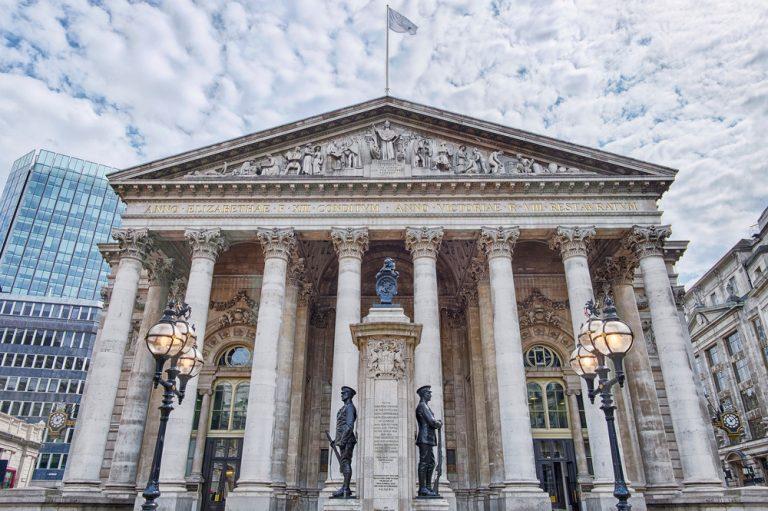
The London Stock Exchange named ex-Goldman Sachs banker David Schwimmer as its new CEO, after Xavier Rolet stepped down in November.
Schwimmer has spent the last 20 years with Goldman Sachs, where he was Global Head of Market Structure and Global Head of Metals and Mining in Investment Banking. He will join the group on 1 August 2018 and will be a member of the Board of Directors.
David Warren, Interim CEO and Group CFO, will continue as group CFO and a member of the Board.
“I have been impressed by its strong track record of partnering with customers to deliver innovative solutions. LSEG has multiple opportunities for further attractive growth across its market leading capital formation, information services and post trade businesses,” said Schwimmer said.
His appointment was made amongst claims that his predecessor, Rolet, was forced out by board members after a row, with the board taking a dislike to his management style.
Donald Brydon, Chairman of the London Stock Exchange Group, said he was “delighted to announce” the new appointment.
“David is a leader with great experience in the financial market infrastructure sector, which he has been closely involved in throughout his investment banking career, as well as capital markets experience in both developed and emerging markets. He is well known for his robust intellect and partnership approach with clients and colleagues alike”.
Volkswagen announce new CEO, Herbert Diess
Herbert Diess will become Volkswagen’s (ETR: VOW3) new CEO, replacing Matthias Müller who will step down immediately.
Diess will head the shakeup of the company, who are to create six new business areas and a special portfolio for China.
“My most important task will now be to join with our management team and our group workforce in consistently pursuing and pushing forward our evolution into a profitable, world-leading provider of sustainable mobility,” he said in a statement.
Diess’s new position at the group has been met with optimism by analysts.
Nord LB analyst Frank Schwope said: “Diess is a man of action. He is the most plausible choice at VW to lead the group into the next phase of its transformation.”
The new CEO will replace Müller, who did not successfully refocus the Volkswagen’s portfolio of car brands, which was a key pillar of “Strategy 2025” to transform the company after the diesel emissions scandal.
Diess, who is a former BMW AG (ETR: BMW) executive, plans major cost-cutting at the group whilst also focusing on the development of new technologies.
Sanford Bernstein analyst Max Warburton wrote: “There have been historic episodes where cost cutters have been brought in to sort out the namesake VW brand, but who then leave or are squeezed out before their work is really done.”
“Instead of being squeezed out, he has been pushed upward, and has been made CEO. It’s a sign of real change at VW.”
Volkswagen’s decision to slim down has come amid Fiat (NYSE: FCAU) and Daimler’s (ETR: DAI) move to strip off from non-core assets and cut costs.
Goldman Sachs analysts have estimated £140 billion worth of “hidden value” in the European auto sector, which can be gained through portfolio simplifications.
Uber acquires bike share startup Jump

Uber has announced plans to acquire the New York City-based e-bike startup, Jump Bikes.
The car-hailing app has not confirmed what the deal is worth but it is estimated to be $100 million in cash and stock.
Uber’s CEO Dara Khosrowshahi said in a blog post that the deal would help in his mission of “bringing together multiple modes of transportation within the Uber app—so that you can choose the fastest or most affordable way to get where you’re going, whether that’s in an Uber, on a bike, on the subway, or more.”
When completed, the deal will give Uber access to Jump’s 12,000 dockless and GPS-enabled bikes in 40 cities across six countries including China and the US.
The start-up’s CEO, Ryan Rzepecki, was initially concerned at the proposed deal and shared concerns over Uber’s recent controversies.
He wrote: “When we first began talking to Uber they were going through an extremely difficult time, with negative headlines each week and a massive change in leadership. We expected to find a toxic work environment and a broken culture.”
“Instead, everyone we met was smart, passionate, and genuinely wanted to help our team succeed. Through our collaboration we realized that we shared Uber’s vision of multi-modal mobility and had the same goal of decreasing car ownership.
“Even more importantly, we could see the shift in the company once Dara was named CEO as he began leading with humility and in a way that we felt reflected our values. It soon became clear that with such strong synergies and alignment on mission, JUMP could better accomplish its goals if it were part of Uber,” he added.
Despite concerns about the deal resulting in extreme losses for Uber, Khosrowshahi said the company were not thinking in terms of profits or IPO yet but are focusing on consumers first.
Travel business performance boosts Saga shares by 8pc
Shares at over-50s insurer Saga (LON:SAGA) soared over 8 percent at market open on Thursday, as underlying profit for the full year to January 2018 moved up 1.4 percent.
Pre-tax profit dropped significantly over the period, down 1.4 percent, but the company raised its dividend by 5.9 percent to 9p. Saga said it reflected ‘confidence in the future cash generation of the business’.
Its travel business had an extremely strong year, seeing profit growth of 36.9 percent over the period. Retail broking insurance recorded a profit of 4.3 percent.
“In a challenging market we have delivered a set of full year results which is in line with the rebased profit expectations set at the end of 2017. We have also continued to develop our strategy for long term growth.
“We have achieved a modest increase in underlying profits and have remained highly cash generative. We have increased the dividend given our confidence in the stability of our highly cash generating model”, said CEO Lance Batchelor.
Shares in Saga are currently trading up 8.12 percent at 126.50 (0847GMT).
Dunelm shares soar 7pc on quarterly revenue boost
Homeware retailer Dunelm (LON:DNLM) saw shares rise nearly 7 percent on Thursday morning, after recording a moderate rise in revenue despite a “challenging” consumer backdrop.
Total revenue for the third quarter rose by 5.1 percent to £268.2 million, with like-for-like revenue up 4.6 percent. Dunelm’s online performance remained strong, with organic growth at 35.7 percent during the three month period.
“We’ve seen a good sales performance over the quarter, with like-for-like sales of 1.2% in stores and 35.7% online, despite a challenging consumer backdrop”, said Nick Wilkinson, chief executive of Dunelm.
The results come after a warning from the company in January that weakness in the legacy Worldstores business, as well as continued investment in infrastructure, would lead to higher operating costs.
Gross margin was approximately 15 basis points lower than the comparable period previously, but the firm said it gross margni figures to improve significantly in the final quarter.
Dunelm confirmed that expectations for the full year remain unchanged, and retained its guidance that H2 margins will be broadly in line with H1 margins.
Shares in Dunelm are currently trading up 6.97 percent at 560.50 (0837GMT).
Carpetright to close 92 stores in CVA proposal
Carpetright (LON:CPR) shares sunk nearly 20 percent at market open on Thursday, after confirming a small pre-tax loss for the year alongside the closure of 92 stores.
It has finalised the terms of a company voluntary arrangement, during which it will close 92 stores on or after the 23rd September 2018.
“These tough but necessary actions will enable us to address the burden of a legacy UK property estate consisting of too many poorly located stores on unsustainable rents and are essential if we are to restore our profitability and deliver a successful turnaround,” Carpetright said.
The proposal will be put to the creditors for approval at a meeting on the 26th April 2018, with shareholders being asked on the 30th April.
Carpetright has over 400 stores in the UK and the recent underperformance of its stores has made meeting rent payments difficult. The group warned that high street trading conditions remain “difficult” but confirmed that performance would be broadly in line with March’s expectations, which is to deliver a small pre-tax profit for the year.
Carpetright also announced plans to raise net proceeds of around £60 million through equity capital.
Carpetright shares are currently down 17.52 percent at 34.60 (0828GMT).
WH Smith profits hit by fall in spoof humour books
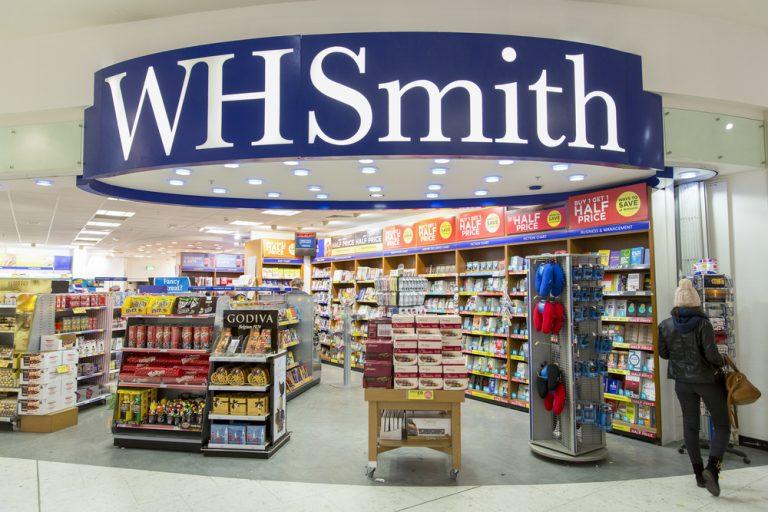
Stationer and book store WH Smith was hit by falling profits in the six months to February, as weak publishing trends over the Christmas impacted on sales.
Results last year were boosted by sales of spoof humour books, especially over the Christmas period, a trend which seems to have dissipated this year.
Group profit dropped down 1 percent year-on-year over the second half of the year, despite a growth in its travel division.
Stores at airports and train stations reported a 5 percent growth in profits over the period, despite a 6 percent decline at its High Street stores.
Revenue was flat, and down 1 percent on a like-for-like basis. Management has raised its dividend 10 percent to 16p.
Chief executive Stephen Clarke said he was “confident” of the outcome for the full year, despite noting some “uncertainty in the broader economic environment”.
Chief executive Stephen Clarke said there was “no publishing trend to match last year’s strong sales of humour books over Christmas”, but he applauded the company’s “good” high street performance on stationery and seasonal sales.
Tesco profits rebound after turnaround initiative
Tesco (LON:TSCO) reported a sharp rise in profits for the year in spite of a challenging retail environment.
The UK’s largest supermarket reported pre-tax profits of £1.64 billion for the year to 24 February, up from £145 million for the previous year.
Sales at UK and Irish stores rose 2.4 per cent in the final quarter, ahead analyst expectations of the 2.2 per cent.
This marks a year of “strong progress”, as the retailer looked to turnaround its fortunes in light of the exposure of an accounting scandal in 2017.
Chief Executive Dave Lewis commented:
“This has been another year of strong progress, with the ninth consecutive quarter of growth,” he said.
“We have further improved profitability, with group operating margin reaching 3% in the second half.
“We are generating significant levels of cash and net debt is down by almost £6 billion over the last three years.
“All of this puts us firmly on track to deliver our medium-term ambitions and create long-term value for every stakeholder in Tesco.”
Despite the strong figures, competition among the UK’s supermarkets remains fierce, with the popularity of budget-friendly options Aldi and Lidl challenging the dominance of the Tesco and Sainsbury’s (LON:SBRY) brands.
Moreover, the retail sector continues to suffer, with many high-street retailers feeling the strain.
Consumers have been increasingly tightening their spending due to lower disposable incomes, as inflation continues to drive up the the price of groceries.
Following the collapse of Maplin and Toys R Us, Restaurant chains such as Prezzo and Jamie’s Italian also announced the closure of several locations, in a bid to streamline costs amidst challenging trading conditions.
In fact, last year the high street faced its toughest year since 2010, with a total of 1,700 chain chain shops closing.
On average, 11 chain stores a day opened, whilst 16 a day closed, according to an analysis conducted by the Local Data Company (LDC) for PricewaterhouseCoopers.
Shares in Tesco have ticked up 5.38 percent as of 11.13AM (GMT).
High street faced toughest year in six years in 2017

The UK high street survived its toughest year since 2010 last year, with store closures soaring as competition from internet retailers hots up.
A net 1,700 chain shops closed on British high streets in 2017, according to analysis of the UK’s top 500 towns compiled by the Local Data Company (LDC) for PricewaterhouseCoopers.
In the UK an average of 11 stores a day opened, but 16 a day closed, not including figures from independent shops.
Retailers were not the only ones hit throughout the course of the year, with travel agents and estate agents also affected by online competitors.
High streets have also been negatively affected by shoppers having a lower disposable income, as inflation boosts the price of groceries and leaves less money in consumers’ pockets.
Major British retailers have been hit hard lately, with many announcing the closure or falling into administrations. 2018 has so far seen the loss of Toys R Us, with Mothercare and Carpetright facing difficulties.