
Angus Thirlwell, Chief Executive Officer of Hotel Chocolat said the brand had made “good progress” over the six months period, adding to both sales and profitability.
“The critical Christmas period was very successful, helped by good availability, popular and innovative new ranges and significantly increased digital transactions. We have strong plans in place for the key spring seasons of Mother’s Day and Easter and are confident of further progress”, he added.
Shares in Hotel Chocolat are currently trading up 6.55 percent at 271.98 (1058GMT). Hotel Chocolat delivers sweet results for investors, shares up over 5 pc
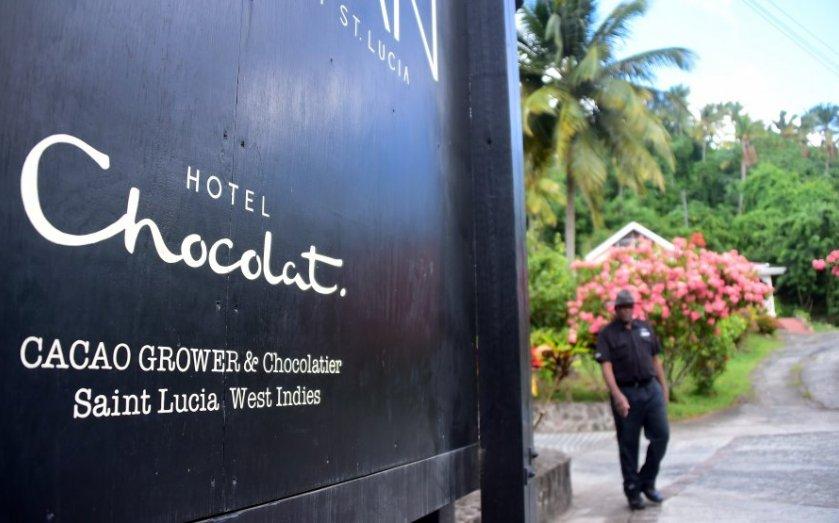
Hotel Chocolat (LON:HOTC) delivered strong Christmas trading results on Wednesday, with a 28 percent profit boost sending shares up over 5 percent.
The strong sales were the result of a “very successful” Christmas, which caused pre-tax profit to rise to £11.2 million in the first half of the luxury chocolatier’s financial year.
Reported revenue rose 14 percent to £62.5 million. Underlying earnings (EBITDA) rose 27 percent to £13.7 million from £10.8 million and underlying EBTIDA margins increased to 21.9 percent from 19.7 percent.
In a statement alongside the results, Hotel Chocolat said it was confident strong sales would continue into their upcoming key trading periods, Mother’s Day and Easter.
The chocolatier, who run both coffee shops and chocolate stores all over the UK, have seen shares rise 73 percent since it floated on the stock market in May of last year. The group opened a further 10 new stores during the period, contributing 4 percent to group sales year-on-year.
Events giant UBM reports strong trading, Liberum reiterates buy rating

Events organiser UBM was one of the biggest movers on the FTSE 250 on Wednesday, after strong results led to Liberum Capital reiterating their buy rating on the stock.
UBM, who are primarily engaged in organising international events and exhibitions, saw its headline pre-tax profits rise to £120.1 million in 2016, up from £119.6 million a year earlier.
Revenues were boosted to £863.0 million, up from £769.9 million in 2015.
The group made significant changes to its business structure over the course of the year, acquiring Asia-focused exhibitions firm Allworld for $485 million and selling its PR Newswire business.
The strong results led to analysts at Liberum Capital reiterating their buy rating on the stock. In a note to clients, the financial firm said: “We would expect consensus upgrades (we were 3-4 percent below consensus) following these results and reiterate our thesis that investors should increase exposure to stocks with exposure to US growth.”
Tim Cobbold, CEO of UBM, commented:
“During 2016 we made significant strategic progress and delivered performance ahead of expectations.
“We took further steps to focus UBM on the attractive B2B events sector by completing the PRN disposal and, in December, acquiring Allworld. At the same time, we made excellent progress implementing the Events First strategy at an operational level and delivered a strong financial performance ahead of market expectations.
“While remaining conscious of the global macro-economic and geopolitical uncertainties, in 2017 the Board expects to see higher underlying revenue growth (excluding the impact of further portfolio rationalisation), enhanced by the consolidation of Allworld and the positive impact of odd-year biennials.”
Shares in UBM are currently trading up 4.54 percent at 759.50 (1129GMT).
Over 50s more likely to spend on home, leisure and travel, says new research

Over 50s are some of the biggest spenders on home, leisure and travel, despite earning potential falling after retirement.
According to the new research by Saga Personal Loans, those surveyed said they typically spent around £17,000 on home renovations, including around £5,000 on a new bathrooms and £13,000 on a new kitchen.
Speaking to 8,000 over 50s, the research found that spending also increase on both motoring and travel. People in their 70s said they have bought three new cars since turning 50, with accessible travel becoming a necessity with age for everything including food-shopping and commuting.
With retirement comes an urge to travel, according to the research, with people in their 70s saying they had had 22 foreign holidays since turning 50.
These figures come despite recent changes to the state pension, which saw the so-called Money Purchase Annual Allowance (MPAA) be cut to £4,000 in April 2017, from its current level of £10,000.
Nici Audhlam-Gardiner, managing director, Saga Money, commented:
“As we get older our income sources become more diverse; typically we have a steady pension income and often earn further income from investment and other sources. Lenders have been short sighted by turning down people by looking only at earned income which is one of the reasons we launched Saga Personal Loans, to give more people access to credit they can afford in order to live the way they want to.
“Industry research also shows us that people over 55 are keen to pay off their debts as quickly as possible and as loans give them an absolute end date and the ability to overpay, they often prefer using a loan to spending on a credit card.”
Royal Bank of Scotland shares rise after change to Williams & Glynn sale

Shares in the Royal Bank of Scotland rose on Monday, after the HM Treasury confirmed that it may not have to spin-off its Williams & Glynn branch in order to meet its state aid obligations.
In a statement, the bank confirmed that the commissioner responsible for EU competition policy will open proceedings to “gather evidence on an alternative plan for RBS to meet its remaining State Aid obligations”, without needing to separate and divest of the Williams & Glynn business by the current deadline of 31st December 2017.
RBS has long struggled to divest itself of its W&G unit, spending billions on attempting to find a sale. The spin-off was originally agreed as part of the bank’s £45 billion government bailout during the 2008 financial crisis.
RBS CEO Ross McEwan said in a statement on Monday: “Today’s proposal would provide a path to increased competition in the SME marketplace. If agreed it would deliver an outcome on our EC State Aid divestment obligations more quickly and with more certainty than undertaking a difficult and complex sale and would provide much-needed certainty for customers and staff.”
“Subject to the plan becoming finalised and further discussions with the European Commission and Her Majesty’s Treasury we will assess the timing and manner in which we reincorporate the business into the RBS franchises. This reintegration would likely create some additional restructuring charges during 2017 and 2018,” he added.
Shares in the Royal Bank of Scotland are currently up on the news, trading 5.88 percent higher at 256.65 (1016GMT).
Sareum Holdings posts first profit, but investors remain unimpressed

Specialist cancer drug producer Sareum Holdings posted its first profit on Monday, alongside strong half-yearly results.
The company received its first payment in the last half of the year after licensing its lead product, a Chk1 inhibitor cancer candidate, to Sierra Oncology. The Sierra licence triggered an upfront payment of $1.9 million, triggering an overall profit of £573,000 in the half year to December.
Sareum added that despite expecting no further payments from the Chk1 licence agreement in the current period, and all future payments “dependent on Sierra Oncology achieving further milestones or Sareum striking licensing agreements with its other programmes”, they still expect to end the current financial year with a modest profit.
This comes after a £485,000 loss for the same period last year. Cash holdings increased to £2.34 million, up from £335,000.
In an update, the company also announced further patent grants for the Aurora+FLT3 kinase programme in Japan, Singapore, China, and Hong Kong, completing IP protection for the candidate in all major territories.
Tim Mitchell, Sareum’s chief executive, said that with development funding for Chk1 now arranged it will accelerate work at its three other programmes including the TYK2 targeting psoriasis, rheumatoid arthritis, and other autoimmune disorders:
“We have previously reported the efficacy of our TYK2 inhibitors, including SAR-20347, in disease models of psoriasis, rheumatoid arthritis, and colitis, and, in the latter two cases, how our compounds compare favourably with a marketed JAK family kinase inhibitor,” Mitchell said.
Despite a price spike as the figures were released, Sareum shares are currently trading down 5.47 percent at 1.13 (1007GMT).
Donald Trump’s first solo press conference sparks controversy

US President Donald Trump took to the stage on Thursday to deny reports of “chaos” at the White House, in one of America’s most memorable Presidential press conferences to date.
In his first solo press conference, Trump talked over reporters and on several occasions told them to “sit down”, adding that he “knew the rest of the question”. He said that he had inherited a “mess”, and that his administration was operating like a “fine-tuned machine”.
“I turn on the TV, open the newspapers and I see stories of chaos, chaos,” Trump told reporters. “Yet it is the exact opposite… despite the fact that I can’t get my cabinet approved.”
The bizarre press conference saw the US President move from topic to topic at breakneck speed, without fully stopping to answer questions from journalists. When pushed about his relationship with Russian president Vladimir Putin, he said:
“President Putin called me up nicely to congratulate me on the win of the election. He called me up extremely nicely to congratulate me on the inauguration, which was terrific, but so did almost all other leaders from almost all other countries.”
He added that he has barely spoken to anyone in Russia because he “doesn’t know anyone in Russia”, and that it would be difficult to get along with Russia because of the media pressure. He then said:
“Because if we could get along with Russia, and by the way, China and Japan and everyone, if we could get along, it would be a positive thing, not a negative thing.”
On the topic of nuclear weapons, he explained to reporters:
“You know what uranium is, right? This thing called nuclear weapons, like lots of things are done with uranium, including some bad things.”
At one point April Ryan, a black reporter with American Urban Radio Networks in Baltimore, asked Trump if he planned to meet and work with the Congressional Black Caucus. He responded by asking if she herself wanted to set up the meeting, adding the question: “Are they friends of yours?”
The press conference sparked controversy across the globe, with Trump’s combative approach to reporters failing to be dampened as his Presidency continues.
SMEs to suffer most from April’s business rate rise, whilst online giants benefit

Almost 75 percent of small companies in London are worried about the negative effects of the government’s latest business rate rise, set to come into effect from April.
The Federation of Small Businesses (FSB) warned that London was in “serious danger of losing its vital support system of micro and small businesses”, after it found that the average small business will have to pay £17,000 to cover business rates from April.
The government’s changes have provoked uproar from business campaign groups, after it was found that more than 500,000 cafes, shops, hotels, nurseries, schools and hospitals will pay up to 300 per cent more under the new rules.
The changes come following the first revaluation of business rates for seven years. Several large business campaign groups have spoken out against the changes, including the British Retail Consortium, the Confederation of British Industry and the Federation of Small Businesses. Some have argued that it could even be illegal under local government finance laws.
The changes led to further controversy after it was found that online retail giant Amazon would benefit from the changes, seeing its business levy slashed at most of its warehouses across the UK. Other online retailers who are set to benefit include Asos and Boohoo.
A survey by the FSB and trade body Camden Town Unlimited, found that rates were the biggest issue for 74 percent of small businesses in London.
Four in 10 businesses that are paying rates said they expected a rise of more than 20 percent, while three in 10 said they were unsure what the changes from April would mean.
Sue Terpilowski, the FSB London chair, said: “London is in serious danger of losing its vital support system of micro and small businesses.
“The business attraction of London is that it has a strong ecosystem of support services from the micro and small business community. Some of these businesses are the ones that become high-growth companies from a standing start, often in the hi-tech sectors.”
UK retail sales fall dramatically, GBP plunges

UK retail sales dramatically fell in January, surprising City analysts and causing the Pound to plummet.
Retail sales volumes fell by 0.3 percent month-on-month in January according to the Office for National Statistics, well below expectations of a 0.9 percent increase.
In the three months to January 2017, retail sales saw the first signs of a fall in the underlying trend since December 2013,” ONS statistician Kate Davies said.
“The evidence suggests that increased prices in fuel and food are significant factors in this slowdown.”
Monthly retail sales figures are traditionally volatile, with December’s figures being revised downwards by 2.1 percent. However, figures have been continually weak for the last several weeks, down by 0.4 percent in January to mark the weakest performance since November 2013.
The unexpected fall caused the Pound to plunge dramatically, losing half a cent to trade down 0.54 percent at $1.242 just after the news. Against the euro, the currency is currently down 0.32 percent against the euro and 0.91 percent against the yen.
Jeremy Corbyn to impose ‘three-line whip’ on Article 50 vote
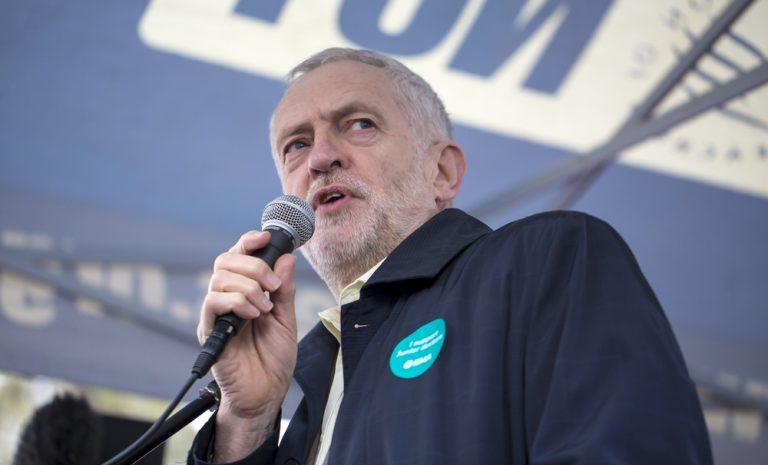
Jeremy Corbyn has confirmed that he intends to impose a three-line whip on Labour MP’s for the upcoming parliamentary vote on Article 50.
The Labour leader said in an interview with Sky News, that he intends to enforce the strongest form of party discipline to ensure that MP’s both attend and vote in favour of Article 50.
This follows the UK Supreme Court’s landmark decision on Tuesday to dismiss the Government’s Brexit appeal case, prohibiting Brexit negotiations progressing without a formal parliamentary vote.
In the interview, Mr Corbyn stated:
“It will be a clear decision that we want all of our MPs to support the article 50 vote when it comes up next week.”
He later confirmed that a three-line whip would be also put in place. He continued:
“It’s clearly a three-line whip. It is a vote on the article 50 … We will put out a statement today to our members that we want them to vote for article 50.”
Jeremy Corbyn had been criticised by many of his remain supporting colleagues for not having campaigned fiercely enough over the issue during the run-up to the referendum. Officially, the Labour stance had been in favour of “remain”, however, Corbyn’s lack of apparent commitment to the cause ultimately led many to question his leadership and his positioning regarding the EU.
During his time as a Labour MP, he has been more accurately characterised by as a left-wing eurosceptic, than an ardent europhile. The leadership challenge that mounted against Corbyn following the June vote, was largely cited as as a result of Corbyn’s lack of leadership regarding the referendum and his lukewarm campaigning.
However, whilst Corbyn remained clear on the party’s official position with regards to Article 50, the Islington-North MP acknowledged the difficulty for many MPs who face a conflict of interests between the party and their remain constituents. He said:
“I fully understand the pressures and issues that members are under, those who represent leave constituencies and those who represent remain constituencies. Labour is in the almost unique position of having MPs representing constituencies in both directions and very strongly in both directions.”
Many Labour strongholds are London constituencies, which have a large proportion of ‘Remain’ voters.
Positive Fokus launch crowdfunding campaign to accelerate growth

Events hire company Positive Fokus has kicked off a crowdfunding campaign on Crowd2Fund, and are seeking investors to help take their innovative brand forward.
Positive Fokus initially began as a hobby for founders Seain Loughlin and Adam Savant, combining their love of both sound and good quality sound systems. Since 2005, their passion has grown into a fulltime business, encompassing a number of ancillary services including technicians, audio, lighting and staging.
The founders’ combined experience was perfect for starting the business, with Adam working as an audio technician and Seain in event logistics and sales. The name of the business is indicative of the company’s founding ethos; to make a positive contribution to their stakeholders and community at large.
From its humble beginnings, Positive Fokus now puts on events at some of the most renowned venues all over the UK including Glastonbury and Port Elliot festival. The company has also been used by blue chip names including Channel 4, and some of the most exciting brands in the UK such as Secret Cinema.
Positive Fokus is creative and innovative in its approach and with how it engages with clients; a recent event put on for Twitter focussed on live streaming video and encompassed a number of cutting edge interactive features.
The company are now seeking a £60,000 loan on Crowd2Fund.com, with an estimated APR of 10 percent, in order to meet growing demand.
The founders of the business believe that this creativity, alongside their understanding of technology, are core components which will enable them to remain competitive in their marketplace and to continue to grow. The loan will be used to increase awareness through marketing and the procurement of new equipment.
Sean Loughlin said of the choice to crowdfund: “In order to meet growing demand from some of the world’s top brands we need to continue to invest. We plan on using a portion of the funds on new lighting equipment in order for us to provide the best experience for our discerning client base. We will also use a portion of the funds to revamp the website.”
The company chose to seek financing from Crowd2Fund.com over traditional lenders due to the platform allowing their customers and stakeholders a deeper level of engagement with the business.
“Crowdfunding is creative by its nature, and fits with our ethos of making a positive contribution to society. Crowd2Fund seemed like the perfect fit for us due to their transparency, track record and similar values”, Loughlin added.
For more information, visit their campaign page on Crowd2Fund.