Fidor and Atom: the rise of the online challenger banks

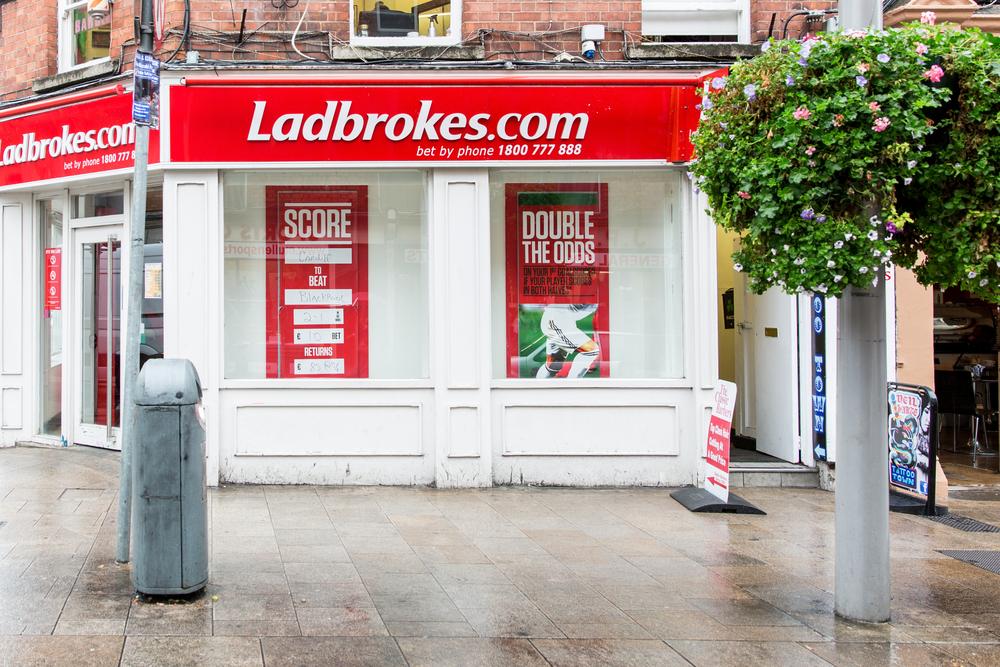
Everything is online these days – talking, shopping, even banking. But would you trust a bank with no high street branches or customer service phone line – in fact, no way to talk to a real person at all? Fidor Bank is a German online-only bank launched in 2009, which entered the UK market last year. Despite having over 300,000 customers in Germany, it employs under 50 employees. Advice is given and received through an online ‘community’ of Fidor customers, sharing advice and helping each other with their problems. In true modern fashion, its interest rates are influenced by Facebook likes – the more it receives, the higher the rate will rise, up to a maximum of 0.5 percent AER. Chief executive Matthias Kroner says: “Our account is more like a marketplace than a closed box current account, it is a social community with a banking licence, it is a peer-to-peer economy. It’s a marketplace, shielded by a banking licence.” In January it launched a contactless debit card for its current account, but ut only the first three ATM withdrawals are free. After that, there is a £1 per withdrawal charge, whether the card is used in the UK or overseas. There is also a 1.5% foreign exchange fee on all non-sterling transactions, including cash machine withdrawals. The most recent online challenger bank to enter the UK market is Atom, whose chairman is the co-founder of Britain’s newest high-street bank Metro. It was granted a license less than a year ago to become the UK’s first digital-only lender, and its investors include star fund manager Neil Woodford and venture capitalist Jon Moulton, as well as Goldman Sachs asset manager Jim O’Neill. Unlike Fidor, Atom bank doesn’t even have online banking; everything is done through the mobile app, including mortgage applications and unsecured personal lending. “Mobile banking has overtaken branches, telephones and even internet transactions,” Mr Thomson said. “We have no branches, no legacy costs, no legacy IT systems or legacy balance sheet.” In fact, Thomson believes that customers are happier with less contact with their bank. “Customers who have less contact – face-to-face or voice-to-voice – with their banks are, surprise, surprise, most content,” he added. So far, its too early to tell for these banks just how well UK consumers will adapt to banking solely online; however, its clear that as with everything else, the internet is the future – and traditional banks will need to adapt faster in order to compete against the rise of start-up challengers.
Miranda Wadham on 28/04/2016

Morning Round-Up: Facebook shares jump, house prices slow, Lloyds makes progress

0

Facebook shares jump as profits triple

Facebook shares jumped over 8 percent in pre-market trading after results showed a tripling of first quarter profits.

Profits rose to $1.51 billion, up from $512m in the same period last year, with advertising revenues also increasing to $5.2 billion.

The company also announced plans to issue a new class of stock to enable CEO Zuckerberg to remain in control of the company as he gives shares to charity, with a statement saying that it would “encourage Mr Zuckerberg to remain in an active leadership role at Facebook”.

House price growth slows on tax changes

British annual house price growth slowed in April, according to the latest survey from mortgage lender Nationwide on Thursday.

House price growth eased to 4.9 percent year-on-year from 5.7 percent in March, slightly less than forecast by analysts.

Over the last month alone house prices edged up 0.2 percent, with Nationwide citing the increase in the stamp duty land tax for second home purchases as the reason behind the easing.

Nationwide also warned that wage and job growth could put pressure on the housing market in the future, with chief economist Robert Gardner saying that “there is a risk that the surge in house purchases in recent months will exacerbate the shortage of homes on the market.”

Lloyds makes steady progress in difficult economic climate

Lloyds Banking Group reported underlying profits in line with expectations on Thursday, keeping its head above water in a tricky economic climate.

The group saw a 46 percent drop in profits in the first quarter to £654 million, but saw underlying profits fall only 6 percent to £2.1 billion. This was in line with analysts’ expectations of £1.9 billion.

Chief executive Antonio Horta-Osorio has put in place a strategy to streamline the business, cutting thousands of jobs and restructuring. In a statement, he commented:

“These results demonstrate the strength of our differentiated, simple, low risk business model and reflect our ability to actively respond to the challenging operating environment.”

28/04/2016

US Federal Reserve vote to keep rates steady

0
US interest rates will remain unchanged until at least June, with all but one of the Federal Reserve members voting to keep rates at the current level of between 0.25 and 0.5 percent. Global economic outlook has caused the Fed to slow down its rate hike programme after it raised rates for the first time in almost a decade in December. However, the Federal Reserve softened its warnings on the state of the economy in its meeting yesterday and left the door open for a rate hike in June: “The Committee currently expects that, with gradual adjustments in the stance of monetary policy, economic activity will expand at a moderate pace and labor market indicators will continue to strengthen”, the Fed said in a statement.
29/04/2016

Bank of Japan shocks market, yen rises

0

The Bank of Japan shocked the markets on Thursday after deciding against extra monetary easing measures to stimulate the country’s flagging economy.

Japanese shares fell and the yen surged 2 percent against the dollat at 109.33 yen. The Nikkei 225 index finished up 3.6 percent lower at 16,666.05.

The Bank of Japan introduced negative rates in January, which has thus far had little effect on the economy, with few people choosing to spend or invest more.

Markets suffered from the news across Asia, with the Shanghai Composite falling 0.5 percent and Hong Kong’s Hang Seng remaining flat at 21,384.61.

28/04/2016

Yahoo agrees new directors to avoid proxy battle

0
Yahoo agreed to add four new directors on Wednesday, following calls from activist hedge fund Starboard Value LP to overhaul the board. Jeffrey Smith, Starboard’s chief executive and chief investment officer, will be joining Yahoo’s board of directors, in addition to as Tor Braham, Eddy W. Hartenstein, and Richard Hill. Chief Executive Marissa Mayer called the agreement a “constructive resolution.” “This constructive resolution will allow management and the board to keep our focus on our extremely important objectives.” Ms Mayer is attempting to turnaround the struggling company, which has seen share price fall over 15 percent over the past year. Starboard Value are its largest shareholder, and recently raised questions as to the competence of the current board to get the company back on track.
27/04/2016

Metro Bank: should you join the banking revolution?

It started with just one store, its iconic red and blue sign standing out against the grey buildings of post-crisis London. Since then, it has multiplied; its name was whispered amongst friends, before hitting the headlines of main finance magazines. A growing ‘revolution’ against the traditional – and disgraced – UK banks: Metro Bank. The US-born Metro hit the streets of London for the first time in 2010 – the first new bank in the UK in 150 years, apparently – with the slogan ‘love your bank at last‘ emblazoned above the entrance. At the time this was, of course, a fairly tall order; 2010 was just two years after the financial crash that saw customers lining the streets of local towns to withdraw their savings from Northern Rock, a period that the British banking industry has yet to recover from. But Metro Bank ignored this, establishing itself proudly at a prime location in Holborn, ready to tackle the public’s mistrust with the kind of enthusiastic customer service that Americans are renowned for. It is now six years on, and Metro bank aren’t doing half bad. March saw their IPO on the London Stock Exchange raising £1.1 billion in private capital – and after an initial price plunge, shares are now steadily climbing back up. For founder Vernon Hill and his wife Shirley, things are looking even better – last Sunday, they entered the Sunday Times Rich List for the first time with a wealth of £400 million. Hill, an all-American businessman who made his fortune investing in Burger King, has a motto: “great brands grow by building fans.” And over the past six years, the fan-base has grown; the bank now has 717,000 customer accounts, up by 62,000 in the past three months alone. But the real question is – would I be one of them? At first sight, the bank has a very American feel – imagine, if you will, a cross between a bowling alley and an upmarket McDonalds and you’re about on the right page. However, I’m easily pleased and took a liking to the idea of having water bowls and treats for pets – I didn’t come in with a dog, but it was a refreshing change from the formal atmosphere of my current bank. (They also pay the re-homing fees for customers adopting pets from Battersea Cats and Dogs Home – I’m not entirely sure why, but I thought it was a nice touch.) I was offered a drink by surprisingly friendly staff, and shown where to wait – so far, so good. I’m no stranger to opening bank accounts – at university I opened as many as possible to take advantage of the cheap overdrafts and free railcards banks use to woo students – but this was the easiest so far. I needed only my passport – no proof of address – and the debit card was printed on the spot, rather than arriving in the post days later. However, the biggest selling point for me is the lack of transaction fee in Europe – as standard, Metro bank take no commission on payments made abroad and convert the currency at competitive Mastercard exchange rates – a rarity for UK banks. I chose my PIN and was signed up for online banking within minutes; I walked out half an hour later with a fully functioning bank account. The group now have over 40 branches across London and the South West, all of which are open seven days a week. Financially, they are doing well for a relatively new company – revenue rose 11 percent in the first quarter of 2016 and, whilst still not making a net profit, underlying losses were reduced by 7 percent to £7.9 million. If growth continues at this pace, management expects to break even this year and finally turn a profit in 2017 – not bad for a bank that is only six years old. Of course, we’re only a couple of hours into our new relationship and there are still many aspects to be tested – how will they fare when I lose my card? Or if my card is blocked aboard? Only time will tell, and for that reason I won’t be making plans to swap my main current account over any time soon; but based on today, Metro has potential. As a bank trying to be give a refreshing, customer-based experience, it certainly hit the spot.
Miranda Wadham on 27/04/2016

One in three UK retail CEOs not ‘fit for purpose’, according to new report

A major new survey of 100 of the most senior global executives in the retail industry has found that a third of UK retail CEOs are “not fit for purpose”. The ‘DNA of the Future Retail CEO’ report, published by the World Retail Congress and Green Park, has found that current leaders are ill-equipped to deal with the pace of change required in the industry, lagging behind with digital and data driven skills. Sir Ian Cheshire, chairman of Debenhams and former B&Q boss commented that, “it is clear from the research that in the eyes of our global panel, many incumbent chief executives simply don’t match up to their job description”. With a clear skills deficit in the digital area, the lack of online mastery drives the question of the willingness of today’s CEOs to adapt. As a major concern for the sector with both BHS and Austin Reed both recently announcing their administration, the problem is across the board as the report reveals that almost athird of chief executives at the UK’s retailers have gained their expertise through store operations. A perfect example of this is Steve Rowe, who only a few weeks ago was promoted to one of the most high profile roles in the country as chief executive of Marks & Spencer. Mr Rowe had begun his career as a shelf stacker at the company nearly 30 years ago; starting from the shop floor is nothing new, as internal hiring has always remained popular within the retail sector with a staggering 66% of current CEOs with no experience of working outside the retail sector. Whilst this was once praised as a sign of having a good understanding of the company’s day-to- day operations, the lack of fresh ideas is a concern for the evolution of retail. 37% of current CEOs interviewed said that the UK’s current pool of retail chief executives were not fit for purpose at a technical level, with 29% of the panel agreeing that they were not fit for purpose on personality traits either. “Out of 10, only about four retail CEOs would qualify if they had to re-apply for their jobs”, commented Bijou Kurien, former president of Lifestyle at Reliance Retail. Moving forward the report also identified 58 aspiring CEOs with a shift in experience and skills that will set the standards for the future. With store experience falling and digital experience increasing, the new generation will become change agents for their businesses. “There is a generational change taking place among retail CEOS. It’s become vital for them to have grown up with technology and appreciate what it can do”, comments Peter Williams, Chairman of boohoo.com. As we have clearly seen, the retail sector is changing at an unprecedented pace, so it will be interesting to see how the findings from this report are adopted by the industry. To read the full report visit FutureRetailCEO.com.

Morning Round-Up: Economic growth slows, Twitter disappoints, Home Retail profits plunge

0
UK economic growth slows in the first quarter Gross domestic product fell to 0.4 percent in the first quarter of the year, according to the Office for National Statistics. The figure was 0.2 percent down from the last quarter of 2015, with growth on an annual basis standing at 2.1 percent. Construction output saw a sharp fall, down 0.9 percent, with production output down 0.4 percent. However, these weaker figures were countered by a 0.6 percent growth in the service sector, the biggest part of the British economy. Twitter results disappoint again Shares in Twitter plunged 13 percent after the release of their first quarter results, with figures yet again coming in below analysts expectations. Twitter reported a revenue of $595 million, significantly below the $607.8 million expected. However, their number of active monthly users rose by 3 percent to 310 million, a positive sign that may well lead to a much-needed increase in advertising revenue. Home Retail reports sharp fall in profits ahead of Sainsbury’s takeover Home Retail, the owner of Argos and Homebase, reported a 28 percent fall in annual profit on Wednesday, just after agreeing to a takeover by supermarket chain Sainsbury’s. Underlying pretax profit fell to £94.7 million for the year to February 27th, down from £132.1 million in 2014-15 but slightly above analysts’ expectations. Sales were flat at Argos and down 3 percent at Homebase. Shares in Home Retail (LON:HOME) are trading down 0.62 percent at 169.14 (1033GMT).
27/04/2016

Barclays profits plunge 25 percent, shares move upwards

1
Barclays bank (LON:BARC) performed better than expected in the last quarter, as the turnaround strategy put in place by CEO Jes Staley begins to have an effect. The group saw a 25 percent drop in profits to £793 million, down from £1.1 billion for the same period last year. However, the bank saw an improvement in some areas including an 18 percent increase in core profit before tax to £1608 million. Barclays have been troubled by poor results and a poor performance from its investment banking arm of late, but Jes Staley has recently put in place a strategy to streamline operations and bring the bank back into the black. He commented: “This quarter we have made good early progress against the strategy update we announced on the 1st of March. It is the first set of results as a transatlantic consumer, corporate and investment bank operating under our new configuration of Barclays UK and Barclays Corporate & International, and they show a Core business performing well in a challenging environment.” Citigroup analysts said in a note: “Overall we view these as solid results”. Shares have risen on the back of the better-than-expected results, currently trading up 2.83 percent at 179.10 (0958GMT).
27/04/2016

Apple results: the beginning of the end for the iPhone?

1
Technology giant Apple has seen shares slump in pre-trade, after reporting its first ever revenue drop. It appears that the iPhone, once on a seemingly never-ending upward trajectory, is beginning to stumble; sales have been slowing for months, despite the release of the iPhone 6SE earlier this year. Apple sold just 51.2 million iPhones during the quarter, down from 61.2 million in the same quarter of 2015. Apple has also been hit hard by a slowdown in China; the Chinese market props up weaker demand in Europe and the Americas, sales in the region fell by 26 percent in the last quarter. The company posted quarterly revenue of $50.6 billion and quarterly net income of $10.5 billion, with a gross margin of 39.4 percent compared to 40.8 percent a year ago. Tim Cook, Apple’s CEO, commented: “Our team executed extremely well in the face of strong macroeconomic headwinds. We are very happy with the continued strong growth in revenue from Services, thanks to the incredible strength of the Apple ecosystem and our growing base of over one billion active devices.” Some analysts are now questioning whether this is the end of the ‘smartphone boom’, with technology companies such as Apple, once pioneers, now facing a saturated market. Apple (NASDAQ:AAPL) shares have fallen nearly 8 percent in pre-market trading this morning.
27/04/2016