
City Of London Group shares fall on continuing loss

Investment company City Of London Group (LON:CIN) saw shares sink over 3 percent on Tuesday, after the company disclosed yet another loss for the period.
In its results for the six month period ended 30 September 2017, the group recorded a loss before tax of £0.2 million, an improvement on the loss of £0.7 million the half-year previously.
Operating profit before shareholder charges came in at £185,000, standing at £23,000 before costs. The group raised £3 million through the issuance of shares during the period, and it increased its ‘own book’ portfolio from £13.8 million to £14.1 million.
Michael Goldstein, Chief Executive Officer, said the company had “continued to progress” over the period, adding:
“We are in the process of establishing our new business line in property bridging funding under the existing CAML business and our re-launch of the Milton Holmes equity release business may be achieved more quickly than originally envisaged. Overall, the future is looking bright with a strong leadership team in place to deliver on all our strategic objectives.”
Shares in the City Of London Group are currently trading down 3.07 percent at 103.72 (1111GMT).
Is the FTSE 100 heading for a Santa Rally?

The FTSE 100 rallied on Monday morning, signalling the start of the market’s annual ‘Santa Rally’ in the run-up to the Christmas weekend.
Driven by risers like infrastructure group 3i, up 2.30 percent and Hunting plc, up nearly 4 percent, the FTSE 100 struggled its way higher in the early hours of trading. The FTSE has continued to suffer this year as uncertainty about Europe continues to pervade the markets, down 0.75 percent in the seven weeks to Monday.
However Monday’s rise could mean the start of the traditional ‘Santa Rally’, a rally in the FTSE 100 seen most winters in the run up to Christmas. The FTSE 250 is also trading up 1.27 percent.
Markets across the globe are doing well by mid-morning trading on Monday, with the S&P 500 up 0.90 percent and Euro Stoxx 50 up 1.17 percent.
Bitcoin given boost by start of futures trading on CME

Bitcoin futures trading began on the Chicago Mercantile Exchange market on Monday, a move which takes the cryptocurrency one step further to mainstream investment.
This comes as Bitcoin hovers around its highest price ever, regaining strength on Monday morning after sinking from its record high on Monday. Bitcoin is currently trading at $19,053.76 (1047GMT). According to Coindesk, a single bitcoin has grown from a price of $1,000 in January to Sunday’s record price of $19,783 over the year.
Those who support Bitcoin hope that the launch of futures trading on CME will lend weight to the cryptocurrency, reducing volatility and reducing the change of a ‘Bitcoin bubble burst’.
When it hit $12,000 many were already warning of the dangers of a Bitcoin bubble, with Stephen Roach, Yale University senior fellow and the former Asia chairman and chief economist at investment bank Morgan Stanley, saying:
“This is a toxic concept for investors. It is a dangerous speculative bubble by any shadow or stretch of the imagination.”
IG Group shares sink as ESMA move to ban marketing of CFDs of retail clients

IG Group (LON:IGG) shares fell over 10 percent on Monday morning, after the European Securities and Markets Authority announced the possible introduction of a ban on the sale of binary products to retail investors.
On Friday ESMA said it had been “concerned about the provision of speculative products such as CFDs, including rolling spot forex, and binary options to retail clients for a considerable period of time”, adding that it had “conducted ongoing monitoring and supervisory convergence work in this area”.
Due to this, it said it was looking at prohibiting the marketing, distribution or sale to retail clients of binary options and and restricting the marketing, distribution or sale to retail clients of CFDs. ESMA also said it was looking at dramatically reducing CFDs leverage limits to levels lower than previously laid out by Britain’s Financial Conduct Authority.The FCA said it was in agreement with these proposals.
Firms selling the products were less pleased however, with their share prices taking a hit on Monday morning. CMC Markets fell by 13 percent and Plus500 by 11 percent on the news. IG Group said in a statement on Monday morning:
“The leverage restrictions under review are disproportionate and go beyond what is needed to protect consumers from poor outcomes associated with excessive leverage.
“The danger of disproportionate leverage restrictions on regulated firms is the risk that they will push retail clients to trade CFDs with unregulated firms based outside the EU potentially resulting in poor client outcomes.”
IG Group’s share price is currently trading down 10.10 percent at 659.00 (1043GMT).
Hunting plc shares rise 4pc on trading update
International energy services provider Hunting plc saw shares rise nearly 4 percent on Monday, after management said it expected to release a strong set of results in March.
The group said in a trading update that revenue for the full year would likely be around the $700 million mark, with “results strongly weighted to the second half of the year.”
EBITDA is likely to be nearer the upper end of market expectations, with the group anticipating a modest pre-tax profit for the full year. US operations are expected to report a loss, however, with their offshore focussed businesses, including the US Manufacturing and Subsea businesses, continuing to face challenging market conditions.
Commenting on today’s trading update, Jim Johnson, Hunting’s Chief Executive, said:
“Hunting Titan’s performance in the year continued to exceed management expectations, and has underpinned the Group’s results in 2017. The Group’s other businesses now operate at close to break-even at the EBITDA level given the cost cutting initiatives and working capital management implemented in the year. As we close 2017, Hunting has retained its operational capabilities and remains well positioned to capitalise on any improvement in global market conditions.”
Shares in Hunting (LON:HTG) are currently up 4.08 percent at 574.00 (0957GMT).
Eurozone economic activity rockets, could be nearing peak

The manufacturing sector in the Eurozone hit an all-time high in November and signs are pointing to further growth in 2018.
Unprecedented economic stimulus has helped Eurozone Manufacturing PMI hit 60.6 in November, beating expectations of 59.8 and up from 60.1 the month prior.
A PMI reading of above 50 indicates expansion whilst below 50 signals contraction.
“The rise in the euro zone composite PMI caps off a strong year and puts the economy on a very firm footing for the start of 2018,” said Stephen Brown of Capital Economics.
Despite the strong growth, some in Europe are cautious of expecting the growth rate to pick up much more given the stage in the business cycle we are in.
“We will see a persistently high underlying pace of economic growth not only in the final quarter of 2017 and the first quarter of 2018, but also over the remainder of 2018, during which time the German economy will grow robustly” said Jens Weidmann.
He continued “the further growth opportunities are being constrained, above all, by strong capacity utilisation and, in particular, labour shortages,”
While the Eurozone economy is running near full capacity, inflation still remains subdued, leaving many economists scratching their heads but more importantly, giving the ECB a mandate to keep policy loose for the foreseeable future.
BITCOIN: Had you invested $100 in 2010, today you would have more than $500 million

In April 2010, the price of one Bitcoin was 0.003 dollars, while the price of one Bitcoin today is more than 15.000 dollars. If you had invested $100 seven years ago, today you would have more than 500 million dollars.
Just as Wall Street started paying more attention to Bitcoin, new rivals emerged in the world of cryptocurrencies, threatening to push the current leader aside. One of them is Ethereum. There is also Litecoin whose total value has exceeded 1 billion dollars for the first time.
 For everyone interested in learning how to trade with the prices of cryptocurrencies, or for anyone interested in expanding their knowledge and investing their time in learning new things, Fortrade has prepared a free ebook named “How to Trade with the Prices of Cryptocurrencies” (so-called CFDs). The ebook is adapted to all proficiency levels and can be downloaded using the link below.
Click here to download your free ebook – “How to Trade with the Prices of Cryptocurrencies”.
Meanwhile, many countries legalized Bitcoin as means of payment which had a strong positive effect on its price. In Japan, many retail outlets allowed shopping with Bitcoin, making Japan the biggest Bitcoin market in the world. Investors expect that many other countries will soon allow this form of trade.
One of the reasons for the rise in the price of Bitcoin this year is that it can’t be manipulated by state governments. Bitcoin uses a public online record known as a “block chain”. The total number of Bitcoins are produced through a process called “mining” that involves solving series of complex mathematical problems.
Click here to download your free ebook – “How to Trade with the Prices of Cryptocurrencies”.
Fortrade Ltd is authorized and regulated in the UK by the FCA (Financial Conduct Authority) under the license number 609970.
Trading CFDs and other leveraged products carries a high level of risk to your capital as prices may move rapidly against you. Be Aware: You can lose all, but not more than the balance of your Trading Account. These products may not be suitable for all clients therefore ensure you understand the risks and seek independent advice. This material does not constitute an offer of, or solicitation for, a transaction in any financial instrument. Fortrade accepts no responsibility for any use that may be made of the information and for any consequences that result. We offer no guarantee or warranty that this information is correct or complete. Consequently, any person that acts according to it, is doing so at its own risk.
For everyone interested in learning how to trade with the prices of cryptocurrencies, or for anyone interested in expanding their knowledge and investing their time in learning new things, Fortrade has prepared a free ebook named “How to Trade with the Prices of Cryptocurrencies” (so-called CFDs). The ebook is adapted to all proficiency levels and can be downloaded using the link below.
Click here to download your free ebook – “How to Trade with the Prices of Cryptocurrencies”.
Meanwhile, many countries legalized Bitcoin as means of payment which had a strong positive effect on its price. In Japan, many retail outlets allowed shopping with Bitcoin, making Japan the biggest Bitcoin market in the world. Investors expect that many other countries will soon allow this form of trade.
One of the reasons for the rise in the price of Bitcoin this year is that it can’t be manipulated by state governments. Bitcoin uses a public online record known as a “block chain”. The total number of Bitcoins are produced through a process called “mining” that involves solving series of complex mathematical problems.
Click here to download your free ebook – “How to Trade with the Prices of Cryptocurrencies”.
Fortrade Ltd is authorized and regulated in the UK by the FCA (Financial Conduct Authority) under the license number 609970.
Trading CFDs and other leveraged products carries a high level of risk to your capital as prices may move rapidly against you. Be Aware: You can lose all, but not more than the balance of your Trading Account. These products may not be suitable for all clients therefore ensure you understand the risks and seek independent advice. This material does not constitute an offer of, or solicitation for, a transaction in any financial instrument. Fortrade accepts no responsibility for any use that may be made of the information and for any consequences that result. We offer no guarantee or warranty that this information is correct or complete. Consequently, any person that acts according to it, is doing so at its own risk.
 For everyone interested in learning how to trade with the prices of cryptocurrencies, or for anyone interested in expanding their knowledge and investing their time in learning new things, Fortrade has prepared a free ebook named “How to Trade with the Prices of Cryptocurrencies” (so-called CFDs). The ebook is adapted to all proficiency levels and can be downloaded using the link below.
Click here to download your free ebook – “How to Trade with the Prices of Cryptocurrencies”.
Meanwhile, many countries legalized Bitcoin as means of payment which had a strong positive effect on its price. In Japan, many retail outlets allowed shopping with Bitcoin, making Japan the biggest Bitcoin market in the world. Investors expect that many other countries will soon allow this form of trade.
One of the reasons for the rise in the price of Bitcoin this year is that it can’t be manipulated by state governments. Bitcoin uses a public online record known as a “block chain”. The total number of Bitcoins are produced through a process called “mining” that involves solving series of complex mathematical problems.
Click here to download your free ebook – “How to Trade with the Prices of Cryptocurrencies”.
Fortrade Ltd is authorized and regulated in the UK by the FCA (Financial Conduct Authority) under the license number 609970.
Trading CFDs and other leveraged products carries a high level of risk to your capital as prices may move rapidly against you. Be Aware: You can lose all, but not more than the balance of your Trading Account. These products may not be suitable for all clients therefore ensure you understand the risks and seek independent advice. This material does not constitute an offer of, or solicitation for, a transaction in any financial instrument. Fortrade accepts no responsibility for any use that may be made of the information and for any consequences that result. We offer no guarantee or warranty that this information is correct or complete. Consequently, any person that acts according to it, is doing so at its own risk.
For everyone interested in learning how to trade with the prices of cryptocurrencies, or for anyone interested in expanding their knowledge and investing their time in learning new things, Fortrade has prepared a free ebook named “How to Trade with the Prices of Cryptocurrencies” (so-called CFDs). The ebook is adapted to all proficiency levels and can be downloaded using the link below.
Click here to download your free ebook – “How to Trade with the Prices of Cryptocurrencies”.
Meanwhile, many countries legalized Bitcoin as means of payment which had a strong positive effect on its price. In Japan, many retail outlets allowed shopping with Bitcoin, making Japan the biggest Bitcoin market in the world. Investors expect that many other countries will soon allow this form of trade.
One of the reasons for the rise in the price of Bitcoin this year is that it can’t be manipulated by state governments. Bitcoin uses a public online record known as a “block chain”. The total number of Bitcoins are produced through a process called “mining” that involves solving series of complex mathematical problems.
Click here to download your free ebook – “How to Trade with the Prices of Cryptocurrencies”.
Fortrade Ltd is authorized and regulated in the UK by the FCA (Financial Conduct Authority) under the license number 609970.
Trading CFDs and other leveraged products carries a high level of risk to your capital as prices may move rapidly against you. Be Aware: You can lose all, but not more than the balance of your Trading Account. These products may not be suitable for all clients therefore ensure you understand the risks and seek independent advice. This material does not constitute an offer of, or solicitation for, a transaction in any financial instrument. Fortrade accepts no responsibility for any use that may be made of the information and for any consequences that result. We offer no guarantee or warranty that this information is correct or complete. Consequently, any person that acts according to it, is doing so at its own risk.
Q4 2017 Market Review and Outlook
Download Report Now:
Risk Warning & Disclaimer:
Forex trading involves considerable risks and is therefore not appropriate for all investors. Traders should take into consideration the possibility of encountering substantial losses; it is therefore important to appreciate the possible consequences of investing. Traders should evaluate their earning potential against the risks involved and act appropriately. Alvexo is owned and operated by VPR Safe Financial Group Limited a Cyprus Investment Firm (CIF) supervised and regulated by the Cyprus Securities and Exchange Commission (CySEC) with CIF license number 236/14 and company registration number HE 322134 , located at 1, Agias Fylaxeos street,3025 Limassol, Cyprus.
By entering your details you agree to be contacted by UK Investor Magazine and the company operating this investment opportunity regarding this opportunity specifically and similar investment opportunities and news.
Profits and sales plunge at Dixons Carphone, but shares rise

Dixons Carphone saw both profits and sales plunge in the first half of the year, caused by a “tougher” mobile phone market hitting its mobile phone division.
Group profit before tax dropped to £61 million from £154 million the same time last year, with like-for-like sales down 2 percent to £3 billion. Profit in the UK and Ireland plunged 73 per cent to £34 million.
The company’s electrical business showed the most improvement over the period, with like-for-like sales up 7 percent and witnessing a growth in both revenues and market share.
However the mobile division suffered during the period, with Seb James, chief executive, saying:
“As we said in August, the UK postpay mobile phone market is tougher, with a combination of higher handset costs and relatively incremental technology growth continuing to cause customers to hold on to their handsets for longer.
“We recognise that the performance of the mobile division needs addressing, and are taking action to adapt our model in order to cement our place in a changing world.”
Despite the weak figures share in the company rose on Wednesday, currently trading up 6.39 percent at 178.10 (1201GMT).
Wage growth struggles to compete with inflation
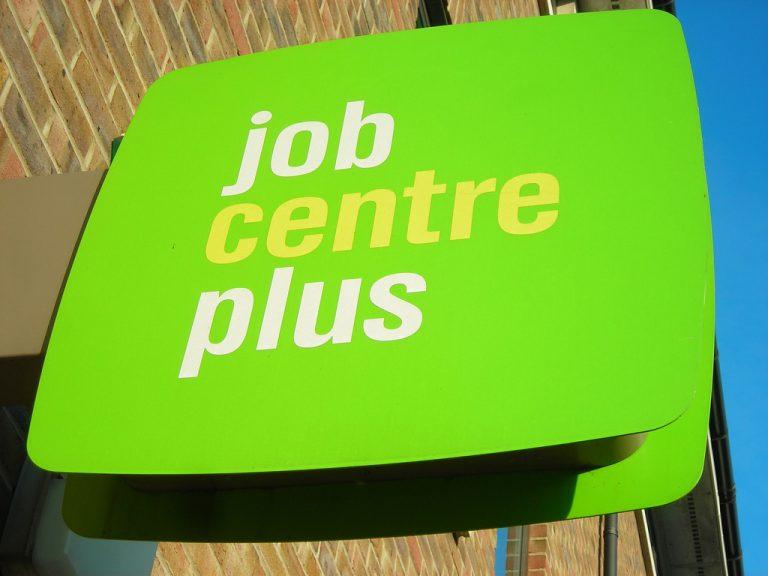
Wage growth came in well below inflation in October, increasing pressure on households for the seventh month in a row.
Average weekly wages rose by 2.3 percent in the three months to October, according to the latest statistics from the Office for National Statistics, coming in below yesterday’s inflation figure of 3.1 percent.
Real earnings, which take into account the cost of living, fell by 0.4 percent.
The ONS also released its unemployment figures, which declined by 26,000 to 1.43 million. The jobless rate remained at its lowest level since 1975, 4.3 percent, with the unemployment rate for women hitting a record low at just 4.1 percent.
John Hawksworth, chief economist at PwC, said that the figures indicated that the “great British jobs boom of recent years may be running out of steam”.