
16/09/2016
MPs to investigate pay of FTSE 100 bosses

MPs have launched an inquiry into the salaries of top business executives in the wake of several shareholder revolts over pay.
Prime Minister Theresa May has vowed to decrease the pay gap between CEOs and the average worker, calling it ‘irrational’ and ‘unhealthy’. May’s plans include making shareholder votes on corporate pay binding and publicising the ratio between a CEO’s pay and that of the average worker in the company.
The investigation by MPs comes after both BHS and Sports Direct faced questions over their governance by the Business, Innovation and Skills Select Committee.
Committee chair Iain Wright said it needed to look “at the laws that govern business and how they are enforced”, adding that “good corporate governance shouldn’t be a hindrance to business.”
The average pay of FTSE 100 CEOs rose more than 10 percent in 2015, according to a survey released in August, meaning CEOs now earn 140 times more than their employees. Whilst the findings of the Business, Innovation and Skills committee are not binding on government, it is likely to add to the increasing pressure for change amongst the public.
Hargreaves Lansdown shares fall on Liberum downgrade

Hargreaves Lansdown (LON:HL) shares fell on Thursday after being downgraded from buy to sell by investment group Liberum.
The group cited industry headwinds as a reason for the downgrade, including a possible further cut in the base rate.
Liberum’s Justin Bates commented:
“There is no doubting the formidable track record and strength of the Hargreaves Lansdown business model. However, trading on a PE of 36x, with the prospect of consensus downgrades and significant industry headwinds, Liberum view the risk/reward as unfavourable.
“The possibility of further cuts to base rates, increased regulatory capital requirements, margin pressure and the FCA’s review of the industry add up to a challenging outlook.”
The downgrade comes a just over a week after strong preliminary full year results. Net revenue rose 11 percent to £326.5 million, with profit up 10 percent to £218.9 million.
Shares were down 3.17 percent to 1,276 at 1010GMT.
15/09/2016
Unemployment holds steady in the wake of Brexit

UK unemployment data has dodged a downturn in the wake of Brexit, remaining steady at 4.9 percent.
The figure represents a 0.6 percent fall from this time last year, with the total unemployment figure at 1.63 million.
The positive data suggests the job market has yet to feel a negative effect from Brexit, despite warnings from major businesses before the referendum.
Ben Brettell, senior economist at Hargreaves Lansdown, commented:
“The UK’s labour market proved resilient in the immediate aftermath of the vote to leave the EU, ONS data has shown.
“This is the latest piece of evidence which shows the economy has fared better than expected since June’s referendum.”
The figures were supported by a strong growth in self-employment and a lean towards part-time working. Growth in average weekly earnings including bonuses also slowed slightly, increasing 2.3 percent on last year, but remaining ahead of the UK’s 0.6 percent inflation rate.
14/09/2016
Positive data from China ahead of PSBC share sale

China’s industrial output rose more than expected in August, according to the National Bureau of Statistics, suggesting higher government spending is having the desired effect on demand.
Industrial output rose 6.3 percent in August from a year earlier, its fastest jump in five months. Demand across all sectors spiked, suggesting growth for the year may well remain within the government’s target of between 6.5 and 7 percent.
Car sales hit a three and a half year high, with retail sales up from 10.2 percent to 10.6 percent.
The figures are a welcome change from recent disappointing economic data to come from China, most of which pointed towards a slowdown in growth.
PSBC launches share sale
China’s Postal Savings Bank of China has announced plans to raise $8 billion by listing on the Hong Kong stock market.
It will be the making it the world’s biggest share sale this year, and the largest since AliBaba floated in 2014.
However the response from traders is likely to be weak, with most shares being bought by ‘cornerstone investors’. A group of six cornerstone investors are expected to buy about 72 percent of the shares on offer.13/09/2016
Winston Churchill’s £5 note enters circulation today
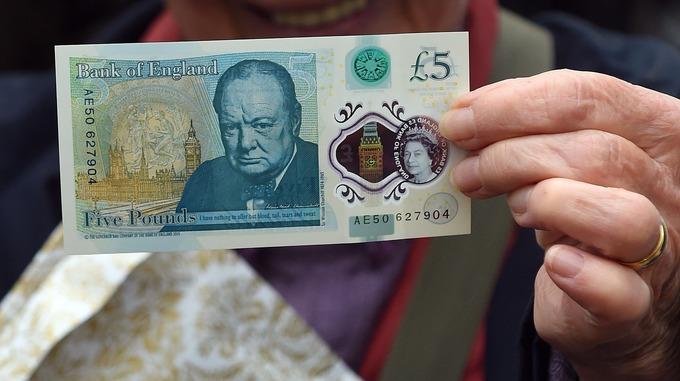
Tuesday sees the launch of the Bank of England’s new £5 note, initially available at a handful of cashpoints in major cities.
The new note is made of polymer and will be much more durable – and hygienic – than the old paper version. It will also include safety features designed to prevent fraud and reduce the number of fake notes in circulation.
Bank of England governor Mark Carney commented, “The use of polymer means it can better withstand being repeatedly folded into wallets or scrunched up inside pockets, and can also survive a spin in the washing machine.”
The notes are expected to be rolled out to banks nationally within a week, but will be dispensed from cash machines in London, Manchester, Leeds, Cardiff and several other major cities from today.
The new fiver will feature ex-Prime Minister Winston Churchill, a total of 440 million of which have been printed. After a long campaign to place a woman on a British note, a new polymer £10 note featuring Jane Austen is set to be released this time next year.
13/09/2016
Fed Reserve official calms markets with dovish comments

Federal Reserve official Lael Brainard calmed jittery markets yesterday by warning against raising interest rates too soon.
Brainard, a member of the Fed’s Open Market Committee, traditional holds dovish views towards monetary policy and has consistently voted against raising rates. In her Chicago speech she said the US economy remains fragile and that such economic weakness “counsels prudence”.
However earlier on Monday Atlanta Federal Reserve president Dennis Lockhart spoke out in favour of the opposite approach, saying he believed the current economic conditions favoured a September rate rise.
Global markets had been volatile ahead of the Fed members’ comments, as fears of a rate rise pushed shares down. After Monday’s speeches Asian markets broadly moved into positive territory, with the Nikkei 225 up 0.34 percent and the Shanghai Composite up 0.05 percent.
The dollar fell however, down 0.19 percent against the pound.
13/09/2016
Britons may need visa for EU travel, says Rudd

Work permits are being considered for EU citizens as the UK prepares to leave the European Union, home secretary Amber Rudd has said.
The ‘work permit’ system is designed to control migration from the European Union, with Rudd telling the BBC that it “certainly has value”.
“What we’re going to look at is how we can get the best for the economy, driving the numbers down but protecting the people who really add value to the economy,” Rudd said.
“Whether we look at a work permit system or another system is something that my department is looking at closely at the moment.”
However, she conceded that it may have repercussions for UK citizens, including the need for a visa to travel to the EU on holiday. This news will likely come as a huge blow to international businesses and workers, as well as those who travel frequently with family and friends. The scheme could be operated by the 26-nation Schengen Zone, of which the UK has never been a member.
Rudd, one of May’s closest allies in government, says the UK will have “complete control” over immigration post-Brexit. She backs May’s plan to cut immigration from it current total of 327,000 to below 100,000.
12/09/2016
Global markets chaotic ahead of Fed speeches

Fears that the US Federal Reserve will raise interest rates next week dragged down global markets on Monday, with European shares following the lead of Asian markets.
Several Fed members have spoken of the need to raise rates in the next few weeks, with Boston Fed president Eric Rosengren causing stock market chaos on Friday by saying a rate rise is needed to stop the US economy “overheating”.
Just an hour and a half into the trading day the FTSE is down 1.71 percent, dragged by miners such as BHP Billiton and Glencore, both down around 4 percent.
Asian markets largely fell on Monday, with the Hang Seng down 3.36 percent and the Shanghai Composite down 1.85 percent.
Three further Fed officials are expected to speak later today, including the traditionally dovish Lael Brainard, whose comments may well calm the markets. In the past, she has urged the Fed to wait until inflation is closer to the central bank’s target before raising rates.
12/09/2016
BCC slashes UK growth forecast post-Brexit
The British Chamber of Commerce has cut its forecast for UK growth in the light of Brexit, despite recent reassuring data.
The BCC now expects growth of 1.8 percent this year, reduced from March’s forecast of 2.2 percent in March. For 2017, the group is now expecting 1 percent growth in 2017 instead of the 2.3 percent originally forecast.
Whilst the group do not expect a recession, it said that growth prospects would “dampen” as negotiations began for the UK’s exit. By 2018, the UK economy is expected £43.8 billion smaller than before the EU vote.
BCC acting director general, Dr Adam Marshall, commented:
“Although individual businesses continue to report strong trading conditions, the overall picture suggests a sharp slowdown in UK growth lies ahead.”
Recently economic data has been promising, with Bank of England governor saying he was “serene” over the effects of the referendum. Key figures such as retail spending and inflation are set to be released this week and will shed further light on the situation.
12/09/2016
UK consumer inflation expectations overshoot 2% target

The indicator for UK consumer inflation expectations, published by the Bank of England, has been revised upwards, overshooting the BoE’s inflation target.
Consumer inflation expectations at 2.2%
UK consumer inflation expectations, an indicator for consumers expectations of price inflation over the coming 12 months, has been revised upwards from 2% to 2.2%. This figure overshoots the BoE’s aim for inflation of 2%. High consumer inflation expectations can have an adverse effect on the economy, as consumers will aim to save more if they believe prices will be high in the future.BoE under criticism for expansionary policy
The BoE Monetary Policy Committee has recently been under criticism for acting to quickly in implementing expansionary monetary policy measures to combat possible recessionary pressures on the UK economy, following the Brexit-vote. Lately, a cohort of data have suggested that the UK economy is in good health, two months after the vote to leave the European Union. Last week, the IMF conceded in a note, that initial weaknesses in the financial markets seem to have been only of a short term nature and that the Brexit has not taken the adverse effect initially thought. Too much stimulus could have the effect of raising inflation expectations beyond the target, causing the adverse effect effect of reduced spending to favour saving as described above.Carney defends BoE policy approach
However, in an inquisition by the Treasury Select Committee this Wednesday, BoE governor Mark Carney defended his approach to monetary policy. According to Carney and many analysts, it is still to early to rule out that Brexit will have long-term adverse effects on the UK economy in the future. While it does not seem like the vote caused a grave reduction in economic activity in the two months after the vote, it cannot be concluded that negative developments have been completely averted.Katharina Fleiner 09/09/2016