
Is the FTSE 100 overvalued?

The FTSE 100 has posted sharp gains over past 18 months and has broken to fresh records on numerous occasions. As the market currently resides with touching distance of recent highs, we ask is the FTSE 100 overvalued?
Just Eat continues strong expansion as revenue rises 47%

Takeaway app Just Eat has posted another strong set of results in which revenue increased by 47% and a 29% increase in orders.
Just Eat set out to develop their technology and marketing earlier this year and the results have reflected the greater engagement of customers throughout the period.
The company pointed to success internationally with a 43% increase in overseas orders to 16.9 million.
Just Eat also noted that after three years as a listed company, it will now proceed with financial updates on a half-yearly basis.
CEO Peter Plumb said of the results:
“The Just Eat team has once again delivered another period of strong growth. As I get to know the company, it is great to see the UK business in good health and positive momentum across our international markets, particularly in Canada where SkipTheDishes’ delivery expertise and relentless focus on customer service are driving excellent results. We will continue to invest for growth in technology, marketing and great people.“
Weir Group sinks as full year guidance is slashed
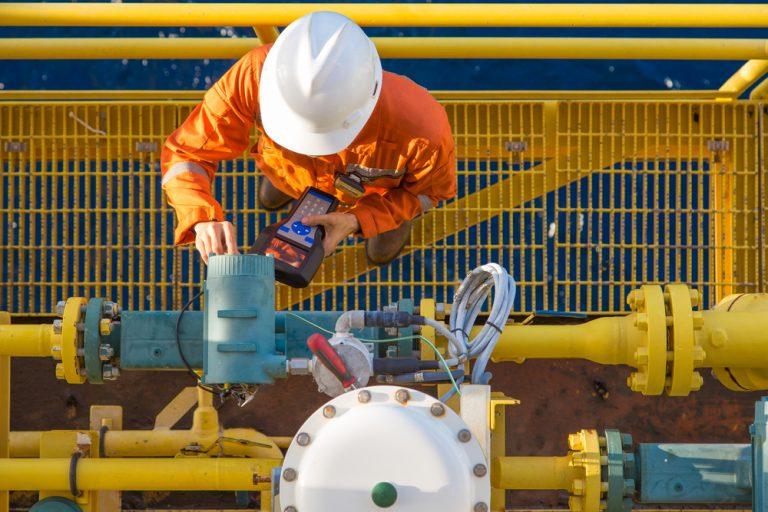
Weir Group shares sunk on Tuesday following the release of a trading statement in which the company said operating profits were expected to be ‘slightly lower’ than previously thought.
Shares in Weir Group were down over 6% in early trade.
The company attributed the weaker outlook to the phasing of mineral projects and one-off configuration costs.
CEO Jon Stanton, commented in the update:
“In 2017 we continue to build on our leadership positions in rapidly improving main markets whilst investing to maximise the significant opportunities ahead of us. “As the North American onshore oil and gas industry continues to demonstrate its increased relevance as a source of global supply, our Oil & Gas business is fully leveraging its market leadership position in support of higher activity levels among customers. While international markets remained challenging the division has accelerated in 2017 as we expected and is well placed to continue to fully capture future opportunities. “In Minerals our brownfield solutions delivered good order growth with an increasing pipeline of future opportunities. Profits will be slightly lower than previously indicated due to project phasing, incremental investment in growth and one-off plant reconfiguration as we ensure the business is well set to benefit from increased momentum in 2018 and beyond.”
“At a group level, we anticipate strong growth in full year constant currency revenues and profits. Minerals profits are expected to be slightly lower than previously indicated while expectations for Oil & Gas and Flow Control are unchanged.”
BP shares rise following share buyback announcement
BP reported Q3 earnings on Tuesday morning and comfortably beat analysts expectations giving the board confidence to announce a share buyback.
BP’s net profit for the quarter was $1.9 billion against analysts expectations of $1.6 billion. The increase in profit represented a near 100% increases in earnings from a year earlier when the company suffered significant impairment charges.
The Oil major said a dividend of 10 cent per share would be paid in December in line with payments over the past few years. There have been concerns that BPs cashflow could put pressure on the dividend but asset sales and strength in the midstream has helped their cash position.
BP recorded an average price $49 per barrel of oil in the quarter highlighting the cost efficiencies the company has implemented to help the bottom line in a period of low oil prices.
Bob Dudley, BP CEO commented on the results:
“We are steadily building a track record of delivering on our plans and growing across our businesses. This quarter, three new Upstream projects and the highest Downstream earnings in five years, underpinned by reliable operations and disciplined spending, have generated healthy earnings and cash flow. There is still room for further improvement and we will keep striving to increase sustainable free cash flow and distributions to shareholders.”
RBS swing into profit, financial position improves
Royal Bank of Scotland (LON:RBS) have continued their already positive year with a third successive quarter of profit. For the third quarter RBS made a profit of £392 million, pushing their profit for the year up to £1.33 billion.
Some quarters have suggested this leaves RBS in a strong position to finish the full-year in profit for the first time since their state funded bailout in 2008. RBS themselves have however expressed caution as they are yet to conclude a number of litigation cases in the US, as well as being under a fresh investigation by the Financial Conduct Authority over mistreatment of small business customers. The firm have already made provisions for these cases, whilst also warning that there may be the need for further substantial provisions. RBS has seen their net interest margin decline for both the third quarter and first nine months of the year, compared to the year previous. In the third quarter net interest margin fell five basis points to 2.12% and fell 2 basis points for the first nine months to 2.16% One off payments for PPI claims was £115 million for the quarter, leaving them with £979 million of provisions. This is an increase in payments from £81 million in Q2 2017, which was expected as new FCA media campaigns has had a significant impact on the number of claims. RBS’ long term target for Common Equity Tier 1 ratio is 13%, managing to be above this target for the quarter as it increased by 70 basis points to 15.5%. This strong performance reflected “continued RWA (Risk-Weighted Asset) reduction, the attributable profit and a reduction in the prudential valuation capital deduction, broadly offsetting the Capital Resolution losses taken in the quarter”. The group, that also owns Natwest, stated firm progress in all four of the target areas they have identified. Income has grown 7.5% for the year to date, operating expenses has been reduced by £708 million, capital usage has been reduced and they are moving toward resolving legacy issues.RBS shares have remained close to their opening price, increasing 0.4% to 282p at the time of writing, despite early strong performance.
Shire Pharmaceutical gains approval from European Commission

The biotechnology company Shire PLC (LON:SHP) has had a label extension approved by the European Commission. The label extension grants a new indication for FIRAZYR, allowing it to be used by adolescents and children aged two and older.
FIRAZYR is used to treat people with hereditary angioedema (HAE), which is a rare genetic diseases that specifically causes attacks of localised oedema. HAE is thought to affect one in 10,000-50,000 people worldwide.
Despite the label extension of FIRAZYR Shire have seen their share price drop 2% to 3517p. This is in anticipation of Shire delivering their third quarter results for 2017 tomorrow (October 27).
Analysts expect revenue for the rare disease specialist to rise 8% and earnings per share to increases by 15% on the previous year. Shire drugs Cinryze and Lialda may however perform worse than expected. Cinryze has suffered from a supply shortage and Lialda has been experiencing competition from Zydus.
How might the Autumn Budget affect AIM companies?

Chancellor Philip Hammond is set to reveal his Autumn Budget next month, with all eyes on his announcements as the government struggles to deal with Brexit negotiations.
A freeze on tuition fees and a £250 million spend on Brexit are rumoured to form a major part of the Budget – but what about the finance sector?
According to Helena Kanczula, Corporate Tax Director at Blick Rothenberg, there could be a large impact on AIM companies.
Some changes may be on the cards for the Enterprise Investment Scheme, including speculation that the relief available for investors through the scheme may be restricted. Investments in AIM-listed groups will often benefit from EIS relief where the necessary conditions are met, and this acts as a significant incentive to wealthy investors who might wish to invest in this market; therefore, the withdrawal or reduction of relief could therefore make it harder for smaller AIM-listed groups to raise the finance necessary for growth and job creation.
Another area that may affect AIM companies in particular is a change to corporation tax. For AIM-listed groups, the costs and resource involved with tax compliance represents a significant burden.
“Until recently many AIM-listed groups had a dedicated HMRC relationship manager”, said Kanczula, “but the withdrawal of this facility for all but the largest groups has increased compliance costs for many companies. The reintroduction of an interface between businesses and HMRC would be greatly welcomed by AIM-listed groups and their advisors”.
The Apprenticeship Levy has also had a significant impact on larger AIM-listed groups. Evidence suggests that many companies in the AIM market are unable to access the funds necessary to train apprentices and so the Levy merely represents an additional tax burden.
“More flexibility around the structure of training carried out by apprentices would be welcomed as many groups are keen to take on apprentices but operate in industries that do not require the level of structured training currently necessary to qualify”, Kanczula said.
Greatland Gold share price sink despite discovery of new gold potential at Panama project

Precious and base metals exploration company Greatland Gold (LON:GGP) saw shares fall nearly 2 percent on Tuesday, despite announcing the discovery of additional gold potential at their Panorama project.
The project, located in the Pilbara region of Western Australia, covers a total area of 130 square kilometres and is prospective for both gold and cobalt mineralisation.
In its Northern license area, it found multiple historic rock chip samples with an elevated gold response along a 3.2 kilometre zone including results of 10.5g/t, 14.0g/t, 14.5g/t, 20.0g/t and 66.0g/t gold. Greatland’s technical team has completed field reconnaissance along this zone and has confirmed that visual indications of mineralisation are present.
In its Southern license area , detailed government geological mapping confirms the presence of lower Fortescue Group coarse grained sandstones and conglomerates at two locations.
Gervaise Heddle, Chief Executive Officer, commented:
“Historic rock chip and stream sampling results suggest that there is a 3.2 kilometre long zone of gold mineralisation in the northern licence area that extends along strike from historical gold mines immediately to the north of our northern licence application.
“In addition, a review of detailed government geological mapping has confirmed the presence of coarse grained sandstones and conglomerates adjacent to the Mt Roe Basalt at two locations in the southern licence application. This is the equivalent geological setting to that of the Purdy’s Reward and Comet Well prospects currently under the operation of Novo Resources Corp. (TSV-V:NVO).”
Shares in Greatland Gold are currently trading down 1.68 percent at 2.34 (1243GMT).
Carillion share price leaps 20pc after update on progress

Carillion shares soared over 20 percent on Tuesday, after it updated investors that it had agreed new credit facilities and deferrals on some of its debt repayments.
The troubled company said on Tuesday that it had agreed facilities totaling £140 million, which was “fully available to draw down now”. The new funds comprise a £40 million senior secured revolving facility maturing on 27 April 2018, secured over shares in certain of the group’s subsidiaries and over certain of the group’s assets, and a £100 million senior unsecured revolving facility maturing on 1 January 2019.
Carillion also announced that it has sold a “large part” of its UK healthcare facilities in a deal worth £50.1 million, adding that it hopes to dispose of the remaining contracts in its UK healthcare facilities management portfolio during 2018 in an effort to get the group’s finances back on track.
CEO Keith Cochrane said: “We remain focused on executing our disposals and cost savings programmes while continuing our discussions with our lenders and other stakeholders to explore further ways of strengthening Carillion’s balance sheet.”
The outsourcing group has seen its share price sink of late, plunging further last month after it reported a £1.15 billion loss to investors. Its share price rose on Tuesday in the wake of the announcement, and is currently trading up 9.49 percent at 47.90 (1054GMT).
Unilever shares sink 5pc as poor weather affects Q3 sales
Unilever’s (LON:ULVR) share price fell over 5 percent on Thursday, after natural disasters in the Americas and poor weather in Europe negatively affected its third quarter figures.
The company reported a 1.6 percent decline in turnover to €13.2 billion in the third quarter, with the stronger euro having a currency impact of 5.1 percent.
Underlying sales growth rose 2.6 percent, weaker than the previous quarter’s 3 percent rise and below analysts expectations. However the company experienced a surge of growth in its Emerging Markets division, in which underlying sales rose by 6.3 percent.
In a statement, Unilever’s CEO Paul Polman said: “For the full year, we continue to expect underlying sales growth within the 3 – 5% range, an improvement in underlying operating margin of at least 100 basis points and strong cash flow.”\
Shares in Unilever, who recently fought off a takeover from American food giant Kraft Heinz, are currently trading down 4.99 percent at 4,321.17 (1516GMT).