The next CrowdTuesday session in London is only a week away.
CrowdTuesday will be held on the rooftop at the BWB London offices next Tuesday, from 6 to 8pm.
Through the networking event the organisers – the European Crowdfunding Network, portfolio manager Lendery and professional services consultancy Bates Wells Braithwaite – aim to connect people in the crowdfunding industry within an informal setting.
The European Crowdfunding Network comments on CrowdTuesday:
“CrowdTuesday is a perfect occasion for anybody interested in crowdfunding to do some networking or to listen to an interesting presentation, while having an after work drink. Participation is free of charge.”
Next week’s event in London will focus on the potential blockchain technologies have to advance alternative financial services. It will feature speeches from Alex Batlin, Senior Innovation Manager at UBS; Steven Garner, Co-Founder of Xsoar.com and Jamie Burke, Co-founder of OutlierVentures.
Volkswagen finally settled a contract dispute, after negotiations with two suppliers began on Monday morning.
After 20 hours of talks with two suppliers, manufacturing seats and cast iron parts needed to make gearboxes, Volkswagen has now confirmed that a resolution has been reached. CarTrim as well as ES Automobilguss will resume supply to the German car manufacturer shortly.
Stoppages will not affected already placed orders
The stop of production affected 27,700 staff members, as well as the production output at four German VW plants, according to Volkswagen. The German car manufacturer has however stated that the dispute and temporary supply cut will not affect delivery of already executed orders.
According to the BBC, production of Golfs in Wolfsburg, as well as production of both Golfs and Passats in Zwickau will resume later this week.
Production of chassis parts and plastic parts in Braunschweig will start again Monday next week.
Volkswagen gave no details of the nature of the settlement.
Due to what the company stated to be an unrelated issue, production of Passats was also temporarily halted in Emden last week, but is set to resume again this Wednesday.
News of a number of production stoppages send Volkswagen (VOW3:GER) shares down 2.3%, to a low of €119.05, on Monday afternoon. After the resolution to the dispute became public, they recovered to €122.6, up 2.12% from market open on Tuesday.
Car maker’s share prices still not recovered since last years emission scandal
The car maker suffered greatly after the emission scandal in the second half of 2015. The company has since only managed a marginal recovery of stock prices and prices once again fell sharply after the UK’s EU referendum.
Although earnings were still depressed by further pay outs and law suits, related to the illegal software installation deactivating pollution controls, Q2 earnings in 2016 exceeded estimates, giving investors some new confidence in the performance of the car manufacturer.
Governor Kuroda spoke at the Bank of Japan’s first FinTech Forum, in a speech discussing the significant role FinTech innovation plays in driving the development of financial services.
Kuroda dedicated a large amount of his speech to the importance of information security. He made no mention of Japan’s current economic situation and the BoJ’s position on monetary policy.
BoJ wants to support country’s developments in FinTech
The BoJ’s first FinTech Forum was designed to promote the development of new, alternative financial services, and attended by business leaders and experts from around the world. Participants included IT enterprises, retailers and start-up companies.
In his speech, Governor Kuroda promoted the FinTech sector as an important driver of economic activity and user-welfare in financial services. He commented: “FinTech has a wide influence on payments, settlements and financial services, and could stimulate various economic activities, including e-commerce and ‘sharing economy’ businesses.” Kuroda signalled that the BoJ is looking to make use of FinTech services in their own operations in the future.
Information security presents a vital issue
A large part of his speech was dedicated to the importance information security. Mentioning the February Bangladesh Bank heist, in which cyber thieves stole $81 million from Bangladesh’s central bank, he also highlighted the opportunities that innovations in FinTech present for hackers and cyber-attacks, which need to be addressed.
Kuroda stated: “FinTech will thrive and grow when users associate it not only with convenience but also with safety and trust.”
Japan is finally catching up in the FinTech innovation race
Japan’s FinTech industry trailed far behind developments in the US and Europe until last year. However, since 2015, investment in start-ups in the FinTech industry more than doubled, to US$141.73 million. This year the industry continues along its exponential growth path.
The Bank of Japan has started to take great interest in the country’s FinTech developments this year. In April, the Bank established its “FinTech Centre”, within the Payment and Settlement Systems Department, to actively take part in the innovation in alternative financial services. The Centre was further complimented by the “FinTech Network”, tasked with distributing and collecting information across the sectors of the Central Bank.
Governor Kuroda said in today’s forum: “The Bank of Japan is ready to lead research and analysis on FinTech, in view of the possibility that the Bank itself may apply FinTech technologies to its operations in the future.”
Kuroda left BoJ’s monetary policy intentions unmentioned
Comments on the wider economic situation of Japan were noticeably missing, despite the failures of Kuroda’s sizeable program of quantitative easing which began in 2013.
In its latest monetary meeting at the end of July, the bank responded to the UK’s Brexit vote with a new record stimulus package. However, many experts worry that the BoJ will soon reach its limit on current expansionary measures as the bank is running out of assets to buy.
The next monetary policy meeting will be held on the 21st and 22nd September, with analysts and economic agents looking for clues as to how the BoJ will proceed in its fight to stimulate the Japanese economy.
Women who take a break in their careers to have children are likely to earn less than men, according to the latest report by the Institute of Fiscal Studies.
Over the 12 years after having a baby the hourly pay rate for women is 33 percent lower than men, with men being 40 percent more likely to be promoted into management roles.
Robert Joyce, one of the authors of the report, said the wage slowdown is gradual:
“Women who work half-time lose out on subsequent wage progression, meaning that the hourly wages of men (and of women in full-time work) pull further and further ahead.”
Women on average earn 18 percent less than men, a big improvement on the 28 percent gap in 1993.
Rank Group resilient despite William Hill deal drop
Bookmaker Rank Group said trading is unlikely to be affected by Brexit, with its business largely focused on the UK market.
Performance in the seven weeks to August 15th remained in line with analysts’ expectations, reporting a 2 percent fall in operating profit.
The figures come just days after Rank Group dropped its bid to buy William Hill after the joint takeover proposal was rejected by the high street bookmaker.
Rank Group (LON:RNK) is currently up 3.25 percent at 228.70 (1052GMT).
Euro zone business growth unaffected by Brexit
Euro zone business activity remained stable in August, suggesting any slowdown in economic growth has been limited to the UK.
MarkIt’s Purchasing Managers’ Index rose to 53.3, 0.1 up on June’s figure and the highest reading for seven months.
Chris Williamson, Markit’s chief economist, said:
“Policymakers will be quite encouraged that it is moving in a positive direction. It looks cautiously optimistic for the region in the face of the Brexit threat.”
Persimmon up 5 percent, defies Brexit uncertainty
Shares in housebuilder Persimmon have risen nearly 5 percent this morning, after reporting first half-profits buoyed by “robust” customer interest.
Profits jumped 29 percent to £352.3 million in the first half of 2016, with the private sale reservation rate up 17 percent.
Despite the increased economic uncertainty sparked by Brexit, customer interest has remained strong and visitors to its sites were up 20 percent year on year.
Persimmon (LON:PSN) is currently up 4.35 percent at 1,872.00 (1046GMT).
This summer’s good weather has had a positive effect on the troubled UK grocery market, causing the sector to grow by 0.3 percent, according to the latest figures from Kantar Worldpanel.
The figures, which represent the 12 weeks ending 14 August 2016, showed a the fastest acceleration of sales since March 2016 but a surprising disinterest in customer promotions. Fraser McKevitt, head of retail and consumer insight at Kantar Worldpanel, said:
“Only 37.7 percent of grocery sales were bought on any kind of promotion this period – a significant decrease from highs of over 40 percent we were seeing in 2015.”
In terms of inflation, Brexit seems to have had little effect so far. Grocery price inflation has remained negative, with a representative basket of goods 1.3 percent cheaper than it was last year.
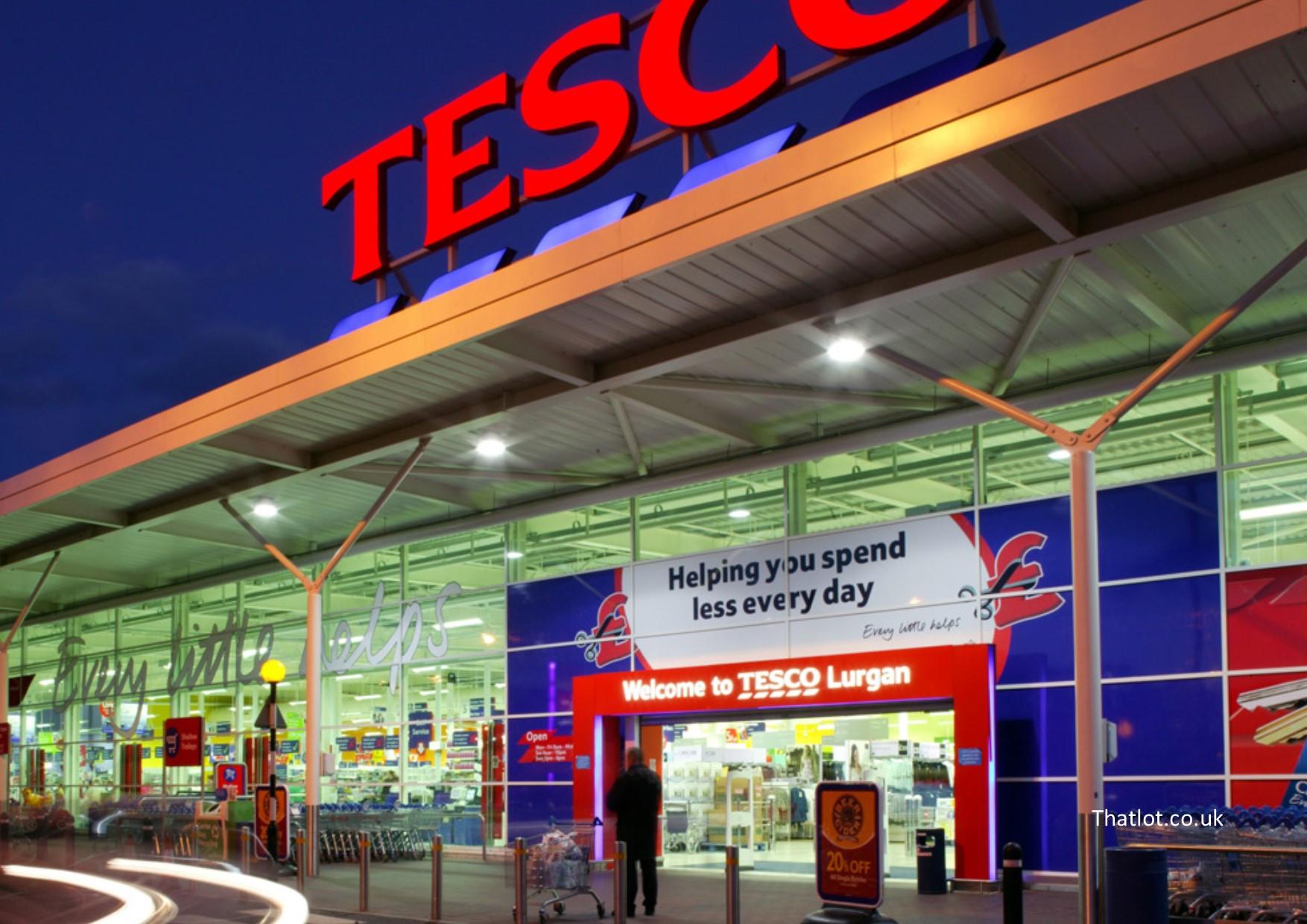
Budget supermarkets have maintained the upper hand in the market over the past 12 weeks, continually beating larger supermarkets with cheaper prices and an increasingly large selection of goods. Lidl was the fastest growing supermarket, with sales up 12.2 percent, followed by Aldi at 10.4 percent.This is in sharp comparison to the falling sales of the traditional ‘Big Four’ supermarkets, with Tesco’s (LON:TSCO) declining by 0.4 percent – albeit its slowest rate of decline in six months, suggesting new strategy may be beginning to pay off.
McKevitt commented: “Current trends suggest the retailer may return to growth this year, which would mark the end of a decline stretching back to March 2015. Tesco’s recent product launches have been making a positive impact on its performance, with its ‘Farm brands’ finding their way into over a quarter of the Tesco baskets this period.”
Waitrose has strong success over the last 12 weeks, with sales rising by 1.4 percent and maintaining its 5.1 percent slice of the market. However, other supermarkets disappointed; Sainsbury’s (LON:SBRY) saw sales fall by by 0.6% and Morrisons (LON:MRW) by 1.8 percent, despite bringing in a new CEO last year to implement a turnaround plan. Both retailers saw market share fall to 16.1 percent and 10.6 percent respectively. Asda suffered the biggest sales drop of the Big Four, down 5.5 percent.
Microsoft announced today that it has signed an agreement to purchase Genee, an “artificial intelligence-powered scheduling service”.
The Tech start-up was founded in 2014 to simplify the task of scheduling meetings. It acts as a virtual personal assistant, which, thanks to natural language processing and optimised decision-making algorithms, recognises meeting requests in a user’s outgoing email or text. It then sends the included recipients appropriate options, according to the user’s prior calendar engagements.
The new acquisition will add to the growing services of Microsoft’s Office 365, in order to create additional value for users of the popular Microsoft service.
The Microsoft press release stated:
“…I’m confident the Genee team will help us further our ambition to bring intelligence into every digital experience.”
Genee Co-founders, Ben Cheung and Charles Lee said about the deal on their blog:
“We consider Microsoft to be the leader in personal and enterprise productivity, AI, and virtual assistant technologies, so we look forward to bringing our passion and expertise to a team that is committed to delivering cutting-edge language and intelligence services.”
Genee will be fully integrated in Microsoft’s Office 365 service by the 1st of September. The start-ups own service will shut down at this time. However, already scheduled meetings will remain on user’s calendars.
Cheung and Lee thank their current supporters and customers:
“We thank all of you who participated in Genee’s private and public betas. The Genee team will take the valuable experiences and lessons that you taught us to Microsoft, where we’ll continue to build amazing next generation intelligent experiences.”
US pharmaceutical giant Pfizer has confirmed its takeover of Medivation, for an agreed price of $14 billion.
Pfizer will pay $81.50 per share for Medivation, 21 percent above the firm’s share price as of last Friday and above the $80 expected in previous reports.
Ian Read, chairman and chief executive officer of Pfizer, commented on the announcement:
“The proposed acquisition of Medivation is expected to immediately accelerate revenue growth and drive overall earnings growth potential for Pfizer.
Global markets remained on edge on Monday ahead of the Federal Bank meeting in Jackson Hole later this week.
Asian markets closed broadly down, with just the Nikkei 225 and the Hang Seng bucking the general negative trend. The FTSE has been in the red for most of the session, with US markets expected to follow suit.
However, the dollar has strengthened this morning after comments from Fed Vice Chairman Stanley Fischer, giving an upbeat assessment of the US economy’s current strength.
Investors remain uncertain ahead of the Federal Reserve’s meeting on Friday, which should clarify the timescale for an interest rate rise.
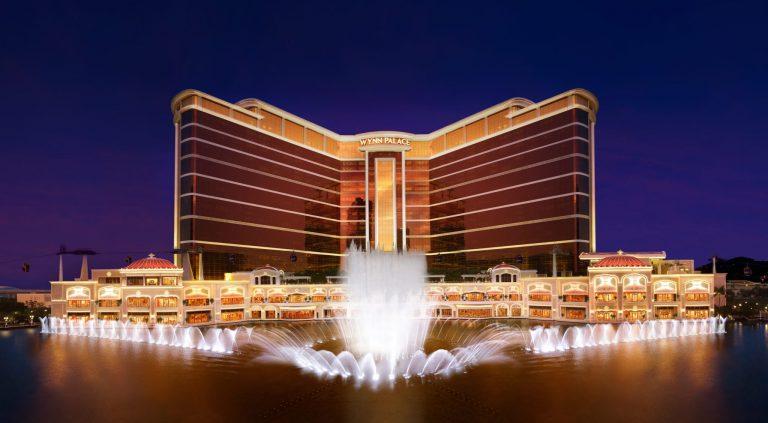
Wynn Palace, the newest luxury hotel and casino of founder and CEO of Wynn Resorts Limited Stephen Wynn, is set to open in Macau this evening.
The $4.1 billion project has been in development for six years, suffering delays and uncertainty about it’s profitability as the Chinese economic slowdown and Beijing’s crackdown on corruption weighed heavy on the gambling industry in Macau
Macau’s gambling industry is on a down-turn
Macau is the only place in China in which casinos are legal and has the world’s biggest gambling industry by revenue, which is around seven times bigger than Las Vegas. The small Chinese territory therefore relies on the booming casino industry and the tourism it generates for more than 80% of it’s GDP.
However, the Macau economic flagship suffered since 2014. The Chinese government decided to crack down on corruption, regulations on gambling where tightened and Macau banned smoking in casinos, causing gamblers from around the world to stay away. Gambling revenues thereafter dropped to a five-year low.
Macau has since decided to work on expanding its tourism industry in other directions than gambling. New policies incentivise resorts to offer a more diversified and family friendly entertainment program.
The Macau government is also limiting the growth of the gambling industry by cutting supply growth of gambling tables to 3% annual expansion. The vast cut back in permissions for new tables reduces dealer activity and game money inflow. This is likely to weigh heavily on gambling revenues.
Union Gaming analyst John DeCree stated: “It’s a pretty significant driver of revenue to have as many as tables as you can, especially during peak periods.”
While the casino industry does still generate revenues, revenue growth has been on a down turn for 26 straight months in July.
Other industry members refocus business strategies
The new barriers, curbing gambling revenue, have caused some businesses, such as Melco Crown Entertainment Ltd. and Sheldon Adelson’s Sands China Ltd., to design new Macau projects to be more family friendly. New entertainment options are set to attract so-called “mass-market recreational gamblers” and their families, as high rollers’ interest to spend their millions in Macau has been on the decline.
Wynn is betting large on the return of the high-rollers
However, Wynn, known for being a major influencer in creating the booming international gambling industry on the Las Vegas strip in the 1990s, is betting large on a recovery of the Macau high rolling gambling business.
Wynn Palace is the developer’s most expensive and luxurious project yet.
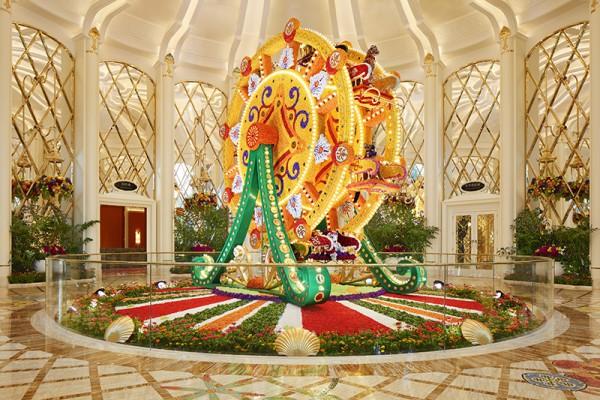
Guests will arrive in the resort by crossing an eight-acre artificial lake in an air-conditioned gondola. The resort, set in a floral theme, features extensive floral displays, including a 6.8 metre Ferris wheel decorated with 103,000 flowers by floral designer Preston Bailey. The extensive art collection further includes a US$33.7 million, 3-ton stainless steel sculpture created by artist Jeff Koons. Many of the over 1,700 rooms also feature luxurious designs in crystal.
Wynn stated: “We’ve spent a 100 million dollars on artwork, sculptures, ceramics, 18th-century vases and screens of very high and rare quality.”
Ferris Wheel with flower display – Sourced @ Wynn Palace
Guests will be able to enjoy treatments in Macau’s largest spa which include facials using crushed diamond and gold-leaf. They can further choose from around a dozen Michelin-starred dining options.
The new casino planned to allocate 60 of 400 planned tables to the high-rollers, set to be attracted by the luxurious and exclusive offering.
Wynn is aware of the risks ahead
While Wynn has taken a huge leap of faith on the recovery of the high-end gambling industry in Macau, he is not at all disillusioned about the risks entailed.
Wynn said in an interview with Bloomberg: “The last two places that opened did not cause the market to grow, did they? No. Will this one? Good question. We’ll get an answer to that in September or October. I’m anxious to see it myself.”
The Macau government has approved only 100 tables for the new casino’s debut. 50 more tables will be allocated throughout the next two years.
Wynn said: “We thought 100 was the minimum, and we planned accordingly and we hired accordingly,”. According to him, the lower than hoped for table allocation will not change profit projections.
Wynn Resorts is planning to shift some 250 tables from the already existing operation in Macau, Wynn Macau, to Wynn Palace, to make up the difference. However, shares of the company’s Macau operations still dropped in the aftermath of the lower than expected table allocation.
Wynn Resorts Limited is performing well this year
Wynn Resorts traded 50% higher on the New York stock exchange over the year. Adjusted earnings per share of Wynn Resort beat estimates of 91 cents per share in the June quarter, generating $1.07 per share, according to Thompson Reuters.
The Macau operations also exceeded estimates by $49.1 million, generating revenue of $639.3 million in the quarter finishing June and could report on a 38% rise in share prices in Hong Kong trading this year.
With no clear consensus about how the Macau government will proceed with its policy measures to reinvent its tourism industry, it remains to be seen if Wynn’s gamble on the Macau high-rollers will pay off.