
Capita shares rise after £888m sale of asset management division

Shares in outsourcing giant Capita (LON:CPI) jumped in early trading on Monday, after the company announced it had sold its fund administration business for £888 million.
Capita sold the division, which administers around £50 billion of fund assets, to Australian firm Link Administration Holdings. The asset management had presented problems for the company, showing stable growth but becoming costly after it provided administration services for the failed Arch Cru and Connaught funds.
“Capita has secured an excellent price for the disposal of Capita Asset Services,’ said Julian Cater, analyst at Numis, told Citywire.
“This will significantly de-gear the balance sheet”.
Shares in Capita rose on the announcement, currently trading up 2.68 percent at 710.00 (1255GMT). However, its shares have fallen nearly 30 percent over the past year, dropping out of the FTSE 100 in March after a spate of profit warnings.
UK business confidence jumps in May, driven by optimism in Wales

Business confidence has jumped to an 18-month high despite political turmoil from both Brexit and June’s general election, according to the latest report from Lloyds Bank.
Britain’s confidence index rose to 24 percent in May, above the average figure for the last 25 years which stands at 23 percent.
However, the number of companies that said they had found it hard to find skilled labour over the past six months rose to a 10-year high of 52 percent, up from 31 percent in January.
Lloyds Bank surveyed 1,500 UK companies, after the general election was called. Tim Hinton of Lloyds Banking Group said: “Although challenges remain in recruiting both skilled and unskilled labour, businesses are anticipating higher sales, increased profits and staffing levels to rise.
“However, the outlook remains mixed at best.”
Businesses based in the North East of England had a particularly optimistic view of the future, with their figure rising to an 18-month high of 33 percent. This was topped only by Wales, who have seen their confidence rise by 19 percentage points since the start of the year to hit 34 percent.
Businesses in Scotland, on the other hand, were less optimistic – the nation had the lowest score in the UK of just 19 percent and was the only place in Britain to experience a fall in confidence since January.
4 FTSE 350 dividend darlings offering growth and income

Download this report now to discover those stocks earning the title of ‘dividend darlings’.
The market has reached all-time highs. Main market valuations are through the roof, which leads some investors to believe that there are little or no ‘cheap’ stocks available.
Investors are also painfully aware that there is basically no return on cash. Bearing both factors in mind, we have chosen four FTSE350 stocks which not only offer growth potential, but also fit the bill as dividend darlings.
>FTSE 100 telecoms stock yielding 5.3%
>The pub group beating the benchmark yield
>UK bank posting improving earnings
>Specialist property stock growing inline with the population
Terms, Risk Warning & Disclaimer:
Although the author and publisher have made every effort to ensure that the information in this publication was correct at press time, the author and publisher do not assume and hereby disclaim any liability to any party for any loss, damage, or disruption caused by errors or omissions, whether such errors or omissions result from negligence, accident, or any other cause. Investments can go up in value as well as down, so you could get less than you invested. This information does not constitute personal advice and you should speak to your financial advisor before committing to any pension product. Information in this document is for reference use only and its accuracy cannot be guaranteed and is subject to change.
Brent crude edges up as oil prices remain supressed

The price of oil rose slightly on Thursday but still hovered around seven month lows, as an ongoing supply glut continues to weigh on the market.
Brent Crude slipped below $45 a barrel around midday, before recovering to trade up 1.18 percent at $45.35.WTI Crude is currently up 0.8 percent $42.87.
“Prices were pushed a bit too low,” Hans van Cleef, senior energy economist with ABN AMRO, told Reuters. “The people who believe in higher prices are stepping in.”
Oil prices have continued to hover below the $50 a barrel mark, despite the Organization of the Petroleum Exporting Countries’ decision to extend their output cuts for a further nine months.
The group’s efforts to cut supply are being undermined by increasing output from several countries, including Libya, Nigeria and the US.
British factory orders surge in June, defying Brexit negativity

British factory orders hit their highest level since 1988 in June, according to the latest survey from the Confederation of British Industry.
The CBI’s factory order book balance jumped to +16 in June, almost doubling from May’s figure of +9.
Export orders also hit a 22 year high, helped by the fall in the pound that was triggered by last year’s Brexit vote. The figures will come as good news to those hoping to demonstrate the strength of British industry outside the European Union.
However, Howard Archer, chief economic advisor to the EY ITEM Club, suspects that the CBI may be over-egging the strength of UK manufacturing.
“There is the concern that survey evidence for the manufacturing sector has tended to be markedly more upbeat than the official data from the Office for National Statistics (ONS) so far in 2017.
“Indeed, official data suggests that the manufacturing sector is far from guaranteed to see even modest growth in the second quarter. Specifically, latest ONS figures show manufacturing output edged up 0.2% month-on-month in April after falling in each of the first three months of 2017.”
The figures will also be watched carefully by Bank of England policymakers, who are in the throes of indecision over when to raise interest rates.
The Monetary Policy Committee was split at last month’s meeting by 5 – 3, with Bank of England governor Mark Carney sending the pound into chaos on Tuesday after saying that now was not the right time for a rate hike.
Businesswomen less confident about Brexit than their male counterparts, study finds

UK Businesswomen are less confident about post-Brexit prospects in the UK than their male counterparts, a study has found.
The study conducted by RateSetter Business Finance revealed that of those surveyed, 10 percent of female business leaders believe that Brexit will be positive for their business.
This proved comparatively low to 21 percent polled across male business owners who considered themselves to be positive about future outlook following the UK’s withdrawal from the European Union.
Paul Marston, Managing Director of RateSetter Commercial Finance, commented on the findings:
“Overall, it is clear that small business leaders are not at all optimistic about the impact of Brexit, but we were rather surprised to find such a difference between the views of male and female business people.”
This follows recent research which revealed that gender pay gap was continuing to negatively affect women’s investment abilities.
According to research by Fidelity International, 43 percent of women save into a cash ISA, but only 9 percent invest in a stocks & shares ISA.
The latest figures reveal the gender pay gap in the U.K to be at 18.1 percent.
On average, for women working full time the weekly wage stood at £12.82, 9.4 per cent less than the average of £14.16 earned by men in full time positions.
UK businesses with 250 or more employees are now obliged to publish gender pay gap details, as part of government regulations which came into force bank in April.
The Minister for Women and Equalities, Justine Greening, commented on the measure when it was first introduced:
“We have more women in work, more women-led businesses than ever before and the highest proportion of women on the boards of our biggest companies. This has helped us to narrow the gender pay gap to a record 18.1 per cent – but we want to eliminate it completely.”
Nevertheless, with added pressure on the economy as Brexit uncertainty continues to drive up inflation, women are arguably beginning to feel the squeeze the most.
The government’s Brexit secretary, David Davis, will head to Spain on Tuesday for additional talks after the first round of negotiations with the European Union began on Monday.
In a blow for the government, Mr Davis was forced to concede that the talks would only move on to trade when the EU decided “enough progress” had been made on its three priorities.
Whitbread plc boosted by strong spring for Premier Inn
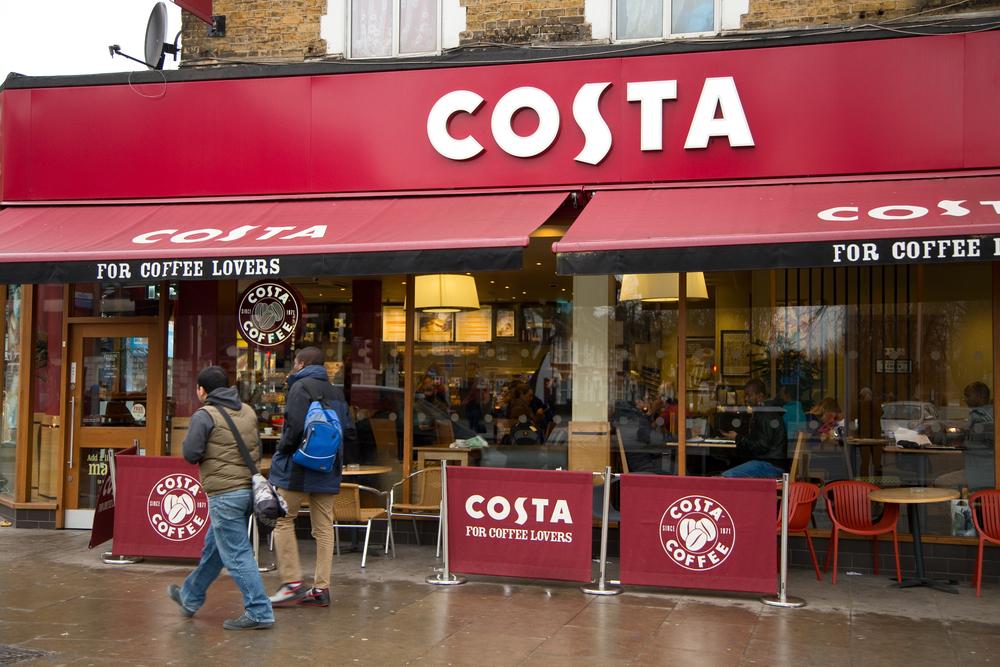
Whitbread plc (LON:WTB) enjoyed a resilient performance across the spring period, boosted by its Premier Inn chains.
The group, which also own Costa Coffee, saw its Premier Inn sales grow by more than double across the period, as it benefited from a “resilient hotel market”.
Premier Inn’s like-for-sales rose 4.7pc in the 13 weeks to June 1, compared to 2.1pc like-for-like growth in the same period last year, driven in part by the addition of 9,000 rooms.
Nevertheless, the company did note a slowdown in demand in cities such as London and Manchester, as tourism began to slow in light of recent terrorist attacks. They did however, note that some recovery had already been witnessed with regards to bookings.
Conversely, its Costa brand continued to face difficulties amid falling consumer economic confidence.
Overall, its like-for-like sales rising 1.1 percent compared to 2.6 percent recorded growth last year. In addition total sales were up 8.7 percent.
In spite of subdued growth from the high-street coffee chain, the figures proved in line with analysts expectations.
“We have had a good start to the year, with first quarter sales growth of 7.6pc, in line with our expectations,” said chief executive Alison Brittain.
“Premier Inn continued to win overall market share with strong sales growth of 9.2pc as we benefited from a resilient hotel market and the contribution from the 9,000 rooms we opened over the last two years, which are maturing well.”
Investors welcomed the results for Whitbread, which ultimately marked an encouraging start to the year.
“Whitbread’s Premier Inn bounce is impressive but the continued slowdown at Costa, at least in terms of like-for-like sales, may be a worry to some,” said Mark Brumby, analyst at Langton Capital.
“[Costa] will not be performing strongly in the current hot weather [in the UK] and retail footfall is on the slide.”
As a result, shares in Whitbread jumped 3.82 percent during Wednesday trading, as of 12.10PM (GMT).
UK budget deficit falls to lowest level since 2008

Britain’s budget deficit fell to its lowest level since 2008 in May, providing some evidence that Brexit is failing to have the expected negative effect on the economy.
Wednesday’s figures from the Office for National Statistics show that the UK borrowed £6.7 billion last month, down from £7 billion in May 2016. It also constituted a significant drop from April’s £9.4 billion deficit.
VAT receipts provided a boost for the government during the month, rising by 4.3 percent to £11.2bn in May. This is the highest May figure on record.
PMG’s chief economist, Yael Selfin, commented:
“UK deficit fell in May, but after a long period of gradual improvements, expected headwinds will put renewed pressure on public finances.”
Sterling sinks further as May struggles to strike deal with DUP

The value of sterling continued to fall on Wednesday, after government officials warned that a deal with the DUP was not likely to be finalised ahead of the Queen’s Speech.
Prime Minister Theresa May has been struggling to negotiate a del with Irish party the DUP that will give her government a much-needed majority, after she failed to gain enough seats on her own at the general election at the beginning of June.
Sterling dropped below $1.26 in early trading, following on from losses seen on Tuesday after Bank of England Governor Mark Carney warned on the long-term effects of Brexit and said interest rates were unlikely to rise for some time.
The pound weakened after officials warned on Wednesday that a DUP deal was not imminent. Societe Generale strategist Kit Juckes wrote in a morning note to clients: “Governor Carney’s Mansion House speech killed any wind that was in sterling’s sails yesterday.
“The Conservative Party’s lack of progress in reaching a deal with the DUP won’t help sterling either”.
Strategists at investment bank Morgan Stanley also warned on the short-term value of the pound, but said it was likely to pick up in the long-term, adding that a short period of British Pound outperformance should be expected.
Exchange Traded Products from Societe Generale
Download guide now:
Discover how you can trade a wide range of equity, commodity and FX markets like a share whilst trading on leverage with Societe Generale’s Exchange Traded Products.
>Leverage your performance on equities, commodities and FX
>Trade like a share via your broker
>SIPP & ISA Eligibility
>Not subject to Stamp Duty
>Risk limited to capital invested, never more
>No margin calls
Download this guide now to discover how Societe Generale’s Exchange Traded Products can help you leverage your returns while limiting your risk.
Leverage Your Performance
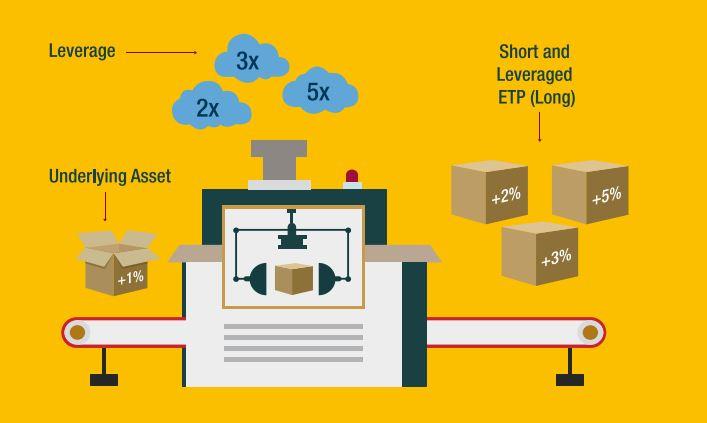
Short and Leveraged ETPs enable you to gain 2, 3 or 5 times the Daily Performance of an index, commodity or currency pair, with your risk firmly fixed at the amount that you invested.
Short and Leveraged ETPs are entirely designed around the daily performance of your chosen Underlying Asset. This means that your profit or loss each day is determined by how much the Underlying Asset has risen or fallen that day. You can hold a Short and Leveraged ETP for more than a day but gains and losses will be compounded over time.
Download your free guide now:
Terms, Risk Warning & Disclaimer:
This communication is directed at sophisticated retail clients in the UK. It is designed to be used as an education tool. For further information and for a full list of risks associated with the Short and Leveraged ETPs please refer to a full product guide; such as Societe Generale’s Guide to Short and Leverged ETPs which can be found on Societe Generale’s Exchange Traded Product Website. By downloading this guide you agree to be contacted by Societe Generale, UK Investor Magazine and Investment Superstore with relevant financial information.