The Bank of England has cut rates for the first time since 2009, in a move designed to negate the economic effects of the Brexit vote.
The Monetary Policy Committee voted unanimously in favour of reducing interest rates from 0.5 percent to 0.25 percent. The central bank also announced further measures to provide additional support to the economy in the wake of the referendum. These include a new Team Funding Scheme to reinforce the pass-through of the cut in Bank Rate; the purchase of up to £10 billion of UK corporate bonds; and an expansion of the asset purchase scheme for UK government bonds.
The decision to leave the European Union at the end of June has led to increasing economic uncertainty, with warnings over the future stability of the British economy coming thick and fast. On Wednesday, Markit lowered the British PMI figure to 47.3, the lowest figure since April 2009.
UK Investor will be live-tweeting the press conference taking place at 12.30PM. Please tune in to @ukinvestormag on Twitter.
Shares in gold miner Randgold Resources dropped over 11 percent this morning after announcing a 6 percent drop in gold production. The company reported a flat second-quarter profit of $150.6 million in the three months to June 30th, with prices offset by a 12 percent rise in production costs.
Randgold owns goldmines in Mali, the Ivory Coast and the Democratic Republic of Congo, and have benefited strongly from the soaring price of gold in the run up to the European referendum. However a mill failure at its mine in Tongon, as well as ore feed issues in Kibali, led to weaker than anticapted results.
Shares in Randgold Resources plummeted on the news, now trading down 11.08 percent at 7,985 (1058GMT).
The global economic outlook remains uncertain in the wake of the Brexit vote but European financial markets look set to weather the storm, according to the European Central Bank’s latest economic bulletin.
The ECB confirmed that markets had steadied since the vote, but warned that “incoming data for the second quarter point to subdued global activity and trade.”
According to the bulletin, the ECB expects recovery in the Euro area to continue at a”moderate pace”, despite inflation remaining at zero with no sign of an upward trend.
President of the ECB Mario Draghi stated in July that the ECB would wait for further information before making more policy decisions, taking into account new staff projections released in September as well as rate decisions by other central banks.
Bank of England expected to cut rates post-Brexit
The Bank of England is expected to cut interest rates for the first time since 2009, in a decision to be announced at 12pm today.
In the wake of the European referendum economic activity has slowed, with the service sector and construction industry both seeing a sharp fall. Rates have remained at a record low of 0.5 percent since 2009, but Bank of England governor Mark Carney widely expected to lower rates further today to 0.25 percent.
Pound falls, Asian shares up
The pound has fallen this morning ahead of the rate decision by the Bank of England, falling 0.1 percent but remaining well clear of the three decade low hit after the Brexit vote.
Shares in Asia fared better on Thursday, with the MSCI Asian-Pacific index rising 0.5 percent after a hard week last week.
Toyota profits drop as strong yen weighs
Japanese carmaker Toyota has seen a 15 percent drop in its first quarter net profit, with the strong yen weighing down the company’s exports.
Toyota posted a net profit of 552.5 billion yen in the months between April and June, down from 646.4 billion yen previously.
The company also lowered their forecast for full year operating profit, predicting their lowest results in four years. The last three have been heavily boosted by Prime Minister Shinzo Abe’s stimulus measures designed to prop up the weak Japanese currency.
The proposed tie-up between Liberty Global and Vodafone has been approved by the European Commission, subject to the completion of concessions by Vodafone.
The joint company will operate in the Netherlands and is conditional on Vodafone divesting its consumer fixed line business in order to retain sufficient competition in the market. The divestment will entirely remove the overlap between the activities of Vodafone and Liberty Global in the markets, allowing the deal to go ahead.
Competition commissioner Margrethe Vestager commented:
“The telecoms market is of strategic importance for our digital society. The commitments offered by Vodafone ensure that Dutch consumers will continue to enjoy competitive prices and good choice.”
Brussels also rejected a request to refer the merger to the Dutch competition authority for assessment.
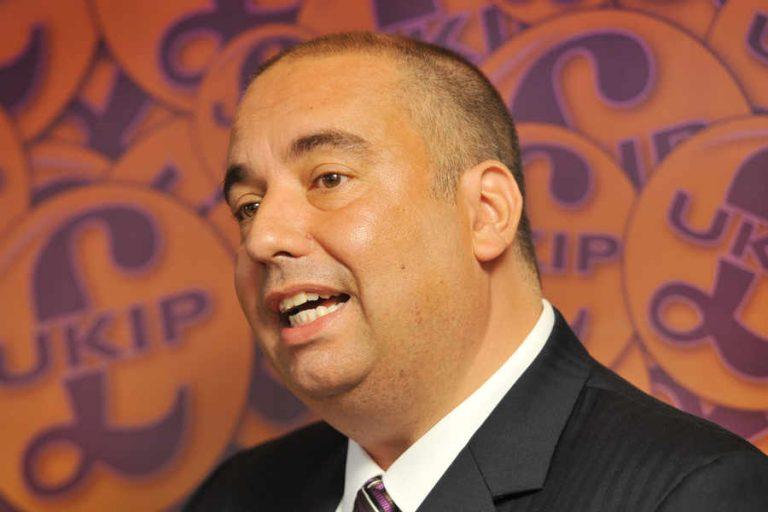
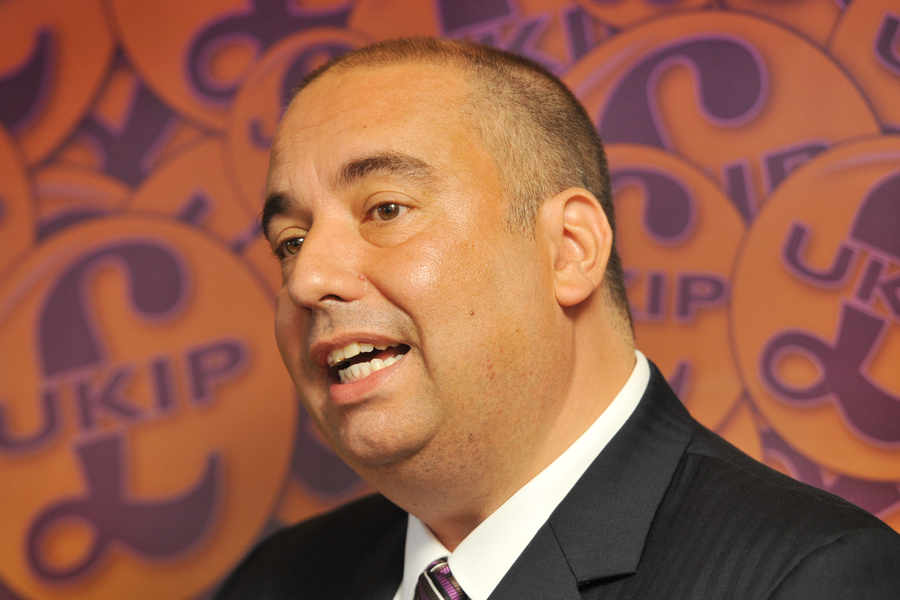
As details of the UKIP leadership shortlist emerge today, it seems one candidate is off to a reough start; Bill Etheridge, MEP for Dudley in the West Midlands, has raised just £8 for his candidacy after launching a crowdfunding page.
Etheridge, whose campaign has the catchy name ‘Billeive in Bill’, launched a crowdfunding campaign two weeks ago with the target of £5000. So far just one donation has been made, making the grand total £8.
Bill Etheridge, UKIP MEP
However, it’s unlikely that the Ukip MEP needs the extra press that comes with a fundraising campaign – he is well known for his extreme views on crime and punishment, calling for a referendum on bringing back the death penalty. Other key policy areas include banning halal meat and burqas, and bringing back smoking areas in pubs.
Nigel Farage’s replacement will be decided with the official vote on UKIP leadership in September.
The price of Bitcoin has sunk over 10 percent after Hong Kong based exchange Bitfinex admitted it had been hacked.
Bitfinex confirmed it had stopped trading and withdrawals on the platform after the breach was discovered, with hackers stealing around $65 million worth of the currency. In a statement on its website, Bitfinex said that it was “deeply concerned about the issue and we are committing every resource to try to resolve it”.
Wednesday is the second day of downward movement for Bitcoin this week, after it sunk 6.2 percent on Monday. The hack is one of the biggest in history, highlighting the weakness of using a solely internet based currency.
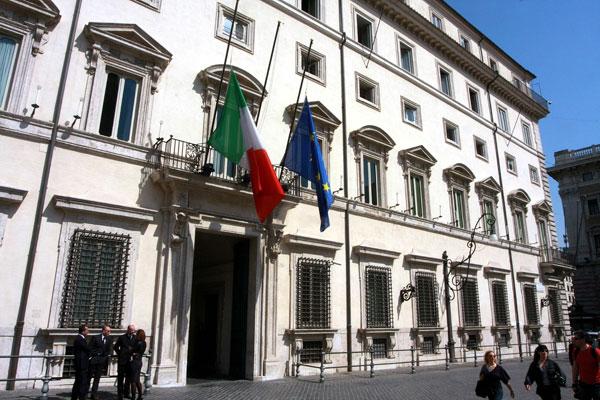
The Italian banking crisis, which has simmered under the surface of the relatively wealthy EU country since 2008, has finally started to erupt. With the UK’s Brexit vote as the catalyst, Italian banking shares have tanked – prompting media speculation on the future of Italy’s economy. After years of bad debts and a typically Italian lax approach to tackling them, it’s crunch time: the government must make a move and tackle the problem, or risk damaging the stability of the Eurozone.
Italy’s economic situation is dire; whilst most countries have recovered since the 2008 financial crisis, Italy has not. Debt was at 121 percent of GDP in 2011, 123 percent in 2012 and 129 percent in 2013. However, the pressing problem of the moment is the €360 billion of ‘sofferenze’ – non-performing loans, in English – weighing down Italian banks; the International Monetary Fund estimates that the Italian banking sector’s non performing loans amount to an astonishing 18 percent of GDP. Borrowers in Italy have accumulated debts they cannot afford, leaving banks unable to offer loans to those that need them. Since the British referendum, the banks – previously propped up by quick-fix intermediate measures in the face of collapse, alongside Mario Draghi’s mass stimuli – have seen shares drop to 2008 crisis levels. It is now clear that action must be taken to completely restabilise the banking system, at an estimated cost of 40 billion euro. But the big question on everyone’s lips is: how?
The problem lies in the European Union’s new banking union, brought in in 2016, which aims to prevent the need for taxpayer intervention in banking crises by placing the responsibility on the banks’ existing stakeholders, who have accepted the risk already.
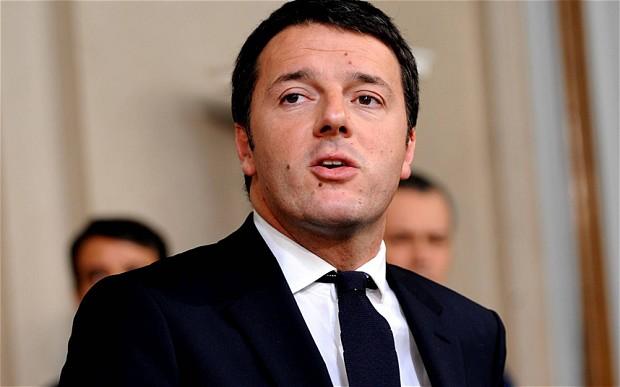
Italy’s PM Matteo Renzi
However, for Italy this is a big problem. A larger-than-average amount of banks’ stakeholders are small savers, making the future of the average Italian’s household finances strongly intertwined with the banks. Many of the Italian population will be affected should Italy follow the EU’s new bail-out rules – and it will risk shutting down the domestic bond market, heavily relied upon by Italian bankers. Prime Minister Matteo Renzi faces a big decision – to follow the EU rules and risk upsetting a majority of his electorate, or risk going against the EU and fund a bail-out with public money.
The banking crisis also poses a political problem for Renzi himself. His course of action will have a resounding effect on his career – upsetting voters will endanger the result of his government’s referendum on constitutional reform, on which the future of his premiership rests. Making a wrong move and alienating his electorate risks allowing Italy’s 5 Star Movement, whose anti-establishment rhetoric has already proved popular in the mayoral elections, to gain further traction – leading Italian politics away from its relatively stable centre-left leanings and towards a possible exit from the EU.
Italy’s long-standing economic crisis has impacted the country for far too long, creating an unfavourable climate for employment and forcing many young graduates to move abroad. The official unemployment rate is 11.4 percent – but the youth jobless rate in the poorer south of Italy far exceeds that, at 65 percent in Calabria, 56 percent in Sicily, and 53 percent in Campania. It is clear to the Italian government that something must be done, and fast. Whichever course of action Italy chooses to follow, the repercussions will be felt throughout the Eurozone.
UK Cycle Centre, unique online marketplace for cycling kit, is seeking investment via a crowdfunding campaign on Crowd2Fund.
UK Cycle Centre is aiming to raise funds through a £40,000 revenue loan, at a 9 percent interest rate, to expand the company globally in a number of key European markets. Set up in 2014 by avid cyclist Adam Broadhurst, the company retails new and approved used bicycles, including a large range of accessories, and makes it cheaper for users to ride by allowing them to sell and exchange part of their bicycle without charges or fees.
Broadhurst’s enthusiasm for cycling started when he was just 15, and he has since trained up to five times a week. This passion, combined with an education in Business Management, resulted in the creation of the UK Cycle Centre. During the company’s first two years of trading turnover increased by 300% year on year, and is estimated to hit £1 million by the end of year three.
Uk Cycle Centre founder Adam Broadhurst
UK Cycle Centre are now looking for an injection of funds to grow the business by increasing their product range, employing new staff and expanding their current Malvern retail site as well as opening a new flagship retail store in the Bristol area. Funds will also go into work on a new website to offer their customers the best possible service. With a successful crowdfunding campaign, UK Cycle Centre aims to become an international company within five years.
The company chose Crowd2Fund, one of the UK’s leading peer-to-peer lending platform meet their funding needs. Broadhurst said of the choice: “We wanted to find a platform for longer term investment. Crowd2Fund as a professional and flexible partner, deliver quickly so was the right choice for UK Cycle Centre.”
As well as offering an interest rate of 9%, the campaign offers a number of rewards to to investors who inject cash above certain thresholds, including scaling discounts of up to 15%. For more information on how to get involved, visit their crowdfunding page here.
Next shares up on optimistic trading figures
Shares in high street retailer Next soared over 3.5 percent this morning after an optimistic trading statement.
Overall group sales were up 0.3 percent on a year earlier, despite a 3.3 percent decrease in store sales. Recent trading reports have been gloomy for the major retailer, after a disappointing Christmas led to a 6 month downward spiral for its share price.
The group confirmed that full-price sales would this year be in the range of 2.5 percent lower to 2.5 percent higher, narrowing the previous estimated range and highlighting the impact of uncertainty after the Brexit vote.
UK economy contracting at fastest rate since financial crisis
Britain’s economy is shrinking at its fastest rate since 2009 in the wake of the vote to leave the European Union, according to the latest data from Markit.
July’s PMI figure came in at 47.3, a sharp drop from 52.3 in June and the lowest figure since April 2009. Anything below 50 signifies economic contraction.
Chris Williamson, Markit’s chief economist, warned that the numbers pointed to Britain’s economy shrinking by 0.4 percent in the three months to September.
Rio Tinto shares drop in challenging market
Shares in mining giant Rio Tinto have fallen 0.57 percent after seeing profits drop to their lowest level in 12 years.
First-half profit dropped 47 percent, with underlying earnings for the six months to June falling to $1.56 billion, down from nearly $3 billion a year earlier.
However, the group paid a higher than expected dividend to investors, easing the blow from the weak figures. New CEO Jean-Sebastien Jacques said the group remained “confident”, but expected market conditions to remain “challenging and volatile”.