
Classlist nears £550k crowdfunding target

Technology start-up Classlist continues its mission to revolutionise the way parents and teachers can communicate, edging closer to the £550,000 target in their crowdfunding campaign.
With only 22 days left, 75 investors have already seen high potential in the site and the campaign has raised £492,920. Classlist, who aim to use the funds to develop infrastructure and build its international platform, have been gaining support from schools around the UK; having already been approved and accepted in over 70 schools, the company continues to be highly rated and approved by parents, headteachers and advertisers.
Founders Susan Barton and Claire Wright started with a simple aim: to discover a new way to find contact details for other school parents. The pair argue that mainstream social media platforms are not designed efficiently for finding such information, ‘needlessly wasting time for busy families’. They therefore devised a ‘designed-for-purpose’ third generation platform accessible for parents with authentication – security and privacy being Classlist’s core values.
After 18 months of large scale piloting and feedback from parents, Classlist now includes tools to support group and private messaging, discussion forums, parent listings, PTA and private event planning, photo sharing, and lift-share maps. The company hopes that funds amounted through its crowdfunding campaign, which closes on the 19th of June, can help improve and add more tools to their site.
Following the massive interest generated by the funding campaign, Classlist said it was “delighted to see Classlist’s loyal parent users – who have helped us grow so quickly – becoming owners in the business”.
For more information on Classlists campaign, visit their website Crowdcube page here.
27/05/2016
By Aaron Kidd
Hostelworld sinks 25%
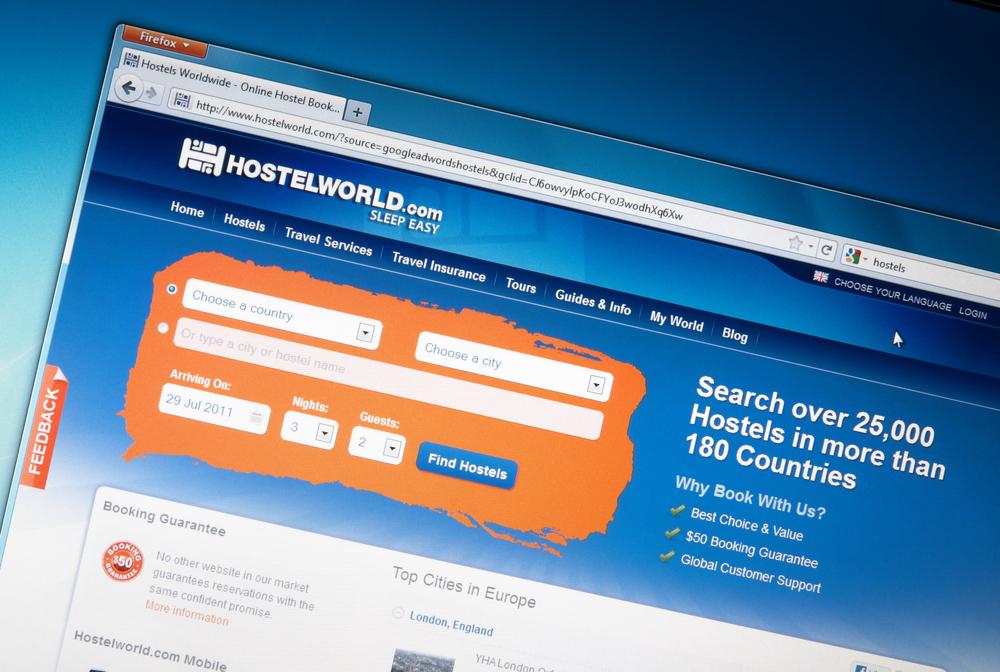
In an AGM statement released to shareholders this morning Hostelworld PLC (LON:HSW) traded at 190.00 down -26.14% 10:19AM BST after the Irish hostel booking company said it has traded “below expectations” in the second quarter of its financial year.
On reflection the company said that ‘recent geo-political events, particularly in Europe’ such as the terrorist attacks on Paris and Brussels were a strong influence behind the dip in trade.
Bookings into higher priced European destinations were weaker whereas the Asia-Pacific region continued to be its fastest growing area due to an increase in hostelers travel preferences.
With Group bookings ‘marginally lower’ compared with its previous year, the company expects its recent launch of its digital advertising campaign to support key summer trades. However the company said it has continued to see strong bookings growth in the Hostelworld brand.
Hostelworld also said it expects marketing investment in its cost-per-click as a percentage of net revenue coming in at below the previous guidance of between 45-50% on a full year basis.
It said:
“The trends in bookings and Average Booking Value that we have seen in the travel market, particularly into higher priced European destinations, while partially offset by improved marketing efficiency, means that the year’s outturn will be dependent on a recovery in key European destinations over the important summer travel season, and we remain mindful of the exchange rate environment.
“Hostelworld will continue to actively respond to movements in demand, supply and pricing. The strength of our brand and technology, underpinned by a growing marketplace, gives the Board confidence in the Group’s future prospects”
26/05/2016
By Aaron Kidd
FTSE rallies for second day

The FTSE 100 index climbed 37.72 points, 0.57 % to 6,254.88 12:17PM BST continuing its risk on rally into a second day.
Lloyds Banking Group rose 0.9p to 73.4p, Standard Chartered climbed 10.6p to 546.6p, with Royal Bank of Scotland being the biggest riser, surging more than 3% or 7.9p to 253.1p.
HSBC was up 9.5p to 443.8p after raising $2bn (£1.4 billion) from selling perpetual subordinated contingent convertible securities, strengthening its capital base.
M&S shares have dropped down 35.6p, or 8%, to 409.1p after investors ignored the retailer’s “get back to basics” revival plan of its clothing business. The group said a turnaround of falling clothing branch would take time and cost money, at least in the short term.
Another big faller was technology firm Intertek Group (LON:ITRK) dropping 3.4% to 3186p, after reporting earnings.
Dixons Carphone PLC (LON:DC) on the other hand rose 2% to 458p after reporting higher revenues and predicting profits at the top end of forecasts.
European equities rose to a four week high with Greek banks profiting a 1.3% rise after euro zone finance ministers made progress on talks over completing a debt relief deal.
Oil Rallies
Energy shares were in demand with oil giant Royal Dutch Shell rising 22p to 1683p as oil prices edged closer to $50 a barrel, up 1.3% as the U.S crude hit its highest in over 7 months following a suspected draw-down in U.S crude inventories following industry data.
Having nearly halved its debt from £305,000 to £230,000 Independant Resources PLC (LON:IRG) rose up nearly 43% to 0.075p. This follows the company’s recent major oil prospect in Tunisia and a big underground gas storage scheme in north-east Italy.
Shares in Petrel Resources PLC (LON:PET) climbed by 8.8% to 4.63p following the news that is expects Woodside Pettroleum ltd. to start a 3D seismic survey of Frontier exploration licence in the Irish Atlantic in a months time.
Judges Scientific PLC (LON:JDG) on the otherhand lost 1/5 of its value down to 354.5p at 1460p followings warnings from designer of scientific intruments on its first half profits.
Currency markets
The pound fell by 0.2% against U.S dollar to $1.4612, alongside a 0.3% slip against the euro to €1.3098.
25/05/2016
By Aaron Kidd
M&S show growth, but warns on near-term profit
M&S released mixed results this morning, with pre-tax profit coming in ahead of analysts expectations but marred by a warning that the group’s turnaround plan may impact profit in the short term.
The group reported an underlying pretax profit of £689.6 million for the year to March 26, up nearly 5 percent on the year before, with with group revenue also up 2.4 percent.
However, new chief executive Steve Rowe warned on the short term profits of the company, as it undergoes a turnaround plan designed to spark growth in its clothing section:
“We are clear on the actions needed to recover and grow Clothing & Home, which is our top priority; to continue to grow our Food business; and to focus on driving profitability. We are investing to re-establish our price position by sharpening prices and to enhance service by putting more employees into our stores.
“These actions, combined with the difficult trading conditions, will have an adverse effect on profit in the short term.”

25/05/2016
Morning Round-Up: Greece/Eurozone deal, Monsanto rejects Bayer, last minute for BHS

“Breakthrough” deal for Greece agreed by Eurozone
Eurozone finance ministers have agreed to send further bailout funds to Greece, after hours to talks that extended into the early hours of Wednesday.
The “breakthrough” deal includes a commitment from the IMF for the first time, just days after the Greek parliament approved another round of gruelling budget cuts to help balance the country’s spiralling debt.
The agreement will release a 10.3 billion euro payment, as well as the possibility of debt relief in 2018 should Greece continue to meet payments.
Euclid Tsakalotos, the Greek finance minister, said: “I think there is some ground for optimism that this can be the beginning of turning Greece’s vicious circle of recession-measures-recession into one where investors have a clear runway to invest in Greece.”
Monsanto rejects Bayer offer
Monsanto has rejected a bid from Bayer just days after a potential deal was announced, calling the $62 billion offer was “financially inadequate”.
German chemical group Bayer offered $122 a share in cash for Monsanto – the largest all-cash offer, ahead of InBev’s $60.4 billion offer for Anheuser-Busch. However, Monsanto’s CEO Hugh Grant said the bid undervalued the company, but remained open to anything higher.
Monsanto shares rose 3.1 percent on the news, with Bayer similarly rising on the German market. BHS in emergency bidding process Last-minute bidding has begun to save retail chain BHS, with a consortium led by former Mothercare boss thought to be the frontrunner.Richess Group, a newly formed consortium headed by Greg Tufnell and backed by a wealthy Portuguese family, is looking the likely winner so far after other bidders, including Matalan founder John Hargreaves, dropped out.
According to sources, if no deal is made by Friday BHS is likely to enter liquidation, risking 11,000 jobs.25/05/2016
Big Yellow Group posts revenue growth, notes slow economic acitivity

The UK’s leader in self storage the Big Yellow Company PLC announces a strong revenue growth in the year ended March 31 against a “backdrop of slower economic activity compared to the prior year”
The FTSE 250 company posted revenue of £101.4M for the year, a 20% increase from the previous year of £84.3m alongside a like-for-like revenue increase of 10% to £87.6m from £79.9m
Alongside its increase in revenue, Big Yellow PLC increased its final dividend by 13% from 11.3p per share up to 12.80p per share meaning its total dividend for the year to 24.9p a 15% growth from the previous year which stood at 21.7p
The statutory metrics show that Big Yellow’s profit before tax grew 7% from £105.2m to £112.2m. Occupancy growth has increased from 267,000 square feet the previous year projected by 185,000 square feet.
The Company’s like-for-like basis was up by a 3.5 percentage points from the previous year at 76.7% from 73.2%
The Big Yellow said that its objectives it to achieve a 85% Occupancy across its next porfolio.
Executive Chairman Nicholas Vetch said:
“Against a backdrop of slower economic activity compared to the prior year, we are pleased to have delivered another year of occupancy, revenue and earnings growth. We will continue to innovate, by improving our digital platform and operations to grow our market share and leverage our market leading brand. In addition, our focus will remain on London and the South East and large regional cities where barriers to entry are at their highest, and supply remains very constrained,”
Special Report: Investment In The Financial Technology Sector

Financial Technology, also known as FinTech, has become a buzz word for investors searching for early stage innovative companies which have the potential for substantial long-term returns.
Due to the relatively recent emergence of the sector, many FinTech companies are still in the start-up and early stage of the business cycle meaning it can be difficult for investors to gain exposure to the sector. In this report, we have detailed a number of companies listed on London’s main market, easily accessible to investors seeking exposure to this rapidly expanding area of finance through established companies.
Request this report now to discover:
-
UK-listed stocks leading the way in financial technology
-
Areas of finance set to be developed by ‘disruptor companies’
-
How your finances could be impacted by changes driven by FinTech
This report is now publicly available, you can download your copy below:
A copy of this report will be sent to you immediately
By submitting my details I consent for information to be sent to me via the above contact details by Charles Hanover Investments Ltd. Contact may be made by email, post or telephone call. Any information provided is not an offer to enter into any transaction and Charles Hanover Investments Ltd will accept no responsibility for any loss incurred by acting on this information. By ticking the box below I confirm I have read and agree to the Research Terms,Terms of Business and have read and understood the Disclaimer, Privacy and Order Execution Policy.
Disclaimer: This report is for your information only. The information included is general in nature and is not in any form a recommendation to enter into any transaction nor does it constitute an offer. Depending on specific objectives and financial position the research may be unsuitable for certain investors. Charles Hanover Investments or Equitrade Markets will not accept any responsibility for any losses, including, without limitation, any consequential loss, which may be incurred by acting upon the contents of this report. Although the upmost care is taken to ensure the accuracy of this report information contained may not be entirely complete and accurate and Charles Hanover Investments or Equitrade Markets will not be held liable for any inaccuracies.
Risk Warning: Trading Contracts for Differences (CFDs), Futures and spread betting carries a high level of risk to your capital, and is not suitable for all investors. Only speculate with money you can afford to lose. Trading or placing any bets can result in consumers incurring liabilities in excess of their initial stake. Please ensure you fully understand the risks, and seek independent advice if necessary. Charles Hanover Investments is a trading name of Equitrade Markets Ltd, a company authorised and regulated by the Financial Conduct Authority for the conduct of investment business in Shares, Spread Betting, CFDs, Futures, Options and Rolling Spot Foreign Exchange.
Brexit: could you benefit from visa-free travel?
Thanks to the ongoing Brexit campaign and the strong press coverage surrounding the immigration crisis, the press has been littered with the term ‘visa-free’ over recent months; but it’s a term that many may be unaware of, as well as the true benefits that are involved.
Visa-free travel is the ability to visit a country without having to complete the lengthy visa procedures. If the governments of those two countries have a signed agreement, nationals of the countries involved can travel without a visa, allowing easy travel to some of the worlds most sort after destinations at the drop of a hat.
As recent reports have found, high-net-worth individuals are increasingly investing in citizenship by investment programmes, with one of the many benefits of such a substantial investment being the visa-free access that can be gained.
Depending on which programme is chosen, a second passport can allow investors to become ‘global citizens’, bypassing the usual lengthy paperwork and enabling access to hundreds of countries without the traditional visa process.
At present Germany has the strongest passport, as Germans have visa-free access to 177 countries across the world, with Sweden in second place and France, Finland, Italy, Spain and the United Kingdom all tied for third place.
For most EU countries travelling visa-free is a luxury that many can underestimate, but if you’re based in a country that is in any political conflict it can reduce your ability to travel visa-free, for example Pakistan and Iraq rank bottom of the Visa Restriction Index.
To understand the true benefits of visa-free access, CS Global Partners have created the below infographic.


Morning Round-Up: German GDP up, Nationwide soars, Spotify mixed

Germany GDP rises on private consumption
Germany benefitted from stronger than expected private consumption in the first quarter, driving GDP up by 0.7 percent.
Higher construction investment also had a positive impact, contributing 0.2 percentage points to GDP between January and March according to the Federal Statistics Office. State spending also weighed in, balancing out a loss of foreign trade.
Nationwide profits soar in 2016
Nationwide released strong results for 2016 this morning, seeing a 23 percent rise in annual pre-tax profits and a sharp increase in mortgage lending.
Pre-tax profits rose to £1.28 billion, up from £1 billion a year earlier, with underlying profit rising by 9 percent. The building society added 525,000 new current account customers in the year, an increase of 12 percent.
In the statement, Nationwide chairman David Roberts welcomed new CEO Joe Garner, saying he had “championed customer interest throughout his career, and … will set the strategic direction for the Society and our people.”
Spotify revenues soar, but still lacks profit
Music streaming platform Spotify saw revenues reach new heights over the past year, but has still failed to make a profit.
Revenue for the past financial year hit €1.95 billion, an increase of over 80 percent, but was weighed down by a 7 percent increase in net loss. The company offers music online, either free or by monthly subscription, but has high outgoings in the form of royalties paid to artists. Of its 89 million monthly active users, only 28 million are paying through subscription.
The group said they are prioritising investment in the face of increasing competition from Apple, Tidal and Deezer.
24/05/2016
Union Jack acquires 7.5% stake in Weald Basin Operation

Union Jack Oil plc has announced it has reached an agreement with Europa Oil & Gas Limited to acquire a 7.5% interest in a project located within the Weald Basin.
Union Jack will not be paying any up-front cash but covering £480,000 of costs related to the drill, utilising cash resources to finance the costs. If the cost of the project breaches the agreed total cost of £3.2 million, then Union Jack will contribute 7.5% of any additional cost overruns.
Should there be a commercial discovery and subsequent development on the licence, Union Jack will pay to Europa back costs of £159,375. Subsequently, any back costs made to Europa will be funded from the net proceeds received by Union Jack from production in accordance to the Holmwood licence.
Investors will be pleased as it demonstrates Union Jack upholding its corporate strategy of identifying attractive drill-ready opportunities. Planning consent was granted during 2015 and Union Jack now looks to test the Holmwood prospects identified Portlandian and Corallian sandstone reservoirs and the same Jurassic section that tested oil from Kimmerdige Limestones at Horse Hill.
Exceptionally high rates were achieved in all three zones in Horse Hill, setting new records for flow rates achieved in onshore exploration wells in the UK.
The drill site is 12 kilometres immediately west of the Horse Hill discovery which had investor tongues wagging in 2015.
David Bramhill, Executive Chairman of Union Jack, commented:
“Participation in the Holmwood-1 exploration well is a strategic opportunity for Union Jack and wholly consistent with adding to our portfolio, high impact, drill-ready prospects”
“Encouragingly, the Operator rates the Holmwood Prospect highly and believes it to be one of the best undrilled prospects in the UK. We are pleased to be involved with another quality Operator and look forward to working with Europa and our new partners in this venture.”
Europa released its own statement that confirmed the deal with Union Jack Oil, stating that the Holmwood exploration will produce similar results to Horse Hill-1 which could produce up to 1,688 barrels of oil per day under flow test conditions.
“The farm-out of an interest in Holmwood is in line with our strategy to advance our multistage portfolio of licences while at the same time managing risk. We rate Holmwood as one of the best undrilled conventional prospects in the UK: gross mean unrisked prospective resources of 5.6 mmbo; the presence of multiple payzones; and located in a prolific hydrocarbon producing region close to the Brockham oil field and Horse Hill discovery. We are keen to get the drillbit moving and are working hard to be in a position to commence drilling operations in late 2016 / H1 2017,” said Europa CEO Hugh Mackay.