
Haughton Honey continues to smash crowdfunding target

Premium honey brand Haughton Honey has continued to create a buzz with its crowdfunding campaign by smashing through its £80,000 target and collecting more than £112,000 in investments.
Over 200 investors have backed the six-week campaign which was launched to support the next stage in the company’s growth.
Founder Crispin Reeves said: “We’ve got high ambitions for Haughton Honey. Demand for pure, raw honey is growing in the UK and we feel there’s tremendous export potential too.
“I’m thrilled that so many investors have come on board to support us as we continue to expand, and would like to thank everyone who’s got involved. Some 98% of businesses that apply to CrowdCube don’t get selected and of those 2% that do, only half successfully fund.
“It’s been a gruelling four months of due diligence, promotion, meetings, sleepless nights, and answering thousands of queries but we smashed it.”
Some 211 investors swarmed to get a taste of Haughton Honey, with £112,870 in total being invested. The investment pledged to the Cheshire-based company will be used to recruit more bee farmers, expand markets and raise awareness of the brand, which was launched in 2014.
Since 2014, the firm has steadily expanded and recently began supplying the fine food retailer Booths, as well as The Protein Works, a large sports nutrition brand owned by Alliance Boots, which has just launched a co-branded Cashew Nut Butter Luxe product containing Haughton Honey.
The honey is available via more than 80 regional sales outlets across the North West and Midlands, as well as through premium supermarket Booths, which started stocking Haughton Honey at the beginning of April 2016 and which has almost 30 outlets.
During the crowdfunding campaign alone, which was operated through CrowdCube, the company secured eight new independent retailers across the Midlands and East Anglia.
The company, based at Radmore Farm, Haughton, near Tarporley, bottles raw honey which comes straight from the hive, is cold extracted and never pasteurised which means that it retains all of the natural enzymes and proteins that make English honey so special. It is also 100% natural and pure and features traces of dandelion, chestnut, blackberry, clover and other wildflowers.
For more information about Haughton Honey visit www.haughtonhoney.com
Morning Round-Up: UK services strengthen, Suzuki HQ raided, Oil steady on OPEC

UK services show growth, but businesses stay cautious
Britain’s service industry strengthened in May after dropping to a three-year low in April, according to Markit’s latest PMI survey.
Markit’s service activity figure stood at 53.5 in May, rising from 52.3 in April.The figures showed a growth forecast of 0.2 percent in the second quarter, a slowdown from the 0.4 percent growth in the first three months of 2016.
Markit chief economist Chris Williamson said:
“Growth has collapsed in manufacturing and construction, leaving the economy dependent on the service sector to sustain the upturn, though even here the pace of expansion has remained frustratingly weak so far this year.”
However, businesses remain cautious ahead of the EU referendum, with new business showing its slowest gain in 41 months and hiring sinking to a 33-month low.
Suzuki HQ raided in Japan
The headquarters of carmaker Suzuki have been raided by Japanese officials, after the company found “discrepancies” in its emissions results last month.
Suzuki is the latest car firm to be caught up in an emissions scandal, clarifying that it failed to use testing methods that would comply with Japanese regulations due a lack of manpower. Officials raided the office looking for documents to confirm the company had meant to deceive buyers.
Suzuki’s shares fell 1 percent on the Tokyo market after the news.
Oil stays steady after OPEC meeting
Oil prices remained at around $50 a barrel on Friday, after an OPEC meeting in Austria failed to agree output targets.
As expected, tension between Saudi and Iran scuppered attempts to reach an agreement on targets going forward. Iran is unlikely to agree to cut their output in the near future, as it attempts to regain market share after years of sanctions were lifted; however, Saudi agreed not to flood the market with oil, giving a positive note to the meeting.
“We will be very gentle in our approach and make sure we don’t shock the market in any way,” Saudi Energy Minister Khalid al-Falih told reporters.
03/05/2016What will Brexit mean for home owners?

With just under three weeks to go, recent opinion polls on the EU Referendum suggest that voters are split 52% – 48% in favour of leaving the EU (ICM/Guardian) .
What will a Brexit vote mean for UK homeowners?
A report released by Nationwide in May 2016 noted that although the annual house price increase has slowed to 4.7%, down from 4.9% in April, the average house price increased by 2%; estimating that the average price of a house in the UK stands at £204,368. The recent increase in house prices is making it difficult for first-time buyers to begin investing in the property market, making getting a foot on the housing ladder a daunting prospect. With politicians and economists believing that house prices will drop if Britain decides to leave the EU, the possibility of cheaper house prices may be a crucial deciding factor for voters.
Pro Brexit campaigners
Today, ex-defence secretary Liam Fox is expected to appeal to young voters by stating that they face longer living at home with parents if Britain stays in the EU. In his speech later today, he is expected to claim that young people cannot cope with rising rent costs and compete with growing competition to buy into the market, and blaming immigration for the current housing crisis.
“Most new immigrants move into the private rented sector, which has grown as the immigrant population has grown….Competition for rented accommodation obliges all those in the private rented sector to pay high rents which take a large share of income and makes saving to buy a home even harder,” Mr Fox will say.
His words are expected to echo those of Chris Grayling, leader of the House of Commons and pro Brexit campaigner who, in an interview with the Guardian earlier this week, said:
“It is already tough to buy a house…. But if we are bringing a population the size of Newcastle upon Tyne into the country every single year, if we cannot set limits on the number of people that come and work in Britain, then simple maths says it is going to be even more difficult to get on to the housing ladder.
“More people chasing not only properties to buy but properties to rent, the more difficult it gets, the higher rents get”.
Will house prices fall?
Foreign investors largely rely on the free movement of people into the UK to secure confidence in oversea investments; but a Brexit vote may trigger a wave of uncertainty within the market, meaning there will be less demand for houses and therefore a price reduction. In early May, The International Monetary Fund (IMF) said a Brexit vote could see “sharp drops in equity and house prices”, as investment in areas such as commercial real estate and finance would take a hit.
The IMF said
“Uncertainty over the outcome of the referendum on EU membership, and about the implications of a potential Leave vote, already appears to be having an impact on investment and hiring decisions, with recent surveys of economic activity falling to their weakest levels in three years.
“While there is wide uncertainty around the market reaction to a leave vote, as the historical experience with similar events is limited, it is expected to be negative and could be severe.”
How much would the average home owner lose on the value of their property?
The National Association of Estate Agents support the view that a Brexit vote would see foreign investors scarper, and predict the average homeowner could lose up to £2,300 over three years with homes in London losing an average of £7,500.
Further risks to homeowners
Homeowners will also have to take into consideration a drop in demand when looking at long-term house prices. If a drop in demand continues after the referendum, house price inflation as well as rental growth is also liable to follow suit. This may benefit those looking to get a foot on the property market – but current home owners and landlords will undoubtedly suffer.
Furthermore, there is a risk that a Brexit vote could trigger an economic crisis. This would mean that as a result of fewer job opportunities and a restriction of mortgage lending, fewer buyers will be able to afford mortgages even with reduced housing prices.
Treasury warning of economic of slowdown
“In the long term, the country and the people in the country are going to be poorer. That affects the value of people’s homes, the Treasury analysis shows that there would be a hit to the value of people’s homes by at least 10% and up to 18%… And at the same time, first-time buyers are hit because mortgage rates go up, and mortgages become more difficult to get. So it’s a lose-lose situation,” said George Osborne.
Political Bias
It is important to keep in mind, however, that these are estimates made to the best degree of knowledge on what the aftermath of the vote will be. The truth of the matter is that no one knows for sure what exactly will happen especially in those decisive weeks after the vote if Britain were to leave the E.U.
Only once we see what type of post-Brexit trade deal the UK would sign with the EU are we be able to see exactly the economic impact of a Brexit vote. The all important trade deal could decide on restrictions of free flowing movement into the UK and consequently affect the housing market for future generations.
Small businesses split 50:50 on EU referendum

With three weeks exactly until the EU referendum, latest figures show small businesses are evenly split over whether stay or go.
Research consultancy TNS found that 37 percent of small and medium-sized enterprises would be voting to leave the European Union on the 23rd June, whilst 38 percent wanted to stay in the single market. However, the poll also showed most expected the Remain camp to win, with 68 percent saying that the desire for economic stability and fear of change will mean the public will vote to stay.
TNS’s UK managing director of financial services and technology Amy Cashman commented: “While some SME owners are backing Brexit, the high proportion of those predicting that the UK will remain in the EU shows that fear of the unknown is likely to be a deciding factor. The reasons given by SME owners for voting, on both sides of the debate, show that the Brexit debate is influenced by passions and personal preferences.”
High-profile figures have been emerging on both sides of the fence over recent months, with Richard Branson and Lady Karren Brady publicly advocating staying in the EU, and Boris Johnson encouraging a Leave vote.
02/06/2016
Saville Row tailor turns to crowdfunding for global expansion

British tailor Mark Marengo is seeking a £90,000 revenue loan on Crowd2Fund.com, to expand its Saville Row business.
The company was first established in 2005 by founder Mark Marengo, who began his career working as a tie salesman. Marengo then began designing his own suits and shirts, before launching his own business on Saville Row eight years ago.
The company’s products are manufactured in Italy by small workshops, with a significant emphasis on their handmade elements. As well as retailing online, Mark Marengo products are wholesaled both in the UK and internationally. The company has had particular success in well-known retailers such as Harvey Nichols, where Mark Marengo’s Asian fit suit brand is the best selling suit line throughout the store.
The business’ early success has led to plans for further expansion; Marengo aims to ramp up online sales, as well as focussing on international buyers, where Savile Row name and connotations travel well. The company already has plans to start selling through Secoo.com, the main online luxury portal in China. They plan to dovetail these efforts by introducing visiting tailoring teams in both China and other countries.
Marengo says:
“We are intending to push the business online using free publicity which Savile Row gives us, and send our visiting tailors to visit CEOs of banks. With this model we can launch a business very quickly in America, Australia or Japan.”
He chose to raise the debt funds through crowdfunding, rather than a traditional lender due to alternative finance offering the opportunity to reach brand advocates, as well as banks lacking the foresight to understand his business.
“The banks are very unapproachable and they lack vision even if security is offered,” he says. “Crowdfunding enables you to share your aspiration with like minded investors based on a solid business plan.”
The company is seeking a £90,000 revenue loan on Crowd2Fund.com. As well as offering an interest rate of 9 percent, the campaign offers a number of rewards to investors who inject cash above certain thresholds; these include scaling annual discounts of up to 25 percent. For more information, visit their campaign page here.
Morning Round-Up: Uber-Saudi investment, France to help Greece, OPEC meeting

Saudi investment fund pours money into Uber
Controversial taxi app Uber have raised $3.5 billion of investment from Saudi Arabia’s Public Investment Fund, bringing the company’s value up to $62.5 billion.
In a written statement, Uber co-founder Travis Kalanick labelled the investment a “vote of confidence in our business”, with the fund’s managing director Yasir Al Rumayyan taking a seat on Uber’s board.
Uber are planning a $250 million expansion into the Middle East, where it has a strong female market – women in Saudi Arabia are banned from driving themselves.
French PM to encourage investment in Greece
French Prime Minister Manuel Valls wants to support Greece’s economic recovery through investment, as he begins an official state visit to Athens.
In an interview with Kathimerini newspaper he confirmed that the leadership is “urging more French businesses to look into investment prospects because we want to assist Greece’s economic recovery.”
Paris has been supportive of Greece throughout heated bailout talks, saying that “the place of Greece is inside the European Union and the euro zone”.
Valls visit comes just days after a further bailout agreement was reached between Greece and the Eurozone.
OPEC stage meeting for Saudi-Iran resolution
OPEC energy ministers will meet later today in Vienna to continue the discussion on oil prices, with the intention of freezing output.
The group have failed to agree on formal output targets in December, with rivals Saudi and Iran clashing over numbers. In April, Saudi Arabia vetoed plans for an output freeze which may have brought oil prices into steadier territory.
A spokesman for OPEC made clear the group’s intentions at today’s meeting, confirming that “the Gulf Cooperation Council is looking for coordinated action at the meeting.”
02/06/2016
Telford Homes profits up 28%

At 10:30am BST Telford Homes PLC (LON:TEF) traded at 369.12 -0.57%
Telford Homes PLC today announced its final results for the year ended 31 March 2016 reporting a record 42% growth in revenue of £245.6 million for the year up from £173.5 million in 2015. Pretax profit rose by 28%, exceeding original market expectations as it rose to £32.2 million from £25.1 million.
The company also forecast profits would exceed £50 million in fiscal 2019.
Telford announced a final dividend of 7.70p per share, bringing the total dividend to 14.20p, a 27.9% increase up from 11.1p the previous year.
The London-focused residential property developer said its demand for its “typical product” remained strong from investors and owner-occupiers across all developments. Its move into the institutional private rented sector (PRS) have returned ‘exceptional capital returns’ and mark the start of a “new direction” for Telford Homes and could become an increasingly significant part of future sales in the coming years.
Telford Homes stated it has secured over 50% of the cumulative revenue expected in the next three financial years up to 31 March 2019.
It’s development pipeline is in excess of £1.5 billion of future revenue, six times greater than the revenue reported in the year to 31 March 2016.
Chief Executive of Telford Homes, Jon Di-Stefano said:
IG Group full year earnings ahead of expectations

At 10:26am BST London IG Group Holdings PLC (LON:IGG) traded at 804.00p up 0.56% following its trading statement released today.
The group announced that it expects full year earnings to be slightly ahead of expectations ahead of the start of its new financial year that begins tomorrow on June 1st 2016.
It a brief trading update, the online trading company said it performed well during what was a relatively quiet fourth quarter of the year with all key operating and financial metrics remaining strong.
The company said it expects full-year earnings to be slightly ahead of expectations, as an increase in marketing spend is returning what it described as a ‘compelling result’.
IG said it is thanks to a “continued robust performance” and “ongoing strength in trading revenue”.
IG said:
“As outlined in the third quarter trading update, this continued robust performance has resulted in higher variable operating costs in the last part of the year, including an increase in online marketing spend, where the payback remains compelling,”
Further adding:
“This cost increase was more than offset by the ongoing strength in trading revenue, meaning the Company now expects full year earnings to be slightly ahead of expectations”
The company will publish its result for the year ended May 31 on Tuesday 19th July 2016
01/06/2016
Classlist nears £550k crowdfunding target

Technology start-up Classlist continues its mission to revolutionise the way parents and teachers can communicate, edging closer to the £550,000 target in their crowdfunding campaign.
With only 22 days left, 75 investors have already seen high potential in the site and the campaign has raised £492,920. Classlist, who aim to use the funds to develop infrastructure and build its international platform, have been gaining support from schools around the UK; having already been approved and accepted in over 70 schools, the company continues to be highly rated and approved by parents, headteachers and advertisers.
Founders Susan Barton and Claire Wright started with a simple aim: to discover a new way to find contact details for other school parents. The pair argue that mainstream social media platforms are not designed efficiently for finding such information, ‘needlessly wasting time for busy families’. They therefore devised a ‘designed-for-purpose’ third generation platform accessible for parents with authentication – security and privacy being Classlist’s core values.
After 18 months of large scale piloting and feedback from parents, Classlist now includes tools to support group and private messaging, discussion forums, parent listings, PTA and private event planning, photo sharing, and lift-share maps. The company hopes that funds amounted through its crowdfunding campaign, which closes on the 19th of June, can help improve and add more tools to their site.
Following the massive interest generated by the funding campaign, Classlist said it was “delighted to see Classlist’s loyal parent users – who have helped us grow so quickly – becoming owners in the business”.
For more information on Classlists campaign, visit their website Crowdcube page here.
27/05/2016
By Aaron Kidd
Hostelworld sinks 25%
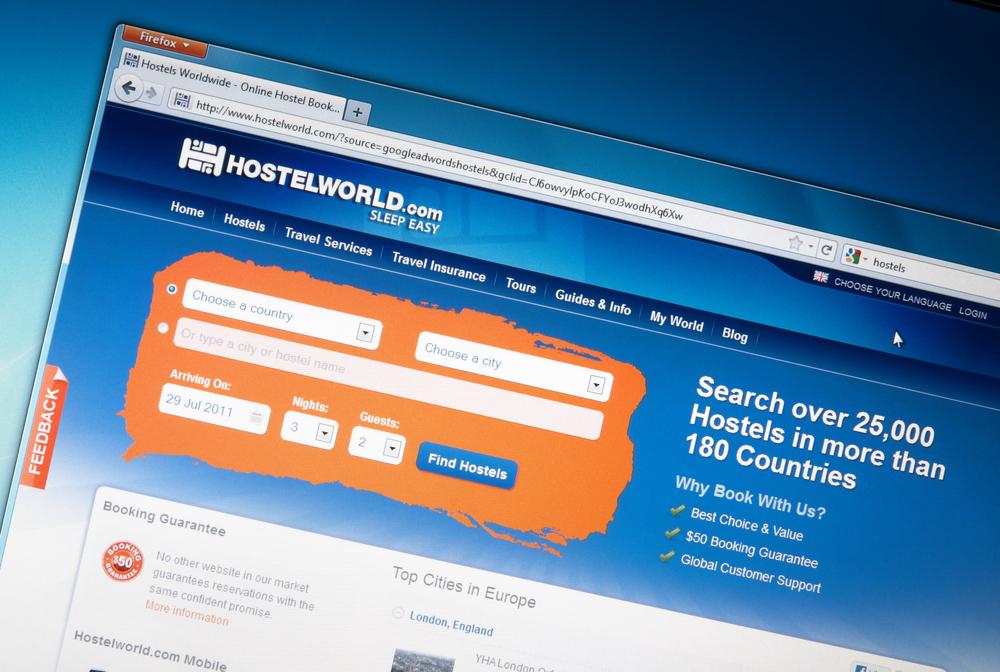
In an AGM statement released to shareholders this morning Hostelworld PLC (LON:HSW) traded at 190.00 down -26.14% 10:19AM BST after the Irish hostel booking company said it has traded “below expectations” in the second quarter of its financial year.
On reflection the company said that ‘recent geo-political events, particularly in Europe’ such as the terrorist attacks on Paris and Brussels were a strong influence behind the dip in trade.
Bookings into higher priced European destinations were weaker whereas the Asia-Pacific region continued to be its fastest growing area due to an increase in hostelers travel preferences.
With Group bookings ‘marginally lower’ compared with its previous year, the company expects its recent launch of its digital advertising campaign to support key summer trades. However the company said it has continued to see strong bookings growth in the Hostelworld brand.
Hostelworld also said it expects marketing investment in its cost-per-click as a percentage of net revenue coming in at below the previous guidance of between 45-50% on a full year basis.
It said:
“The trends in bookings and Average Booking Value that we have seen in the travel market, particularly into higher priced European destinations, while partially offset by improved marketing efficiency, means that the year’s outturn will be dependent on a recovery in key European destinations over the important summer travel season, and we remain mindful of the exchange rate environment.
“Hostelworld will continue to actively respond to movements in demand, supply and pricing. The strength of our brand and technology, underpinned by a growing marketplace, gives the Board confidence in the Group’s future prospects”
26/05/2016
By Aaron Kidd