Shell profits fall in first statement since BG deal

0
shell Oil giant Royal Dutch Shell continue to be hit by low oil prices in the first quarter, cutting its 2016 spending by a further 10 percent after completing the $54 billion acquisition of BG Group. The group’s first earnings report since the acquisition of BG was better than expected by analysts, despite a 58 percent drop in profits to $800 million, from $4.8 billion a year earlier. Shell cited continuing low oil prices as a reason for the fall in profits and have since come under pressure from shareholders to cut costs, announcing a decrease in investment from $33 billion to $30 billion. Shell chief executive Ben van Beurden commented: “Downstream and integrated gas businesses are delivering strong results and underpinning our financial performance despite continued low oil and gas prices” “The combination with BG is off to a strong start, as a result of detailed forward planning before the completion of the transaction. This will likely result in accelerated delivery of the synergies from the acquisition, and at a lower cost than we originally set out,” he added.
04/05/2016

Morning Round-Up: Sainsbury’s and Next down, Imperial Brands meets expectations

0
Sainsbury’s shares fall on results Supermarket chain Sainsbury’s have seen shares fall this morning, after its CEO warned that trading conditions in the “fiercely competitive supermarket sector” would remain tough. Underlying profits fell to £587 million for the year to 12 March, down from £681 million in the previous year. Pre-tax profits for the year were £548 million, better than expected after last year’s £72 million loss. “The market is competitive, and it will remain so for the foreseeable future,” said Chief Executive Mike Coupe on Wednesday. “We believe we have the right strategy in place.” The supermarket was hit by its own price cuts as well as a decline in food prices in general. Shares (LON:SBRY) are currently trading down 3.99 percent at 374.30 (0907GMT). Next issues profit warning Clothing retailer Next has issued its third downgrade in five months, warning that sales could fall as much as 3.5 percent by the end of the year. The poor performance of the last six weeks may be indicative of weaker underlying demand for clothing and a potentially wider slow-down in consumer spending,” Next said in its statement on Wednesday. The company cited tough weather conditions in comparison to last year as the main reason for the fall. However, investors have reacted well to the news, with shares in Next (LON:NXT) trading up 2.45 percent at 5,100 (0915GMT). Imperial Brands meet outlook expectations British tobacco company Imperial Brands (LON:IMB) saw a fall in first-half sales, but managed to maintain full-year outlook expectations. Imperial, who make Davidoff and Gauloises cigarettes, saw sales of 133.9 billion cigarettes in the six months to 31 March, below expectations of 136 billion. Tobacco net revenue was £3.4 billion. However, operating profit came in above analysts expectations at £1.64 billion. The Group’s results come just as major cigarette companies lose a battle in the EU high court against plain-packaging cigarettes, which may well be introduced next month.
04/05/2016

Pfizer shares up on strong quarter

US pharmaceutical giant Pfizer saw shares soar in pre-market trade this morning after a favourable earnings release. Revenue for the quarter stood at $13.01 billion, well above last year’s figure of $10.86 billion. The company cited a sales boost of its new treatments for cancer and its Hospira acquisition as reasons for the increase. Pfizer adjusted their 2016 revenue expectation upwards and is now set to be between $51 billion to $53 billion, up from $49 billion to $51 billion. Shares of the company were up 3.2 percent at $33.86 in premarket trade.    

Morning Round-Up: Liberty House place bid, Just Eat shares soar, Lufthansa slows growth

0
Liberty House to bid for Tata Steel plants Metals group Liberty House will submit a letter of intent to buy the British steel plants put up for sale by Tata Steel, possibly saving 11,000 jobs. This will be the first bid since Tata announced their intention to sell. A spokeswoman confirmed that the Group has put in “place a strong internal transaction steering committee and panel of leading external advisers to take the bid forward.” Just Eat shares up over 8 percent Shares in takeaway site Just Eat have risen over 8 percent this morning as the group upgraded their full year guidance. Highlights from the announcement showed order numbers for Q1 rising 57 percent year-on-year to 31.5 million, with its full year revenue expectation increased to £358 million. Underlying EBITDA for the full year is now expected to be between £102-104 million, up from the previous guidance of £98-100 million. CEO David Buttress added: “We have had an excellent start to 2016 and I am delighted with the Company’s performance and the momentum in the business”. The company’s shares (LON:JE) are currently up 9.21 percent at 418.82 (0933GMT). Lufthansa slows growth after reporting loss, shares fall

Lufthansa has announced plans to slow the pace of growth plans year, after being hit by stiff competition from low-cost airlines.

The German airline reported a net loss of €8m in the three months to the end of March – a sharp fall from the €425 million profit reported a year earlier. Seat growth will now be at 6 percent this year, instead of the 6.6 percent initially planned. The announcement comes just days after British Airways owner IAG also decided to slow the roll-out of growth plans, after being hit by a lack of demand after European terror attacks. Shares have fallen 6.7 percent on the news this morning, at 12.80 (0937GMT).
03/05/2016

HSBC reports better-than-expected drop in profits

0

HSBC has reported a 14 percent drop in profits for the first quarter, hit by “extreme levels of volatility” in financial markets throughout January and February.

However, analysts had expected the fallout to be far worse for the bank, with chief executive Steve Gulliver commenting that it had been “resilient in tough market conditions”. “Market uncertainty led to extreme levels of volatility in January and February, which affected our ability to generate revenue in our markets and wealth management businesses. However, our diversified, universal-banking business model helped to cushion the impact through growth in other parts of the bank,” he added. Profit before tax stood at $6.1 billion for the three months to March, down from $7.1 billion a year ago. Its adjusted revenue for the first quarter amounted to $13.9 billion, a 4 percent drop from the same time last year.   Shares in HSBC have moved up on the news, currently trading up 2.50 percent at 463.75 (0811GMT).
03/05/2016

Exxon Mobil beats expectations in tough market

0
Exxon Mobil, the world’s largest publicly traded oil producer, reported a sharp profit drop after being hit by low oil prices and tough market conditions. The company reported a $1.8 billion profit, a sharp decline from $4.94 billion in the same period last year and its lowest quarterly profit since 1999. However, the results remained better than expected by analysts, with CEO Rex Tillerson attributing this to the company’s large size and cash flow. He said: “The organization continues to respond effectively to challenging industry conditions.” Exxon Mobil’s share price is reflecting the positive earnings, up 1.12 percent at 89.02 (1519GMT)  

Earnings reports: IAG, AstraZeneca, Amazon, Restaurant Group

0

IAG, the owner of British Airways and Iberia, has announced plans to slow expansion plans in the wake of weaker demand after the Brussels attacks.

The group reported pre-tax profits of €124 million for the first quarter, compared with a loss of €37 million in 2015. However, shares have dropped 3.45 percent this morning on the news that they will be scaling back their planned expansion of routes.

Shares are currently down 3.81 percent at 530.00 (1142GMT).

AstraZeneca saw a 12 percent fall in underlying earnings in the first quarter, broadly in line with expectations.

The pharmaceutical company have been hit by drug patent expiries, with analysts expecting weak earnings throughout 2016 and 2017.

However, share price is broadly unaffected by the news, currently up 0.13 percent at 3964.50 (1146GMT).

Online retail giant Amazon has seen another strong quarter, reporting a $513 million profit and a 28 percent jump in sales.

The company’s investment into technology appears to have paid off, with their Kindle and Fire tablets pushing sales to $29.1 billion.

Restaurant Group, the owner of Chiquito and Frankie & Benny’s, saw shares take a dive this morning after cutting their profit forecast.

The group are now predicting full-year like-for-like sales will fall by between 2.5 percent and 5 percent, with profits between £74 million and £80 million.

Restaurant Group is currently trading down 23.91 percent at 284.91 (1156GMT).

29/04/2016

RBS reports £968 million loss after government fee

0
The Royal Bank of Scotland saw losses more than double to £968 million for the first quarter of the year, after paying a £1.2 billion fee to the British government. Operating profits rose to £421 million for the quarter, up from just £37 million in 2015. The £1.2 billion payment to the government was made to remove the Dividend Access Share, meaning it can now pay a dividend to investors. It was also hit by £238 million restructuring costs, including the spinning off of subsidiary Williams & Glynn. RBS shares are currently trading down 1.16 percent at 241.96 (1037GMT).

US economy slows in Q1 2016

0

The US economy slowed in the first quarter of the year, according to figures released today, just hours after the Federal Reserve voted with caution and kept rates steady.

US economic growth slowed to an annual pace of 0.5 percent during the first three months of the year, a sharp drop from the 1.4 percent seen in the last quarter of 2015.

Gross domestic product rose at an annual pace of 0.5 per cent in the first quarter, slower than the 0.7 percent estimated by analysts. Household spending, a key driver of US growth, slowed to 1.9 per cent growth in the first quarter from 2.4 per cent previously.
28/04/2016

Would banks really desert London in event of a Brexit?

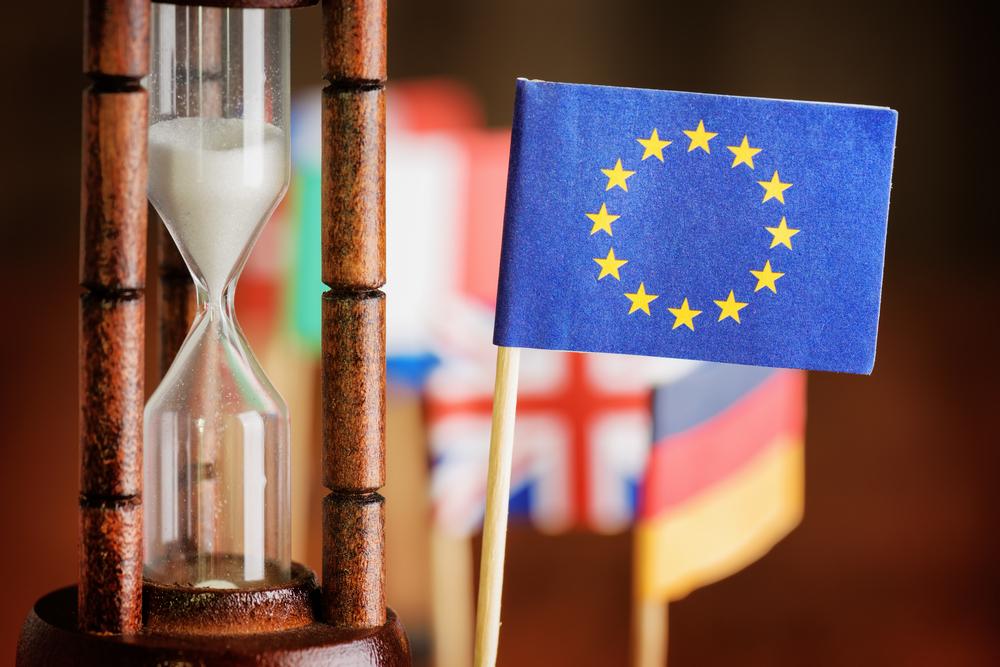
With the threat of a Brexit growing ever closer, stark warnings of the potential impact on the City of London grow louder. Bank of England governor Mark Carney has warned of major banks leaving the city in their droves, fleeing towards the safety of EU countries. But how likely is that to happen? It appears to be a generally universal opinion that a Brexit would have a negative effect on the City, at least in the short term. London’s financial centre is the world’s largest, contributing 9.6 percent to the UK’s GDP in 2011. It is home to 250 foreign banks, most of which are based here because of the access London gives to the EU market. Without that, banks could be forced to relocate abroad. “A significant amount of financial trade currently booked in London would leave if the UK left the EU,” says Alex Wilmot-Sitwell, head of the European arm of Bank of America Merrill Lynch. “It wouldn’t happen overnight but, steadily, it would fragment throughout the EU.” Of course, it largely depends on the agreement the UK reaches with the EU as to whether the City would retain unfettered access to the single market. However, without it, Carney has warned of the consequences: “Fundamentally in its broadest terms, the question is what degree of mutual recognition would be accorded to the UK… and whether or not a mutual recognition framework could be negotiated that would as much as possible replicate the current passporting regime,” Carney said. HSBC warned in February of the possibility of moving a large part of their investment banking arm to Paris should a Brexit happen: “If the UK leaves the EU it could have a significant impact on our non-ring-fenced bank – our trading room, corporate banking and investment banking – although it would not have an impact on our holding company domicile,” he said. “In that situation a number of jobs would leave the UK.” However, some are sceptical as to whether the impact would really be so great. After all, London was a global financial centre long before Britain joined the EU in 1973, and has remained so despite not joining the single currency. It boasts an impressive skill set, the world’s most universal language, and a time zone that allows for same-day working with both Japan and the US – even without access to the EU, London is a beneficial city to base business. In reality, it is not easy to simply move your operations abroad – it would be timely and costly. According to lobby group TheCityUK the 250 foreign banks based in the UK employ almost 160,000 people; moving this number abroad, or recruiting again, would be no easy task. Arguably, the City is the greatest financial centre in Europe with one of the most welcoming tax and regulatory environments. Any post-Brexit negotiations are likely to saw in favour of the UK; as we import £68 billion more goods from Europe each year than we sell there, we are in a strong bargaining position. In the event that the public vote ‘yes’ to leaving the European Union on the 23rd June, in the short term the effects are likely to be negative. The Sterling may well drop against many other currencies, largely on the panic created by the uncertainty of the future. But after that, it could go either way – in reality, no one can be sure. With a lack of any precedent to follow, we can only hope for smooth post-vote negotiations.
Miranda Wadham on 28/04/2016