USA
It may come as a surprise that the world’s biggest power is on the list, given its President’s strong stance against tax avoidance. However, its federal system allows states to make their own laws on certain subjects – and one of these is financial regulation.
Delaware, just a stone’s throw from the White House on the East Coast of America, has 945,000 firms registered within it – almost one for each resident. It is one of four states, which also include Nevada, Arizona and Wyoming, that house “ghost companies” – there to take advantage of their weak financial laws. Transparency International, an anti-corruption campaigning movement, has recently described Delaware as a “transnational crime haven”.
Jersey
Jersey, a small island of the coast of the UK, prints its own banknotes and makes its own tax laws – allowing it to have a certain amount of secrecy and discretion that has been widely taken advantage of by those looking to avoid tax. It is estimated that Jersey houses an estimated 5 billion dollars of wealth per square mile.
British overseas territories
President Obama recently pointed out that Ugland House, a business building in the Cayman Islands, is registered as holding 12,000 companies. He eloquently made the added, “that’s either the biggest building or the biggest tax scam on record.” According ot the Tax Justice Network, the Cayman Islands have more registered companies than people living there, with around $2 trillion in banking assets.
The Cayman Islands are self-governing, but are a British Overseas Territory – alongside another key haven, the British Virgin Islands, which features strongly in the Panama Papers. These islands, with their link to the UK, have been the first port of call for many British individuals or corporations looking to avoid tax – those registered there pay no income tax, capital gains tax, company tax, or inheritance tax. Tight security laws also protect companies from being forced to reveal details of the finances based there.
Switzerland
Another oldie but a goodie – Swiss bank accounts have been a favoured tax avoidance tactic for years. Even Hitler knew this trick – it was only as recently as the 1990s that bankers released gold stored by the Nazi government during the Second World War.
Since they’re not in the EU, their lax laws are even harder to regulate. Undoubtedly, Switzerland is at the top of this list – innumerable wealthy people and companies have money hidden here.
Hong Kong
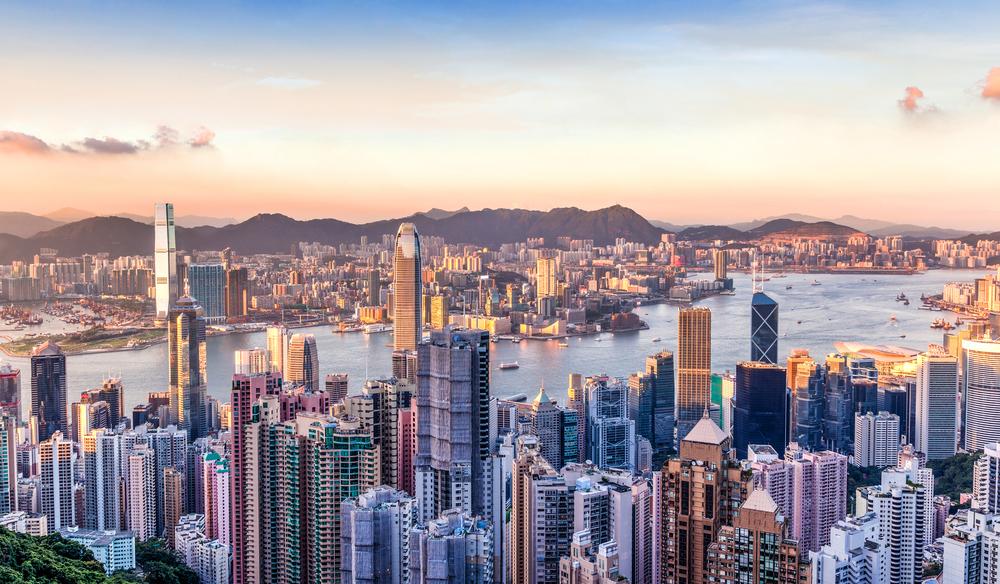
Another ex-British colony, Hong Kong’s laissez-faire approach to the economy makes it an ideal tax haven. An ‘ask no questions, tell no lies’ approach is employed here, and it is favoured by wealthy individuals and companies from China.
In the Tax Justice Network’s report, Hong Kong obtained a secrecy score of 71 – placing it at the higher end of the secrecy scale, roughly on a par with Panama, and even higher than all of the major British-linked secrecy jurisdictions. Its offshore services including tax exemptions, transfer pricing facilities, escape routes from Chinese exchange controls, and various forms of financial secrecy including the use of opaque companies and trusts that can assist tax evasion and other crimes.
Luxury retailer LVMH saw an unexpected rise in revenue for the first quarter this year, up 4 percent on last year, with global sales hitting €8.2 billion for the last quarter.
Based in Paris, the company saw a 50 percent decline in sales at some of their stores in the wake of the terrorist attacks in the French capital in November. However, the company stated that, “Europe remains well oriented – except for France”.
Perfume sales were up 9 percent, boosted by Christian Dior, and the figures were driven by a strong US market.
LVMH owns more than 60 luxury brands, including Bulgari and Tag Heuer.
ASOS profit soars 18 percent, on track for full year
ASOS shares are up over 5 percent this morning after half-year profit soared 18 percent.
Growing competition has caused the market leader’s shares to drop over the past few months, but it most recent results, released today, have showed positivity. The company disclosed a pretax profit of £21.2 million in the six months to February 29, with international sales up 24 percent.
Chief Executive Nick Beighton commented: “I’m pleased to confirm that we are on track to achieve our previously stated sales and margin guidance for the full year.”
ASOS (LON:ASC) are currently trading up 4.70 percent at 3561 (0833GMT).
Tesco sells stake in Lazada to Alibaba
Struggling supermarket giant Tesco has started selling off its overseas assets, in an attempt to re-fuel the struggling British chain.
Tesco announced today that it had sold 8.6 percent of its stake in Lazarda to Chinese retail giant Alibaba for $129 million, retaining just an 8.3 percent holding in the company.
This move comes just 8 months after Tesco sold its South Korean business Homeplus, in an attempt to focus further on rejuvenating Tesco in the UK and competing in an increasingly tough market.
Tesco shares have fallen 0.67 percent on the news.
German Finance Minister Wolfgang Schäuble has indicated that Berlin is losing patience with the ECB’s approach to the economic slowdown, calling for banks to move away from loose monetary policy and increase rate hikes.
Schäuble, speaking at an event organised by a German economic think tank, said that, “there is a growing understanding that excessive liquidity has become more a cause than a solution to the problem.”
“I just said to [US Treasury secretary] Jack Lew that you should encourage the Federal Reserve and we should encourage the European Central Bank and the Bank of England in a concerted action, to carefully but slowly exit.”
The ECB has increased stimulus and lowered rates in the face of increasing economic uncertainty over the past few months, seeking to support the European economy. It has increased its €1.5 trillion stimulus twice since December, and even rolled out a series of rate cuts and cheap loans for banks in March. Such a high-profile figure in finance speaking out against these measures will certainly call ECB President Mario Draghi’s approach into question.
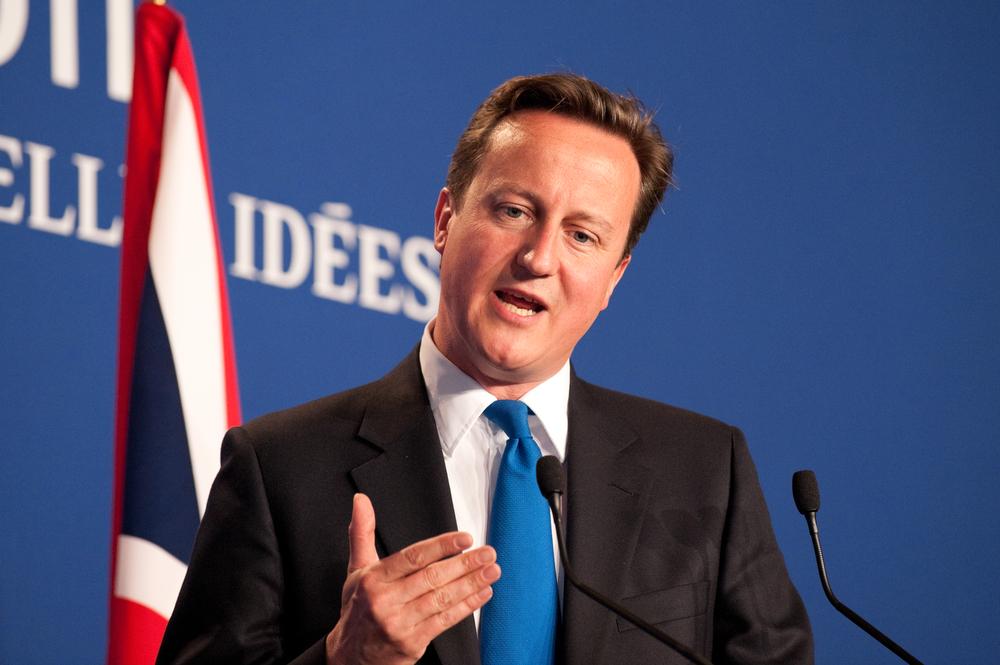
British Prime Minister David Cameron is expected to announce that new legislation making companies criminally liable if employees aid tax evasion, originally planned for 2020, will be introduced this year.
The statement will be made in the House of Commons later today, as Cameron tries to claw back credibility after the news that he profited from an off-shore fund set up by his father.
“This government has done more than any other to take action against corruption in all its forms, but we will go further,” Cameron will say, according to advance excerpts of his statement circulated by his Downing Street office.
“That is why we will legislate this year to hold companies who fail to stop their employees facilitating tax evasion criminally liable.”
Cameron admitted to selling his shares in an off-shore fund for a £19,000 just before taking office in 2010. The revelations ironically come just before he is due to host a global anti-corruption summit in London next month.
Tata Steel puts UK plants up for sale
Tata, one of the world’s biggest steelmakers, has begun the process of selling its UK plants and invited bidders to make offers.
Tata Steel announced March 30 that it would be putting its loss-making British assets up for sale, after a potent cocktail of oversupply, high costs, weak domestic demand and a volatile currency caused the plants to lose over £1 million per day.
15,000 workers risk losing their jobs if a buyer isn’t found and so far, the only company to have publicly expressed an interest is Liberty Steel, owned by Sanjeev Gupta. Gupta said in an interview with the Sunday Telegraph that he felt there was “a very clear opportunity to turn things around, make money and create a sustainable business”, but also underlined the fact that he was “not married to it” as the deal was “too big to get wrong.”
Daily Mail in possible bid for Yahoo
The owner of Daily Mail is said to be interested in making a takeover bid for struggling internet company Yahoo, according to the Wall Street Journal.
The Daily Mail and General Trust (DMGT) have been discussing an offer with private equity firms, after Yahoo’s shareholders added pressure to the company to turn itself around in a letter to the board last month.
A spokesman for Daily Mail said: “Given the success of DailyMail.com and Elite Daily we have been in discussions with a number of parties who are potential bidders.
“Discussions are at a very early stage and there is no certainty that any transaction will take place.”
DMGT has risen 1 percent on the news.
UK economy flagging in 2016, say BCC
The UK economy dipped in the first quarter of 2016, according to The British Chambers of Commerce’s (BCC) Quarterly Economic Survey.
The report highlighted a sharp decline in industrial output and a drop in consumer confidence, with most of the key gauges remaining stagnant or falling.
The BCC’s acting director general, Adam Marshall, said: “From sales and orders to confidence and investment intentions, many of the business indicators we track are at a low ebb.” The BCC cited “mounting global and domestic uncertainties” as reasons for the disappointing survey.
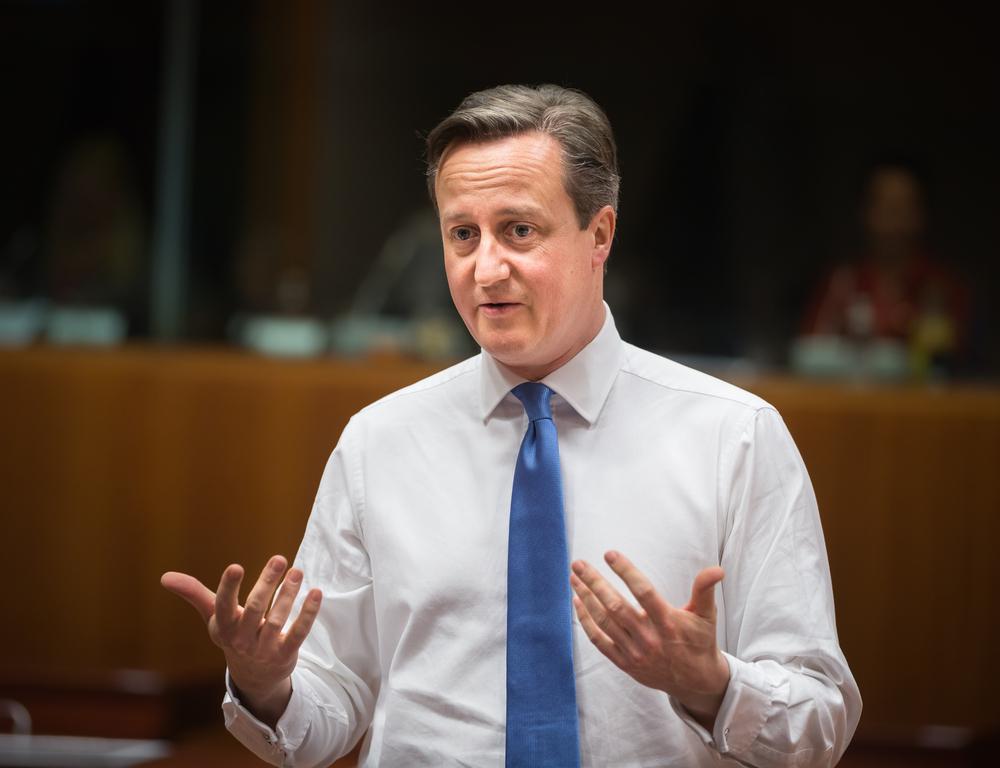
David Cameron has admitted to profiting from shares he held in his father’s offshore trust, which were sold the year he became Prime Minister.
Blairmore Holdings, set up by his late father, was just one of the companies whose details were leaked in the Panama Papers released earlier this week. The Prime Minister has been hesitant to answer questions on the topic since the revelations went to press, but confirmed a direct link to the fund in an interview with Robert Peston.
He admitted to holding the shares with his wife Samantha from 1997 until their sale in 2010 – for a profit of £19,000 – because he didn’t want to anyone to say he had “agendas or vested interests.”
In the interview, he continued: “It has been a difficult few days, reading criticisms of my father and his business practices – my dad, a man I love and admire and miss every day”.
Cameron also insisted the company was not set up to avoid paying taxes.
“It wasn’t. It was set up after exchange controls went, so that people who wanted to invest in dollar denominated shares and companies could do so, and there are many other, thousands of other unit trusts set up in this way,” he said.
David Cameron is just one of many public figures to have been caught up in the Panama Papers scandal, including Iceland’s Prime Minister and the Argentinian President.
Value retailer Bonmarche sees shares plunge
Shares in clothing retailer fell over 15 percent this morning, after its CEO Beth Butterwick confirmed that trading conditions had been “challenging” since Christmas.
Bonmarche saw like-for-like sales rise by 0.4 percent in the 13 weeks to March 25th, up just 0.7 percent on the year.
Butterwick said in a statement this morning: “The continued colder weather has been unhelpful in kick-starting real demand for spring products. Overall, consumer confidence does not appear buoyant.”
Bonmarche (LON:BON) is currently trading down 9.57 percent at 170.00 (0924GMT).
Oil up on Fed comments
Brent crude oil is up 2 percent this morning at $40.22 a barrel, perhaps helped by upbeat comments from Fed chair Janet Yellen. She confirmed that the world’s largest economy was on a solid course, and on track to justify more interest rate hikes.
Commodities shares have also risen this morning, led by the mining sector; Anglo American (LON:AAL), Glencore (LON:GLEN) and BHP Billiton (LON:BLT) were all up around 3 percent.
UK productivity falls for last quarter
British productivity fell by 1.2 percent in the last quarter, according to official figures, adding to doubts about the near-future of the UK economy.
Measured by output per hour, labour productivity saw the biggest fall since the 2008 financial crisis – and 14 percent where it should be, according to analysts.
Shares in regional airline Flybe have fallen over 10 percent this morning after the release of a trading update.
The company saw load factor fall 2 percent on last year to 68 percent, but passenger volumes maintained at 1.8 million. The company temporarily reduced seat capacity by 2.4 percent in response to weaker demand after the Paris attacks in November, as well as taking ownership of three of their Q400 aircraft – two strategies designed to have long term positive effects.
Saad Hammad, Chief Executive, said in a statement: “This last year has seen enormous progress at Flybe. We completed the resolution of the key legacy issues while significantly improving our service and customer offering. We are carrying more passengers across a growing route network and doing so at a lower unit cost.”
Flybe (LON:FLYB) is currently trading down 10.16 percent at 57.50 (1034GMT).
Samsung hit profit high for last quarter
Samsung, the world’s largest smartphone producer, is set to see operating profit soar after the success of its Galaxy S7 model.
The company is expected to announce that its operating profit has reached 6.6 trillion Korean won for the January – March period, up from 6 trillion won in the same period last year.
Competition from cheaper Chinese rivals such as Xiaomi and Huawei have put premium retailers such as Samsung and Apple under pressure of late, but these figures are a sign that Samsung are fighting back.
Marks and Spencer see further decline for clothing arm
Marks & Spencer have released their first trading statement with their new CEO Steve Rowe at the helm, showing that he has his work cut out to turn the struggling retailer around.
Clothing sales fell again in the fourth quarter, adding to the past five years of almost constant falling figures. Sales were down 1.9 percent for clothing and home – however, saw an increase of 8.2 percent from products bought online.
Rowe commented: “Turning around our Clothing and Home business by improving our customer offer is our number one priority.”
“Although the sales decline in Clothing and Home was lower than last quarter, our performance remains unsatisfactory and there is still more we need to do.”
Sales from its food division remained strong, growing market share to 4.3 percent and continuing to outperform the market.
House prices rising fast, says Halifax
British house prices rose at their fastest pace for seven months in March, according to mortgage lender Halifax.
Price growth on an annual basis has been hauled back into double figures for the first time since mid-2014, with house prices rising 2.6 percent in March after a 1.5 percent drop in February.
Today’s start of the 2016/17 tax year sees the Government’s introduction of the Innovative Finance ISA, a new tax wrapper which sits alongside the traditional Cash ISA and Stocks & Shares ISA and which will allow individuals lending money through the Peer-to-Peer (P2P) sector to receive loan interest tax free.
[youtube http://www.youtube.com/watch?v=pYVu4TG7TWQ&w=560&h=315]
Source: www.innovativefinanceisa.org.uk
The P2P lending sector has matched thousands of individual borrowers with individual lenders over the past decade and, in recent years, the sector has enjoyed unprecedented growth in uptake – over £5 billion in P2P loans have originated in the UK so far. Many individual lenders have enjoyed a level of return not seen since the days of the 6 percent Cash ISA – by now a distant memory for many cash-rich, yield-poor investors. Meanwhile, borrowers continue to sing the praises of the various P2P platforms, whose streamlined loan application processes make applying for a loan quick and stress free. Yet the key questions are these: will the introduction of the new Innovative Finance ISA shift Peer-to-Peer lending away from being an interesting, but largely obscure, form of ‘alternative’ investment, and into the mainstream? And, more pressingly for potential lenders, are the returns worth the risk?
First things first – the Financial Conduct Authority (FCA) has made it clear that prospective lenders must be made aware that Peer-to-Peer lending has very different risk characteristics to straightforward deposit-style saving, such as bank or Cash ISA saving.
One of the major differences in risk that any would-be Peer-to-Peer lender must consider is that of loan liquidity, and its impact on how readily cash can be accessed. Whilst it is the case that, as with many bank savings accounts, the platforms generally offer a choice between short and long term options, having ‘instant access’ to funds deployed through a P2P platform is almost entirely reliant on there being an established secondary market – within the platform itself – in which willing sellers can be matched with willing buyers. Further, assuming a willing seller and a willing buyer can be successfully ‘paired’ within the platform, the process of reaching a satisfactory buy/sell price means that – in reality – ‘instant access’ could very well mean having to sell the loan on at a discount to its original face value.
Another important difference that would-be lenders must consider is that – unlike most Cash ISA and other savings products – the Innovative Finance ISA (and Peer-to-Peer lending itself) are not covered by the Financial Services Compensation Scheme (FSCS).
The FSCS is the UK’s statebacked statutory compensation scheme for the banking sector, protecting savers who use FCA-authorised bank and building society savings accounts by as much as £75,000 in the event of that bank or building society collapsing. In the event of a Peer-to-Peer loan (or loans) becoming unpaid for any reason, the individual lenders would have no basis on which to seek compensation from the FSCS.
As a result and in an effort to provide assurance to both current and would-be lenders, a number of platforms have introduced their own internal ‘reserve’ funds, which have been designed to protect lenders in the event of either individual borrower default or – in some cases – total platform failure. A platform might for example contribute a portion of its fee and margin income to an internal reserve fund, the idea being that – where a borrower defaults on their loan repayment obligation – the platform then has the ability to make an internal claim against the fund for any remaining principal and interest due.
It is very important that lenders understand however that these reserve funds are not statutory. Where they are in place, they are operated on a purely discretional basis – meaning that there are very likely no guarantees that any individual claim would be approved, or even that sufficient cash will have been reserved to make good any shortfall that the lender may be experiencing. There is additionally an ongoing risk to the lender that any given platform may, at any time, choose to change its reserve fund policy – this may sound unlikely, but it could happen for all manner of reasons.
Borrower credit risk also represents a key consideration and one that many ISA savers may not have previously had reason to consider. Whether the platform operates an individual (manual) loan bidding process or whether it uses automated bidding to pool lenders’ capital across a range of riskbanded loans, each underlying loan carries its own risk profile and if Peer-to-Peer lending platforms are to provide consistently strong returns over the long term they must ensure that they deploy adequate credit underwriting processes,as Lord Turner’s comments highlighted back in February:
“You cannot lend money to small and mediumsized enterprises (SMEs) without someone doing good credit underwriting. This idea that you can automate that on to a platform, it has a role to play, but it will end up producing big losses.”
Successful credit risk underwriting for SME loan applications is far from straightforward, and relies very heavily on the successful deployment of comprehensive legal and financial due diligence processes, which are expensive and which require specialist skills and experience.
Once this risk underwriting process has been completed and the loan application approved, most platforms then grade applicant borrowers according to their own internal risk benchmarks or ‘bandings’. Unfortunately, it can be very difficult, if not impossible, to compare credit risk bandings across multiple platforms on a truly likeforlike basis. What makes comparing credit risk across multiple platforms particularly difficult for lenders is that, in effect, Platform A’s risk bandings do not necessarily correlate to those of Platform B. Or do they? It is very difficult to say.
All things considered however, the sector has for the most part delivered returns which have been broadly in line with both the platforms’ and lenders’ expectations – though not without exception. Prospective lenders and those considering opening an Innovative Finance ISA should bear in mind that the UK has not yet seen a full economic cycle of boom-and-bust during the relatively short timeframe in which the Peer-to-Peer lending sector has operated at its current levels. Ultimately, time will tell how this form of investing performs during a period of economic difficulty but – as with any form of investing – it is important to understand that regardless of the prevailing economic climate, past returns are no guarantee of future performance.
For more information, visit www.innovativefinanceisa.org.uk

 Jersey
, a small island of the coast of the UK, prints its own banknotes and makes its own tax laws – allowing it to have a certain amount of secrecy and discretion that has been widely taken advantage of by those looking to avoid tax. It is estimated that Jersey houses an estimated 5 billion dollars of wealth per square mile.
Jersey
Jersey, a small island of the coast of the UK, prints its own banknotes and makes its own tax laws – allowing it to have a certain amount of secrecy and discretion that has been widely taken advantage of by those looking to avoid tax. It is estimated that Jersey houses an estimated 5 billion dollars of wealth per square mile.
 British overseas territories
President Obama recently pointed out that Ugland House, a business building in the Cayman Islands, is registered as holding 12,000 companies. He eloquently made the added, “that’s either the biggest building or the biggest tax scam on record.” According ot the Tax Justice Network, the Cayman Islands have more registered companies than people living there, with around $2 trillion in banking assets.
The Cayman Islands are self-governing, but are a British Overseas Territory – alongside another key haven, the British Virgin Islands, which features strongly in the Panama Papers. These islands, with their link to the UK, have been the first port of call for many British individuals or corporations looking to avoid tax – those registered there pay no income tax, capital gains tax, company tax, or inheritance tax. Tight security laws also protect companies from being forced to reveal details of the finances based there.
British overseas territories
President Obama recently pointed out that Ugland House, a business building in the Cayman Islands, is registered as holding 12,000 companies. He eloquently made the added, “that’s either the biggest building or the biggest tax scam on record.” According ot the Tax Justice Network, the Cayman Islands have more registered companies than people living there, with around $2 trillion in banking assets.
The Cayman Islands are self-governing, but are a British Overseas Territory – alongside another key haven, the British Virgin Islands, which features strongly in the Panama Papers. These islands, with their link to the UK, have been the first port of call for many British individuals or corporations looking to avoid tax – those registered there pay no income tax, capital gains tax, company tax, or inheritance tax. Tight security laws also protect companies from being forced to reveal details of the finances based there.
 Switzerland
Another oldie but a goodie – Swiss bank accounts have been a favoured tax avoidance tactic for years. Even Hitler knew this trick – it was only as recently as the 1990s that bankers released gold stored by the Nazi government during the Second World War.
Since they’re not in the EU, their lax laws are even harder to regulate. Undoubtedly, Switzerland is at the top of this list – innumerable wealthy people and companies have money hidden here.
Switzerland
Another oldie but a goodie – Swiss bank accounts have been a favoured tax avoidance tactic for years. Even Hitler knew this trick – it was only as recently as the 1990s that bankers released gold stored by the Nazi government during the Second World War.
Since they’re not in the EU, their lax laws are even harder to regulate. Undoubtedly, Switzerland is at the top of this list – innumerable wealthy people and companies have money hidden here.
 Hong Kong
Another ex-British colony, Hong Kong’s laissez-faire approach to the economy makes it an ideal tax haven. An ‘ask no questions, tell no lies’ approach is employed here, and it is favoured by wealthy individuals and companies from China.
In the Tax Justice Network’s report, Hong Kong obtained a secrecy score of 71 – placing it at the higher end of the secrecy scale, roughly on a par with Panama, and even higher than all of the major British-linked secrecy jurisdictions. Its offshore services including tax exemptions, transfer pricing facilities, escape routes from Chinese exchange controls, and various forms of financial secrecy including the use of opaque companies and trusts that can assist tax evasion and other crimes.
Hong Kong
Another ex-British colony, Hong Kong’s laissez-faire approach to the economy makes it an ideal tax haven. An ‘ask no questions, tell no lies’ approach is employed here, and it is favoured by wealthy individuals and companies from China.
In the Tax Justice Network’s report, Hong Kong obtained a secrecy score of 71 – placing it at the higher end of the secrecy scale, roughly on a par with Panama, and even higher than all of the major British-linked secrecy jurisdictions. Its offshore services including tax exemptions, transfer pricing facilities, escape routes from Chinese exchange controls, and various forms of financial secrecy including the use of opaque companies and trusts that can assist tax evasion and other crimes.