
Marston’s break Christmas sales fourth year running

Pub and brewing company Marston’s who owns Pitcher & Piano topped records, earning £3m on Christmas day.
The FTSE 250-listed company reported 3% like-for-like sales growth at its 400 premium managed pubs in the 16 weeks to 23 January outperformed competitor JD Wetherspoon, who blamed waning profits on increased labour costs.
Ralph Findlay, the chief executive has commented;
“This performance demonstrates the appeal of our pubs and the value for money we offer, underpinned by excellent service. In brewing, our principal brands and new beers contributed to an excellent first quarter.”
In light of Marston’s growth, analysts at Numis have upgraded their recommendation of the company to ‘buy’, saying:
“Marston’s is generating strong organic growth… the company is trading ahead of expectations,”
Shares of the company were up 5.1 percent at 158.4 pence by 0818 GMT on the London Stock Exchange.
Who are the winners and losers behind the oil crisis?

Over the past year, global oil prices have seen a dramatic fall. This oil collapse, with prices today reaching below $30 per barrel, has the potential to have profound geopolitical consequences.
So who are the possible winners and losers of the falling oil prices?
Russia
As one of the world’s largest producers, Russia will undoubtedly be affected by the oil crises. The World Bank has already warned that Russia’s economy could shrink by at least 0.7% if the oil prices do no increase. This is following data confirming that Russia’s economy loses $2bn of revenues for every dollar fall in the oil price. Despite warnings, Russia has confirmed that it will not cut its production to level out prices with Alexander Novak the Energy Minister saying; “If we cut, the importer countries will increase their production and this will mean a loss of our niche market,”.
Saudi Arabia
Similarly to Russia, the world’s largest oil exporter could also support global prices by cutting back on production but shows no sign of doing this. With reserve funds of approx $700bn, Saudi can withstand these low prices for some time however will need oil prices to be up at around $85 for the long term.
Nigeria
Africa’s top oil producer and with crude sales funding 75% of the country’s budget, Nigeria will ultimately face huge consequences to its economy. Despite warnings, the falling oil price is not preventing the Nigerian government’s new big spending plans, which analysts have warned is a bad idea in the current climate. Chuba Ezekwesili, a research analyst at Nigerian Economic Summit Group has said: “They’re sort of delaying the inevitable. I feel like eventually it has to give way, and by the time it does I feel the economy is going to be hurt because a lot of businesses can’t work under those conditions.”
United States
The picture in the US is looking slightly more complex. Whilst the government has noticed consumers benefiting from the lower prices in petrol, which is fueling consumer spending, the collapse in oil price is predicted to cast a shadow of the US energy industry. Due to cheap oil prices, fracking has become less attractive to investors leading to losses of tens of thousands of jobs.
Dixons Carphone increases profit forecast following strong Christmas
Dixons Carphone, which trades as Currys, PC World and Carphone Warehouse, has reported strong Christmas sales following increased sales in mobile phones.
In the ten weeks to January 9, sales at stores open over a year rose ahead of analysts’ average forecast by 2%, rising a total of 5%
The firm expected a 2015-16 pretax profit of 440-450 million pounds versus analysts’ previous average forecast of 440 million pounds and the 381 million pounds made in 2014-15.
Shares for Dixons Carphone closed Monday at 467.1 pence, valuing the business at 5.4 billion pounds.
Sebastian James, the chief executive, has said;
“We think it was a good Christmas trading period. We are now also taking the opportunity to put our estate into its long-term shape by rolling out the three-in-one format across the UK and Ireland. Our experience has taught us that the net effect on both sales and colleague levels is likely to be neutral or better.”
EasyJet suffers following terror attacks
The British low-cost airline easyJet (EZJ.L) reported a 3.7 percent fall in revenue per seat on a constant currency basis in the quarter ending December 31.
According to easyJet, the demand for travel slowed following terror attacks in Paris and Egypt in 2015.
James Hollins, an analyst at Nomura, does not believe these impacts will have longstanding effect;
“While the French and Egyptian issues have had a more damaging impact on fares than we had expected, these are relatively exceptional and short-term issues, while the more controllable and longer-term issue of cost efficiencies is better than we had envisaged,”
In light of the security fears, easyJet plans to cut costs for customers further. These attempts have been helped by the drop in oil prices, which are currently at a twelve year low.
EasyJet CEO, Carolyn McCall, has said in a statement;
“This year we will consolidate a low-fare strategy with a relentless focus on cost reduction which is already delivering results. This will ensure that EasyJet continues to win and continues to grow revenue, profit and dividends.”
The drop in fuel costs and strong demand on UK beach routes are predicted to save £75m-£85m in the first half from the same period last year meaning the airline is likely to reach market expectations of £738m profit for the full year.
EasyJet fell 1.7 percent to 1,604 pence as of 9:14 a.m. in London trading. The stock has dropped 7.8 percent this year.
26/01/2016
Analysts predict a gloomy start to 2016 for Apple

Despite successes seen in 2015, the start of 2016 has given Apple reasons to worry. For the first time since October 2014, Apple’s stock value dropped to below $100.
Apple Inc (AAPL.O) is expected to report iPhone sales over the Christmas period to increased slightly more than 1%, it’s slowest growth to date and much less than the double figures expected from investors.
Despite the sales of smartphones making up 63% of Apple’s entire revenue, iPhone sales are expected to drop in the March quarter for the first time since the iPhone launched in 2007.
Reasons for this possible decline are explored by Apple investor Daniel Ives, from FBR Capital Markets;
“Apple has become a victim of their own success as the blockbuster iPhone 6 product cycle was hard to replicate as many customers are either buying an older, cheaper iPhone 6 or waiting for the iPhone 7,”
To counter this slowing in sales, Apple has recognized the importance of its presence in China. Apple now makes more money in China than it does throughout Europe, and it is well on course to overtake the United States.
Almost all of Apple’s gains last year were from Chinese expansion. However, instability in the Chinese economy has rocked the global markets and if China continues to under perform, it may be hard for Apple to continue long-term growth.
Market forecasts are for Apple to have sold 76m iPhones in the quarter, just a slight increase of the 74.5m sold in the same period a year ago. Some analysts are even predicting a decline.
Sales are expected to pick up in the second half of the year, with the release of the iPhone 7.
Apple shares closed down 1.98 percent at $99.41 on Monday. They have fallen nearly 10 percent since the start of October, steeper than a 2.2 percent decline in the S&P 500 index.SPX.
26/01/2016
Shares in Carpetright tumble 10 percent post Christmas
Shares in interior retailer Carpetright (LON:CPR) have fallen over 10 percent after a trading update, which saw sales decline by 1.3 percent over the Christmas period.
Whilst sales in the four weeks to 23 January 2016 were up 6.0% on a like-for-like basis, total sales for the twelve week period declined by 1.3 percent.
In local currency terms, like-for-like sales in the rest of Europe, which includes the Netherlands, Belgium and the Republic of Ireland increased by 4.2 percent on year; however, after the impact of currency movements, the final figures showed a 2.7 percent decrease in total sales.
Wilf Walsh, Carpetright’s Chief Executive, said:
“In the UK, we delivered our ninth consecutive quarter of like-for-like sales growth. While we saw some softening of like-for-likes in the pre-Christmas period, reflecting lower footfall, customer numbers recovered in the important January sale period.
“Our trading performance over the last four weeks, with like-for-like growth of 6.0% against exceptionally strong prior year comparatives, gives us confidence that the enhanced interest free credit offer and strong promotions launched on Boxing Day are hitting the spot with our customers. Like-for-like sales growth in our Rest of Europe business was better than expected as consumer spending continued to recover, particularly in the Netherlands and the Republic of Ireland.”
Carpetright are currently trading down 10.67 percent at 402 pence per share. The company have a 52 week range of between 395 and 629.
26/01/2016
FTSE 100 tumbles as oil falls below $30

The stock markets have sharply fallen in early trading by more than 1.5% as crude oil continues to fall more than a fifth this year over increasing supply from Iran and concerns over slowing demand.
Currently, Brent crude is at $29.61 and the West Texas Intermediate is down to $29.51.
As a result, HSBC and Goldman Sachs have slashed rating of oil majors. HSBC has said that the signs of distress across the sector are rising and that it expects further bankruptcies, write-offs and restructurings.
Chief economist as asset manager GAM, Larry Hatheway, has commented;
“Falling oil prices have historically been positive for the world economy, given the redistribution of purchasing power from producers to consumers. This time, however, markets have chosen to focus on the immediately negative effects of lower oil prices without looking ahead to potential positive outcomes,”
Another reason behind tumbling stocks can also be seen in the falling of Chinese markets, with China’s Shanghai Composite index sinking more than 6%
This effect on the markets has left investors looking elsewhere to invest. Gold is looking promising, with the precious metal rallying to its highest levels since November.
26/01/2016
Iran and Europe repair relations in billion dollar deals, after lifting of economic sanctions
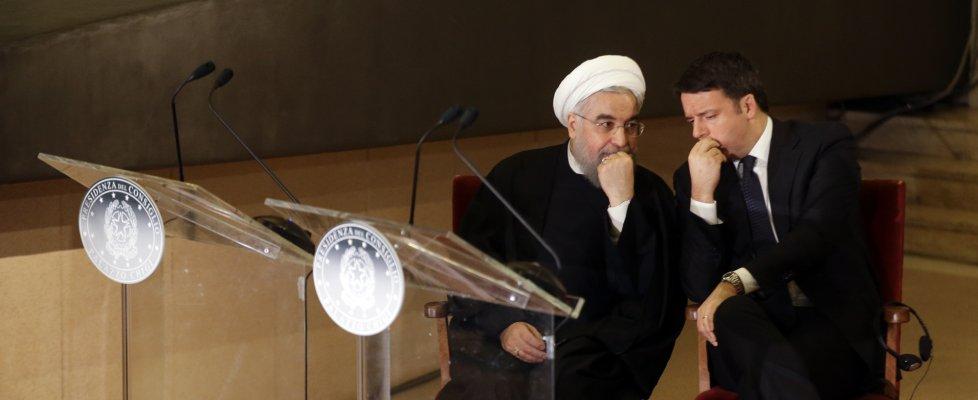
Italy and Iran signed billions of dollars worth of business deals with Iran on Monday, as President Hassan Rouhani makes the first Iranian state visit to Europe in 16 years.
Rouhani is leading a 120-member delegation for five days of meetings in Rome and Paris, designed to strengthen ties with the West after years of economic sanctions, which were lifted last week.
Italian Prime Minister Matteo Renzi said: “This is just the beginning of a journey. There are sectors where we must work closer together.”
Renzi also commented on the challenge from Islamic State, who oppose Iran and the West equally:
“I am sure this visit will be a fundamental part of our ability to overcome together the challenge of fighting terrorism, atrocity and evil that we all have to confront together.”
Rouhani added, speaking through a translator: “We have always been in the front line against terrorism … we have to continue to secure a genuine peace in Afghanistan, Syria, Lebanon, Libya.”
Italian business leaders, including those from energy firm ENI and carmakers Fiat Chrysler, attended a state dinner with the Iranian President on Monday. Among the deals struck were a pipeline contract worth between $4 billion and $5 billion for oil services group Saipem, up to 5.7 billion euros in contracts for Italian steel firm Danieli and up to 4 billion euros of business for infrastructure firm Condotte d’Acqua.
Iran announced plans at the weekend to buy more than 160 European planes, mainly from Airbus, a major step forward for ordinary Iranians, many of whom opposed the deal that led to the lifting of economic sanctions. Since the 1979 revolution, which brought Islamic clerics to power, Iran has struggled to buy planes and spare parts from the West, causing delays for many Iranian passenger flights as ageing planes are repaired.
On Saturday, Iran and China signed 17 agreements on a range of issues from energy to boosting trade to $600bn.
26/01/2016
Bleak day for global shares as China tumbles six percent

After a rally on Monday, Tuesday was another bleak day for Asian stocks, with most indexes falling around 2 percent and further dampening investor confidence worldwide.
Japan’s Nikkei index fell 2.4 percent, while Hong Kong’s Hang Seng Index dropped 2.3 percent. Mainland Chinese shares were the worst hit again, slumping more than six percent to a 14-month low as Beijing struggle to prove that they can control their volatile markets.
As European markets opened earlier today it became clear that the rout has extended globally; the FTSE is down 1.6 percent, the DAX down 1.5 percent and the EURO STOXX 50 down 1.6 percent also.
Investors are increasingly worried about oil prices, which have continued to fall from their rock bottom – Crude has tumbled another 7 percent so far this week, with production still on the increase.
The chairman of Saudi Aramco confirmed on Monday the firm is continuing to invest in oil and gas production capacity, and Iraq have shown no signs of curbing output from their record high.
The massive price fall is putting huge pressure on profitability of energy firms worldwide, which are in turn slashing investment and cutting jobs.
26/01/2016
Is recent data pointing to another global economic downturn?
A slew of concerning economic data has been released today, indicating that all over the world falling oil prices and continued problems in China are having an effect on the global economy.
China
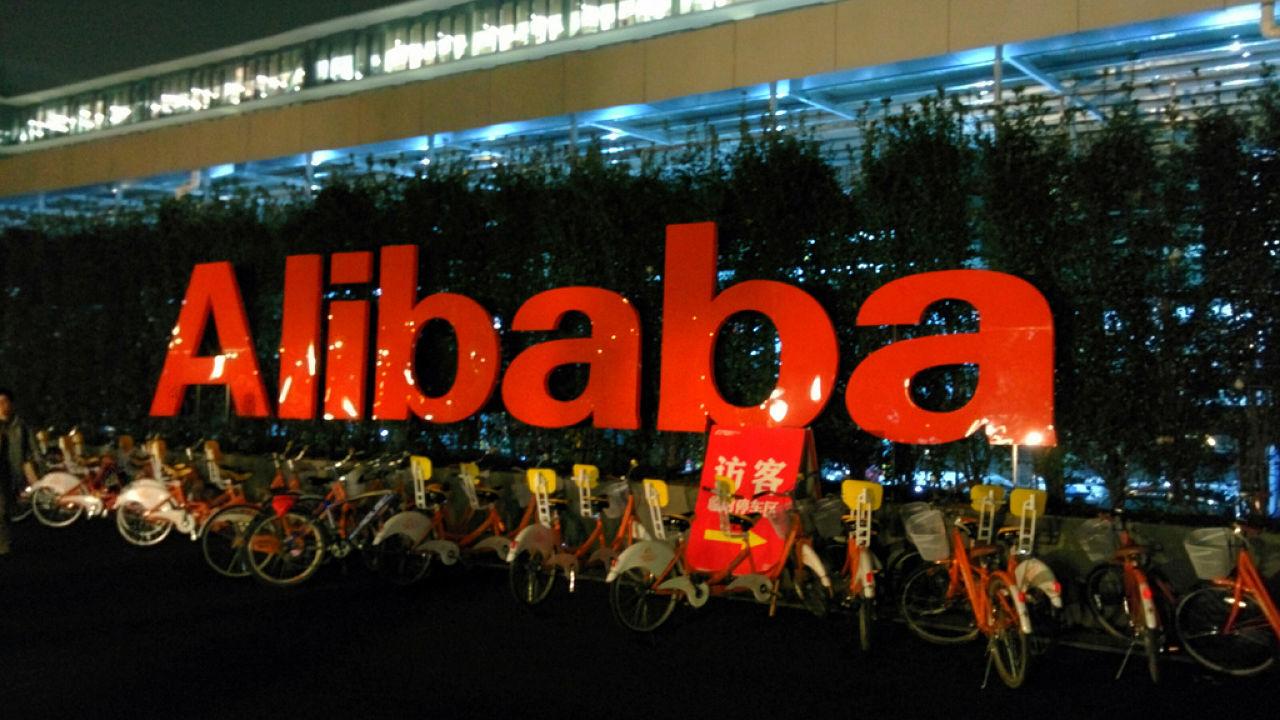
Whilst shares in China have steadied this morning after the tumultuous volatility seen last week, figures have indicated that one of China’s biggest e-commerce companies, Alibaba Group Holding, is expected to post its weakest quarterly revenue growth on record.
Alibaba’s revenue for the quarter ending December is projected to grow at 26.6 percent, according to a Thomson Reuters SmartEstimate survey of 28 analysts, which would be the slowest rate since the company started publishing such data three and a half years ago.
Earlier this month, Alibaba Chief Executive Daniel Zhang announced that the company would continue to target China’s largest cities including Beijing, Shanghai, Shenzhen and Guangzhou, where demand is highest, after previously pointing in the direction of a push into China’s vast countryside.
Russia
Over in Russia, oil’s rock-bottom prices have hit the economy hard, seeing a 3.7 percent contraction in 2015, according to preliminary figures published by the country’s statistics service. Retail sales dropped around 10 percent and capital investment fell by 8.4 percent.
Russia’s economy relies heavily on oil exports, and which the price of oil down 70 percent over the last 15 months Prime Minister Dmitry Medvedev has warned that Russia’s 2016 budget may have to be revised.
Japan
The latest export data from Japan, also released today, suggests that the country may be strongly affected by the slowdown in China: exports fell by 8 percent in December from a year earlier.
However, markets across Asia have risen this morning, mostly trading up around 1 percent and propping up global economies alongside it. This January has seen the worst start to the year in financial history, with European markets continuing to be affected by problems in China and a falling investor sentiment.
25/01/2016