China’s economy grew at its slowest pace for 25 years in the fourth quarter of 2015, indicating that the country is going through major economic difficulties that could impact on the global economy.
Growth fell from 6.9 percent to 6.8 percent in the last quarter of the year, down from 7.3 percent a year earlier. Beijing’s official target for the year was around 7 percent. The figure was released by China’s National Bureau of Statistics, which some suspect may have slightly inflated the figure.
Over the last few weeks China has caused shockwaves throughout the global economy, with two further devaluations of the yuan and subsequent suspensions of trading on their market.
This is the latest in a string of bad economic news from the country; others including weak exports, high debt and slowing factory figures have all ignited concern from investors. Chinese Premier Li Keqiang has said weaker growth would be acceptable as long as enough new jobs were created, however, growth continues to decline further stimulus measures will be introduced.
Reports from the British foreign minister and senior EU officials suggest that a new deal between the EU and the UK could be struck within weeks.
EU Commission President Jean-Claude Juncker said on Friday that he is “quite sure” a deal will be reached at the February summit in Brussels. The deal will renegotiate the relationship between the UK and the EU and trigger an in-out referendum before the end of 2017.
The main issue preventing a deal is David Cameron’s commitment to making it more difficult for migrants to receive benefits, with the aim of restricting them to those that have been in the country for four years. However, opposition countries say that this violates the fundamental principle of free movement of peoples between EU countries. Jonathan Faull, who is leading the negotiations, said that the “the fundamental freedoms are not unconditional,” adding that there was an array of legislation already limiting them.
For the second time in seven months, the Shanghai Composite index entered bear market territory, triggering a mass sell-off across European stock markets. But is the FTSE set to follow suit?
It’s been a rough couple of days in the global financial markets; last week saw the worst start to the year in financial history, with the S&P 500 tumbling 6 percent. A knock-on effect on the FTSE caused significant volatility, combined with disappointing Christmas trading results for a couple of blue chip companies. After a period of steady growth since the 2008 financial crisis, the last six months have seen significant instability, and there is a general air of negativity in the markets.
However big sell-offs, corrections, and even crashes are all normal parts of a long term bull market. In an interview with the Telegraph ,JP Morgan analyst Alex reiterated that, if history is any guide, a bear market will not be hitting the stock market in America – or the UK – any time soon.
“None of the four key factors that have triggered previous bear markets is a cause for concern,” he said. “A recession looks unlikely as America’s economy is ticking along nicely. Similarly, an oil price spike does not look on the cards .
“Rates are going to rise gradually from here, so we won’t see the kind of aggressive or unexpected tightening that has been associated with previous crashes, while in my opinion US shares are at fair value rather than expensive.”
But the fact remains that the FTSE has fallen over 20 percent from its high in April last year, and a growing number of respected investors are pulling out of the stock market. Over the past eight months, the Greek debt crisis has had a significant effect on European markets, highlighting the dangers of a single currency and resulting in more cautious investor sentiment.
Similarly, China caused shockwaves throughout global markets last week with another surprise devaluation of the Chinese Yuan, causing such a large sell-off of Chinese shares that trading was suspended – twice. With further devaluation likely, it is probable that market sentiment will continue to be hit in the months ahead, having a knock-on effect on the FTSE.
Whilst the price of oil usually tends to rocket when economies go downhill, tumbling prices are also having a negative effect. Oil and commodities giants are slashing assets and jobs in an attempt to stay afloat – sending their share prices tumbling, many of which prop up national and international stock markets.
Generally, a bear market is described as period of snowballing negative investor sentiment, causing a rapid sell-off of shares, usually leading to a 20 percent decrease in several major market indexes over two months. Whilst the last few months have undoubtedly been rocky, key markets, including the DOW and the FTSE have only fallen by around 10 percent – not enough to statistically enter a bear market. It seems that for now, at least, the markets are keeping their heads above water. But as the waters become choppier, investor sentiment is becoming increasingly negative – Mark Carney has even shown a lack of confidence in the long-term health of the UK’s economy, neglecting to follow Janet Yellen’s lead and raise interest rates from their record low of 0.5 percent. Undoubtedly, the markets are entering a period of tricky territory unseen for a couple of years – how it will fare remains to be seen.
Russia have announced a curb on exports this year, a move that may prove beneficial to an oil market plagued by oversupply issues.
The oil-pipeline monopoly Transneft said Russian companies are likely to cut crude shipments by 6.4 percent over the course of 2016, a fall of 460,000 barrels a day. These figures are comiled on applications submitted so far by Russian firms Lukoil, Rosneft and Gazprom.
The news will be welcomes by the oil market as, with sanctions on Iran set to be lifted in the coming weeks, oil on the market is set to multiply further. However, with Russia the world’s biggest oil producer, this cutback is enough to eliminate a third of the excess supply.
This decision comes just after Russian ministers announced that the Russian government budget may have to be adjusted downwards if the price of oil continues to fall. Oil exports account for 52 percent of their federal budget revenues. Prime Minister Dmitry Medvedev said at an economic forum on Wednesday:
“If oil prices fall any further, then the budget’s parameters will have to be adjusted. We have to understand this and prepare for the worst-case scenario.”
Top global miner BHP Billiton (LON:BLT) has announced that it will book a $7.2 billion writedown on the value of its U.S. shale assets, after plummeting commodity prices led to a sharp slump in 2015 earnings.
BHP Billiton Chief Executive Officer, Andrew Mackenzie, said:
“Oil and gas markets have been significantly weaker than the industry expected. We responded quickly by dramatically cutting our operating and capital costs, and reducing the number of operated rigs in the Onshore US business from 26 a year ago to five by the end of the current quarter.
“While we have made significant progress, the dramatic fall in prices has led to the disappointing write down announced today. However, we remain confident in the long-term outlook and the quality of our acreage. We are well positioned to respond to a recovery.”
A slump in oil prices by 70 percent over the last year has led to difficulties for all commodities companies. Ratings agencies Moody’s and Standard & Poor’s have both warned that the BHP Billiton’s dividend policy poses a risk to its credit rating.
BHP saw a sharp drop in share price on the news, currently trading down 5.49 percent at 620.90 pence per share (1043GMT).
Britain’s construction output unexpectedly fell in November, according to the latest figures from the Office for National Statistics, another sign that growth in the UK economy may be slowing down.
Construction output fell 0.5 percent – its biggest annual drop since May 2013 – a far cry from the 0.5 percent rise widely expected by analysts.
Output dropped 1.1 percent on an annual basis, with the ONS attributing the unexpected fall to bad weather. Falls in construction output are a bad sign for the economy, to which it contributes 6 percent of GDP.
The ONS confirmed that construction output would need to increase by 2.6 percent month-on-month in December to fourht-quarter fall overall.
The Competition and Markets Authority (CMA) have approved a controversial takeover of EE, the UK’s largest mobile network, by telecoms giant BT.
The deal, valued at around £12.5 billion, has been under consideration by the CMA for six months, after objections were raised by other operators over the reduction of competition in the British market. The takeover was given final clearance on Friday, when the CMA declared that it was unlikely to harm competition since BT was “smaller in mobile” and EE a “minor player” in broadband.
John Wotton of the CMA said: “The evidence does not show that this merger is likely to cause significant harm to competition or the interests of consumers.”
The deal is aiming to be closed on January 29th, creating a giant telecoms firm that will serve over 35 million customers.
BT chief executive Gavin Patterson said: “The combined BT and EE will be a digital champion for the UK, providing high levels of investment and driving innovation in a highly competitive market.”
BT (LON:BT) shares remain more or less the same, trading up 0.07 percent at 467.32.
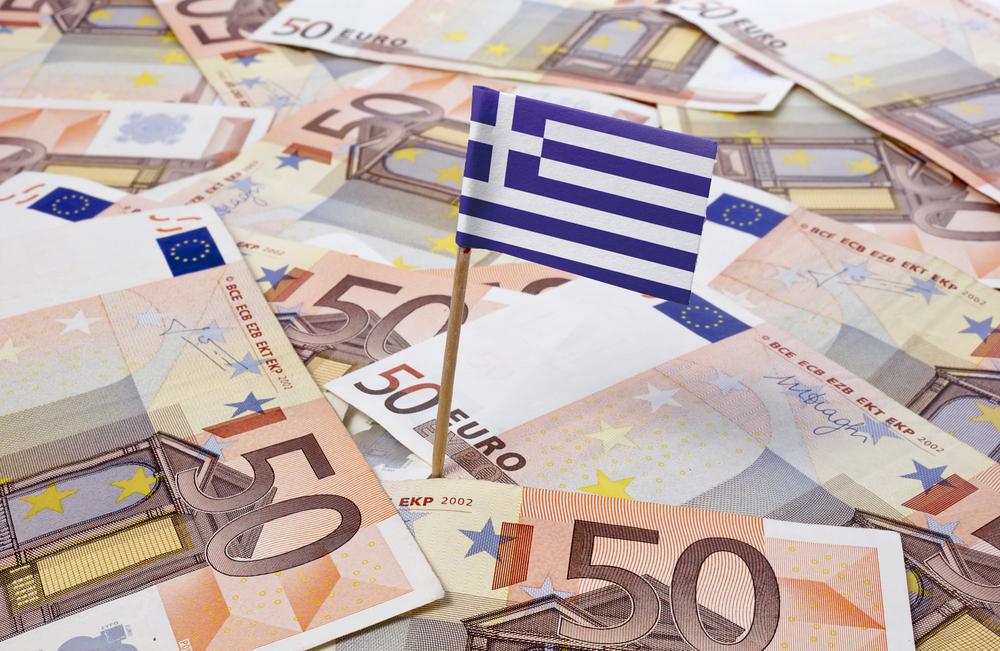
Despite the Greek prime minister Alexis Tsipras saying in 2010 that that the participation of the IMF was not necessary and believing that the programme could be handled by euro zone authorities alone, on Thursday Greece “fully accepted” the proposal for the International Monetary Fund to take a role in the bailout programme.
The Eurogroup chief Jeroen Dijsselbloem said;
“Tsakalotos (Greek Finance Minister) confirmed to me that the Greek government accepts that the IMF needs to be part of the process. It was absolutely clear to him, it was part of the agreement this summer,”
Jijsselbloem has however confirmed that the intervention from the IMF is not straightforward, saying that the IMF will require Greece to push through pension reforms and the euro zone.
The EU’s economic affairs commissioner has warned Athens “not to play games” with the IMF in their role in the three year, 86 billion euro rescue package agreed in July.
The German economy grew by 1.7 percent in 2015, its strongest rate of expansion in four years, according to the latest data from the Federal Statistics Office.
Private consumption expanded by 1.9 percent, the strongest figure since 2000, and public spending increased by 2.8 percent, adding 0.5 points to GDP and in line with the government’s forecast. However, imports continued to expand at a slightly higher rate than imports.
“Germany has continued to benefit from the weaker euro, and combined with an increase in private and public consumption recovery should continue to be strong”, said Dayfdd Davies, partner at Charles Hanover Investments.
Germany is expecting expansion to continue on into 2016, but a record influx of migrants last year pushed state spending higher, and may have an impact on the year ahead.
Entrepreneur David George has had quite the journey: starting in 2013 with a business idea driven by a passion for cycling, one crowdfunding attempt and subsequent business pivot later he has successfully launched the premier cycling insurance product on the market.
His initial business idea was a different project altogether. Grown from his frustration at the lack of places to compare deals on bikes and cycling equipment, especially in an era where comparison sites are so popular, he and his team of six passionate cyclists created BIKMO Search, a one-stop search engine for cycling products.
Upon launching BIKMO Search, David’s first thought was to turn to crowdfunding to support expansion. With crowdfunding growing massively as an industry, choosing a site to launch your campaign on can be difficult. For David, Seedrs was the right choice:
“At the time with Seedrs, if you were successful with your campaign, then you would receive the funds, less their 7% charge, and you would have just one single point of contact for all those investors – which could have been anything from 10 to 1,000. With other platforms, once you raised your funds, those shareholders would then be your responsibility and I didn’t want to have to manage an additional 10, 100 or 1,000 or so shareholders as it would take my time away from our core business.”
The unfortunate downside to the growth of crowdfunding is that, with so many campaigns out there, it’s not as easy as it once was to hit the funding target. For David, only 60 percent of the money was raised from investors; meaning he couldn’t receive any of the funding. In hindsight, he might have ran his campaign differently:
“When I first chose to run a crowd-funding campaign, it was done hastily as I needed to raise funds, and thought the exposure of a crowd funding campaign would help boost our business.
“Retrospectively, it should have been planned far better, with three to six months of effort put into building relationships with our customer base to make sure those who were interested in investing had enough time to answer questions and would jump on it, on the campaign launch date.
“The best example of this at the time was a campaign run by David Kitchen, who is also the chap who founded and runs the LFGSS (London Fixed Gear and Single Speed) forum. Running the forum and well respected in the London cycling sector, he leveraged forum users to inform them of the campaign before launching it. The result was that he hit 100 percent of his crowd-funding target within two hours – the fastest ever success story for Seedrs at the time.”
CEO David George
But as they say – if at first you don’t succeed, try again. The failure of David’s crowdfunding campaign turned out to be the biggest turning point in his career, changing the course of his business and taking it in an unexpected – but ultimately successful – direction. A fellow cycling enthusiast working in insurance put him in touch with insurance company Hiscox, who wanted to work together on an insurance product for cyclists. Not from an insurance background, David was understandably reluctant to move away from his passion, the BIKMO search business. However, after doing some research he quickly realised the huge gap in the market for such a product – and jumped on board:
“The aim behind Bikmo.com, the bike and cycling equipment price comparison tool and content aggregator, was to make life easier for cyclists. After undertaking some research at the existing insurance providers and products, their archaic websites and user experience, and realising they simply didn’t understand cyclists fully, I immediately saw the huge opportunity in doing it the right way. We then set about creating a policy, web experience, and customer service that eclipsed anything else out there.”
With BIKMO, users can benefit from a simple three step sign-up process which is as super simple to buy, an exceptional user experience, expert knowledge of the cycling industry, an honest approach to insurance, 0% interest on monthly payments, online claims processing and faultless customer service, as testament by a 5* scoring.
David said: “I am delighted to see the reception my business has had since we launched 18 months ago. Our priority has always been, and will always be to simplify the lives of our customers with the use of technology and digital expertise”.
bikmoplus.com