
Troubled supermarket chain Morrisons has reported another fall in sales, despite attempts to stabilise the brand.
In the third quarter, like-for-like sales excluding fuel fell by 2.6%, higher than analysts were expecting. The company cited a reduction in the number of promotional vouchers on offer as the reason for the poor performance, however chief executive David Potts said the retailer was “making good progress in many areas”. The chain has suffered a spate of bad results; in March, it reported a drop of 52 percent, its worst result in eight years. The company have recently sold off 140 of its ‘M’ brand convenience stores in a deal worth £25 million, in a further attempt to pull back its results. In his statement, Potts said that the company was continuing “to stabilise trading, reduce costs and further improve the capability of the leadership team”.Facebook beat expectations on strong advertising sales

Facebook (NASDAQ:FB) has reported third quarter results that have topped analysts’ expectations after strong advertising sales from Instagram and WhatsApp.
Net income rose to 11 percent $891 million for the period between July and September, up from $806 million last year.
Facebook bought photo-sharing app Instagram in 2011, but investors have been cautious as to its money-making potential. However, this set of results is the first indication that takeovers of Instagram and WhatsApp were a good move. In a statement, Facebook chief Mark Zuckerberg said that the company was “focused on innovating and investing for the long term”. The company also stated that Facebook and Instagram account for one in every five minutes Americans spend online, illustrating the potential for advertising reach and revenue in the future. Facebook is currently trading up 1.33 percent in after hours trading.Marks and Spencer shares rise after raising profit margin
British retailer Marks and Spencer (LON:MKS) have reported another fall in sales, despite extensive spending to modernise the brand, but have upped their annual profit margin forecast.
Sales of general merchandise, which includes clothing, were down by 1.2 percent for the six months to 26 September. Clothing accounts for around 40 percent of the store’s total sales. However, food sales increased by 0.2 percent as Marks and Spencer establishes themselves as an upmarket, ‘occasion’ supermarket. The company have raised their full-year guidance up to between 2 and 2.5 percent. The retailer has also beat beat forecasts for first-half profit and increased its dividend. This will come as good news to chief executive Marc Bolland, who has chosen to focus on gross margins and investment in stores, products, logistics and the company’s website. “We delivered good underlying profit growth in the first half and made strong progress against our key priorities,” Bolland said The 131-year-old retailer is currently trading up 2.69 percent at 534.50 pence per share. (1225GMT)VW hit by second scandal: CO2 emissions
German automaker Volkswagen (FRA:VOW3) has been hit by yet another scandal, as the company revealed that is has found “irregularities” in carbon dioxide emissions levels, which may affect around 800,000 cars in Europe.
Following on from September’s revelations that VW had used software that could cheat nitrogen emissions tests, an internal investigation by the company into diesel emissions has revealed that CO2 emissions and fuel consumption have also been understated. According to a spokesman, the VW, Skoda, Audi and Seat models are affected, with concerns mainly focusing on diesel cars – but some petrol ones as well. VW has already put aside €6.7 billion to meet the cost of recalling 11m diesel vehicles worldwide – although many suspect that this figure will not be enough – and the company now estimate that another €2 billion will be needed to cover this problem too. VW have fared fairly well since the last crisis, releasing third quarter results that were largely unaffected by the scandal. However today shares in VW dropped 8 percent in early trade, indicating that the public may be less forgiving of this further revelation. Investors wiped 3 billion euros off VW’s portfolio this morning, although some gains have been made; VW are currently trading down 5.11 percent at 101.19 pence per share.London Fintech companies to watch in 2016

London’s fintech scene is continuing to expand at an impressive rate; research from consultancy William Garrity Associates shows that the total value of the capital’s fintech scene by deals – including direct investment, stock market listings and acquisitions – has now topped £11.9 billion, putting it on the same level as San Francisco.
However, there’s clearly still room for growth. Industry experts estimate that just 10 per cent to 20 per cent of the financial services industry has been “disrupted” by fintech so far, leaving large chunks of it – namely insurance and capital markets – as yet largely untouched. Companies are continuing to emerge to fill that gap; as we enter November and grow ever closer to the end of the year, which fintech companies are the ones to watch in 2016?
Invoiceable
Business administration and software are one sector that is thriving in fintech. The idea behind Invoiceable may be simple, but easy software that speeds up admin can make a big difference to business. Their free platform allows users to create, send and manage professional looking invoices in seconds. In the three years since its launch, the company have recorded an impressive growth of 26,000 registered users in two months. Invoiceable was also rated the number one billing and invoice app on bestvendor.com.
www.invoiceable.com
InvestYourWay
InvestYourWay is essentially an online, easy-to-use fund management company. It allows you to build your own fund based on your requirements, using a variety of companies and financial instruments. Their service rebalances your fund when it needs it, has no minimum investment period and caters for GBP, EUR and USD. Essentially, InvestYourWay is a completely bespoke, individually managed investment portfolio; with a fee of just 1% per year. Well worth a look at.
www.investyourway.com
FundingInvoice
FundingInvoice is a relative newbie to the fintech scene, with software that essentially bridges the gap between suppliers selling their stock and being paid by the buyer. They recognise that many small and medium size enterprises (SMEs) may have problems with cashflow, and hope to provide an online platform where SMEs can “sell” their invoices to investors and receive payment up front, rather than having to wait to receive the money. SMEs will not pay any fees to use the service; they will only pay the investors a small percentage of each invoice value. As of October 30th the guys behind Funding Invoice became one of 30 entrepreneurs to reach the final of The Pitch, a business competition. With the winner announced on the 12th November, it will be interesting to see how well they do.
www.fundinginvoice.com
George Osborne to set out UK demands for future of Europe
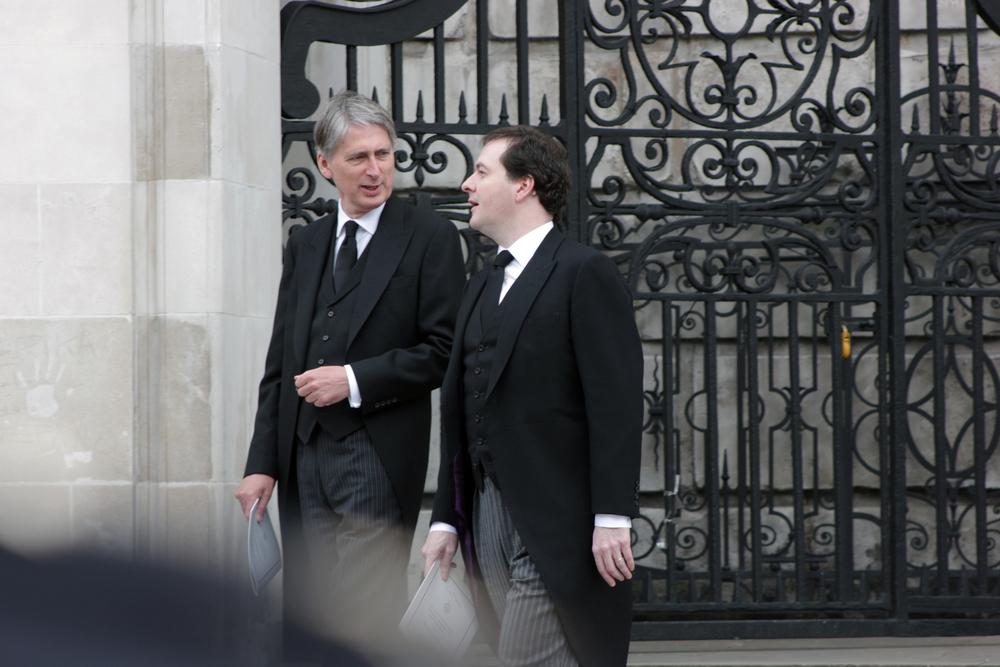
Chancellor George Osborne is set to lay out demands for the future of the UK’s relationship with the EU in Germany later today, in an attempt to come to a new arrangement before the in-out referendum.
His main focus is to ensure that firms in countries which do not use the euro as their currency are not discriminated against, and require legally that those countries who do not use the single currency – like the UK – are not required to bail out euro members. Excerpts from his speech show his intention to make it clear that the UK is not in favour of an ‘ever closer union’ as it stands at the moment: “It needs to be a Europe where we are not part of that ever closer union you are more comfortable with … an ever closer union is not right for us any longer. “The (EU) principles must ensure that as the euro zone chooses to integrate it does so in a way that does not damage the interests of non-euro members. “What we seek are principles embedded in EU law and binding on EU institutions that safeguard the operation of the union for all 28 member states. The principles must support the integrity of the European single market.” The UK government are desperately trying to come to a new arrangement with the EU, ahead of the referendum at the end of 2017. Next week, Prime Minister David Cameron will next week set out Britain’s demands in full in a letter to European Council President Donald Tusk.Seedrs to launch site in the US after relaxation of regulations

UK crowdfunding platform Seedrs, which is championed by tennis star Andy Murray, is set to expand into the US.
The announcement comes after the US Securities and Exchange Commission (SEC) voted on Friday to approve Title III of the Jobs Act, deregulating the US crowdfunding sector to an extent and essentially opening up equity crowdfunding to non-accredited investors.
Seedrs will be launching a beta site in the US within a few weeks to test the market, before launching fully at the beginning of next year.
Seedrs is one of the biggest UK crowdfunding platforms, enabling the public to invest in new companies and opening up the availability of business finance. It has funded over 270 deals to date, and on average raises up to £3.5 million per month.
Jeff Lynn, Seedrs’ chief executive Jeff Lynn said in a statement:
“I have had the privilege of being involved in the lawmaking process for US crowdfunding ever since the JOBS Act was introduced in 2011, and I am very pleased to see that the SEC has finally adopted rules implementing Title III.
“We believe this heralds the emergence of equity crowdfunding as a vibrant form of finance in the United States – just as it has become in the UK and Europe – and Seedrs is perfectly positioned to take advantage of the sector’s growth.
Crowdfunding has become increasingly popular over the last few years, going from a relatively unheard of and unobtainable form of finance to something considered by businesses of all sizes. The US has traditionally had a more cautious approach to the crowdfunding sector than the UK, making it difficult for UK companies to expand. However, the tide seems to be turning across the pond, with the US realising the potential the sector has to benefit new businesses and stimulate the economy.
Call of Duty producer Activision Blizzard buys Candy Crush firm

The US game company who produce World of Warcraft and Call of Duty, Activision Blizzard, have announced plans to buy Irish firm King Digital Entertainment in a deal worth $5.9 billion.
King Digital, the creators of popular app game Candy Crush, will widen the appeal and reach of Activision’s games, with the company hoping the acquisition would make it a global leader in interactive entertainment across mobile, console and PC platforms. After the deal, Activision will have more than half a billion monthly active users in nearly 200 countries.
Chief Executive Bobby Kotick told Reuters: “You have such broad reach. This is a fantastic opportunity for us to create compelling content for new demographics.” The deal is expected to be completed early next year and has not yet received approval from the Irish High Court. To fund the deal, Activision have said that it will use $3.6 billion of offshore cash and the rest will be lent by Bank of America Merrill Lynch and Goldman Sachs. King Digital (NYSE:KING) are trading up 3.88 percent on the news.Lira up by 3% following AKP victory

Following Sunday’s win by the ruling Justice and Development Party (AKP), the Turkish lira was up 3% to 2.817, after falling 25% this year as one of the worst performing currencies in the world.
After months of political deadlock, the AKP won with 316 seats in the 550 seat parliament, extending the party’s rule to 2019.
Valeria Bednarik, FXstreet analyst said; “This election will end Turkey’s period of transition and should lead to a marked strengthening of the country’s economy.”
Suzan Sabanci Dincer, executive chairman of Akbank bank, believes that the results will return momentum to the Turkish economy stating; “This was clearly a vote for stability, and Turkey is an economy that does well under stable conditions. “No more elections, no more politics.”
The AKP have promised increases in minimum wages and increased payments for retired workers.
The main index in Istanbul jumped 5% in morning trading.
Visa to buy Visa Europe for €21.2bn
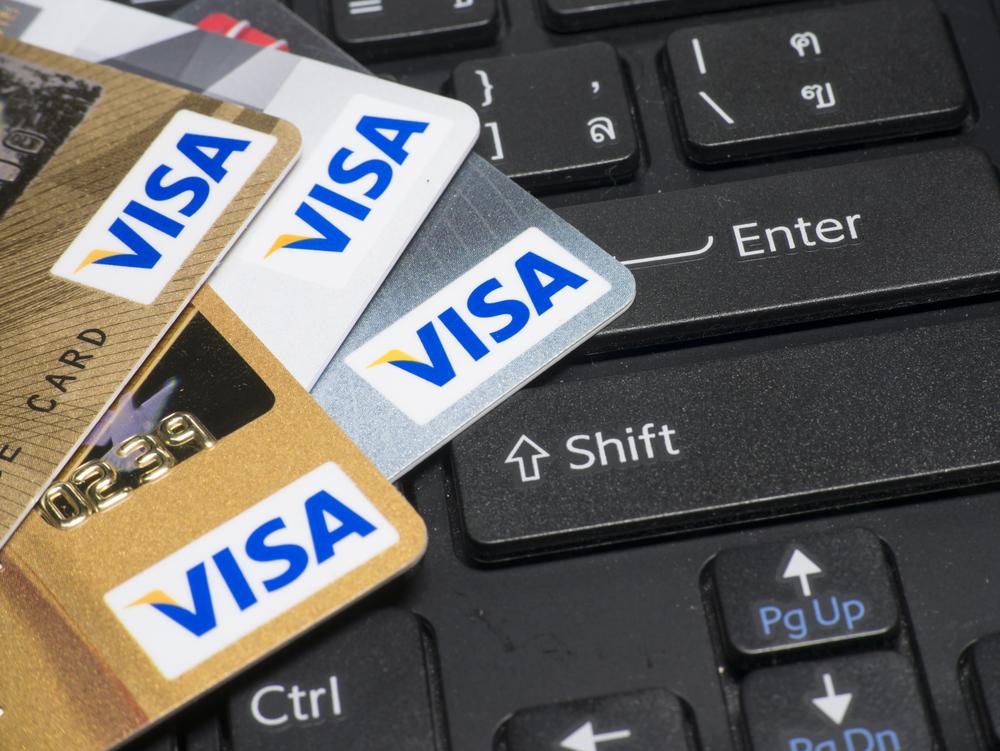
On Monday, Visa Inc announced it would buy Visa Europe Ltd in a deal worth 21.2bn Euros (£15.09bn).
Whilst Visa Inc and Visa Europe previously operated under the same company known as the Visa International Service Association, in 2007 most units merged to form Visa Inc, leaving Visa Europe as a separate entity.
The most active bank in the Visa Europe network is Barclays and is predicted to make up to 1.2bn Euros in total, sharing proceeds with over 3,000 companies.
The chief executive of Visa Inc, Charles Sharf, has said;
“We are very excited about unifying Visa into a single global company with unmatched scale, technology and services…Together we will bring the power of electronic payments to more people, in more places, than ever before.”
Chirantan Barua, from Bernstein Research is less optimistic about the merge stating;
“Now that the banks will be ‘external’ to the payment system they will see their fee income margin start to be squeezed and we wouldn’t be surprised if Visa tried to increase the margins in Europe at the expense of the banks. As well, given the nature of the deal, the banks will not be able to switch providers for at least the first few years.”
The deal, which is still subject to regulatory approval, was supported fully by the boards on both sides and is expected to close in the third quarter of 2016.
Shares, which have increased by 18% this year, slipped by 1.2% in premarket trading.