
Education technology software Earwig begin crowdfunding campaign

In the past decade schools have moved from one computer room, to ‘smart boards’ in every classroom and the standard issue of an iPad to every pupil – but what does the future of technology hold for education?
Apps have sprung up for education purposes left, right and centre. For pupils these days, revision no longer means copying out facts onto paper; it means flashcards made on an iPad with the ability to test yourself against others, or an app that teaches you French grammar.
So what about for the schools themselves? One entreprenueur has noticed a gap in the market when it comes to technology in education; a product that speeds up and organises paperwork, leaving more free time for teachers to actually teach.
Joe Ryan is founder of Earwig Academic Timelines, a software business that brings school technology into the 21st century, enabling teachers to create vivid, image-based timelines showing the progress of each pupil and allowing parents to track the progress of their children. Earwig is currently crowdfunding on Crowdcube, with a target of £152,000 in return for 8% equity.
Essentially, the company has developed an app and software package which allows teachers to capture and tag images, documents and video, so that they are automatically available as a dynamic timeline that shows the progress being made by each pupil. This cuts the time spent recording teaching evidence by 50%. As well as this, photos put onto a child’s stream will be available to be bought by the parents, generating an income – on top of fee for the service – of between £5 and £20 per pupil.
Schools are under constant pressure from Ofsted to provide documentary evidence of the progress of each child in every area of learning and at every level from Nursery to A Levels. According to Ryan, a product was needed to organise this process:
“We’ve found that the arrival of technology, particularly smartphones and tablets in schools means that teachers increasingly use photos, document scans and video to record everything from test scores to field trips. However, they currently have no convenient way to organise or present these. Printing images and making notes can take up huge amounts of expensive teacher time which would be better spent preparing and teaching. This provides the opportunity.”
There is, as far as the founders are aware, no competition for this product. Developed by an ex-teacher, who understood the problems teachers face and Ryan, who is software sales specialist, the perfect team was created; raising £285,000 from founders, friends and private investors. In what will be there second crowdfunding campaign on Crowdcube, the additional £152,000 will be needed to fill out the Earwig product suite, build the marketing and sales momentum and speed up the rollout to those 46,000 schools and other educational institutions which make up the UK education landscape.
For more information on this opportunity, visit Crowdcube.com
US-Italian car giant Fiat Chrysler given record fine
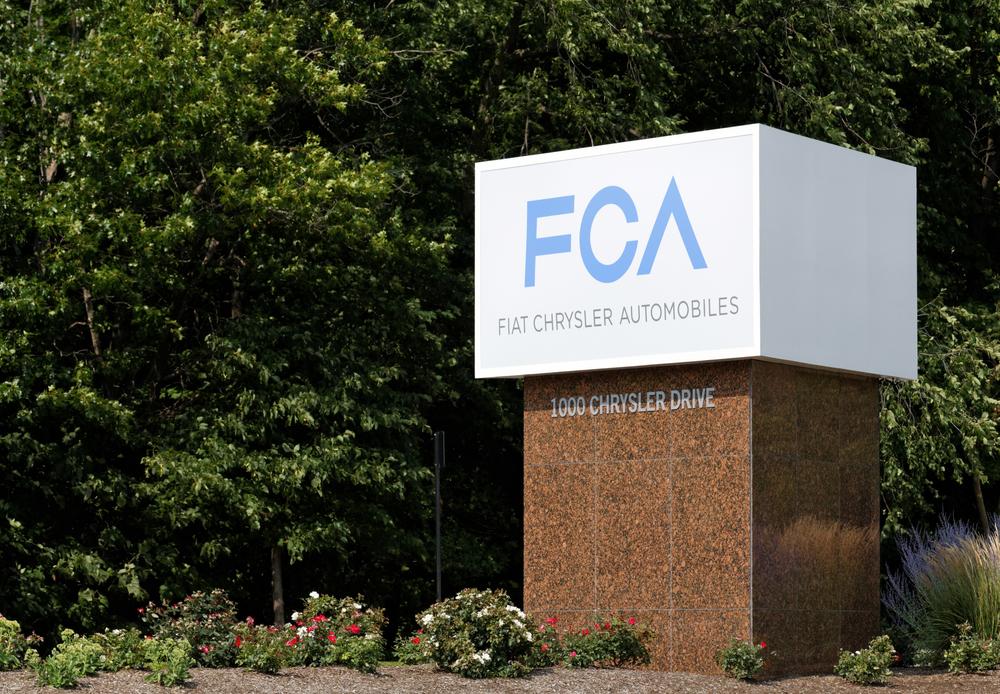
US regulators have imposed a record fine of $105m (£67.6m) on Fiat Chrysler over recall failures, in a crack-down on manufacturer defects.
The automaker will also offer to buy back as many as 1.5 million vehicles in an agreement with National Highway Traffic Safety Administration, as well as agreeing to allow an independent monitor to audit the company’s recall performance for three years.
The huge fine eclipses the previous record of $70 million imposed against Honda Motor Co in January for failing to report death, injury and other claims.
Mark Rosekind, administrator of the NHTSA, said in a statement: “Fiat Chrysler’s pattern of poor performance put millions of its customers and the driving public at risk.This action will provide relief to owners of defective vehicles, will help improve recall performance throughout the auto industry, and gives Fiat Chrysler the opportunity to embrace a proactive safety culture.”
The breakdown of the fine includes a $70 million cash payment, an agreement that Fiat Chrysler will spend $20 million improving its recall process and an additional $15 million payable if the automaker is found to have committed any further violations.
What will new Innovative ISAs mean for investors?

While George Osborne’s recent Summer budget provoked a variety of emotions in the public – disbelief and anger, mainly – there is likely to be one welcome addition, especially for the alternative finance sector: the Innovative Finance ISA.
As E-Car Club becomes the first crowdfunded company to pay back investors, now seemed the right time for Osborne to give an official nod to alternative finance methods. The new type of ISA will extend the usual list of tax-free ISA investments to include peer-to-peer lending to businesses from 6th April 2016. A consultation will also take place as to whether the ISA should extend to debt and equity crowdfunding investments. Essentially, it allows investors to put money into new companies and reap the rewards – tax-free.
ISA investors will have the ability to set up an Innovative Finance ISA through peer-to-peer lending platforms like LendingCrowd. Clearly, it is a move by Osborne to encourage people to invest in SMEs. By boosting and growing small businesses, there is the hope that thousands of new jobs will be created, which will subsequently help to haul down a budget deficit that he has already reduced from 10.2% of GDP to 5%. It is also another sign of the government recognising the benefits of an industry that continues to grow by 400% each year.
Whilst on the surface this looks like a good idea, there are however some concerns over underlying issues.
For the most part, peer-to-peer lending opportunities are tailored to sophisticated investors with wealth to deploy – which is very different to the primary audience at which ISAs are aimed. They are traditionally used to encourage ordinary people to save for the future.
Furthermore, most equity-based crowdfunding investments already qualify for tax relief that is far more generous than what is on offer via ISAs. The majority of fundraisings are eligible for the enterprise investment scheme (EIS) or its junior partner, the seed enterprise investment scheme (SEIS); meaning that, by offering and advertising ISAs as a way to save, people without specialist knowledge may end up making less money by putting the money into an Innovative ISA rather than one of the other schemes.
The name “Innovative ISA” is a broad umbrella term that, pending the aforementioned report into including equity crowdfunding opportunities too, can be extended to other types of alternative finance in the future. The rules surrounding this new type of ISA will be clarified through technical consultation on the draft legislation, with the final arrangements set in time for the new tax year.
Greek creditors arrive in Athens for negotiations

Greece’s creditors have begun arriving in Athens to start technical discussions on a third euro bailout deal.
The negotiators were originally expected to arrive last week, although a spokesperson has said that there is no reason for the delay. Talks have just begun but high level talks are not due to start until early next week.
Ex-finance minister Yanis Varoufakis recently told a group of investors in London that he had commissioned a small team to work on a contingency plan, should the the European Central Bank (ECB) decide to cut off emergency funding to the Greek financial system. According to Greek newspaper Kathimerini the plan would involve copying online tax codes in order to introduce a parallel payment system if the banking system was closed down, which would have seen the return of the drachma.
“The context of all this is that they want to present me as a rogue finance minister, and have me indicted for treason. It is all part of an attempt to annul the first five months of this government and put it in the dustbin of history.” Varoufakis told the Daily Telegraph.
Earnings season shows power of US tech companies

The US earnings season has been relatively strong, most notably for a number Tech companies, with most having beaten analyst’s expectations.
The likes of Amazon, Google and Apple have all posted solid revenue increases demonstrating the dominance of the US Technology sector.
Amazon (NASDAQ:AMZN) released results last week, disclosing an unexpected profit of $23.18 billion; the company’s first profit. Analysts had expected Amazon to lose $0.14 per share on revenue of $22.39 billion. Following its earnings beat, Amazon shot up more than 14 percent in after-hours trade.
Google’s stock jumped more than 7 percent in the after-market hours on Thursdayas the company also reported strong earnings results for the second quarter. Total income for the period ended June 30 was $3.93 billion, up 17 percent from $3.35 billion in the second quarter of 2014.
Apple posted a profit rise of 38% to $10.7bn; however, investors seemed disappointed with the results, and the stock dropped 5%. This sell-off is representative of the high standards investors are demanding from the sector.
The social media giants are set to release results this week; Twitter (NYSE:TWTR) is scheduled for Tuesday, and Facebook (NASDAQ:FB) rolls out on Wednesday. Their stocks have often become volatile after earnings results with investors being quick to sell or buy; Twitter has beaten consensus five out of six times since it went public in 2013, yet investors typically sell the first chance they get, pushing shares down 4.6 percent on average.
Twitter has suffered significantly over the past quarter, with CEO Dick Costolo stepping down and uncertainty surrounding his replacement affecting share price. The company went into this quarter at a similar price to rivals Facebook and Google and is now trading at around 50% lower than both.
Facebook, however, has followed a similar trend to Google over the past 3 months, with Google spiking before and falling slightly after releasing their results earlier in July. Facebook are set to release on Wednesday and have remained fairly steadier, but may be set to do the same following a sell-off of shares if they report increased earnings as expected.
Whilst the Dow Jones and S&P 500 are largely flat year to date, the tech dominated NASDAQ is up 7% having made a record high two weeks ago.
The strength in US tech stocks will give hope to investors who fear a negative impact of higher interest rates and some see further good news in 2015 for the sector.
“The question now is if the markets are fully valued and can they move higher without earnings growth,” said Jerry Braakman, chief investment officer of First American Trust
“Ultimately, it’s earnings that drive the market not revenue and a lot of the growth in earnings is expected to come in the second half of the year.”
Apple, Google and Amazon have accounted for around 37% of the NASDAQ’s gains but small caps within the sector have the potential to supersede US tech giant in terms of share price gains as investors seek the higher returns innovative early stage companies can yield.
FTSE down, led by Merlin Entertainments and Pearson

Merlin Entertainments (LON:MERL) dropped 5% after it said the disruption caused by the crash would hit profits by up to £47m.
Profits for the theme parks division in 2015 are expected to be between £40m and £50m, compared with £87m last year
The Alton Towers theme park owner said that the recent accident in which four people were seriously injured has had an adverse effect on trading. The summer season has been slow, with several rides, including the one that malfunctioned, temporarily closed. Merlin have also suspended advertising for its theme parks, and rides at other sites were also closed temporarily.
Merlin shares fell as much as 8% in the first few minutes of trade, although they recovered to be down 3.5% at 408p by mid-morning.
Merlin’s profit report led the FTSE 100 index down 19.06 points to 6,560.75.
Shares in Pearson (LON:PSON) were also down 2% after it confirmed it was in talks to sell its 50% stake in the Economist. This came just after it announced on Friday it would be selling the Financial Times after 60 years of ownership.
However, mining shares were up, with Randgold Resources (LON:RRS) the top riser in the FTSE 100, climbing 3.1%, and mining giant BHP Billiton (NYSE:BHP) was up 2.4%.
UBS profits increase 53%

Swiss bank UBS reported an increase in net profits for its second quarter, up 53% on the previous year.
The second quarter adjusted profit before tax was 1.6bn Swiss francs (£1.1bn, $1.7bn), far higher than the forecast by analysts who predicted a rise in profits of just 3.2 percent.
UBS chief executive Sergio Ermotti said to financial broadcaster CNBC that the bank had “maintained its momentum despite ongoing market challenges”.
The bank published their earnings a day earlier than planned, to counter “incorrect and misleading information” in a report about the results in Swiss weekly Sonntagszeitung on Sunday.
“These results show a company delivering on its strategy,” Bank of America Merrill Lynch analyst Andrew Stimpson, who has a ‘buy’ rating on the stock, wrote in a note.
Ryanair profits up 25%

Ryanair (LON:RYA) have reported a profit of €245 (£173.7m) for the three months to the end of June, 25 percent higher than last year.
Revenues were also up 10 per cent to €1.65bn and the company are expecting their full year results to be at the top end of their expectations, which were between €940m and €970m issued in May.
However, Ryanair added: “We caution… that this guidance, which is 12% ahead of last year’s profit, is heavily reliant on the final outturn of H2 fares over which we currently have almost zero visibility.”
Passenger numbers increased by 16 per cent to 28m thanks to improved load factors and their new “Always Getting Better” programme, designed to improve passenger experience. According to the company it has attracted “millions” of new customers, prompting CEO Michael O’Leary to say he should have “started being nice years ago”.
The airline has also accepted an offer from International Airlines Group (IAG) for its 29.8% stake in Aer Lingus, saying it “maximises Ryanair shareholder value”.
Chinese stocks tumble by 8.6%

Chinese shares suffered their biggest one-day drop since February 2007 on Monday, renewing fears over the health of the world’s second largest economy.
The market fell by 8.6%, the equivalent of $500bn, with 2,247 companies falling and only 77 gainers. The CSI300 index .CSI300 of the largest listed companies in Shanghai and Shenzhen plunged 8.6 percent, to 3,818.73, while the Shanghai Composite Index .SSEC lost 8.5 percent, to 3,725.56 points.
This comes just weeks after fears of a stock market collapse led to government intervention in the form of interest rate cuts, initial public offering suspension and relaxed margin lending. This seemed to lead to some stabilization, with the market up 15% before Monday’s fall.
Bernard Aw, market strategist at trading firm IG, told the BBC that surprisingly weak manufacturing data “added to worries that there could be further weakness in the Chinese economy, after the patch of recent economic data showed signs of stability”.
More than 1,500 shares listed in Shanghai and Shenzhen fell by their daily downward limit of 10%.
HP report finds smartwatches are laden with security risks

A report by tech giant Hewlett Packard has concluded that smart watches are littered with security flaws.
The report said that “100 percent of the tested smartwatches contain significant vulnerabilities, including insufficient authentication, lack of encryption and privacy concerns.”
“The results of our research were disappointing, but not surprising. We continue to see deficiencies in the areas of authentication and authorisation along with insecure connections to cloud and mobile interfaces.”
One security expert said manufacturers needed to pay closer attention to customer security.
“Keeping up with other manufacturers to be a forerunner in this technology field may force products to be released without the necessary attention to how secure they actually are,” said Mark James, security specialist at online security firm ESET.
The study tested 10 different wearable watches, although declined to say which ones. Security features put to the test included password protection and data encryption, as well as its cloud storage service. It found all the watches had at least one problem area. There are concerns that, with consumer demand for smartwatches booming, there has been too much focus on getting watches onto the market rather than fully testing its security capabilities.