



Aquis weekly movers: ProBiotix Health grows US sales

Gibraltar-based Coinsilium (LON: COIN) has appointed James Van Straten and Clement Hecquet as strategic advisors on its cryptocurrency treasury strategy. The share price jumped 44.8% to 4.2p.
Healthcare IT software provider DXS International (LON: DXSP) grew interim revenues by 2% to £1.73m and the pre-tax loss was slashed from £258,000 to £59,000, helped by grant income of £170,000. There was a small post-tax profit after R&D tax credits. There was no capitalised development pending in the period and the cash position improved over six months to £96,000. Chairman Bob Sutcliffe bought 50,000 shares at 2p each and 37,037 shares at 2.7p each. He owns 1.93% of the company. The share price improved 25.7% to 2.2p. That is the highest it has been for more than one year.
First Car International increased its Samarkand Group (LON: SMK) shareholding from 17.6% to 21.6%. The share price rose 16.7% to 3.5p.
Cardiometabolic health products developer ProBiotix Health (LON: PBX) reported 13% growth in net sales to £1.88m, while the order book for the first quarter is worth £620,000. The EBIDA loss fell from £709,000 to £568,000. There was cash of £1.65m at the end of 2024. The relationship with SEED Health in the enabled the launch of products in 2,000 Target stores, which drove growth in US sales. There are negotiations that could lead to ingredient sales in China. Management believes that the company can reach breakeven by early 2026. The share price continues its recovery and was up 10.3% to 8p.
Fintech and blockchain technology company Tap Global Group (LON: TAP) has increased monthly revenues to £451,000 in December. Revenues for the six-month period rose from £1.29m to £1.8m and there should be a positive EBITDA for the period. The share price increased 1.75% to 2.9p.
FALLERS
SulNOx Group (LON: SNOX) has generated £126,000 from the exercise of options at 36p each by a former director. It has also settled £36,330 of costs via issuing shares. SulNOx has secured a patent in Nigeria for its improved oil/water separation methodology. The share price declined 13.2% to 82.5p.
Premier Miton’s stake in Global Connectivity (LON: GCON) has reduced from 5.21% to 3.69%. The share price fell 10% to 0.9p.
AIM weekly movers: Engage XR partners with Meta
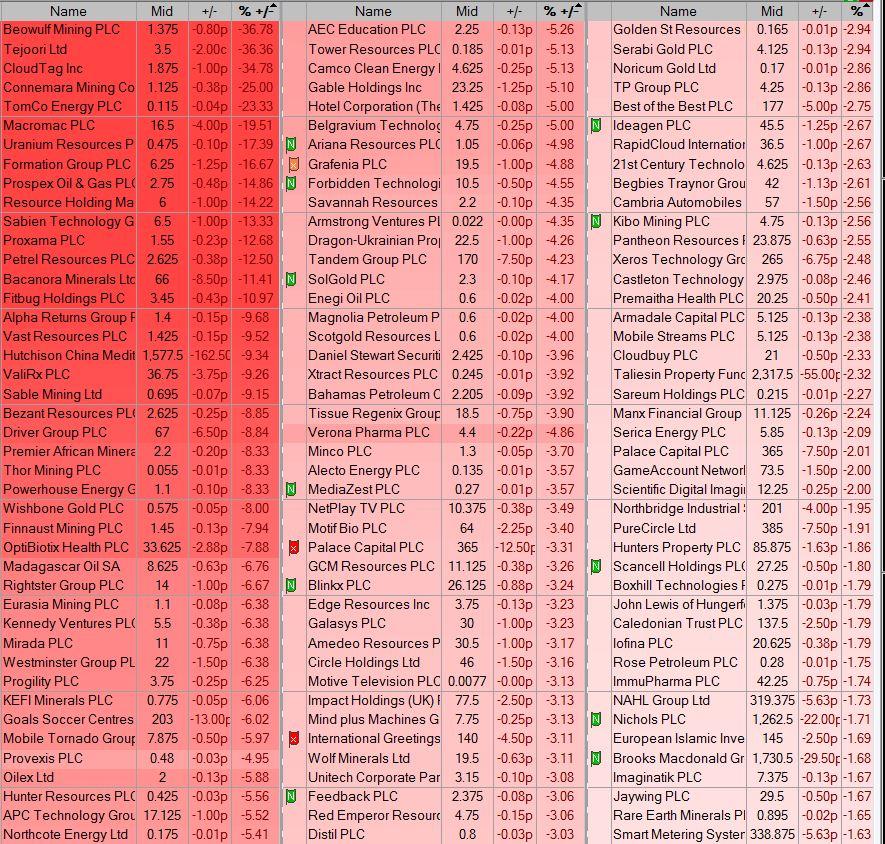
Immersive technology developer Engage XR (LON: EXR) is unveiling its education offering at the EdTech conference Bett 2025 in London. The package has been developed for kindergarten up to 18 years old. Engage XR will be a partner with Meta for Education. The share price jumped 134% to 1.55p, having reached 2.5p – the highest it has been for nine months.
Mindflair (LON: MFAI) investee fund Sure Valley Ventures made a £1.5m investment in Vizgard, which is an AI company involved in distributed solutions for defence and public safety applications. Another portfolio company, Infinite Reality, is securing a marketplace for shares on the Nasdaq Private Market. Mindflair granted 41.5 million options exercisable at 0.25p each to two directors and an employee. This compensates for the waiving and reduction of cash remuneration. Later the company clarified the condition for the third tranche of options issued to director Nicholas Lee. This requires the share price to be above 4p for five consecutive days for the options to vest. The share price rose 64.7% to 1.4p
Managed services provider Tialis Essential IT (LON: TIA) has made a good start to 2025 with preferred partner and contract extensions totalling £17.8m. Some of these are five-year contracts and are higher margin lifecycle management contracts. The 2024 pre-tax profit is expected to be flat at £1.1m, but earnings are forecast to treble to 3.6p/share. The share price has been falling since the beginning of 2024. The share price recovered 51.2% to 32.5p.
GENinCode (LON: GENI) says that its heart disease risk assessment product CARDIO inCode is included in the US 2025 Clinical Lab Fee Schedule enabling reimbursement from Medicare and Medicaid. The price varies from $450-$570. It is also being used to prevent heart disease in Catalonia. The share price improved 47.7% to 4.8p, having been as high as 6.125p.
FALLERS
Fuel additives developer Quadrise (LON: QED) generated £4.5m via a placing at 3p/share, which was well above the minimum sought, and a retail offer could raise up to £1m more – although that figure could be increased. The money already raised will last well into 2026. Quadrise is taking advantage of the share price rise on the back of contract announcements with an impressive area of customers. The share price dipped 35.5% to 4.125p. Two months ago the share price had fallen back to 1.5325p and the current price is the highest it has been for nearly four years.
Bars operator The Revel Collective (LON: TRC) had a good Christmas, but it faces higher costs because of the National Living Wage and National Insurance increases. Annualised costs will rise by £4m. This has led to forecasts of larger than expected losses. Like-for-like Christmas revenues were 1.6% higher. Net debt is expected to be £24m at the end of June 2025. The share price declined 31.3% to 0.275p, which is a new all-time low.
Oil and gas producer Enwell Energy (LON: ENW) shares slipped 27.1% to 17.5p following news that the court in Ukraine has cancelled a previous ruling that lifted the suspensions of the Mekhediviska-Golotvshinska, Svyrydivske and Vasyschevskoye production licences. The suspension of the Mekhediviska-Golotvshinska and Svyrydivske licences is back in force. There is a continuing appeal against the ending of the suspension of the other licence, where operations continue. In the fourth quarter of 2024, average production was 2,014 barrels of oil equivalent/day, with 92 barrels/day coming from the Vasyschevskoye licence. Average production was 2,014 barrels of oil equivalent/day for 2014 as a whole.
AI-technology services provider Pri0r1ty Intelligence (LON: PR1) is forming a strategic partnership with Funding Circle, the small business loans provider. Pri0r1ty Intelligence clients will be provided access to loans of up to £750,000 via its platform. Pri0r1ty Intelligence will get an introducer commission of up to 6.5%. The fundraising for the reversal of the business into the previously listed shell Alteration Earth at the end of 2024 was done at 13.5p. Rupert Labrum, one of the original shareholders in the shell, has reduced his stake from 3.4% to 2.34%. The share price fell by one-quarter to 6p.
Burberry shares rise despite revenues decline

Luxury clothing brand Burberry Group (LON: BRBY) is the best performing FTSE 250 index constituent today, despite a decline in revenues in the 13 weeks to 28 December. The share price increased 13.7% to £12.175.
Third quarter revenues declined from £706m to £659m. Americas revenues were 4% higher, but Asia Pacific revenues were 9% lower, even though Japan was 4% ahead. Comparable stores sales were 4% lower. Outerwear and scarves outperformed. There was a 4% headwind due to currency movements.
The Burberry Forward strategy was launched in November to “reignite brand desire”. Visual merchandising has been enhanced in stores. It is still early days, though.
Management is hopeful that the second half performance could offset the loss in the first half. Analysts expect a return to profit in 2025-26.
AIM movers: IQE partnership and Renew hit by rail delays

Semiconductor wafer manufacturer IQE (LON: IQE) is partnering with Quintessent Inc to develop the world’s first large-scale quantum dot laser (QDL) and semiconductor optical amplifier (SOA) epitaxial wafer supply chain. Quintessent Inc has made an initial order of $500,000. This follows the announcement that 2024 revenues were better than expected at £118m. The loss is still likely to be more than £24m. The share price improved 12.5% to 14.85p.
Revolution Beauty (LON: REVB) shares recovered some of their loss on the back of the poor trading statement on Thursday. Fourth quarter trading to February 2025 is weak with some retail launches delayed until the first quarter of 2025-26. Full year revenues are forecast to fall by one-quarter to £143.6m and a £1.6m loss is anticipated. The share price rose 8.66% to 11.8p.
Quantum Blockchain Technologies (LON: QBT) shares rebounded 6.75% to 1.265p following yesterday’s £2m placing at 1.15p/share. The cash will be invested in its Bitcoin mining technology. Executive chairman Professor Francesco Gardin has extended his agreement with MC Strategies for the repurchase of five million shares to June 2025. The repurchase price has been raised from 3.483p/share to 3.568p/share. Last week, it announced a breakthrough for its Bitcoin Artificial Intelligence model mining tool. The Method C AI Oracle provides a 30% improved performance compared with other methods.
ITM Power (LON: ITM) is jointly developing a design configuration for a 10MW green hydrogen plant with an unnamed European energy company. This will be used in several UK projects. The design involves two 5MW NEPTUNE V electrolyser systems. The share price increased 6.46% to 36.07p/share.
FALLERS
Quadrise (LON: QED) has raised £4.5m through a placing at 3p/share and a retail offer could raise up to £1m more – although the figure could be increased. The money already raised will last well into 2026. Quadrise is taking advantage of the share price rise on the back of contract announcements and, even though the share price slumped 34.7% to 3.8p.
Engineering services Renew Holdings (LON: RNWH) has a solid track record, but this has been knocked by the timing of the rail renewal programmes. Rail is nearly two-fifths of revenues. The timing of the renewal spending is uncertain, and Peel Hunt has reduced its 2023-24 earnings forecast by 10% to 63.6p/share, down from 65.9p/share the previous year. The water business has been strong, and the order book is growing. The share price dived 22.6% to 703.5p.
Premier African Minerals (LON: PREM) has raised £540,000 at 0.02p/share. This is interim funding following the decision not to proceed with the fundraising at 0.0275p/share because the retail offer did not raise enough to reach a total raising of £3.5m. The company will require more cash and I talking to its offtake partner. The share price dipped 16% to 0.021p.
Communications and reputation software provider Pulsar Group (LON: PULS) says growth accelerated in Europe and North America in the second half, but Asia trading weakened. Annualised recurring revenues edged up to £61.7m. Reported revenues will be lower than expected. Cavendish has reduced its 2023-24 pre-tax profit expectations from £2.8m to £2.4m. The share price fell 5.05% to 51.75p.
FTSE 100 falls as new data highlights stagflation risks

The FTSE 100 fell on Friday, retreating from a series of record highs sparked by optimism about interest rates after a fresh assessment of the UK economy threw up the risks of the UK entering an environment of stagflation.
The S&P Global Flash UK PMI edged higher to 50.9, a three-month high, but sales pipeline and employment data revealed a slowing of activity. This, coupled with stubborn rates of inflation, points to stagflation and the curtailing of the Bank of England’s ability to cut interest rates.
“The first indicators of business conditions in 2025 add to the gloom about the UK economy, with companies cutting employment amid falling sales and concerns about business prospects. Inflation pressures have meanwhile reignited, pointing to a stagflationary environment which poses a growing policy quandary for the Bank of England,” explained Chris Williamson, Chief Business Economist at S&P Global Market Intelligence.
The concerns were evident in UK-focused sectors, including retailers, housebuilders and banks.
Just as markets were starting to enjoy an improvement in sentiment around the UK’s outlook, today’s data served as a reminder we’re not completely out of the woods.
Marks & Spencer shares fell 2%, while Taylor Wimpey gave up 1.5% as investors reacted to the possibility of rates staying higher for long while businesses consider cutting staff. The Labour government’s plans to hike national insurance are not helping matters.
Mining companies provided the counterbalance to weaker UK-centric stocks and helped contain losses on Friday.
“Miners were the talk of the town as base metal prices strengthened. Antofagasta, Glencore, Rio Tinto and Anglo American enjoyed decent share price gains, helping to prop up the resource-heavy FTSE 100 index,” said Russ Mould, investment director at AJ Bell.
“Copper, aluminium, lead, zinc and tin all saw higher prices amid a weaker dollar. Metals are typically priced in dollars and a decline in the US currency makes the commodities cheaper for buyers holding other currencies.
“Also putting a shine on metals prices was speculation that Donald Trump might not take the nuclear option regarding tariffs on China, potentially imposing a lower rate than has previously been suggested.”
JD Sports bucked the trend of softness in retailers following an encouraging update by Burberry, whose shares surged 13% on Friday.

The crucial role of e-waste recycling in ensuring a sustainable future

The extraction of critical minerals for clean energy technologies and electronic devices presents significant environmental challenges for our planet. For example, extracting a single ounce of gold can generate up to 20 tons of waste rock and tailings, often containing hazardous chemicals like cyanide and mercury used in processing.
Similarly, platinum and palladium mining, essential for catalytic converters and electronics, also involves highly energy-intensive processes.
This blog post dives into the environmental costs of mining, sheds light on the different types of waste it generates, and highlights how recycling electronic waste or otherwise commonly known as e-waste, could significantly reduce our reliance on mining for new materials.
Environmental impact of critical mineral mining
Governments worldwide have identified critical materials essential for national security and economic stability, developing official lists of these materials to prioritise domestic production or sourcing through allied nations. These lists, such as the US Critical Minerals List (2022) and the UK Critical Minerals Strategy (2021), include key materials like lithium, cobalt, rare earth elements, and copper.
However, there are only two ways to source these critical materials: mining and recycling.
When it comes to mining, the environmental costs are both vast and varied, leaving an indelible mark on our planet and future generations. Extracting critical minerals essential for modern technologies requires moving mountains – literally.
Now, to put this in perspective, producing just one kilogramme of gold—the amount needed to manufacture approximately 100,000 mobile phones—requires processing a staggering 3 million kilogrammes of mineral ore. That’s the equivalent of moving the weight of 750 fully loaded garbage trucks just to extract enough gold for a fraction of the devices we use daily
The impact begins with the land itself. Vast swathes of forests and ecosystems are cleared to make way for open-pit mines, resulting in habitat destruction and the fragmentation of wildlife corridors. In fact, studies show that 8% of invertebrate species are threatened by mining activities, as disrupted ecosystems ripple far beyond the immediate excavation sites.
Then there’s the water. Mining operations often pollute local waterways through acid mine drainage, a chemical reaction that occurs when exposed sulphide minerals produce sulphuric acid. This toxic runoff dissolves heavy metals, poisoning rivers and groundwater for decades, if not centuries, after the mines have shut down.
Air quality isn’t spared either. Dust from excavation and ore crushing fills the air, while smelting and refining processes release a cocktail of pollutants. For workers and nearby communities, this can mean increased risks of respiratory diseases and other health complications.
The role of e-waste recycling in reducing mining impact
This is where recycling comes in.
Recycling, specifically e-waste recycling offers a promising pathway to reduce the environmental burden of critical mineral extraction. Through urban mining – the process of recovering valuable materials from discarded electronic devices – we can significantly decrease the need for primary mineral extraction and mitigate its devastating environmental impacts. What’s more, the intrinsic properties of recycled materials remain undiminished, providing our finite resources with an undeniable and sustainable second life.
According to the Global E-Waste Monitor 2024, e-waste recycling has prevented the need to extract approximately 900 billion kilogrammes of ore through traditional mining methods. This reduction in mining activity equates to avoiding an estimated 52 billion kilogrammes of CO₂-equivalent emissions, a significant step toward addressing the environmental challenges of critical mineral sourcing. The majority of these savings stem from the recovery of copper (50%), followed by gold (20%) and iron (10%).
Moreover, e-waste recycling helps curtail the release of hazardous substances into the environment. Unmanaged e-waste currently emits 58 thousand kilogrammes of mercury and approximately 45 million kilogrammes of plastics containing brominated flame retardants annually. By implementing advanced recycling systems, these toxic materials can be safely captured and repurposed, preventing their harmful effects on ecosystems.
“The numbers speak volumes,” says Peter Lai, Founder and CEO of Majestic Corporation. “Every kilogramme of e-waste recycled is a step toward mitigating the environmental destruction caused by traditional mining. Recycling is not just about resource recovery – it’s about rewriting the rules for how we sustain our planet.”
The environmental damage wrought by critical mineral mining – deforestation, water pollution, and air quality degradation – demands urgent action. E-waste recycling by companies like Majestic Corporation (AQSE:MCJ) offers a tangible solution by reducing the demand for primary mineral extraction while simultaneously addressing the challenges posed by unmanaged e-waste.
Please view the article on Majestic Corporation’s website here.
Sources:
https://api.globalewaste.org/publications/file/297/Global-E-waste-Monitor-2024.pdf
https://www.cell.com/action/showPdf?pii=S0960-9822%2824%2900895-9
Broadening applications in the fight against sodium overconsumption with MicroSalt
The UK Investor Magazine was delighted to welcome Rick Guiney, CEO of MicroSalt, back to the podcast to review the low-sodium salt company’s progress in 2024 and outline what investors can expect in 2025.
We start with a review of the progress the company made in 2024 following MicroSalt’s IPO in February 2024.
Rick provides an overview of recent developments, including the launch of ‘MicroSalt Premium’ and the inroads the company is making with new applications, including French fries, in the fast food industry.
We conclude with a rundown of what investors have to look forward to in the year ahead.