FTSE 100 set for higher close ahead of next week’s interest rate decisions

The FTSE 100 has navigated a potentially precarious week of inflation data and interest rate decisions and has come out stronger, though only by small margins.

Dramatic swings in US stocks throughout the week didn’t translate into much in the way of volatility for the FTSE 100, which was 0.5% higher going into the weekend. 

“The FTSE 100 ticked higher on Friday, putting the index on course for a solid if unspectacular week of gains,” said AJ Bell investment director, Russ Mould.

September has traditionally been a choppy week for stocks, so the fairly flat performance of the month so far is encouraging. However, investors will be gearing up for a potentially bumpier ride for UK stocks next week when the Bank of England and Federal Reserve will decide on interest rates. 

The big question will be how much the Federal Reserve cuts by. They have indicated they will cut rates, but whether that is by 25bps or 50bps will be the overriding factor influencing equities. 

A 25bps cut will signal the Fed is happy with the state of the economy, while a 50bps cut would suggest they see weakness and have ramifications for stocks. 

In terms of individual movers on Friday, Endeavour Mining and Fresnillo were again at the top of the leaderboard as investors reacted to gold breaking to fresh record highs.

“Precious metals miners led the way as gold reached new heights, while bargain hunters seemingly took advantage of the recent sell-offs at Burberry and Rentokil,” Russ Mould said.

Burberry is set to leave the FTSE 100 later in September after being demoted. Sainsbury’s was the top faller, slipping 2%. 

AIM movers: Volvere profit jump and Proteome boss to leave

0

Property finance provider Vector Capital (LON: VCAP) shares have recovered 7.14% to 15p even though trading will be cancelled on Monday. The company spent £3.5m on a tender offer at 33p/share.

A strong performance from Shire Foods meant that revenues improved from £19.1m to £22.2m at Volvere (LON: VLE). Pre-tax profit jumped from £440,000 to £1.78m. Net assets excluding non-controlling interests are 1585p. Cash is £24.3m. Further investments are being sought. The share price rose 6.38% to 1500p.

Berenberg cut its target price for Pan African Resources (LON: PAF) from 38p to 33p, but the share price improved 4.05% to 32.1p.

Iodine producer Iofina (LON: IOF) has commissioned its latest IOsorb plant in Oklahoma. The IO#10 plant is being tested and is the production will ramp up over the next few weeks. This is the seventh plant that is in production. There should be a material contribution to production this year.

FALLERS

Proteome Sciences (LON: PRM) reports a decline in interim revenues from £3.21m to £2.22m due to reduced and delayed R&D by biotech companies and almost quadrupled it loss to £2.15m. Chief executive Dr Mariola Soehngen will step down in January. The share price slumped 26.9% to 2.55p.

Premier African Minerals (LON: PREM) says that progress is being made towards the restarting of operations at the flotation plant at the Zulu lithium and tantalum project. The company will need further funding. The share price fell 9.73% to 0.051p.

Energy optimisation services provider Inspired (LON: INSE) shares continue to fall following interim results showing revenues edged up from £44.6m to £45m and pre-tax profit dipped from £6.2m to £5.7m. That was lower than forecast. The share price declined 8.4% to 54.5p.

Transense Technologies (LON: TRT) shares dipped 2.86% to 170p ahead of full year results on 23 September. They are expected to show an underlying pre-tax profit of £1.3m. The share price has risen 64% this year.

THG – Surely There Is No Need To Rush Into The Shares Before Next Week’s Interims 

Four years ago, Matt Moulding brought his loss-making The Hut Group to the market, raising a total of £1.88bn in the process, valuing the business at £5.4bn. 

The 376.27m shares were offered at 500p each, with some £920m worth of new money going into the group’s coffers, and the balance paid to vending shareholders, including Moulding. 

The group’s shares went up to 818p early in 2021 – just a couple of months before Covid struck. 

That was the good part. 

And The Business Now 

The group was renamed as THG plc, with its shares quoted on the Main Market (LON:THG)

The group describes itself as a leading vertically integrated, global ecommerce technology group and brand owner, powered by its proprietary technology platform, Ingenuity, through which it also provides end-to-end e-commerce solutions for brands to reach a global e-commerce consumer base. 

It operates under three core businesses – THG Beauty, THG Nutrition and THG Ingenuity – each operating in resilient, growing markets and each scaled from the UK to hold global leading positions in their respective sectors. 

THG Beauty is a digital-first brand owner, retailer and manufacturer in the prestige beauty market, with a portfolio of own-brands across skincare, haircare and cosmetics. 

THG Nutrition is a group of digital-first Nutrition brands, which includes the world’s largest online sports nutrition brand Myprotein and its family of brands, with a vertically integrated business model supported by global THG production facilities. 

THG Ingenuity provides a complete digital commerce solution for consumer brand owners across its three pillars of technology, digital marketing and operations.  

Why Invest In THG? 

When asked the question ‘why invest in THG?’ the group responds by stating that: 

“We are a global digital innovator revolutionising how brands connect to a worldwide consumer base.  

We are transforming how consumer brands go to market in the digital age. 

Through our proprietary platform Ingenuity, we are providing a simpler, integrated and frictionless retail experience for consumers and brand owners.  

We are democratising online retail – overcoming its structural technology barriers by enabling brands and retailers to have direct relationships with consumers, improving accessibility.” 

Recent Performance 

The group is still loss-making. 

In the last five years, it has turned over some £9,218m in revenues and recorded losses of £1,565m. 

Results Due Next Week 

Today the whole group is capitalised at just £801m, with its shares trading at around the 61.5p level. 

They rose 4.5p yesterday, ahead of the group announcing its Interim Results, for the six months to end-June, next Tuesday morning, 17th September.  

Toward the end of June, the group issued an AGM Trading Statement which declared that: 

“The group has made further progress in H1 2024 in line with previous revenue guidance, and Q2 will represent the third consecutive quarter of year-on-year revenue growth.  

The group’s performance is underpinned by positive trading within the Beauty, external Ingenuity and offline Nutrition businesses, which have helped offset continuing FX headwinds within Asia.” 

At that time, the group stated that its guidance to the market for 2024 remained unchanged, with adjusted EBITDA expected to range in the £133.8m to £156.5m range. 

In My View 

It will be very interesting to see just what publicity is built up before and after the Interims are revealed – will they point the way to the group breaking into profitability and, if so, by how much? 

There are some 10 analysts that follow the group, with an average consensus for a 110.6p Price Objective on the shares. 

In my opinion, this group’s shares, which bottomed at around 35p two years ago, and are now trading at 61.5p, will take quite some time to break back up through the 100p level again – it really would take a string of good corporate news items to bolster to such an equity value. 

Stand back and just watch before making a move. 

hVIVO – Institutional Holdings Building Up After This Week’s Strong First Half Report 

Earlier this week hVIVO (LON:HVO) reported its Interim Results to end-June, they showed a 30.6% first-half growth in revenues to £35.6m, while its EBITDA was 67.6% higher at £8.7m, with end-period cash up at £37.1m (£1.3m). 

The group is a fast-growing specialist contract research organisation and the world leader in testing infectious and respiratory disease vaccines and therapeutics using human challenge clinical trials.  

Management Comment 

CEO Yamin ‘Mo’ Khan stated that: 

“After an exceptionally strong first half with record revenues and margins, hVIVO enters the remainder of the year with FY24 revenue guidance fully contracted and good visibility into 2025.  

We continue to expand our pipeline, not only in human challenge trials but also in our new revenue streams including clinical site studies, standalone laboratory services, and volunteer / patient recruitment.  

Operational efficiencies are set to continue to improve with the expansion of our services, improved automation, and the move to our new facility in Canary Wharf. 

We are pleased to reaffirm our full-year revenue guidance of £62 million and expect EBITDA margins to be at the upper end of market expectations.  

We are targeting Group revenue of £100 million by 2028 – this growth will be underpinned by the increased capacity of our facilities, our strong cash position, and our long-term sustainable growth model.” 

Institutional Buying 

As I have detailed previously, the City investing institutions are becoming ever more aware of this group’s potential and have been gradually building up positions in the group’s equity. 

Investors like Canaccord Genuity Wealth Management (3.19%), Rathbones Investment Management (5.01%), and JP Morgan Asset Management (UK) (7.03%) each have taken stakes in the growing business. 

However, the one professional investor really showing its faith in hVIVO’s prospects is Octopus Investments, which in the middle of July held just 3.1% of the HVO equity. 

Within that month, it had more than doubled its holding to 7.61%. 

At the start of August, it was up to 8.0%. 

This morning it has been announced that on Tuesday of this week (10th) it upped its stake to 9.08%, some 61,801,224 shares. 

The group’s shares are currently trading at around the 29p level, whilst City analysts have Price Objectives ranging from 36p to 42p for its shares. 

Technology Minerals to slash costs in absence of meaningful revenue

Technology Minerals has unveiled a comprehensive cost reduction programme aimed at streamlining operations and bolstering efficiency across the organisation today.

After generating zero revenue in the six month period to 31st December, the firm is taking steps to cut costs to ‘drive productivity’. One would assume the company is yet to generate enough revenue to support its wage bill. We will find out more in the full-year report.

Steps outlined by Technology Minerals include a significant redundancy scheme to reduce the total workforce, substantial cuts to head office costs, and an ongoing, thorough assessment of all service providers.

Philip Beard has agreed to step down from his roles as Independent Non-Executive Director and Chairman of the Remuneration Committee with immediate effect.

The reduction in Independent Non-Executive Directors has prompted a review of the Board’s future composition, which is likely to be a lot leaner in the future.

“These cost reduction measures have been identified as part of the Board’s efforts to increase efficiencies and drive productivity throughout every level of the business,” said Robin Brundle, Chairman of Technology Minerals.

“On behalf of the Board, I’d like to extend our thanks and appreciation to Phil for his contribution to the Company. We are grateful for all the strategic guidance Phil has provided to Technology Minerals and wish him the best in his future endeavours.”

Those investors seeking a profitable circular economy metals recycling company should look at UK-listed Majestic Corporation.

The company generated $29m revenue in the year ended 31st December, and profit before tax grew 149%. Majestic recycles a range of e-waste and renewable energy waste and is expanding in the UK after acquiring a business based in North Wales.

AB Foods shares are oversold, is now the time to buy?

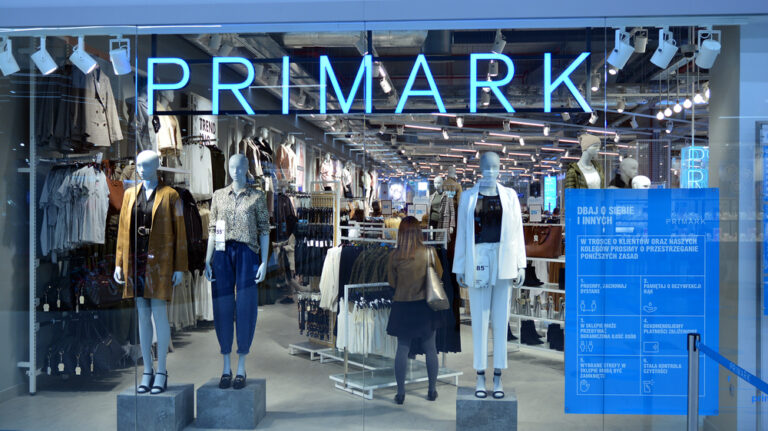
Primark-owner AB Foods took a pasting after the group said Primark sales would fall in the second half of the year due to poor weather and low footfall.

After losing roughly 18% of their value since August highs, AB Foods shares are currently firmly in oversold territory with an RSI of 21. The sharp decline should pique the interest of investors seeking an entry point with the long-term investment case intact.

The Weather

AB Foods has blamed slow sales in the second half on the weather. We all know how disappointing the British summer was this year, and companies heavily reliant on good weather to drive consumer purchases have been hit hard. AB Foods isn’t the only company to attribute bad sales to poor weather.

Primark is particularly reliant on in-store sales. Although it has been strengthening its online presence, Primark is still driving people into its stores by focusing on click-and-collect and the online shopping experience provides little help during a washout summer.

However, AB Foods used the same excuse earlier this year for slow sales growth in the first half. The winter was too warm and the summer too cold, according to AB Foods.

Investors have evidently grown tired of the same excuse and dumped the stock. For those with longer time horizons, this may provide an opportunity.

Primark’s same-store sales growth is fairly steady, and the company relies on new store openings for growth—this has proved a fruitful pursuit. The company is expanding across southern Europe, and new store openings are expected to increase US sales by 25% in the second quarter.

‘Build it, and they will come’ seems to be working for Primark. The brand’s low-cost clothing is a hit wherever it opens a new store.

The company plans further expansion in the US, which promises further growth in the years to come. Primark are also eyeing the Gulf Cooperation Council markets after signing an agreement with a local partner.

Investors should note that despite uneven sales growth, Primark’s margins are strong, and they expect operating margins to be higher in H2 2024 than H2 2023.

Food

AB Foods (as the name suggests) isn’t just the owner of Primark, and food sales account for roughly half group sales.

Sales from the food side of the business are expected to be steady in the second half and pose no major concern for investors, despite agriculture and sugar’s risk of adverse weather conditions. AB Foods uses the word ‘weather’ 15 times in its interim report to give you an idea of how much its business is dependent on Mother Nature.

All three food-related divisions saw operating profits grow in the first half of the year. However, due to sugar pricing in Europe, the company expects a disappointing second half for the unit, which may have contributed to the recent selloff.

Valuation

From a valuation perspective, AB Foods offer good value at 2,170p. They trade at 11x forward earnings and 15x historical earnings. The historical earnings multiple is reasonable, and the forward multiple, should estimates be meet, suggests very good value.

Don’t expect fireworks from AB Foods, but Primark’s overseas expansion plans and stable long-term earnings from the food business should support a move back to all-time highs above 3,000p.

AIM movers: Marlowe demerger and Fevertree Drinks hampered by weather

3

Video editing technology developer Blackbird (LON: BIRD) continues to rebound following the interims earlier in the week. The share price improved 22.7% to 6.75p. Revenues fell 30% to £692,000 because of the ending of the A+E deal and lower operating costs meant that the loss was reduced. Cash burn was similar at £1.9m, leaving net cash of £5.6m. The elevate.io product was released in March and monetisation starts in early 2025.

Online gaming company Gaming Realms (LON: GMR) continues to make good progress and generate cash. The share price is also higher after interims and it is 39p, up 8.33%. Interim revenues improved 18% to £13.6m, even though there was not a repeat of the brand licensing deals in the year before, and pre-tax profit increased from £2.4m to £3.5m. The growth is international, although North America is the fastest growing with West Virginia going live after the period end. Even after capitalised development costs, net cash improved to £9.6m.

Marlowe (LON: MRL) is demerging the occupational health division as an independent AIM company called Optima Health by the end of September. Shareholders will receive one share for each Marlowe share held. Marlowe will focus on testing, inspection and certification operations. So far, £41m of the £75m share buy back has been spent. Marlowe continuing revenues are forecast to be £306m and pre-tax profit £13m. The share price increased 6.98% to 460p.

Wind turbine optimisation technology developer Windar Photonics (LON: WPHO) increased interim revenues by 71% to €2.3m and there was a small EBITDA loss. The second half order book is worth €3.8m. A move from loss to a full year profit of €2.7m is forecast. The share price is 6.17% ahead at 43p.

FALLERS

Wet weather hit sales at Fevertree Drinks (LON: FEVR) in the UK and Europe. That was offset by growth in other regions, but group revenues fell from £175.6m to £172.9m. Even so, underlying pre-tax profit rebounded from £4.7m to £13.2m. Cash is £65.9m. Second half revenues are expected to grow by between 7% and 10% following more positive trading in July and August. The share price declined 11.3% to 765.25p.

Optimisation software provider Checkit (LON: CKT) continues to reduce its loss on the back of a 16% increase in interim revenues to £6.7m. Annualised recurring revenues are £13.8m and that underpins the full year revenues forecast of £14.2m. Net cash was £7m at the end of July 2024 and higher R&D spending means that year-end cash is likely to be slightly lower than previously expected at around £5m. The share price fell 10.9% to 20.5p.

Energy optimisation services provider Inspired (LON: INSE) interim revenues edged up from £44.6m to £45m and pre-tax profit dipped from £6.2m to £5.7m. That was lower than forecast. Optimisation revenues declined, but product mix meant that margins were better. Cross-selling is helping to grow the ESG division and other parts of the business. Net debt is £57.6m. There is only £2.2m of contingent consideration due to be paid. Debt should start to decline over the next few years. The share price dipped 5.34% to 62p.

Ex-dividends

Churchill China (LON: CHH) is paying an interim dividend of 11.5p/share and the share price is unchanged at 925p.

Colefax Group (LON: CFX) is paying a final dividend of 2.9p/share and the share price is unchanged at 860p.

DSW Capital (LON: DSW) is paying a final dividend of 0.75p/share and the share price is unchanged at 60p.

Globalworth Real Estate Investments (LON: GWI) is paying an interim dividend of 10 cents/share and the share price is unchanged at 266 cents.

Midwich (LON: MIDW) is paying an interim dividend of 5.5p/share and the share price is 0.5p higher at 320.5p.

Uniphar (LON: UPR) is paying an interim dividend of 0.67 cents/share and the share price is unchanged at 225p.

Trainline shares top FTSE 250 as ticket sales surge

Trainline shares were at the top of the FTSE 250 leaderboard on Thursday after the ticketing app announced strong sales growth in the first half of the year.

“Trainline sales are tracking ahead of analyst estimates with more consumers switching to digital tickets being one of the main drivers. It may not feel like it for many commuters but there has also been a reduced effect of strike action in comparison to last year,” said Adam Vettese, Market Analyst at investment platform eToro.

Trainline enjoyed revenue growth of 16% year-on-year in the first half, driven by a 13% jump in ticket sales. Investors will be pleased to see strength in the UK after a couple of soft periods for Trainline.

“Double-digit gains in net ticket sales and group revenue point to a fantastic first-half period for Trainline,” said AJ Bell investment director, Russ Mould.

“Acting as a big tailwind is a structural shift in the UK for people to use digital tickets rather than paper ones. As more people become accustomed to scanning their phone to get through station barriers, the bigger the opportunity for Trainline to position itself as the go-to place for buying these types of tickets.

“A second tailwind is increased carrier competition in mainland Europe, primarily in Spain and Italy. Trainline has been able to position itself as an easy way to navigate the increasingly complex travel system and get good deals.”

FTSE 100 surges higher after strong US session

The FTSE 100 had a strong start to Thursday as London followed a decent for US shares ahead of the ECB’s rate decision later.

The catalyst was a surge in US tech stocks overnight, helping drive a turnaround in the S&P 500 yesterday. Markets also appeared to cheer the US CPI reading which almost nails on a rate cut next week. Such was the scale of the buying, the S&P 500 rallied around 140 points from yesterday’s lows into the close. The move from low to high was about 2.8% of the index value. 

“US markets bounced after the CPI inflation print all but secured the Fed’s first rate cut next week,” said Matt Britzman, senior equity analyst, Hargreaves Lansdown.

“CPI isn’t the Fed’s preferred inflation measure, but with a little bit of jigging, we can get a decent idea of what the preferred PCE number might look like, and it’s all starting to paint the same picture – inflation that’s behaving well. Markets are pricing in an 87% chance of a 0.25% cut, and there wasn’t much in this data to suggest a bolder move is needed.

An upbeat Nvidia CEO helped fire up AI-related stocks that were responsible for much of yesterday’s gains. The AI trade has been under pressure in recent weeks, but the 8% surge in Nvidia overnight shows there is still plenty of interest in the chipmakers, and investors are happy to continue deploying cash in the sector.

“Tech was back leading the charge, with the S&P 500’s chip sector up 6.65%. Nvidia’s had a bumpy ride of late, but markets were encouraged by CEO Jensen Huang’s bullish conference commentary on demand,” Britzman said.

The risk on trade was evident in the FTSE 100’s cyclical sectors, with miners surging higher and financials having a good day.

Copper miner Antofagasta was the top gainer, adding over 3.5%. Anglo American was not far behind, rising 3.2%. The lack of technology shares in London means investors often pick the next best thing in the cyclical mining sector when they are feeling confident about the outlook.

M&G was the top faller, but only because the stock traded ex-dividend today.

Investors will tune into the ECB’s rate decision later today, when we are expected to see another rate cut. A rate cut from the ECB will more than likely be followed by similar moves by the Fed and Bank of England next week.

Fevertree shares sink as growth stalls

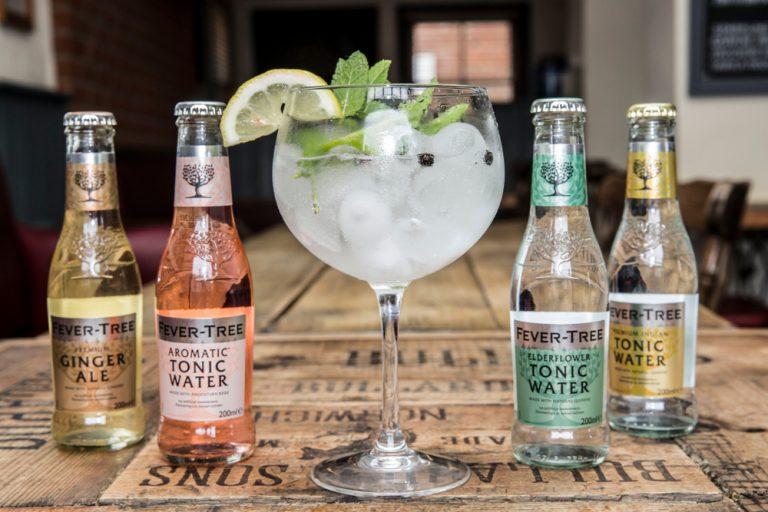
It seems a long time ago that Fevertree shares were the talk of the town as the group established itself as a leading tonic brand in the UK and entered the US market. 

Fevertree shares are now worth less than 25% of what they were at their highs, and growth is disappointingly slow.

Once considered a drinks market disruptor, the group didn’t produce any revenue growth in the first half. Poor weather contributed to the soggy sales, but using that excuse usually means a company has nearly peaked in market share terms.

”Fevertree shareholders might be nursing sore heads this morning as the premium mixers maker posted a disappointing trading update, cutting its annual revenue growth forecast,” said Mark Crouch, Market Analyst at investment platform eToro.

Although the group enjoyed sales growth in the US in the first half, it was entirely offset by slowing sales in the UK. Total group revenue for the first half was down 2%.

The worrying signs for Fevertree were too much for investors on Thursday, and the stock slid by over 9%.

“Fevertree served up a mixed set of first-half results to investors. Revenue failed to bubble higher despite double-digit growth in the US where it continued to gain market share,” said Aarin Chiekrie, equity analyst, Hargreaves Lansdown.

“The US is already Fevertree’s largest contributor to the top line, but there’s plenty of room to run given the size of this vast market. Performance in the UK and Europe wasn’t so spritely. Despite gaining market share in these regions too, revenue fell 6% and 10% respectively as poor weather and a tough consumer backdrop weighed on demand in the second quarter. While the weather which convinced some punters to stay at home is out of Fevertree’s control, it’s doing well to manage the factors that are within its control. It’s kept a tight lid on costs in the first half, and profitability is improving quickly as shipping rates, energy costs on glass bottles and wider inflationary pressures ease.”