Trainline shares book early gains as sales grow and downloads surge

Trainline shares booked themselves a ticket to the top of the FTSE 350 in early trade on Friday after releasing upbeat results for the year to 29th February 2024.

Shares in the ticketing app were over 6% higher as investors digested an encouraging set of numbers for the last year.

Net ticket sales at Trainline soared by 22% year-over-year, reaching £5.3bn, which falls at the upper end of the company’s previous guidance range.

“Trainline has this morning delivered a blistering earnings report, carrying last year’s momentum into 2024 at full steam. The online ticketing platform has delivered significant increases in revenues, cash flows and profits in all operating regions, making notable headway in Spain where ticket sales have doubled for two years in a row,” said Mark Crouch, analyst at investment platform eToro.

Ticket sales drove a 21% increase in revenue to £397m, beating previously anticipated guidance. Higher revenue was reflected in the 42% jump in adjusted EBITDA to £122m, accounting for 2.3% of net ticket sales. Operating profit surged 101% to £56m.

Trainline’s mobile app experienced a robust surge in downloads, cementing its position as Europe’s most downloaded rail app.

The company has been at the forefront of driving the shift towards digital tickets in the UK rail market. The industry-wide penetration of e-tickets in industry ticket sales increased from 43% in FY2023 to 47% and Trainline has secured a large proportion of this market.

Trainline’s share of the commuter travel segment grew from 10% pre-COVID to 23%, while on-the-day bookings accounted for 66% of Trainlines UK Consumer transactions.

“Trainline remains firmly on track to exceed growth expectations and now boast the title of Europe’s most downloaded rail app. Shareholders will be buoyed by the news of an additional £75m in buybacks, in addition to the £50m already underway,” Crouch said.

Internationally, Trainline’s Consumer net ticket sales surpassed the £1bn mark. Combined growth across Spain and Italy stood at 43%, with domestic ticket sales in Spain more than doubling for two consecutive years.

Trainline has provided robust guidance for the year ahead which will go a long way to bolster investor confidence. The group sees net ticket sales growth between 8% and 12% and revenue growth of between 7% and 11%. Adjusted EBITDA is guided to be between 2.4% and 2.5% of net ticket sales.

ANGLE inks £550,000 deal with AstraZeneca for prostate cancer detection, shares jump

ANGLE plc, the AIM-listed liquid biopsy company, has inked a major supplier agreement with pharmaceutical giant AstraZeneca. The £550,000 deal will see ANGLE develop a new circulating tumor cell (CTC) assay to detect androgen receptor (AR) status in prostate cancer patients.

ANGLE shares surged 20% higher in very early trade on Friday.

The AR assay will utilise ANGLE’s proprietary Parsortix system, which can harvest intact CTCs from a simple blood sample. By analysing the AR levels in these CTCs, clinicians can assess the effectiveness of prostate cancer therapies throughout a patient’s treatment.

“This is further validation of ANGLE’s Parsortix system which shows potential for long-term large-scale revenues in bringing innovative new cancer drugs to the market. We anticipate that success in this first phase of assay development may lead to much larger contracts for use of the assay in clinical trials,” said ANGLE Chief Executive Officer, Andrew Newland.

The new AR assay adds to ANGLE’s pipeline of CTC assays for drug development research. In April, the company announced a deal with AstraZeneca to develop a CTC test for DNA damage. With over 130 active clinical trials related to androgen receptor therapies, the AR assay promises significant commercial opportunities.

Development of the AR assay will take place at ANGLE’s UK labs, with completion expected by early 2025. A successful outcome could lead to an ongoing role for Parsortix in supporting AstraZeneca’s prostate cancer studies and therapeutic monitoring.

FTSE 100 gains despite underwhelming Fed, Standard Chartered and Smurfit Kappa lead the way

After a couple of soggy sessions following a series of fresh record highs, the FTSE 100 was helped higher by strong corporate earnings and a reasonably positive response to the Federal Reserve’s interest rate decision.

The FTSE 100 bounced back on Thursday and traded close to intraday highs before easing back to 8,153, up 0.4% on the day.

The significant macro consideration for traders was the Federal Reserve’s interest rate decision and accompanying commentary, which proved to be a non-event.

“The move was widely expected after recent economic data showed the US struggling still to get the inflation genie back inside the lamp,” said Steve Clayton, head of equity funds, Hargreaves Lansdown.

Clayton continued to explain that markets learned nothing new from the Federal Reserve yesterday, given Fed speakers have consistently hinted at a longer wait for interest rate cuts. The muted market reaction can be attributed to the absence of any major scares about inflation heating up, which had the potential to unnerve markets.

“Speaking to reporters after the meeting, Fed Chair, Jay Powell said he did not know how long it would be before the Fed was confident enough to begin cutting rates. Modest gains in US Treasuries suggest this was all that markets were expecting to hear. Rates are still going to come down, but we’ve a way to go first,” Clayton said.

Given that we’re amid earnings season in the US and UK, the lack of any real catalyst for stocks from the Federal Reserve meant corporate earnings drove trade on Thursday.

Standard Chartered and Smurfit Kappa announced very good results, while Shell announced mediocre results that didn’t shift the dial in either direction.

Standard Chartered

Standard Chartered was among the top risers after announcing bumper Q1 results that smashed analyst expectations. Profit and income exceeded estimates, and provisions for bad debts were lower than predicted despite ongoing concerns about the Chinese property market.

“Standard Chartered has made a statement,” said Matt Britzman, equity analyst at Hargreaves Lansdown.

“This was as close to a clean sweep of first-quarter results as you can get. Pretty much every major line item was better than markets had expected, even after stripping out some of the one-off items that inflated results. Performance was driven by non-interest income, which accounts for over half of all revenue. This includes areas like wealth management, investment banking, and trading. Traditional banking operations performed more or less as expected.”

Standard Chartered shares were 5% higher at the time of writing.

Shell

Shell shares gained 1% after the company announced that Adjusted EBITDA rose 15% in Q1 2024 compared to Q4 2023 in a telegraphed announcement that provided very few new developments for investors. Shell issues earnings previews so the market has a reasonably good insight into earnings before they are released. That said, Shell’s earnings were better than expected, but shares were held back by a declining oil price that would impact future earnings updates.

“The relatively muted market reaction to Shell’s better-than-expected earnings and unveiling of a $3.5 billion share buyback may fuel the argument it would be better served by listing in the US,” said AJ Bell investment director Russ Mould.

“However, this would be something of a red herring with enthusiasm for Shell likely tempered thanks to pressure on oil prices from strong US inventories.

“It is notable the company, a leader in the natural gas market, achieved its stronger-than-anticipated quarterly showing despite facing an obvious impact from lower gas prices.”

AIM movers: Kinovo outperforms and ex-dividends

2

Trading at property services provider Kinovo (LON: KINO) is ahead of expectations with organic growth of 23% in the year to March 2024. Underlying pre-tax profit should be more than £6m, excluding costs related to the DCB contracts, which were guaranteed by Kinovo when it was sold, still to be completed. The share price jumped 20.7% to 49.5p.

Reabold Resources (LON: RBD) says that there is a heads of agreement for Guvnor International to buy liquified natural gas from LNEnergy, where Reabold owns 26.1%, produced from the Colle Santo gas field. Guvnor will purchase 44,000 tonnes of LNG/ year. LNEnergy has a right to acquire a 90% interest in Colle Santo. The share price increased 14.8% to 0.775p.

Revolution Bars Group (LON: RBG) has received interest from Nightcap (LON: NGHT) and the share price has recovered 13.8% to 1.65p. Nightcap is assessing the situation and options include a possible bid or acquisition of some sites or subsidiaries. Nightcap is a consolidator in the bars sector.  The Nightcap share price has risen 2.41% to 4.25p.

Galileo Resources (LON: GLR) has received the second cash payment of £2.1m for the sale of the Glenover phosphate project, where the AIM company had a significant stake. The final payment of £0.25m is due this month. The share price improved 8.9% to 1.225p.

FALLERS

Brake discs developer Surface Transforms (LON: SCE) shares have slumped even further and are down 63.1% to 1.05p after a £6.5 fundraising at 1p/share. There will be a one-for 1.76036319 open offer at the same price. That could raise £2m. The cash will finance the scale up of manufacturing. Factory capacity will be increased to £75m. This year’s revenues are forecast to be £17.5m.

Currency services provider Argentex Group (LON: AGFX) plans to raise £5m through a placing and offer at 45p/share. The share price has slumped 21.3% to 325.4p. The new chief executive wants the cash to transform the business and take advantage of opportunities following a strategic review. Net cash was £18.3m at the end of 2023.  Pre-tax profit dipped from £7.8m to £7.3m.

Invinity Energy Systems (LON: IES) raised £56m at 23p/share with £25m committed by the UK Infrastructure Bank and £3m from Korean Investment Partners. There is also an open offer to raise up to £6.6m. IES will use £30m to increase capacity ahead of the launch of the latest version of the Mistral flow battery. The share price fell 10.6% to 23.25p.

Grocery distributor Kitwave (LON: KITW) is trading in line with expectations. There is organic growth as well as the benefits from acquisitions. This year’s trading will be second half weighted and there is additional investment in operations. That means there could be a small dip in pre-tax profit in the first half, but a rise from £27.5m to £29m is forecast for the full year. The share price declined 8.3% to 372.75p.

Ex-dividends

AB Dynamics (LON: ABDP) is paying an interim dividend of 2.33p/share and the share price rose 20p to £18.50.

Ashtead Technology (LON: AT.) is paying a dividend of 1.1p/share and the share price fell 2p to 791p.

Greencoat Renewables (LON: GRP) is paying a dividend of 1.69 cents/share and the share price is 0.3 cents lower at 84.6 cents.

Tekcapital’s Guident issues Q1 2024 update as commercialisation gathers pace

Tekcapital’s portfolio company, Guident, has issued a Q1 activities update summarising a solid quarter of progress in which the company has made strides forward in commercialising its autonomous vehicle safety technology.

During the quarter, Guident expanded a strategic partnership with Auve Tech and forged a new one with Star Robotics.

Guident will power the safety features for Auve Tech’s MiCa autonomous shuttle, which is launching into the US market. Auve Tech is a leader in autonomous shuttles with a global footprint. Auve Tech has exported autonomous shuttles to Japan from its base in Estonia as part of a partnership with Softbank’s Boldly. The shuttles provide an autonomous vehicle solution to urban mobility considerations such as helping elderly people and improving efficiencies in fixed-circuit transportation such as airports or business parks.

Gudient’s relationship with Auve Tech is focused on the US, but if early commercialisation proves successful, further collaboration would be expected.

Star Robotics

Star Robotics has developed surveillance robots with a broad range of industrial applications. Guident will provide remote monitoring and control services to Star Robotics as it rolls out the ‘Watchbot’ technology across North America. Tekcapital said Guident is working on a ‘go-to-market’ strategy with Star Robotics.

In addition to expanding commercial relationships, Guident recorded an important operational milestone with the grand opening of its new Remote Monitoring and Control Center (RMCC) in Boca Raton, Florida. The facility is the first of its kind in the United States and provides a hub for the teleoperation oversight of autonomous vehicles.

“I was thrilled by the strong turnout of our esteemed partners and valued customers at Guident’s new headquarters inauguration. Our event theme, ‘To the Future,’ perfectly encapsulates Guident’s vision and commitment to pioneering advancements,” said Harald Braun, Executive Chairman and CEO of Guident.

“With MiCa’s debut, the world’s most compact level 4 autonomous shuttle, and our seamless integration with Star Robotics’ state-of-the-art surveillance robot, we’ve reached a pivotal moment in our mission for safer autonomous vehicles and robotics.”

Tekcapital shares were trading 4% higher at the time of writing.

Why Legal & General shares are starting to look attractive

The Legal & General share price had pulled back from recent highs and is starting to look attractive.
Simply put, Legal & General is a robust dividend payer and has a place in income portfolios. Investors should be confident, that over the long term, there is a minimal risk of seeing their income from the stock falter. You can’t rule out any wobbles due to external stresses, but the income attributes are robust.
The company has consistently grown its dividend over the past ten years. It has increased its dividend every year except one year during the pandemic, when it held the divide...

Are Rolls Royce shares still a buy after gaining nearly 1,000%?

From the post-pandemic low around 39p, Rolls Royce shares (LON:RR) have rallied nearly 1,000%. We look at the key factors determining whether the stock should still be considered a ‘buy’ after the portfolio-making ascent.

The threat of grounded planes for extended periods due to the spread of the coronavirus ravaged the engineer’s share price. The company relies on flying hours for revenue; this evaporated in 2020, and investors scrambled to the exit, sending the Rolls Royce share price below 40p.

This proved to be the buying opportunity of a lifetime.

For many investors who bought Rolls Royce in the depths of 2020 and are still holding it, Rolls will be the best investment they will make in their life, certainly in an FTSE 100 stock.

Whether Rolls Royce continues to rally from here boils down to valuation. The recovery from the pandemic is an old story, and we know very well consumers are choosing to allocate their discretionary spending to travel. The dynamics that underpinned Rolls Royce’s meteoric rise are intact.

The stock is no longer a recovery play. Far from investing in a recovery, investors now must consider the company’s growth potential and whether the underlying fundamentals can support earnings growth, as well as the current earnings multiple.

Trading at 29x historical earnings, Rolls Royce is overvalued compared to peers, and the wider benchmark, on an earnings basis. Earnings are a very simplistic method of valuing a company, but investors of all levels will refer to it when trying to justify an investment case. The question for investors is whether Rolls Royce can bring this multiple down by increasing earnings in the future.

Judging by the company’s latest investor presentation, this is very much a possibility, but Rolls Royce has a lot of work to do to justify the current share price.

Rolls Royce has set out ambitious profitability targets supported by a robust strategic framework. The company is setting out to materially expand it civil aerospace business unit and build foundations in the power generation business.

The company targets £2.5bn—£2.8bn operating profit by 2027 and a return on capital of 16-18%. To meet their targets, Rolls Royce will need to nearly double operating profit from the 2023 full year and dramatically increase operating margins.

Rolls Royce have taken the difficult decision to reduce headcount in the pursuit of higher margins and this has been rewarded by the market.

However, the market appears to have already priced in future targets, which leaves the stock vulnerable to performance which doesn’t deliver on Rolls Royce’s goals.

This vulnerability doesn’t make Rolls Royce a sell but investors must question whether the current valuation justifies future earnings and how much more upside the shares have in them.

Brokers generally have price targets above the current price, but not much higher.

Standard Chartered wraps up FTSE 100 Q1 banking updates with a bang

Standard Chartered shares soared on Thursday after the company reported Q1 earnings and wrapped up a fairly upbeat series of updates for the FTSE 100 banks. 

UK investors were saved the best banking update until last as Standard Chartered smashed earnings estimates sending shares 6% higher in early trade.

Underlying income was $5.2bn compared to $4.7bn analyst estimates and underlying profit before tax came in at $2.2bn vs $1.6bn expected.

Most of the FTSE 100 banks, Lloyds, Natwest, HSBC and Barclays, have beaten earnings estimates. But none to the extent of Standard Chartered.

“Standard Chartered has made a statement,” said Matt Britzman, equity analyst, Hargreaves Lansdown.

“This was as close to a clean sweep of first-quarter results as you can get. Pretty much every major line item was better than markets had expected, even after stripping out some of the one-off items that inflated results. Performance was driven by non-interest income, which accounts for over half of all revenue.

“This includes areas like wealth management, investment banking, and trading. Traditional banking operations performed more or less as expected.”

Concerns about the health of the Asian economy have dogged Standard Chartered, and today’s update will go a long way to put the doom-mongers back in their place. 

A big plus for investors is the lower-than-expected credit provisions. With the Chinese property crisis far from over, some may have feared STAN’s exposure to the sector could see further impairment. 

“As we’ve seen from peers, credit quality metrics remain resilient. This is especially important for Asian-focused banks like Standard and HSBC, which have both had to write down the value of Chinese assets in past quarters,” Britzman said.

“Commercial real estate exposure in China has also been a cause for concern, so investors will be pleased to see no real uptick in impairments taken here.

Pressure mounts for Horizonte Minerals with little prospect of value for shareholders

On Wednesday, Horizonte Minerals announced that continued negotiations with secured creditors and potential investors regarding restructuring for its Araguaia project in Brazil were yielding little in the way of hope for investors.

Senior lenders have agreed to extend waivers, deferring accrued interest payments until May 15th, as discussions explore options to recover value for creditors. Shareholders, unfortunately, are of little consequence in these discussions.

Scenarios under consideration include raising financing at the subsidiary level, disposing of the Araguaia project while maintaining its viability, liquidating assets, or leveraging Brazilian laws to maximise creditor recovery while minimising liabilities.

The outcome in any of these scenarios will be unfavourable for shareholders, and the company said it believes these options are unlikely to yield any value for equity investors.

If no further extension is granted by senior lenders, deferred interest will become immediately payable on May 16th. Failure to pay could result in the cancellation of undrawn funds, acceleration of outstanding debt, and potential enforcement of lender security over the group’s assets.

The pressure is mounting on Horizonte Minerals, and its fall from grace could be coming to a conclusion. If a deal is not secured soon, Horizonte Minerals may be the next London-listed firm to enter administration.

Horizonte’s Brazilian subsidiary has secured a 60-day injunction until May 15th, preventing debt enforcement to allow restructuring negotiations.

The company has working capital until mid-May, subject to creditor discussions, project expenditures, and potential cost-saving measures. The clock is ticking.

Horizonte Minerals’ demise is not only a real shame for investors but for the wider London markets. It had the potential to be a powerhouse producer and a text book success story for the junior natural resource sector.

Cornish Metals shares soar on positive South Crofty economic assessment

Cornish Metals shares were firmly higher on Wednesday after the tin miner announced a solid economic assessment of its South Crofty tin mine in Cornwall.

Cornish Metals has reported a positive independent Preliminary Economic Assessment (PEA) for its South Crofty tin project confirming the project’s economic viability with an impressive after-tax Net Present Value (NPV) of US$201 million and an Internal Rate of Return (IRR) of 29.8%.

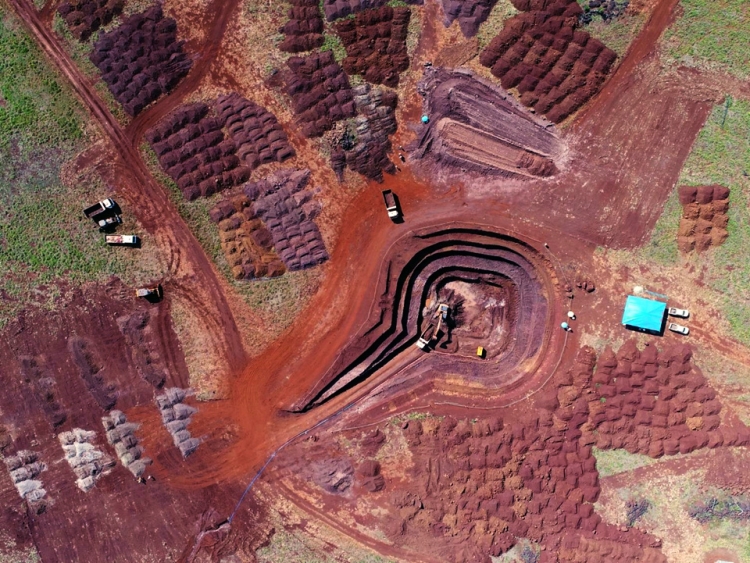
The South Crofty project is poised to become a low-cost and long-life tin mining operation with a current 14-year life of mine. It is expected to produce a high-grade, clean tin concentrate, positioning it as a significant tin producer in Europe. This is particularly promising given the growing demand for tin, a critical metal essential for the energy transition. Tin is also widely used in electronics.

Project economics highlights:

  • US$201 million after-tax NPV8% and 29.8% IRR at base case tin price of US$31,000 /tonne
  • US$235 million after-tax NPV8% and 32.8% IRR at the current US$32,625 /tonne LME tin price
  • Capital payback period of 3 years after-tax
  • Total after-tax cash flow of approximately US$626 million from start of production, peaking at US$82 million in the second year of production
  • Average annual earnings before interest, taxes, depreciation and amortisation (“EBITDA”) of US$83 million and 62.1% EBITDA margin in years 2 through 6

 Cornish Metals shares were 15% higher at the time of writing.

“Congratulations to Cornish Metals’ technical team on completion of this Preliminary Economic Assessment of the South Crofty tin project,” said Ken Armstrong, Interim CEO and Director of Cornish Metals.

“This PEA is an important milestone for Cornish Metals and our goal of bringing responsible tin mining back to Cornwall and the United Kingdom. South Crofty is a strategic asset as tin is recognised as a critical metal by the United Kingdom and other national governments, while there is currently no primary tin production in Europe or North America.”