This group’s shares look cheap ahead of its imminent results.
Wiring, LED lighting, EV chargers and portable power equipment is what drives this Telford-based business, and it markets its products across the globe.
‘Bringing power to life’ is the group’s proud proclaim, while it describes its purpose as helping people to harness power sustainably in everyday life.
Employing over 1,600 people, Luceco (LON:LUCE) serves some 2,000 customers, working with around 1,000 key suppliers and has a total product range of over 11,500 different items.
Ahead Of Expectations, With A Better Outlook
After a fa...
Top ten stocks held by AJ Bell’s ISA millionaires
In the run-up to the end of the tax year and the deadline for using ISA allowances, AJ Bell has shared the top ten stocks held by its ISA millionaire accounts.
High dividend-paying FTSE 100 stocks with consistent business models are favoured by these account holders, who have an average age of 72.
AJ Bell highlighted the propensity of ISA millionaires to invest in stocks instead of funds. Investing in stocks as opposed to funds helps reduce fees and provides a more concentrated portfolio of higher conviction holdings, which can lead to market outperformance.
“AJ Bell ISA millionaires have shown a preference for investing in individual shares rather than funds, with 75% of their portfolios sitting in stocks (including investment trusts),” says Dan Coatsworth, investment analyst at AJ Bell.
There aren’t any real surprises in the top ten stocks held by AJ Bell’s ISA millionaires. All the top ten stocks are constituents of the FTSE 100, and all pay dividends. Notably, ISA millionaires are more than content to follow the mantra of ‘never sell Shell’ with 39% of accounts holding the oil major.
“Big blue-chip names like Shell, Lloyds and GSK are the most popular stocks with AJ Bell customers who are an ISA millionaire. US-listed tech giants including Nvidia, Microsoft and Apple also feature in portfolios but far more have large cap dividend-paying stocks from the UK market than overseas-listed stocks which pay little or no income to shareholders,” Dan Coatsworth said.
| % of ISA millionaire holders | |
| SHELL | 39% |
| LLOYDS BANKING GROUP | 32% |
| GSK | 32% |
| BP | 31% |
| AVIVA | 28% |
| NATIONAL GRID | 25% |
| HALEON | 25% |
| SCOTTISH MORTGAGE INVESTMENT TRUST | 24% |
| LEGAL & GENERAL | 24% |
| HSBC | 23% |
Another AJ Bell observation investors may do well to consider is the approach ISA millionaires take to managing portfolios. Retail investors can often be guilty of overtrading, and this is something those achieving the £1 million mark seem to avoid.
“There also appears to be a buy and hold mentality given the number of spin-offs in the ISA millionaire portfolios. Shares in Haleon, Woodside Energy and Jackson Financial were distributed free of charge to shareholders of GSK, BHP and Prudential respectively as the parent companies restructured and demerged holdings. These gifted stocks look as if they’ve been left alone in investors’ portfolios rather than the usual temptation of cashing out of a demerged business,” Coatsworth explained.
Tips AJ Bell provided to achieving the ISA millionaire status include starting early, maximising your contributions and spreading your risk.
FTSE 100 flat as markets assess Chinese economic measures, Intertek jumps
The FTSE 100 was flat on Tuesday as the index reversed early losses following disappointment at reports that China will hold off material action to support its economy, setting a new growth target of 5%.
Market participants will be concerned that China isn’t planning meaningful stimulus given the slow growth rate and a GDP target far lower than historical averages. Stocks and commodities were sold as a result.
Disappointment around China was offset by strength in Intertek and Marks & Spencer. The FTSE 100 was flat at the time of writing but had started the day deep in the red.
Chinese growth was once the world’s growth powerhouse, and stimulus in response to signs of weakness was eagerly anticipated by equity markets. Anticipation was almost always met with fresh measures by Chinese authorities. Not anymore.
“Beijing wants to sort out problems in the property sector and add more jobs in urban areas – but it just didn’t seem enough to get investors fired up,” said Russ Mould, investment director at AJ Bell.
The market reaction is symptomatic of underlying concerns about the health of the Chinese economy and perceptions of underlying structural weakness, which can’t be fixed with sticking plaster stimulus measures. Today’s reaction appears to be markets telling Chinese authorities they must do more to reignite growth.
As expected, unhappiness with the economic situation played out in the FTSE 100’s China-focused sectors, especially mining companies. The sector started the session deep in the red but improved as trade progressed.
Rio Tinto was down 1.2%, Antofagasta slipped 1.1% and Anglo American was flat. Prudential was the FTSE 100’s second biggest faller.
Ashtead
Another former beacon of light for investors seeking upbeat growth stories was plant hire company Ashtead. After many years of consistently strong revenue and profit growth, the company has faltered in recent years. Ashtead’s Q3 results released on Tuesday were also soggy, with operating profit falling 3%.
“Ashtead has been a major success over the past few decades thanks to more companies deciding to rent rather than own construction equipment as well as significant spending on infrastructure in the US where it mainly does business,” Russ Mould said.
“That’s made investors consider Ashtead to be bulletproof, but the past few years have shown that it can occasionally be tough-going. “An ordinary three-month period has prompted the company to guide for full year revenue growth at the low end of the range. North America is key for Ashtead as it accounts for the lion’s share of its business, so a difficult time in that geography is always going to have a material impact.
“What will provide some reassurance to investors is this appears to be a short-term issue relating to a lower level of emergency response activity and reduced demand from the entertainment industry thanks to strikes.”
Ashtead shares fell 6%.
Intertek
Intertek will win no competition for being the sexiest FTSE 100 company. Still, the quality assurance specialist will grab the headlines today after revenue grew 7% in 2023, recording the highest like-for-like revenue growth of the last ten years.
“I would like to recognise all my colleagues for their unwavering support enabling us to deliver a strong 2023 performance in revenue growth, margin, EPS, cash and ROIC,” said André Lacroix, Chief Executive Officer of Intertek.
“Our revenue grew by 7.1% at constant currency driven by a LFL revenue growth of 6.2%, the highest in the last 10 years, and the contribution of our acquisitions. Our systemic performance management drove strong profit conversion with margins rising 60bps at constant currency, driving EPS growth of 11.0% at constant currency. Cash conversion at 122% was excellent.
Intertek shares were 6% higher at the time of writing and was the FTSE 100’s top gainer.

AIM movers: Active Energy Group agrees settlement and KEFI Gold and Copper fundraising.
Active Energy Group (LON: AEG) has agreed a settlement with Player Design Inc, which was constructing a CoalSwitch plant in Maine. Active Energy Group will receive a cash payment of $1.65m, but Player Design will retain IP rights that were developed while the plant was being developed – but not Active Energy Group IP. All legal claims have ended. The share price has more than doubled to 0.675p.
Empire Metals (LON: EEE) says study results for the Pitfield project in Western Australia show favourable mineralogy and metallurgy in the high-grade titanium samples. This should simplify processing. Around two-thirds of the contained titanium is titanite, which can be processed at low temperatures. The overall end product would be ideal for a titanium dioxide pigment producer. The share price rose a further 19.2% to 10.25p.
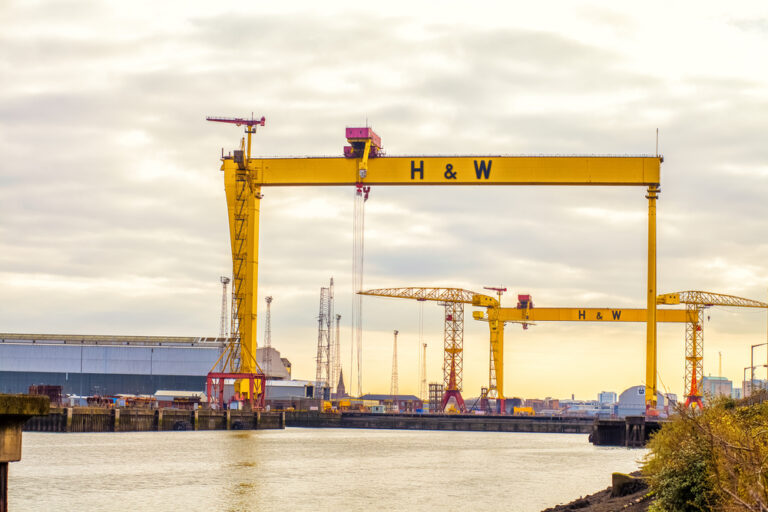
Harland & Wolff (LON: HARL) has been awarded preferred bidder status for the Falkland Islands Port Replacement Project. This could generate revenues of between £100m and £120m over two years. The project should start this year. It involves constructing four floating pontoons. The share price improved 11.1% to 11p.
Tulip Oil’s stake in Beacon Energy (LON: BCE) has been diluted from 31.8% to 23% following the recent placing at 0.05p/share. The share price is 5.56% higher at 0.0475p.
FALLERS
KEFI Gold and Copper (LON: KEFI) announced a fundraising after the market closed on Monday. The miner raised £4.5m via a placing at 0.6p/share and further £496,000 through a PrimaryBid offer. This is part of a funding package for the Tulu Kapi gold project. Management says that the NPV8 of KEFI Gold and Copper’s interest in the project, at a gold price of $1,862/ounce, is equivalent to 2.9p/share. The share price slumped 24% to 0.578p.
Lung cancer diagnostics developer LungLife AI (LON: LLAI) has raised £1.8m at 35p/share. Following positive validation study results the commercialisation process is starting. The cash will fund the evidence generating activities, including an early access programme and clinical utility studies. It will also help to raise clinical awareness and enable LungLife AI to investigate licensing opportunities. There should be enough cash until April 2025. The share price dipped 12.1% to 36.5p.
Thor Energy (LON: THR) interims show cash in the bank of A$525,000 at the end of 2023. That is after a A$974,000 cash outflow from operations and investment. The share price fell 11.8% to 1.5p.
Audio-visual services provider MediaZest (LON: MDZ) fell back into loss in the year to September 2023, as revenues declined 17% to £2.34m. Margins did improve and there was an improvement in activity in the fourth quarter. The share price declined 7.14% to 0.065p.
Harland & Wolff awarded preferred bidder status for £100m project
Harland & Wolff Group Holdings, the UK-based strategic infrastructure and asset lifecycle management firm, has landed a lucrative contract that could significantly bolster its top line. The company announced it has secured preferred bidder status for the Falkland Islands Port Replacement Project (FIPASS) from the Falkland Islands Government.
Harland & Wolff shares were 13% higher at the time of writing.
If final contract pricing and negotiations are successfully concluded, the Directors estimate the FIPASS project could generate total revenues in the range of £100 million to £120 million over a two-year period. Work on the project is expected to commence later this year.
The project involves the construction, transportation, and installation of four floating pontoons, each approximately 90 meters long, in the Falkland Islands. Harland & Wolff intends to leverage its multiple facilities to spread out the fabrication work.
“Following a competitive bid process, I am delighted that the Falkland Islands Government has selected Harland & Wolff as preferred bidder for this project,” said John Wood, Chief Executive Officer of Harland & Wolff.
“The Company enjoys an excellent relationship and a rich heritage with the Falkland Islands given that Harland and Wolff built the six linked barges which make up the existing port facility 45 years ago. I look forward to working closely with the Falkland Islands Government and bringing this contract to fruition.”
Greggs sales and profit rise as market share increases
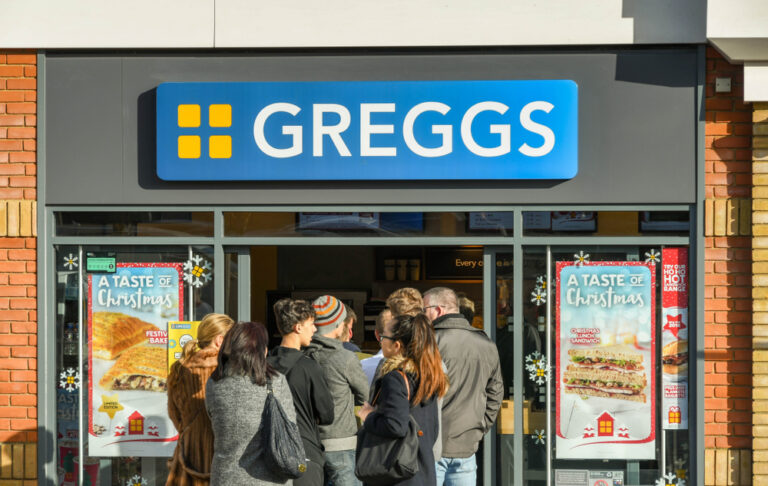
There is no stopping bakery chain Greggs who recorded another year of sales and profit growth as the chain opened more stores and kept them open later.
The UK’s insatiable demand for the humble sausage roll helped Gregg’s total revenue increase 19.6% and like-for-like sales rise 13.7% in 2023.
Greggs is now the UK’s top food-to-go company according to YouGov’s Brand Index and has a total share of visits of 8.2%.
Even though the group said costs have increased over the last year, Greggs maintained healthy margins and underlying profit before tax rose 13.1%.
“Greggs has enjoyed an excellent year despite the challenging economic environment. Sales and profits have both risen, despite significant cost inflation, and the group is returning more cash to shareholders through dividends. All in all, an impressive performance,” said Charlie Huggins of Wealth Club.
In terms of costs, investors will be encouraged to learn Greggs sees cost increases slowing going forward which will be supportive of earnings. Greggs said in a statement: “inflationary pressures are reducing and we have improved visibility of costs in the coming year.”
The company has consistently expanded its presence across the UK with new store openings and opening stores later into the has helped bolster the top line.
“Greggs continues to show why it’s the UK’s leading food-to-go brand (YouGov’s Brand Index). This is a business intent on growing, aiming to surpass 3,000 UK shops while enhancing its multi-channel approach for better service. Digital channels are booming, with delivery sales up 23.6% last year following partnerships with Just Eat and Uber Eats,” said Matt Britzman, equity analyst, Hargreaves Lansdown.
“Greggs is extending hours to capture more of the evening market and bolstering its brand to both deepen loyalty and attract new customers.
“Greggs is far more than just a treat, and its value offering puts it in a sweet spot with consumers still battling higher living costs. Maintaining that price point is key, and with cost inflation easing Greggs is making sure customers feel the benefit too. That’s likely to be a small drag on sales growth this year compared to last, but there are plenty of other growth avenues to target.”
Strong operating profit growth is translating into higher shareholder distributions with an increased ordinary dividend and a bumper 40p special dividend.
Greggs ordinary dividend isn’t anything to write home about but the additional 40p special dividend means payouts will total 102p per share.
“Investors don’t have to sit and wait while the growth strategy plays out. Greggs already boast a modest 2.6% forward yield and today’s special dividend is further evidence that the board’s keen to pay investors while it expands.”
Canadian firm Carbon Done Right Developments Inc plans AIM quotation
TSX Venture Market-listed carbon offsetting firm Klimat X Developments Inc (TSXV: KLX) is changing its name to Carbon Done Right Developments Inc and plans to gain a quotation on AIM early in the second quarter.
The company was a cash shell known as Earl Resources before the acquisition of the Klimat X business in June 2022. The current share price is C$0.07 (C$0.065/C$0.075) and the market capitalisation is C$6.58m (Carbon Done Right Developments Inc Com (KLX) | TSXV Stock Price | TMX Money). There were 250,100 shares traded on Monday.
The company has 57,000 hectares in Sierra Leone and there are plans to increase this to 100,000 hectares. This is unproductive land leased from small farmers. So far, 1,400 hectares of forest and 14 hectares of mangrove have been planted.
There is another project underway in Yucatan, Mexico. That involves restoration of up to 40,000 hectares of degraded mangrove and the joint venture partner is Imperative Global Projects.
The company has entered into an operating, licensing and purchase option agreement with an entity called Carbon Done Right, which is a technology enabled, carbon quantification platform. The remote sensing and monitoring technology is called Carbon Quantification System. This tracks each tree planted, which provides transparency for carbon project managers.
Revenues are still modest with C$69,000 in 2022 and C$129,000 in the nine months to September 2023.
At the end of 2022, net assets excluding non-controlling interests were C$8.55m. By the end of September 2023, the figure was C$6.14m. That included C$582,000 in cash.
A carbon credit offtake agreement with a Fortune 100 company, which will buy carbon credits from the Sierra Leone rewilding project. This has generated C$664,000, which is included in the balance sheet as deferred revenue.
Klimat X has secured a convertible bridging loan to help to fund professional fees charged in the process of coming to AIM.
FTSE 100 falls despite strong Asian session, Budget eyed
Another day and another trading session in which the FTSE 100 misses out on the broader zest of global equities.
Not even another record high and the break of the substantial psychological level of 40,000 for the Japanese Nikkei fired up UK equity bulls on Monday.
“After starting on the front foot, the FTSE 100 dipped in a seesaw start to the session. The index was dragged lower by financials ahead of this week’s UK Budget,” said AJ Bell investment director Russ Mould.
“A cautious mood pervaded despite Japan’s Nikkei 225 breaking new ground to trade above the 40,000 mark. The push for the index to new all-time highs is undoubtedly a key milestone but whether it truly marks an end to more than three decades of stagnation is still up for debate. One swallow doesn’t make a summer and the fact it has taken since 1989 for the index to claim a new record high is probably cause for some reflection rather than outright celebration.”
Although there was mild positivity in European indices, the FTSE 100 was firmly lower, shedding 0.6%.
BT was the top riser with a gain of 1.8% as the FTSE 100 fell 0.6%. The index was dragged lower by weaker miners, banks and housebuilders.
Ocado fell 5% as the FTSE 100’s biggest faller.
Budget
With the UK government’s last budget before the general election scheduled for this Wednesday, UK-centric sectors will be in focus as investor position for any potential policy changes.
However, it is not yet clear what to expect from the chancellor, who will have his hands tied by the threat of a rerun of the fallout in financial markets following Liz Truss’s doomed autumn statement.
Jeremy Hunt and Rishi Sunak would like to be in a position to announce a wave of tax cuts to win over voters ahead of this year’s general election, but that may be beyond their reach. Markets will expect business-friendly policies as well as long-overdue amendments to savings products.
The UK government is under pressure to revive UK equity markets, and any fresh measures unveiled this week will be aimed at encouraging retail investor participation in stocks.
“With blue-chip stocks finding it hard to regain their mojo and the swoop on British companies continuing, rumours are swirling that Jeremy Hunt will try and revitalise the London markets, by offering tax incentives to retail investors,” said Susannah Streeter, head of money and markets, Hargreaves Lansdown.
“While and increase to the annual ISA allowance would be hugely welcome, he should steer clear of introducing a ‘British ISA. This would add unnecessary complexity and could have a negative impact on UK investors.”
The FTSE 100’s housebuilders could have been in for quite a week if Jeremy Hunt announced a 1% mortgage but this has supposedly now been ditched.
Autins continues recovery and appoints new boss
Thermal insulation and acoustic material manufacturer Autins Group (LON: AUTG) is maintaining its recovery momentum and cost savings helped to reduce the 2022-23 loss. A new chief executive is joining in April, and he has extensive experience in the core automotive market. The share price recovered 6.25% to 8.5p, but this is only just above the all-time low.
The AIM-quoted company has been winning new contracts with automotive manufacturers such as Jaguar Land Rover and Nissan. There has been a positive customer reaction to new products including the 100%-recyclable Neptune-R material.
In the year to September 2023, revenues improved from £18.9m to £22.7m, while the pre-tax loss reduced from £3.55m to £1.04m. Gross margin improved from 22.5% to 29.5%. All the growth was in the automotive sector with other revenues declining – mainly due to the weak flooring market in Germany.
Productivity has improved and there has been a lower staff turnover. Waste has been reduced. Conversion to renewable energy sources has reduced carbon emissions by 88%, although utility costs did rise by £500,000 as forward contracts came to an end.
Net debt declined from £2m to £1.6m. The unused invoice discounting facility provides cash headroom of £4.1m. That is enough to cover the expected debt repayments until the end of 2024.
Andy Bloomer is replacing Gareth Kaminski-Cook on 22 April. He has been head of sales and marketing of a division of Morgan Advanced Materials for the past four years. This has annual revenues of £150m. He has experience with electric vehicles and speaks German – Germany is a key market. There are no forecasts for the current financial year, but Singer believes that full year revenues of £26m are possible. That might have been enough to achieve a small operating profit, but management says that more will be spent on sales and marketing and R&D in the second half. That will hold back improvement in profitability. It is also before the new chief executive comes in and assesses the situation.