Google is being sued after a man was led to death by maps

0

Late at night in September 2022, Philip Paxson died after following Google Maps’ directions to a collapsed bridge. Now his family is suing Google for negligence. 

According to the lawsuit, the bridge in North Carolina, US, collapsed in 2013. Over the years, the company has received multiple complaints about the bridge´s malfunction but has done nothing.

Google´s spokesperson, José Castañeda, said that:

“We have the deepest sympathies for the Paxson family. Our goal is to provide accurate routing information in maps, and we are reviewing this lawsuit.”

The route through the Snow Creek Bridge, known as the “Bridge to Nowhere” by locals, remains active.

The lawsuit also targets Google`s parent company, Alphabet Inc., the owner of a piece of land where the bridge is located, and the individuals responsible for its maintenance.

The bridge is usually surrounded by warning signs and barricades, but those were “removed after being vandalised and were missing at the time of Paxson’s wreck”, reported the Charlotte Observer.

Philip Paxson`s widow, Alicia, said:

“Our girls ask how and why their daddy died, and I’m at a loss for words they can understand because, as an adult, I still can’t understand how those responsible for the GPS directions and the bridge could have acted with so little regard for human life.”

Premier African Minerals shares edge higher as lithium production set to resume

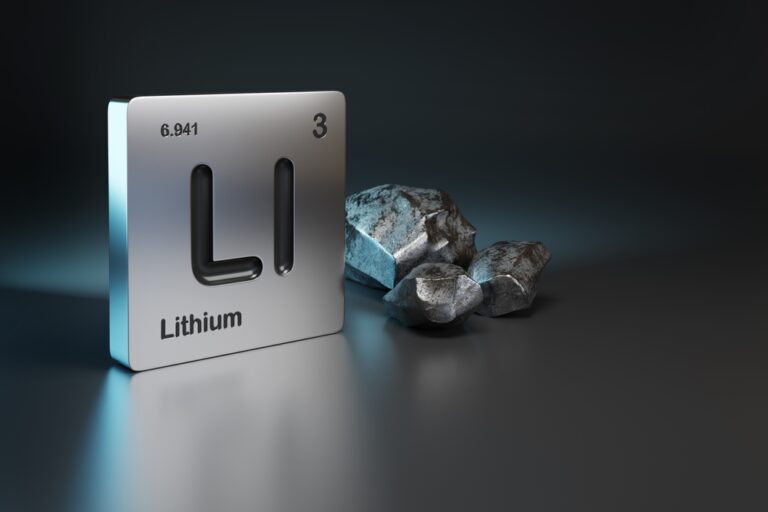
Premier African Minerals shares edged higher on Friday as investors positioned for the recommencement of lithium production at the flagship Zulu project.

The company has completed the installation of much-needed processing machinery and is set to resume open-pit mining from next week.

Premier African Minerals shares were 1% higher at 0.52p at the time of writing.

Premier is required to ramp lithium production up to 1,000 tonnes per month by 1st November 2023 or face penalty payments contracted with offtake partner Canmax.

The next month will be crucial for meeting these targets and investors will be on the edge of their seats waiting for further updates.

“Subsequent to our update of 23 August 2023, I am pleased to confirm the completion of the installation of the Mill including all necessary feeds and discharge components, pumps, control circuitry and grinding media requirements that is expected to support planned production of up to 1,000 tons per month of spodumene from November 2023 at Zulu,” said George Roach, CEO, in a statement issued yesterday.

“The commissioning phase is now planned to commence from today with first material expected to be fed through the Mill on Monday, 25 September 2023.

“Open pit mining operations at Zulu are expected to resume next week and while there is already substantial material on the run-of-mine pad, it remains critical that the plant has sufficient ore for current processing.

“Further updates will follow in Premier’s unaudited interim results for the six months ended 30 June 2023 which will be published on 29 September 2023.”

Bank of England’s surprise rate hike pause fails to take FTSE 100 higher

The Bank of England made the surprise decision to keep rates on hold on Thursday, with the nine voting members split five to four on whether to keep interest rates at 5.25%.

The FTSE 100 did pop higher in the immediate reaction, but the rally faded shortly afterwards, and London’s leading index was trading down 0.25% at 7,712 at the time of writing.

The FTSE 100 touched lows of 7,674 earlier in the session.

The skittish nature of UK stocks in the aftermath of the decision to keep rates on hold after 14 consecutive hikes reflects division in the Bank of England and the mixed picture of the UK economy.

“There were a lot of moving parts for the Bank of England (BoE) to contend with going into today’s decision. But, with yesterday’s core print still three times higher than the BoE’s target and wage growth remaining strong, the BoE clearly want to stamp inflation into the ground for good,” said Giles Coghlan, Chief Market Analyst consulting for HYCM.

“However, there is a risk that the ‘lag effect’ on interest rate hikes means that today’s decision may not be felt for another 9 to 12 months. As such, with economic growth already faltering and core inflation remaining high, today’s hike runs the risk of overtightening the economy and inducing a period of stagflation further down the line.”

As an ultra interest rate sensitive sector, Housebuilders were among the top risers on Thursday and built on yesterday’s gains. Taylor Wimpey was 1.6% higher, and Barratt Developments had gained 1.8% at the time of writing. Both were well off session highs.

While keeping rates steady at 5.25% is good for housebuilders and the UK property market, there is the question of what the Bank of England knows about the health of the UK economy that we don’t.

For the BoE to hold off hiking rates while inflation rates are still at 6.7% suggests they see a weakening in the UK economy, which would warrant keeping rates on hold.

With the Bank of England and Federal Reserve both keeping rates on hold in the last 24 hours, attention will very quickly shift to growth rates and what they mean for company earnings.

JD Sports & Next

Insight into the health of UK consumers was provided by Next and JD Sports on Thursday, who both reported positive first-half trading. The two were the FTSE 100’s top risers, with Next gaining 3.2% and JD Sports surging 6%.

Next increased their profit guidance for the year while JD Sports reported strong organic growth.

AIM movers: Strix debt problem and ex-dividends

0

Vela Technologies (LON: VELA) shares jumped 51.2% to 0.031p on the news that Conduit Pharmaceuticals will start trading on Nasdaq on Friday. This will trigger the option to sell the interest in AZD1656 to Conduit Pharmaceuticals for £4m.

CT Automotive (LON: CTA) reported better than expected interim revenues as vehicle production increases and new business is won. Gross margin also recovered, helping the interior components supplier to move back into profit and more than halve debt to $9m over a 12-month period. Liberum trimmed is 2023 pre-tax profit forecast from $9.1m to $8.7m, although revenues have been upgraded by 8% to $135.5m. The share price is 13.8% higher at 45.5p. The December 2021 placing price was 147p.  

Premier African Minerals (LON: PREM) is commissioning the mill for the Zulu lithium project. Production of spodumene should reach 1,000 tons/month by November. The share price is 5.15% higher at 0.51p.

Neometals (LON: NMT) has been granted a lithium-ion battery recycling patent in Australia. Neometals owns 50% of the project. The technology recovers minerals from lithium-ion batteries. This includes cobalt, nickel, manganese and lithium. The share price rose 6.82% to 23.5p.

FALLERS

Shares in Strix (LON: KETL) slumped 40.3% to 54.65p on the decision to cut the dividend because of high borrowings. Acquisitions have pushed up net debt to £93.1m. The economic recovery has also been slower than expected. Revenues are growing, but higher interest rates meant that interim pre-tax profit has dived from £11.6m to £5.7m.

Yesterday, Eqtec (LON: EQT) announced that the Billingham waste-to-energy project is not going ahead. Potential customers have closed facilities and the project is behind schedule. So far, £4m has been invested. Eqtec is also taking legal action against its partner in the Deeside project, seeking repayment of £4m of loans. Forecast 2023 revenues have been slashed by more than three-quarters to €2-3m. Net debt is expected to be €5.7m and double that at the end of 2024. The share price dived 34.6% to 0.085p.

Harvest Minerals (LON: HMI) reported interims showing a near-doubled loss as demand for fertiliser and pricing was lower in the period. The second half sales are normally much greater than in the first half, but they continue to be disappointing. Low crop prices mean that farmers are disinclined to boost production. Cash has declined and the company has moved into net debt of £1.4m, partly due to a jump in inventories. The share price fell 34.2% to 1.35p.

Bluejay Mining (LON: JAY) announced a downgrading of the resource at the Dundas project in Greenland due to inconsistent exploration results. The resource is 29.7Mt grading 1.99% titanium dioxide, compared with 67.1Mt grading 3.45% titanium dioxide previously. This means that additional work is required to assess whether the project is commercial. There was better news of the progress of the Disko-Nuussuaq nickel project. The share price dipped 20.9% to 0.759p.

Ex-dividends

Alpha Group International (LON: ALPH) is paying an interim dividend of 3.7p/share and the share price rose 20p to 2020p.

Brooks Macdonald (LON: BRK) is paying a final dividend of 47p/share and the share price dipped 37.5p to 1832.5p.

Churchill China (LON: CHH) is paying an interim dividend of 11p/share and the share price declined 5p to 1300p.  

Driver Group (LON: DRV) is paying an interim dividend of 0.75p/share and the share price is unchanged at 27.5p.

Eckoh (LON: ECK) is paying a final dividend of 0.74p/share and the share price is 0.5p lower at 43p.

Eleco (LON: ELCO) is paying an interim dividend of 0.25p/share and the share price is unchanged at 82p.

Gamma Communications (LON: GAMA) is paying an interim dividend of 5.7p/share and the share price fell 22p to 1130p.

Hargreaves Services (LON: HSP) is paying a dividend of 18p/share and the share price is 14.5p lower at 455.5p.

Ingenta (LON: ING) is paying an interim dividend of 1.5p/share and the share price declined 1p to 123.5p.

Jet2 (LON:JET2) is paying a final dividend of 8p/share and the share price fell 22p to 1095p.

Keystone Law (LON: KEYS) is paying an interim dividend of 5.8p/share and the share price dipped 7.5p to 485p.

Midwich Group (LON: MIDW) is paying an interim dividend of 5.5p/share and the share price declined 5.5p to 412.5p.

Mattioli Woods (LON: MTW) is paying a final dividend of 18p/share and the share price slipped 20p to 600p.

Public Policy Holding Company (LON: PPHC) is paying an interim dividend of 4.5 cents/share and the share price is unchanged at 124.5p.

Robinson (LON: RBN) is paying an interim dividend of 2.5p/share and the share price is unchanged at 92.5p.

Restore (LON: RST) is paying an interim dividend of 1.85p/share and the share price is 7p lower at 187.5p.

Somero Enterprises (LON: SOM) is paying an interim dividend of 10 cents/share and the share price slumped 15p to 285p.

The Property Franchise Group (LON: TPFG) is paying an interim dividend of 4.6p/share and the share price is 2.5p lower at 282.5p.

Federal Reserve keeps rate at 5.5% in ‘hawkish hold’, dollar rallies

Last night, the U.S. Federal Reserve announced they would keep interest rates on hold at 5.5%.

The announcement was followed by a press conference, during which the Federal Reserve hinted that they do see the interest rates rising again by the end of the year and rates would remain elevated for a longer period.

USD strengthened in the aftermath of the press release, and GBP fell to $1.2293 against the U.S. dollar, hitting a five-month-low this morning. The Euro also fell below $1.07 against the dollar.

At noon the Bank of England is to make a decision regarding UK’s interest rates. 

According to Susannah Streeter, head of money and markets at Hargreaves Lansdown:

”Nervousness is pervading sentiment as investors assess the prospects of interest rates staying higher for longer.

”The mood is being driven by the U.S. Federal Reserve taking a defensive stance in the fight against inflation, pausing for now but signalling a fresh rate hike to come“, she added. 

The Federal Reserve’s announcement has created a lot of speculation as to what fate awaits UK and the next decision on interest rates.

According to Marios Hadjikyriacos, the senior investment analyst at XM: 

”Following the latest inflation report that was colder than expected, markets are pricing this rate decision almost as a 50-50 coin toss. 

“Admittedly, the data pulse argues for no action. The labor market loss jobs in July while economic growth stagnated, and business surveys suggest these trends will persist or worsen.

“The only real argument in favour of a rate increase is wage growth, which is extremely hot and continues to accelerate”.

Converting higher interest rates into a substantial dividend yield with the M&G Credit Income Investment Trust

The UK Investor Magazine was thrilled to welcome Adam English, Fund Manager of the M&G Credit Income Investment Trust, for a deep dive into the trust and the opportunity for investors to benefit from the higher interest rate environment.

Adam employs a counter-cyclical approach to portfolio composition and focuses on private and public credit assets with floating rates.

The trust pays a quarterly dividend at a rate of SONIA +4% which has gradually increased since the Bank of England started hiking rates.

Visit the M&G Credit Income Investment Trust website.

The M&G Credit Income Investment Trust is an investment-grade portfolio which means the portfolio is considered lower risk than other high-yield fixed income trusts.

JD Sports shares soar as sales in Europe and Asia surge

JD Sports is a fantastic example of a British company dominating its domestic market and replicating this success through overseas expansion.

Shares in the sports fashion retailer were 6% higher in early trade on Thursday after announcing robust organic growth mainly driven by growth in North America, Europe and Asia.

“We have delivered a strong first half to our financial period with organic sales growth of 12% and profit on track for the full year,” said Régis Schultz, Chief Executive Officer of JD Sports Fashion.

“In line with our strategic plan, growth is being driven by our premium Sports Fashion business with an impressive performance in Europe (+27%) and North America (+15%), supported by a strong performance in our more mature UK market (+8%). This performance continued in the important back to school period.”

Investors will be pleased with progress in North America which represents a substantial growth opportunity for the company. However, the most exciting source of growth was Europe and Asia Pacific where JD recorded organic growth of 26.9% and 25.6% respectively.

UK revenue grew 7% to £1.2bn.

“It’s a tough place for consumer-facing companies given the uncertain macro backdrop. Consumer confidence remains fragile even though there are signs of a slowdown in the rate of inflation,” said Russ Mould, investment director at AJ Bell.

“Selling trainers and tracksuits can be big business and many people aspire to own the latest products. That said, these items aren’t cheap and so just because someone wants something doesn’t mean they can always afford it. JD Sports is aware of this situation and rightfully doesn’t assume its goods will continue to fly off the shelf at pace.

“While it is good practice to be cautious, JD Sports’ results still show a business in good health. Sales, profits and dividends are all up, it is investing in the business to support geographic growth, and it is finding new ways to keep customers happy and on its side.

“That includes a loyalty scheme trial in the UK for 10 stores in Manchester which involves customers collecting a virtual JD currency that can be used towards future purchases. These initiatives can be easy wins for retailers.”

Next shares rise as profit guidance increased again

Cost-of-living crisis? What cost-of-living crisis? This is certainly the impression Next’s half-year report gave on Thursday.

Next shares were 2% higher in early trading on Thursday after the high-street bellwether said profit before tax rose 4.8% to £420m in the first half.

Shaking off any concerns about the health of the consumer, Next also increased its full-year profit before tax guidance increased from £845m to £875m. This constitutes a 0.5% increase on the last full year.

“Next has pulled another rabbit out of the hat today, leading to a further upgrade to its full-year sales and profit guidance,” said Charlie Huggins, fund manager at Wealth Club.

“UK consumer spending appears to have defied gravity. A strong employment market and rising wages have helped cushion inflationary cost pressures, meaning consumers have continued to spend, despite the gloomy economic headlines.

“Not all retailers have benefited, as the travails of Wilko show. Next has capitalised by doing the simple things well. Once again its operational execution continues to outshine almost all of its competitors.”

Although Next’s increased sales will play a major part in meeting its full-year profit guidance, the company has successfully reduced costs and streamlined its online business which will help the bottom line through the rest of the year.

“If you have an idea of the challenges on the horizon, it’s possible to put your business in the right shape to survive. That seems to be Next’s approach, as it has benefited from focusing on key cogs in the business to navigate the difficult market environment,” said Russ Mould, investment director at AJ Bell.

“Broadening its product offering, making sure the online service is as efficient as possible and keeping a sharp eye on costs have all been key focal points and Next has come out on top. These factors and steady demand from customers have enabled it to raise profit expectations.”

Firering Strategic Minerals raises cash to invest in lithium project

0

Firering Strategic Minerals (LON: FRG) is planning to raise £680,000 at 6.5p/share and this will be used by the AIM-quoted company to define identified pegmatite targets through a drilling campaign at the Atex lithium-tantalum project in Cote d’Ivoire.  

Uses for the cash include 3,000 metres of reverse circulation drilling to increase the understanding of the new six pegmatites identified and Laser Induced Breakdown Spectrometry soil sampling. There will also be some cash to finance a team of technical experts for the owner of a limestone project in Zambia, where Firering Strategic Minerals has an option to acquire up to 28.3%. The crushing system has already been commissioned. This project should generate cash within 24 months.

Firering Strategic Minerals holds 90% of the company that owns the Atex project. Firering Strategic Minerals also owns 75% of Bri Coltan, which owns the coltan rights for the Atex area. Coltan is composed of tantalum, niobium, iron and manganese.

Part 1 of the phase II drilling campaign has been completed. This has been done in partnership with Ricca Resources. Nine target areas have been identified, including the six newer ones. The latest drilling is planned for the fourth quarter of 2023.

When it floated in November 2021, Firering Strategic Minerals raised £4m at 13p/share. The placing was announced after the market closed and the share price was 6.75p.

Consider the Rights and Issues Investment Trust for the UK small-cap recovery

The UK small-cap market is having a difficult time. The macro picture is not on its side and smaller companies are almost always the first to suffer during challenging economic conditions.  

It is during such periods investors are presented with the opportunity to secure holdings in vehicles which can provide returns long into the future.

With a discount of 16% and a dividend yield of 2%, investors should consider the Rights and Issues Investment Trust for exposure to the UK small-cap market.

The trust invests a minimum of 80% of its assets in UK small caps and AIM-listed companies.

Over the past 10-year period, the Rights and Issues Investment Trust’s NAV has returned 137.9% compared to the FTSE All-Share Benchmark’s return of 70.6%.

Managers Daniel Nickols and Matt Cable look for opportunities that can provide above-average returns over the long term and avoid short term trading opportunities.

Investing in small caps and the AIM is all about conviction and the managers of the Rights and Issues Investment Trust have this in abundance.

The Trust has employed a concentrated low turnover approach to stock selection since its inception in 1962 and only has about 20 stocks in the portfolio.

As of the end of August, the top ten holdings accounted for 69% of the portfolio demonstrating the conviction in their holdings.

Top Ten Holdings (31.08.23)

Vp Plc
10.26%
Macfarlane Group Plc
9.74%
Colefax Group Plc
9.26%
Hill And Smith Plc
7.39%
Renold Plc
6.38%
Telecom Plus Plc
5.76%
Treatt Plc
5.56%
Alpha Group International Plc
5.53%
Gamma Communications Plc
5.43%
Carrs Group Plc
4.82%
Total 69.0%

Positioning for recovery and future growth

It is easy to over-diversify a small-cap portfolio and hug the benchmark’s performance. However, material outperformance is typically achieved through a highly concentrated selection of high-conviction ideas.

Since Jupiter was appointed as the manager of the Rights and Issues Investment Trust in October 2022, Nickols and Cable have stayed true to the trust’s historic approach to concentration and conviction, but have set about putting their own stamp on the portfolio.

While maintaining a high level of concentration, the first half of 2023 saw a number of holdings cut from the portfolio while some of the larger holdings were reduced to make space for new additions.

At the start of 2023, the portfolio held positions in 22 stocks with the top five positions accounting for 50% of NAV and the top ten for 76%.

On 31st August, Rights and Issues held 21 stocks with the top five accounting for 43% of NAV and the top ten for 67%.

The top holding accounted for 12.6% of the portfolio at the beginning of the year which reduced to 10.26% at the end of August.

These are marginal amendments and likely reflect the new manager’s desire to bolster the portfolio with higher conviction ideas, rather than move away from a strategy of high concentration and low turnover.

A number of smaller holdings such as Titon Holdings and Coral Products were sold as was Castings which the managers felt offered little upside.

The disposals made way for four exciting new additions; OSB Group, Marshalls, Spirent Communications and Gresham Technologies. These holdings expand the trust’s exposure to banking, UK construction, technology and communications.

What is striking about these new additions is that they present cyclical opportunities which should provide handsome returns during an economic recovery.

OSB is particularly interesting. OSB is a specialist buy-to-let mortgage provider and has suffered dearly in the current environment. The group has experienced adversities in the face of changes to interest rates and general pessimism around the UK housing market.

OSB represents an out-of-favour small-cap company with a plentiful opportunity for recovery. The same can be said of building materials company Marshalls.

Again highly linked to the UK housing market, Marshall’s sales have suffered this year as new house building slowed and shares trade substantially below the 52-week high.

None of the four new additions are in the top ten holdings suggesting the managers are willing to gradually build positions during the periods of share price weakness in preparation for the eventual recovery.

This highlights Rights and Issues’ long-term approach to investing in small-caps and the willingness to build a high conviction position over time.