Oil prices drop as US inventories build

On Wednesday, oil prices faced challenges, declining to a three-month low in the prior session. This decline is fueled by a fall in exports from the United States and China.

WTI Crude is down 1.5%, and Brent Crude is down 1.3% at the time of writing.

Chinese oil exports have been dipping for six months. This, according to Derren Nathan, head of equity researcher at Hargreaves Lansdown, means that “demand concerns were heightened by a 6% fall in Chinese exports, the sixth decline in as many months. But traders also factored in a potential oversupply. US crude inventories rose more than expected yesterday.”

Oil prices faced additional pressure as the U.S. dollar (.DXY) experienced a slight rebound from recent lows, increasing the cost of oil for holders of alternative currencies. ​​

The U.S. Energy Information Administration (EIA) now forecasts a slightly smaller increase in U.S. crude oil production this year, accompanied by a felt decline in demand.

EIA now indicates a 300,000 bpd reduction in total petroleum consumption, in contrast to the initial prediction of a 100,000 bpd increase.

The EIA website states that the data this week is delayed and rescheduled to be posted on November 13, citing that the delay was caused by a planned system upgrade.

China’s central bank governor stated on Wednesday that China is on track to meet its annual gross domestic product growth target of around 5% this year.

Despite economic challenges such as high inflation and interest rates, OPEC anticipates global economic growth to boost fuel demand.


AIM movers: Luceco invests in eEnergy Group and Versarien fundraising

0

Fully listed Luceco (LON: LUCE) is investing £1.75m in energy as a service provider eEnergy Group (LON: EAAS) at 5p/share, which was a 25% premium to the market price, which has recovered 46.3% to 5.85p, which is 74.6% higher than at the start of the year. Luceco, which will have a 9.1% stake, has been supplying LED lighting to eEnergy Group and some of the cash will go to settling trading balances. The company will continue to spend the same amount on Luceco lighting products, subject to price and availability. eEnergy Group has received approaches for the energy management division and there are exclusive talks with a potential buyer, which could generate more than £30m. This would be reinvested in the energy services business. The Luceco share price rose 1.13% to 107p.

Information publisher Merit Group (LON: MRIT) made a positive start to the financial year and forecasts have been upgraded. Interim revenues improved 7% to £9.9m and Merit Group returned to profit. Full year pre-tax profit estimates have been raised from £900,000 to £1.3m. The share price jumped 31.2% to 71.5p.

Neometals (LON: NMT) says its lithium-ion battery recycling joint venture Primobius has proved that it can produce batter-grade nickel sulphate from German electric vehicles batteries. A third-party laboratory has validated the product. Final test work on cobalt recycling will be in this quarter. The shares price is 11.1% higher at 15p.

Artemis Resources (LON: ARV) has raised around £1m at A$0.018/share. The share price improved 14% to 1.425p. The placing was oversubscribed and provides working capital as Artemis Resources tries to secure a joint venture partner for the Paterson licence, near to the Havieron discovery. It is also seeking to expand the Carlow Castle copper gold cobalt deposit and explore lithium targets.  

FALLERS

Graphene technology developer Versarien (LON: VRS) has raised £455,000 at 0.275p/share. This provides working capital while the company tries to sell non-core assets. The amount receivable from disposals is uncertain. The share price slumped 34.9% to 0.338p, which is a new low.

Savannah Resources (LON: SAV) revealed investigating officers from the Portuguese authorities attended its business locations in the country. It says none of its directors and employees are targets of the investigation, which relates to other operations in the region. The share price fell 19.7% to 2.65p.

Investment company Tern (LON: TERN) has decided not to invest more money in InVMA, which trades as Konektio, and that means that three-quarters of its 28% stake pre-dilution will be transferred to a valueless class of deferred shares. This is because Tern previously committed to invest £280,000 in a second tranche of a fundraising that is due for completion before the end of the year. Konektio develops internet of things software enabling remote asset monitoring. The share price dived 10.5% to 4.25p.

Trinity Exploration and Production (LON: TRIN) has removed the blockage in the Jacobin well in Trinidad. The production test will restart soon. The share price slipped 7.97% to 63.5p.

What Rightmove shares tell you about the UK property market housebuilding stocks don’t

Rightmove shares are signalling an underlying trend in the UK property market that all homeowners and investors in property stocks should be aware of.
The past week has seen a sharp contrast between the Rightmove share price and those of the UK housebuilders.
The prospect of UK interest rates remaining on hold for the foreseeable future sparked a rally the UK housebuilders as it marked an end to rising mortgage costs that have crippled the market.
Rightmove shares, however, did not join in the rally.
Indeed, Persimmon shares surged yesterday after increasing their completion guidance for the y...

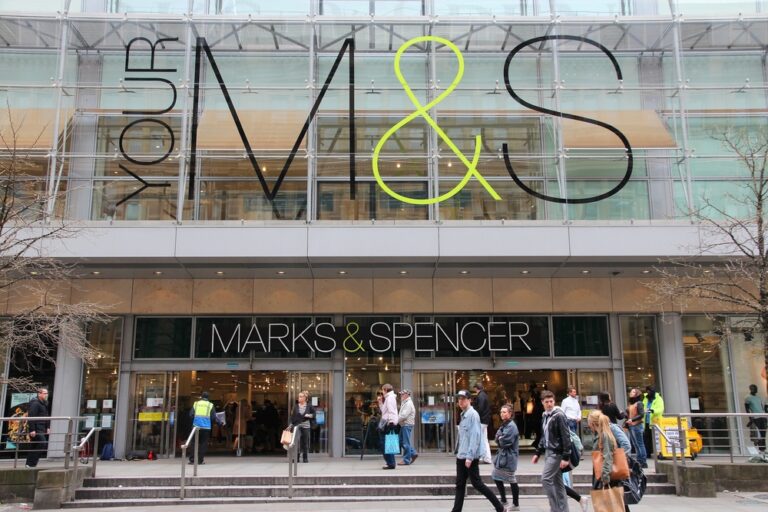
Marks & Spencer shares surge as dividend reinstated, profit beats expectations

Marks & Spencer shares jumped on Wednesday after the retailer released surging profits that beat expectations and reinstated the dividend.

M&S delivered a bumper performance in the half year to 30th September, with profit before tax and adjusting items reaching £360.2m, up 75% from £205.5m in the prior year.

Statutory profit before tax also rose significantly to £325.6m, up from £208.5m.

Marks & Spencer shares were 9.9% higher at the time of writing.

The M&S food business was a major source of growth as demand for their premium range proved resilient despite concerns about the cost of living crisis.

Food sales were up 14.7%, driving an adjusted operating profit of £164.9m – a substantial increase from £71.8m in the same period last year.

The Clothing & Home business has been the laggard for M&S in recent years yet shareholders will be pleased with recent performance in the segment. Sales rose 5.7% while producing an adjusted operating profit of £223.4m, an improvement of £171.7m in the last year.

“Good progress in Clothing and Home, where Marks & Spencer has struggled in recent years, has to be commended. It shows the extent to which the company has regained its style credentials and it is particularly admirable given the pressure on sales of discretionary items amid the cost-of-living crisis,” said Aarin Chiekrie, equity analyst at Hargreaves Lansdown.

Chiekrie continued to explain that although Home & Clothing was good, food was the main event for investors.

“M&S food was the standout performer in the first half, with demand here arguably more protected from high levels of inflation. At a more premium end of the market, M&S’ core customers aren’t as sensitive to price,” said Chiekrie

“Coupled with impressive margin growth, total underlying operating profits jumped significantly. There’s also been good headway on the group’s reshape programme, which looks to pivot to new locations and refresh existing stores to create a more productive estate. Full-year guidance has been maintained, albeit performance is expected to be weighted towards the first half, with the group likely wanting to get through the Christmas period any potential move of the dial on expectations.”

While the sales numbers for both the clothing and the food businesses were very respectable, the most positive takeaway from today’s update is the reinstatement of the M&S dividend, which was scrapped in 2019.

After a long wait for the turnaround strategy to filter through to earnings, M&S is rewarding shareholders with a 1p interim dividend.

There was a tone of caution in the company’s outlook as they highlighted the geopolitical environment, interest rates and tough comparables going forward.

“However, pressure on the UK consumer could intensify heading into 2024 as the impact of higher interest rates really starts to bite. This, combined with tougher comparatives means M&S is striking a tone of caution looking ahead to the second half. This may disappoint investors,” said Wealth Club’s Charlie Huggins.

Director deals: Non-exec buys Hilton Foods shares ahead of Capital Markets Day

Meat, seafood and ready meals supplier Hilton Foods Group (LON: HFG) has hosted an analyst and investor day at its production facility in Huntingdon. This provided an overview of the strategy of the group and the focus on organic growth. It also set out financial targets. A replay is on the company’s website (www.hiltonfoods.com). The share price rose 4.33% to 674p.
On Monday, the day before the presentations, non-executive director Patricia Dimond bought 5,963 shares at 666.958p each. Prior to this purchase she owned just under 12,000 shares. The previous purchase during April was of 7,575 sh...

FTSE 100 whipsaws as interest rate hopes dashed, housebuilders gain

The FTSE 100 whipsawed on Tuesday as any hopes of lower borrowing costs in the near term were hit by comments by a Federal Reserve official, and Chinese data curtailed sentiment.

The Federal Reserve’s highly accommodative monetary policy involving ultra-low interest rates and quantitative easing in the wake of the financial crisis was often referred to as a ‘punch bowl’ for markets due to the associated bullishness and asset price inflation.

The beginning of the tightening cycle nearly two years ago marked an end to this period, and the world has endured steadily increasing borrowing costs since. 

However, last week, we saw a glimmer of what may be to come when the Federal Reserve eventually cuts rates again. A weaker US jobs reports had some raising the question of rate cuts early next year, and global equities surged.

Interest rate hopes dashed

Unfortunately for the bulls, the prospect of the ‘punch bowl’ of easier monetary policy returning was dealt a blow on Monday after Fed official Neel Kashkari alluded to additional rate hikes by saying: “We haven’t completely solved the inflation problem. We still have more work ahead of us to get it done.”

Equities whipsawed in what was a tentative European session. The FTSE 100 was down 0.1% at the time of writing while US futures were pointing to a lower open across the pond.

Poor Chinese economic data was also dragging on the FTSE 100 with Antofagasta, Anglo American and Glencore making up the top three fallers.

“While signs of a softer economy in the US are typically taken as a positive by markets as they anticipate an end to their trial by interest rate hikes, weak economic data from China is just bad news,” said AJ Bell investment director Russ Mould.

“Worse-than-expected Chinese trade data prompted a gloomy start to proceedings on Tuesday as some of the euphoria from rate pauses in the US and UK ebbed away. Helping to sour sentiment was news of Australia’s central bank going against the grain and increasing rates for the first time in five months.”

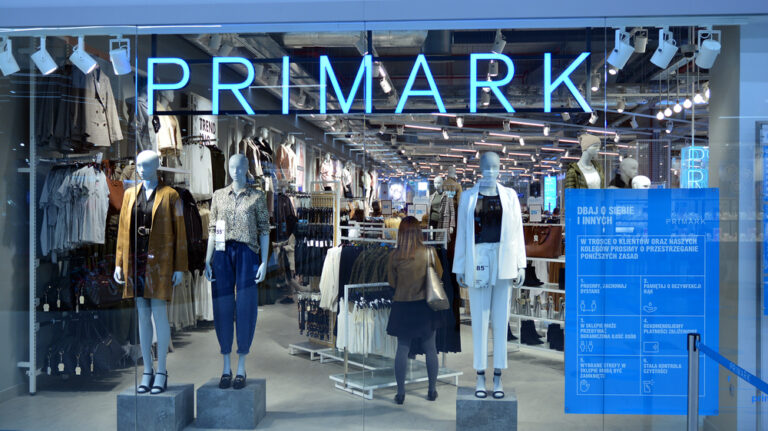
AB Foods was the FTSE 100’s best performer after announcing strong sales growth at Primark as the retailer took the decision to maintain a competitive pricing, despite input cost inflation.

AB Foods shares were 7% higher at the time of writing.

UK housebuilders

Housebuilders were among the gainers after Persimmon increased their full-year completions target and Halifax said UK house prices rose 1.1% in October.

“House prices have proven fairly resilient. They’re down 3.2% in a year, but we’re still sitting on enormous gains since the onset of the pandemic,” said Sarah Coles, head of personal finance, Hargreaves Lansdown.

“And while prices are likely to drift further south in the coming months, they’re holding up impressively in the face of horrible pressure – actually rising in October. 

“However, this isn’t because buyers are rushing back to the market: they’re still horribly thin on the ground. The resilience of house prices is due to the fact that so many sellers have decided to stay away for now too. According to Rightmove, it takes around 60 days to agree a sale at the moment – roughly double the time it took during the pandemic boom.”

AIM movers: Naked Wines boss leaves and Anglo Asian Mining agrees environmental changes

0

Anglo Asian Mining (LON: AAZ) has signed an agreement with the government for its environmental action plan that will enable a restarting of agitation leaching and flotation operations at Gedabek. This should not involve significant investment. Mining will recommence ahead of processing. The high grade Gilar site will start production next year. Production of 30,000-34,000 ounces of gold equivalent is expected this year. The share price jumped by two-fifths to 70p.

Novacyt (LON: NCYT) has gained IVDR certification for its DPYD genotyping assay. This helps to identify people who could suffer a severe reaction to common chemotherapy. This is an assay that came with the acquisition of Yourgene Health. The share price is 22.4% higher at 56.5p.

Croma Security Services (LON: CSSG) increased revenues from continuing activities by 38% to £8.03m and the gross margin increased. Underlying pre-tax profit was £400,000. Net cash is £2.1m with more to come from deferred payments for the Vigilant disposal. The share price improved 17.2% to 51p, which is the highest level since June.

Identity management software provider Intercede Group (LON: IGP) has won new contracts and renewals totalling more than $1.4m. Two of the new contracts are in the Middle East and one in North America. This will help to underpin the current forecasts. The share price rose 10.4% to 63.5p.

FALLERS

Naked Wines (LON: WINE) chief executive Nick Devlin has stepped down from the board, although he will continue to head up the US business until the end of peak trading, and chairman Rowan Gormley will take an executive role until a successor is identified. Nick Devlin being in charge of the US as well as the group as a whole is identified as the major problem of the group. Trading in the US is weaker than expected and group revenues could fall by up to 16%, while operating profit will be between £2m and £6m, compared with previous guidance of £8m-£12m. Sales have fallen in all the main regional markets with the 11% decline in the UK the best performance. The share price slumped by one-third to 30.15p, which is an all-time low.

Challenger Energy (LON: CEG) has completed the sale of the Cory Moruga asset in Trinidad to Predator Oil and Gas and received $1m in cash. Challenger Energy was expecting a further payment, but this will be paid to the government instead, although the deal does remove liabilities of $4.5m. The cash can fund exploration in Uruguay. The share price declined 7.69% to 0.06p.

The SDI Group (LON: SDI) share price fell a further 3.06% to 111p, following yesterday’s acquisition of temperature sensors manufacturer Peak Sensors for £2.3m net of cash for an initial payment of £1.58m. The deal should be earnings enhancing in the first full year. Chief executive Mike Creedon bought 42,606 shares at 116p each.

Specialist maintenance and compliance services provider Kinovo (LON: KINO) increased revenues by 2% to £30.3m in the first half and gross margins improved. New regulations for electricals helped to boost higher margin demand. Canaccord Genuity maintains its full year pre-tax profit forecast at £5.8m, which is equivalent to eight times prospective earnings, at 53p, which is down 3.64%.

Quantum Blockchain Technologies: can shares retest 3.5p?

Quantum Blockchain Technologies shares have resumed their rally after management jumped on the opportunity to raise £2m at 1.5p following a strong rally culminating in 52-week intraday highs around 3.5p.

The company is developing Bitcoin mining technologies that enhance the efficiency of Bitcoin mining while reducing the amount of electricity used to mine Bitcoin.

Quantum Blockchain Technologies rally coincides with resurgent interest in Bitcoin amid regulatory approvals for crypto ETFs in the US.

The company’s success hinges on its ability to commercialise two formats of their software known as Method A and Method B.

Each Method possesses individual attributes, but essentially, the software can be applied to existing Bitcoin mining rigs to enhance their mining activities.

Representing a clear path to revenue generation, Quantum Blockchain Technologies’ offering is available as a SaaS (Software as a Service) client-server cloud application that can be uploaded to mining rigs.

The SaaS offering overcomes issues with the company not wanting sharing source code with its partners and should open up the door to wider adoption of the technology.

Investors will await news of commercial agreements to gauge long-term value creation capabilities of the technology.

Whether Quantum Blockchain Technologies can retest will depend on additional news related to engagement with potential customers, and the performance of Bitcoin.

Should the Bitcoin price continue towards $50,000, expect Quantum Blockchain Technologies shares to jump on its tailcoats. It goes without saying interest in the stock will fall with a drop in Bitcoin.

Quantum Blockchain Technologies is a high-risk play but a solid option for a prolonged rally in Bitcoin.

Associated British Foods shares buoyed by strong Primark sales

Associated British Foods shares were sharply higher on Tuesday as investors cheered stronger Primark sales amid the cost of living crisis.

Associated British Foods’ sugar and food business often plays second fiddle to Primark in the eyes of investors, and looking at today’s update, it is easy to see why.

Although AB Foods enjoyed growing sales and operating profit in the grocery and ingredients business, the Primark unit accounted for a large proportion of the group’s 17% increase in operating profit to £1,383m.

AB Foods shares were 6.7% higher at the time of writing and were by far the best performing FTSE 100 shares on Tuesday morning.

Sugar operating profit fell 27% due to crop issues and Agriculture profits fell amid tough market conditions.

Primark’s sales jumped 17% to £9bn on an actual currency basis, accounting for a little under half of the group’s £19.75bn total revenue. The company has taken the decision to pass on only a part of their input cost inflation customers, which has helped customers through the door during the cost of living crisis.

“The key Primark business has benefitted from a changing retail landscape over the past few years, especially with the demise of Debenhams and Topshop,” said Aarin Chiekrie, equity analyst at Hargreaves Lansdown.

“That’s helped sales grow 15% at Primark, up to £9.0bn for the full year, with 27 new store openings and an improved website helping Primark to ring more cash through the tills. Margins here fell slightly as the group chose not to pass the full extent of inflated input costs onto consumers in order to keep its price-sensitive customers happy amidst the current cost-of-living crisis.  

“One of ABF’s key strengths is its diversified portfolio of businesses, which includes many well-known food brands such as Kingsmill, Ryvita and Patak’s. This diversification helps to spread out risk, ensuring the company isn’t overly reliant on any one product or division.

“That’s been a benefit in recent times as unhelpful weather in the prior year dented performance at the group’s African sugar business, Illovo. But after strong pricing actions and much-improved production levels, sugar revenue soared nearly 30%. The strong financial performance means there’s plenty of room to return excess cash to shareholders, with a special dividend and new £500m buyback programme on the way.”

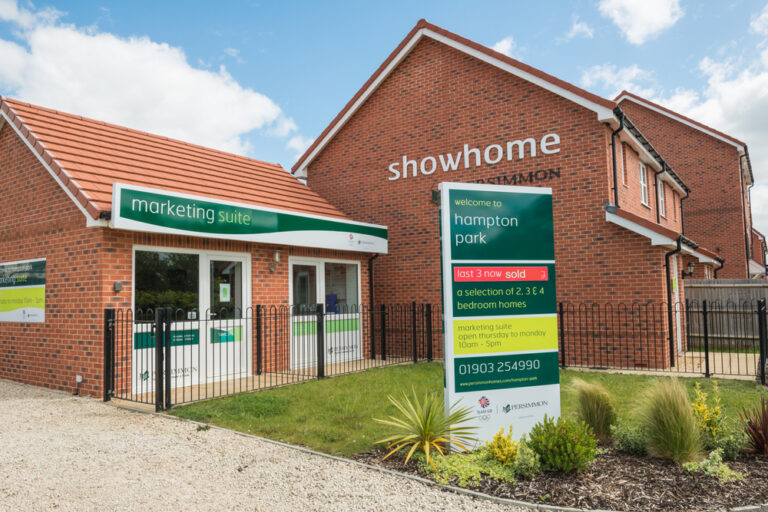
Persimmon shares jump on increased completion guidance

Persimmon shares were comfortably higher on Tuesday after the housebuilder increased their completions guidance for the year amid a slight uptick in activity.

The company said full-year completion guidance had been increased to 9,500 from 9,000 as private sales rates have improved to 0.59 over the past 5 weeks, up from 0.45 in the same period last year.

Persimmon shares were 3.8% higher at the time of writing.

Persimmon’s rally extended as the session progressed on Tuesday as investors ponder the dire situation the housebuilder is in and how much is already priced into shares. Notwithstanding a minor increase in completion guidance, Persimmon’s New Home Completions were 37% lower in Q3 2023 despite a ramping up of incentives.

“New home buyers are clearly exercising greater caution, and frankly who can blame them,” said Wealth Club’s Charlie Huggins.

“Mortgage payments for first time buyers have soared over the past 18 months. When combined with the limited availability of high loan to value mortgages and the end of the Help to Buy scheme in England, it’s no surprise that the housing market has seen a marked slowdown.

“How much worse can things get? Well, interest rates are widely considered to have peaked meaning the first interest rate cut is a matter of if not when. It can’t come soon enough for Persimmon. And it could mark the beginning of a strong recovery.

“We probably need to see a few interest rate cuts to entice first time buyers back into the housing market. But with inflation moderating that point has probably been brought forward.

“The one fly in the ointment could be house prices themselves. Prices have held up so far but this could be because there have been very few transactions. If the economy weakens further from here house prices could easily register further declines, causing further pain for Persimmon and its peers.”

The group said they see a ‘highly uncertain’ 2024 and are taking action on costs by renegotiating labour pricing and controlling material costs.