Late charge sees FTSE 100 close positive, sterling jumps

The FTSE 100 closed marginally higher on Tuesday as sterling rose after a raft of UK economic data suggested that further Bank of England action on rates is nailed on.

Early weakness in the FTSE 100 due to stronger sterling was bought into by investors and the index closed the day up 8 points at 7,282.

Sterling strengthened after UK wage growth jumped to 7.3% in the three months to May while the unemployment rate rose to 4% over the same period.

Higher wage growth will be a concern for the Bank of England which will watch the reading closely as a gauge of inflation. With wage growth jumping to 7.3% the BoE will have little choice but to continue hiking.

“With sterling at a 15-month high the value of the overseas earnings which dominate the index is relatively less. The reason for the pound’s move higher is today’s UK jobs data,” said AJ Bell investment director Russ Mould.

“While there are some signs the tightness in the labour market is starting to ease, wage growth remains uncomfortably high in the context of the Bank of England’s efforts to get surging prices under control.

“If inflation is like toothpaste, to borrow the well-worn analogy, then the Bank is likely to have to make a big mess of the economy trying to get it back in the tube. Borrowers face more pain with the prospect of further rate hikes to come.”

FTSE 100 movers

Tuesday was a fairly uneventful day for individual movers with Land Securities topping the FTSE’s gainers as the REIT bounced back from a downgrade yesterday.

Highlighting some signs of confidence in the macroeconomic picture, cyclical sectors were among the gainers while more defensive sectors fell.

UK housebuilders Persimmon and Barratt Developments rebounded from some of the worst levels for months.

Unilever, Reckitt Benckiser and ConvaTec Group were among the losers.

Three Investment Trusts primed to explode higher

Many London-listed Investment Trusts are providing investors with the opportunity to capture attractive discounts to NAV, in some circumstances discounts that haven’t been on offer for many years.

In the article, we explore three Investment Trusts with not only attractive discounts but significant opportunities for NAV growth in the coming years.

Vietnam Holding

Vietnam Holding is solely focused on one of the most exciting economies on the planet. The trust invests in Vietnamese-listed growth shares with a portfolio spanning banks, real estate and companies considered integral to the digitalisation of Vietnam.

Not yet an emerging market, Vietnam is categorised as a frontier market by MSCI.

When Vietnam earns the coveted title of being an emerging market, the country and its equity market will experience a flood of capital inflows. It may take a couple of years or more for Vietnam to be included in MSCI’s Emerging Market index, but one would expect a melt-up in equity prices in preparation for inclusion.

Vietnam Holding is well-placed to benefit from these future capital flows and has the potential for significant gains as the Vietnamese equity grows.

Investors are able to pick Vietnam Holding up at a 15% discount to NAV. Vietnam Holding typically trades at a relatively tight discount and the current discount should be viewed as a rare opportunity.

Vietnam Holding is at the forefront of ESG in Vietnam and recently championed its portfolio companies’ progress at the inaugural Vietnamese ESG Investor event.

Listen to the latest Vietnam Holding Podcast with UK Investor Magazine here.

Scottish Mortgage Investment Trust

It has been a tough few years for Baillie Gifford’s flagship investment trust. After a bumper run during the pandemic, the trust has come under fire for underperformance and overlooking standout technology winners.

However, investors should never underestimate the ability of the Scottish Mortgage Investment Trust to get involved in a good old-fashioned risk-on rally.

US Tech stocks

The US tech rally so far this year has been concentrated on around 8 tech stocks, many of which are thought to provide exposure to artificial intelligence. 

The Scottish Mortgage Investment Trust does not have significant holdings in all of these stocks and their investors have missed out. The trust does hold Amazon, NVIDIA and Tesla which have produced fantastic returns.

The trust’s largest holding is ASML which accounts for 8.6% of the portfolio. The stock’s 29% rise so far in 2023 lags well behind NVIDIA’s 180% gain and Meta’s 135% appreciation.

The decision to position the portfolio underweight Apple, Meta, and Microsoft has led to Scottish Mortgage’s underperformance of the tech-heavy benchmarks.

It goes without saying, Scottish Mortgage investors who have become accustomed to riding every tech-driven equity rally will be disappointed with recent performance.

Nonetheless, the trust’s portfolio is positioned in growth stocks primed for a run higher amid a general risk-on rally. Should equity returns become more dispersed across the wider market, Scottish Mortgage is well-placed to benefit. The catalyst for this rally may well be softer monetary policy later this year, or the avoidance on recession in major global economies.

Scottish Mortgage shares trade at a whopping 22% discount to NAV and provide investors with the opportunity to access world-leading tech names on the cheap.

JLEN

Describing the possible move higher in JLEN as explosive may be considered sensationalist. 

The trust trades within a tight range representing around 20%-30% of the trust’s value and is currently trading towards the bottom of this range. Any explosion higher will be relative to this range.

From a technical perspective, the support line at 100p has held on three occasions since 2021 making recent price action particularly compelling.

JLEN has established a portfolio of renewable energy and green infrastructure projects located across Europe. The strength of this portfolio is demonstrated in the trust’s 6.8% yield. 

The portfolio is well diversified with assets across the clean energy supply chain including generation, storage and distribution.

The trust secured its first green hydrogen asset this year and this week announced the acquisition of its second. The projects are both located in Germany and further diversify the portfolio into one of the most exciting areas of renewable power.

Ed Warner, Chair of JLEN, commented on the Green Hydrogen investments:

“Hydrogen has an important role to play in decarbonising heavy transport, industry, and other hard-to-abate sectors of the economy. Investing in this sector will remain an important near-term focus for the Company as we continue to assess opportunities to recycle capital within the portfolio.”

JLEN’s NAV stood at 123.1p as of 31st March 2023 and shares currently trade at a 15% discount to NAV.

Q3 2023 Top Picks and European Equity Outlook with Morningstar’s Michael Field

The UK Investor Magazine was thrilled to welcome back Michael Field, European Equity Market Strategist at Morningstar, for a deep dive into Morningstar’s Q3 Outlook and Top Picks.

Download a read Morningstar’s Q3 Outlook and Top Picks here.

The conversation starts with a look at inflation and other key market themes driving Morningstar’s views on European equity sectors. We explore the outlook for inflation and central bank action in the coming quarter.

Michael pays particular attention to the insurance, energy, banking and consumer cyclical sectors. We discuss Morningstar’s Top Picks including Persimmon and Shell.

Positive sampling results for Great Southern Copper

0

Great Southern Copper (LON: GSCU) has found rock chip samples at Teresita in Chile that have up to 5.97% copper and 13.7g/t gold. This will help to yield drill targets. The standard listed copper gold explorer is one of the highest risers on the Main Market with a 6.25% gain to 1.275p.

Terestia is on the Especularita copper gold project area in northern Chile. There were 160 rock chip samples. There is high grade copper gold mineralisation in outcropping quartz-carbonate vein-breccias. There will be further results from rock chip samples and soil sampling.

High-resolution aeromagnetic surveys commenced in June. There will be magnetic surveys of the Teresita and Victoria prospects. The interpretation of the magnetic survey will commence when results of the survey and soil sampling are available, so there could be analysis of the magnetic survey published by August.

Great Southern Copper floated in December 2021 after a new President was elected in Chile. It raised £3.52m at 5p/share and the uncertainty about the government’s plans for the mining sector hit the share price.

In May, £500,000 was raised at 1.2p/share, which was then a premium to the market price, and there was a warrant attached to each share exercisable at 2.4p each. A further £500,000 was raised through a convertible loan facility with Foreign Dimensions with a conversion price of 1.2p/share with warrants attached.  

AIM movers: Potential STM bid and Angus Energy negotiating bridge facility

0

STM Group (LON: STM) has received a potential cash offer of 70p/share from pensions company PSF Capital GP II Ltd. The Gibraltar-based cross border financial services provider has agreed in principle to this offer. The share price has not been that high for five years. There are a number of regulatory hurdles that will have to be negotiated before the bid can be completed, so even if a bid is announced it may take a while to go unconditional. The share price jumped 72.7% to 47.5p, having been above 57p earlier in the day.

Gold explorer Panthera Resources (LON: PAT) is varying the services agreement with chief executive Mark Bolton. He will be granted three million options that are exercisable at 10p/share. The options are subject to the grant of the Bhukia prospecting licence and drilling permits, plus the securing of litigation finance of a minimum of $5m to pursue a claim under the Australia India Bilateral Investment Treaty. The share price is 11.1% higher at 7.5p.

Healthcare investment company Intuitive Investments Group (LON: IIG) is calling a general meeting and publishing a prospectus to enable a move to the Specialist Funds Segment. Existing shareholders are being offered the chance to realise some or all of their shareholding through a tender offer for 17.4% of the share capital at 5.25p/share. This could cost up to £675,000. The investment strategy will be adapted. The share price is 10% ahead at 5.5p.

D4T4 Solutions (LON: D4T4) improved its full year pre-tax profit from £3.2m to £3.7m. There were delayed orders that will come through this year. The data management and analysis company is expected to significantly increase pre-tax profit to £5.3m this year, although a higher tax charge will hold back earnings growth. The share price rose 6.98% to 168.5p.

Empire Metals (LON: EEE) has secured more information confirming titanium mineral at Pitfield in Western Australia. New 3D magnetics shows the anomaly extends at least 6km below surface. The share price improved 6.67% to 2.4p.

Angus Energy (LON: ANGS) is continuing negotiations for proposed £6m bridge facility. This will close out hedges relating to late production and develop storage facilities at Saltfleetby gas field in Lincolnshire. The share price declined 8.82% to 0.775p.

Totally (LON: TLY) shares continue to decline following the results yesterday when the healthcare services provider warns that this year will be tougher. David and Monique Newlands have reduced their shareholding from 5.14% to 3.2%. The share price slipped a further 7.84% to 11.75p. That is the lowest level for more than three years.

Online fashion retailer Sosandar (LON: SOS) moved into profit in the year to March 2023. Revenues jumped from £29.5m to £42.5m, while the pre-tax profit was £1.6m. Profit could double this year and the strong balance sheet can finance the working capital required for growth. Even so, the share price fell 4.95% to 24p.

Crypto History: An Overview of Bitcoin’s Price Throughout the Years

In the world of digital and cryptocurrencies, one has captured the attention of many like none other: Bitcoin. Since its advent in 2009, the Bitcoin price has seen soaring highs and heart-stopping lows. To say that Bitcoin’s price volatility has been its hallmark would be an understatement. Today, we’ll analyze the roller-coaster history of BTC’s price and the key milestones that contributed to its rollercoaster ride over the years.

The Early Years: 2009-2011

The first exchange of Bitcoin for dollars was recorded in late 2009 by the New Liberty Standard Exchange. 5,050 Bitcoins were exchanged for $5.02 via PayPal. In other words, 1 Bitcoin was worth as much as 1/10th of a cent. Bitcoin stayed relatively steady from 2009 to 2011. Then in January 2011, the Bitcoin price surpassed $1 and hit an all-time high of $31 by June. However, this is where we saw this cryptocurrency’s notable volatility when it plummeted to $2 within mere months. It’s worth mentioning, however, that 2011 was when investors and early adopters started taking a considerable interest in Bitcoin and taking cryptocurrency seriously.

Market Maturity and Mt. Gox Exchange

Following this, most of 2012 was spent recovering from this jolt, and Bitcoin ended 2012 at $13.50, at least better than how 2011 had ended. That’s around when Mt.Gox, a Bitcoin exchange company accounting for over 70% of all Bitcoin transactions, made headlines and significantly impacted Bitcoin volatility.

In 2014, its price went up to $1100, only to crash to $200 after Mt. Gox collapsed due to a massive security breach and a 650,000 to 850,000 coin’ loss. This event woke authorities and pressed on the need for investor security and regulations in cryptocurrency. It also taught everyone to exercise caution and diligence when engaging with cryptocurrency exchanges.

Bitcoin’s Mainstream Recognition: 2015-2020

From 2015 to 2017, the Bitcoin price volatility remained relatively mute, fluctuating between $400-700. Nevertheless, the cryptocurrency made headlines again in 2017 when it started the year off between $1000-2000. This was still slow enough, but the currency reached an all-time high of $19000 by mid-December. Having begun trading at the Chicago Board Options Exchange, Bitcoin became extremely popular as its breakthrough year ended.

However, this was followed by another downhill road when the year ended at about $3500, with an almost 70% decrease from the previous year. Factors such as regulatory crackdowns, scalability issues, and speculative trading played a role in this volatile phase until the COVID-19 pandemic began in 2020.

COVID-19 Pandemic 2020 and Beyond

Bitcoin was doing reasonably decent in the initial COVID-19 wave, at $10,000 during the year’s first six weeks. However, once the pandemic was officially announced, it dropped by over 39% in just a single day in March. Cryptocurrency took just as much of a hit with the pandemic as any other industry. The price eventually surged, but it has been all up and down, and the uncertainty wouldn’t stop. At the moment, Bitcoin traded for around $26,000 as of mid-June 2023, with a 50% increase in just half a month. However, who knows what will come next with how unstable it’s been through the years?

Endnote

To wrap up, the price volatility of Bitcoin has been a defining factor in its history from 2009 till today. There have been several unignorable price swings, such as the Mt. Gox exchange event or the rise in 2017 and 2020. These result from market sentiment, regulatory developments, technological advancements, and macroeconomic conditions. Understanding these trends throughout history can help investors and market participants determine when to invest and when not to.

Tekcapital – its shares are at far too steep a discount to value

Almost a year ago the shares of Tekcapital (LON:TEK) were trading at 34p, they have since then fallen by over 70% to the current 9.75p.

It declares that its investment objective is to achieve long-term growth of net assets and returns on invested capital through the commercialisation of university discoveries that can make a positive impact on people’s lives. 

Considering that every move that the company’s management has made in the last year has done nothing but improve its overall profile – the market appears to be truly undervaluing this investor in intellectual property.

Perhaps the Interim Results due to be announced later this month will prove to be the precursor of investors taking a very much more positive view of the company’s business, its structure and its corporate prospects going forward.

The Business

Identifying and capitalising upon a selection of projects that have been created by some of the world’s leading universities is just what the company is all about.

It has a global network of contacts, through which it gleans thousands of patents and schemes originating from the billions of pounds spent each year upon technology research.

Spanning some 160 countries around the world, its network includes some 4,500 research bodies and universities.

Founder Dr Clifford Gross and his team sift through patent applications, some 100,000 of which are filed each year.

Tekcapital researches and identifies the potential viability of commercialising such prospects and selects several for further analysis.

It has a panel of over 60 industry experts from various fields, using their knowledge to delve deeper into such prospective investments, and then evaluate development candidates.

Apart from offering this ability as a service to hundreds of its universities, research institutions and business subscribers, it also helps to provide them with technology transfer services as they look to commercialise new disruptive technologies.

More importantly, though, the company also selects several for its own investment.

The group creates its value by investing in new, university-developed discoveries that it believes can enhance people’s lives.

It considers that when you couple commercialisation-ready, compelling university intellectual property with visionary individuals, then vibrant companies will emerge that could produce strong returns on invested capital.

Those eventual investments are then progressed towards their own IPOs, giving them the opportunity to raise further development capital.

In due course, the company expects each investment to outperform its sector, providing it with the opportunity to exit part or all of its investment, which in turn gives the group the ability to return a portion of the proceeds as a ‘special dividend’ to its shareholders.

It has an ability to transform university discoveries into valuable, much-needed products.

The value of its investment portfolio is very much more than double the current market capitalisation, while events due soon could see that discount widen even more.

The Portfolio

Currently the £18m capitalised group has a portfolio of patent interests. Its business model is to take the pick of those researched situations, invest in them, team it up with a ‘star-power’ management with both experience and vision, then progress it forward to an eventual fund-raising, further development and success, before part or total exit of its equity position.

Its main portfolio constituents are:

Lucyd Limitedwww.lucyd.co 70% owned

Lucyd is seeking to Upgrade Your Eyewear® by developing and selling designer tech-enhanced eyewear at affordable prices.

It has recently introduced the world’s first smart eyewear with ChatGPT.

Lucyd’s 58% owned US operating subsidiary, Innovative Eyewear Inc (NASDAQ: LUCY), was the first company to deliver prescription glasses with Bluetooth® technology in 2019.

Its eyeglass frames help the wearer stay connected safely and conveniently, by enabling many common smartphone tasks to be performed handsfree with Bluetooth® and voice assistants.

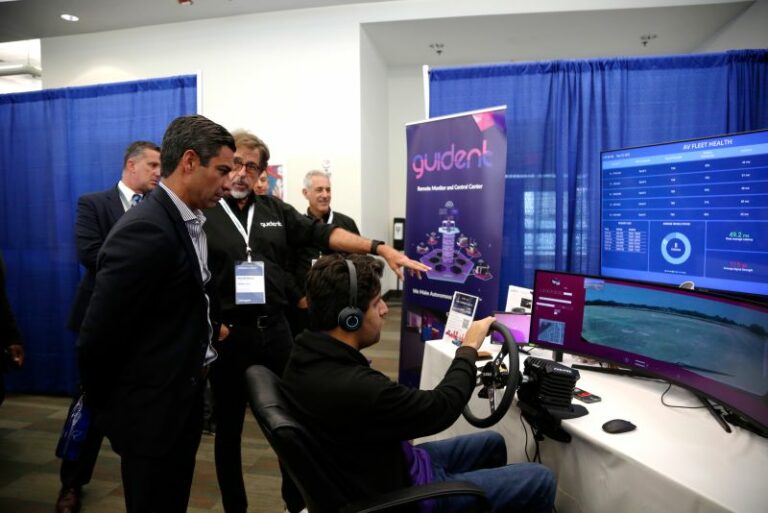
Guident www.guident.co 100% owned

Guident Limited is developing remote monitoring and control software to improve the safety of autonomous vehicles and land-based delivery devices.

Its software will incorporate artificial intelligence and advanced network technologies to minimise signal latency and improve the safety of autonomous vehicles.

Developing intellectual property and software solutions to increase the safety and efficiency of electric and autonomous vehicles.

MicroSalt Ltd www.microsaltinc.com 97% owned

This company manufactures MicroSalt®, which is a new, patented, all natural, non-GMO, Kosher, low-sodium salt, that tastes great and has approximately half of the sodium of regular table salt.

Belluscura Plc (LON:BELL)  www.belluscura.com 12% owned

Belluscura is a respiratory medical device company that has developed and launched an improved portable oxygen concentrator (POC) to provide on-the-go supplemental O2.

The company believes its product is the first FDA cleared, modular POC with a user-replaceable filter cartridge.

Belluscura aims to make POCs more affordable to those who need them.

Latest Results – 26th May

Understandably the group’s net assets eased back in the year to end December 2022, due to the difficult equity markets in the period to $57.8m ($68.1m), leaving its net asset value per share at $0.38 ($0.48).

The company’s Portfolio valuation at the year-end was $54.9m ($62.5m).

The impact of a net unrealised fair value reduction of $11.0m, created a total loss after tax of $12.7m ($26.4m profit).

Commenting upon the current year Outlook Dr Clifford Gross stated that:

“We are enthusiastic about the development of Tekcapital’s portfolio companies, their performance to-date and their prospects to significantly expand in 2023.

The Board is confident that continued investment in our non-quoted portfolio companies remains the right approach for potential long-term value creation.

Additionally, we are currently exploring additional funding for our non-quoted, portfolio companies, to accelerate growth for these companies.”

The Equity

There are some 178.2m shares in issue.

Larger holders include Clifford Gross, Chmn, (4.86%), James Knight (4.28%), Nigel Wray (4.06%), Elie Dangoor (3.30%) and Edale Capital (2.18%).

Analyst Opinion – the shares are a Buy

Brokers SP Angel rate the group’s shares as a Buy.

Their analysts note that the company’s net asset value, as at TEK financials on 31st May, were £46.8m.

However, that was before £4.25m of new cash raised in February and April of this year takes it up to £51.07m.

The brokers stated that there has been a great deal of commercial activity at each of the portfolio companies since year-end, creating additional upside in the potential return to investors over the reported NAV.

Conclusion – far too steep a discount to its value

This innovative investment company’s shares should not be trading at such a significant discount to its net asset value.

Upon SP Angel’s estimates that gives an NAV of 28.66p per share, giving a 66% discount to value, with the shares currently trading at only 9.75p.

Even at a 50% discount, which is also a steep discount, the shares would then be trading at nearly 14.5p each, which offers patient investors a very attractive upside.

FTSE 100 edges higher despite soft Chinese data, US CPI eyed

The FTSE 100 crept higher on Monday as investors shook off more downbeat Chinese economic data and looked forward to US CPI inflation data due to be released on Wednesday.

The FTSE 100 was 0.45% higher at 7,290 at the time of writing.

Chinese producer prices sank 5.4% in June, the worst decline since 2015, and piled further pressure on Chinese authorities to take additional steps to stimulate their economy.

“The continued loss of power in the Chinese economy is concerning investors, with consumer prices flatlining. The downbeat data comes ahead of the key inflation snapshot in the United States on Wednesday, which could determine how long the monetary squeeze will continue,” said Susannah Streeter, head of money and markets, Hargreaves Lansdown.

“While inflation shows signs of stubbornness in other economies, disinflationary forces are at work in China, which risk tipping the world’s second largest economy into a deflation scenario.”

The frequency of poor Chinese economic data releases has increased recently, and many investors have positioned for imminent easing. There is an argument that additional Chinese stimulus is already priced into stocks, and the immediate market reaction to new measures will be muted.

The FTSE 100’s miners were little changed on Monday.

US CPI

Inflation remains the overarching theme in markets, and investors will closely watch Wednesday’s US CPI print for any hint of central banks’ next moves.

“Last week’s big pullback in global equities has hurt investor sentiment and triggered a ‘wait and see’ approach among many people who have become nervous about deploying more money in the markets until there is more clarity on the next central bank interest rate decisions,” said Russ Mould, investment director at AJ Bell.

“It seems likely the Federal Reserve, ECB and Bank of England will continue to raise rates in the fight against inflation. Labour markets are holding up better than expected and plenty of businesses continue to grow profits. However, the more rates go up, the bigger the risk of a hard landing – reaching the point where a lot more consumers and businesses cannot cope with the higher cost of borrowing and we suddenly see a slump in the economy.”

DWF bid approach

0

Legal services provider DWF (LON: DWF) is the best performing company on the Main Market following a bid approach by Inflexion Private Equity Partners. The offer is 97p/share and the market price jumped by one-third to 87.2p. Shareholders would also receive a 3p/share special dividend if the bid goes ahead.

Shareholders would also be given the option to receive a partial loan note alternative with 65% in loan notes and/or preference shares and 35% in cash. There is also an option to reinvest 40% of the cash proceeds in loan notes or preference shares.  

The business is split into four divisions: commercial services, insurance, international and connected services.

History

Back in March 2019, DWF was the first lawyer to float on the Main Market – the rest are on AIM. It raised £75m at 122p/ share, which valued DWF at £366m. After a strong start the share price slumped in 2020 – probably due to the end of the one-year lock-in following flotation – before recovering. However, there has been a downward trend since the beginning of 2022.

Dividends paid since flotation total 15.1p/share. Last year, 4.75p/share was paid.

Zeus trimmed its 2022-23 pre-tax profit forecast by 4% to £44.1m but maintained the following year at £54.2m. Taking the total potential consideration as 100p/share, the prospective 2022-23 multiple is less than ten, falling to nine. That compares with a multiple of 20 when DWF floated.

That rating is higher than for some AIM rivals, such as Knights Group Holdings (LON: KGH), and similar to Gateley (LON: GTLY).  

AIM movers: Helium One buys drilling rig and Totally warns of tough conditions

1

Helium One Global (LON: HE1) has bought an Epiroc Predator 220 drilling rig so that it can start drilling the Tai-C well at the Rukwa site in Tanzania by September. An experienced crew will be required for this. Costs will be higher as they will no longer be shared with Noble. The share price rebounded 41.2% to 7.2p, which more than makes up for the fall at the end of last week.

Knights Group Holdings (LON: KGH) grew revenues by 13% to £142.1m with the growth coming from acquisitions. Management is confident that organic growth will improve thanks to price rises and recruitment of additional fee earners by the legal services company. Pre-tax profit was 19% ahead at £21.6m. Net debt was £29.2m at the end of April 2023 with cash generation covering acquisition and dividend costs. The total dividend was raised 15% to 4.03p/share and it is covered five times by earnings. The share price has slumped by one-third this year due to concerns about the debt level, but this is a highly cash generative business. The share price recovered 9.87% to 70.1p.

Artemis Resources Ltd (LON: ARV) has identified lithium bearing pegmatites within the Osborne joint venture, where it owns 49%. Artemis Resources has tenements adjoining the joint venture area and geochemical soils sampling data indicates elevated lithium levels. A high resolution dipole-dipole induced polarisation geophysics survey has commenced at the Lulu Creek gold prospect. Results of the moving loop electromagnetic survey of the Greater Carlow area are due to be finalised in mid-July. The share price improved 7.5% to 1.075p.

Eco Animal Health (LON: EAH) reported full year figures ahead of expectations. Revenues were 4% higher at £85.3m and pre-tax profit was flat at £3.9m. Net cash was £21.7m at the end of March 2023. Two poultry vaccines are near to submission for approvals. R&D exploration will be increased to £10.4m this year. The new products will reduce the dependence on pig treatment Aivlosin. A 2023-24 pre-tax profit of £4.3m is forecast. The share price is 7.14% higher at 105p.

Totally (LON: TLY) increased full year pre-tax profit from £1.3m to £1.8m but the healthcare services provider warns that this year will be tougher. The total dividend has been cut from 1p/share to 0.625p/share. The main growth is coming from elective care services, where Totally is helping the NHS to reduce waiting lists. The loss of four contracts hit urgent care revenues and a lack of new tenders means that it will be difficult to rebuild them. The share price dipped 22.1% to 13.25p

Petro Matad (LON: MATD) is abandoning the Velociraptor-1 exploration well in Block V of the Taats Basin in Mongolia after it intercepted water-bearing reservoirs. This was always a high risk well, but it reduces Shore’s risked NAV from 14.5p/share to 8p/share. The focus will be Block XX. The share price fell 11.3% to 4.3p.

Scotgold Resources (LON: SGZ) revealed first half production of 2,314 ounces of gold was less than the original plan for 2023. Production rates are improving following the move from cut and fill mining to long hole stoping and grades are improving. The financial position of the company still depends on continued improvements in production and a third-party review of the current mine plan is ongoing. The share price slipped 11.4% to 15.5p.

Currency and payment services provider Argentex (LON: AGFX) increased interim revenues by 28% to £25m with strong growth for the online platform. Nigel Railton is taking over as chair from Lord Digby Jones. Although trading is in line with expectations the share price fell 10.2% to 119.5p.