Ocado shares: what’s happening at the technology and premium grocery delivery company

Ocado shares have been on a tear this week, with the food technology company topping the FTSE 100’s top gainers for the past few trading sessions.

The Ocado share price was again the top riser at the time of writing on Friday, with gains of over 4%.

We look at the factors driving recent price action in Ocado shares as the stock rebounds from the 460p mark.

Interest Rates

Although Ocado is predominately associated with its premium grocery delivery service, the company is viewed by many market participants as a technology company. Ocado has developed proprietary technology concerned with the distribution of groceries, which is used by their delivery service and third-party supermarkets.

Ocado’s Customer Fulfilment Centres (CFC) improve the way grocery companies prepare and organise deliveries ready for distribution using artificial intelligence and robots.

This side of the business has earned Ocado the label of a ‘tech stock’ in some quarters, meaning the company trades in a similar fashion to US tech giants like Meta, Apple and Amazon.

The hiking cycle increased the risk-free rate and made technology-focused equities less attractive over the past 18 months. Those with lofty valuations, including Ocado, were punished.

After the Federal Reserve and the Bank of England both kept interest rates on hold this week, technology shares have received a bid as investors position for the end of the hiking cycle and a period more favourable for tech stocks. This can explain the rally in Ocado shares this week.

Ocado is oversold

Ocado shares entered oversold territory in late October and built a base around 460p. Having found support after shares halved from July highs in the region of 950p, the stock just needed a catalyst to spark a bounce.

Such a catalyst was found in interest rate decisions this week and a general uptick in the technology sector.

Strong Sainsbury’s Earnings

Sainsbury’s earning update released this week will have encouraged Ocado investors. Sainsbury’s, seen as one of the premium supermarkets, has managed to increase sales by offering lower-priced groceries and running offers to attract shoppers.

Ocado shareholders will be hoping Ocado’s efforts to attract customers and increase basket sizes by competing on pricing through special offers will have a similar impact.

The latest data from Kantar showed the joint venture between Marks & Spencer and Ocado enjoyed a 9.6% uplift in sales in the four weeks to 1st October as market share increased to 1.7% from 1.6%.

Lloyds shares: three economic indicators investors must watch closely

The Lloyds share price is in no man's land. The decision by the Bank of England to keep interest rates on hold in November almost confirms Lloyds has squeezed all it can from the current rate hike cycle.
Key income measures will now face increased pressure at a time when economic conditions start to deteriorate.
Lloyds investors must understand and keep a close eye on these three critical economic indicators in the coming months to gauge the impact on the bank's earnings.
Spoiler: CPI or GDP aren't included.
With a cap effectively placed on Lloyd's top line with net interest margins peakin...

Are Australian wildfires making the country “uninsurable”?

0

Australia is currently on fire. On Thursday, around 76 fires were raging in Queensland, with nine in New South Wales to the south.

Western Downs (Queensland area) Mayor Paul McVeigh even said to Australian reporters on Tuesday that “some areas are still too hot to get into. Unfortunately, we are expecting that number to go up”.

One wildfire in eastern Australia has reportedly annihilated over 50 homes and consumed 49,000 acres of farmland and scrubland.

Dozens of bushfire warnings are still in place across southern Queensland and northern New South Wales.

At the time of writing, over 10 million hectares of land were on fire all across Australia.

In comparison, all of England’s land area adds up to 13 million hectares. So, the equivalent of almost the entirety of England is on fire.

Some fires are so big that they cannot be put out; they are just controlled by the firefighters. Two people have been reported dead.

This, according to the Australian government, marks the early start of the country’s wildfire season, which typically peaks in the Southern Hemisphere summer.

In the Northern Hemisphere, we typically associate the three months of December–February with colder weather and (sometimes) snow. In Australia, these three months are associated with big fires.

Australian Prime Minister Anthony Albanese said on Tuesday that “these are heartbreaking scenes when people lose their houses. This is a difficult period, and it’s going to be a difficult summer.”

Experts anticipate this upcoming season is highly likely to be the most destructive since the 2019–20 Black Summer fires, which claimed 33 lives, destroyed over 3,000 homes, and burned 19 million hectares of land.

Insurance crisis

As extreme weather events intensify, the maintenance and repair costs for Australian properties—homes, workplaces, and buildings—go up. In response, insurance companies are raising premiums to cover the higher costs of claims and reinsurance.

Insurers are hiking up premiums, some by 10–11% annually, in response to inflation, soaring global reinsurance rates, and Australia’s growing climate risks.

In Sydney, premiums have reached A$20,000–A$30,000 per annum (£10,557–£20,557).

Mat Jones, general manager of public affairs at the Insurance Council of Australia (ICA), said in a comment to Australian SBS News that:

“Reinsurers [the insurers of insurance companies], who are global players, are re-rating Australia. Apart from earthquakes and volcanoes, we get the brunt of all of the extreme weather events. We’ve had flooding, cyclones, and terrible fires, and that risk in Australia is putting upward pressure on premiums.”

With the increased pressure from reinsurers, Australian insurers are forced to re-evaluate insurance costs for people in high-risk areas (and not only).

In flood-prone spots like the Western Sydney Plains, residents are now dealing with not only an increased climate-change-driven risk of floods but also growing insurance costs because they are in a high-risk area.

Insurance bills for storms and floods since January 2020 have cost over $12.3 billion, with 788,000 claims—equal to one in 25 adult Australians, ICA reports.

According to the Climate Council’s 2023 “Uninsurable Nation: Australia’s most climate-vulnerable places” report, the main risk to properties is riverine flooding, which accounts for 80% of the properties expected to be uninsurable by 2030.

Other major threats include bushfires and flash flooding, which will contribute to properties becoming uninsurable by 2030.

Around 520,940 properties in Australia, or one in 25, will be deemed ‘high risk’ and effectively uninsurable due to annual damage costs from extreme weather and climate change by 2030.

Additionally, 9% of properties, or one in 11, will be classified as’medium risk’ by 2030, facing annual damage costs ranging from 0.2% to 1% of the property replacement cost. These properties are at risk of being underinsured.

In a 2022 assessment, the Commonwealth Bank identified approximately 38,000 properties (with mortgages totaling $11 billion) facing significant cyclone exposure risk. Additionally, 56,000 properties (worth $19 billion) were identified as flood-prone, and 5,000 properties (valued at $2 billion) were deemed at risk of fire.

Many currently “at-risk” areas are likely to become “uninhabitable” by 2030, the report asserts.

The Climate Council further notes that, regrettably, in the past eight years, the federal government hasn’t effectively addressed climate change or prepared Australians for increasingly severe weather despite funds being available.

It is then further stressed in the report that the crucial measure for all candidates in the upcoming federal election is their endorsement of policies promoting significant emissions reductions in the 2020s. Investments in national adaptation and disaster risk reduction funding must be increased in order to better equip Australians for increasingly severe weather events.

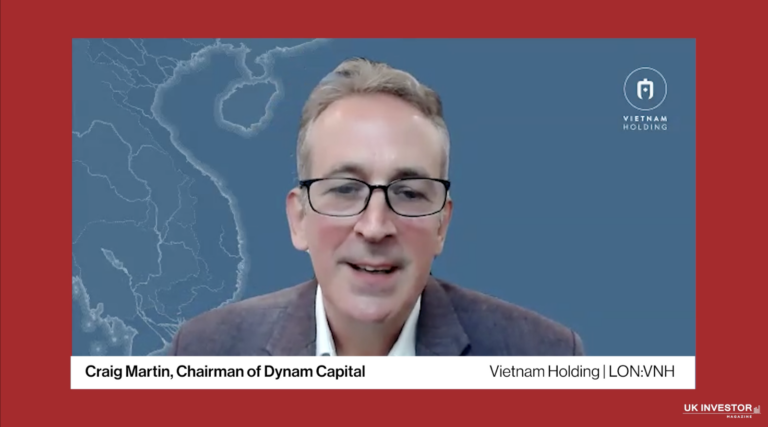
Exploring Vietnam Holding’s portfolio companies with Craig Martin

The UK Investor Magazine was thrilled to welcome Craig Martin, Chairman of Dynam Capital, the manager of Vietnam Holding, for a deep dive into the trust’s portfolio companies.

Download the Vietnam Holding annual report

Craig has provided a comprehensive analysis of the Vietnamese economy in previous podcasts. In his latest instalment, Craig Martin offers deep insight into three portfolio companies; FPT Corporation, Petrovietnam Technical Services, and Gemadept.

FPT Corporation is the portfolio’s largest holding with 15% weighting. The company provides technology and STEM education services and is positioned to benefit from Vietnam’s aims to do more in the semiconductor value chain.

Petrovietnam Technical Services (PVS) is a renewable energy transition play. Vietnam Holding feels PVS could be a key winner in Vietnam’s plans for NetZero by 2050 – through its ambitions to be a leading producer and exporter of renewable energy. In addition, PVS is working with Singapore to build the world’s longest subsea electricity cable (1000 km to export 1.2 GW, 10% of Singapore’s energy need).

We finish with a look at Gemadept, an operator of seaports and air cargo in Vietnam.

FTSE 100 higher after the Bank of England keeps rates on hold

The FTSE 100 rose Thursday as the Bank of England paused its interest rate hiking cycle, leaving rates at the highest level in 15 years.

The Bank of England followed the Federal Reserve in keeping rates on hold by voting 6-3 in favour of rates staying at 5.25%.

“The news of rates staying the same indicates that we may have already reached the peak of the interest rate cycle, which will allow households to breathe a collective sigh of relief,” said Rachel Winter, Partner at Killik & Co.

The Bank of England was widely expected to keep rates on hold, and the decision itself provided investors with little they didn’t already know. However, the commentary around the decision will give markets food for thought in the coming days.

“Although this wasn’t a unanimous vote, there is a growing strength of feeling that previous rate hikes need more time to feed through. There are deepening concerns about the faltering economy as the high borrowing costs batter financial resilience and policymakers paint a stark picture of a stagnation scenario lasting until 2025,” said Susannah Streeter, head of money and markets, Hargreaves Lansdown

Bank of England Governor Bailey provided reason for caution in his subsequent press conference, pointing to a potential softening in UK economic conditions in early 2023. Bailey also left the door open for further rate hikes by highlighting wage growth remained above long-term averages and inflationary pressures were yet to recede sufficiently.

“The minutes highlight that UK GDP is expected to have been flat in the third quarter, weaker than initial estimates. The economy only just eked out growth in August and there has been a surge in company insolvencies,” said Streeter.

Nonetheless, there was a positive tone in UK stocks as the FTSE 100 gained 1.2%, supported by UK-centric companies.

Housebuilders were among the top gainers as they avoided the pressure of higher rates and mortgage costs. Taylor Wimpey, Barratt Developments and Berkeley Group Holdings were up between 1.9%-3.4%.

Real Estate Investment Trusts with significant portfolios of UK commercial property also enjoyed a rally. Segro added 5.3%, and Land Securities gained 5.1%.

BT surged 7% after announcing cost control efforts were improving profitability, even though revenue was nearly precisely the same as last year.

Sainsbury’s shares jumped 4% as the supermarket steals market share with competitive pricing strategies.

Hikma was the top faller, down 5%, after releasing a downbeat trading statement.

AIM movers: Ethernity Networks contract and ex-dividends

0

Ethernity Networks (LON: ENET) has signed an extended licence agreement with a military aerospace customer. The contract is worth $475,000 and should be completed before the end of the year. This is on top of a previous $80,000 payment and there should be additional revenues next year. Interim revenues were $1.4m. The share price is 21.1% higher at 3.875p.

In October, podcast company Audioboom (LON: BOOM) generated more than one billion advertising impressions in a month for the first time. The removal of old adverts after 90 days and replacing them with a new focused advert is helping advertising impressions to continue to grow. Fourth quarter revenues are still expected to be at least $19m. The share price increased 15.1% to 152.5p.

Sovereign Minerals (LON: SVML) is significantly upscaling the bulk sampling at Kasiya lithium-ion battery graphite project in Malawi. Sovereign Minerals and its partner Rio Tinto are trying to qualify the graphite to supply spherical purified graphite for battery anodes. The Kasiya project could produce 244,000t/year and it should be a low-cost producer – the current estimate is $404/t. China will soon require export permits for some forms of graphite used in batteries. The share price improved 8.51% to 25.5p.

Seaweed-based animal feed producer Ocean Harvest Technology (LON: OHT) has conducted a successful trial in Georgia for its poultry feed. Mortality rates for the poultry with necrotic enteritis with the company’s feed in their diet fell from 49% to 33%. It also enhances weight gain. Necrotic enteritis costs the poultry sector up to $6bn/year. The share price recovered 6.77% to 10.25p.

Cerillion (LON: CER) has secured a five-year software deal with a European telecoms company. The deal is worth €12.4m and there is potential for selling other software modules. This deal helps to underpin forecasts. The share price is 6.67% ahead at 1355p.

FALLERS

US-based gas producer Southern Energy (LON: SOUC) has raised $5m at 15.5p/share. This will help to finance up to four new wells, which cost around $3m each. The existing cash and generation from gas sales will finance the rest of the cost. The strategy is to increase production to 4.7 mboe/day by the second quarter of 2024. The US gas price has been increasing. The share price dipped 18.9% to 15p.

Sabien Technology (LON: SNT) reported a rise in 2022-23 revenues from £680,000 to £1.1m and the loss was slightly lower at £700,000. The order book is worth £200,000. The share price has fallen 6.45% to a new low of 7.25p.

Technology and life sciences investment company NetScientific (LON: NSCI) has switched its nominated adviser and broker from WH Ireland to Panmure Gordon. The share price slipped 8.41% to 49p.

Shanta Gold (LON: SHG) has updated investors about drilling at the West Kenya project. It has identified visible gold in five intersections. Shanta Gold is paying an interim dividend of 0.1p/share and the ex-dividend share price declined 0.25p to 10.85p.

Ex-dividends

Coral Products (LON: CRU) is paying a final dividend of 0.6p/share and the share price fell 0.25p to 13.5p.

CVS Group (LON: CVSG) is paying a final dividend of 7.5p/share and the share price is 14p higher at 1478p.

EKF Diagnostics (LON: EKF) is paying a final dividend of 1.2p/share and the share price declined 0.9p to 28p.

Gattaca (LON: GATC) is paying a dividend of 5p/share and the share price slipped 4.5p to 114.5p.

NWF (LON: NWF) is paying a final dividend of 6.8p/share and the share price fell 5p to 190p.

BT shares surge as cost control boosts profits

0

On Thursday, BT shareholders cheered positive developments in profitability as the group took action on costs.

BT Group shares surged over 8% on Thursday and were trading at 120p at the time of writing.

In the context of recent disappointing earnings updates, BT delivered solid financial performance, with adjusted earnings per share showing a 3% increase to 10.3p.

BT’s reported profit before tax was £1.1bn, up 29% largely as a result of cost-cutting measures. Revenue for the period was nearly exactly the same as the prior year’s £10.4bn.

Despite an increase in profitability, the board declared an interim dividend of 2.31 pence per share, in line with last year’s payout.

From an operational standpoint, the rollout of fibre has secured 364,000 net new customers in Q2 and ‘New EE’ was launched to attract new customers.

According to Matt Britzman, equity analyst at Hargreaves Lansdown, “BT’s consumer rebrand is now fully underway with an increased focus on converged products and services. There’s value in the facelift, mainly due to increased cross-selling and bundling within the consumer division.

“Figuring out how to deliver consistent growth is going to be the biggest challenge. Some serious cost-cutting efforts are underway, and as the buildout of 5G and fibre gets closer to its end, there should be a more normalised spending pattern on the horizon.”

“Given the pressure shares have been under of late, investors should be relatively happy with this print,” he inferred.

The Federal Reserve keeps rates on hold ahead of Bank of England’s decision

0

On Wednesday, the Federal Reserve made the decision to keep interest rates on hold, ahead of the Bank of England’s decision on interest rates at noon today.

The Federal Reserve’s rate target continues to be 5.25%–5.5%, which is the highest interest rate level in 22 years.

The Reserve aims to control surging prices, which have recently hit near-record highs.

The bank has been hiking borrowing costs with the goal of cooling down the economy and curbing inflation.

According to Susannah Streeter, head of money and markets at Hargreaves Lansdown, the decision to keep the rates stable alleviates worries that the Federal Reserve might push the economy into a recession if the monetary policy becomes too restrictive.

“For now, investors seem more confident that a goldilocks economy, not too hot but not too cool, will return to scare away the bears,”, she explained.

“Inflation is still elevated, but with long-term interest rates having surged and borrowing so much more expensive, these tighter financial and credit conditions are expected to push down demand going forward. Economic conditions could still deteriorate sharply, so this bout of confidence still risks being wishful thinking, but a steeper downturn would hasten rate cuts next year,”, she added.

The bank received some criticism, with some arguing that keeping interest rates high could jeopardise the US economy, potentially leading to a recession.

However, the Fed’s decision came slightly after the U.S. released the governmental data from the Bureau of Economic Analysis, which shows that the U.S.’s GDP grew by 4.9% in the July–September period, fueled by a tight job market and consumer spending.

On Thursday at 12, the Bank of England will also decide whether or not to keep interest rates on hold.

Interest rates in the UK are at their 15-year highest, and following the Fed’s decision, many expect the Bank to keep the rates on hold.

Commenting on the BoE, Susannah Streeter further said that “a jump in company insolvency rates and a housing market in the deep freeze are signals that the sharp hike in rates is already being keenly felt, and that’s even before the full effects come through. Inflation may still be at 6.7% at the last snapshot, three times the bank’s target, but upcoming data is expected to show it fell more markedly in October. Investors will be keen to sift through the Bank of England’s outlook to assess if the government’s ambition to halve inflation by the end of the year might be met.”

Shell profits rise as oil prices help earnings, fresh $3.5bn share buyback announced

Shell shares rose on Thursday morning as the oil and gas giant’s earnings for the Q3 came in almost bang in line with estimates.

Shares in the group were 2% higher at the time of writing – a sharp contrast to BP’s performance after they released earnings this week.

After peers BP, Chevron, and Exxon missed analyst estimates, Shell shareholders will be delighted to learn higher oil prices are feeding through into Shell’s profitability and LNG maintenance didn’t impact earnings too heavily.

Investors will also welcome increased share buybacks as the group returns some of its $7.5bn free cash flow to shareholders.

“Shell has not bucked expectations, unpacking underlying earnings of $6.2 billion for the third quarter. This position of strength has prompted it to announce share buybacks of $3.5 billion over the next three months, up from $2.7 billion in the previous three months,” said Susannah Streeter, head of money and markets, Hargreaves Lansdown.

“Revenues have been boosted, not just from the creep higher in oil prices, but also by higher margins in its refining business. Shell is also a leading supplier of Liquified Natural Gas and, although scheduled maintenance kept the taps tighter, with production across the integrated gas division down 9%, earnings from its gas trading business ticked up. Tighter supply has enabled the company to make higher margins diverting gas away from other regions to Europe where it’s still in high demand.”

The new Shell CEO’s strategy to refocus on hydrocarbons and take a more tentative approach to investing in clean energy has supported shares this year, with Shell gaining 14% since the beginning of the year.

Like all major fossil fuel companies, Shell must contend with volatility in underlying energy markets as traders weigh geopolitical threats with global demand.

Sainsbury’s shares jump as market share increases in battle against discounters

Sainsbury’s shares were firmly higher on Thursday after the supermarket released very robust trading in their most recent half year period.

Sainsbury’s has actively set out to compete with discounters Lidl and Aldi on price, and the strategy is paying off. Extensive use of Nectar pricing brings many products in line with the discounters and helped drive a 10.1% volume increase in the half year.

Their efforts have increased market share as group retail sales for the period rose 8.4%.

Simon Roberts, Chief Executive of J Sainsbury plc, said: “Food is firmly back at the heart of Sainsbury’s. We’ve never been more competitive on price and our focus on value, innovation and service is giving more customers more reasons to shop with us.”

Sainsbury’s shares were 4.7% higher at the time of writing.

Considering the focus on low prices and higher volumes, shareholders will have been pleased to see retail operating margins decrease only 4 bps to 2.91%.

Strong performance during the period now means Sainsbury’s see underlying profit before tax in the range of £670m-£700m, the higher end of the previously guided £640m-£700m range.

“This is another solid trading update from Sainsbury’s with further volume growth in the second quarter and an improved market share performance. This means the group now expects profit for the year to come in at the top end of its previous guidance range,” said Wealth Club’s Charlie Huggins.

“Sainsbury’s has worked hard to lower prices in the face of intense competition. The launch of Nectar prices, where Nectar card holders save money on everyday items seems to have been well received and has helped the group to hold its own against Tesco and the German discounters. 

“Food inflation is starting to fall and this should help ease pressure on consumers, whose finances have been squeezed from all angles by rising prices, no more so than for the weekly shop. That said, lower inflation also means volume growth will become a more important contributor to like-for-like sales in future periods. It is encouraging that Sainsbury’s volumes grew in the second quarter but it will need to maintain this momentum.”