UK retail sales rose 0.4% in December, bolstered by increased food purchases and online gold sales, though non-food sales fell 0.9% during the month.
Rising gold prices may have helped drive a preference for gifting precious metals over the festive period, with online jewellery standing out as a clear winner amid overall non-food sales that fell.
Although retail rose in December, sales declined 0.3% across the final quarter of 2025, reflecting challenging Christmas trading conditions and a trend of shoppers holding off making purchases until the last moment, which points to underlying weakness.
Quieter shops and lower levels of online activity during October and November prompted retailers to start sales earlier than they might otherwise have, leading to an uptick in the final days before Christmas.
For the full year, sales volumes increased 1.3%, though they remained below pre-pandemic levels.
“The headline rise in retail sales masks what has been a difficult Christmas for our high streets. People were keen to splurge on tasty treats which helped deliver bumper sales to supermarkets, but they were still cautious when it came to snapping up gifts for loved ones,” explained Danni Hewson, AJ Bell head of financial analysis,” said Danni Hewson, AJ Bell head of financial analysis.
“The trends evident over the past couple of years have continued, with shoppers seeking out value for money and waiting for those sales events before making their purchases.
“Experiences have also become highly sought after. Many people have preferred to hoard their cash in order to make memories with their friends and families, focusing on moments rather than mementos.”
Energy-as-a-Service provider eEnergy Group has delivered a substantial turnaround in profitability, with adjusted EBITDA surging 183% to £1.7m for the year ended 31 December 2025.
The AIM-listed company posted revenues of £23.0m, down from £25.1m the previous year. However, £4.0m of anticipated FY25 revenue has been pushed into the first half of 2026. Gross margin improved to 35.3% from 34.7%, reflecting better project budgeting and tighter operational controls.
Encouragingly for investors, the company’s contracted and awarded order book stood at a record £14.0m at year-end, doubling from £7.0m at the start of the year. With improved revenue visibility for FY26, the board expects revenues of £34.0m and adjusted EBITDA of £4.5m. This would be a major improvement on figures announced today for the prior year.
“Our strategy is working; we have pivoted from a direct sales education business to a multi-channel, framework, and partner-driven development platform across education (where we are market leaders), healthcare and commercial and industrial. We have an exceptional proposition, underpinned by a funding model which provides our customers with a truly off-balance sheet solution, which we believe is unique in the UK market,” said Harvey Sinclair, CEO of eEnergy.
“We are pleased to have secured several major new contracts and awards in H2-25, namely Mace, LASER and the NHS NEEF portfolio. Despite the strong sales growth over FY25, evidenced by our record year-end contracted order book which is 100% higher from the position at the start of the FY25, a small number of large contracts were delayed which we expect to conclude in H1-26.”
Major contract wins
The company’s strengthened framework capabilities delivered several significant awards during the year. NHS trusts awarded eEnergy a combined £1.7m following successful funding applications to the NHS National Energy Efficiency Fund for LED lighting, solar PV and battery storage projects.
A standout contract came from a UK government-backed solar PV and battery installation project managed by Mace. Initially covering 47 schools, the project expanded to 73 schools and now includes LED and EV installations. eEnergy recognised £5.1m of revenue from this contract in FY25, with cash inflows commencing in January 2026.
Other notable wins included a £2.0m solar PV ground-mount installation at a UK golf course and a £0.7m local authority contract with West Berkshire Council for solar installation at an integrated waste management site.
The company also launched SolarLife, a structured operations and maintenance service expected to generate £0.2m of recurring revenue from FY26 onwards.
eEnergy shares were 9% higher at the time of writing.
Babcock shares slipped on Friday after the defence group announced that CEO David Lockwood would retire by the end of the year, alongside a round-up of third-quarter trading.
The company said it maintained the strong trajectory reported at half-year and was confident of meeting its FY26 margin target of 8%, with contracted revenue now secured for the vast majority of the year ending 31 March 2026.
The group achieved good organic revenue growth and underlying operating margin progression through December. Nuclear operations led the expansion, driven by new build clean energy projects and submarine support activities. Aviation also posted strong growth as the French Mentor 2 contract continues its ramp-up phase.
Marine revenues increased on higher LGE volumes and the expansion of the Skynet programme. These gains more than compensated for the expected lower Land revenues due to reduced Rail activity.
All in all, Babcock’s third-quarter update was fine, but it provided little to drive shares higher after a 12% gain so far in 2026.
Indonesian Partnership Drives International Expansion
Babcock secured its position as the prime partner for Indonesia’s £4 billion Maritime Partnership Programme in November and will develop maritime capabilities for the Indonesian navy and fishing fleets.
In January, the company signed a Letter of Intent and an agreement for two additional Arrowhead 140 licences, scheduled for delivery within months. Should these Indonesian licences be completed within the financial year, they would provide upside to current expectations.
UK Defence Programmes Progress
The T31 frigate programme reached another milestone in December with the keel-laying of HMS Formidable at Rosyth. HMS Active is on track for rollout, whilst steel cutting for HMS Bulldog is expected imminently.
Babcock has expanded its strategic partnership with HII to support the US Virginia Class nuclear submarine programme. The Rosyth facility will manufacture complex submarine assemblies for Block VI fast-attack submarines, strengthening the AUKUS supply chain.
The company launched ARMOR Force with HII and Arondite to develop autonomous maritime capabilities. The initiative aims to transform Royal Navy frigates into command vessels controlling networked autonomous systems for anti-submarine, air defence and strike operations.
On land, the £1 billion five-year DSG follow-on contract continued its ramp-up. The first Jackal 3 “Extenda” high mobility vehicle for the British Army rolled off production lines at Devonport.
Babcock shares were 1% lower at the time of writing.
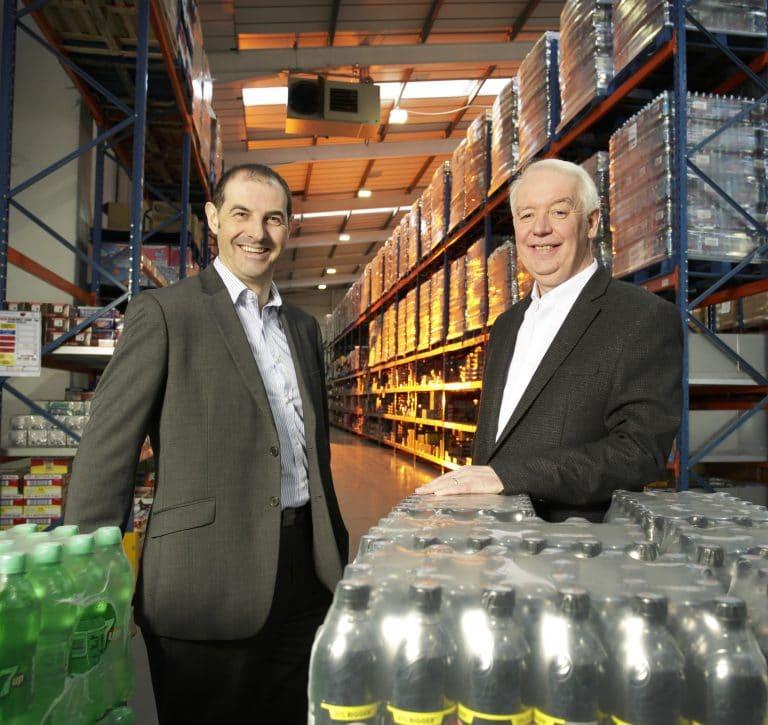
Kitwave Group (LON: KITW) is recommending a 295p/share cash bid from OEP Partners and the shares have jumped 32.6% to 293.5p. The bid values the grocery distributor at £251m. The acquirer will support further growth through acquisitions. Interim figures show a 21% increase in revenues to £802.7m, but there was a like-for-like decline of 1%. Underlying operating profit rose 12% to £38m despite the increasing overheads due to higher staff costs. Net debt is £57.3m, down from £63.7m one year earlier. The May 2021 placing price was 150p.
Alba Mineral Resources (LON: ALBA) is sending a circular to shareholders to gain approval for the second party of the acquisition of a 51% interest in the Motzfeldt critical metals project in Greenland. This is a prospective Niobium-Tantalum-Zirconium-Rare Earth Element project. A 25.5% stake is being acquired from a person connected to one of its directors George Frangeskides, who will also receive repayment of loans and fees. The share price gained 23.7% to 0.0235p.
Shares in Indus Gas (LON: INDI) rebounded 16.5% to 1.585p ahead of leaving AIM on 23 January. JP Jenkins will provide a matched bargains facility.
Digital mental health services provider Kooth (LON: KOO) has won an initial contract for services to students in a US state worth $2.6m. This is the third state it is providing services to. Harwood Capital managed Rockwood Strategic (LON: RKW) has increased its stake from 10.2% to 11.1%. The share price improved 9.05% to 114.5p.
FALLERS
Genetics based testing company GENinCode (LON: GENI) has raised £3.9m via a placing and subscription at 1p/share – that is more than the £3.5m minimum sought. Up to £500,000 more could be raised by a retail offer, which closes on 26 January. The company has been working with the FDA to gain 510k approval for the CARDIO inCode-Score test. Highlighted deficiencies are being attended to, including a greater emphasis on African American community data and further clinical validation. The cash will fund this and expansion in the UK and EU. The share price decreased 40.5% to 1.1p.
Trading in Landore Resources (LON: LND) shares recommenced after it published an updated mineral resource estimate for the BAM gold project in Ontario. It includes estimates for the B-47 nickel copper cobalt PGE deposit and VW nickel copper cobalt deposit at the Junior Lake nickel deposit. BAM has indicated gold of 622,300 ounces with 33,700 ounces inferred. B47 has indicated resources of 3,428 tonnes at 0.6% nickel, 0.41% copper, 0.05% cobalt, 0.13g/t platinum, 0.48g/t Pg and 0.03%g/t gold. VW has indicated resources of 3,428 tonnes at 0.4% nickel, 0.05% copper, 0.02% cobalt, 0.03g/t platinum, 0.04g/t Pg and 0.01%g/t gold. Strategic options are being considered for Junior Lake. There are potential changes at subsidiary Landore Resources Canada Inc. The share price slid 29.2% to 2.55p.
TheWorks.co.uk (LON: WRKS) says like-for-like sales over the Christmas and New Year period were 1.2% ahead, compared with 0.1% in the first half. There was an interim EBITDA loss of £1m, but management believes that the retailer is on course for a full year EBITDA of £11m. The share price declined 16.5% to 33.8p.
Airea (LON: AIEA) says demand for its floor tiles was softer in the second half, although full year sales were still 1% ahead at £21.4m. Uncertainty ahead of the Budget hit sales. International sales were 4% down. Operating profit should be better than that reported for 2024. The new manufacturing facility is in the final stages of commissioning. The share price slipped 13.3% to 19.5p.
Ex-dividends
Brickability (LON: BRCK) is paying an interim dividend of 1.12p/share and the share price dipped 0.3p to 52.7p.
MS International (LON: MSI) is paying an interim dividend of 6p/share and the share price jumped 70p to £12.50.
Solid State (LON: SOLI) is paying an interim dividend of 0.92p/share and the share price is unchanged at 160p.
Thor Explorations (LON: THX) is paying a dividend of 0.67p/share and the share price rose 1.5p to 84p.
M Winkworth (LON: WINK) is paying a dividend of 3.3p/share and the share price fell 2.5p to 182.5p.
The FTSE 100 was sharply higher on Thursday after Donald Trump made a U-turn on his Greenland threats and adopted a more diplomatic approach.
Donald Trump is famous for changing his mind and not following through on threats, but that does not make events at Davos yesterday any less dramatic.
London’s leading index rose 0.7% to trade back above 10,200 after the US President signaled he wouldn’t pursue a military invasion of Greenland, and a framework emerged for the US to be given a small pocket of the country to build military bases.
This could be seen as a win for all involved, and equity markets cheered the end of short but deeply concerning tensions between the US and some of its closest allies.
“Donald Trump’s TACO bell has rung once again, much to the joy of financial markets,” said Russ Mould, investment director at AJ Bell.
“Trump has form in chickening out of his threats, and investors are pleased he confirmed no plans to use military action to take Greenland or to impose new tariffs on parts of Europe.
US markets reacted well to developments overnight, and the improvement in sentiment spilt into the European session. The S&P 500 closed over 1% higher at 6,875.
The FTSE 100’s leaderboard was turned on its head on Thursday when compared to the week’s earlier sessions. Defensive sectors were out of favour, and investors were prepared to take a little more risk with cyclical sectors.
Falling geopolitical tensions weighed on precious metals, which saw Endeavour Mining and Fresnillo – two stocks that thrive on uncertainty – at the bottom of the leaderboard, with losses of around 2%. Diversified miners Rio Tinto and Antofagasta were also among the losers after a frenetic start to 2026.
Defence stocks BAE Systems and Babcock were down around 1%.
The positive impact of JD Sports’ trading update yesterday continued into a second session with the stock rising to 84p.
St James’s Place was the top riser after analysts at JPMorgan marginally increased their price target on the stock. FTSE 100 banks NatWest, Lloyds, and Barclays played a part in Thursday’s rally with gains between 1.7% and 2.6%.
IMI and Rentokil were among several stocks continued steady uptrends breaking to their highest levels of the year so far.
Inheritance tax receipts reached £6.6 billion in the nine months to December 2025, according to new figures. This represents an increase of £0.2 billion compared with the same period last year.
The data reveal a sharp rise in self-assessment tax payments during December. Collections jumped to £3.1 billion, up 25% year-on-year.
The impact of higher asset prices, including properties and stocks, means more people are being dragged into paying IHT with the threshold frozen.
Although receipts are rising, there are numerous ways to protect estates against IHT, with how much a person pays to HMRC on their death very much in their own hands.
‘Gifts of any value pass out of your estate after seven years – this can make it a good idea to give away assets while you are still alive rather than leaving them in a Will,’ explained Helen Morrissey, head of retirement analysis, Hargreaves Lansdown.
‘There is also an array of different allowances that enable you to gift assets away immediately. These include the £3,000 annual allowance as well as smaller allowances of £250 for smaller gifts. There are also rules around gifting to loved ones on marriage with gifts to children of £5,000, grandchildren and great grandchildren of £2,500 and £1,000 to anyone else. Such gifts leave your estate for inheritance tax purposes immediately.”
Schemes such as SEIS and EIS can help adventurous investors protect their investments from the tax man.
Meanwhile, capital gains tax receipts fell to £231 million in December, ahead of the usual seasonal peak in January. The drop suggests investors may be holding onto gains rather than realising them.
This behaviour appears linked to recent policy changes. The annual CGT allowance has been reduced, whilst rates on stock and share gains have increased. Both measures seem to be prompting investors to defer disposals.
Analysis for informational purposes only. Capital at risk.
Highlight
Regulatory Tuition, Not “Crackdown 2.0”: The Trip.com antitrust probe is a delayed normalization of legacy practices, not a return to the 2020–22 era. Trip.com is paying the same “tuition” its peers already settled.
True Moats Endure: History (Didi, Meituan) shows regulation breaks contractual advantages but is less effective against competitive edges built on infrastructure, product, and service.
The Real Threat & Opportunity: Price wars are unlikely due to competitor distraction. The real threat is AI-led integration (e.g., Alibaba’s Qwen). The opportunity is the overlooked Skyscanner hedge and Trip.com’s role in Beijing’s “visa-free” agenda.
China’s recent antitrust probe into Trip.com has reawakened investor anxieties around a return to the 2021 regulatory storm.
Our take: this is unlikely to be the start of a new regulatory cycle. Instead, it looks like the closing of the previous one.
The “Class of 2021” (Alibaba, Meituan, Didi) already paid their “regulatory tuition” by removing exclusivity clauses and aligning with state priorities. The Trip.com probe appears more like a late tuition bill than a fresh crackdown.
Source: AP
Protecting SMEs in a Deflationary World
China is currently fighting a deflationary cycle and weak consumer sentiment. In this environment, the priority is to protect small and medium enterprises (SMEs).
The investigation targets two specific “rent-seeking” behaviours:
Exclusivity (“Pick One of Two”): The practice of forcing hotels to list solely on one platform to maintain traffic dominance.
Excessive Take-Rates: High commissions and “value-added service fees” that squeeze independent hotel operators who lack bargaining power.
Why Trip.com and not Tencent?
The distinction lies in the business model.
Tencent: Connects individuals via WeChat and monetises primarily through advertising or self-developed games. It acts as a neutral infrastructure layer, avoiding direct conflict with users.
Trip.com: It operates as a centralised marketplace that controls and monetises traffic flow. Consequently, merchants often lack pricing power against the platform.
Source: AP estimates
The Regulatory Tuition
Direct Fees: China’s antitrust rules permit fines of 1%–10% of domestic revenue. Previous major cases (Alibaba, Meituan) landed in the 3%–4% range.
Applying a 4% penalty to Trip.com’s domestic revenue implies a one‑time hit of roughly USD 300–350m. Potential financial impact should be manageable given the company’s USD6.7bn net cash position.
Indirect Fees- Recurring Business Practice: Enforcement will probably force changes to Trip.com’s monetisation that depress recurring margins.
For example, ending “pick one of two” clauses would let hotels list simultaneously on Douyin and Meituan, diluting Trip.com’s pricing power. To retain merchants, Trip.com may need to increase merchant incentives such as marketing subsidies or guaranteed-traffic programmes, creating ongoing margin pressure.
On a positive note, Trip.com’s corporate and high‑friction services (B2B travel, visa support, dispute resolution) are less exposed to casual switching, mitigating some medium‑term pressure.
True Moats Endure Regulatory Action
Historical precedent suggests that regulation can break contractual advantages, but it is far less effective against moats built on infrastructure, product, and service.
Alibaba (The False Negative): Fined USD 2.8bn to end exclusivity.
The Reality:Market share fell from ~70% to ~40% since around 2015, but this downward trend started before the regulatory action.
The Lesson:It didn’t lose to the intended beneficiary (JD.com), but to cheaper rivals (Pinduoduo/Douyin) due to a consumption downgrade.
Meituan (The Split Verdict): Fined USD 530m.
The Reality:Lost share in “In-store” deals to Douyin’s video feeds, which were easy to replicate.
The Lesson: Retained >60% share in food delivery because Douyin could not replicate the “hard infrastructure” of millions of riders.
Didi (The True Positive): Faced the “Ultimate Penalty”—18-month removal from app stores.
The Reality: Didi retained about 75% market share despite the ban.
The Lesson:Didi offered an unmatched utility—”getting a car in 3 minutes” via 13 million drivers. Users stuck with the banned app rather than switch to inferior service.
Tencent Music (The Behavioural Correction): Ordered to abandon exclusive music rights in 2021.
The Reality:The order had minimal impact on TME’s dominance.
The Lesson:Product stickiness driven by social integration with WeChat, karaoke features, and the high switching cost of rebuilding playlists trumped contract exclusivity.
Source: The companies, AP estimates
Competition Shifting from Price War to AI
In our view, the likelihood of a price war after the removal of exclusivity is low.
Cash constraints and distraction: Meituan and Alibaba are already locked in battles in food delivery and quick commerce, pressuring margins and balance sheets. Launching a full‑scale offensive against Trip.com would lead to further stresses on its profitability and financial position.
Strategic prioritisation: Both groups are focused on restoring profitability and are less incentivised to start a costly, uncertain new front in online travel right now.
Source: The companies, AP
Financially, Douyin can afford to start a price war, but its business model differs from Trip.com’s. Douyin’s travel product focuses on impulse, prepaid vouchers, and short‑form commerce pushed via video. As a result, Douyin is more likely to capture low‑end, price‑sensitive demand than to displace Trip.com in premium or corporate channels.
Having said that, competition is shifting from capital-intensive price wars to technological integration. Alibaba has embedded e-commerce, travel, payments, and other services into its Qwen AI app, creating a one-stop AI interface. Users can complete tasks in natural language, such as itinerary planning, ticket booking, ordering takeout, and shopping, giving Alibaba a new, AI-driven channel to capture traffic.
Strategic Role in Beijing’s “Visa-Free” Agenda
On a positive note, the government has expanded visa-free entry to over 30 countries. In our view, the government does not want to crush the infrastructure required to monetise these high-value visitors.
Major Western platforms, including Booking.com and Expedia face an infrastructure gap in China. They cannot sell standalone high-speed rail tickets or verify “PSB” (Public Security Bureau) licences. Trip.com is the only platform offering the full stack: payments, language, rail, and compliance.
Source: AP
Skyscanner – An Overlooked UK Asset
While the inbound story provides a floor, the outbound story provides the optionality. The most mispriced asset on the balance sheet is Skyscanner, the Edinburgh-based search engine acquired in 2016.
The Disparity: Skyscanner accounts for over 30% of group traffic but less than 10% of revenue, by our estimates.
The Model: Currently, Skyscanner operates as a “Metasearch” engine, a lead generation tool that hands users off to airlines for low referral fees. Management has historically kept monetisation low to prioritise market share.
The Pivot: Should domestic Chinese margins be compressed by regulation, management can turn Skyscanner from Metasearch to OTA (Online Travel Agency). By processing bookings directly, it can significantly increase take-rates.
Source: AP estimates
This article is a “periodical publication” for information only and is not investment advice or a solicitation to buy or sell securities. This article does not constitute a “personal recommendation” or “investment advice” under UK FCA regulations. Investing in equities involves significant risk. The author holds NO position in the securities mentioned. There is no warranty as to completeness or correctness. Please do your own due diligence or consult a licensed financial adviser. Please read the Full Disclaimer before acting on any information. Images created with the assistance of Gemini AI.
Kitwave Group shares surged on Thursday after announcing has agreed to a recommended £251 million cash takeover by US private equity group OEP Capital Advisers in another blow to London’s equity markets.
Under the terms of the offer, Kitwave shareholders will receive 295p per share in cash. Kitwave shares quickly moved to the takeover price of 295p on Thursday, trading 33% higher on the day.
The price represents a 33.5% premium to Kitwave’s closing share price of 221p on the last practicable date, and a 38.8% premium to the three-month volume-weighted average price of 212p.
However, the offer price is significantly below the group’s 2024 highs above 400p.
Kitwave’s board, advised by Canaccord Genuity on the financial terms, has unanimously recommended that shareholders vote in favour of the scheme. Directors holding approximately 5.2% of the company’s share capital have given irrevocable undertakings to support the transaction.
Kitwave announced a profit warning in July last year, and shares have never recovered. The takeover looks to be an easy way out for management, who are struggling with a challenging economic backdrop.
US smart money obviously sees more value in Kitwave than the UK’s public markets are willing to give it.
OEP said the acquisition represents an opportunity to support the growth of one of the UK’s leading delivered wholesale groups. The private equity firm cited Kitwave’s nationwide network, strong supplier relationships, modern logistics infrastructure and diverse customer base as key attractions.
Young & Co’s Brewery has delivered exceptional festive trading whilst announcing plans to graduate from AIM to the London Stock Exchange’s Main Market.
The pub operator, which focuses on London and the South of England, saw like-for-like sales surge 11.2% during the three weeks to 5 January 2026. This notably came against particularly strong prior-year comparatives.
Performance over key trading days proved especially robust. Christmas Eve, Christmas Day and Boxing Day saw like-for-likes rise 12.3%. The former City Pub Company estate, acquired by Young’s, delivered standout growth of 26% over Christmas and Boxing Day, reflecting successful integration with Young’s wider proposition.
“We are delighted with the outstanding trading performance in our pubs over the festive period. Once again, this demonstrates the ongoing appeal of our premium, well-invested offer and another amazing contribution from the talented and hard-working team at Young’s,” said Simon Dodd, CEO of Young’s.
“During the six weeks of the festive period, we recorded our highest ever sales in one day, setting multiple daily and weekly records across our estate.”
For the 14-week period ending 5 January, total managed revenue increased 5.6%, with like-for-like growth of 5.7%. This builds on positive momentum reported in November’s interim results. Year-to-date managed revenue like-for-like growth now stands at 5.4%.
Main Market Ambitions
Young’s is also the latest company to signal it is throwing in the towel on AIM. Thankfully, it’s remaining listed and hopes to move to the Main Market.
The company has confirmed its intention to apply to the FCA for admission to the Official List and trading on the Main Market. The move, planned for Q2 2026, would see Young’s AIM listing cancelled.
Management believes the upgrade will enhance the corporate profile and facilitate investment from a broader range of UK and global institutional shareholders. Young’s points to considerable growth in both size and performance in recent years as justification for the move.
Goldstone Resources (LON: GRL) is raising £2m at 1p/share, which was more than double the share price ahead of the announcement. The cash will fund exploration at the Homase mine in Ghana to expand the JORC resource and to evaluate other gold projects, including one in Sierra Leone. Asian Investment Management is converting £1.45m of interest on its gold loan to shares at a conversion price base on a gold price of $4,250/ounce, taking its shareholding to 29.9%. This leaves 250 ounces of interest and the principal gold loan of 1,871.31 ounces. Directors are also taking 50% of fees owed in shares at 1p/share. The share price jumped 47.4% to 0.7p.
Sovereign Metals (LON: SVML) says that there are exceptionally high levels of rare earth elements Dysprosium-Terbium, used in magnets, and Yttrium, used for aerospace, in Monazite from the Kasiya rutile tailings in Malawi. Monazite can generate another stream of revenues. These are by-products of the rutile processing, which is the primary focus. The share price increased 33.8% to 40.8p.
Pulsar Helium (LON: PLSR) has issued a further 145,434 consideration shares to Aquis-quoted Oscillate (LON: SRVL) as part of the deal to acquire Quantum Hydrogen. This takes the stake to 80% with an option to the acquire rest for $400,000 in shares issued in five equal instalments. 2D seismic surveying has started at the Topaz helium project in Minnesota and should be completed in March. The share price gained 22.6% to 89.5p.
Microbiome-based products developer OptiBiotix Health (LON: OPTI) has received a 24 tonnes order of appetite reduction ingredient SlimBiome from Meelung Trading in Taiwan. There will be four deliveries this year at three month intervals. This will enable an increase in the scale of production enabling greater efficiency. The share price recovered 17.2% to 7.5p.
Oil condition monitoring equipment supplier Tan Delta Systems (LON: TAND) generated revenues of £1.2m in 2025, which is one-fifth higher than anticipated. There are customers undertaking trials of equipment that should be near to making purchasing decisions. Net cash was £1.4m at the end of 2025, but a fundraising may be required depending on the rate of new orders. The share price improved 13.9% to 37p.
FALLERS
Shares in Indus Gas (LON: INDI) slumped by one-third to 1.335p ahead of leaving AIM on 23 January. JP Jenkins will provide a matched bargains facility.
Eqtec (LON: EQT) has published a circular for a general meeting on 12 February to gain shareholder approval for broadening its strategy to gain exposure to critical and precious metals, while continuing with the core waste to energy technology business. This fits with the energy transition sector strategy. The share price fell 15.4% to 0.11p, but it is still much higher than prior to the announcement of the strategy change.
Firering Strategic Minerals (LON: FRG) intends to exercise the next tranche of the Limeco Resources option, which will take its shareholding to 36.2%. Firering Strategic Minerals boss Yuval Cohen will step down and concentrate on his role as chief executive of lime producer Limeco Resources in Zambia. A new kiln will increase production capacity. Youval Rasin will be interim chief executive of Firering Strategic Minerals. The share price declined 11.1% to 1.2p.
Iron deficiency treatment developer Shield Therapeutics (LON: STX) expects to achieve an operating profit in 2026, having generated $1m in cash from operations in the fourth quarter of 2025. In 2025, revenues rose from $32m to $50m with $46m coming from iron deficiency treatment ACCRUFeR through a combination of higher prices and more prescriptions. There were 61,000 prescriptions in the fourth quarter, up from 41,000 one year earlier. Cash was $11.6m at the end of 2025, although there is still net debt. The share price dipped 6.67% to 10.5p.