AIM movers: Ethernity Networks contract and ex-dividends

0

Ethernity Networks (LON: ENET) has signed an extended licence agreement with a military aerospace customer. The contract is worth $475,000 and should be completed before the end of the year. This is on top of a previous $80,000 payment and there should be additional revenues next year. Interim revenues were $1.4m. The share price is 21.1% higher at 3.875p.

In October, podcast company Audioboom (LON: BOOM) generated more than one billion advertising impressions in a month for the first time. The removal of old adverts after 90 days and replacing them with a new focused advert is helping advertising impressions to continue to grow. Fourth quarter revenues are still expected to be at least $19m. The share price increased 15.1% to 152.5p.

Sovereign Minerals (LON: SVML) is significantly upscaling the bulk sampling at Kasiya lithium-ion battery graphite project in Malawi. Sovereign Minerals and its partner Rio Tinto are trying to qualify the graphite to supply spherical purified graphite for battery anodes. The Kasiya project could produce 244,000t/year and it should be a low-cost producer – the current estimate is $404/t. China will soon require export permits for some forms of graphite used in batteries. The share price improved 8.51% to 25.5p.

Seaweed-based animal feed producer Ocean Harvest Technology (LON: OHT) has conducted a successful trial in Georgia for its poultry feed. Mortality rates for the poultry with necrotic enteritis with the company’s feed in their diet fell from 49% to 33%. It also enhances weight gain. Necrotic enteritis costs the poultry sector up to $6bn/year. The share price recovered 6.77% to 10.25p.

Cerillion (LON: CER) has secured a five-year software deal with a European telecoms company. The deal is worth €12.4m and there is potential for selling other software modules. This deal helps to underpin forecasts. The share price is 6.67% ahead at 1355p.

FALLERS

US-based gas producer Southern Energy (LON: SOUC) has raised $5m at 15.5p/share. This will help to finance up to four new wells, which cost around $3m each. The existing cash and generation from gas sales will finance the rest of the cost. The strategy is to increase production to 4.7 mboe/day by the second quarter of 2024. The US gas price has been increasing. The share price dipped 18.9% to 15p.

Sabien Technology (LON: SNT) reported a rise in 2022-23 revenues from £680,000 to £1.1m and the loss was slightly lower at £700,000. The order book is worth £200,000. The share price has fallen 6.45% to a new low of 7.25p.

Technology and life sciences investment company NetScientific (LON: NSCI) has switched its nominated adviser and broker from WH Ireland to Panmure Gordon. The share price slipped 8.41% to 49p.

Shanta Gold (LON: SHG) has updated investors about drilling at the West Kenya project. It has identified visible gold in five intersections. Shanta Gold is paying an interim dividend of 0.1p/share and the ex-dividend share price declined 0.25p to 10.85p.

Ex-dividends

Coral Products (LON: CRU) is paying a final dividend of 0.6p/share and the share price fell 0.25p to 13.5p.

CVS Group (LON: CVSG) is paying a final dividend of 7.5p/share and the share price is 14p higher at 1478p.

EKF Diagnostics (LON: EKF) is paying a final dividend of 1.2p/share and the share price declined 0.9p to 28p.

Gattaca (LON: GATC) is paying a dividend of 5p/share and the share price slipped 4.5p to 114.5p.

NWF (LON: NWF) is paying a final dividend of 6.8p/share and the share price fell 5p to 190p.
BT shares surge as cost control boosts profits

0

On Thursday, BT shareholders cheered positive developments in profitability as the group took action on costs.

BT Group shares surged over 8% on Thursday and were trading at 120p at the time of writing.

In the context of recent disappointing earnings updates, BT delivered solid financial performance, with adjusted earnings per share showing a 3% increase to 10.3p.

BT’s reported profit before tax was £1.1bn, up 29% largely as a result of cost-cutting measures. Revenue for the period was nearly exactly the same as the prior year’s £10.4bn.

Despite an increase in profitability, the board declared an interim dividend of 2.31 pence per share, in line with last year’s payout.

From an operational standpoint, the rollout of fibre has secured 364,000 net new customers in Q2 and ‘New EE’ was launched to attract new customers.

According to Matt Britzman, equity analyst at Hargreaves Lansdown, “BT’s consumer rebrand is now fully underway with an increased focus on converged products and services. There’s value in the facelift, mainly due to increased cross-selling and bundling within the consumer division.

“Figuring out how to deliver consistent growth is going to be the biggest challenge. Some serious cost-cutting efforts are underway, and as the buildout of 5G and fibre gets closer to its end, there should be a more normalised spending pattern on the horizon.”

“Given the pressure shares have been under of late, investors should be relatively happy with this print,” he inferred.

The Federal Reserve keeps rates on hold ahead of Bank of England’s decision

0

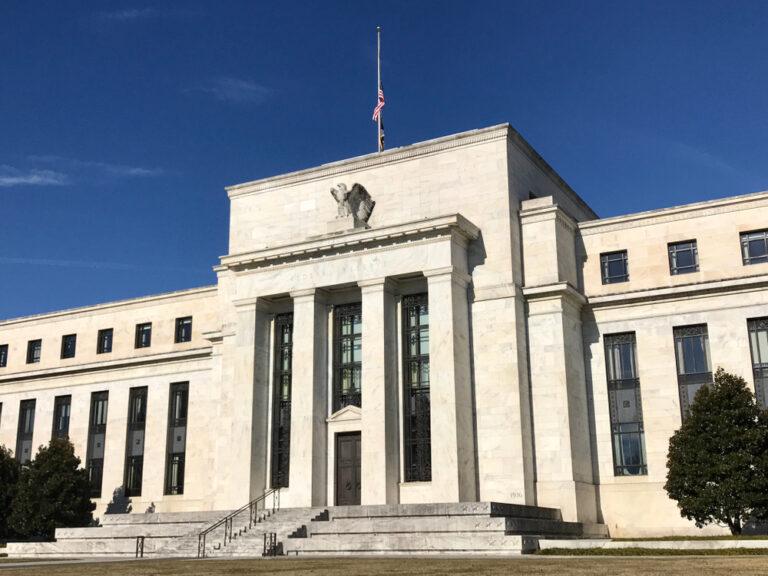
On Wednesday, the Federal Reserve made the decision to keep interest rates on hold, ahead of the Bank of England’s decision on interest rates at noon today.

The Federal Reserve’s rate target continues to be 5.25%–5.5%, which is the highest interest rate level in 22 years.

The Reserve aims to control surging prices, which have recently hit near-record highs.

The bank has been hiking borrowing costs with the goal of cooling down the economy and curbing inflation.

According to Susannah Streeter, head of money and markets at Hargreaves Lansdown, the decision to keep the rates stable alleviates worries that the Federal Reserve might push the economy into a recession if the monetary policy becomes too restrictive.

“For now, investors seem more confident that a goldilocks economy, not too hot but not too cool, will return to scare away the bears,”, she explained.

“Inflation is still elevated, but with long-term interest rates having surged and borrowing so much more expensive, these tighter financial and credit conditions are expected to push down demand going forward. Economic conditions could still deteriorate sharply, so this bout of confidence still risks being wishful thinking, but a steeper downturn would hasten rate cuts next year,”, she added.

The bank received some criticism, with some arguing that keeping interest rates high could jeopardise the US economy, potentially leading to a recession.

However, the Fed’s decision came slightly after the U.S. released the governmental data from the Bureau of Economic Analysis, which shows that the U.S.’s GDP grew by 4.9% in the July–September period, fueled by a tight job market and consumer spending.

On Thursday at 12, the Bank of England will also decide whether or not to keep interest rates on hold.

Interest rates in the UK are at their 15-year highest, and following the Fed’s decision, many expect the Bank to keep the rates on hold.

Commenting on the BoE, Susannah Streeter further said that “a jump in company insolvency rates and a housing market in the deep freeze are signals that the sharp hike in rates is already being keenly felt, and that’s even before the full effects come through. Inflation may still be at 6.7% at the last snapshot, three times the bank’s target, but upcoming data is expected to show it fell more markedly in October. Investors will be keen to sift through the Bank of England’s outlook to assess if the government’s ambition to halve inflation by the end of the year might be met.”

Shell profits rise as oil prices help earnings, fresh $3.5bn share buyback announced

Shell shares rose on Thursday morning as the oil and gas giant’s earnings for the Q3 came in almost bang in line with estimates.

Shares in the group were 2% higher at the time of writing – a sharp contrast to BP’s performance after they released earnings this week.

After peers BP, Chevron, and Exxon missed analyst estimates, Shell shareholders will be delighted to learn higher oil prices are feeding through into Shell’s profitability and LNG maintenance didn’t impact earnings too heavily.

Investors will also welcome increased share buybacks as the group returns some of its $7.5bn free cash flow to shareholders.

“Shell has not bucked expectations, unpacking underlying earnings of $6.2 billion for the third quarter. This position of strength has prompted it to announce share buybacks of $3.5 billion over the next three months, up from $2.7 billion in the previous three months,” said Susannah Streeter, head of money and markets, Hargreaves Lansdown.

“Revenues have been boosted, not just from the creep higher in oil prices, but also by higher margins in its refining business. Shell is also a leading supplier of Liquified Natural Gas and, although scheduled maintenance kept the taps tighter, with production across the integrated gas division down 9%, earnings from its gas trading business ticked up. Tighter supply has enabled the company to make higher margins diverting gas away from other regions to Europe where it’s still in high demand.”

The new Shell CEO’s strategy to refocus on hydrocarbons and take a more tentative approach to investing in clean energy has supported shares this year, with Shell gaining 14% since the beginning of the year.

Like all major fossil fuel companies, Shell must contend with volatility in underlying energy markets as traders weigh geopolitical threats with global demand.

Sainsbury’s shares jump as market share increases in battle against discounters

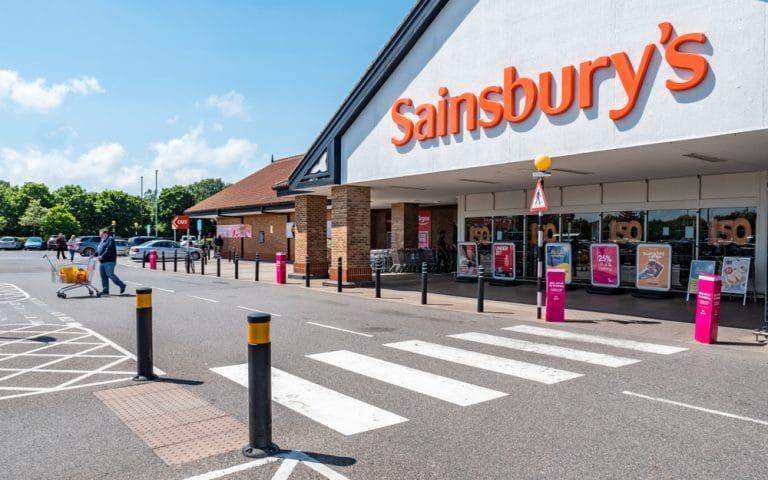
Sainsbury’s shares were firmly higher on Thursday after the supermarket released very robust trading in their most recent half year period.

Sainsbury’s has actively set out to compete with discounters Lidl and Aldi on price, and the strategy is paying off. Extensive use of Nectar pricing brings many products in line with the discounters and helped drive a 10.1% volume increase in the half year.

Their efforts have increased market share as group retail sales for the period rose 8.4%.

Simon Roberts, Chief Executive of J Sainsbury plc, said: “Food is firmly back at the heart of Sainsbury’s. We’ve never been more competitive on price and our focus on value, innovation and service is giving more customers more reasons to shop with us.”

Sainsbury’s shares were 4.7% higher at the time of writing.

Considering the focus on low prices and higher volumes, shareholders will have been pleased to see retail operating margins decrease only 4 bps to 2.91%.

Strong performance during the period now means Sainsbury’s see underlying profit before tax in the range of £670m-£700m, the higher end of the previously guided £640m-£700m range.

“This is another solid trading update from Sainsbury’s with further volume growth in the second quarter and an improved market share performance. This means the group now expects profit for the year to come in at the top end of its previous guidance range,” said Wealth Club’s Charlie Huggins.

“Sainsbury’s has worked hard to lower prices in the face of intense competition. The launch of Nectar prices, where Nectar card holders save money on everyday items seems to have been well received and has helped the group to hold its own against Tesco and the German discounters. 

“Food inflation is starting to fall and this should help ease pressure on consumers, whose finances have been squeezed from all angles by rising prices, no more so than for the weekly shop. That said, lower inflation also means volume growth will become a more important contributor to like-for-like sales in future periods. It is encouraging that Sainsbury’s volumes grew in the second quarter but it will need to maintain this momentum.”

M&G Credit Income Investment Trust – Future trends in investment trusts: Adam English

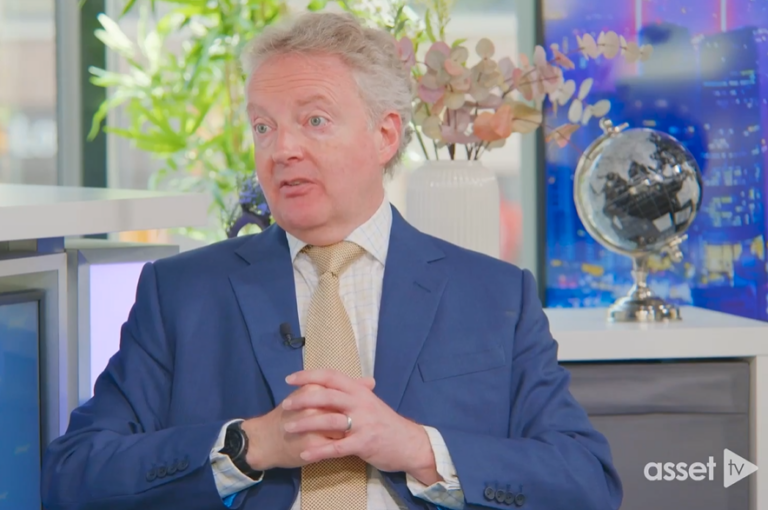
Adam English, Fund Manager of the M&G Credit Income Investment Trust, joins Asset TV’s Rory Palmer to provide a background on the trust, how they deal with volatility in the markets and private credit.

FTSE 100 gains ahead of Fed interest rate decision

The FTSE 100 edged higher on Wednesday as markets prepared for the next instalment from the Federal Reserve and its interest rate decision after the European cash market closes.

The main interest rate decision is likely to be a non-event with the Federal Reserve expected to keep rates on hold. Markets will be most concerned with the accompanying projections and insight into thinking on where rates will go in the coming months.

A bumper 4.9% increase in US GDP in the last quarter shows the world’s largest economy is able to withstand higher rates and suggests the Federal Reserve could act again to increase rates if inflation persists at current levels.

Interest rate cuts will not even be in the conversation.

After the US 10-year treasury yield hit 5% last week, bond markets will be watched closely for any sign of rising yields that could dampen demand for equities.

“The FTSE 100 moved higher on Wednesday ahead of the crunch meeting of the US Federal Reserve,” said AJ Bell investment director Russ Mould.

“The broad expectation is the Fed will sit on its hands for now, so all the focus is likely to be drawn to any hints dropped about the future direction of monetary policy.

“Given the volatile economic and geopolitical backdrop, Jerome Powell will have to weigh any words in the accompanying statement carefully if he wants to avoid giving investors the jitters.”

FTSE 100 movers

Next was the FTSE 100’s top riser after the retailer again dispelled any fears about the UK consumer with an increase to full year profit guidance.

“It’s been a turbulent year for retailers thanks to consumers battling high interest rates and, more recently, unusual weather patterns which meant the wrong kind of clothes were on the shelves. For example, t-shirts and summer dresses were less appealing during the cooler than average August, and then retailers’ winter range gathered dust during a warmer than average September,” Russ Mould said.

“Nonetheless, Next has managed to navigate through the challenges and once again has upgraded earnings guidance. Rival retailers will certainly want to know how it has managed to stay above water.

“The latest success can be attributed to online sales, suggesting Next continues to stock what people want and at price point that shoppers deem to be good value for money.”

Marks & Spencer’s rose in sympathy but sports retailer JD Sports didn’t join in the rally declining 1.2%.

GSK was the FTSE 100’s biggest loser, down 3%, as the removal of COVID-related sales masked otherwise strong sales activties.

“Speciality medicines couldn’t quite shrug off the effects of falling COVID sales but still saw strong growth from the rest of the portfolio. Here, the longer-term outlook looks promising driven by product launches/expansions and a strong R&D programme, the success of which will be key to unlocking further value,” said Derren Nathan, head of equity research at Hargreaves Lansdown.

“The current share price valuation looks attractive, likely held back in some part by the ongoing Zantac litigation. GSK is moving swiftly to settle these cases but there are still a number of key hearings outstanding. However, investors should take heart from the strong operational progress.”

Investors will have one eye on tomorrow’s Bank of England rate decision and Shell’s earnings.

After BP’s disappointing results on Tuesday.

Ørsted shares are down as it halts two US wind farm projects

0

Ørsted shares had plunged 19.63% at the time of writing on Wednesday as it became known that the Danish renewable energy company was to halt two offshore wind farm developments in the U.S.

Ørsted released a statement saying that the move is to cost the company approximately 39.4 billion DKK (£4.6 billion).

The developer announced the discontinuation of its 2,248-megawatt Ocean Wind 1 and 2 projects in New Jersey.

This decision is part of the company’s ongoing restructuring of its U.S. offshore wind portfolio.

“Significant adverse developments from supply chain challenges, leading to delays in the project schedule, and rising interest rates have led us to this decision,” said Ørsted Chief Executive Mads Nipper on the matter.

Ørsted stocks have been rapidly falling for two months since August and are now down by approximately 60%.

The shares were trading at 273.1 DKK in the morning trade on Wednesday.

“The development of new wind energy projects is becoming increasingly challenging. Securing investment is particularly difficult in the current rate environment. Input costs are on the rise for wages and materials like steel and copper, and our experts highlight that offshore vessel hire costs are particularly elevated. It coincides that the maximum set price per MWh is simply set too low to offset these soaring costs,”said Louis Knight, analyst at Third Bridge.

“The future of many projects remains uncertain due to the increasing construction costs, combined with the fact that power prices for projects are fixed, ignoring inflation, through the UK’s contracts-for-difference price model”, he added.

UK house prices rise by almost 1% amidst a shortage of homes

0

On Wednesday, mortgage lender Nationwide data showed that, surprisingly, British house prices rose nearly 1% in October.

According to Nationwide, the rise was primarily attributed to a shortage of available homes rather than a market recovery impacted by increased borrowing costs.

The data further shows that new home prices rose by 0.9% from the previous month, marking the greatest monthly increase since August 2022.

Economists surveyed by Reuters in a poll had predicted a monthly decrease of 0.4% and a year-on-year drop of 4.8% in housing prices.

However, Tom Brown, Managing Director of Real Estate at Ingenious, said that “it’s essential to note that the situation is not uniform throughout the country and across all price ranges. When analysing opportunities, it is key to understand the underlying subsectors and regional dynamics.”

“Taking too broad a view of the market can be misleading. For instance, the institutional housing sector has experienced fewer disruptions compared to the residential sector due to its long-term investment horizon, rental growth, and substantial capital inflows,”, he added.

Chinese manufacturing slows in October

0

The Caixin China General Manufacturing PMI, which evaluates manufacturing sector’s performance based on a survey of 430 private industrial firms, dropped to 49.5 in October 2023, down from 50.6 in September.

These numbers fall short of the forecasted 50.8.

In October, the manufacturing sector shrank for the first time since July, with decreased output reflecting the delicate economic recovery.

New orders showed minimal growth, and foreign sales declined for the fourth consecutive month due to slow global conditions and high prices.

Input costs reached a nine-month high because of pricier raw materials and oil, while selling prices increased moderately.

Susannah Streeter, head of money and markets at Hargreaves Lansdown, commented on the development by saying:

“More data has come through in China, indicating that the manufacturing sector has struggled unsuccessfully to hang onto growth. The Caixin S&P PMI data showed that factory activity contracted in October amid weaker demand globally.”