The building blocks for an income strategy: resilience, growth and diversification

Iain Pyle, Investment Manager, Shires Income plc

  • It’s been a strong year for UK dividends, with underlying growth of 16.5%
  • Corporate earnings have proved robust in spite of slowing economic activity
  • Despite recent outperformance, the UK market remains close to a record discount when compared to other developed markets

As the interest rate environment has changed, investors have rediscovered the charms of an income strategy. The tangible return of a regular income has had an appeal at a time when inflation is high and the economic outlook is uncertain. However, with predictions for lower growth in dividends in the year ahead, finding a balance between resilience, growth and diversification is vital for any income strategy.

It has been a bumper period for UK dividends. UK dividends rose 8% in 2022. Stripping out the effect of special dividends, underlying payouts rose 16.5%. There has been strong growth across multiple sectors, with almost every sector in the UK market showing double digit growth in payouts. The yield still looks attractive across the UK market, projected at around 3.7% for 2023.

Equally, dividends in the UK market look resilient. Many companies rebased their shares during the pandemic, adjusting their payout ratios. While the absolute level of dividends is in line with pre-Covid levels, there has been considerable profit growth in between. This has left payout ratios (the amount a company pays out in dividends relative to its profits) looking relatively low. This leaves those dividends less vulnerable to any earnings weakness and allows for stronger growth.

In spite of the weaker economic environment, corporate earnings have proved relatively robust. Companies started the year with near-record profit margins. While we have been alert to the possibility of those margins eroding in the face of higher cost inflation and interest rate rises, it hasn’t happened to date. Companies have shown significant pricing power and have managed to maintain profit margins in spite of a tougher climate. This has allowed dividend increases to continue.

It may be that this earnings weakness does not materialise, at least not for higher quality companies. Cost increases are moderating and there is no reason that stronger companies cannot sustain their pricing power and protect their margins in the year ahead.

Nevertheless, there are headwinds. The most recent Link Group Dividend Monitor predicted that growth in UK dividends would slow to 1.7% in 2023. In particular, the mining sector – which has been a strong engine of growth in dividends over the past two years – is likely to see payouts fall. There is no weakness on the part of the underlying companies, but simply a reflection that the past two years have been exceptional in terms of commodity prices.

A tougher environment will create idiosyncratic problems. The interest rate rises in 2022 and 2023 have been unprecedented in terms of their speed and depth. As the turmoil in the US regional banking sector has shown, it is not always clear where stresses will emerge. Equally, growth may be harder to come by, even if dividends prove resilient.

In the Shires Income portfolio, our solution to this is multi-faceted. The preference share portfolio gives us a reliable income stream that forms the foundation of our income portfolio. The income stream it provides is high, but static. It solves one piece of the income puzzle – resilience – but it cannot solve the growth piece. However, the reliability of the income from the preference share portfolio allows us greater flexibility to hunt for growth. In particular, it means we can retain our weighting in abrdn Smaller Companies Income Trust, the largest single holding in the portfolio. We could reinvest this capital into large cap companies with better dividends, but this holding brings the prospect of long-term growth and compelling diversification. It also has a yield of 3.8%.

There is still a place in the portfolio for the mining sector, even though it may reduce its dividend payouts this year. Even at a reasonable through-cycle commodity price, these companies still look cash generative and pay yields materially higher than the broader market. Longer term, the sector is also positioned for structural growth due to increasing demand for mined commodities required for the energy transition and scarcity of supply.

Above all, we want to retain flexibility in the portfolio, with an ability to recycle into areas that have sustainable, long-term dividends. A growing income is likely to become more important in a climate of higher structural inflation and we want to make sure that Shires keeps pace.

In spite of these caveats, income investors can still feel encouraged. Coming into this year, the consensus was that recession was inevitable. Economic activity and corporate growth have been far stronger than expected. While market valuations are still relatively high and warrant caution, there are plenty of companies with strong earnings growth and fundamentals, raising their payouts to investors. We believe the market will put greater value on these companies in the year ahead and, after a period out of favour, income will be an increasingly important component of total return.

Important information:

Risk factors you should consider prior to investing:

  • The value of investments, and the income from them, can go down as well as up and investors may get back less than the amount invested.
  • Past performance is not a guide to future results.
  • Investment in the Company may not be appropriate for investors who plan to withdraw their money within 5 years.
  • The Company may borrow to finance further investment (gearing). The use of gearing is likely to lead to volatility in the Net Asset Value (NAV) meaning that any movement in the value of the company’s assets will result in a magnified movement in the NAV.
  • The Company may accumulate investment positions which represent more than normal trading volumes which may make it difficult to realise investments and may lead to volatility in the market price of the Company’s shares.
  • The Company may charge expenses to capital which may erode the capital value of the investment.
  • There is no guarantee that the market price of the Company’s shares will fully reflect their underlying Net Asset Value.
  • As with all stock exchange investments the value of the Company’s shares purchased will immediately fall by the difference between the buying and selling prices, the bid-offer spread. If trading volumes fall, the bid-offer spread can widen.
  • Certain trusts may seek to invest in higher yielding securities such as bonds, which are subject to credit risk, market price risk and interest rate risk. Unlike income from a single bond, the level of income from an investment trust is not fixed and may fluctuate.
  • With funds investing in bonds there is a risk that interest rate fluctuations could affect the capital value of investments. Where long term interest rates rise, the capital value of shares is likely to fall, and vice versa. In addition to the interest rate risk, bond investments are also exposed to credit risk reflecting the ability of the borrower (i.e. bond issuer) to meet its obligations (i.e. pay the interest on a bond and return the capital on the redemption date). The risk of this happening is usually higher with bonds classified as ‘subinvestment grade’. These may produce a higher level of income but at a higher risk than investments in ‘investment grade’ bonds. In turn, this may have an adverse impact on funds that invest in such bonds.
  • Yields are estimated figures and may fluctuate, there are no guarantees

Other important information:

Issued by abrdn Fund Managers Limited, registered in England and Wales (740118) at 280 Bishopsgate, London EC2M 4AG. abrdn Investments Limited, registered in Scotland (No. 108419), 10 Queen’s Terrace, Aberdeen AB10 1XL. Both companies are authorised and regulated by the Financial Conduct Authority in the UK.

Find out more by registering for updates. You can also follow us on social media: Twitter and LinkedIn.

Midwich Group launches retail offer

3

Audio visual products distributor Midwich Group (LON: MIDW) is acquiring SF Marketing Inc, which has a similar business in Canada for £26.7m. Midwich is also raising £50m via a placing at price to be set when the bookbuilding is finalised. A Primary Bid offer could raise up to £2m more at the same price.

The retail offer will not go ahead if the placing is unsuccessful. Existing and new shareholders can subscribe for shares. The minimum subscription is £250. The offer closes at 9pm today.

The acquisition and fundraising were announced just after 4.30pm and the share price closed at 450p.

The cash raised will help to reduce debt, which had risen to £119.4m by the end of 2022, although that includes £23.4m of lease liabilities. That is before the acquisition of SF Marketing.  Further earnings enhancing acquisitions are likely.

Midwich already has a north American operation called Starin. Last year, revenues increased by 78% to £123.1m, but gross margin declined to 14%. Adjusted operating profit rose 41% to £6.4m. That is around 12% of group operating profit. The majority of profit is currently generated by European activities with the UK and Ireland the biggest contributor.

In the year to May 2022, SF Marketing generated revenues of C$94.7m and adjusted operating profit of C$6.1m, so it will be a significant boost to the North American operations.  There is £1 to C$1.66. The deal should be earnings enhancing in the first full year.

Premier African Minerals shares steady after lithium offtake agreement clarity

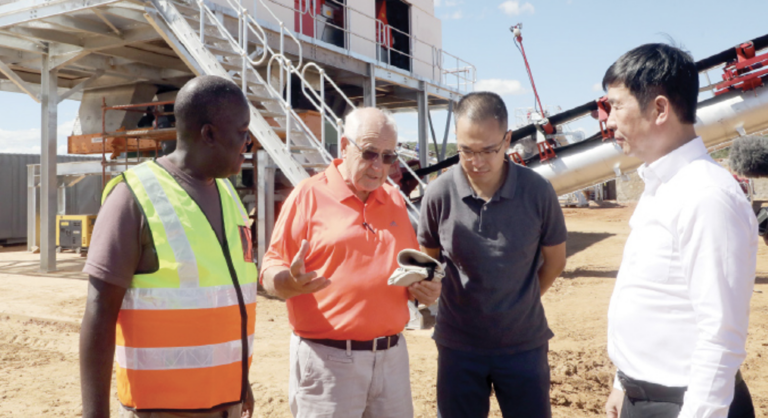
Premier African Minerals continued the rally on Wednesday after announcing it received the support of their lithium offtake partner Canmax Technologies yesterday.

Premier African Minerals have an offtake agreement with Canmax that stipulates Premier African Minerals must supply lithium to Canmax by 30th May, or Canmax has the right to terminate the agreement.

Premier African Minerals announced this date would not be met in May and raised concerns about their ongoing agreement. PREM shares sank as a result.

Yesterday, Premier African Minerals announced that Canmax were not seeking to terminate the agreement and were instead exploring amendments to the agreement. The clarity sparked a rally in Premier African Minerals shares yesterday, and the price held steady on Wednesday.

George Roach, CEO commented: “I am deeply appreciative for the constructive discussion, further assistance, and confirmation of our relationship with Canmax “.

Canmax holds a 13.14% stake in Premier African Minerals and would likely see the value of this stake diminish considerably if they imposed damaging terms on PREM.

Premier African Minerals are around 33% higher than the lowest traded levels in May.

FTSE 100 reverses early losses; housebuilders dip on UK housing data

We start today’s coverage of trade in London by paying respects to Sir Ivan Menezes, the CEO of Diageo, who sadly passed away after a short illness.

“This is an incredibly sad day. Ivan was undoubtedly one of the finest leaders of his generation,” said Javier Ferrán, Chairman, Diageo.

“Ivan was there at the creation of Diageo and over 25 years, shaped Diageo to become one of the best performing, most trusted and respected consumer companies. I saw first-hand his steadfast commitment to our people and to creating a culture that enabled everyone to thrive. He invested his time and energy in people at every level of the company and saw potential that others may have overlooked. This is one of many reasons why he was beloved by our employees, past and present.”

Sir Ivan was instrumental in turning Diageo into one of the world’s leading drinks companies and oversaw steady and measured increases in the share price for investors.

“Sir Ivan Menezes will be remembered for transforming Diageo’s fortunes and making it the powerhouse it is today in the spirit sector. He was greatly admired by the business community and by investors,” said AJ Bell investment director Russ Mould.

“In his 10 years as chief executive, he focused on high-end brands, recognising that consumer tastes were evolving and that people were prepared to pay a premium price for a quality product.

“Sir Ivan paid a lot of attention to culture within the business, while also making sure Diageo was a leader in the fields of sustainability, inclusivity and diversity.”

FTSE 100 Movers

The FTSE 100 was broadly flat at the time of writing on Wednesday, having reversed early losses. Poor Chinese economic data meant the FTSE 100 started the day on the back foot, but buyers gradually stepped in throughout the session.

China is reported to be considering stimulus measures to help support the economy. The hopes for action from the Chinese authorities contained sentiment on Wednesday.

CNBC reports economists predict stimulus measures will be focused on the property sector, a key driver of the wealth effect in China.

“The stimulus package could be centered on the property sector, with expansionary monetary and fiscal policies to keep up growth momentum,” Citi economists wrote in a note.

UK housebuilders were weaker after the Halifax House Pirce Index recorded the first annual decline in UK house prices since 2012. Taylor Wimpey, Persimmon, and Berkeley Group Holdings were all weaker at the time of writing.

Associated British Foods was the FTSE 100’s top riser a day after announcing a cash acquisition of National Milk Records for £48m or 215p per National Milk Records shares. National Milk Records is listed on the AQUIS Stock Exchange.

DX settles with Tuffnells

1

Parcel and freight delivery company DX (LON: DX.) has come to a settlement with rival firm Tuffnells Parcels Express. This is one of the things that has held back the share price this year despite the strong trading.

Tuffnells Parcels Express made a claim relating to confidential competitor information it says was obtained by DX. Past and current management of DX were previously at Tuffnells and helped ot turnaround its performance.

AIM-quoted DX says that it has not admitted liability and the details of the settlement are confidential. It should not have any impact on the 2022-23 figures or thereafter.

In the year to June 2023, pre-tax profit is forecast to improve from £20.6m to £25.4m and a total dividend of 1.5p a share is expected to be paid for the financial year.

Net cash could be more than £35m by the end of June 2023, which is nearly one-quarter of the market capitalisation. The cash pile should continue to rise even with expected capital investment and the dividend payment.

The share price edged up 0.5p to 26p, which is seven times prospective 2022-23 earnings, falling to just over six next year. The forecast yield is 5.9%.

Past corporate governance problems still hang over the business, but settling with Tuffnells Parcel Express is a good sign. Confirmation of the progress made when the 2022-23 figures are published should further help to spark a re-rating.

Baillie Gifford foresees strong growth in this US tech small cap

Baillie Gifford holds this US tech small cap in their American Fund alongside NVIDIA, Tesla and Amazon.
UK Investor Magazine discussed the company with Baillie Gifford when we sat down with managers at their Edinburgh offices last month.
Kirsty Gibson, co-manager of the Baillie Gifford American Fund, said they have been watching the company since its IPO but only bought in after the share price declined.
Baillie Gifford's American Fund focuses on 'Atoms and Bytes' businesses that solve real-world problems with online solutions. Managers of the fund seek out companies with high-growth potenti...

AIM movers: Jersey Oil & Gas farm-out approved and IOG gas flow problem

0

Jersey Oil & Gas (LON: JOG) has received approval for the Greater Buchan Area farm-out to NEO Energyfrom the regulator and the deal should be completed by the end of the month. An extension has been granted to the Buchan licence to enable a field development plan to be compiled. The share price is 3.9% higher at 200p.

RUA Life Sciences (LON: RUA), which has developed Elast-Eon biostable polyurethane medical device technology, increased revenues by one-third to £2.18m – £1.63m from contract manufacturing and biomaterials generated £550,000. R&D spending increased from £887,000 to £1.07m. The full year loss could be £2.4m. There was cash of £1.48m at the end of March 2023. The vascular business is getting ready to commence an FDA approved clinical study for vascular grafts. The structural heart business has been assessing the performance of polymeric heart valve leaflets. The share price moved 3.75% ahead to 41.5p.

Embedded computing technology supplier Concurrent Technologies (LON: CNC) has secured a new distributor agreement with SoC-e, which will enable the AIM company to offer SoC-e’s Relyum advanced networking solutions. The share price rose 2.96% to 69.5p.

Serabi Gold (LON: SRB) says underground exploration at the Palito project is extending the G3 vein and at depth beyond a fault zone. There should be an updated resource estimate in the third quarter of 2023. The share price increased 2.8% to 27.5p.

More bad news for oil and gas company IOG (LON: IOG), which says that the Blythe H2 well in the North Sea is producing gas at a constrained rate. There could be a mechanical blockage. The well could be brought onstream this month. The volatility of the gas market and the declining price has increased pressure on the company. Management is seeking pre-emptive waivers of potential covenant breaches. The company’s bond matures in September and that will need to be refinanced.  The share price slumped 41% to 3.95p, which is a new low.

In-content advertising company Mirriad Advertising (LON: MIRI) lost £15.6m in 2022 as revenues fell by one-quarter to £1.5m. Management is hopeful that trading could improve in the second half of 2023. The share price declined 17.8% to 3.125p. The recent placing was at 3p.

Late last evening, Jadestone Energy (LON: JSE) announced an $85m funding package. This includes a $52.6m gross, $50m net, placing at 45p a share and a $30m standby working capital facility from Tyrus Capital. There is also an open offer to raise up to $8.3m at the placing price. The cash will be invested in oil and gas asset development. The share price slipped 14.8% to 41.75p.

Last Friday, Eco Buildings Group (LON: ECOB) was readmitted to AIM following the reverse takeover of Eco Buildings by Fox Marble. The business supplies prefabricated modular housing, initially in the Balkans. As part of the deal there was £2.7m raised at 55p a share. The share price has fallen below the deal price and today it fell a further 13.3% to 32.5p.

Evgen Pharma (LON: EVG) made a higher 2022-23 loss than expected. It was £5m instead of the forecast £4.1m. Net cash was £5m at the end of March 2023. Evgen says it has enough cash until next year. There are potential milestone payments that could add to the cash. The share price is 7.59% lower at 3.65p.

Upgraded forecasts for City Pub Group

0

Peel Hunt has upgraded its forecast for City Pub Group (LON: CPC) following its AGM trading statement and believes further upgrades are possible. Like-for-like sales are 13% ahead through a mixture of price increases and volume gains. This compares with estimated growth of 8% for the pub sector.

Sales are 12% ahead of pre-pandemic levels. Refurbishments have helped to improve revenues and the figure could have been higher without train strikes.

Cost pressures are easing, and management has fixed 35% of energy costs until March 2025. Utilities costs are expected to fall this year. Food costs are still high, but food generates less than one-quarter of revenues.

The purchase of a further 4% of Mosaic for £700,000 will take City Pub Group’s share to 52% and the business will be consolidated. A further £4m is expected to be spent over the coming year to take the stake to 75%.

This increases the pub estate from 43 to 52. Mosaic lost money last year, but it should make a positive contribution when integrated into the group.

Peel Hunt has increased its 2023 pre-tax profit forecast from £5.8m to £6.3m, with a further increase from £7.2m to £7.6m for the 2024 figure. A return to dividends is forecast for this year with an estimate of 1.2p a share, which would be covered 3.8 times by forecast earnings.

The share price rose 2% to 100.5p, which is the highest it has been since the beginning of 2022 but around 50% of the level in early 2020. The shares are trading on 22 times prospective 2023 earnings, falling to less than 20 the following year. Net assets were 93.6p a share at the end of 2022.

Halifax records first annual drop in house prices since 2012

Halifax’s House Price Index shows house prices have fallen 1% in the year to May – the first annual drop since 2012.

Halifax’s data corroborates recent house price data from Nationwide. Although their methodologies and price changes differ, both organisations are recording declines in the average UK house price on an annual basis.

Rising mortgage rates and the cost of living crisis have eroded confidence in the housing market. Adding fuel to the fire, The Bank of England is expected to hike rates again this year and have lenders reacted by increasing mortgage rates. Analysts at interactive investor suggest we could see further declines this year.

“It is becoming increasingly clear that the resilience of the property market in the first quarter of the year was a flash in the pan, with the impact from the affordability squeeze from high mortgage rates and high inflation filtering through. The constrictions imposed by affordability culminate in a diminished pool of buyers capable of participating in the market, exerting downwards pressure on price growth,” said Myron Jobson, Senior Personal Finance Analyst, interactive investor.

“The recent rises in the mortgage rates which has seen rates climb by 0.4% within a fortnight could further fuel further declines in house prices in the coming months.”

Stubbornly high inflation rates are to blame for the latest bout of uncertainty around borrowing costs. UK inflation was higher than expected in May, which caused a repositioning in market pricing of interest rates.

“This is far from over,” said Sarah Coles, head of personal finance, Hargreaves Lansdown.

“Core inflation sent shockwaves through the mortgage market at the end of May, and we’re still feeling the effects as major lenders bump up prices.

“The market now expects rates to be higher for longer, which means fixed rate mortgage prices are increasing. Today Halifax will push up rates on its two-and five-year fixed rate deals, which is likely to depress prices even further in the coming months.”

New standard listing: Ashington Innovation

Ashington Innovation is a shell seeking to acquire a technology business. It has not narrowed the potential sectors down by much, but it is likely to be something developing a newer technology.
The share price ended the first day of trading at 4p (3p/5p). There were 150,000 shares traded in three deals, including one for a single share.
The NAV is 0.85p/share and the share price is more than four times that level. High enough.
==========
Ashington Innovation (LON: ASHI)
Technology shell
www.ashingtoninnovationplc.com  
Market: Standard list
Placing
Flotation date: 6 June 2023
Share price:...