Tapping into China’s growing sportswear market

As China’s sportswear market skyrockets, Mike Kerley and Sat Duhra, Portfolio Managers of Henderson Far East Income, have seized this golden opportunity by investing in two of China’s sportswear frontrunners, Li Ning and Anta.

China’s sportswear market has witnessed remarkable growth in recent years, fuelled by various factors, including an emerging fitness culture, rising disposable income, and strong government support for the sports industry. In addition, a heightened awareness of obesity and lifestyle-related diseases has led many Chinese consumers to prioritise regular exercise and adopt healthier lifestyles. This has increased participation in a wide array of sports, ranging from traditional favourites like badminton and table tennis to basketball, football, cycling, and swimming, consequently driving a diverse demand for sportswear.

The nation’s rapid economic development and urbanisation have significantly transformed the lifestyles and aspirations of the Chinese populace. As urbanisation continues, more people are moving to cities with greater access to gyms, sports facilities, and fitness classes. Simultaneously, an expanding middle class with higher disposable income and a growing emphasis on health and fitness have spurred an unprecedented demand for sportswear.

Recognising the importance of a healthy population, the Chinese government has launched initiatives such as the National Fitness Plan, support for professional sports, and hosting the 2022 Winter Olympics, further boosting interest in sports and fitness nationwide. As sports participation and the shift towards healthier lifestyles have gathered pace, so too has the demand for sportswear.

The Chinese Sportswear Boom

In 2021, China’s sportswear retail sales soared to RMB371.8 billion (US$51.9 billion), accounting for 13.4% of the country’s apparel market. And this momentum is set to continue, with the Chinese sportswear market projected to grow at an impressive compound annual growth rate (CAGR) of 10% between 2021 and 2026.i While international brands like Nike and Adidas have traditionally dominated the sportswear market, recent years have seen an increasing shift toward local brands that embody Chinese cultural traditions and rising national pride.

The ‘Guochao,’ or ‘national wave,’ has been one of the driving forces behind this shift toward domestic brands. As reported by Bloomberg, the trend is quickly gaining traction among young Chinese consumers, especially the 270 million-strong Gen-Z cohort. These young consumers are redefining the traditional stigmas associated with Chinese goods; the ‘Made in China’ label is now seen as a badge of honour, with local brands producing high-quality products tailored explicitly for Chinese consumers.

And it’s not just traditional sportswear that has seen increased demand. China’s Gen Z and Millennials are also placing an emphasis on style and luxury, which has resulted in the proliferation of athleisure (a mix of fashion and sports apparel). For many Chinese millennials, fitness is also a social activity, they want to make friends in the gym or be part of certain communities. As a result, consumers now want sportswear that is functional, versatile, and even more importantly attractive – something which many Chinese brands have leveraged.

This shift has enabled Chinese sportswear giants like Li Ning and Anta Sports to expand their market share. In 2022, Nike led the Chinese sportswear market with a 22.6% share, while local brand Anta Sports overtook Adidas (11.2%) to secure second place with approximately 20.4% of the market share. Meanwhile, Li Ning increased its market share to 10.4%.ii

Source: Breakdown of the sportswear market in China in 2022 by brand. Statista 2022

Li Ning: A Homegrown Success Story

Li Ning, founded by the eponymous Olympic gold medallist, has swiftly emerged as one of China’s foremost sportswear brands, rivalling international behemoths like Nike and Adidas. The company offers an extensive portfolio of products, encompassing athletic footwear, apparel, and accessories. It also sponsors numerous high-profile sports events and athletes, further cementing its reputation. Crucially, Li Ning has adeptly tapped into China’s burgeoning national pride, striking a chord with the increasingly affluent and aspirational Chinese consumer base.

The company’s financial results over recent years reflect its success in navigating the competitive landscape. In 2022, Li Ning’s revenues climbed by 14.3% year-on-year (yoy), reaching RMB25,803 million, up from RMB22,572 million the previous year. Moreover, despite a 4.6 percentage point dip in the gross profit margin to 48.4%, the net profit margin held steady at a robust 15.7%.iii Li Ning’s impressive performance can be attributed to its commitment to product innovation, proactive marketing strategies, and an in-depth comprehension of the local market, all of which have positioned it as a key player in China’s booming sportswear industry.

Anta: A Formidable Contender

Anta, a prominent homegrown Chinese sportswear brand, has made its presence felt in the industry by emphasising design, quality, and performance. The company has consistently exhibited strong financial performance, positioning itself to capitalise on China’s burgeoning sportswear market. In a strategic move, Anta acquired the rights to the Fila brand in China, Hong Kong, and Macau, enabling it to diversify its portfolio and attract a wider clientele. Furthermore, the company has invested in

international brands like Amer Sports, the owner of well-known names such as Salomon, Arc’teryx, and Wilson, bolstering its standing in the market.

Despite pandemic-related challenges, Anta reported impressive financial results, showcasing its resilience and potential as a rewarding long-term investment. In 2022, the company’s revenues rose 8.8% year-on-year to RMB 53.7 billion. Furthermore, with the successful marketing campaign during the Beijing Winter Olympics and the implementation of the “Lead to Win” strategies, the Anta brand further enhanced its brand equity and increased contribution from high-end products and DTC business, driving revenue to increase by 15.5% yoy to RMB 27.72 billion.iv These figures underscore Anta’s commitment to design, quality, and performance and its capacity to appeal to a diverse customer base through strategic acquisitions and partnerships. This strong performance is also mirrored in the company’s share price, further highlighting its growth potential and investment appeal.

Conclusion

Our investments in Li Ning and Anta are a testament to the growing potential of the Chinese sportswear market. The recent earnings reports from Li Ning and Anta underscore the growth potential of China’s sportswear market and validate our investments in these companies. As the demand for sportswear continues to rise in China, Li Ning and Anta are well-positioned to capitalise on the trend, offering attractive returns for the trust and its shareholders. In addition, the solid financial performance of both companies is a testament to their resilience, adaptability, and keen understanding of the evolving Chinese market, further solidifying their status as compelling investment opportunities.

Footnotes

iSource: https://www.china-briefing.com/news/chinas-sportswear-market-opportunities-and-challenges-for-foreign-players/

iiSource: https://www.statista.com/statistics/432292/leading-sportswear-brands-in-china/#:~:text=Breakdown%20of%20the%20sportswear%20market%20in%20China%202022%2C%20by%20brand&text=In%202022%2C%20Nike%20ranked%20first,percent%20market%20share%20that%20year.

iiiSource: http://ir.lining.com/en/ir/highlights.php

ivSource: https://manager.wisdomir.com/files/394/2023/0321/20230321193140_82367817_en.pdf

These are the views of the author at the time of publication and may differ from the views of other individuals/teams at Janus Henderson Investors. Any securities, funds, sectors and indices mentioned within this article do not constitute or form part of any offer or solicitation to buy or sell them.

Past performance does not predict future returns. The value of an investment and the income from it can fall as well as rise and you may not get back the amount originally invested.

The information in this article does not qualify as an investment recommendation.

Marketing Communication.

Glossary

IMPORTANT INFORMATION

Please read the following important information regarding funds related to this article.

Before investing in an investment trust referred to in this document, you should satisfy yourself as to its suitability and the risks involved, you may wish to consult a financial adviser. This is a marketing communication. Please refer to the AIFMD Disclosure document and Annual Report of the AIF before making any final investment decisions. Henderson Far East Income Limited is a Jersey fund, registered at Liberté, 19-23 La Motte Street, St Helier, Jersey JE2 4SY and is regulated by the Jersey Financial Services Commission] Ref: 34V

  • The Company has significant exposure to Emerging Markets, which tend to be less stable than more established markets. These markets can be affected by local political and economic conditions as well as variances in the reliability of trading systems, buying and selling practices, and financial reporting standards.
  • If a Company’s portfolio is concentrated towards a particular country or geographical region, the investment carries greater risk than a portfolio that is diversified across more countries.
  • The portfolio allows the manager to use options for efficient portfolio management. Options can be volatile and may result in a capital loss.
  • Where the Company invests in assets that are denominated in currencies other than the base currency, the currency exchange rate movements may cause the value of investments to fall as well as rise.
  • This Company is suitable to be used as one component of several within a diversified investment portfolio. Investors should consider carefully the proportion of their portfolio invested in this Company.
  • Active management techniques that have worked well in normal market conditions could prove ineffective or negative for performance at other times.
  • The Company could lose money if a counterparty with which it trades becomes unwilling or unable to meet its obligations to the Company.
  • Shares can lose value rapidly, and typically involve higher risks than bonds or money market instruments. The value of your investment may fall as a result.
  • The return on your investment is directly related to the prevailing market price of the Company’s shares, which will trade at a varying discount (or premium) relative to the value of the underlying assets of the Company. As a result, losses (or gains) may be higher or lower than those of the Company’s assets.
  • The Company may use gearing (borrowing to invest) as part of its investment strategy. If the Company utilises its ability to gear, the profits and losses incurred by the Company can be greater than those of a Company that does not use gearing.
  • All or part of the Company’s management fee is taken from its capital. While this allows more income to be paid, it may also restrict capital growth or even result in capital erosion over time.
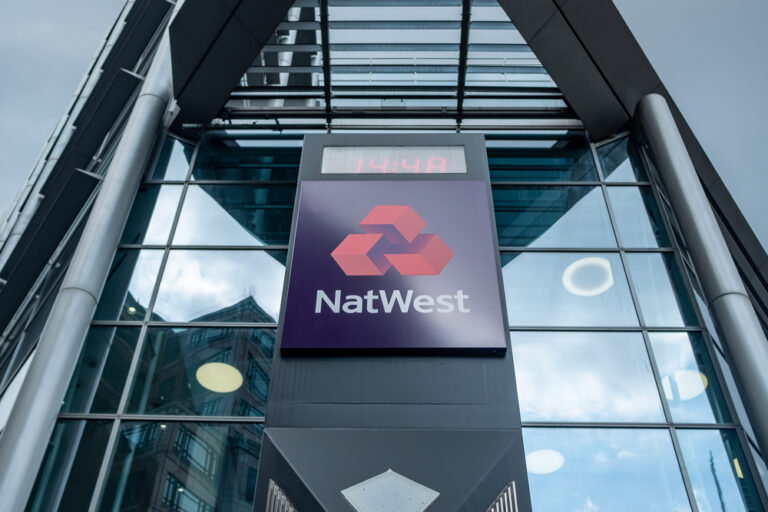

NatWest shares sink as margin outlook and customer deposits disappoint

NatWest has cast a shadow over what had been a positive week for UK banking earnings after Barclays and Standard Chartered reported upbeat Q1 results earlier in the week.

NatWest’s update differed from Barclays and Standard Chartered on two key metrics; net interest margins and deposits.

Barclays provided an encouraging outlook on net interest margins (NIM) and said they expected full-year NIM to be higher than the previously guided 3.2%. In contrast, NatWest said they saw no upside from previous guidance.

In addition, NatWest is the first UK bank to report a negative impact on customer deposits in the first quarter.

As a result, investors dumped Natwest shares on Friday as the stock fell over 5% in early trade.

“A drop in customer deposits, while nothing like on the scale seen at other crisis-ridden banks, has helped put the wind up investors in NatWest,” said AJ Bell investment director Russ Mould.

“The gap between the amount NatWest charges for loans compared to what it pays out for deposits, also known as the net interest margin, is also tighter than many had hoped.

“This runs counter to Barclays’ own first quarter numbers which showed higher base interest rates were feeding into a strong net interest margin.”

NatWest CEO Alison Rose called the outlook ‘uncertain’ in a TV interview with Bloomberg but the bank set aside less provisions for bad credit than expected.

Indeed, while NatWest shares were down heavily on Friday, the bank’s underlying performance was strong. Total income grew 28.9% to £3.9bn in the first quarter.

“NatWest rounds off a good week for the major UK banks, beating earnings expectations as provisions set aside for debt defaults were better than first thought,” said Matt Britzman, equity analyst at Hargreaves Lansdown.

“This is an ongoing trend, somewhat bucking the idea that the global banking system is in troubled water. In fact, the major banks across the UK look to be in rude health, and NatWest is just the latest example. Capital levels remain healthy, and the portfolio’s debt defaults are stable and low.”

Three FTSE 100 quality high-yield dividend payers: Shell, Barclays and Smurfit Kappa

With have applied a screener to FTSE 100 constituents and identified Shell, Barclays and Smurfit Kappa as high-quality, high-yielding dividend considerations.

For a company to be considered for this selection, we feel they have to pass four stringent criteria:

  • Yield more than the FTSE 100 average (3.55%)
  • Dividend covered more than 2.5x
  • Increased full-year ordinary dividend three years in a row (excluding the pandemic)
  • The free cash flow yield is higher than the dividend yield

Many companies have a high yield, but not all will be sustainable, and some will slash their dividends. Not only will this reduce income from the investment, but the stock will also likely be dumped out of portfolios, leading to a potential capital loss. 

To ensure the quality of this selection of dividend payers, only companies with dividends covered more than 2.5x by earnings make the cut. In addition, we like to see a progressive dividend policy and steadily increasing ordinary dividends. Companies are forgiven for conserving cash during the pandemic by pausing dividend payouts.

Only a handful of London’s leading index 100 constituents meet our screening criteria. The three we highlight today are:

  • Shell (LON:SHEL)
  • Smurfit Kappa (LON:SKG)
  • Barclays (LON:BARC)

Shell (LON:SHEL)

Shell dividend yield: 3.6%

Shell dividend cover: 5.4x

Shell free cash flow yield: 20.9%

Although Shell’s dividend is very close to the FTSE 100 average, it is very well covered and leaves plenty of potential for dividend hikes in the coming years. Shell is also highly cash generative and has a substantial buyback programme.

Smurfit Kappa (LON:SKG)

Smurfit Kappa dividend yield: 4.3%

Smurfit Kappa dividend cover: 3.2x

Smurfit Kappa free cash flow yield: 5.6%

Smurfit Kappa has produced consistently higher revenues and profits in recent years, supporting a sustainable dividend policy. The packaging manufacturing company reported a 13% jump in EBITDA in the first quarter of 2023.

Barclays (LON:BARC)

Barclays dividend yield: 4.5%

Barclays dividend cover: 5.3x

Barclays free cash flow yield: 113x

Barclays’ recent Q1 2023 update demonstrated resilience through March’s banking mini-crisis as the UK bank saw profit before tax jump and deposits remained unaffected by the turmoil elsewhere in markets.

The investment case for the M&G Positive Impact Fund

To coincide with Earth Day earlier this week, M&G’s Impact Investing team presented their SDG Reckoning Report on the progress of the UN’s Sustainable Development Goals (SDGs) at an event held in London last week.

The report revealed opportunities for investors to position capital to facilitate achieving the SDGs’ key objectives.

The UN set out the SDGs to align governments and businesses behind the common goal of improving the planet with 17 defined goals. 

According to M&Gs research, almost all SDGs have seen little progress.

The goals focus on specific areas of environmental protection and societal improvements, such as improving diversity and reducing waste.

The critical analysis by M&G’s team shows many of these objectives are a long way off being met, and there is a material opportunity for investors to deploy capital with the specific aim of meeting the SDGs – while generating a financial return.

Speaking at an event hosted by M&G last week, Head of Impact Investing Ben Constable-Maxwell provided an insight into specific SDGs where the opportunity is greatest. 

You may be surprised to learn environmental goals, including Life on Land, Climate Action, and Responsible Consumption and Production, have made little or no progress in recent years.

There is the suggestion the pandemic shifted attention – and capital flows – away from clean energy and carbon reduction to healthcare. Good Health and Well-being were one of only two SDGs to progress in recent years.

Fossil Fuels and lower renewable electricity generation

Factors curtailing progress in environmental goals were the increased use of fossil fuels in the wake of the pandemic and the reduction of renewable electricity generation as a proportion of total generation.

Not only do the UN SDGs 2030 goals highlight the opportunity in carbon reduction technology, but the Paris 2050 Net Zero goals also present a material opening for value creation. 

Environmental investing is, of course, nothing new – Constable-Maxwell discussed other themes, including promoting financial inclusivity and enhancing the circular economy.

Investment in Healthcare and HealthTech businesses reached fever pitch during the pandemic and has been instrumental in progressing SDGs.

Greater adoption of the internet helped infrastructure targets.

M&G Positive Impact Fund

M&G has developed the M&G Positive Impact Fund specifically to generate a financial return in companies that produce a measurable positive impact on society, diversity and the environment.

Companies selected for this portfolio include SolarEdge which has helped avoid 23 million metric tonnes of emissions.

The Bank of Georgia provides banking services to 2.9 million people in a country transitioning from communism. 

M&G identified a number of Moats for the Bank of Georgia which includes talent retention and access to capital in the region. 

FTSE 100 trades sideways, Barclays profit jumps

The FTSE 100 traded sideways on Thursday after a mixed set of corporate releases evened out their impact on the wider index.

Barclays, Taylor Wimpey, Unilever, and WPP were among FTSE 100 companies reporting on Thursday.

The European session started off on the front foot after Meta reported upbeat results and helped lift US tech overnight.

US stocks opened higher again on Thursday and Meta soared over 15% in early trade.

“The owner of Facebook, Instagram and WhatsApp saw signs of recovery in its advertising business, helping to dispel concerns about the continued relevance of these platforms,” said AJ Bell investment director Russ Mould.

“This, plus the greater efficiency pursued by the business in recent months, is clearly helping to win the market over, although CEO Mark Zuckerburg’s continued insistence on pursuing his metaverse vision will ring in the ears of some investors like tinnitus.

“Meta also notably flagged its own developments on AI as the tech giants compete for their share of real estate in this nascent market.”

Barclays 

Although UK banks trade at a significant discount to their US peers on an earnings and book value basis, they have demonstrated a degree of prowess through the recent turbulence.

Barclays followed Standard Chartered yesterday in reporting robust activity in Q1 with little impact from the banking crisis. Barclays deposits in fact grew by 2% during the crisis.

Higher interest rates produced an improved net interest margin in Q1 2023 for Barclays, when compared to the same period last year.

Investment banking activity was tepid but Barclays’ consumer business in the UK – and internationally – helped lift profit before tax 16% to £2.6bn.

“Barclays has posted a very solid first quarter, comfortably beating market consensus on profit amidst a turbulent tie for the broader banking sector,” said Matt Britzman, equity analyst at Hargreaves Lansdown.

Housebuilders

Taylor Wimpey was the latest housebuilder to reveal signs of improvement in the first quarter with a slight pick up in recent weeks. Taylor Wimpey shares were little moved after rising in sympathy with Persimmon yesterday. 

WPP was among companies suffering on Thursday after the advertising giant said they were concerned about the slowdown in ad spending in tech giants.

WPP shares were down 2.5% at the time of writing. 

AIM movers: Engage XR revenues increase and ex-dividends

1

Extended reality technology provider Engage XR (LON: EXR) says that revenues have increased by two-fifths so far this year thanks to new client wins and renewals. The share price has jumped 18.5% to 3.85p. Having raised £8.8m at 4p a share, the balance sheet is strong with net cash of €10.8m at the end of March, although cash outflows remain significant. Engage XR is thought to have enough cash to become cash generative in 2025.

Kropz (LON: KRPZ) has risen sharply following additional trading since the announcement that 43,886 tonnes of phosphate concentrate was sold during April. The share price soared 134.7% to 5.75p today.

Par Lindstrom, chief executive of cleantech investment company i(X)Net Zero (LON: IX.), has increased his stake from 3.52% to 11.2%. The share price recovered 25.6% to 12.25p. The February 2022 placing price was 76p.

Mixed signal chip maker Ensilica (LON: ENSI) says that EBITDA for the year to May 2023, will be much better than expected, although revenues will be in line. Effective resourcing and use of established IT have helped to improve margins. EBITDA of £1.18m was expected, but it is likely to be more than £1.5m, enabling a pre-tax profit to be achieved ahead of expectations. The share price jumped 13.7% to 70.5p. The May 2022 placing price was 50p. Vela Technologies (LON: VELA) invested £125,000 in the recent placing at 70p a share, taking its stake to 1.1 million shares. The Vela share price is 2.78% ahead at 0.0185p. The Ensilica stake is worth one-quarter of Vela’s market capitalisation.

Construction disputes company Driver Group (LON: DRV) says that first half revenues were flat at £24.2m, but pre-tax profit will be much better at £650,000. The Middle East is no longer losing money. The share price improved 11.1% to 30p.

CT Automotive (LON: CTA) is raising £7.6m at 34p a share. The share price slumped 20.4% to 39p. The December 2021 placing price was 147p and the shares started trading at a premium. The automotive interiors supplier wants the cash for capital investment and to strengthen the balance sheet. The company is estimated to have lost $11m in 2022, although the full figures have not been published. Net debt was $11.6m at the end of 2022.

Africa-focused oil and gas company Tower Resources (LON:TRP) has applied for a one year extension to the Tahli production sharing contract, offshore Cameroon. The company is trying to secure a rig for drilling. The share price fell 9.09% to 0.125p.

Oil and gas company Synergia Energy (LON: SYN) says that it has received a non-binding expression of interest for the acquisition of up to 51% of its Cambay Block PSC, but management is cautious and says the deal is subject to due diligence. The share price slipped 10.3% to 0.13p.

Yourgene Health (LON: YGEN) says full year revenues were £19m and net cash is £2.8m. A loss of £8.7m is expected for the year to March 2023. Although additional cost savings have been identified there is likely to be another substantial loss this year. The share price fell 8.62% to 0.265p. In January, £7.3m was raised at 0.3p a share.

Ex-dividends

Central Asia Metals (LON: CAML) is paying a final dividend of 10p a share and the share price is down 7.5p to 210.5p.

Gemfields (LON: GEM) is paying a final dividend of 2.3p a share and the share price is 1.9p lower at 17p.

Mortgage Advice Bureau (LON: MAB1) is paying a final dividend of 14.7p a share and the share price rose 32p to 774p.

MP Evans (LON: MPE) is paying a final dividend of 30p a share and the share price is 35p lower at 847p.

Pebble Group (LON: PEBB) is paying a final dividend of 0.6p a share and the share price fell 1.5p to 107.5p.

Taylor Wimpey sees improvement in the housing market

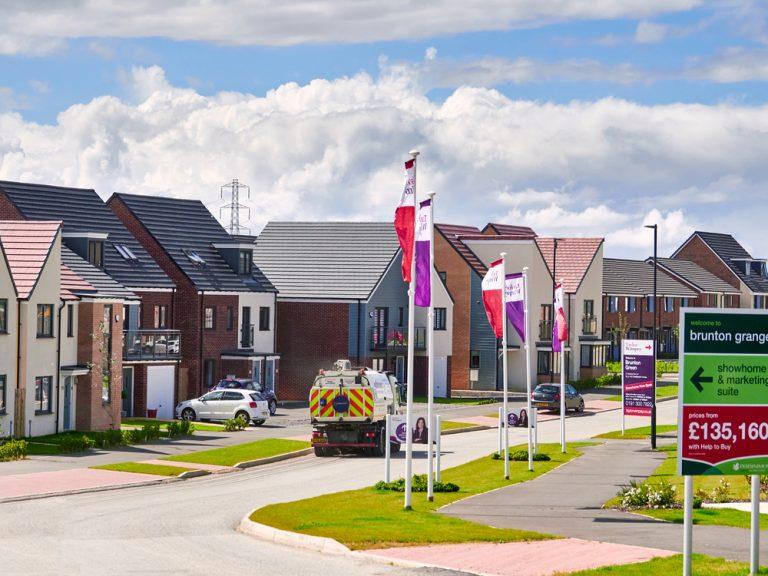
Taylor Wimpey released a remarkably upbeat trading statement for early 2023 and noted improving sales rates and recovery in demand from the lowest levels of last year.

That said, Taylor Wimpey’s total order book value stood at £2,379m, a sharp reduction from the £3,027m from this point last year.

The impact of higher mortgage rates and the cost of living crisis has resulted in slower housing activity – especially among first-time buyers. These negative influences are starting to ease and Taylor Wimpey’s activity is starting to pick up.

Taylor Wimpey’s assertion that the UK housing was recovering corroborated Persimmon’s improving trading activity outlined yesterday.

In terms of outlook, Taylor Wimpey expects completions to be in the range of 9,000 to 10,500 for FY2023.

“It’s encouraging to see that demand’s recovered slightly during the spring selling season, supported by mortgage rates that have pulled back from recent highs,” said Aarin Chiekrie, equity analyst at Hargreaves Lansdown.

“As a result, Taylor Wimpey’s seen an uptick in sales rates since the sluggish tail-end of 2022, while pricing remained resilient. There are also some underlying tailwinds supporting the longer-term market. Brits are ideologically committed to home ownership and the country has been in a prolonged period of housing undersupply, a trend that’s unlikely to change anytime soon.”

Taylor Wimpey said they were set to pay a 4.78p per share dividend on 12 May 2023.

Barclays profits increase as higher interest rates lift UK income

Barclays profit before tax rose 16% in the first quarter compared to a year ago with both their UK and international businesses generating higher income.

However, unlike previous quarters, it was Barclays consumer-facing business doing the heavy lifting while corporate and investment banking activity was largely flat.

Barclays UK saw income rise 19% to £1.96bn. Higher interest rates helped net interest income rise 21% to £1,618m with a net interest margin (NIM) of 3.18%.

Barclays International increased £5,282m in Q1 2023 from £4,824m in the same period. Corporate and Investment Banking (CIB) was flat but their consumer business saw significant growth.

“Barclays has posted a very solid first quarter, comfortably beating market consensus on profit amidst a turbulent time for the broader banking sector,” said Matt Britzman, equity analyst at Hargreaves Lansdown.

Britz continued to note Barclays, like Standard Chartered yesterday, has appeared to avoid much of the negativity related to the US banking crisis.

“It’s still early doors for the major UK banks reporting cycle, but signs look promising that issues over the pond aren’t leaking into the wider ecosystem. Credit card defaults in the UK remain below pre-pandemic levels, highlighting the UK consumers’ resilience despite mounting costs.”

Barclays shares were 3.9% higher at the time of writing on Thursday.

FTSE 100 dips as recession fears hit sentiment

The FTSE 100 was in the red on Wednesday as doubts about the US economy proved to be a catalyst for investors to take money off the table.

London’s leading index was down 0.47% at the time of writing. The S&P 500 had closed down heavily last night but started Wednesday’s session higher.

“Realisation is dawning that more ominous clouds are gathering over the US economy, causing fresh nervousness for investors,” said Susannah Streeter, head of money and markets, Hargreaves Lansdown.

“Despite some better-than-expected results from the first of the big tech crowd to report, the darkening picture of consumer confidence has increased concerns about lower spending ahead.”

Although economists and market analysts increasingly predict a US recession, many feel it will be a brief, shallow contraction.

There is also a school of thought any recession will be a manageable contraction – and could spark the next leg higher in stocks.

The leading cause of any recession later this year will be inflation and associated higher borrowing costs. However, a recession would naturally bring inflation down, and central banks have ample room to reduce rates. This long-awaited pivot to rate cuts will likely be positive for equity markets.

FTSE 100 gainers

Encouraging trading activity in recent weeks sent Persimmon shares over 6% higher on Wednesday and were the FTSE 100’s top riser at the time of writing. Q1 2023 results were pretty poor for the housebuilder, but with shares down over 50% from 2021’s highs, one could argue the bad news is already baked into the cake.

Taylor Wimpey and Barratt Developments were over 3% higher in sympathy with Persimmon.

Standard Chartered rose 2.6% as Q1 2023 profits jumped 25%.

FTSE 100 fallers

CRH shares were 3.7% lower despite improved first quarter trading. However, confirmation the company would proceed with shifting its primary listing to the US saw investors sell their shares in the group.

The company said; “the Board had come to the conclusion that it is in the best interests of our business and our shareholders to pursue a US primary listing, together with US equity index inclusion as soon as possible.”

Venture Capital Trust (VCT) Opportunities with Albion Capital

The UK Investor Magazine Podcast was thrilled to welcome Will Fraser-Allen, Managing Partner at Albion Capital, for a deep dive into Venture Capital Trusts (VCTs).

Find out more on Albion Capital’s website here.

Albion Capital reached the milestone of £1 billion in assets under management due to another strong fundraising round in the 2022/23 tax year.

Will provides vital insight into the benefits of investing in VCTs, including generous tax incentives and access to high-growth UK companies. Naturally high-risk investment vehicles, VCTs provide up to 30% income tax relief and tax-free dividends.

Albion Capital is a thematic investor focusing on FinTech, HealthTech and Software companies. We discuss a number of their portfolio companies and the opportunities Will sees in the year ahead.

Advert:

Fully regulated, OANDA offers competitive spreads on a wide range of CFD markets, including indices, forex, commodities, metals, and bonds.

Voted “Most Popular Broker” by TradingView in 2022, 2021, and 2020.

Trade with OANDA and get access to one year’s subscription to TradingView Pro.*

*Get TradingView Pro for 1 year when you start trading with OANDA and meet the minimum volume requirements.

Get more details here.

Disclaimer:

76.6% of retail investor accounts lose money when trading CFDs with this provider. You should consider whether you understand how CFDs work and whether you can afford to take the high risk of losing your money.