Marks Electrical continues to outperform market

0

Online electricals retailer Marks Electrical (LON: MRK) is still gaining market share with a 15% increase in sales during the first half of the financial year. That rate of growth accelerated in the last couple of months of the period.

Sales are growing in the domestic appliances and consumer electronics markets thanks to its positive reputation for service due to its own fleet of delivery vehicles and recycling offer. More installations are being taken in-house to improve overall service.

The total market has declined during the six-month period, but Marks Electrical has maintained profitable growth. The company has been pushing energy efficient products. It is also further expanding the range of products it offers by moving into IT products.

Marks Electrical is in a stronger cash position than previously anticipated with stockturn improving. There are no borrowings. Cash was £7.7m at the end of September 2022 and should continue to build up year-on-year. It is expected to improve from £3.87m to £8.5m over the 12 months to March 2023. This enables Marks Electrical to take advantage of opportunities to buy stock at attractive prices.

Marks Electrical cannot totally buck the current economic conditions and Equity Development has trimmed its full year sales forecast by 5% to £89m, which is still more than 10% ahead of the previous year. The level of discounting by rivals could hamper growth, but Marks Electrical has shown that it has the ability to cope with tough market conditions.   

Gross margins could dip slightly from last year’s level of 19.8%. Advertising and marketing are likely to remain 5% of sales, but other operating expenses will further reduce operating margins. Pre-tax profit is expected to fall from £6.44m to £5.67m this year, before recovering sharply next year as margins potentially recover.

The share price is 4.5% ahead at 58.5p, which is trading on less than 14 times prospective 2022-23 earnings. That could fall to ten next year if forecasts are achieved.

Argo Blockchain shares crash after September operational update

Argo Blockchain shares crashed to fresh lows on Tuesday after the bitcoin miner issued an operational update for September.

The Argo Blockchain share price fell over 25% to 16.5p in early trade on Tuesday, the lowest level since December 2020. Argo Blockchain shares are now down 83% in 2022 and trade at just a fraction of their all-time high around 330p.

Argo’s fall from grace is inextricably linked to waning interest in cryptocurrencies with the most popular coins losing a large proportion of their value this year.

However, today’s decline follows an operational update that showed Argo mined less Bitcoins in September than the prior month, and said they were curtailing their operations due to high energy prices.

Argo mined 215 Bitcoin or Bitcoin Equivalents in September, down from 235 in August. It is difficult to see a favourable scenario for increased mining activity in the near-term with high energy prices set to persist.

Mining revenue diminished significantly falling to $4.27 million in September from $5.23 million in August. Although revenue fell, Argo saw their mining margin increase to 25% from 20%.

Argo recently announced a scramble to raise capital by selling mining machines and issuing equity.

“As another month of high energy prices and uncertain market conditions ended, Argo continues to execute on its plans to grow operations at Helios,” said Peter Wall, Chief Executive Officer at Argo Blockchain.

“We are nearing completion of the installation of our new Bitmain S19J Pro machines, which will increase our total hashrate capacity to 2.9 EH/s by the end of the month. This will represent a 81% increase in total hashrate capacity since Q1 2022. I continue to be proud of our team for its efforts to deliver long-term growth in the interest of our shareholders.”

AIM movers: Evgen drug deal and no oil at Serenity for Europa and i3 Energy

0

Drug developer Evgen (LON: EVG) is partnering with Swiss biotech Stalicia for the potential use of SFX-01 for the treatment of autism spectrum disorder and other CNS disorders. The share price jumped 63.2% to 4.65p. This deal could generate up to $160.5m in milestone payments and double-digit royalties, although that is a long way away. The upfront payment is $500,000 with a further $500,000 once a volunteer study is completed in the first half of 2023. If the FDA approves an investigational new drug admission that will spark a $5m payment – possibly next year. Including what is already in the bank, cash should last until the end of 2024.

Identity management software provider Intercede Group (LON: IGP) says trading is in line with expectations and is acquiring password security management software company Authlogics for an initial £2.5m, plus up to £3m depending on growth in annualised recurring revenues. This broadens the scope of the Intercede business. Net cash will still be £7.9m. The share price rose by 38.2% to 52.5p.

Shares in PipeHawk (LON: PIP) increased 18.5% to 16p after winning a contract to provide a manufacturing assembly system for a rotor component in an aerospace e-motor. The value is £1.6m over 12 months.

Helium One Global (LON: HE1) has completed an engineering audit on the preferred drill rig for phase II drilling at Rukwa in Tanzania. The rig will be imported from Kenya and drilling could start by February. That sparked a 9% rise to 6.65p.

Frasers Group (LON: FRAS) has acceptances totalling 48.6% for its 2p a share bid for MySale Group (LON: MYSL) – once settlement is completed. The share price improved by 9.76% to 2.25p.

Subsea rental equipment supplier Ashtead Technology (LON: AT.) says higher utilisation and pricing means that 2022 results will be much better than expected. The share price rose 7.83% to 268.5p. Ashtead Technology floated last November at 162p a share.

Subsea cable protection services provider Tekmar Group (LON: TGP) is exploring approaches from interested parties as part of its strategic review. The maturity date of a £3m CBILs loan has been extended to the end of October 2023. The share price edged up 6.1% to 8.75p.

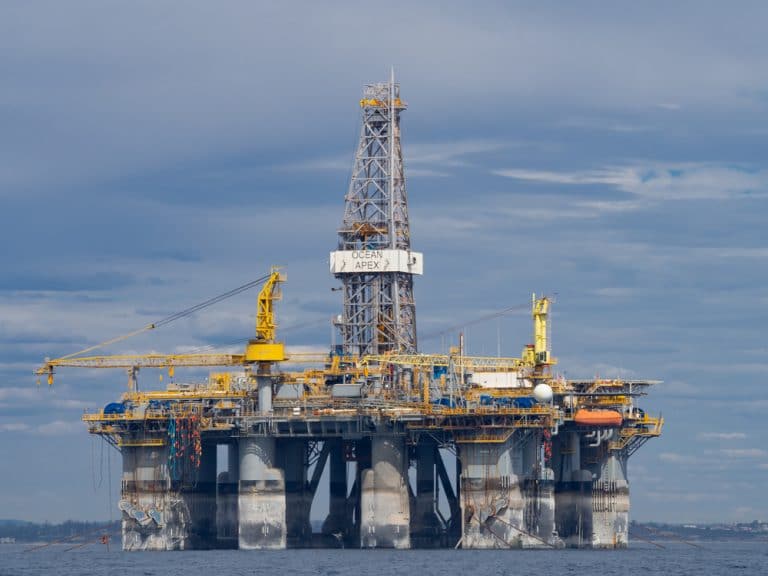
Europa Oil & Gas (LON: EOG) is the worst performer on the day with a 37.5% decline to 1.375p because the Serenity SA02 well in the North Sea was not oil bearing. The gross well cost is forecast to be £10.4m with £4.8m paid by Europa Oil & Gas and £5.6m by i3 Energy (LON: I3E). WH Ireland has reduced its estimate for i3 Energy from 66p a share to 49.35p a share. The i3 Energy share price fell 12.1% to 24.125p.

Acoustic materials supplier Autins Group (LON: AUTG) says second half sales were similar to those in the first half, but the fourth quarter was weak because of production disruption at a major customer. Higher costs have put pressure on gross margins. Autins hopes to reduce its loss in the short-term through operational efficiencies. Net debt was £2.4m at the end of September 2022. The share price declined 35.7% to 9p.

Property lending platform operator Lendinvest (LON: LINV) says platform assets under management are one-third higher at £2.4bn, but finnCap has downgraded its full year forecast. Interest rate volatility is hampering margins. Earnings have been downgraded from 12.6p a share to 8.9p a share. Volatile The dividend forecast is maintained at 4.6p a share. The share price slumped 27.7% to 70.5p. The July 2021 placing price was 186p.

Investment publisher Bonhill (LON: BONH) has commenced a strategic review that could lead to the sale of the company or separate businesses. Trading remains difficult and shareholder Rockwood Strategic (LON: RKW) is providing a £800,000 loan facility. Restructuring should reduce costs by £700,000 in 2023. In 2018, InvestmentNews was bought for £21.3m and in 2019 Bonhill acquired Last Word for £8m in cash and shares. The shares are 26.1% lower at 4.25p, which values Bonhill at £4.2m.  

Upgrade for pawnbroker Ramsdens

0

Pawnbroker Ramsdens (LON: RFX) says trading in the year to September 2022 was ahead of expectations and this has led to an upgrade to 2022-23 forecasts. Economic uncertainty and reduced competition from other short-term credit providers means there is a positive backdrop propelling growth for Ramsdens.

The pawnbroking loan book has increased from £6.1m to £8.6m, while the retail jewellery sales were 43% ahead. Higher jewellery stocks mean that net cash is expected to be £9.3m, which is lower than previously forecast. Foreign exchange volumes are four-fifths of pre-Covid levels. Gold buying did well, and the high gold price will continue to benefit this part of the business.

Liberum expects a 2021-22 pre-tax profit of £7.5m, up from £7m previously, and an improvement to £8.5m this year even though wages and energy costs are rising.

Profit contributions from each division have been upgraded, except for foreign exchange where expectations have been trimmed because of concerns about the economic uncertainty’s effect on foreign holidays. Average transaction values are higher than previously.

Ramsdens has 157 stores, but the number of openings has been lower than targeted. That shows that management will only open at the right sites and not try to meet targets for the sake of it.  

The share price rose 5.1% to 207.5p, which puts the shares on just over ten times prospective 2022-23 earnings. Dividends should grow steadily. The forecast yield is 4.5%. Liberum has a target share price of 240p.

FTSE 100 stumbles on prospect of US rate hikes, end of BoE intervention

An appalling close to US markets on Friday spilled over to the European open on Monday with most major European indices starting the week off in the red.

A slightly better than expected Non-Farm Payroll figure on Friday almost guaranteed the Federal Reserve would kick on with a 75bps point hike at their next meeting, and were a long way off pivoting to a slower pace of rate hikes.

The NASDAQ closed down nearly 4% on Friday and saw the FTSE 100 open well below 7,000 while the DAX fell back towards 12,000.

However, after touching lows of 6,922 in early trade on Monday, the FTSE 100 recovered some losses to trade at 6,971 at the time of writing.

Stronger dollar and UK uncertainty

The dollar gained on the back of the robust jobs data sent GBP/USD back below 1.1100 for the first time in over a week.

The pound had enjoyed a relief rally but looked set to resume declines with pressure on the UK government mounting and no remedy to sterling’s woes in sight.

Investors will also be concerned the doubling of Bank of England bond purchases failed to support the pound or FTSE 100 on Monday.

“Also leaving investors on edge is the news that the Bank of England has doubled the amount of government bonds it is prepared to buy each day under a support initiative. While this programme is designed to provide calm to the markets following concerns about pension funds dumping gilts on the market, the fact it has doubled the previous limit of £5 billion also acts as a reminder that we’re living in unsettled times,” said Russ Mould, investment director at AJ Bell.

There was a slight reprieve for the pound after Kwasi Kwartneg said the government would bring forward the release of their economic projections to 31st October.

The pound typically has an inverse relationship with the FTSE 100 and investors will be looking to see if this holds and provides support for the index this week.

However, the FTSE 100’s largest overseas earners were weaker on Monday with AstraZeneca down 1.7%, Diageo 3% and BP off 1.5%. Shell was down 0.6% after announcing refining margins are declining last week.

DS Smith

Some of the changes the global economy underwent due to the pandemic are here to stay. One of these is the shift towards online shopping and DS Smith’s packaging business is a major beneficiary.

In a world where retailers are issuing profit warnings, the seller of the spades in the gold rush is proving to be a winner.

DS Smith shares were 11% higher at the time of writing after announcing operating profit would exceed prior guidance.

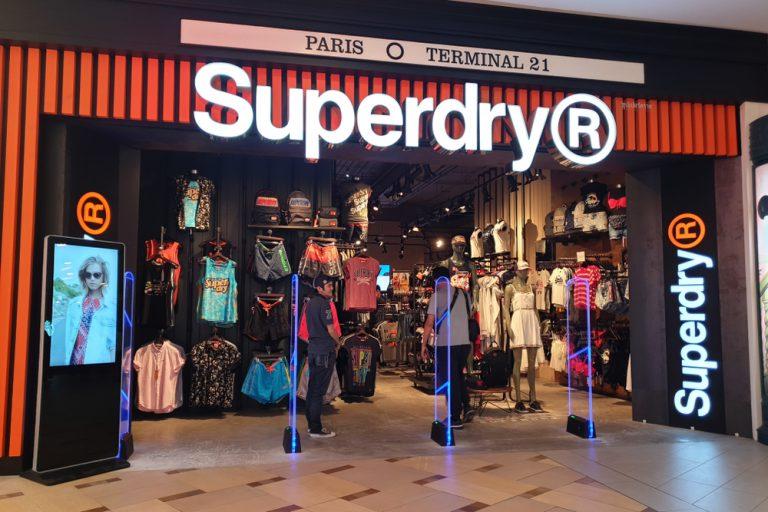
Superdry – this recovering group offers massive upside as it continues to get things right again

Members of my family are, but I am not, particularly concerned with sustainability – but then I can defend my stance (if I have to) by noting my senior years, meaning I have not got many still left to go, compared to them.

However, I have to say that I was impressed by the Superdry (LON:SDRY) commitment to sustainability and driving it through its product lines by significant contact with its suppliers as it urges them to be organic.

A very strong commitment to sustainability

Last Friday’s announcement of the final results for the year to end April noted very clearly that:

“Our mission is ‘To be the #1 sustainable style destination’ through our distinct collections, defined by consumer style choices. We design affordable, premium quality clothing, accessories and footwear which are sold around the world. We have a clear strategy for delivering continued growth via a multi-channel approach combining Stores, Ecommerce, and Wholesale.”

Examples of the way it looks to drive its sustainability focus in “underpinning everything we do” are shown by the fact that 47% of the products that it bought for sale in its Autumn/Winter 2021 and Spring/Summer 2022 collections were made of sustainable product, compared to just 33% for the previous year.

Of the products that it sold in the 2022 full year, sustainables were some 46% against 35% previously.

For Superdry sustainability continued to sit at the heart of its business, especially in its sourcing. 

Cotton seeds and recycled bottles

It has a target of converting 20,000 farmers in India to organic practices and using 100% organic cotton in its garments by 2025. 

As at the end of FY22, it had invested in training to convert 7,508 farmers, up from 5,684 last year and in the process donated over 65m organic cotton seeds

For its Spring/Summer 2022 collection 99% of its swimwear was converted to recycled materials, with50.4m recycled bottles having been used to produce both its Spring/Summer 2022 swimwear and also in the company’s Autumn/Winter 2021 and Spring/Summer 2022 range of outerwear jacket fill.

City Reaction – is it sustainable?

After the £93m capitalised group’s results were published there were many observers who commented upon whether the company itself had any sustainability.

Even so the group’s shares responded with an 11% jump in its share price to close at 114p.

In the last year or so the group’s shares saw a peak last November at 330p but they subsequently traded down to a 96p low, just two weeks ago.

Not a straight line

Like businesses everywhere Superdry has had its ups and downs. 

Julian Dunkerton built the business up from a Cheltenham market stall to getting his stores group quoted in 2010. The bubble was burst with a profit warning in 2012 alongside a suspension of its store opening programme.

Dunkerton left the board in late 2014 and two years later sold 4m shares at £12 each, then leaving him as the biggest holder with a 27% stake in the business.

By 2019 he declared openly that he did not like the way the group was being run, without him on the board. 

He won his seat back on the board while fellow directors resigned.

His mission was ‘to reset the brand’s focus on design and quality’.

From an interim CEO position, he was six months later promoted to that post permanently, but sales were falling due to his decision to minimise promotions, dropping in-store discounts while focussing upon full-price sales.

Then Covid-19 happened in Spring 2020 and the severe fall in sales revenues needed drastic action.

The 2021 trading year saw takings fall 21% to £556m, but with the group going into a smaller loss of £36.7m (loss £166.9m in 2020).

Overall, the group’s mission today is ‘to inspire and engage style-obsessed consumers, while leaving a positive environmental legacy.’

The recent results – still a going concern

The full year to end April saw sales up 9.6% at £609.6m, with the adjusted pre-tax loss of £12.6m in 2021 being replaced by a much healthier £21.9m profit, boosting earnings from a loss of 19.4p to a plus 36.3p per share.

The group’s asset backed lending facility runs out in January next year, so there are ongoing discussions to refine and renew the position.

Thoughts that it may have problems continuing as a ‘going concern’ resurfaced but have been subsequently played down.

CEO Julian Dunkerton, stated that:

“These are exceptional times for retail and for the economy more generally, and like all brands we’re having to work harder than ever to drive performance. Against that backdrop, I am pleased that we managed to return the business to full-year profit, driven by increased full price sales, whilst also making strong strategic progress. I’m proud of the strides our team has made, delivering great product while also making a step-change in our social and digital capabilities and real progress towards our sustainability objectives.

“Superdry is a premium, affordable, brand, which should mean we are well-positioned as customers think more carefully about their purchases. That said, given the current challenging conditions, we continue to run the business prudently while remaining focused on delivering our strategic goals.”

With the results the group posted details of the 22-week period to 1 October showing sales had improved another 7%, while also noting that there were sector-wide trends of traffic slowly moving away from online back to store. Encouragingly the group’s wholesale revenue has increased year-on-year.

Despite the sales increase, it is apparent that margins are a lot tighter, so the group may only make between £10m to £20m for the adjusted pre-tax profits to end April 2023.

Analysts Opinion – 500p Target Price

At Liberum Capital, broker to the group, their analyst Wayne Brown is rating the shares as a Buy, with a Target Price of 500p a share.

His estimates for the current year to end April 2023 are for sales of £652m (£610m) a dip in profits to £16.3m (£21.9m), generating earnings of 15.1p (36.3p) and paying a resumed dividend of 5.0p per share (nil).

Already his figures suggest sales of £698m next year, with £26.3m profits, 24.5p earnings and a useful 8.2p per share in dividend.

Further out he is anticipating £748m sales, £41.1m profits, 38.2p earnings and a 12.7p dividend.

His Target Price, based upon his estimates, does not look so outlandish.

Conclusion – a potential doubling of price?

Last week’s results clearly show that Julian Dunkerton has got firmer control of Superdry’s reins and is determined to return the group to trade around its former glories.

The iconic brand, which is sold to 157 countries globally, is known the world over and with ‘sustainability’ as its mantra going forward it is a fair bet, facility permitting, that he will deliver again, which will be glorious news for its shares, now at just 114p.

The AGM is due at the end of October, while the pre-close trading Update for the first half-year will be declared in November, giving a few more weeks of cheap buying of the group’s shares.

A 500p Target Price may be too far away for most investors but a doubling in price over the next year is quite feasible.

Sterling falls despite increased Bank of England intervention

The pound fell against the dollar on Monday despited the Bank of England ratcheting up their daily bond purchases for the remainder of their support package.

GBP/USD fell to 0.37% to 1.1052 as the Bank of England announced they would increase daily bond purchases to £10bn from £5bn.

“I’m not so sure that this is a good sign to be frank. We should remember that market interventions of this type by the central bank are not normal. It is extraordinary and the fact the BoE needs to increase the daily level of liquidity for its remaining five auctions shows that its initial interventions were unsatisfactory,” said Joshua Raymond, Director at financial brokerage XTB.

The Bank of England stepped into the UK gilt market to support yields following the announcement of the UK government’s radical fiscal package that led to severe volatility in bonds and the pound.

With the pound falling today, investors will be concerned about how the market will react to the removal of the BoE measures on Friday.

“While this programme is designed to provide calm to the markets following concerns about pension funds dumping gilts on the market, the fact it has doubled the previous limit of £5 billion also acts as a reminder that we’re living in unsettled times,” said Russ Mould, investment director at AJ Bell.

DS Smith shares jump 10% as full year guidance increased

In a brief statement released on Monday, DS Smith said they expected full year performance would be above their prior expectations.

The packaging and recycling company said operating profit would be at least £400m and saw strong cash generation.

Miles Roberts, DS Smith, Group Chief Executive, was upbeat and confident about navigating the current macro environment.

“I am very pleased with the performance in the year to date and the momentum in our business. We remain focussed on delivering for our customers and managing our costs in an inflationary environment. While the macro-economic outlook remains uncertain, performance this year is ahead of our previous expectations and we look forward to the remainder of the year with confidence,” said Miles Roberts.

DS Smith shares were 10% higher at the time of writing.

Lloyds shares: 3 reasons to buy at current levels

Just as Lloyds shares were starting to build some momentum on the back of higher interest rates, Liz Truss and her new government stopped the bank’s rally in its tracks.

Recent declines in Lloyds share price were a result of Kwarteng and Truss’s failed attempt to be fiscally radical, and a massive vote of no confidence by the markets. 

The pound has been the main barometer of the markets’ views on their fiscal, but underlying gilts yields have sent waves through the UK’s financial system, and damaged the value of FTSE 100 asset managers and banks.

Today, we consider three reasons why Lloyds shares on particular could be a buy after the recent sell off. 

Lloyds dividend

The promise of an attractive dividend to compensate for a wait for capital appreciation will almost always secure the interest of income investors.

With a dividend yield of 4.7% and dividend cover of 3.9x, Lloyds shares have both a strong yield and the capability of increasing dividends in the future.

Interest rates are set to rise

Disruption in the mortgage market will likely mean Lloyds sets aside provisions for bad debt in their next trading statement.

However, this is probably now largely priced in and investors may see a welcome uptick in Net Interest Margin (NIM) as a result of higher mortgages rates.

A key profitability metric for UK banks, Lloyds NIM will enjoy favourable upside pressures in the near term. Higher interest rates will also mean the future value of Lloyds loan book is worth more today.

Lloyds Price-to-Book valuation 

Banks saw the importance of their earnings as valuation metric diminish during the recovery from the financial crisis.

Ongoing litigation costs and changes to capital requirements meant profits were no longer the most appropriate measure of a bank’s financial health or future prospects.

Instead, the market shifted their attention to the bank’s assets and the potential change in book value of their assets. Thus, for some investors, price-to-book has a become the most scrutinised valuation metric for banks in recent years. 

Lloyds now trades at 0.6x book value, largely in the with the sector, but slightly below Lloyds average over the past few years.

There are still risks attached to Lloyds, including uncertainty around the housing market and general health of the UK economy, which has been reflected in the move down from 49p to 42p

Yet, with the Lloyds share price at 42p, and taking consideration the three points above, long term investors may take a cautiously optimistic approach to Lloyds shares, especially those with an appetite for income.

Why companies left AIM in September

There were five departures from AIM during September. One company was taken over, another moved to the Main Market and the other three decided to leave for various reasons.   
7 September 2022
Stanley Gibbons Group
Stamp dealer Stanley Gibbons has had a tough time in recent years. The largest shareholder Phoenix SG believed it was better to cancel the quotation considering the limited free float and additional costs. The 58% shareholder also said that it would reconsider its financial support if shareholders did not agree to the cancelation. Stanley Gibbons is loss making.
The busine...