Green Investing: Environment, Meet Fairphone

One of the biggest headlines from recent weeks was that Google Stadia, the company’s cloud gaming service, was to end. This kind of closure isn’t particularly unusual but, in Stadia’s case, it did serve as a reminder of just how wasteful the technology industry can be. Unless Google unlocks Bluetooth functionality on the Stadia controller, more than a million plastic gamepads are going in the bin.

Replacements

This is called e-waste. The UK government makes it mandatory for retailers of electronic goods to provide a free ‘take back’ service for old and unloved technology but the UK is still reportedly the third largest e-waste producer in Europe, according to Statista, behind Russia and Germany. The Eurostat website claims that only three countries in the EU achieved a 65% target for e-waste collection in 2019. 

Source: Pexels

Inevitably, mobile phones form a large part of the world’s rubbish. Around a third of households possess three or more smartphones in the United States, for instance. This means that a biannual trend of replacement pumps tonnes of plastic and toxic metals into landfill, potentially harming wildlife and human health. Other than take-back schemes, though, what exactly are consumers supposed to do with all this waste?

One piece of advice is to keep older devices around as replacements. In its “tech survival kit”, the ExpressVPN website recommends that householders create a package of electronic supplies to help stave off misfortune or disaster, including at least two phones. These should be a standard handset, complete with a SIM card and charger, and a satellite phone, devices that are readily available online.

Giving older phones and tablets to family members is also a popular means of ‘disposing’ of an unwanted device. 

Fair Treatment

While it might make sense to repair broken devices, phone companies deliberately make this difficult by preventing the sale of official parts on the open market. This kind of behaviour, combined with all the e-waste we’re sitting on, has boosted the appeal of green-aligned manufacturers like Fairphone. This Dutch brand makes all kinds of claims about sustainability, including fairly sourced materials and a fully repairable design.

The Fairphone is also made entirely from old devices, meaning that it’s not taking anything else from the planet and exacerbating the global lithium shortage (for example). A smartphone brand that makes similar promises to the environment is the former Indiegogo campaign Teracube, which claims to have products that last up to four years, and the German outfit Shift. The latter company is focused more on the fair treatment of workers.

The obvious question to ask here is what about investment? The audience for products that don’t cause more damage to the environment is growing alongside the concept of greener funding. For instance, the WWF website claims that searches for environmentally friendly items grew 71% in 2020. As an industry, energy remains the obvious destination for funding, but transportation, waste, farming, and even water infrastructure are attracting investor money. 

Sadly, there is still a long way to go if the combined efforts of tech corporations and governments are to reverse decades of climate inaction.


AIM movers: Empire Metals soars and Corero hit by delayed decisions

4

Positive news concerning the Pitfield copper gold project in Australia has boosted Empire Metals (LON: EEE) by 54.8% to 1.2p. A review of the recent surveys and historical data for the site suggests that it has the hallmarks of a giant copper mineralised system. There is a large magnetic anomaly. Exploration activity will be accelerated in early 2023.

Cancer treatments developer Scancell Holdings (LON: SCLP) has signed a licencing agreement with Danish antibody specialist Genmab. It covers an anti-glycan monoclonal antibody, and it could be used by Genmab to develop therapeutic products. Tumour-associated glycans are attractive oncology targets and this antibody is highly flexible. Total milestone payments could be $624m, covering three potential products. The share price is up 23.8% to 16.25p, although it has come off its high for the day.

Life science company DeepVerge (LON: DVRG) has bounced back today after it said it was recruiting a new management team. The proposed fundraising is still in process. DeepVerge has revealed related party transactions that should have been notified earlier and is improving internal controls. They included agreements with the chief executive’s wife. The share price has recovered 24.8% to 2.75p, but it is still three-fifths lower than at the start of October.

Union Jack Oil (LON: UJO) continues to rise after yesterday’s announcement of its first ever dividend and share buy backs. The shares rose a further 11.5% to 33p.

Promotional products services provider Altitude (LON: ALT) says interim revenues will increase from £5.9m to at least £7.6m. This was helped by exchange rate movements because 90% of revenues are in North America. Altitude is on course to make a trebled underlying pre-tax profit of £300,000 this year. The share price is 4.65% ahead at 22.5p.

Cyber security products and services provider Corero Network Security (LON: CNS) says that order intake is expected to grow by between 15% and 25% this year with revenues between 5% and 10% higher than last year. That suggest full year revenues of around $23m compared with the previously forecast level of $27.9m. This means that Corero will make a pre-tax loss. There have been delays in customer decision making. The share price slumped 24.8% to 23.5p.

Jubilee Metals (LON: JLP) improved full year revenues by 5% to £140m and paid off its long-term loan. However, increased costs meant that pre-tax profit fell by two-fifths to £26.5m. A large capital investment programme has been completed and chrome production has increased substantially. The shares fell 6.9% to 11.45p.

FTSE 100 drops on China concerns

The FTSE 100 slipped beneath 7,000 on Tuesday feeling the impact of negative reactions to earnings updates from blue chips.

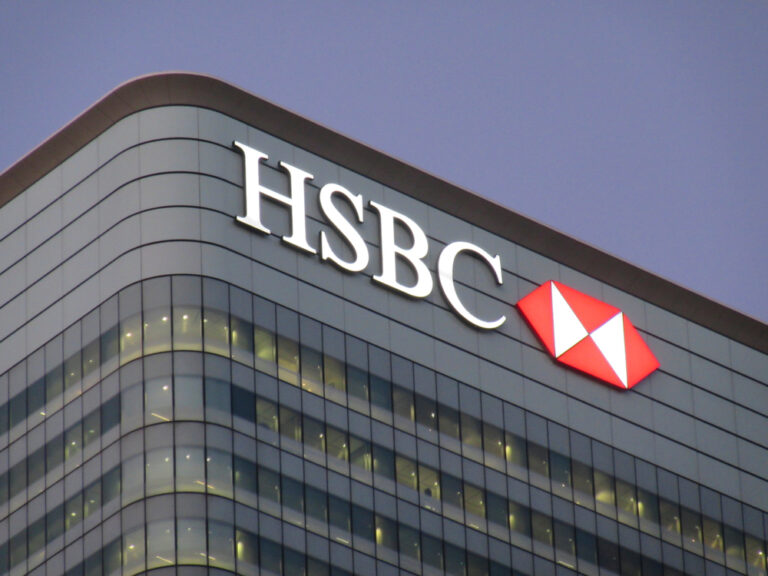
HSBC and Whitbread issued warnings on the economic environment pointing to inflationary pressures and headwinds which tarnished otherwise solid reports.

Indeed, both companies produced remarkably good revenue figures – but investors were more concerned with the outlook.

HSBC also said the Chinese real estate sector was a factor behind increased provisions for bad debts. HSBC shares were the FTSE 100’s top faller shedding over 7% at the time of writing.

“Concern about the impact of a slowing economy on bad debts and growth in the loan book is being exacerbated at HSBC by the departure of well-respected finance director Ewen Stevenson and the deteriorating situation in China,” said AJ Bell financial analyst, Danni Hewson.

Chinese exposure

One would be forgiven for thinking the FTSE 100’s performance is more a representation of the Chinese economy than it is the UK’s – and today is a perfect demonstration.

On a day the new UK Prime Minister sets about the jobs of increasing confidence in UK assets, the FTSE 100 falls due to concerns around the health of the Chinese real estate sector and overall Chinese economy.

Following disappointing Chinese retail sales data yesterday, HSBC raised concerns about the outlook of the property sector. This sent waves through FTSE 100 miners, and Standard Chartered who are reporting tomorrow.

Standard Chartered was down 4% while Rio Tinto, Anglo American and Antofagasta all sank, dragging the FTSE 100 with them.

Bargain hunting

The losses in stocks exposed to China was marginally offset by strength in many companies who have experienced a torrid 2022.

B&M European Value, down 50% year-to-date, gained 2.3% while JD Sports looked set to break a 6-day losing streak. JD Sports are down 55% year-to-date.

Tristel targets growth after destocking

5

Hospital disinfection products supplier Tristel (LON: TSTL) had a relatively flat year to June 2022, but the current financial year has started well. Gaining FDA approval for DUO ULT in the US will help AIM-quoted Tristel to achieve its medium-term growth target.

Destocking and the winding down of discontinued products masks further underlying progress in the past year. The international spread of the business has helped to offset NHS destocking.

In the year to June 2022, turnover was flat at £31.1m, but discontinued products contributed £1.5m, down from £2.4m. Medical devices disinfection products revenues did improve, but customers stocked up on surface disinfection products two years ago and this position unwound more recently.

Underlying pre-tax profit fell from £5.4m to £4.5m. That excludes a £2.4m write-down. The underlying dividend was maintained at 6.55p a share, but there was also a special dividend of 3p a share. There could be a small increase in the underlying dividend this year.

Net cash was £8.9m at the end of June 2022 and it should be higher at the end of June 2022 despite the dividend payments.

Future

Tristel is targeting 10%-15% growth in revenues each year over the next three years. US FDA product approval will help with this growth, as will expanding the product range.

FDA approval for DUO ULT for ultrasound use is in progress and Tristel will respond to the latest request for information. DUO has been launched in the US through distributor Parker through a more limited EPA approval.

The first quarter has started strongly. finnCap forecasts a recovery in pre-tax profit to £6m this year without any significant contribution from the US. At 302.5p, the shares are trading on 28 times prospective earnings.

Whitbread margin pressure takes shine off pandemic bounce back

Whitbread saw revenue surge over 100% compared to last year and exceeded pre-pandemic levels as their expansion plans helped increase market share and strong performance versus peers.

Whitbread’s group statutory revenue rose 104% to £1.35bn, up from £661m the year prior. Revenue was also higher than the £1.08bn recorded in the period just before the pandemic.

“Whitbread’s Premier Inn has driven a strong first half performance. Its UK hotels are fuller than pre-covid levels, but not at the expense of room rates which have also been going up. This is testament to Premier Inn’s increasing market share as the independent hotel sector continues to decline,” said Derren Nathan, Head of Equity Research at Hargreaves Lansdown.

Despite bumper sales figures, Whitbread shares dipped on Tuesday as investors fretted about the impact of rising costs on margins. Whitbread said they expected margins to fall in H2 2023 as a result of inflationary pressures.

Nonetheless, analysts were upbeat on Whitbread’s growth strategy and a cash pile that will enable them to deliver on this strategy. Whitbread had £1.2bn cash and equivalents at the end of the period.

“The one fly in the ointment which seems to be preventing investors from getting too excited about any of these strengths is the surge in costs which Whitbread is facing. However, Whitbread has the financial resources to continue to invest in and grow the business despite these inflationary pressures,” said AJ Bell financial analyst, Danni Hewson.

HSBC shares tumble on outlook and China concerns

HSBC shares failed to reap the benefits of rising net interest margins on Tuesday as investors chose to focus on concerns around economic headwinds, including uncertainties in the Chinese property sector.

The HSBC share price was down 6% to 445p at the time of writing.

Investors sold HSBC even though the global bank reported underlying profit that exceeded analysts expectations as the threat of provisions for an economic downturn proved too much of a negative for the market.

The resignation of Finance Director Ewen Stevenson also spooked markets on Tuesday.

“Concern about the impact of a slowing economy on bad debts and growth in the loan book is being exacerbated at HSBC by the departure of well-respected finance director Ewen Stevenson and the deteriorating situation in China,” said AJ Bell financial analyst, Danni Hewson.

“This explains HSBC serving up a better-than-expected set of third quarter numbers only to have the market effectively tell it to get stuffed.”

China Real Estate

There have been well documented problems in the Chinese real estate sector and these issues were apparent in today’s HSBC update. The bank increased the provisions for bad debt, attributing the ‘developments’ in mainland China as one of the reasons for setting aside capital for potential defaults.

This offset some of the surge in revenue’s due to higher interest rates.

Higher Interest Rates

Worries about future provisions even overshadowed a positive outlook for net interest income which HSBC said they expected to be $32 billion in 2022.

Banks are a major beneficiary of higher interest rates which was evident in today’s update from HSBC. HSBC’s Net interest margin rose to 1.57%, a gain of 38 basis points. This helped third quarter adjusted revenue rise 28% to 14.3bn.

“Banks reap rewards when interest rates increase, because their net interest margins, which show the difference between how much a bank earns in interest on loans, compared to what it pays on deposits, soar. That’s exactly what we’ve seen play out at HSBC in the third quarter, and expectations for 2023 also include plumped up net interest income, as the bank sits in anticipation for further rate rises from central banks,” said Sophie Lund-Yates, Equity Analyst at Hargreaves Lansdown.

“However, it’s not as simple as saying the current situation is a net win for the financial sector. The rising interest rate environment makes the economic outlook very challenging, and sharp financial contractions are painful for bank”

DX (Group) – return from Suspension offers a very cheap buying-in opportunity

Times of opportunism can produce profits for versatile investors.

Now could well be the time, for such market players, to jump into the shares of one company that I really like ahead of its figures being published.

Last week DX (Group) (LON:DX.) came back to the market after its shares were suspended ten months ago.

Inability to publish its 2021 Annual Report inside the statutory six-month timeframe allowance brought about the suspended dealings.

It also did not help that its previous auditors were concerned over certain corporate governance issues and a resulting inquiry.

However, that all seems to have been sorted out, certainly sufficient for the group’s shares to be requoted on the market.

Some 47 years old

Established in 1975, DX is a market leader in the delivery of mail, parcels, pallets and freight of irregular dimension and weight.

The group, which provides a wide range of specialist delivery services to both business and residential addresses across the UK and Ireland, operates through two divisions, DX Freight and DX Express.

DX now provides one of the widest ranges of overnight delivery services in the market, as well as logistics services. 

Items that DX transports range from confidential documents and valuable packages to large, awkward-to-handle freight, unsuitable for automated conveyor.

Progress during the suspension

With the inquiry and investigation having been concluded, with several important improvements having been made in procedures and training, it is impressive to see that it has clearly not affected the group’s short-term trading.

DX Freight has continued to make strong progress driven by continued market share gains backed by its strong service levels and with price rises offsetting cost pressures wherever required. 

Encouragingly the DX Express side has returned to sales and profit growth, having been supported by the successful expansion of the Parcels business. 

Outlook – stronger growth

The company expects to report the financial results for the year ended 2 July 2022 in the second half of November.

It is now reasonable to expect that the high service levels combined with additional investment into sites, equipment and information technology will help to drive stronger growth into the long term.

Analyst Opinions – price targets ranging 45p to 57p share

Analyst Guy Hewett at finnCap, the company’s NOMAD and joint broker, has estimates out for the last year to have shown revenues improving from £382.1m to £425.0m, while adjusted pre-tax profits could come in at £20.0m (£12.2m) generating earnings of 2.8p (2.0p) per share.

For the current year he is going for £457.0m sales, £25.0m profits, earnings of 3.4p and even a 1.5p dividend per share.

He is even more bullish for 2024. Prior to the return from suspension, he had a 57p Target Price out on the shares, however I think that he may cautiously temper that objective.

Over at the other joint broker, Liberum Capital, their analyst Gerald Khoo considers that the group’s shares have attractive fundamentals, while the company is resilient in its trading.

He has £426m sales for the last year, £19.6m profits and 2.6p in earnings per share.

For this year his figures suggest £450.0m revenues, £25.4m profits, earnings of 3.3p and a similar 1.5p per share dividend. 

Cautiously he has a Target Price of just 45p.

Conclusion – as ‘locked-ins’ get out then just jump right into a bargain

Awaiting the actual final results being published towards the end of next month I would expect to see the group’s shares gyrate somewhat in price, as locked-in holders liquidate positions out of necessity.

They returned from suspension at 30p and have since fallen back to the current 22p. 

After frenetic dealings upon its return last week, the market has now levelled out and looks ready for an uplift.

That is why I suggest that adventurous investors should now take a view on the group’s shares climbing back up to, and hopefully above, the 34p peak of last November, they are certainly worth a lot more in price.

Frasers stake could spark other interest in ASOS

Retailer Frasers Group (LON: FRAS) has taken a 5.1% stake in online fashion retailer ASOS (LON: ASC), which moved from AIM to the Main Market earlier this year. It appears to have spotted value in ASOS.
This perked up the ASOS share price which was 1.5% higher at 517.5p, although it is still 78% down on the year. ASOS is capitalised at £525m, which is less than 10% of its peak. Frasers is capitalised at £3bn.
Frasers has bought other online fashion retailers Missguided and I Saw It First. This is still a relatively small part of the business. Mike Ashley owns two-thirds of Frasers, although he...

Eastinco Mining switches from Aquis to standard list

Eastinco Mining and Exploration has acquired Aterian, and this sparked the move from the Aquis Stock Exchange to the standard list. This takes the business into Morocco. There is a portfolio of potential projects in the North African country.
The cash raised prior to the flotation and in the placing will finance the holding company costs for one year and enable investment in Morocco and the Rwandan assets that were already owned.  
Eastinco will change its name to Aterian soon after joining the standard list. The share price ended at 1.05p at Friday’s close on the Aquis Stock Exchange. It...

FTSE 100 turns positive as Sunak leads Prime Minister race, earnings eyed

The FTSE 100 reversed early losses on Monday as Rishi Sunak looked set to win the race to be the next UK Prime Minister.

Rishi Sunak has over half of Conservative MPs backing him while Penny Mordaunt’s campaign said she had over 90. Backing from 100 MPs is required to be entered into the ballot of Conservative party members later in the week. If Mordaunt fails to achieve 100 backers before 2pm, Sunak will become Prime Minister.

The pound had rallied early in session putting pressure on the FTSE 100’s heavy weight overseas earners. However, as the session progressed the FTSE 100 turned positive lifted by Pearson and sectors exposed to the UK economy.

Autotrader gained 6% and Whitbread added 3.5%. Whitbred is set to release half year results tomorrow.

The UK banks and housebuilders were snapped up by traders piling back into UK assets after Boris Johnson announced he was pulling out of the race.

Gains GBP/USD faded through the session and helped mega caps such as BP, AstraZeneca, and Diageo bounce back from early weakness adding a significant number of points to the FTSE 100.

Although Rishi is being perceived as a the safer option to take up the role at Number 10, whoever becomes the next PM will have face a number of challenges that have no easy answer.

“Investors clearly hope Sunak will stabilise the economy and the political situation – though it’s hard to work out at this point which is the harder task,” said AJ Bell financial analyst, Danni Hewson.

“Assuming Sunak gets his coronation later today, attention will likely turn to the new fiscal plan set to be announced a week today on Halloween. Clearly the aim will be to avoid doing anything which might spook the market.”

Earnings season

Markets are geared up to receive a plethora of corporate results in the coming days. After a period where investors have been intently focused on politics and central banks, company earnings have the opportunity to set the tone in equity markets once more.

“There is likely to be a certain amount of treading water ahead of a heaving week of results with some big hitters on indices reporting financial results,” said Susannah Streeter, senior investment and markets analyst, Hargreaves Lansdown.

HSBC, Whitbread, Barclays, Standard Chartered, Reckitt Benckiser, Shell and Unilever are all set to report this week.