Greggs profits fall as costs rise

Greggs has reported a fairly respectable set of full-year results, growing total sales 6.8% to £2.15 billion in the 52 weeks to 27 December 2025, though profits came under pressure as higher costs and cautious consumer spending took their toll.

Greggs shares fell on Tuesday as the firm said like-for-like sales in company-managed shops rose 2.4%, a notable performance given the broader food-to-go market saw visits decline 3.1% over the same period.

Greggs increased its share of market visits by half a percentage point to 8.6%, cementing its position as the UK’s leading food-to-go brand.

Greggs doesn’t have any issue selling more through its expanding network of stores; the trouble is that it’s costing more to do so.

Dan Lane, Lead Analyst at Robinhood UK, explained that the firm could be in a tricky position if Greggs is forced to hike prices to match cost increases.

“Greggs is the face of the cheap and cheerful pastry pick-me-up, that’s its whole brand identity,” Dan Lane said.

“If today’s margin compression leads to raised prices, it runs the risk of diluting the entire point of its offering. Consumers have baulked at price increases in the past for exactly this reason.”

Underlying operating profit fell 4% to £187.5 million, while underlying pre-tax profit dropped 9.4% to £171.9 million. The squeeze came from increased fixed costs across manufacturing, logistics and technology — investments made to support long-term growth — combined with the operating leverage drag of softer like-for-like volumes.

Lower interest income on cash deposits and higher lease charges as the estate expands added further pressure below the operating line.

The company continues to make efforts in cost management, delivering £13 million of structural savings in 2025 with further plans in the pipeline.

The new distribution centres in Derby and Kettering, which will support capacity for up to 3,500 shops, remain on time and on budget. The group is also revamping its menus with a focus on protein to help attract more health-conscious shoppers.

Greggs opened 121 net new shops in 2025, taking the estate to 2,739, and is targeting a similar pace of around 120 net openings this year. Longer term, the company sees clear runway to significantly more than 3,000 UK locations and is trialling a compact “bitesize Greggs” format for sites where a full-sized unit isn’t feasible.

There was a cautious yet confident tone in the commentary on trading so far this year and on the outlook for the rest of the year. Like-for-like sales in the first nine weeks of 2026 are running at 1.6%, with total sales up 6.3%.

Management expects full-year profits at a similar underlying level to 2025, noting that any improvement will depend on the consumer backdrop picking up. This seems like Greggs are leaving the door open to blaming the consumer backdrop if sales fall more.

Investors may be reassured with a final dividend of 50p per share, maintaining the total ordinary payout at 69p, unchanged from 2024.

CyanConnode board backs improved 10.44p takeover approach from Esyasoft

CyanConnode Holdings has confirmed its board would unanimously recommend a revised takeover proposal from Esyasoft Holding, a subsidiary of Abu Dhabi-listed International Holding Company, after the offer price was bumped to 10.44p per share from the original 9.75p tabled in February.

The improved all-cash proposal values the AIM-listed smart metering firm at £37.5 million and represents a 44% premium to the closing price of 7.25p on 2 February, the last trading day before the possible offer was first announced.

The board said it had considered the revised terms carefully with its financial adviser and confirmed it would be willing to back the deal unanimously, subject to agreeing on the remaining key terms and finalising transaction documentation.

In supporting the approach, the board highlighted the longstanding commercial relationship between the two businesses. Around a quarter of CyanConnode’s group revenue across FY24 and FY25 combined has come from the Esyasoft group, and directors believe a combination would unlock meaningful synergies in scale, capital support, and international expansion, particularly in India.

The board also noted the financial backing already provided by Esyasoft through convertible loan notes totalling US$20.25 million issued during 2025, primarily to fund CyanConnode’s Goa project.

Helix Exploration completes discounted placing to further development in Montana

Helix Exploration, the Montana-focused helium explorer and developer, has completed a placing of 8.8 million new shares at 25p each, raising gross proceeds of approximately £2.2 million.

The placing was conducted at a discount of 19% to last night’s closing share price.

The fundraise, conducted via an accelerated bookbuild with Hannam & Partners acting as sole bookrunner and broker, will provide the company with working capital to support its ongoing operations.

Net proceeds will be directed principally towards operational working capital, the re-entry and perforation of the Inez well, and general corporate and administrative expenses.

The Inez re-entry has already identified the well as a target for integration into its broader production infrastructure at the flagship Rudyard project in Montana’s Helium Fairway, and the placing gives it the funding to push that work forward.

In late February, Helix announced it had achieved first helium gas production at Rudyard, making it the first helium producer in the state of Montana.

Three production wells are now online and processing helium gas through the on-site PSA plant, with capacity set to scale towards full production over the coming months as the operational team beds in processes around the facility. The Inez well could be brought into production once testing is complete.

MicroSalt achieves one billion servings milestone

MicroSalt, the AIM-listed salt technology company, has passed a significant milestone after more than one billion servings of its reduced-sodium salt were consumed worldwide.

MicroSalt, which produces a natural salt delivering full flavour with roughly 50% less sodium, said the figure underscores the growing industrial-scale adoption of its products across multiple categories and geographies.

The company works with ‘one of the world’s largest food, soft drink, and snack manufacturers’ who have been increasing their order sizes and are set to launch new products using MicroSalt in Q2 2026.

MicroSalt has kept its partners’ names under wraps, but the size of the orders and the achievement of one billion servings narrow the potential pool of partners to just a handful of household names.

The one billion servings notable marker for a business that has been positioning itself at the centre of a broader industry shift toward sodium reduction. With regulators tightening expectations and food manufacturers under increasing pressure to reformulate, MicroSalt argues the milestone offers real-world proof that its technology works at scale.

MicroSalt said it expects further growth through expansion into new product categories and deeper relationships with existing customers.

“We are incredibly proud to have achieved one billion healthier servings globally,” said Rick Guiney, CEO of MicroSalt.

“This milestone evidences the strength of our technology and its real-world impact. As regulatory tailwinds continue to build, customers are increasingly adopting and embracing our solutions. Reformulation is no longer a long-term aspiration, it has become a practical, board-level priority, and we are strongly positioned to support manufacturers in delivering lower-sodium products in a scalable, commercially viable way, making a meaningful difference worldwide.”

FTSE 100 falls as US-Iran conflict rocks markets

The FTSE 100 fell on Monday as investors scrambled to realign portfolios in the wake of the US-Iran conflict that began on Saturday and showed little sign of abating as the trading week got underway.

London’s high weighting towards oil majors and the defensive sectors meant the FTSE 100 fared better than some European indices on Monday, but it was still over 1% lower shortly after midday.

“The uncertainty factor reigns again,” says Dan Coatsworth, head of markets at AJ Bell.

“Scenes in the Middle East have caused widespread nervousness across financial markets. The US attacks on Iran have caused oil prices to soar amid fears of disruptions to supplies, pushing up costs for businesses and consumers. That ranges from costing more to fill up the car to making it more expensive to run factories.”

Investors will also be cognizant of the impact of higher oil prices on the chances of interest rate cuts by the Federal Reserve and Bank of England at upcoming meetings.

“Financial markets typically prefer lower rates to higher ones, and any prospect of rates staying put or even going up would be taken as a negative for share and bond prices,” Coatsworth said.

“A higher cost of borrowing would be negative for consumer and business sentiment, and feed into slower economic growth.”

These concerns played out in the FTSE 100’s cyclical sectors on Monday, with banks, housebuilders, and retailers among the sectors heaviest hit.

Barclays shed 5% of its value while Standard Chartered and HSBC lost around 4.5%. Barratt Redrow and Taylor Wimpey gave up 1%.

IAG shares were down 5.5% as flights to the Middle East were grounded. Higher oil prices will also dent the airline’s profitability.

Unsurprisingly, oil majors and defence stocks topped the FTSE 100 leaderboard. BAE Systems was the FTSE 100’s top riser as traders piled into the defence group, which was 4.5% higher at the time of writing.

Investors jumped into BP and Shell as Brent Crude oil prices rose as much as 10% before easing back. Shell and BP could prove to be sensible places to be in the coming weeks if there is a more profound supply disruption in the region.

Daniel Casali, Chief Investment Strategist at Evelyn Partners, said: “There is also the risk of broader attacks on regional energy infrastructure or US-linked assets across the Gulf, as most of the key oil infrastructure sits within short-range missile range of Iran. However, at this stage, markets are pricing heightened uncertainty rather than a sustained supply shock. 

“It is also worth noting that global oil inventories have been rising, which provides a partial buffer against near-term supply disruption. That does not eliminate risk, but it may dampen the impact unless escalation becomes materially worse.”

The fading rally in oil prices on Monday supports the view that the world can absorb short-term disruption. That may change as the week progresses.

AIM movers: FIH sells Portsmouth Harbour Ferry Company and share prices of oil producers rise

0

Caledonian Holdings (LON: CHP) investee company AlbaCo is raising £25m to increase its regulatory capital. The cash will support the application for full bank authorisation. Caledonian has a 5.47% stake and is providing £110,000 of additional short-term funding to AlbaCo. The FCA has approved Caledonian’s investment in Aspire Payments. The share price jumped 14.3% to 0.004p.

Wellnex Life (LON: WNX) shares have risen 11.8% to 9.5p following last Friday’s interim results, although there are no reported trades. The consumer healthcare company increased revenues 8% to A$12.9m and cut the loss by three-quarters to A$1.79m.

FIH Group (LON: FIH) is selling The Portsmouth Harbour Ferry Company for £11.6m. The ultimate buyer is Collins River Enterprises, which trades under Uber Boat by Thames Clippers. The ferry operator has a net book value of £7.59m and made a pre-tax profit of £530,000 under the ownership of FIH. The share price increased 10.2% to 270p.

Arrow Exploration (LON: AXL) has announced results for two wells – M-9HZ and M-10 – at Mateguafa in South America. M-9HZ has been brought onstream at 850bbl/day gross and M-10 at 1,100bbl/day gross. Arrow Exploration has a 50% interest in each well and its total net production is 4.9mbbl/day. The share price gained 8.96% to 18.25p.

The rise in oil prices has pushed up the share prices of some of the AIM-quoted oil and gas producers. Star Energy (LON: STAR) recovered 17.8% to 13.25p following last week’s fall after the trading statement, Petro Matad (LON: MATD) rose 6.38% to 1.25p, Kistos (LON: KIST) increased 8.33% to 260p and North Sea oil and gas producer Serica Energy (LON: SQZ), which is the largest oil company on AIM, improved 8.28% to 261.5p.

FALLERS

Alba Mineral Resources (LON: ALBA) has raised £800,000 at 0.02p/share. The cash will fund drilling at the Clogau gold mine and processing of ore, as well as upgrading the processing plant. It will also fund an updated mineral resource for the Motzfeldt critical metals project in Greenland and the completion of the assay programme at the Finnsbo gold copper rare earths project in Sweden. The share price dived 21.2% to 0.0205p.

Premier African Minerals (LON: PREM) says that the new spodumene plant is about to arrive on site at the Zulu lithium and tantalum project. Commissioning and optimisation should take place in the second quarter of 2026. The company is in discussions with the Zimbabwe authorities about the suspension of lithium concentrate and raw mineral exports. The share price dipped 10.3% to 0.0175p.

Molecular diagnostics company Novacyt (LON: NCYT) has launched a preferential subscription rights issue to raise €785,000 at €0.40/share. Shareholders are offered one share for every 36 they hold. The subscription period ends on 17 March. This follows the acquisition of Southern Cross Diagnostics for £4.4m, which will enable entry to the Australian market as well as adding products that can be distributed in other countries. The previous owner of Southern Cross has committed to subscribe for shares, as have some members of the Novacyt board. The final subscriptions depend on the take up of other shareholders. Novacyt generated revenues of around £20m in 2025, but remains loss making, and cash was £19.2m at the end of 2025. The share price declined 4.08% to 35.3p.

Lords Group Trading (LON: LORD) has paid the next deferred consideration of £600,000 for AW Lumb in cash. That leaves £480,000 payable in February 2027. The share price fell 4.17% to 23p.

Airline and tour operator Jet2 (LON: JET2) has been hit by concerns about travel in the Middle East because of the conflict in Iran. The share price slipped 2.47% to £12.25, having been down to £12 earlier in the day.

Automated forex strategy optimisation through AI is the new frontier for traders

Artificial intelligence (AI) isn’t just another tech buzzword in trading circles anymore. It’s quickly turning into the driving force behind smarter, quicker and more flexible automated forex strategies. Both retail and institutional traders are starting to rethink how they approach the currency markets.

The foreign exchange market has always been about speed and precision. With trillions moving every day, even the smallest advantage can make a real impact. Traders have leaned on automated systems and expert advisors for years, letting the machines handle trades without getting tangled up in emotion. But now, thanks to AI, the game is changing.

Instead of just following rigid and pre-programmed rules, AI-powered systems sift through mountains of data, adapt to shifting conditions and fine-tune strategies on the fly. Anyone who keeps an eye on finance headlines can see it: AI-driven forex optimisation isn’t just a passing phase. It’s fast becoming the new normal.

From static algorithms to adaptive intelligence

Old-school automated forex systems run on fixed rules. Developers set up strategies based on indicators like moving averages, RSI or Bollinger Bands. You backtest the strategy, see how it would’ve performed in the past and then let it loose in the live market. But when markets shift, that static approach can fall apart unless someone jumps in and tweaks the settings. AI turns that approach on its head.

Machine learning models crunch historical prices, volatility, macroeconomic data and even market sentiment. Over time, the model figures out what matters and what’s just noise. Instead of sticking to a simple “if A crosses B, then buy” script, AI weighs probabilities across a bunch of different factors.

What does that look like in practise? The strategy evolves. Maybe trend-following stops working in a choppy market; an AI model can pick up on that and lean more toward mean reversion. If volatility jumps, it’ll rethink risk settings. You end up with a trading system that grows more resilient over time.

Platforms breaking new ground

The push for smarter automation has sparked a wave of new platforms built around AI-powered optimisation. Take ForexIGO, for example. It’s starting to make waves with traders thanks to its advanced automated trading tools, especially the ForexIGO Forex Robots.

What really stands out is its AI forex strategy optimizer, because instead of just firing off trades, the platform mixes algorithmic execution with smart, adaptive optimisation. It’s not just about letting a robot loose and hoping for the best. Traders get a full suite of features and clear FAQs, so they can actually understand and sharpen their strategies along the way.

The power of data in forex markets

Forex spits out a mind-boggling amount of data. Every tick, every trade and every breaking news headline, all of it feeds into price action. People can only handle so much information, but AI actually thrives on it.

With advanced optimisation tools, you can run thousands or even millions of simulations, mixing and matching everything from stop-loss distances to position sizing models and entry filters. What would take a human months to analyse, AI can blast through in hours or even minutes.

But it’s not just about raw speed. AI is great at spotting weird, non-linear relationships. Maybe a currency pair reacts differently to interest rate hikes depending on how jittery global markets feel that week. Traditional rule-based systems would probably miss that. An AI model can pick up these subtle patterns and bake them into the strategy.

Reducing overfitting and building robust strategies

One of the biggest traps in automated trading is overfitting; when your strategy nails the backtest but falls flat in real markets because it was too tuned to old data.

Done right, AI-based optimisation helps sidestep that. Techniques like cross-validation, walk-forward analysis and out-of-sample testing come standard in many AI frameworks. So instead of chasing perfect results in the past, you focus on building strategies that hold up across all kinds of market conditions.

The goal isn’t to win every single trade. It’s to build a system that can adapt and survive. For big institutional desks, and more and more retail traders, robustness like that is way more valuable than a flashy backtest curve.

Speed, precision and taking emotion out of the equation

Forex trading is full of emotional traps. Fear, greed and hesitation, they can wreck even the smartest strategy. Automated systems take emotion out of execution, but AI pushes discipline even further.

An AI-optimised strategy can tweak position sizes on the fly according to volatility. It can tighten risk controls during major news cycles. If correlations between currency pairs start acting up, it pulls back exposure. And it does all this in a split second.

For traders glued to their screens, that’s a huge relief. Instead of tracking dozens of pairs and economic calendars by hand, the system takes care of the grunt work. The trader’s job shifts: They become more of a risk manager or strategist, not just someone clicking buttons all day.

Retail traders stepping up

What’s really fascinating is just how easy it’s getting for regular traders to jump in. Not that long ago, AI trading tools were the playground of hedge funds and big institutions. Now, anyone with even a modest bankroll can access systems that would’ve seemed out of reach a few years back.

Cloud computing has slashed the cost of running these complex models. Dashboards are getting easier to use, so you can actually make sense of your results. And there’s plenty of guidance to help you get what’s going on under the hood.

Intelligent Forex Software and Institutional-Grade Automation

Retail FX used to feel like a different sport from the one banks and hedge funds played. Same market, different tools. Institutional desks leaned on systematic execution, tight controls, and repeatable processes. Retail traders relied on screens, judgement, and a handful of indicators.

That gap has started to close.

Intelligent Forex software now packages parts of the institutional workflow into tools that a serious retail trader can run from a laptop or VPS. Execution logic gets codified. Risk rules become enforced. Market context becomes structured data. The result is a trading process that behaves more like a desk, less like a mood.

The big shift sits in one idea: automation has moved from “nice to have” into a competitive baseline for anyone who wants consistency.

High-quality automation as the foundation

Automation amplifies whatever sits underneath it. A disciplined strategy becomes easier to deploy. A messy strategy becomes easier to blow up. That is why quality matters early, before time and capital get committed to a fragile setup.

High-quality forex automation software brings structure to areas that usually fail under stress. It handles order routing with logic that stays stable when spreads widen. It applies risk limits even when a trader feels tempted to “give it a bit more room”. It logs decisions in a way that supports review.

That is the role of institutional forex automation software in a retail context. It supports professional habits, so the strategy runs as designed. It also reduces the number of moving parts a trader has to manage manually during fast markets.

Quality also shows up in the unglamorous places. Error handling. Clear audit trails. Sensible defaults. Clean integration with brokers and data feeds. These details decide whether automation performs like a tool, or like a liability.

Algorithmic execution that behaves like a desk

Many traders over-focus on entries. Institutions tend to obsess over execution. The reason is simple: execution quality decides whether an edge survives contact with real market conditions.

Institutional-style execution logic goes beyond market orders and basic limits. It can scale into positions using rules that respond to liquidity. It can avoid chasing prices during spread spikes. It can cut exposure when conditions shift, rather than waiting for a human to notice.

Consider a common scenario: a strong move hits after a major data release. Manual execution often turns into a sequence of late clicks and poor fills. With automation, rules can define what “acceptable” looks like, then act only inside those boundaries. That protects the strategy from becoming a victim of its own urgency.

When evaluating an execution layer, focus on two themes: control and transparency.

  • Control over order types, slippage limits, and behaviour during volatility
  • Transparent logs that show why an order triggered, and how it filled

That is where retail setups start to resemble professional workflows. The goal is repeatability, with fewer surprises.

Risk controls that enforce discipline

Risk management sounds simple until the market starts to run. At that point, discipline tends to bend. Automation helps because it turns rules into constraints, not suggestions.

Institutional-grade risk controls sit at multiple levels. There is trade-level risk, such as stop logic and position sizing. There is portfolio-level risk, such as correlated exposure across pairs. There is operational risk, such as disabling trading when pricing becomes unreliable.

A useful mental model is “risk as a system”, not a single stop-loss. In practice, that can mean:

  • Position sizing that adapts to volatility regimes, rather than fixed lots
  • Hard limits on exposure per currency, so correlation does not quietly stack risk

The value here is behavioural as much as technical. Automation reduces the chance of revenge trading. It also reduces the chance of doubling down after a string of losses. The software becomes the guardrail that keeps the process intact.

Data-driven automation that improves the strategy over time

Automation pays twice. First, it executes the strategy. Second, it captures the data needed to improve it.

Institutions treat trading as an engineering loop: test, deploy, observe, refine. Retail traders can adopt the same loop if the workflow captures clean data. That means consistent logs, stable inputs, and clear separation between signal, execution, and risk.

A practical example: two strategies can show the same profit curve, yet one depends on a fragile set of market conditions. Without structured data, it is hard to see the difference. With proper logging, patterns emerge. Certain sessions produce better fills. Certain pairs behave poorly under specific liquidity conditions. A set of filters improves stability.

This is where “intelligence” becomes real. It sits in how the system learns from outcomes, even pessimistic ones, then adjusts rules. That can be as simple as tightening execution constraints during known spread expansions. It can also involve regime detection that switches between playbooks. The key is that the process stays measurable.

Strategy deployment that stays reliable under pressure

Most retail traders can build a strategy. Fewer can deploy it cleanly, run it consistently, and maintain it like a production system. Institutions put real effort into operational discipline because it keeps performance from leaking away.

A retail automation stack needs similar thinking. That includes stable hosting, sensible monitoring, and controlled updates. It also includes a clear plan for what happens when something breaks.

Two implementation habits make an immediate difference:

  • Use staging and live environments, so changes get tested before they touch real capital
  • Set alerts around key failures, like rejected orders or unexpected spread behaviour

This is where many experienced traders level up. They stop treating automation as a one-time build. They treat it as a system with maintenance, version control, and regular review.

Metro Bank: 2025 Finals due Wednesday will show massive uplift, shares 124p, analyst TP 170p

This coming Wednesday, 4th March, will see the £834m-capitalised Metro Bank (LON:MTRO) declare its Final Results for the year to end-December 2025. 
They should reveal an impressive leap from £14.0m of losses in 2024 to over £98.0m of pre-tax profits last year. 
And that is just the start of a major recovery. 
After some hassles three years ago, the group has undergone a significant period of change. 
2024 proved to be a year of successful transformation, which saw the Bank return to underlying profitability through strong cost manage...

Oil prices spike 10% higher with Middle East supply in focus

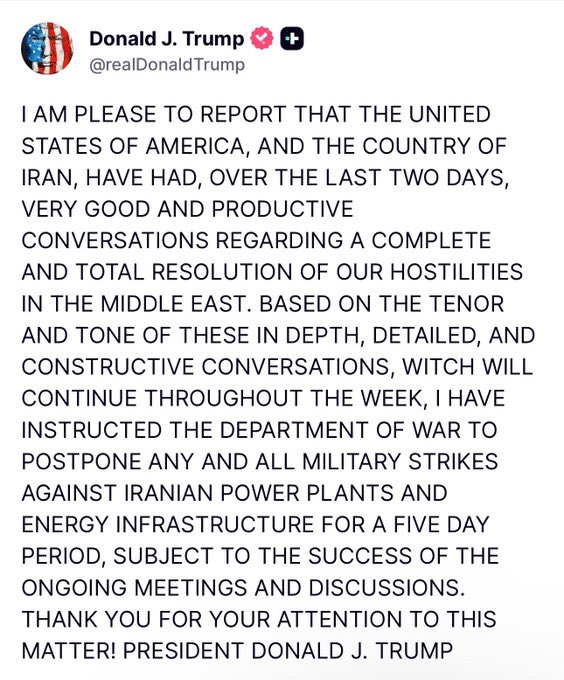
Oil prices surged 10% on Monday as traders reacted to the war in the Middle East and the potential for significant supply disruption from routes that account for around 20% of the world’s oil supply.

Brent Crude was trading 10% higher at $80.12 at the time of writing, while US WTI benchmark oil surged 9% to $73.24.

Such a sharp increase was to be expected given the sheer volume of oil flowing out of the region, and many market participants are taking the increase in stride, outlining the potential for OPEC to fill the gap left by the current conflict.

George Lagarias, Chief Economist at Forvis Mazars, said: “Our base case is that the region and energy markets have prepared for the present eventuality, and it is a matter of time before contingency plans become operational that would allow oil to flow beyond Iranian chokepoints.”

Although the near 10% spike in oil prices is dramatic, there is some degree of containment to the price increase, with analysts pointing to the difficulties for both sides in sustaining the current level of attacks for a prolonged period.

“These logistical constraints likely set a hard deadline for Donald Trump to resolve the conflict one way or another in the coming days,” explained Samer Hasn, Senior Market Analyst at XS.com.

“While a non-stop aerial campaign over Iran aims to suppress missile launches, the President is also incentivized to avoid a prolonged energy-driven inflation wave. Trump is acutely aware that a spike in U.S. pump prices would necessitate a higher-for-longer interest rate environment, which he desperately wants to avoid.”

However, Hasn continues to explain that the real risks of a deeper global oil shock remain.

“If a new red line is crossed, which is specifically the targeting of Iranian production and export facilities more severely, we will enter a much darker phase of the war. In such a scenario, $100/bbl would likely be the minimum target as the IRGC would almost certainly retaliate against GCC energy infrastructure with even greater intensity. The worst-case outcome remains a massive oil leak within the Strait, which could halt navigation for months and force a global economic reckoning.”