SberBank’s technology drive to become ‘Russia’s Amazon’

Amazon have posted a 9.4% increase in fourth quarter revenue to $137.4bn, and booked a $12bn gain from their stake in EV company Rivian.

Amazon started with selling books online and became the world’s largest company by providing everything from food delivery to films and it’s own web services.

Russian bank Sberbank now hopes to emulate this process by harnessing its brand and over 100 million customers in Russia to become a tech giant.

The Russian Bank committed to diversifying away from its traditional banking activities with the launch of a food delivery service which is now available to customers across Russia. The group now provides streaming services and provides in-home Internet of Things services.

Like Amazon and their stake in Rivian, the future of the automation industry is also receiving Sber’s attention and the launch of SberAutoTech in 2020 will focus on autonomous vehicles and smart transport infrastructure.

We recently met with Sber at Web Summit and their intent was clear. Their focus is on delivering innovative technology solutions to consumers that have the potential to rival global tech giants.

Sber’s drive to become a tech giant is evident in their willingness to invest in R&D which they have demonstrated through the establishment of an R&D centre in Berlin.

“The opening of our R&D center in Berlin underscores our commitment to creating the best technological products and services for our clients with the help of the best specialists in the world.” said David Rafalovsky, executive vice president, Sberbank; CTO, Sber; head of Technology.

“We invite developers, architects, and data scientists to work on the most relevant and innovative projects that will change the customer experience for over 100 million Sber Group customers.”

Sber are also in a position to harness the behaviours of a young demographic that have a high propensity to utilise technology and new services.

Sber count over 80% of Russia’s 14-21 year olds as clients and have moulded a workforce that is 60% Gen Y and Z.

Indeed, 54% of Sberbank’s customers are already digital only and have 73 million monthly active users on their digital banking services, further highlighting the readiness of their users to adopt technological solutions in their everyday lives outside of their finances.

The market has generally welcomed Sberbank’s transformation and shares rose significantly through 2021 before falling back as we closed in on 2022.

Investors will also be encouraged by an update in December that pointed to a tripling in non-financial revenue and Sber’s London-Listed ADRs could be one to keep an eye on if tensions with Ukraine ease.
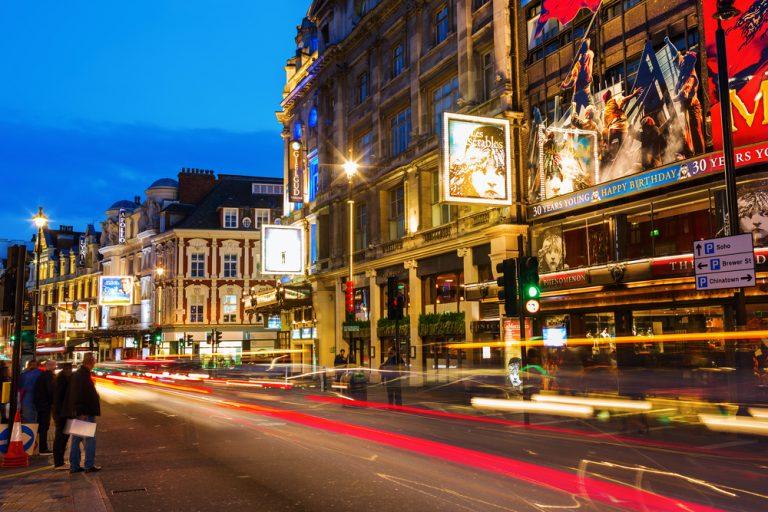
Shaftesbury posts strong trading

0

Shaftesbury has announced strong trading in the four months ending 3 February – despite impact of Omicron.

The group’s debt fell from £748.5m to £740.5m whilst the group made investments of £18.5m.

Chief executive Brian Bickell said: “Robust occupier interest across all our uses and in each of our locations has continued throughout the period, our vacancy levels are trending lower towards pre-pandemic levels and rent collection rates continue to improve.”

“The unrivalled attractions and lasting appeal of the West End to both local and domestic audiences, together with our curated, differentiated and affordable locations, will underpin both our continuing post-lockdown revival and our long-term resilience and prospects in the months and years ahead,” he added.

Upper Crust sales dip

0

Sales are falling for SSP, the owner of Upper Crust.

In the last eight weeks, sales have fallen to 57% of pre-pandemic levels. In a previous trading update, sales were 66% of pre-pandemic levels.

The group commented: “The spread of the Omicron variant around the world and the subsequent government restrictions have inevitably had an impact on passenger numbers in many of our markets.”

“Recent weeks have been more encouraging, as government restrictions have been lifted in the UK and some Continental European markets, with sales now trending positively again, driven mainly by strengthening trading in the Rail sector as commuter travel returns,”

The group said that they plan to return to pre-pandemic profits and revenues by 2024.

Carnival continues to be hit by pandemic

0

Carnival has said that two ships will be leaving its fleet as it continues to be affected by the pandemic.

Carnival’s president Christine Duffy commented: “Our guests have remained passionate and supportive throughout the restart and 2022 gives us plenty of reasons for enthusiasm and excitement as we reach full operations in the US, prepare for our 50th birthday celebration, and await the arrival of Carnival Celebration this fall.”

“Our very loyal guests, our vibrant homeport strategy and our fleet of popular ships are strengths to our advantage as we adapt to changing opportunities and circumstances.”

As well as losing two shops, the group has also paused the sailing of two ships.

“We regret having to cancel our guests’ long-awaited vacations and appreciate their loyalty and understanding,” said the group in a statement.

FTSE 100 falls after interest rate hike and disappointing Meta results

The FTSE 100 fell on Thursday after the Bank of England raised rates and the market digested a terrible set of results from Meta.

The FTSE 100 was trading down by 0.35% at 7,555 shortly after midday trade in London after accelerating declines following the decision by the Bank of England to increase rates to 0.5%.

The Bank of England raised rates for the second month row having hiked rates for the first time since the beginning of the pandemic in December. As well as sending the FTSE 100 further into negative territory, the rate hike saw the pound rally against the dollar, before fading into the afternoon.

Although sterling traders may have benefited from the news, the decision to hike rates comes at a time UK households are facing a cost of living crisis with soaring energy bills, food inflation and tax increases.

“Policy makers at the Bank of England have poured another dash of cold water over the economy in a bid to stop it breaking out in even more of a sweat,” said Susannah Streeter, senior investment and markets analyst, Hargreaves Lansdown.

“This cooling attempt had largely been priced in by the financial markets given that inflation was running so hot, but some policy makers clearly felt a much bigger splash was needed to get try and get prices under control. Four members of the Monetary Policy Committee wanted rates to rise to 0.75%, a sign that inflation is fast turning from a niggling headache to a debilitating migraine.”

Sectors reliant on the health of the UK consumer suffered in the wake of the announcement with shares in housebuilders and retailers feeling the pinch.

The UK banks cheered the news with Lloyds and Barclays surging 2.5% and 2.4% respectively.

Meta

Markets started off the day with a negative tone after Facebook owner Meta crashed 25% as the social media giant missed earnings estimates.

“It’s tough for any firm to stay at the top: either customers get bored of you, the competition catches up or the regulator sticks in their nose and at Facebook it may just be a case of all three, as growth in daily average user stalls and revenue increases begin to slow,” said AJ Bell Investment Director Russ Mould. 

“Facebook may also be yet another firm whose business model is perfectly-adapted to helping people cope with the pandemic and lockdowns but may see fresh interest wane as commuters return to offices and consumers look to get out and about again.”

Meta was a significant drag on the tech-heavy NASDAQ which declined over 2% in the pre-market and revived fears over the technology sector denting market sentiment.

Investors again used the Scottish Mortgage Investment Trust as a proxy for sentiment around the US tech sector and sent their shares down 3.5%.

BT shares dips as revenue fall in disappointing quarter

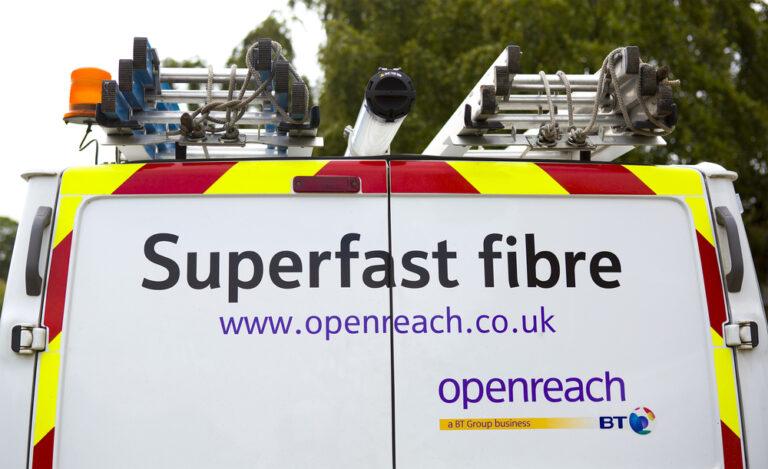
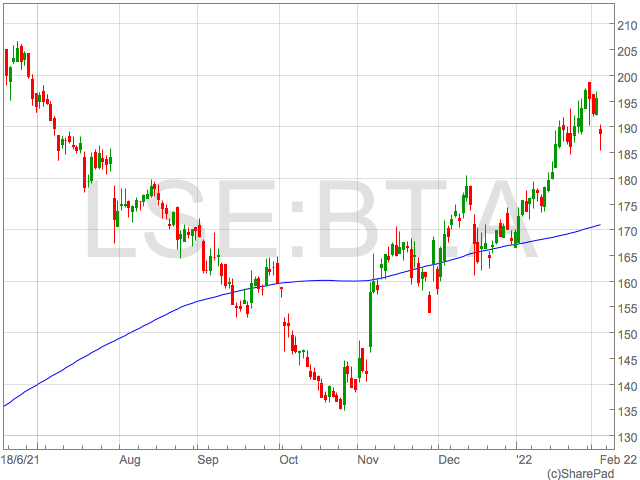
BT shares fell on Thursday after the company released Q3 earnings and said it saw revenue falling by 2% in the full year.

BT said their underlying revenue fell 3% to £15.7bn in the first nine months of the year.

The group said their revenue fell due to decline in their legacy BT voice product and lower postpaid mobile revenue.

The Openreach business unit saw a 4% increase in revenue, whilst all other units saw declines. The Global business unit saw the biggest decline in revenue falling 11%.

BT shares were down over 4% by midday in London trade.

“BT has had a good quarter with encouraging market share performance, and we continued to make significant improvements in customer service, although revenue from our enterprise divisions was softer than we expected,” commented BT CEO, Philip Jansen.

“We had another record-breaking quarter on our full fibre build and a pleasing 37% increase in FTTP connections following the launch of Openreach’s wholesale pricing offer. Our 5G build is also on track and now covers over 40% of the UK population with independently verified network leadership.”

Despite a strong market share, analysts pointed to the companies traditional businesses as a cause for disappointment .

“BT is making tracks to improve its content position, which in today’s climate is no bad thing. That said, there’s an argument that sport is a lot more sheltered from changing media habits than other mediums, so while BT can’t rest on its laurels, it has a bit more breathing room. BT Sport is a genuine asset,” said Sophie Lund-Yates, equity analyst at Hargreaves Lansdown.

“It’s disappointing to see other areas of the business looking less bright as Covid disruption and supply issues continue. The telecoms giant is weighed down by a number of legacy products that have been falling out of favour for a while. The issue with being an internet or phone service provider is that the main differentiator on product, is price. That’s a tough place to be.”

Cranswick delivers “strong quarter”

0

Cranswick has been hit by labour and supply chain, however, the group has benefitted from more in-home dining amid the pandemic.

The pork sector is facing issues as the number of pigs is exceeding demand.

The group said in a trading update: “Given the magnitude of this industry issue, we continue to lobby the government for sector support to help alleviate the backlog, including the reinstatement of Chinese export licences and addressing the acute shortage of skilled butchers.”

Adam Couch, the chief executive, said: “We have delivered another strong quarter of growth during which we have supported our customers by delivering excellent service levels to ensure full availability of our products.

“Our outlook for the current year is unchanged and we have a solid platform from which to continue Cranswick’s successful long-term development.”

Virgin Wines hit by Omicron disruption

0

Omicron disruption has forced Virgin Wines to lower profit and revenue guidance for the year ending in June 2022.

The group also experienced labour shortages in the run-up to Christmas, causing them to see a £800,000 fall in sales.

“Like many businesses, we experienced several operational challenges in the Period due to well-publicised, external, macroeconomic factors including labour market shortages caused by the emergence of the Omicron Covid-19 variant, staff absences due to illness/self-isolation, freight disruption and inflationary pressures,” said Virgin Wines.

In the six months ended 31 December, the group reported a 55% increase in revenues.

Chief executive Jay Wright said: “This performance continues to reflect the strength of our award-winning consumer propositions, the ongoing loyalty of our existing customers, the quality of our wines and our growing reputation for outstanding customer service.”

“Despite current headwinds we look forward to the future with optimism,” he added.

Compass expects growth in revenues for FY2022

0

Compass has said that its guidance remains unchanged for 2022.

Revenue grew by 38.6% in the three months ending 31 December for the foodservice multinational group thanks to growth in all regions.

Revenues are expected to increase by 20-25% this year while underlying operating margin is expected to be at 6-7%.

The group said: “We are encouraged by the strong start to the year, excellent new business wins and continued strong client retention,”

“However, we are mindful of some impact from the Omicron variant in the second quarter, with Business and Industry clients delay their return to work, some Sport and Leisure events being postponed and Education facilities extending their remote learning.”

Cadence Minerals raises £4.1m to fund Amapa Iron Ore investment

Cadence Minerals has raised £4.1m by the way of a placing to fund the first tranche of their investment into the Amapa Iron Ore project in Brazil.

The offer was met with strong demand and was heavily oversubscribed. The placing price of 20.5p represents a discount of 17.1% to the closing price of 24.75p on 1st February 2022. The placing was taken up by both private and institutional investors.

The placing follows the landmark restructuring agreement with banks in December that cleared the way for Cadence Minerals to proceed with an investment into a joint venture that will own the Amapa asset. Cadence Minerals will invest $6 million over two stages to acquire a 27% interest in the project.

Taking into consideration long-term holders of Cadence Minerals shares, the company will also run an open offer to existing shareholders so they invest on the same terms as those that invested through the placing.

The Amapa Iron Ore project was valued at $462m in 2012 by Anglo American and in 2012 the mine produced 6.1mt of iron ore concentrate.