UK gas prices soared on Wednesday, hitting record highs.
As a result, factories could be forced to close whilst households are likely to face higher bills.
Vladimir Putin has said that Russia, the largest supplier to Europe of gas, will ease the crisis faced. This caused prices to fall from highs 350p per therm.
Danni Hewson, AJ Bell financial analyst, commented on the rise in gas prices: “News that Russia will boost gas supplies has steadied market nerves a little this afternoon and helped temper those record price hikes but businesses are worried, and investors are too.
“Even at current prices some energy intense sectors will struggle to operate as normal over the winter months and those that can keep operating as normal will have to find a way to push costs through the system.”
“Ultimately it will be the consumer that will have to pay and for some consumers today was as unwelcome as an egg sandwich on a crowded train.”
Alan Green joins the Podcast to discuss the tumbling equity market and a selection of shares for consideration.
We start with the volatility in equity markets caused by rising oil prices, that only 24 hours ago were helping lift the FTSE 100 through BP and Shell.
Fears are increasing rising energy prices could force central banks to tighten conditions just as the economy starts to falter.
Tesco released a solid set of results alongside the announcement of a share buyback which helped lift shares 4%.
We also discuss On The Beach and British Honey Company.
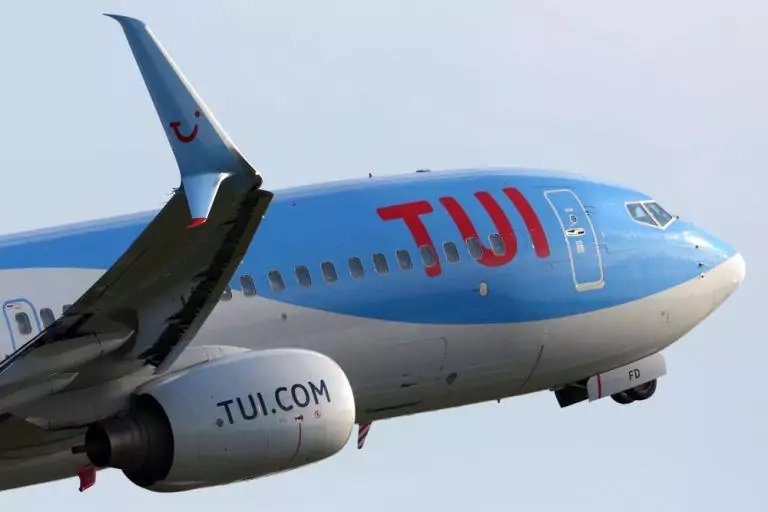
Tui has reported a surge in late summer holiday bookings.
After a quieter summer due to travel restrictions, the group announced plans to raise 1.1 billion euros to reduce its debt.
TUI’s chief executive, Fritz Joussen, said: “The capital increase will enable us to take a significant step closer to our goal of rapidly repaying the government loans.”
Tui has been bailed out several times by the German government since the start of the pandemic.
Whilst summer holiday bookings are normally around nine million, this year bookings hit around five million. This was driven by late summer holiday bookings primarily by German and Dutch customers.
AJ Bell investment director, Russ Mould, commented: “Travel operator TUI is back to the market with its begging bowl out again. Not for the first time in this crisis the slow return to normality for tourism is causing problems, putting more strain on its balance sheet than an elephant on a tricycle.
“The assumption through the pandemic has been that TUI would never go to the wall, despite a very messy balance sheet, because the German authorities would always step in to bail it out.”
“However, the state-backed loans it received weren’t handouts, they do need to be paid back hence the need to go out and raise more funds through a rights issue.”
US crude oil has hit a seven-year high on Wednesday morning amid rising demand.
Brent Crude is now $83 per barrel, which is a three-year high whilst US crude hit $79.40 a barrel, which is the highest since 2014.
The increase in oil prices is likely to drive up petrol prices. Simon Williams, the RAC’s fuel spokesperson, said:
“[The trend] looks likely to spell further misery for drivers at the pumps as we head towards Christmas … If this were to happen we could see the average price of unleaded hit a new record of around 143p per litre. Diesel would shoot up to 145p, which is only 3p off the record high of 147.93 in April 2021.”
Commenting on the increase of crude oi prices, Naeem Aslam of Think Markets, said: “Oil prices in the United States have climbed to their highest level since 2014, rising for the last 5 sessions. Crude oil has gained support from uncertainty regarding energy supplies as supplies of coal, natural gas, and crude appear to be tighter.”
“Monday’s OPEC meeting only exacerbated the issue as the group conveyed no significant rise in oil production and decided to go on with its already existing timeline to avoid any major repercussions caused by another wave of coronavirus. However, the cartel may be pushed into a corner if demand continues to rise, leaving no option but to ramp up production.”
Tesco profits have doubled in the first half of the years despite supply chain issues.
The store’s profits jumped 107% to £1.1bn as coronavirus related costs fell and sales were up by 3% in the six months to 28 August.
Tesco is expected to reach full-year profits of £2.6bn, which is £700m more than expected and have been boosted by the Euros and more staycations in the UK this summer.
“We’ve had a strong six months; sales and profit have grown ahead of expectations, and we’ve outperformed the market against a backdrop of profound change. Tesco has many unique advantages. The scale and reach of our store estate and online operations are unmatched in the UK,” said the chief executive, Ken Murphy.
Commenting on the results, Walid Koudmani, market analyst at financial brokerage XTB, said: “Tesco announced a share buyback programme after strong H1 performance and increased profit outlook. In addition, the retail giant set out its strategic priorities moving forward as it intends to keep growing its customer base with several competitive offerings and by strengthening its digital platform.”
“Today’s results reassure investors by showing positive performance and a clear plan for the future as the economy contends with potential supply shortages.”
Imperial Brands shares (LON:IMB) fell on Wednesday after the group released a trading statement pointing towards an ever reducing market for their combustible products and no changes to Imperial’s outlook for the year.
The group’s Next Generation Products (NGP) – which are designed to reduce harm when compared to their combustible products – are expected to produce similar sales in the second half as the first half.
Imperial Brands shares were down 1.9% in early trade on Wednesday.
“Imperial’s pressing forward with its strategy to focus on quality rather than quantity when it comes to its global footprint. This is a key part of being a tobacco company these days—with the number of smokers dwindling, the only lever to pull is hiking prices. Having a commanding market share and recognisable brand name is paramount,’ said Laura Hoy, Equity Analyst at Hargreaves Lansdown
Imperial Brands also faced the impact of a great level of travel allowing smokers to purchase their products in cheaper destinations and reduce Imperial’s revenue in their priced locations.
Imperial Brands said they expect their combustibles market shares to decline by 2-3 basis points this year, an improvement on last year’s 17 basis points decline.
“Aside from a shrinking addressable market, Imperial’s combustibles business is battling against loosening travel restrictions which are funnelling some customers away from more expensive product offerings. Add to that declining revenue in Australia and a £50m legal bill in the US, and it’s a recipe for profit declines. On the bright side, improved performance in Next Generation Products (NGP) and Distribution should make up for this, with group underlying profit ultimately expected to rise,” Hoy said.
“Combustibles is still the growth engine for Imperial—but NGPs is ultimately the future. So far it’s had a lukewarm reception, but management’s managed to trim some of the fat by exiting less profitable markets. While the second half will still show the impact of these abandoned markets, a narrowed focus should help the group build out more successful cigarette-alternatives.”
Chief Executive Stefan Bomhard commented:
“We have made good progress in implementing our strategy through a sharper management focus, greater investment behind our priority combustible tobacco markets and new market trials in heated tobacco and vapour. We are building a high-performance culture with the introduction of new more consumer-focused ways of working, and have made a significant number of new hires to enhance our capabilities in key areas. I am pleased to report the business continues to perform well and we remain on track to deliver our full-year results in line with expectations.”
As the country queued for fuel and sales of Electric Vehicles jumped, the sales of Diesel cars unsurprisingly crashed 72% over the same period.
“September is often a bumper month for EV sales, but even these statistics surprised us. Twice as many people bought electric cars as bought diesel cars, showing the ongoing slump in sales of polluting diesels,” said Ben Nelmes, Head of Policy and Research at New AutoMotiv.
“In many UK cities – Newcastle, Bristol, London, Oxford, Cambridge and Birmingham, the figures suggest that 1 in 5 cars bought are fully electric. That is good news for the millions of people living in areas with illegally high levels of air pollution.
“Our data show that the market for EVs is incredibly diverse, with a growing number of brands and models bringing electric cars to market. Among the brands that are fastest to electrify, Jaguar tops the table for the third month in a row – a British success story that we can all celebrate.”
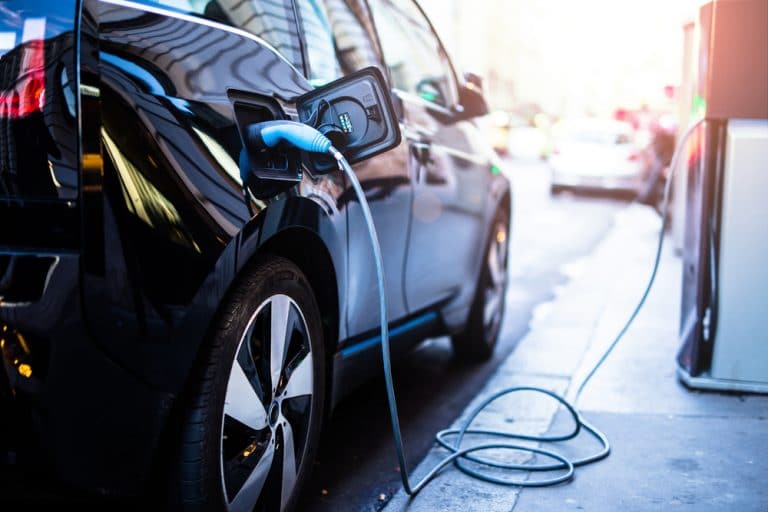
The expansion in the number of charging points is also attributed to helping the number of EVs sales in the UK.
One of the biggest drawbacks of buying an EV previously was the lack of range of the vehicles and the scarcity of charging points.
The is know as ‘range anxiety’ due to the fear drivers would have when setting out on long journeys and would only use their electric vehicles for shorter journeys as opposed to some of their more demanding trips.
Although these are still a factor in owning an EV, situation has improved dramatically and there are now 44,000 public charging points across the UK.
According to New Automotive, if you are on a UK motorway or A road, you are now never more than 25 miles away from a charging point.
While Vietnam continues to battle by far its worst COVID-19 outbreak of the entire pandemic, economic growth is still expected through 2021. Individual investments continue as a result, with the stock market emerging as the most popular destination for retail investors.
Dynam Capital sought to find out more about the characteristics of Vietnamese retail investors and engaged Indochina Research Vietnam – an independent survey research firm – to conduct the first retail investor survey in August 2021. Half of the respondents were investors who have joined the stock market less than one year ago – known locally as F0 investors.
“We truly believe that the more information and trustful data are available, the more Vietnam will be understood for its true potential and attract foreign investments. We are looking forward to the next edition of the survey to consolidate the results with more participants and provide regular updates on retail investors’ behaviour to the community”, says Xavier Depouilly, General Manager of Indochina Research Vietnam.
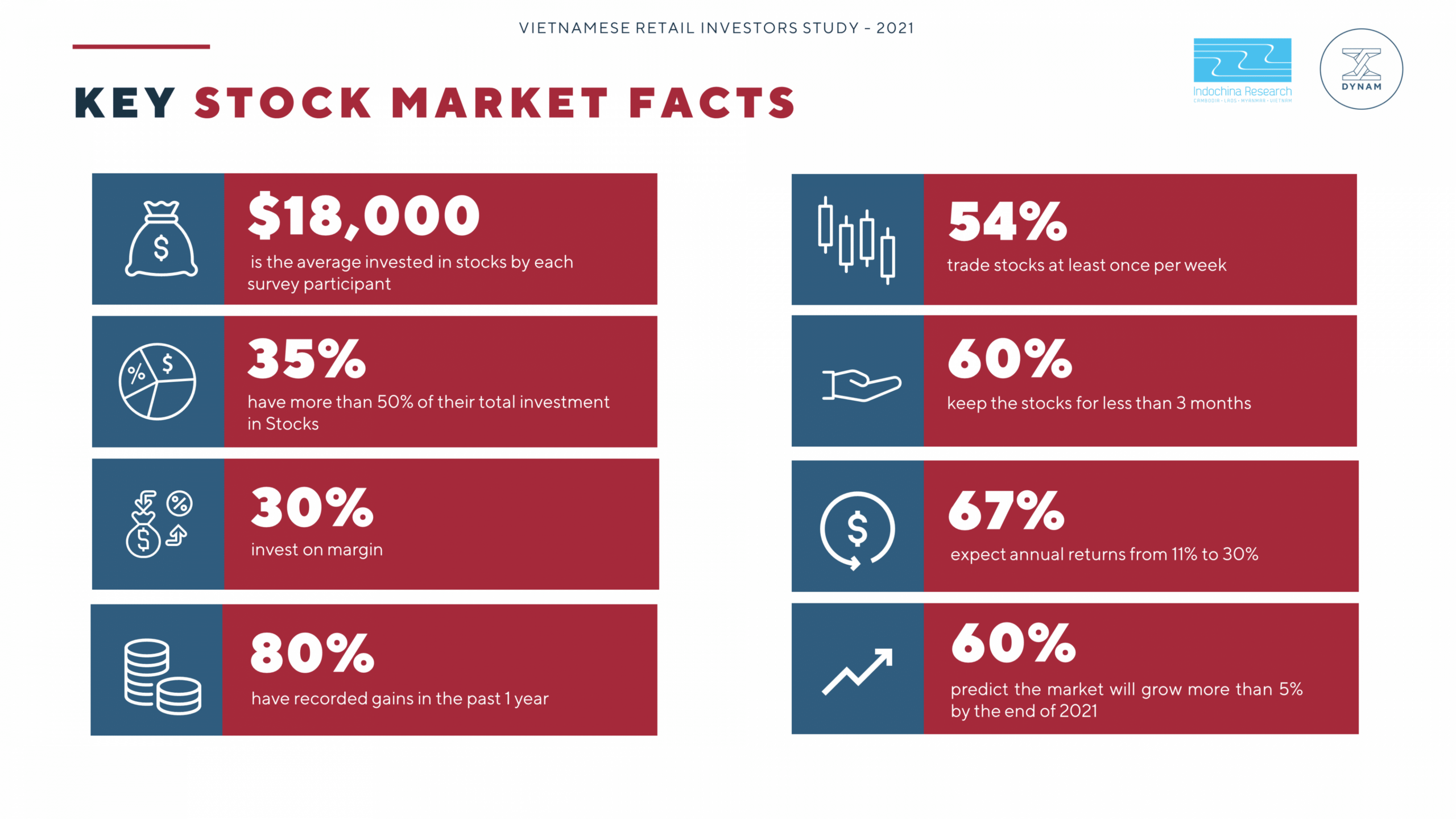
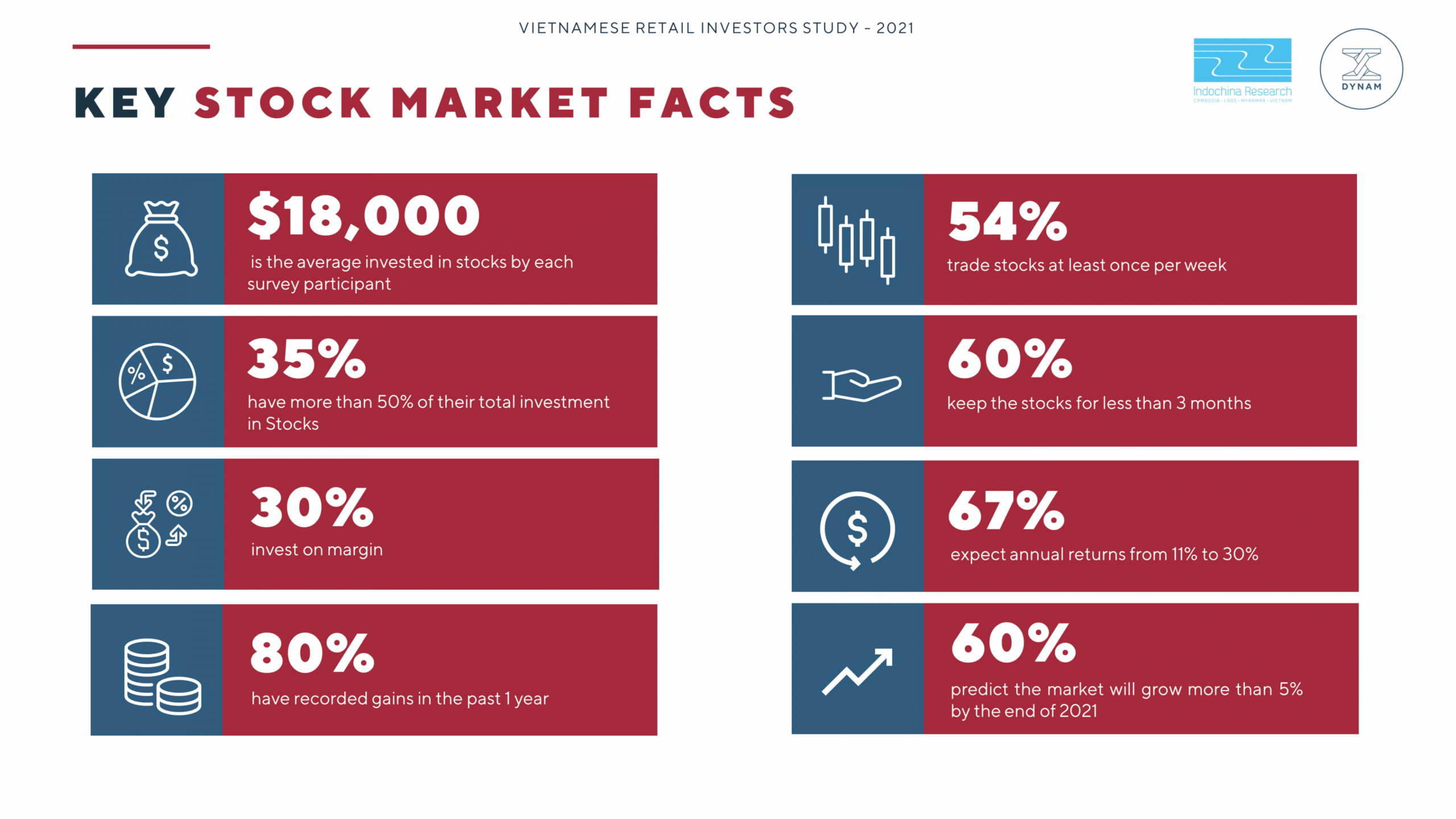
The survey reached 425 participants, out of them 193 were fully validated and analyzed. It reflects that local retail investors, are mostly from Hanoi and Ho Chi Minh City, with a gender balance of 55% female and 45% male. Most respondents are white-collar office workers (53%), with an average overall monthly personal income of USD1,170 and an average portfolio value of $18,000. This place most retail investors surveyed among the medium-high income groups of the two key economic hubs.
The results highlight how stock investors allocate their investment, with 35% having more than 50% of their money invested in stocks and a similar proportion (35%) investing up to $4,500 (up to 100 million VND).
Apart from stocks, bank deposits, real estate and insurance products are the most used placements. Interestingly, the traditional gold is only chosen by 15% while cryptocurrencies are now traded by 2 out of 10 investors.
The majority are very active, meaning they check the stock market index multiple times a day (84%) and 54% trading at least one time per week.
Further analysis describes significant differences between F0 and F1+ investors. F0 investors have an average lower portfolio value ($11,000 vs $24,500 for F1), are more likely to surf stock with shorter positions held and have an overall lower expectation for return on their stock investment compared to the more experience F1 investors.
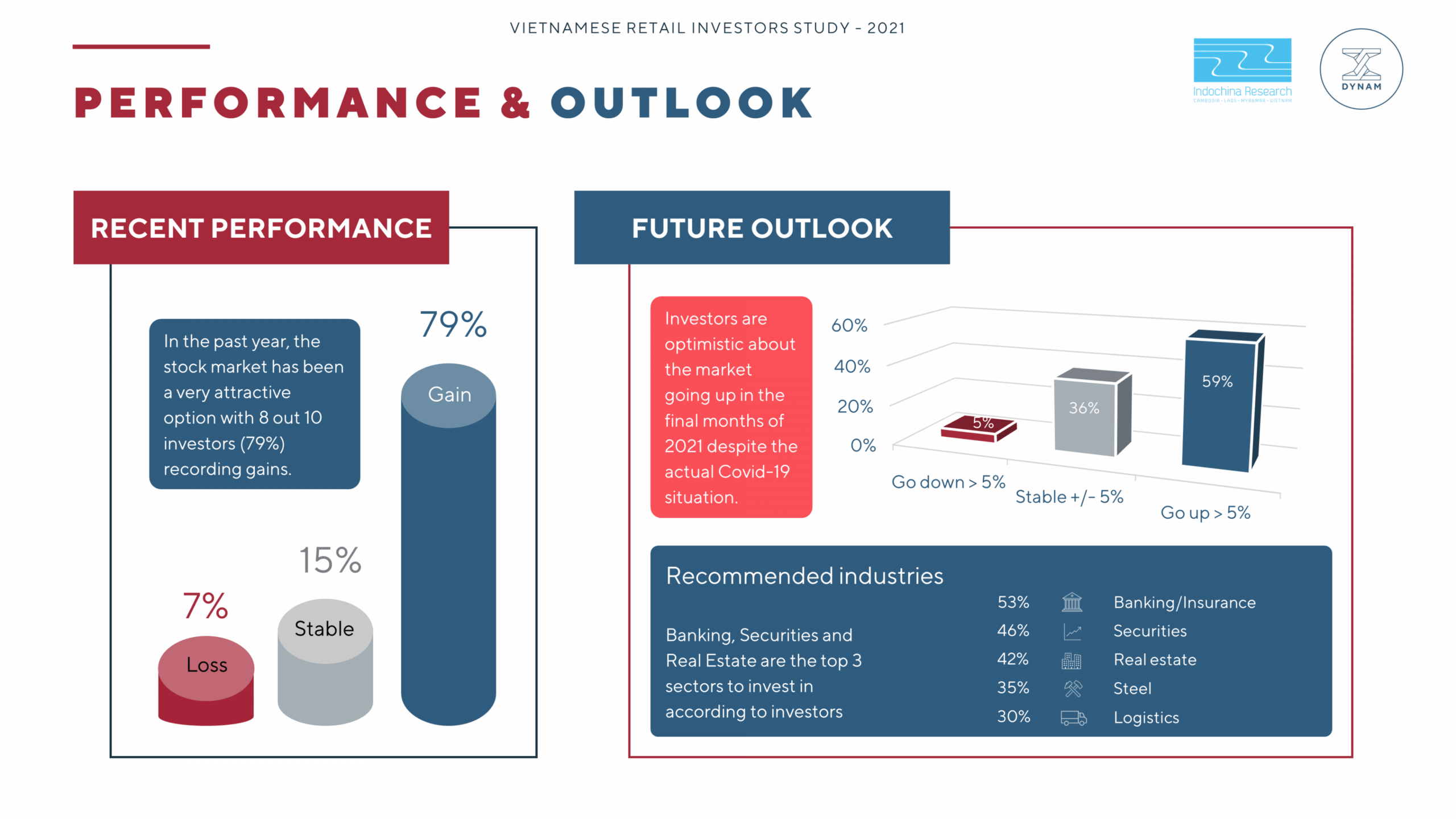
Positively, most investors (80%) have registered gains in the past year, more among F1 investors (88%), and 59% are confident that the stock market will even grow up more than 5% through the rest of this year, even in the face of the outbreak.
Six out of ten (63%) consider the stock market as a source of extra income, by far the most common response, significantly more among F0 investors (71%). About 10% consider the stock market as a retirement / long term investment plan.
These F0 individuals are far from alone.
According to local media, 842,405 securities accounts were opened in the first eight months of this year, more than the number of new accounts in the last three years combined. Bank deposit interest rates remain low, driving increased interest in stocks. As of this June, there were 3.4 million individual stock accounts in Vietnam.
Vietnam has also been likened to Taiwan in terms of potential stock market growth. Currently around 3% of Vietnam’s population has a retail stock brokerage account, similar to Taiwan’s figure in 1986. Taiwan went on to experience a decades-long stock market surge, and Vietnam now has many of the same economic fundamentals in place. The Vietnamese government also wants to see further growth, with goals to increase stock brokerage penetration to 5% by 2025 and 10% by 2030.
The growth in the stock market in Vietnam has been meteoric, the market value of publicly traded companies is close to USD 300 billion in 2021, up from USD 2 billion in 2006 when investment funds such as London-listed Vietnam Holding (VNH) commenced their activity. It has created wealth for some of the new domestic investors, and longer-term investors – such as those in VNH – have seen compound returns of 15% per annum over the last decade, according to public data.
Yet, despite the growth and increased liquidity in the stock market (the second highest in ASEAN), for foreign investors Vietnam is still classified as a frontier market. For the time being, at least, it is the local investors who dominate, and seem to be benefitting most from its growth and development.
Writing credit to Michael Tatarksi and Infographics credit to Indochina Research Vietnam
Oxford Nanopore Technologies is one of the most successful companies backed by fully listed IP Group. The focus on nanopore-based life science research tools for DNA / RNA means that there is a fast-growing market to exploit.
The company has developed the world’s only pocket-sized portable sequencer called MinION. This means that it can be used outside the laboratory. There is also software sold on an annual licence.
The 2023 life science tools revenues of £165m to £175m are being targeted with a target gross margin of more than 60%. Losses should reduce by 2023.
Prior to the start of u...
The FTSE 100 rose on Tuesday in a broad rally which saw most sectors gain.
Oil shares were a significant contributor to the FTSE 100 in terms of points following the decision by OPEC to not lift production, sending oil prices higher.
“OPEC’s decision not to lift production volumes gave oil prices a lift into Tuesday, helping the FTSE 100 to solid gains as index heavyweights BP and Shell gushed higher,” says AJ Bell investment director Russ Mould.
BP shares were up 1.45% and Shell added 1.2%.
Ocado shares were the top riser on Tuesday lunchtime, gaining some 2.9%, as investors continued to bet that the takeover activity in UK grocers wasn’t over after Morrisons received final offers from US Private Equity.
The gains in London came despite a rocky night on Wall Street as the Facebook outage caused volatility in tech shares.
Facebook services including WhatsApp and Instagram suffered prolonger downtime and investors took this as an opportunity to reduce positions in tech stocks that are fairly highly valued after a long bull run.
“This followed a tech-led sell-off in the US overnight as investors turned away from the likes of Apple, Amazon and, perhaps most notably, Facebook which had a pretty terrible day on Monday,’ said Russ Mould
“First it faced damaging allegations from a company whistleblower then it saw a lengthy outage on its eponymous social media app as well as its Instagram and WhatsApp platforms.
“After Beijing took its own technology sector to task in 2021, could 2022 see Washington follow suit with tighter regulation?
“A cocktail of risks is brewing for the US market around not just the tech sector but also the debt ceiling and stalled spending plans as political in-fighting continues.”
Despite giving up ground on Monday, Facebook shares were set to open higher on Tuesday.